2025-11-04 05:44
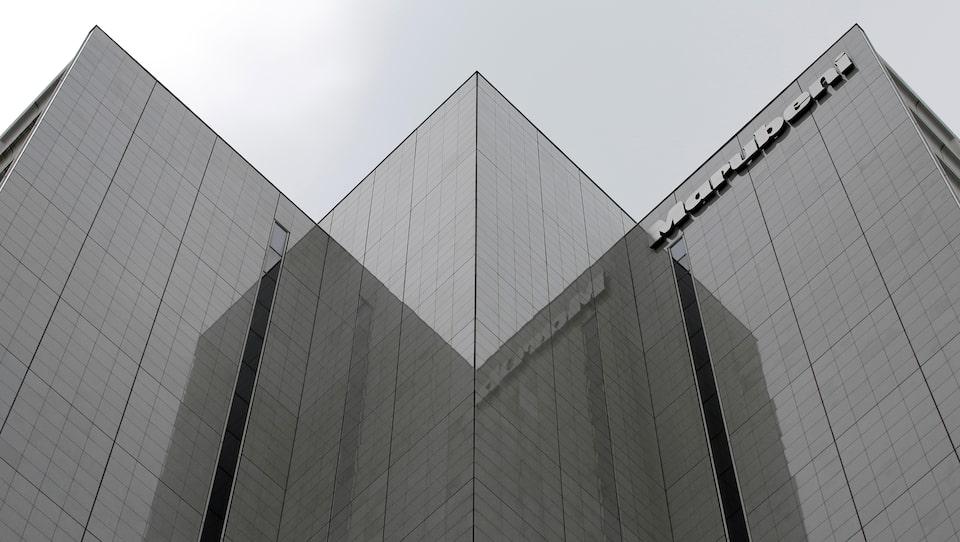
Russian state-owned Rosneft is a Sakhalin-1 shareholder US sanctioned Rosneft, Lukoil last month Marubeni co-owns SODECO, a Sakhalin-1 shareholder Marubeni's 6-mo profit up on strong performance in financial, food businesses TOKYO, Nov 4 (Reuters) - Marubeni (8002.T) , opens new tab plans to follow the guidance of the Japanese government regarding its involvement in Russia's Sakhalin-1 oil project after the U.S. government sanctioned the project's key shareholder Rosneft, its CEO said on Tuesday. Last month, the U.S. hit Russia's major oil companies Rosneft (ROSN.MM) , opens new tab and Lukoil (LKOH.MM) , opens new tab with sanctions, the most recent step to force the Kremlin to end the war in Ukraine. The U.S. will allow operations with Rosneft and Lukoil to wind down until , opens new tab November 21. Sign up here. Marubeni is a shareholder with Japan's SODECO consortium, a Sakhalin-1 co-owner. Other Japanese stakeholders in SODECO include Itochu (8001.T) , opens new tab, Japan Petroleum Exploration (1662.T) , opens new tab, Inpex (1605.T) , opens new tab and the industry ministry. "I am very concerned about the recent changes," Marubeni CEO Masayuki Omoto told a briefing. "I will firmly ally with the Japan government's response (to the latest sanctions)." ExxonMobil (XOM.N) , opens new tab, which used to own a 30% stake in Sakhalin-1 and had led the project since it started in the 1990s, took an impairment charge of $4.6 billion to exit its Russian businesses after Moscow sent troops into Ukraine in February 2022. In October that year, the Kremlin appointed Rosneft subsidiary Sakhalinmorneftegaz-shelf as the new operator of Sakhalin-1. Last year, Russian President Vladimir Putin signed a decree extending the sale period for the unclaimed Exxon stake in Sakhalin-1 until 2026. Before Exxon's exit, Rosneft and India's ONGC Videsh (ONVI.NS) , opens new tab owned a 20% in the project each and the SODECO consortium controlled a 30% stake. PROFIT UP Omoto made the comments during Marubeni's earnings briefing. The company reported a 28% rise in its first-half net profit to 305.5 billion yen ($2 billion), helped by a stronger performance in its financial, real estate and food businesses. The company, in which Berkshire Hathaway (BRKa.N) , opens new tab owns a stake, kept its annual net profit forecast unchanged at 510 billion yen, including a 30 billion yen cushion for contingencies. Marubeni plans total asset divestments of 250 billion yen this fiscal year, including in its natural resources segment, more than double the already achieved 96.2 billion yen of divestments so far. ($1 = 150.7800 yen) https://www.reuters.com/sustainability/climate-energy/japans-marubeni-reports-28-on-year-rise-six-month-profit-2025-11-04/
2025-11-04 05:41
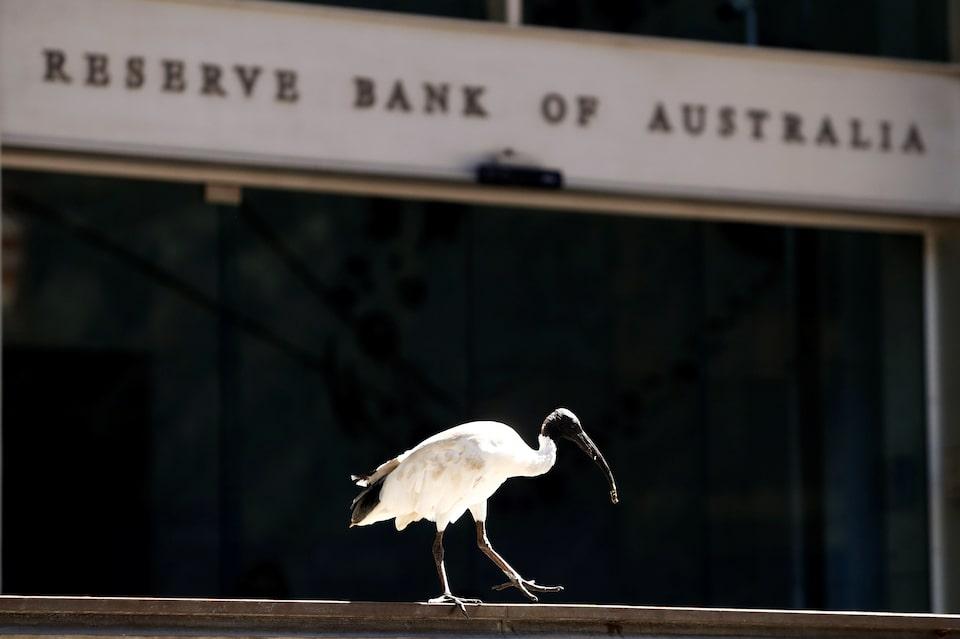
RBA cautious on easing due to inflation revival Governor Bullock says possible no more rate cuts Market sees low chance of rate cut before May 2026 SYDNEY, Nov 4 (Reuters) - Australia's central bank on Tuesday left its cash rate steady as expected at 3.60%, saying it was cautious about easing further given higher inflation, firmer consumer demand and a revival in the housing market. Wrapping up a two-day policy meeting, the Reserve Bank of Australia (RBA) said recent data suggested inflationary pressures could remain in the economy, adding that it would update its view as data evolves. Sign up here. Markets had seen little chance of a rate cut this week following an uncomfortably hot reading on third-quarter inflation, and now see scant prospect of an easing until May next year. At a press conference, Governor Michele Bullock said the central bank does not have a bias on policy and even though the current cash rate is still judged to be a little restrictive, it is fraught with uncertainties. "It's possible there's no more rate cuts. It’s possible there's some more but as I said earlier, we didn’t go as high, we might not have to come down as far," said Bullock. The spike higher in inflation means the RBA does not see core inflation returning to the target band of 2-3% until the second half of 2026, a reason that policymakers are cautious about further easing. The lack of any surprises left the Australian dollar a touch softer at $0.6526, while the bonds took a bigger fall, with three-year government bond futures down 5 ticks to 96.29, near a five-month low. Swaps imply just a 10% chance for a move in December, with some betting that the entire easing cycle is over. STILL POSITIVE ON JOBS The RBA has cut interest rates three times this year after assessing quarterly inflation data, but in the third quarter, core inflation surged to 3%, hitting the top of the 2-3% target band, as market services and housing costs stayed elevated. Home prices jumped by the most in more than two years in October, adding to signs that financial conditions might not be as tight as thought. The RBA has said the cash rate of 3.6% was only slightly restrictive. Complicating the picture for policymakers, the jobless rate spiked to a four-year high of 4.5% after a long period of holding largely steady. The consumer spending recovery also appears to be patchy. Bullock said the labour market has eased but that there is still tightness, playing down the spike in unemployment. "The RBA isn’t hitting the panic button on inflation just yet... But nor is it willing to fully discount the recent lift in inflationary pressures," said Sally Auld, group chief economist at the National Australia Bank. "On net, the RBA's delivery of a soft landing still stands, but the combination of trend GDP growth, full employment and core inflation sustainably in the target band now takes longer to achieve." NAB expects the RBA to be on hold before a final cut in May 2026, while the Commonwealth Bank of Australia has said the current easing cycle is over. Westpac tipped two more cuts next year. https://www.reuters.com/sustainability/sustainable-finance-reporting/australias-central-bank-holds-rates-steady-cautious-about-inflation-2025-11-04/
2025-11-04 05:38
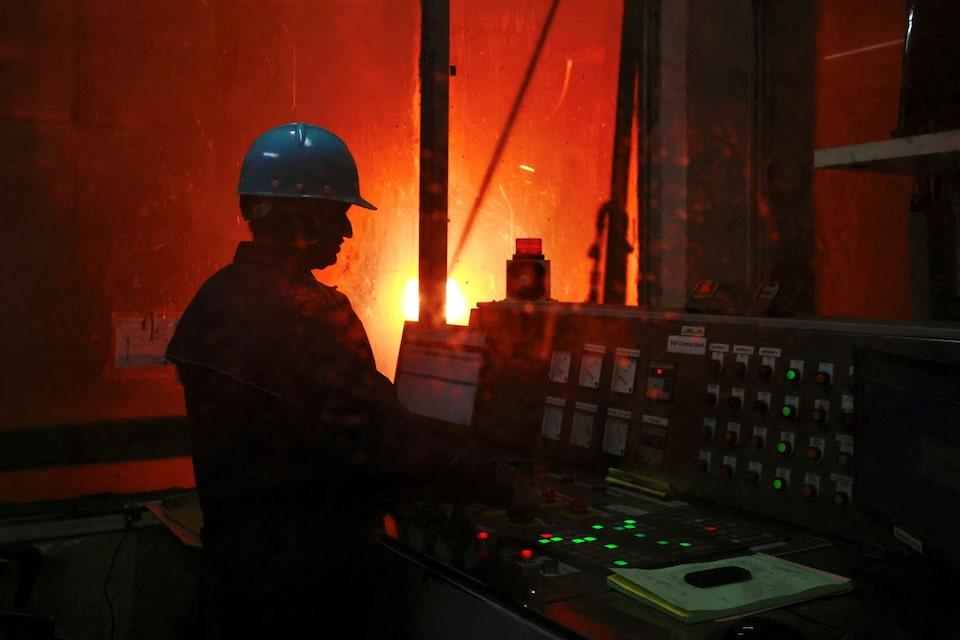
NEW DELHI, Nov 4 (Reuters) - India's push to lead the clean industrial transition among emerging economies is facing significant hurdles, despite having one of the largest project pipelines, a new report by the clean‑industry alliance Mission Possible Partnership shows. India has 53 clean‑industry projects in development, tied with Australia for the highest number in the "new industrial sunbelt," a group of renewables‑rich countries seen as key to the next wave of global decarbonisation. Sign up here. However, none of these projects have reached final investment decision this year, the Mission Possible Partnership, which is an alliance of companies and climate action organizations focusing on advancing decarbonisation in high-emission sectors, said. Outdated construction rules and slow regulatory changes are holding back India's cement industry from adopting cleaner technologies such as calcined clay and low‑carbon cement blends, the report said. High financing costs in emerging markets such as India limit the bankability of clean‑industry projects, it added. Some projects in India have already lined up buyers for clean energy and partial funding, but are still waiting for clear rules, permits and access to power transmission and other infrastructure, the study said. The report also pointed to the lack of demand‑side regulation in India, such as blending mandates or green procurement rules, which are critical to creating markets for clean industrial products. The study identified 70 projects outside China as "poised" for investment, representing a $140 billion global opportunity, with India among key markets. But the report warned that without enabling policy frameworks, India risks missing out on the industrial transformation already underway in other regions. China, in comparison, accounted for 12 of the 19 clean‑industry final investment decisions recorded globally this year, the report said. https://www.reuters.com/sustainability/climate-energy/indias-cleanindustry-pipeline-hampered-by-financing-regulatory-delays-report-2025-11-04/
2025-11-04 05:31
A look at the day ahead in European and global markets from Kevin Buckland On another day, tech-driven stock rallies to fresh record highs in Tokyo and Taipei would probably signal a bullish tone for regional equities, but not today. Sign up here. Just after those markets edged up to those unprecedented heights, traders turned sellers, looking to lock in profits in what remains a very uncertain environment. South Korean investors were sellers from the get-go, taking advantage of Monday's 2.8% surge in the KOSPI index (.KS11) , opens new tab to an all-time peak. Wall Street's S&P 500 (.SPX) , opens new tab and Nasdaq (.IXIC) , opens new tab may have gained overnight, but futures point sharply lower, and pan-European STOXX 50 futures are also in the red. With most U.S. economic data releases suspended by the government shutdown, and Federal Reserve officials presenting diverging views on the correct path for monetary policy, investors have had to put a lot of weight on private surveys. And one from Monday did not inspire much confidence in the world's biggest economy: Accounts from manufacturers in the Institute for Supply Management survey painted a dire picture of the factory sector, which President Donald Trump's sweeping tariffs are intended to stimulate. The JOLTS job openings data, closely watched by the Fed, that the market should have gotten later on Tuesday almost certainly won't be forthcoming. Instead, investors need to wait until Wednesday for the ADP payrolls report. For now, traders seem content with paring back bets on a December rate cut, lifting the dollar to multi-month highs on the yen and euro. Even the tech news that buoyed Wall Street on Monday reinforced ongoing concerns about how closed the loop is in terms of the companies fuelling all the artificial intelligence fervour. In this case, Amazon's (AMZN.O) , opens new tab $38 billion cloud services deal with ChatGPT-creator OpenAI. Trump is also muddying the waters with conflicting comments about Nvidia's (NVDA.O) , opens new tab most advanced chips, saying they won't be available outside the U.S. - and he didn't just limit that to China. South Korean politicians and business leaders must be scratching their heads after the U.S. president appeared to promise them access to said chips just last week. It's bad news for Nvidia too, with CEO Jensen Huang saying recently that access to the China market is essential to fund U.S.-based R&D. Key developments that could influence markets on Tuesday: -ECB President Christine Lagarde speaks in Sofia, Bulgaria -Bank of Spain Governor Jose Luis Escriva, Bank of England Deputy Governor Sarah Breeden speak at Santander event in Madrid https://www.reuters.com/world/china/global-markets-view-europe-2025-11-04/
2025-11-04 04:43
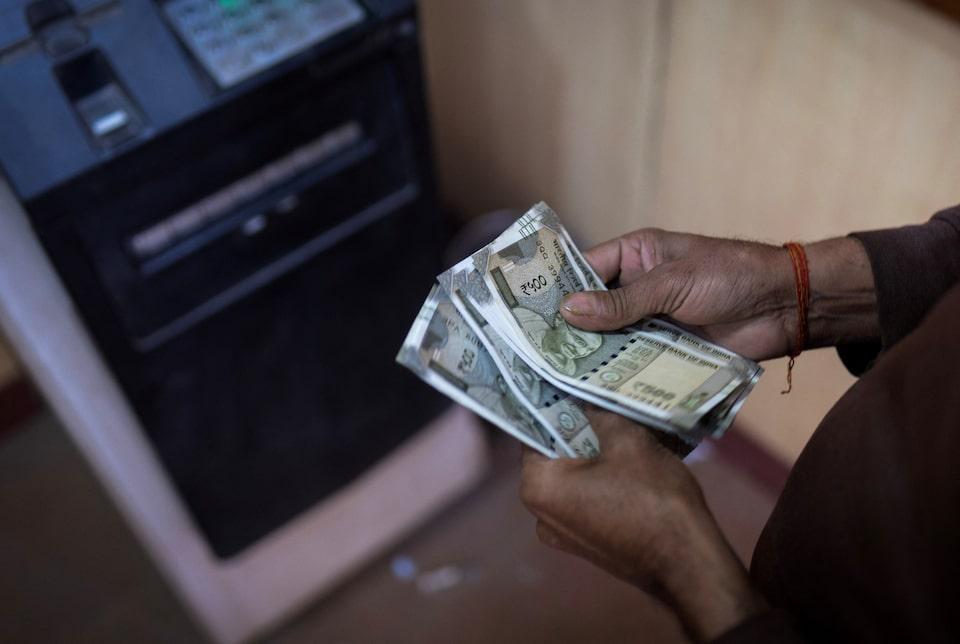
MUMBAI, Nov 4 (Reuters) - The Indian rupee closed stronger on Tuesday, hoisted by likely market intervention by the Reserve Bank of India even as routine dollar bids from importers and foreign banks kept a lid on the currency's gains. The rupee closed at 88.6550 against the U.S. dollar, up 0.1% on the day, after being pinned close to its all-time low over recent trading sessions. Sign up here. The currency touched a peak of 88.42 in early trading before trimming gains. The RBI likely intervened to shore up the rupee before the local spot market opened and was possibly active intermittently though the day's session as well, traders said. Early in the session, broad based interbank offers in wake of the intervention also helped the rupee, but importers stepped in around the 88.50 mark, a trader at a Mumbai based bank said. A pickup in dollar strength has exerted strain on the rupee since last week, adding to the headwinds sparked by worries over the hit from steep U.S. trade tariffs and muted foreign portfolio flows. The currency has declined 3% over 2025 so far. On the day, the dollar index was perched near a three-month peak while most Asian currencies slipped. India's benchmark equity indexes, meanwhile, declined about 0.6% each. Foreign investors were net buyers of Indian equities worth $1.6 billion last month but the year-to-date tally stands at a net outflow of nearly $17 billion. "We continue to forecast INR underperforming core G10 and Asia FX, but the key change relative to last month is the RBI drawing a line in the sand for now at the 88.800-level for USD/INR," analysts at MUFG said in a note. The firm expects the rupee to recover modestly to 88.50 in the second quarter of 2026. India's financial markets will be shut on Wednesday for a local holiday. https://www.reuters.com/world/india/rupee-expected-remain-anchored-near-8880-rbis-hand-counters-dollar-strength-2025-11-04/
2025-11-04 04:03
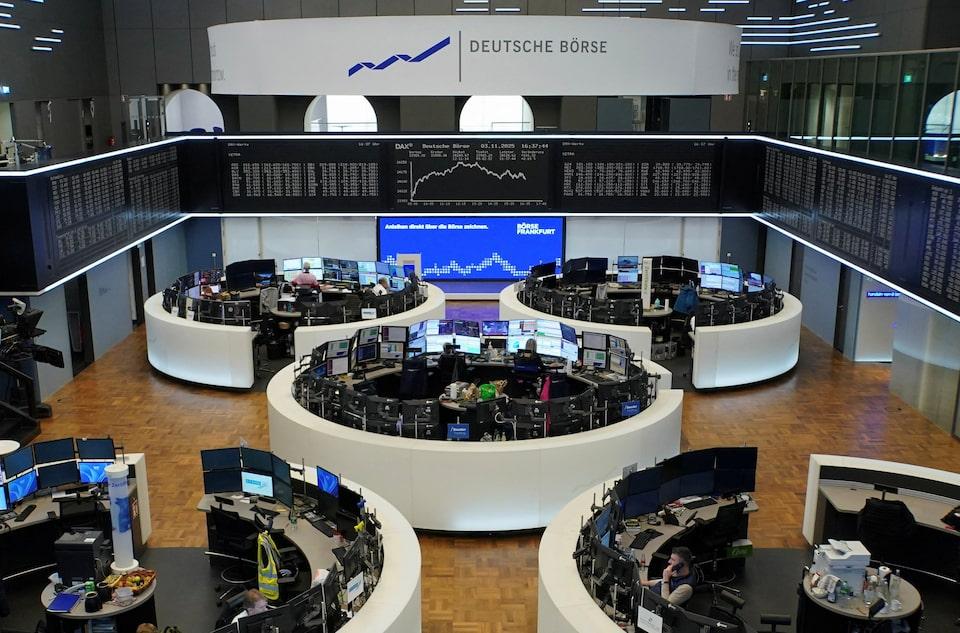
Euro falls against dollar for fifth straight session Pound weakens on rare pre-budget speech by UK finance minister Yen gains; investors wary of intervention risks Aussie slips after RBA stands pat, warns on inflation Bitcoin slips to lowest in more than four months NEW YORK, Nov 4 (Reuters) - The dollar rose to a four-month high against the euro on Tuesday as divisions in the Federal Reserve raised doubt about the prospect of another rate cut this year, while a risk-off move sent investors seeking the U.S. currency for safety. Meanwhile, sterling fell after the UK finance minister pointed to "hard choices" in her upcoming budget. Sign up here. Overall market sentiment was noticeably darker, with stocks falling and government bonds drawing demand, while safe-haven currencies like the yen and the Swiss franc held firm. "I think it's just an old-fashioned haven bid," said Michael Brown, senior research strategist at Pepperstone, noting strength in both the dollar and the Japanese yen. The euro fell for the fifth straight session, down 0.3% to $1.1483, its weakest since August 1. Against the yen, the dollar was 0.4% lower at 153.60 yen, though the Japanese currency remained near a recent 8-1/2-month low. "Despite all the column inches that 'death of the dollar' takes up, it does remain the best haven out there in the minds of market participants," Brown said. With investor risk appetite taking a hit, the Australian dollar fell 0.8% at $0.649, after the Reserve Bank of Australia left its cash rate steady as expected at 3.60% and said it was cautious about further easing. Cryptocurrency bitcoin sank 7% to $99,679, dropping below the $100,000 level for the first time since June. DIVIDED FED Tuesday's dollar rise was an extension of the rally following last week's Fed meeting, where the central bank cut rates as expected but Chair Jerome Powell suggested another cut in December was not a given. Since then, Fed officials have offered competing views of where the economy stands and the risks facing it in the absence of economic data suspended due to the U.S. government shutdown. Traders now price a 65% chance of a rate cut in December, compared with 94% a week earlier, CME FedWatch showed. That shift in near-term expectations has boosted the dollar. The dollar index , which measures the U.S. currency against six others, topped 100 for the first time since early August and was last at 100.17. Still, some investors remain skeptical the dollar's recent strength marks a sustainable turnaround in the currency's longer-term outlook. "Just as US growth numbers have been upgraded in recent months so have the European ones, leaving relative growth expectations significantly narrower than the start of 2025," George Saravelos, global head of FX research at Deutsche Bank, said in a note. "This benign global growth environment is not consistent with a continued dollar rally," Saravelos said. POUND POUNDED Sterling fell 0.9% to $1.3015, after British finance minister Rachel Reeves set out the difficult economic backdrop she was wrestling with, pointing to high debt levels, low productivity and stubborn inflation. "Reeves' remarks that her budget choices will focus on reducing inflation to prepare for rate cuts are likely to enliven the debate about a (Bank of England) move before year-end and will focus attention on this week’s BoE meeting," Rabobank head of currency strategy Jane Foley said in a note. "We would expect the pound to remain on the back foot heading into the November 4 policy meeting given speculation of a dovish tilt." YEN BOUNCE The Bank of Japan's decision to leave interest rates unchanged last week has offered the yen some much-needed support. Still, the yen's recent weakness prompted Finance Minister Satsuki Katayama to reiterate the government's intention to continue to monitor currency movements with a high sense of urgency. The yen is approaching levels at which Japanese authorities intervened to support it in 2022 and 2024. U.S. President Donald Trump, who visited Japan last week, has frequently criticised governments that allow their currencies to weaken, arguing that it gives them an unfair trade advantage. This might mean Katayama will tread carefully, analysts said. https://www.reuters.com/world/asia-pacific/dollar-3-month-high-traders-pare-near-term-rate-cut-wagers-2025-11-04/