2025-11-03 23:46
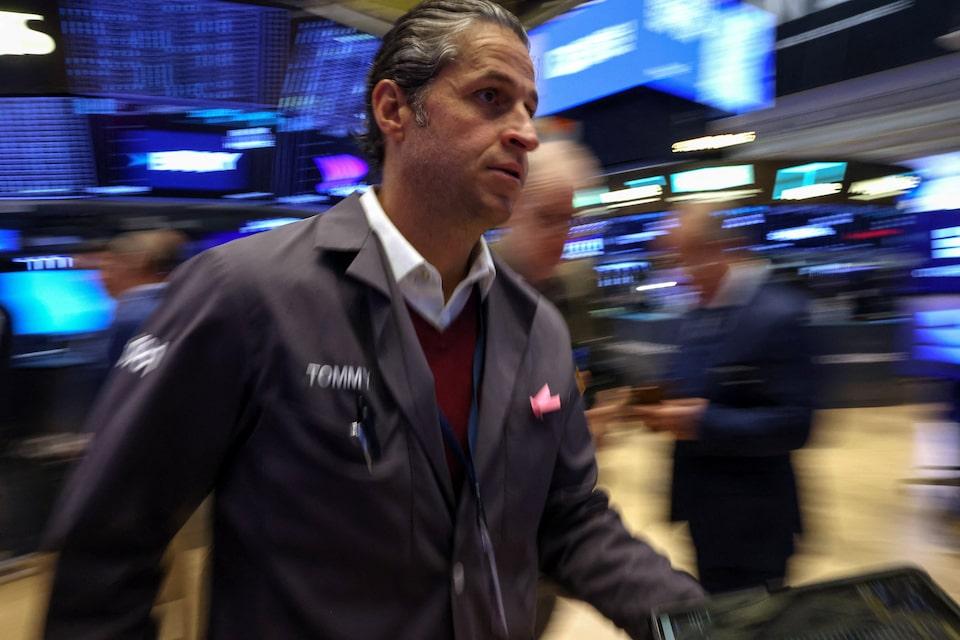
Indexes: Dow down 0.48%, S&P 500 up 0.17%, Nasdaq up 0.46% Kimberly-Clark to acquire Kenvue for more than $40 billion US manufacturing activity contracts in October Fed officials offer conflicting viewpoints regarding a December rate cut NEW YORK, Nov 3 (Reuters) - The S&P 500 and the Nasdaq closed higher on Monday, with artificial intelligence-related deals driving much of the gains even as the Federal Reserve's near-term monetary policy grew increasingly foggy due to scarcity of official U.S. economic data. Tech and tech-related firms helped boost the Nasdaq to the biggest gain. Healthcare companies UnitedHealth Group UNH.N , opens new tab and Merck MRK.N , opens new tab, falling 2.3% and 4.1%, respectively, held the Dow in negative territory. Among the major drivers to the upside, Amazon (AMZN.O) , opens new tab announced it struck a $38 billion deal with OpenAI to allow the ChatGPT maker to run and scale its artificial intelligence workloads on Amazon Web Services' cloud infrastructure. Amazon's stock advanced 4.0%. Nvidia shares (NVDA.O) , opens new tab gained 2.2% after U.S. President Donald Trump said the AI chipmaker's most advanced microchips will be reserved for U.S. companies and kept out of China and other countries. Over the weekend, the White House released details about the agreement reached by U.S. President Donald Trump and Chinese President Xi Jinping to de-escalate the trade war between the world's two biggest economies. "The Amazon deal and other M&A news have boosted the market, and then you know we came into the week after getting marginally positive news over the weekend, both about the China trade situation and some dovish Fedspeak," said Ross Mayfield, investment strategy analyst at Baird in Louisville, Kentucky. "(But) it's definitely a market led by big tech semiconductors and it has been for almost this entire bull market." Kimberly-Clark(KMB.O) , opens new tab shares slid 14.6% after it was revealed the consumer goods company will buy Tylenol maker Kenvue (KVUE.N) , opens new tab for more than $40 billion. Kenvue advanced 12.3%. While official economic data remains scarce amid the ongoing government shutdown, the Institute for Supply Management and S&P Global released their purchasing managers' indexes, which showed U.S. factories continue to grapple with uncertainty stemming from Trump's tariff policies. The U.S. Supreme Court is expected to hear arguments pertaining to the legality of Trump's tariffs on Wednesday. In the wake of last week's expected interest rate cut, the Fed's next move has become increasingly unclear given the lack of economic indicators due to the ongoing government shutdown. Payrolls processor ADP's National Employment index, expected on Wednesday, could shed light on the state of the U.S. labor market. Fed officials offered conflicting viewpoints, with Fed Governor Stephen Miran making the case for additional rate cuts, but Chicago Fed President Austan Goolsbee said he was leery of additional cuts while inflation remains well above the central bank's 2% annual target. The Dow Jones Industrial Average (.DJI) , opens new tab fell 226.19 points, or 0.48%, to 47,336.68, the S&P 500 (.SPX) , opens new tab gained 11.77 points, or 0.17%, to 6,851.97 and the Nasdaq Composite (.IXIC) , opens new tab gained 109.77 points, or 0.46%, to 23,834.72. Of the 11 major sectors in the S&P 500, consumer discretionary (.SPLRCD) , opens new tab enjoyed the largest percentage gains, while materials suffered the biggest decline. Third-quarter earnings season is well underway, with well over 300 of the companies in the S&P 500 having reported. Of those, 83% have beaten analysts' estimates, according to the most recent LSEG data. Declining issues outnumbered advancers by a 1.34-to-1 ratio on the NYSE. There were 202 new highs and 142 new lows on the NYSE. On the Nasdaq, 1,799 stocks rose and 2,887 fell as declining issues outnumbered advancers by a 1.6-to-1 ratio. The S&P 500 posted 16 new 52-week highs and 32 new lows while the Nasdaq Composite recorded 74 new highs and 181 new lows. Volume on U.S. exchanges was 19.62 billion shares, compared with the 21.11 billion average for the full session over the last 20 trading days. https://www.reuters.com/business/sp-500-nasdaq-gain-after-amazon-openai-deal-kenvue-soars-after-buyout-2025-11-03/
2025-11-03 23:38
Nov 3 (Reuters) - Hafnium prices are near record highs in Europe, driven by supply constraints due to China's export controls and booming demand fuelled by AI-led growth in semiconductors and gas turbines. Prices for the metal used in aerospace, nuclear, and computing applications ranged between $6,300 and $7,000 per kg in Rotterdam, nearing the record high of $7,100 reached in 2023, according to information agency Argus. Sign up here. Hafnium, a byproduct of zirconium refining, typically occurs at a ratio of 1 part hafnium to every 50 parts zirconium, making its separation complex and costly. The United States Geological Survey (USGS) listed China, Germany, and the Netherlands as the top exporters of unwrought hafnium in 2024. China tightened export controls on hafnium under revised dual-use regulations in 2024, meaning exporters require more stringent government licensing to ship the material abroad, analysts and traders said. "Latest wave of geopolitical tensions have increased pressure. Very few parties are able to have their licenses granted or get material actually exported," said a minor metal trader, referring to China's tightening grip on hafnium exports. "Companies without a track record of handling dual-use items or prior export licenses are suddenly not being granted them at all," the trader added. China's unwrought hafnium exports plunged from 5,001 kg in January to 499 kg in September, a 90% decline over nine months, according to customs data. Cristina Belda, hafnium pricing specialist at Argus, said demand was rising across multiple sectors for both hafnium metal and hafnium dioxide, particularly for use in semiconductors and memory technologies. "The clamour for hafnium is also being fuelled by demand for gas turbines, particularly for powering AI data centres ... Demand for nuclear power is also expected to increase hafnium usage," Belda added. Hafnium is used in gas turbines to make heat-resistant superalloys, which help power artificial intelligence data centres, and in memory chips, where hafnium oxide enables fast, efficient data storage. It is also valued for its anti-corrosive properties and used to make control rods for nuclear reactors. Market sources highlighted that U.S. hafnium prices were trading even higher, mostly above $7,000 per kg, due to tighter availability. https://www.reuters.com/world/china/hafnium-prices-near-record-highs-europe-china-export-curbs-ai-boom-2025-11-03/

2025-11-03 22:37
HOUSTON, Nov 3 (Reuters) - Executives from the Panama Canal plan to meet shipping companies interested in the construction and operation of two new ports in the waterway's area in early December, and expect to have the companies prequalified in early 2026, the canal's chief Ricaurte Vasquez said in a conference on Monday. Sign up here. https://www.reuters.com/world/americas/panama-canal-complete-prequalification-port-concessions-early-2026-2025-11-03/

2025-11-03 22:07
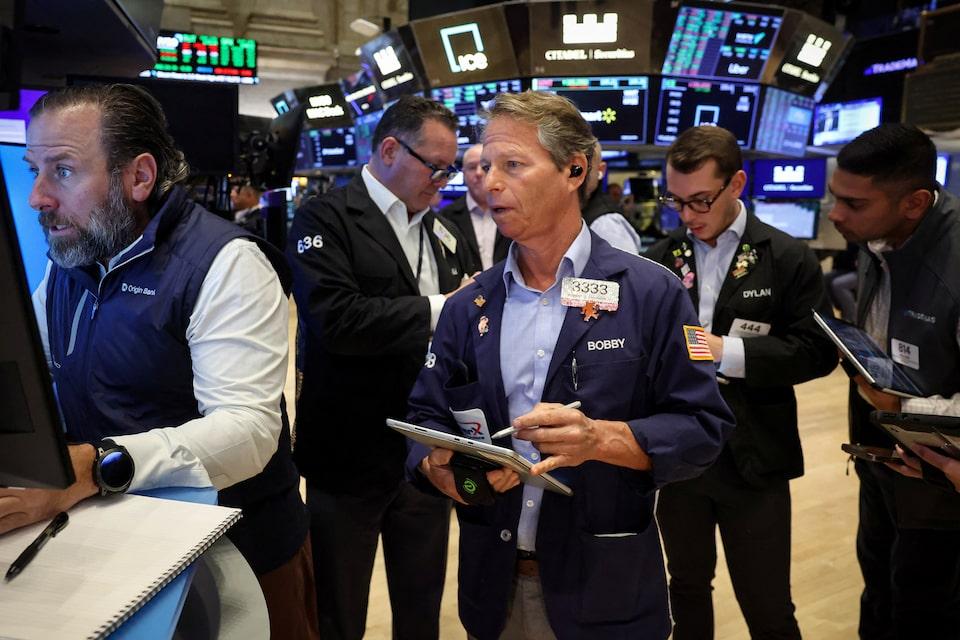
ORLANDO, Florida, Nov 3 (Reuters) - Wall Street was mixed on Monday, with bumper corporate dealmaking activity and another mega AI-related tie-up offset by murky signals around the path for U.S. growth and interest rates, while the dollar crept up to a fresh three-month high. In my column today, I look at whether Big Tech's big spend on AI will generate the big returns investors are clearly hoping for. No one has a crystal ball, of course, but the huge sums being spent mean the bar for decent returns is very high too. Sign up here. If you have more time to read, here are a few articles I recommend to help you make sense of what happened in markets today. Today's Key Market Moves Today's Talking Points * Tech debt In September, Oracle tapped the bond market for $18 billion, last week Meta announced its largest ever bond sale of up to $30 billion, and on Monday Google's owner Alphabet said it is raising debt finance. Media reports put the multi-tranche issue at around $22 billion. Investors are lining up to lend to these tech giants, of course, but the borrowing does raise questions around how much their collective AI capex splurge is eating into cash flows. If Big Tech borrows big in the months ahead, could that affect demand for U.S. Treasury debt? * Do you want to make a deal? Kimberly-Clark is buying Band-Aid maker Kenvue in a deal worth nearly $50 billion, something of a surprise move given the premium paid and some of the controversies and difficulties facing Kenvue. Dealmaking appetite is strong - Wall Street is booming, the Fed is cutting rates, and financial conditions are the loosest in years. Deals targeting U.S.-based companies totaled $1.7 trillion, according to LSEG, up 36% year-on-year and second highest since LSEG records began in 1970. Justified, or is irrational exuberance creeping in? * Fed fissures Uncertainty around the Fed's next step is rising, and understandably so. The U.S. government shutdown is about to extend to a record-matching 35 days on Tuesday, and online betting market Polymarket is predicting it won't end until December 2. No data means very little visibility. Add to that the growing differences between FOMC hawks and doves, and little wonder the probability of a December cut has slumped to 65% from 90% last week. Few would bet against it being closer to a 50-50 call soon. Big Tech, big spend. But big returns? The reaction of most "Magnificent Seven" tech giants' shares to their latest earnings suggests the artificial intelligence boom is far from over. Yet doubts about the future returns from these firms' astronomical AI expenditures are gnawing deeper. The third-quarter earnings season has seen these tech behemoths continue to rake in huge profits and offer sunny guidance. Some investors may baulk at the Mag 7's lofty valuations, but today's tech leaders – unlike the superstar firms of the 1990s dotcom bubble – appear to have sustainable business models. Federal Reserve Chair Jerome Powell reiterated as much last week, saying that their AI investments are a major source of U.S. economic growth. Just four "hyperscalers" alone - Microsoft(MSFT.O) , opens new tab, Amazon (AMZN.O) , opens new tab, Meta (META.O) , opens new tab and Alphabet (GOOGL.O) , opens new tab - are expected to spend a combined $350 billion this year, and Goldman Sachs estimates global AI-related infrastructure spending could reach $4 trillion by 2030. The more these firms splurge on data centers, cloud computing capabilities, and the gamut of AI technologies, the loftier investors' expectations will get. At some point, they will be impossible to meet. The financial benefits and cost savings for society resulting from that are one thing; which companies actually profit is another. It is important, therefore, to distinguish between "value creation" and "value capture". "The value creation is certainly there," says Daniel Keum, associate professor of management at Columbia Business School. "But will that value flow back to the companies that are making these AI investments right now? For me, the clear answer is no." DO THE MATH It's early days in the AI supercycle, but Big Tech's AI outlays are already eating into hyperscalers' cash flows. Torsten Slok, chief economist at Apollo Global Management, estimates that aggregate capex at Amazon, Google, Microsoft, Meta and Oracle as a share of their operating cash flow is now a record 60% – and rising. Amazon reported strong earnings last week, and its stock surged double digits to hit a new high on Friday. But buried in the report was a slide showing that trailing-12-month free cash flow has fallen almost 70% over the last year. Ross Hendricks, analyst at independent research firm Porter & Co, estimates that hyperscalers' free cash flow in the first quarter of next year will be down more than 40% from the same period this year. "The whole sector faces the same basic problem," says Bob Elliott, co-founder of Unlimited Funds. "The math is pretty simple, unless there is a surge in revenues from these activities, Big Tech is going to pump nearly all their free cash flow into capex in just a few years." This creates several potential problems. It intensifies the pressure to generate high returns on these investments, but until those materialize, non-AI-related activities are also under pressure to produce significant returns. And this leaves hyperscalers vulnerable in the event of a sharp economic or market downturn. HIGHER BAR The fate of these megacaps will, of course, have a significant impact on the broader economy, not only because these companies' capex is helping to drive growth but also because almost everyone with a retirement fund is exposed to them. Nvidia's share of the total S&P 500 market cap is a stunning 8%, while that of the "Mag 7" is a record 37%. Investors are well aware of how much these shares have appreciated. The Philadelphia Semiconductor Index has more than doubled from its April low. But expensive markets can always get more expensive. It will take a brave fund manager to tell clients that they're reducing exposure to what have effectively become cash-printing machines. Of course, whether these companies can continue printing money as fast as they're spending it is the big question. For example, Meta's announced capex this year is around $70 billion, but Unlimited Funds' Elliott notes that the company's income is only $3 billion to $5 billion higher, based on underlying trends, than it was before they started spending all this cash. That's a pretty "mediocre" return on investment. Of course, CEO Mark Zuckerberg might argue that this is long-term investment and that not spending now could be more costly down the line if the AI revolution lives up to the hype. But it is unclear how much patience investors will have. Smaller businesses overall seem to be faring better. A Wharton Business School study published last month found that 74% of businesses say generative AI investment is already producing positive returns, especially smaller enterprises in digital-based sectors like tech and finance. "Confidence remains strong ... but future gains must now be justified by clear performance outcomes," the authors said. The bar for Big Tech giants with market caps of trillions of dollars and capex budgets of hundreds of billions is higher though. Much higher. What could move markets tomorrow? Want to receive Trading Day in your inbox every weekday morning? Sign up for my newsletter here. Opinions expressed are those of the author. They do not reflect the views of Reuters News, which, under the Trust Principles , opens new tab, is committed to integrity, independence, and freedom from bias. https://www.reuters.com/world/china/global-markets-trading-day-graphic-2025-11-03/
2025-11-03 21:51
Partial SNAP payments unprecedented in program's 60-year history States may face delays in distributing reduced benefits Democratic-led states and officials push for full SNAP funding Nov 3 (Reuters) - President Donald Trump's administration said on Monday it plans to partially fund November food benefits for millions of Americans, but warned it could take some states weeks or months to calculate and distribute the aid. The administration laid out the Department of Agriculture's plan in a filing , opens new tab in federal court in Rhode Island after a judge ordered it on Friday to use emergency funds to at least partially cover November's Supplemental Nutrition Assistance Program or SNAP benefits. Sign up here. But a USDA official warned in the filing that at least some states, which administer SNAP benefits, would need weeks to months to make system changes that would allow them to calculate and issue the reduced benefits. In the meantime, some states have hurried to pay benefits themselves or buoyed support for food banks. Partial payments are unprecedented in the program's 60-year history, which provides assistance to nearly 42 million low-income Americans. Changes in the system that states need to implement to provide reduced benefits "will take anywhere from a few weeks to up to several months," said the filing from Patrick Penn, deputy under secretary for food, nutrition, and consumer services at the USDA. SNAP benefits, also known as food stamps, lapsed for the first time ever on November 1 during the federal shutdown. CONTINGENCY FUNDS A coalition of Democratic-led states sued the administration last week to draw on contingency funds and other sources of funds to pay for the benefits after the USDA said last month it would suspend SNAP benefits starting November 1. The U.S. Department of Justice said on Monday that the USDA is complying with U.S. District Judge John McConnell's order and "will fulfill its obligation to expend the full amount of SNAP contingency funds today." While the administration said it would fully deplete the $5.25 billion in contingency funds, it would not use other funding that would allow it to fully fund SNAP benefits, which cost $8 billion to $9 billion per month. Separately, the administration on Friday made $450 million in tariff revenue available to fund three weeks of the Special Supplemental Nutrition Program for Women, Infants, and Children, known as WIC, according to federal funding records seen by Reuters on Monday. Penn said in the court filing that the sums required to fully fund SNAP were too large to draw on tariff revenue, some of which is earmarked for other child nutrition programs. Skye Perryman, CEO and president of Democracy Forward, which represented the plaintiffs in the case, said in a statement the group is "considering all legal options to secure payment of full funds." Senator Amy Klobuchar, top Democrat on the Senate Agriculture Committee, also said full benefits should be paid. "It is not enough to do the bare minimum — the administration should stop playing politics with hunger and use all available resources to ensure Americans can put food on the table," Klobuchar said in a statement. The administration said $600 million would be used to fund states' administrative costs in administering SNAP benefits, leaving $4.65 billion to cover 50% of eligible households' current allotments. UNPRECEDENTED PAYMENTS States will need to calculate the partial benefit amount for recipients and then transmit that information to their contracted Electronic Benefit Transfer processor, which then loads SNAP recipients' EBT cards with their benefits. Conduent, an EBT processor that works with 37 states, said it would be able to move quickly once it receives updated benefit information from states. SNAP benefits are paid out monthly to eligible Americans whose income is less than 130% of the federal poverty line, or $1,632 a month for a one-person household and $2,215 for a two-person household in many areas. McConnell and another judge in Boston, U.S. District Judge Indira Talwani, said on Friday the administration had the discretion to also tap a separate fund holding around $23 billion. Penn said in the court filing the agency is carefully considering using those funds but determined they must remain available for child nutrition programs instead of SNAP. STATES STEP IN Alaska and Maryland on Monday joined Vermont, Virginia and a handful of other states that have said they will free up state funds to pay for November SNAP benefits. Alaska Governor Mike Dunleavy issued a state disaster declaration to make funds available to be loaded onto SNAP recipients' EBT cards on a weekly schedule, according to a press release. New Jersey Governor Phil Murphy said members of the state National Guard would be deployed to support food banks with distribution. Other states including Connecticut, New Mexico and West Virginia have said they will send additional money to food banks, which are already under strain as higher food costs strain low-income households. https://www.reuters.com/world/us/trump-administration-use-emergency-funds-pay-partial-food-aid-benefits-2025-11-03/

2025-11-03 21:39
Nov 3 (Reuters) - Oil and gas firm Coterra Energy (CTRA.N) , opens new tab missed Wall Street estimates for third-quarter profit on Monday, as lower oil prices offset a jump in production, but raised its annual production forecast. Shares of the company were down 3% at $23.66 in after-market trading. Sign up here. U.S. President Donald Trump's trade policies fueled uncertainty across the energy industry, as escalating trade tensions threatened to slow global economic growth and weaken energy demand. Crude prices averaged $68.33 per barrel in the July-September quarter, down more than 13% from a year earlier, after OPEC+ accelerated output hikes and raised concerns about oversupply. The Houston-based company reported an average oil price of $64.10 per barrel, down about 13% from a year earlier, whereas production was at 166,800 barrels per day, up about 49% from last year. However, the company raised its full-year production forecast to between 772,000 to 782,000 barrels of oil equivalent per day, on the back of strong natural gas demand. Average natural gas prices rose to $3.25 per million British thermal units in the quarter, up 26% from a year earlier, driven by record power demand. The United States is poised to see a record surge in power demand this year and in 2026, led by data centers' outsized energy needs, the U.S. Energy Information Administration estimates. The company's adjusted profit was 41 cents per share for the three months ended September 30, compared with the analysts' average estimate of 44 cents per share, according to data compiled by LSEG. https://www.reuters.com/business/energy/coterra-energy-misses-third-quarter-profit-estimates-2025-11-03/