2025-11-01 10:06
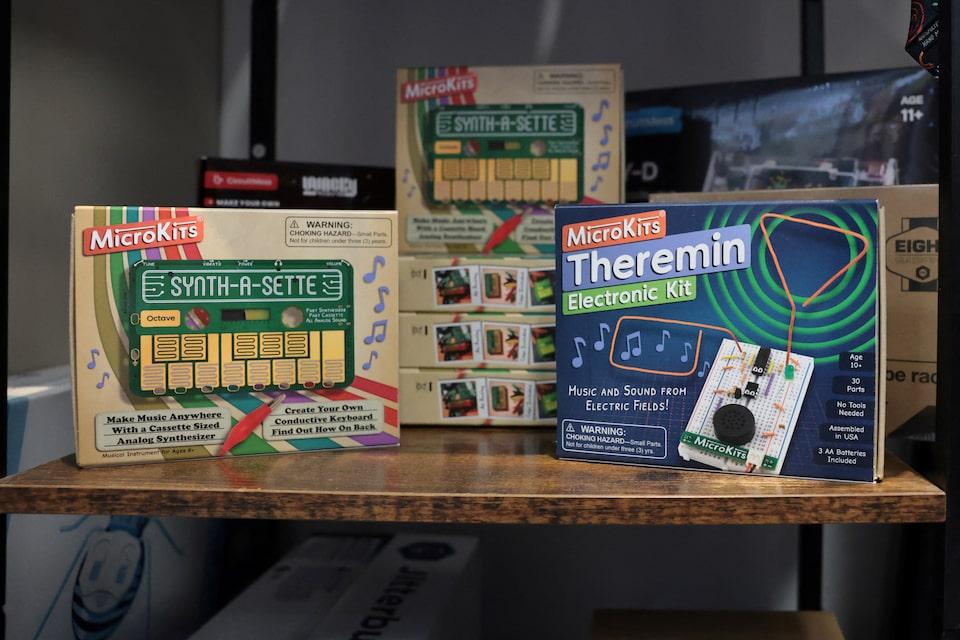
Supreme Court to hear tariffs arguments on Wednesday Trump invoked emergency powers in imposing tariffs Plaintiffs accused Trump of exceeding his authority WASHINGTON, Nov 1 (Reuters) - Within days of Donald Trump announcing his sweeping "Liberation Day" tariffs in April, Rick Woldenberg was looking for a law firm to help him sue the U.S. president. "I'm not willing to allow politicians to destroy what we have built up over generations," said Woldenberg, CEO of educational toy company Learning Resources, a family business in the Chicago suburbs founded by his mother. Sign up here. Woldenberg, along with attorneys at the Akin Gump firm, will be at the U.S. Supreme Court on Wednesday to attempt to secure a historic victory. The nine justices will be hearing arguments in the case called Learning Resources v. Trump, along with two related cases in which plaintiffs also argue that the Republican president's tariffs are unlawful. One of the related cases was filed by Oregon and other Democratic-led states. The other was brought by the Liberty Justice Center, a libertarian nonprofit, on behalf of five small businesses, including a wine distributor called V.O.S. Selections and another educational toy company called MicroKits. While the court typically takes months to issue rulings after hearing arguments, the Trump administration has asked it to act swiftly in this case. LARGE COMPANIES ON THE SIDELINES Large U.S. companies have stayed on the sidelines of the tariffs litigation. They did not bring lawsuits and have not filed amicus - or friend-of-the-court - briefs offering their views. Such briefs are commonly used by companies to highlight the importance of cases brought by other litigants. By contrast, about a dozen small businesses have agreed to serve as plaintiffs in a batch of separate lawsuits brought by nonprofits challenging the tariffs that are still playing out in lower courts, in addition to the businesses involved in the Supreme Court litigation. And another 700 signed onto an amicus brief filed by We Pay The Tariffs, an advocacy group, against Trump's action. Trump's tariffs have hit small- and medium-sized businesses particularly hard because they "don't have the same flexibility as large companies to manage the impact," said John Horn, a professor at the Olin Business School at Washington University in St. Louis. Large companies have more cash on hand, Horn said, so they were better able to stock up on inventory before the tariffs took effect. They can also better manage prices and supply chains, Horn added. One reason large companies are not suing to challenge Trump's tariffs is that they are more focused on lobbying efforts, Horn said. "Large businesses have the flexibility of lobbying the government for exemptions," Horn said. "Small businesses don't have that." Woldenberg said his legal bills have been in the millions of dollars, but he felt suing was a necessary cost. "This is certainly not for everyone," Woldenberg said of his legal advocacy. "Hundreds of thousands of businesses in the United States are similarly situated to ours, but to my knowledge I'm the only person in the United States - a country of 300 million people - who has chosen to sue on their own resources." 'CAN'T PLAN AHEAD' At issue before the Supreme Court on Wednesday are tariffs Trump imposed using the International Emergency Economic Powers Act of 1977, or IEEPA. These tariffs thus far have netted about $100 billion for U.S. coffers. This law was meant for use during national emergencies. Trump deemed the U.S. trade deficit a national emergency even though the United States has run trade deficits every year since 1975. On April 2, as part of his "Liberation Day" announcement, Trump imposed a baseline tariff of 10% on virtually all countries, with higher tariffs - anywhere from 11% to 50% - on dozens of countries. The lawsuits before the Supreme Court argue that Congress did not intend for IEEPA to authorize presidents to impose tariffs. Three lower courts have ruled against Trump's tariffs, saying they exceeded his lawful authority under IEEPA. The IEEPA tariffs are paid by U.S. importers like Learning Resources, which manufactures most of its educational toys in Asia. In his inauguration speech in January, Trump said tariffs will allow the United States to become a "manufacturing nation once again." Importers have said they want to move manufacturing to the United States, but the parts and services they need are unavailable or prohibitively expensive. CUTTING BACK In response to Trump's tariffs, Learning Resources cut back expansion plans to keep more cash on hand, Woldenberg said. Woldenberg canceled a building project that would have added 600,000 square feet (55,700 square meters) of warehouse and office space for the 500 employees of Learning Resources and a related toy company, hand2mind, that he runs. Woldenberg also abandoned plans to hire about 30 more employees in 2025, and cut back on other expenditures like marketing and training for workers. When Trump's tariffs hit, "I predicted we'd be smaller and make less money," Woldenberg said. "And both of those things are true." Woldenberg's frustrations are shared by David Levi, founder of MicroKits, a smaller toy company in Charlottesville, Virginia, that serves as a plaintiff in the parallel case at the Supreme Court. MicroKits sells electronic instruments, including a synthesizer called the Synth-a-Sette that teaches children about conductivity. Levi imports small electronic parts, mostly from China, then assembles his products in Virginia along with the help of a part-time employee. Levi said that, when Trump's tariffs on Chinese imports spiked above 100% this spring, he temporarily stopped importing and slowed down production so he would still have work for his part-time employee. Levi reduced the employee's weekly schedule from 25 hours to 15 hours, and assembled thousands of fewer toys than anticipated. MicroKits, which Levi founded in 2020 after working at large toy companies Hasbro and Mattel, was growing 30% a year and was aiming to hit $1 million in revenue in 2025. Instead, because of the tariffs, revenue will be around $400,000 this year. Levi said consumer-grade electrical clips he needs for his products are not being manufactured in the United States in any meaningful way. Domestically made clips are designed for aerospace and medical uses and would cost at least 10 times more than consumer-grade ones from Asia, Levi said. Levi expected to pay tariffs and other taxes when he founded MicroKits, but was not prepared for the constant uncertainty caused by the Trump administration adjusting tariff rates with little public notice. "In a world where tariffs can go above 100% and then back down again, you're just trying to guess what happens next and can't plan ahead," Levi said. 'OVERWHELMING RESPONSE' Levi said he came across a webpage where Liberty Justice Center was encouraging businesses to join its lawsuit. The public interest law firm is representing him and four other businesses at no cost. "After we issued a public call for plaintiffs, we received an overwhelming response from small businesses nationwide," said Jeffrey Schwab, a lawyer at Liberty Justice Center. "Our team spoke with dozens of owners and selected five whose experiences best illustrate the broad harms caused by the tariffs and who were prepared to accept the responsibilities and public attention of litigation." Victor Schwartz is the founder and president of Manhattan-based wine distributor V.O.S. Selections, one of those five. Schwartz said he felt a "moral imperative" to challenge Trump's tariffs, which he said have cost his company about $200,000. The tariffs have hit wine importers particularly hard as they contend with inflation, a weakening dollar and declining U.S. alcohol consumption. "I was shocked that those with much more power and money did not step up," Schwartz said. https://www.reuters.com/world/us/toy-maker-takes-his-case-against-trumps-tariffs-supreme-court-2025-11-01/
2025-11-01 10:03
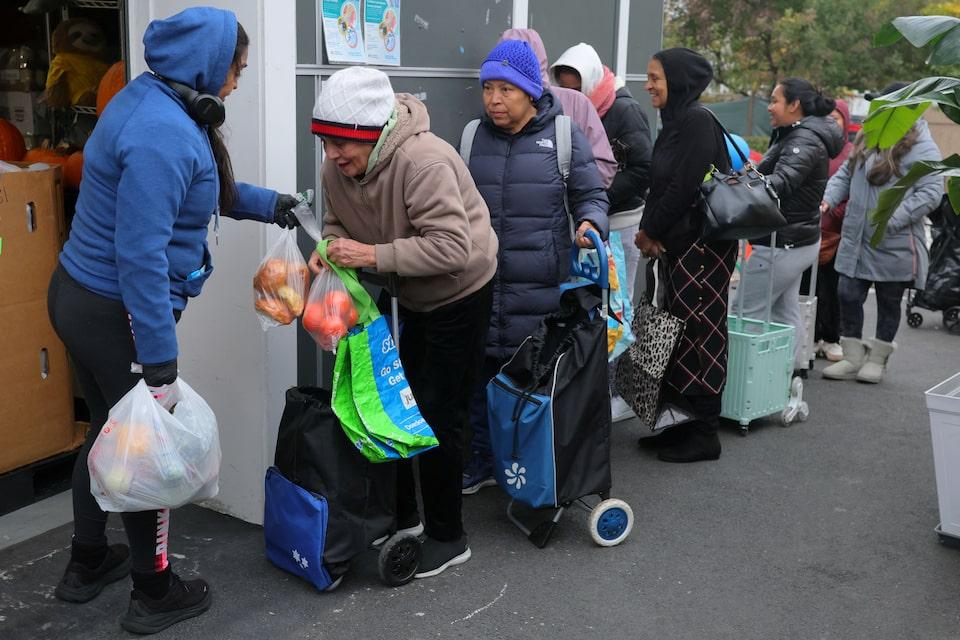
WASHINGTON, Nov 1 (Reuters) - For Roma Hammonds, of Chattanooga, Tennessee, food stamps have been a lifeline since taking custody of her grandchildren five years ago. Hammonds, 60, who cannot work because of a physical disability, has relied on her $563 in monthly Supplemental Nutrition Assistance Program benefits to feed her family of four and to afford other bills like rent, she said. Sign up here. But her November benefits may not be issued by the U.S. government due to the ongoing federal shutdown, and Tennessee is among the vast majority of states that have said they cannot pay for the aid themselves. "I don’t know what I’ll do," Hammonds said. Hammonds is one of the roughly 41 million SNAP recipients wading into a potential historic lapse on Saturday of the 60-year-old food aid program, which sends roughly $8 billion each month to low-income Americans in every state. Neither Congress nor the administration of President Donald Trump has acted to fund benefits. Two federal judges on Friday ruled that the administration cannot block November SNAP benefits and must use about $5 billion in agency contingency funds to pay for them, requiring updates by Monday on compliance with their rulings. The U.S. Department of Agriculture did not respond to questions about how it will react to the ruling or share any details of a plan to pay benefits. In the meantime, just five states, Delaware, New Mexico, Louisiana, Virginia and Vermont, and the District of Columbia have said they will pay for some or all of the November food aid, according to a Reuters review of state websites and public statements. The rest have said they will not pay for the benefits due to technical or cost barriers, or provided no explanation. The USDA said in an October 24 memo that it will not reimburse states if they cover the cost of benefits. Most states balance their budgets annually or biennially, and the increased uncertainty of federal funding for healthcare, education and other key resources has added layers of risk to state finances, according to the Pew Charitable Trusts. "Every year we have significant budget shortfalls and are working to balance the budget," said Christine Woody, food security policy manager at Empower Missouri, a social justice organization. "We don’t have $130 million to put towards this without any assurance." A USDA spokesperson called the shutdown an "inflection point for Senate Democrats." The agency has repeatedly blamed the aid lapse on Democrats, most of whom have withheld their votes on a spending bill in an effort to keep healthcare costs from spiking for many Americans. Democrats have criticized the USDA for not using agency contingency funds to partially fund the November benefits. MULTI-MILLION-DOLLAR GAPS States receive huge monthly sums from the federal government for SNAP benefits, ranging from $4.9 million for Wyoming to more than $1 billion for California, according to USDA data. To distribute those benefits, states contract with third-party processors who add the money to recipients' Electronic Benefit Transfer cards. Some states have said they cannot make the technical changes needed to get money to recipients themselves. "Tennessee is unable to utilize state dollars to provide the benefit, as states do not have a mechanism to load benefits onto customer cards," said Governor Bill Lee in an October 24 statement. Others said the sums are simply too large to accommodate. "SNAP brings in more than $210 million monthly in federal funding. The state budget cannot absorb even one month of federal failure," said a notice on the Massachusetts Department of Transitional Assistance website. Virginia is drawing on a budget surplus for its stop-gap program that will issue weekly benefits through at least November, Governor Glenn Youngkin said this week. Virginia SNAP benefits cost about $143 million per month, according to USDA data. Delaware on Wednesday said it would fund week-by-week benefits through November if needed. Louisiana, Vermont and New Mexico are making funds available for partial benefits. Some states, including Connecticut, New Mexico and West Virginia, have said they will send additional money to food banks. Food banks are already under strain from rising U.S. hunger rates and have said they are unlikely to be able to meet surging demand during the benefit lapse. Many states encouraged SNAP recipients to budget and visit food pantries, and others to donate time and money during the benefit lapse. "Let’s do everything we can to support one another so that no family goes hungry," said the Arkansas Department of Human Services website. BIPARTISAN BLAME Some Democratic-led states have blamed the Trump administration for the lapse, while some Republican-led states blamed Democrats in Congress. North Carolina Governor Josh Stein, a Democrat, said the administration is at fault because of its decision not to use the emergency funds. "The administration’s refusal to use these available funds as temperatures cool and the Thanksgiving holiday approaches is a cruel abdication of the responsibility to support families and communities," Stein said in an October 27 statement. The website of Louisiana Governor Jeff Landry, a Republican, blamed Democratic Senators for withholding their votes on a spending bill. "Our U.S. Senators representing Louisiana have voted over and over again to re-open the government. They are doing their part. Now it is time for those U.S. Senators, voting under Democrat Senate Leader Chuck Schumer, to vote yes and re-open the federal government," the website said. Thirteen Senate votes to fund the government have failed. https://www.reuters.com/world/us/us-federal-food-aid-lapses-most-states-unable-fill-void-2025-11-01/
2025-11-01 08:33
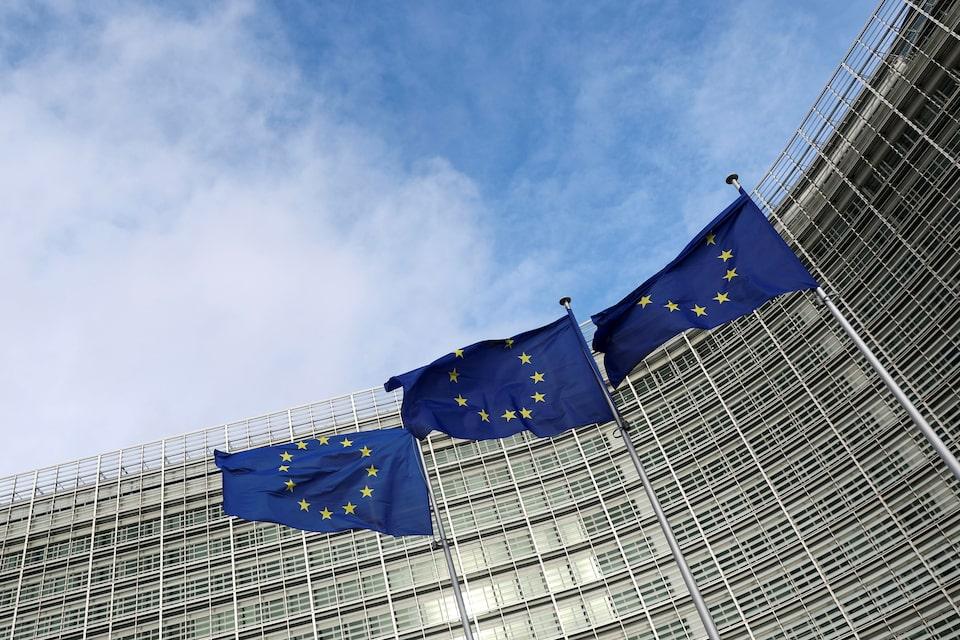
BRUSSELS, Nov 1 (Reuters) - The European Union and China will continue to engage on export control policies, the European Commission's trade chief said on Saturday, a day after EU and Chinese officials met in Brussels. The officials held talks in a bid to smooth trade tensions, notably over China's expansion of its controls over rare earth exports. Beijing has now agreed to pause that expansion for a year. Sign up here. "China confirmed that the suspension of the October export controls applies to the EU. Both sides reaffirmed commitment to continue engagement on improving the implementation of export control policies," EU Trade Commissioner Maros Sefcovic said in a post on X. The two sides were also expected to discuss Nexperia, the Chinese-owned computer chipmaker that the Dutch government took control of last month, in a tussle that threatens to disrupt the supply of semiconductors to European carmakers. https://www.reuters.com/world/china/eu-china-continue-engagement-export-controls-eu-says-2025-11-01/
2025-11-01 07:21
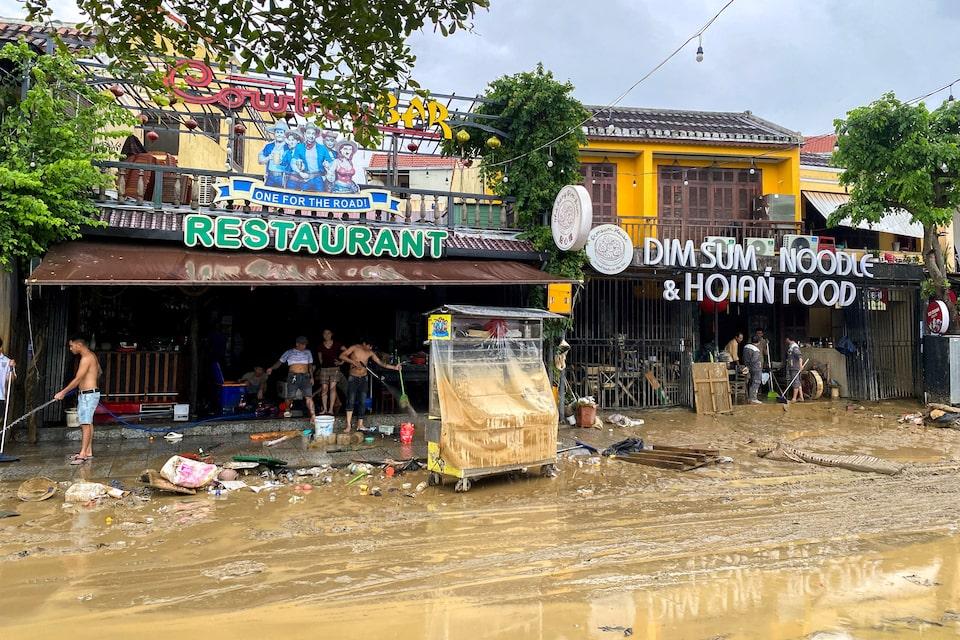
HOI AN, Vietnam, Nov 1 (Reuters) - Residents of Vietnam's UNESCO-listed ancient town of Hoi An began cleaning up on Saturday as floodwaters receded after days of torrential rain that caused deadly flooding and widespread damage across the central region. The deluge swamped Hoi An's lantern-lit streets and centuries-old wooden houses, with residents saying they had never experienced flooding of this scale before. Sign up here. As the water subsided, shop owners and residents cleared thick mud from storefronts, repaired furniture, and worked to restore power in hopes of reopening soon to welcome back tourists. "Everything was swept away by the floodwaters, causing significant damage," said Dang Quoc Dat, a 40-year-old restaurant owner. "What is left was broken furniture that would need to be replaced... but I'm determined to overcome this challenge alongside other business owners in the town," Dat added. The central region, battered by heavy rains this week, saw flash floods and landslides that killed at least 29 people and left five missing, according to Vietnam's disaster agency. Over 22,000 houses remain submerged, and nearly 100,000 residents are still experiencing power outages, it said. Vietnam, prone to deadly storms and flooding during its storm season from June to October, has yet to release official estimates of financial damage. Small shop owners reported losses amounting to hundreds of millions of dong. "We have to keep trying, this is our livelihood. Giving up now just isn't an option," said Dao Thi Diu, a 38-year-old painting store owner. Authorities warned that heavy rain is expected to continue in central Vietnam, with some areas forecast to receive over 700 millimetres, potentially causing river levels to rise and triggering renewed flooding. https://www.reuters.com/business/environment/vietnams-ancient-town-hoi-an-works-restore-tourism-after-devastating-floods-2025-11-01/
2025-10-31 23:49
Oct 31 (Reuters) - Ukraine's Foreign Ministry denounced on Friday what it described as Russian attacks on substations critical to supplying external power for Ukraine's nuclear power stations. Russia has carried out "targeted strikes on such substations", a ministry statement issued late on Friday said. Sign up here. "Deliberate strikes on civilian energy facilities that directly affect the safe operation of nuclear installations bear the hallmarks of nuclear terrorism and constitute a grave violation of international humanitarian law," it added. The ministry referred to a statement issued on Thursday by the U.N. nuclear watchdog, the International Atomic Energy Agency, reporting military activity "that has led to damage to substations critical to nuclear safety and security in Ukraine". The IAEA statement reported incidents near two nuclear plants - South Ukraine and Khmelnitskyi - that led to each plant losing access to an external power line. A third station at Rivne had been forced to reduce power at two of its four reactors, the IAEA statement adds. It gave no indication of which side might have been behind the incidents. Russia and Ukraine regularly accuse each other of engaging in military activity that compromises safety at Ukraine's four working nuclear plants, particularly the Zaporizhzhia station. Russian forces seized the Zaporizhzhia plant, Europe's largest with six reactors, in the early weeks of the February 2022 invasion of Ukraine. The IAEA statement referred to continuing efforts to reconnect the second of two external power lines to the Zaporizhzhia plant, vital to keep nuclear fuel cool and guard against meltdowns. The plant generates no power at the moment. There was no Russian reaction to the IAEA or the Ukrainian statements. Both external links to the Zaporizhzhia plant were down for about 30 days in September and October, forcing officials to rely on emergency diesel generators. Kyiv and Moscow accused each other of causing the outage and disrupting efforts to fix it. https://www.reuters.com/business/energy/ukraine-denounces-attacks-power-substations-vital-nuclear-plants-2025-10-31/

2025-10-31 23:41
SYDNEY, Nov 1 (Reuters) - Australia said on Saturday it signed an agreement with Canada to promote and strengthen bilateral cooperation and trade on critical minerals at the Group of Seven meeting of energy and environment ministers in Toronto. Resources Minister Madeleine King said she and Canadian counterpart Tim Hodgson signed the joint declaration of intent on critical minerals collaboration, aimed at deepening the countries' partnership on critical minerals. Sign up here. G7 countries, except Japan, are heavily or exclusively reliant on China for a range of materials from rare earth magnets to battery metals. Canada this week said it wanted to focus on working with G7 partners to secure critical mineral supply deals while hosting the two-day meeting. “I look forward to working with Canada to build resilient supply chains that support innovation and economic growth," King said in a statement. The agreement comes after Prime Minister Anthony Albanese in September met his Canadian counterpart in the United Kingdom for talks, including on critical minerals, according to government statements. Australia and the U.S. last month agreed a wide-ranging critical minerals deal aimed at countering China's dominance in the sector. https://www.reuters.com/world/china/australia-canada-sign-deal-promote-strengthen-critical-minerals-cooperation-2025-10-31/