2025-10-30 21:05
ORLANDO, Florida, Oct 30 (Reuters) - Tech shares on Wall Street took a beating on Thursday after some megacap earnings reports, while the dollar and U.S. bond yields rose further following the Fed's "hawkish" rate cut as investors also digested the outcome of the U.S.-China leaders' summit. In my column today, I consider one overlooked reason why the Fed may not cut rates again in December. If cheaper credit is aimed at supporting the labor market, and the labor market is softening due to supply rather than demand issues, then rate cuts won't work. Sign up here. If you have more time to read, here are a few articles I recommend to help you make sense of what happened in markets today. Today's Key Market Moves Today's Talking Points * Trump-Xi meeting reality U.S. President Donald Trump said his 100-minute meeting with Chinese counterpart Xi Jinping was a "12" out of 10 score. But with little being announced that wasn't flagged in advance or generally expected, the reality may be rather less rosy. Underwhelming, even. The "truce" does de-escalate tensions for now and buys time for further talks on a more lasting deal. But Eurizon's Stephen Jen sums up the bigger picture well: "Make no mistake, the two countries are drifting apart and are frantically building their own autonomous economic ecosystems." * Monitoring U.S. money markets The Fed has said its QT program will end on December 1, as scrutiny intensifies on money market liquidity, the plumbing of the financial system - interbank rates, repo, bank reserves - and the Fed's ability to keep the policy rate within its target range. Bank reserves are declining and the "SOFR" overnight rate has spiked above the upper limit of the Fed's target range, indicating that money market liquidity is tightening. Keen to avoid a repeat of the late 2019 liquidity crunch, the Fed could be ready to provide liquidity as and when and how it sees fit. * Big Tech and the pAIn trade With Apple and Amazon releasing earnings after the bell on Thursday, six of the "Magnificent Seven" U.S. tech megacaps have now reported. Nvidia, which this week became the world's first $5 trillion company, will report in three weeks. It's a mixed picture so far, with investors desperately seeking a clearer sense of how the massive - and still growing - capex binge around artificial intelligence will boost future earnings. Is Meta's 11% slump on Thursday a warning that the extraordinary AI-led boom may be about to lose steam? The cuts don't work - why the Fed may pause in December Federal Reserve Chair Jerome Powell surprised many market-watchers on Wednesday when he declared that another interest rate cut in December was not a slam dunk. Perhaps even more surprising was his apparent suggestion that if boosting the labor market is the goal, rate cuts might not be that useful. In the press conference after the central bank lowered its fed funds policy target range by 25 basis points, Powell cited several reasons why a similar move in December is "far from" a done deal. These included "strongly different" views among rate-setters, limited data visibility due to the government shutdown, above-target inflation, and doubts about how quickly the labor market is slowing. He also noted that policy may be close to neutral after 150 basis points of easing. But perhaps the most telling reason was the most simple: cutting rates won't work. At least, doing so won't address the current problem, which is supporting the softening labor market. Alluding to this, Powell admitted that the job market is weakening primarily because of shrinking labor supply rather than cooling demand for workers. But lower borrowing costs are designed to boost demand for workers. If the job market's problems are "mostly" a function of labor supply, as Powell said, then cutting interest rates is akin to pushing on a string. "So the question then is what does our tool do, which supports demand? Some people argue that this is supply, and we really can't affect it much with our tools. But others argue, as I do, that ... we should use our tools to support the labor market when we see this happening," Powell told reporters. "It's a complicated situation." 'K-SHAPED' ECONOMY The current U.S. economic picture is indeed complicated. Job growth has slowed in the U.S. over the past year, but this has been offset by a steep decline in the number of people looking for work. That's a result of the tighter immigration controls, increased deportations, and both young people and retirees leaving the labor force. In the last official monthly jobs report, which was for August, the unemployment rate climbed to a four-year high of 4.3%. But that's only one tenth of a percentage point up on the previous year, and is still ultra-low by historical standards. Powell also said there's no evidence of a worrisome deterioration in the broader labor market, though the recent announcement of some high-profile corporate layoffs may suggest otherwise. At the same time, economic indicators such as business investment and retail sales still appear fairly healthy. Both are strongly linked to the booming stock market - big companies' rising share price and profits fund their capex, and the asset-owning top 10% continue to drive around half of all U.S. consumer spending. What we appear to see taking shape is a so-called 'K-shaped' economy: the rich are getting richer from the asset price boom, while the rest are struggling. This curious balance is new for the Fed and a tricky one to navigate, especially with the government shutdown reducing visibility even further. Just as the Fed's blunt interest rate tool doesn't fix supply-side issues in the jobs market, it may not do much to support lower-income households and individuals either, even though ensuring a stronger labor market is the "best thing" the Fed can do for the American people. Cheaper money is also likely to benefit the richest cohorts by inflating asset prices even more, which may also push already lofty valuations to unsustainable levels. Six weeks is a long way off, but a third successive rate cut in December is suddenly in the balance. If the subtext of Powell's press conference is anything to go by, that may be for the best. What could move markets tomorrow? Want to receive Trading Day in your inbox every weekday morning? Sign up for my newsletter here. Opinions expressed are those of the author. They do not reflect the views of Reuters News, which, under the Trust Principles , opens new tab, is committed to integrity, independence, and freedom from bias. https://www.reuters.com/world/china/global-markets-trading-day-graphic-2025-10-30/
2025-10-30 20:59
China also to buy 25 million tons annually over next three years, Bessent says Other SE Asia nations to buy 19 million tons of US soybeans CBOT soybeans reverse earlier losses to trade higher Deal returns Chinese demand to level of recent years, analyst says CHICAGO, Oct 30 (Reuters) - U.S. Treasury Secretary Scott Bessent said on Thursday that China has agreed to buy 12 million metric tons of American soybeans during the current season through January, down from 22.5 million tons in the prior season after a months-long tariff battle halted all purchases of the current U.S. harvest. China also committed to buying 25 million tons annually for the next three years as part of a larger trade agreement with Beijing, Bessent said, following a meeting between U.S. President Donald Trump and Chinese President Xi Jinping in South Korea. Sign up here. The drop in Chinese demand cost U.S. farmers - a key pillar of Trump's political base - billions of dollars in lost sales and the deal would represent a return to normalcy in trade with the top U.S. soy importer, which averaged purchases of 28.8 million tons over the past five September-to-August crop seasons. "Our great soybean farmers, who the Chinese used as political pawns - that's off the table, and they should prosper in the years to come," Bessent told Fox Business Network's "Mornings with Maria" program. The agreement negotiated in Malaysia over the weekend could be signed as soon as next week, he said. Bessent said other countries in Southeast Asia have agreed to buy another 19 million tons of U.S. soybeans, but did not specify a timeframe for those purchases or the nations involved. Asian importers other than China have imported between 8 million and 10 million tons annually in recent years, according to U.S. Census Bureau trade data. The most-active soybean contract on the Chicago Board of Trade reversed losses and closed 1.2% higher at a 15-month high of $11.07-3/4 per bushel. U.S. soybean export prices jumped by $20 to $30 per metric ton this week as exporters anticipated the Trump-Xi meeting would spark fresh demand. Three , or about 180,000 tons, were sold to Chinese state-owned importer COFCO on the eve of the summit. "These (Chinese purchase agreements) are not numbers that are unattainable, but they're also not numbers that are really supporting the idea of expansion for our U.S. soybean export program," said Ted Seifried, chief market strategist for Zaner Ag Hedge. RELIEF IN THE U.S. FARM BELT U.S. farm groups cheered the agreements after Trump's bruising trade war eroded soy exports valued at $24.5 billion last year. Growers have nearly finished harvesting what is expected to be the fifth-largest U.S. crop on record. The lack of Chinese demand has squeezed U.S. farm incomes as crop prices hovered near multi-year lows for months amid rising costs for fertilizer, seeds, labour and equipment. "This is a meaningful step forward to reestablishing a stable, long-term trading relationship that delivers results for farm families and future generations," said American Soybean Association President and Kentucky farmer Caleb Ragland. The agreement with China came after Trump secured agricultural trade deals or framework agreements with other Asian nations. "Expanding markets and restoring purchases by China will provide some certainty for farmers who are struggling just to hold on," said American Farm Bureau Federation President Zippy Duvall. CHINA DIVERSIFYING SOYBEAN PURCHASES Trump wrote in a social media post overnight after his meeting with Xi that the Chinese leader had authorized China to begin the purchase of massive amounts of soybeans, sorghum and other farm products. U.S. Agriculture Secretary Brooke Rollins applauded Trump's comments on soybeans and sorghum in a post on X. But Even Rogers Pay, director at Beijing-based Trivium China, said the agreement effectively constituted a return to business as usual in terms of U.S. soybean exports to China. "It targets a level of trade that has been pretty consistent with the past few years," she said. Johnny Xiang, founder of Beijing-based AgRadar Consulting, said commercial buyers were still awaiting details such as whether China would reduce the tariff on U.S. soybeans from 20% to 10%, or remove it entirely. "If the tariff is not completely lifted, commercial buyers will have little incentive to purchase U.S. soybeans," he said. China, the world's biggest soybean buyer and the top market for U.S. farmers, had turned its vast appetite for U.S. crops into a powerful trade war bargaining chip. Facing import duties of 23% on soybeans after rounds of tit-for-tat tariffs, Chinese buyers largely shunned the U.S. autumn harvest, turning instead to South American supplies. Since the trade war of the first Trump administration, China has diversified its sources of soybean imports. In 2024, China bought roughly 20% of its soybeans from the United States, down from 41% in 2016, customs data shows. https://www.reuters.com/world/china/china-buy-12-million-metric-tons-soybeans-this-season-bessent-says-2025-10-30/

2025-10-30 20:56
CALGARY, Oct 30 (Reuters) - The U.S. Army Corps of Engineers has granted approval to Canadian company Enbridge (ENB.TO) , opens new tab for its plan to reroute a section of its Line 5 oil pipeline around a Wisconsin tribal reservation. The Army Corps, a federal engineering service, issued a permit Wednesday for Enbridge to build a new 41-mile segment of pipeline around the Bad River Reservation, to replace an existing section that currently crosses tribal territory. Sign up here. The Bad River Band filed a lawsuit in 2019 aimed at getting the pipeline off its land, citing concerns about treaty rights and the risk a potential oil spill would pose to Indigenous people and the environment. Enbridge submitted permit applications to state and federal regulators in 2020 for the Wisconsin relocation project. The permit issued Wednesday is a major project milestone, an Enbridge spokeswoman said, though construction cannot begin until multiple state permits issued last year are confirmed. Opponents of Line 5, including environmental organizations, have been contesting those permits, arguing Enbridge's plans do not properly protect Wisconsin's waterways. Enbridge said Thursday it is confident state permits will soon be confirmed. Enbridge's Line 5 is a 645-mile oil pipeline constructed in 1953 that carries oil from Superior, Wisconsin, through Michigan and into Ontario, Canada. In addition to its plan to reroute a section of the pipeline in Wisconsin, the company is planning to build a roughly 4-mile tunnel to house the aging section of pipeline that crosses through the Straits of Mackinac in the Great Lakes. Michigan regulators had approved Enbridge's application to build the $750-million tunnel under the Great Lakes to house its aging Line 5 oil pipeline in 2023, but the project still awaits Army Corps permitting. The Army Corps said earlier this year it plans to issue that decision this fall. https://www.reuters.com/business/energy/us-army-corps-approves-enbridges-line-5-reroute-wisconsin-2025-10-30/
2025-10-30 20:54
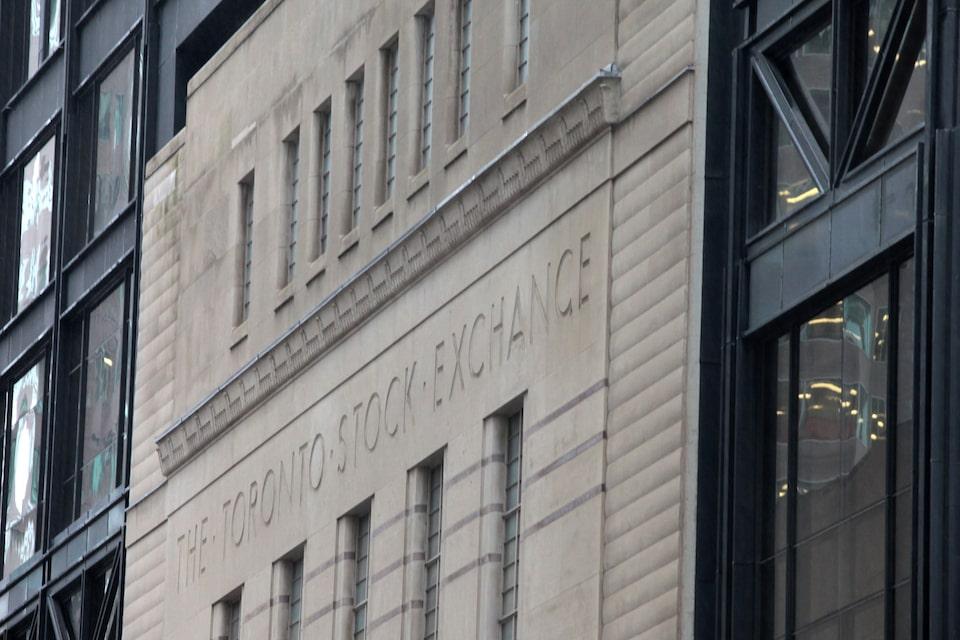
TSX ends up 0.1% at 30,178.98 Materials group adds 1.7% as gold rallies Bausch Health shares jump 12.5 % Energy dips 0.4% TORONTO, Oct 30 (Reuters) - Canada's main stock index edged up on Thursday as higher gold prices boosted metal-mining shares and investors took stock of the Bank of Canada's move to cut interest rates to a three-year low. The S&P/TSX composite index (.GSPTSE) , opens new tab ended up 34.20 points, or 0.1%, at 30,178.98, putting the index on track for a monthly gain of 0.5%. It would be the sixth straight monthly advance, which is a streak last achieved in 2021. Sign up here. On Wednesday, the BoC reduced its benchmark interest rate by a quarter of a percentage point to 2.25%. "The bank's move signals a pivot from fighting inflation to supporting a struggling economy," said Victor Kuntzevitsky, a portfolio manager at Stonehaven, Wellington-Altus Private Counsel. "It reinforces the lower-for-longer rate environment which has implications for everything from bank margins to dividend-paying utilities." Lower interest rates reduce the income banks earn from floating-rate loans while they potentially increase the attractiveness of utilities to income-seeking investors. The materials group (.GSPTTMT) , opens new tab, which includes metal-mining shares, climbed 1.7%, as the price of gold increased 2.4%, moving back above $4,000 an ounce. "Global demand for gold continues to be driven by central bank demand, especially the Chinese central bank," Kuntzevitsky said. "We haven't yet seen inflows from retail investors and we think that the next wave in gold appreciation will come from retail investors." Healthcare (.GSPTTHC) , opens new tab was another bright spot, adding 1.5%. Shares of drugmaker Bausch Health Companies (BHC.TO) , opens new tab jumped 12.5% after the company raised its full-year 2025 revenue outlook. Canadian National Railway (CNR.TO) , opens new tab has laid off about 400 managers at its rail offices across Canada and the United States amid a freight downturn due to the trade war, the Globe and Mail reported. The company's shares ended 0.5% higher. Energy (.SPTTEN) , opens new tab was a drag, dipping 0.4%, and heavily weighted financials (.SPTTFS) , opens new tab ended 0.1% lower. https://www.reuters.com/business/tsx-futures-steady-markets-assess-us-china-trade-deal-2025-10-30/
2025-10-30 20:41
Oct 30 (Reuters) - Coinbase Global (COIN.O) , opens new tab beat analysts' estimates for third-quarter profit on Thursday, as heightened volatility in digital assets boosted trading volumes at the cryptocurrency exchange, sending its shares up more than 3% after the bell. Digital assets rallied in July as crypto-friendly policies by U.S. President Donald Trump attracted institutional investor interest, catapulting bitcoin, the world's largest cryptocurrency, to new peaks. Sign up here. However, weak economic data in the following month sparked recession fears, triggering a sector-wide selloff as investors moved to liquidate riskier assets. Cryptocurrency exchanges often benefit from volatility in the sector as they earn more through transactions with investors seeking to hedge their portfolios. Coinbase's transaction revenue rose to $1.05 billion during the quarter, from $572.5 million a year ago. The company reported a net income of $432.6 million, or $1.50 per share, for the three months ended September 30, compared with $75.5 million, or 28 cents per share, a year earlier. Analysts were expecting a profit of $1.06 per share, according to data compiled by LSEG. Coinbase also closed its Deribit acquisition in the third quarter, bolstering its position in the derivatives market, an area where, according to Third Bridge analysts, it has historically lagged. "Deribit is already the market leader in options. They had over 75% market share for options. Notably, this is all non U.S., and so there's paths to grow the market for options in the U.S.," finance chief Alesia Haas said on a conference call. STABLECOIN - PART OF GROWTH STORY Revenue from Coinbase's subscription and services unit, which includes businesses outside of trading, rose 34.3% to $746.7 million during the third quarter. A portion of Coinbase's subscription and services revenue is derived from stablecoin holdings and related platform activities. Stablecoin revenue came in at $354.7 million, up from $246.9 million a year earlier. "We are accelerating payments through stablecoin adoption, which we anticipate will continue given policy tailwinds, and ongoing adoption from financial institutions and corporates for payment and treasury needs," Coinbase said in a letter to shareholders. Stablecoin has received optimism from traditional circles of finance and been at the forefront of legislation, with the GENIUS Act passed earlier in the year. The act aims to create a regulatory framework for stablecoins and promote broader adoption. "Coinbase is cash-rich and growth-ready," said David Bartosiak, Stock Strategist at Zacks Investment Research. "The company isn't just trading coins anymore, it's building the backbone of the new financial internet." https://www.reuters.com/business/crypto-exchange-coinbase-profit-rises-trading-strength-2025-10-30/

2025-10-30 20:00
MILAN, Oct 30 (Reuters) - Stellantis has set up a "war room" to address possible chip shortages stemming from issues at Dutch group Nexperia linked to the U.S.-China trade war, the automaker's CEO said on Thursday. "We are monitoring day-by-day the chip situation from Nexperia," Chief Executive Antonio Filosa told analysts in a call to discuss third quarter performance. Sign up here. "Every day we are pushing actions and projects" to produce without stoppages, Filosa said, replying to an analyst who asked whether Stellantis was in a similar position to Volkswagen (VOWG.DE) , opens new tab. The German automaker has said it cannot rule out stoppages to production in the short term due to chip shortages. "This is a day-by-day management of what is an industry-wide global issue," Filosa said. Industry bodies have sounded the alarm over the possible impact on production after the Dutch government seized control of Chinese-owned Nexperia last month, citing intellectual property concerns, while China curbed exports of finished products needed by European automakers. U.S.-China trade tensions, including on semiconductors, could ease after Thursday's announcement by U.S. President Donald Trump that he had reached a deal with President Xi Jinping. Under the agreement, the U.S. would trim tariffs on China in exchange for Beijing cracking down on the illicit fentanyl trade, resuming U.S. soybean purchases and keeping rare earths exports flowing. https://www.reuters.com/business/autos-transportation/stellantis-has-set-up-war-room-manage-nexperia-chip-crisis-ceo-says-2025-10-30/