2025-10-30 19:37
Democratic-led states ask judge to block SNAP benefits from being cut off USDA says it will not use contingency funds for food aid States seek ruling before Saturday BOSTON, Oct 30 (Reuters) - A federal judge in Boston on Thursday said it appeared to her that President Donald Trump's administration cannot legally suspend all food aid for millions of Americans amid the ongoing government shutdown as it plans to do starting Saturday. U.S. District Judge Indira Talwani said she planned to decide later on Thursday whether she should force the U.S. Department of Agriculture to use some of the $5.25 billion in contingency funds it has on hand to pay for the Supplemental Nutrition Assistance Program, also known as food stamps. Sign up here. Lawyers for 25 Democratic-led states and the District of Columbia during an hour-long hearing asked the judge to issue a temporary restraining order that would ensure the government at least partially funds the SNAP benefits, which 42 million Americans rely upon. The USDA has said insufficient funds exist to pay full benefits, which cost $8.5 billion to $9 billion per month. Justice Department attorney Jason Altabet told the judge that USDA lacked the authority to disburse any funds for the benefits until Congress passes a spending bill ending the shutdown that began October 1. But Talwani, an appointee of Democratic President Barack Obama, questioned how the administration came to conclude it could pay out nothing at all when Congress provided the USDA with contingency funds it still has available in case of an emergency. "It's hard for me to understand how this isn't an emergency when there’s no money and a lot of people are needing their SNAP benefits," she said. The judge said Congress and USDA's own regulations instead appeared to intend for the agency to "tighten belts" if, for the first time in the SNAP program's history, it could no longer fully fund benefits for nearly 42 million low-income Americans. "We're not going to make everyone drop dead because it’s a political game," she said. The USDA's shutdown plan, released last month, had said contingency funds were available to keep funding SNAP benefits in the event Congress did not enact spending legislation that would avert the lapse in funding that began October 1. But on Saturday the department updated its website to say no benefits would be issued on November 1 as scheduled, stating "the well has run dry," prompting the states to sue on Tuesday. SNAP benefits are available to Americans whose income is less than 130% of the federal poverty line, or $1,632 a month for a one-person household, or $2,215 for a two-person household in many areas. States are responsible for the day-to-day administration of the benefits, which are paid out monthly. Democrats and Republicans in Congress have traded blame for the shutdown and for the risk that SNAP benefits could lapse as the funding impasse continues. But the states, led by Massachusetts, California, Arizona and Minnesota, say the lapse is unnecessary given the existence of the contingency funds, which would cover a portion of the benefits and by law are intended to be used as “necessary to carry out program operations." “Millions of Americans are going to lose benefits they’ve had for decades," Michelle Pascucci, a lawyer with the Massachusetts attorney general's office, said during the hearing. She argued that USDA lacks the discretion to stop funding benefits absent a complete lack of funding and by law must continue paying out as long as Congress has appropriated funds that can be used for those purposes, even if it could only make a partial distribution. Altabet, the Justice Department attorney, warned that a ruling in the states' favor would result in an operationally fraught situation for USDA, saying officials were "legitimately scared" if the antiquated systems some states use could handle an unprecedented partial benefits distribution. "The agency thinks it would be catastrophic," he said. While the temporary restraining order the states had proposed would only apply to them, Talwani said that the way the law governing SNAP worked, any decision she issued would have a national impact as benefits cannot be reduced based on where people live or "what political party they are." "I can’t consider this in only the terms of half the nation," she said. https://www.reuters.com/legal/government/states-urge-us-judge-block-trump-administration-suspending-food-benefits-2025-10-30/

2025-10-30 19:28
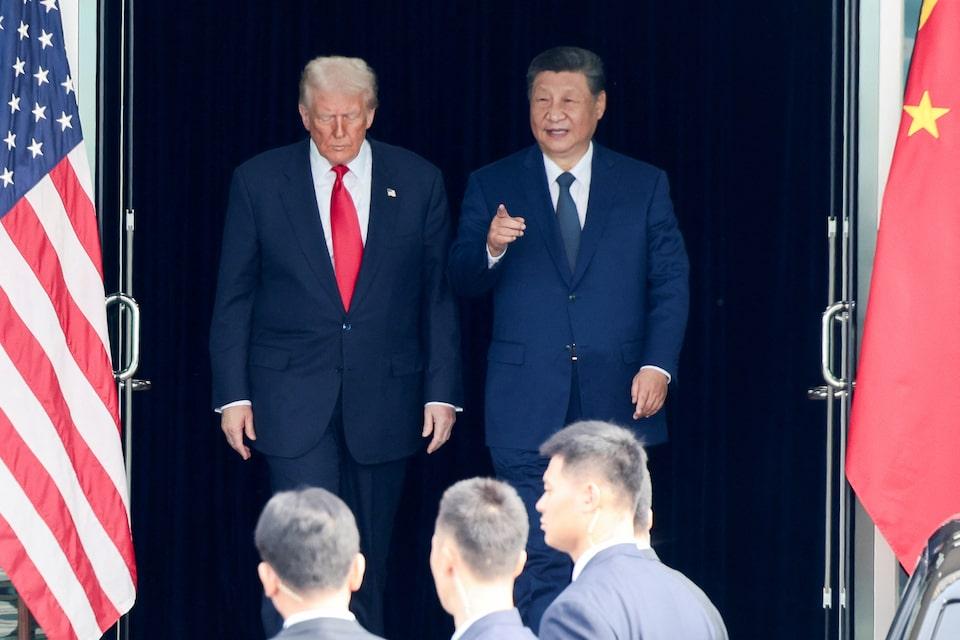
Foreign investors remain cautious despite trade truce China's stock market sees selective foreign participation Competition and cooperation will spur rally, analysts say SINGAPORE/HONG KONG, Oct 30 (Reuters) - China's latest trade truce with the United States removes one big deterrent for foreign investors who've been circumspect all year about investing in a stock market that's outrun most other major ones with its strongest annual run since 2019. Foreign money managers have so far been both measured and selective participants in a rally that has pushed Chinese stocks to multi-year highs, fearful of pressures from deflation, weak consumption in the world's second-largest economy and trade tensions. Sign up here. Thursday's deal between China and U.S. President Donald Trump removes one source of worry, to an extent. The year-long truce is the longest the two feuding sides have had in a fractious relationship, and it reduces import tariffs on China, removes some controls on Chinese rare earths exports and allows Chinese firms to receive some U.S. technology. Beyond those encouraging headlines, the specifics of the deal left markets unimpressed and analysts pointing to the breakthrough and commitment to cooperation as the best part of the truce. "I don't think this trade deal changes anything dramatically, but it helps move the needle on on encouraging offshore investment in China," said Kristina Hooper, New York-based chief market strategist at the Man Group. "There has been some concern among investors in areas like the U.S. that at some point if they were to invest in China, they would be forced to divest. So any warming of relations between the two countries is a form of encouragement to invest in China." Boosted by policy measures and Chinese artificial intelligence forays, its blue-chip stock index (.CSI300) , opens new tab is up by a fifth this year, while the more accessible Hong Kong Hang Seng index (.HSI) , opens new tab is one of the world's top performers this year with 31% gains, bigger than Nasdaq's (.IXIC) , opens new tab 23%. But foreign money has played safe, staying in sectors around AI and China's self-sufficiency initiatives while avoiding broad exposure. Foreigners have pulled $3.9 billion from offshore-listed China-dedicated equity funds so far this year, LSEG Lipper data showed. Relative to its economic might, which is a fifth of world GDP, China is underowned. Data from financial services firm Morningstar showed large global funds on average had a 1.43% exposure to China at the end of September. Cusson Leung, chief investment officer at Hong Kong-based wealth manager KGI, finds the signs of easing in Sino-U.S. tensions positive. "I'll continue building up China positions with today's dip," said Leung. But it's less about the trade talks and more a bet on China's economic recovery, he said. COMPETITION PLUS COOPERATION For investors, there's ostensibly opportunity even if the two trade rivals compete fiercely while cooperating a bit. "On both sides, they still have the mindset to strengthen the security of their own supply chains, and this brings opportunities for their domestic players in different sectors," said Chaoping Zhu, global market strategist at JP Morgan Asset Management in Shanghai, referring to U.S. quest to find alternate sources of rare earths and China's push for technological prowess. "Maybe the competition will continue and at the same time, some kind of cooperation, and investors have already priced in this scenario. I think the chance for upside might be a little larger than the chance for downside." Analysts at BNP Paribas and Goldman Sachs expect strong domestic drivers to push Chinese stocks higher. In a note published last week, Goldman said it expects policy, growth, valuations and money flows to push the mainland and Hong Kong indexes up roughly 30% by the end of 2027. There are stubborn "China Discounts" to peer markets in the valuations, suggesting "investors aren’t overpaying for the right tail from further AI optimism and liquidity overshoot in China," they said. "The combination of easing Fed policy and a weaker dollar may incentivize global funds to revisit their China investment case, and to repair their persistent underweight allocations to Chinese stocks." Still, no one's ready to call an end to the trade war, and investors are advised caution. "There's a not a lot of positivity getting priced in, as investors are still sceptical as to how long this unstable equilibrium sustains," said Devesh Divya, FX strategist at Standard Chartered in Singapore. Uncertainty had reduced but it was still a very difficult environment for corporates and multinationals looking to expand or invest, he said. https://www.reuters.com/world/china/after-trade-truce-china-becomes-bit-more-investible-2025-10-30/
2025-10-30 19:24
BRASILIA, Oct 30 (Reuters) - Deforestation in Brazil's Amazon rainforest fell 11.08% in the 12 months through July compared with the same period a year earlier, hitting an 11-year low, government data showed on Thursday. The figures were released just days before the country hosts the United Nations climate summit known as COP30, in a win for President Luiz Inacio Lula da Silva, who aims to tout his government's environmental achievements at the conference. Sign up here. Lula has pledged to end all deforestation in the country by 2030. Since the beginning of his term in 2023, Amazon destruction has been cut by half. The annual report, produced by Brazilian space research agency Inpe, showed that roughly 5,796 square kilometers of the Amazon were destroyed in the period, the lowest figure since 2014. "Even in my best-laid plans I would never have imagined that we would reach this point with a 50% reduction in deforestation," Environment Minister Marina Silva told a press conference. In Brazil's Cerrado savanna, deforestation fell 11.49% in the period to 7,235 square kilometers, a six-year low and the second straight decline after four years of rising deforestation - which included Lula's first year in office. The government's success in reducing deforestation is seen as contrasting with some other moves criticized by environmentalists, such as its backing of state-run oil firm Petrobras' (PETR3.SA) , opens new tab plans to drill near the mouth of the Amazon River. https://www.reuters.com/sustainability/cop/brazils-amazon-deforestation-falls-11-12-months-through-july-2025-10-30/

2025-10-30 18:54
Oct 30 (Reuters) - Crypto miner Core Scientific (CORZ.O) , opens new tab on Thursday ended a deal for its sale to CoreWeave (CRWV.O) , opens new tab after shareholders voted against the proposal, marking the culmination of months-long investor and proxy campaigns against the agreement. The move marks the second foiled attempt by CoreWeave to scoop up Core Scientific, with the crypto miner also rejecting a June 2024 all-cash buyout offer. Sign up here. Core Scientific shares were up marginally in afternoon trading, while CoreWeave was down 3.9%. CoreWeave had struck an all-stock deal worth $9 billion to buy Core Scientific in July, as part of its push to secure the energy and data center capacity needed to power surging demand. Soon after, Two Seas Capital, which claims to be the largest active shareholder of Core Scientific, said it would vote against the deal, citing concerns with the sale process, deal structure, and valuation. It said the fixed exchange ratio left Core Scientific shareholders vulnerable to fluctuations in the price of CoreWeave shares. Last week, proxy advisory firm Institutional Shareholder Services also recommended investors vote against the deal, suggesting Core Scientific should continue going alone given its considerable success as a standalone company. Some analysts said the vote might have been influenced by soaring valuations commanded by AI-related companies, also raising questions if the markets are in a bubble. "(Shareholders) believe their value should be higher based on current valuations of comparable companies, which we see as more a sign of AI trade froth than actual economic value," said Gil Luria, analyst at D.A. Davidson. Core Scientific's board had urged its shareholders to vote for the sale, saying the combined company would benefit from several potential cost savings. "We respect the views of Core Scientific stockholders and look forward to continuing our commercial partnership," said Michael Intrator, CoreWeave's CEO and co-founder. https://www.reuters.com/business/core-scientific-terminates-9-billion-merger-deal-with-coreweave-2025-10-30/

2025-10-30 18:42
DYdX plans to introduce spot trading on solana in U.S Platform recently surpassed $1.5 trillion in trading volume U.S. regulators may allow crypto perpetual contracts on regulated platforms Oct 30 (Reuters) - One of the top decentralized cryptocurrency trading platforms, dYdX, is preparing to enter the U.S. market by the end of the year, in a shift for the derivatives-focused exchange that was previously not available to American users, the president of dYdX told Reuters in an interview. Unlike centralized exchanges like Coinbase (COIN.O) , opens new tab and Kraken that act as the intermediary between buyers and sellers, decentralized platforms like dYdX aim to cut out the middleman and allow users to transact directly on a blockchain network, which powers cryptocurrencies. Sign up here. DYdX specializes in perpetual contracts, a type of derivative that lets traders speculate on the price of an asset without actually owning it, and unlike traditional futures, does not have an expiration date. It recently surpassed $1.5 trillion in total trading volume since its inception, the San Francisco-based company said. The platform plans to add to its offerings, bringing spot trading on solana and other linked cryptocurrencies to the U.S. by the end of the year, said Eddie Zhang, the president of dYdX. "It's very important for us as a platform to have something available in the United States, because I think it represents, hopefully, the direction we're trying to move in," Zhang said. DYdX's move follows President Donald Trump's embrace of the cryptocurrency sector this year, which has led to the dismissal of a spate of lawsuits against prominent crypto platforms and a shift by financial regulators to create specialized rules to accommodate digital assets. Upon entering the U.S., dYdX plans to slash its trading fees by as much as half "across the board," to between 50 and 65 basis points, Zhang said. Perpetual contracts will not be available in the U.S., but dYdX hopes U.S. regulators will eventually provide guidance for decentralized platforms to be able to offer those products, Zhang said. In a joint statement last month by the U.S. Securities and Exchange Commission and the Commodity Futures Trading Commission, the agencies indicated they would consider allowing crypto perpetual contracts to trade across regulated platforms in the U.S. https://www.reuters.com/business/decentralized-crypto-exchange-dydx-plans-us-market-entry-by-year-end-2025-10-30/

2025-10-30 18:08
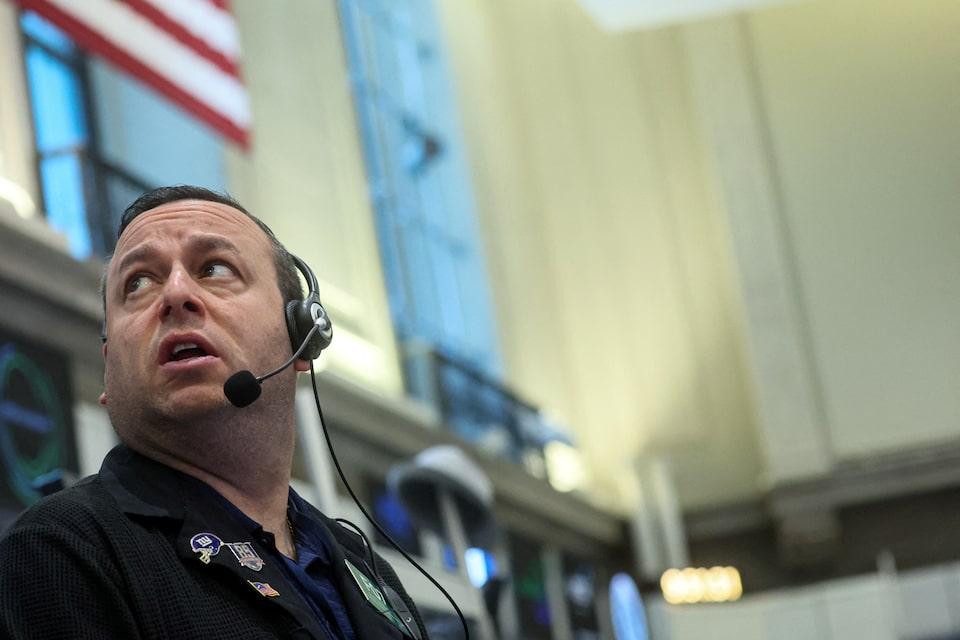
Bullish options trading amplifies U.S. stock market advance Options dealers' short gamma position may exaggerate market swings Potential for S&P 500 pullback due to expensive calls and tech stock valuation concerns NEW YORK, Oct 30 (Reuters) - A wave of bullish options trading has amplified the U.S. stock market's advance toward another major milestone and left dealers positioned so that market swings are likely to be exaggerated in coming days or weeks, according to options specialists. The S&P 500's (.SPX) , opens new tab 17% rally this year to record highs has brought the index close to the 7,000 mark, accompanied in recent weeks by a surge in bullish options activity. Sign up here. Strong demand for call options earlier this month pushed the one-month rolling calls-to-puts traded ratio to its most bullish level in roughly four years, according to a Reuters analysis of Trade Alert data. Calls convey the right to buy stock at a set price in the future, while holders of puts can sell at a later date. "People really front-ran this whole move into this 7,000 area," said Brent Kochuba, founder of options analytic service SpotGamma. The rush into upside call options has left options dealers as net sellers of options - a stance known as "short gamma," options specialists said. Dealers generally aim to maintain market neutrality. In a short gamma position, they typically sell stock futures during market declines and purchase them during rallies, intensifying price movements in both directions. "On our trading desk we are seeing more extreme upside call buyers, so it makes sense that the market makers of the world would be short gamma," Chris Murphy, co-head of derivative strategy at Susquehanna Financial Group, said. This dynamic suggests that if the S&P 500 climbs above 7,000, the rally could receive additional momentum from options dealers' hedging activity. TWO WAY MARKET However, short gamma positioning carries risks in both directions, analysts warned. Any decline in the benchmark index could similarly be exacerbated by derivatives-related trading as options dealers sell stock futures into a weakening market. "The problem now is people own expensive calls and there's not that fuel for the next leg higher at this moment," Kochuba said, adding he would not be surprised to see the market pull back from current levels. The rush by investors into upside calls on the so-called Magnificent Seven of the largest and most influential technology-focused companies has "locally peaked-out," Nomura strategist Charlie McElligott said. The companies are Apple (AAPL.O) , opens new tab, Amazon (AMZN.O) , opens new tab, Alphabet (GOOGL.O) , opens new tab, Meta Platforms (META.O) , opens new tab, Microsoft (MSFT.O) , opens new tab, Nvidia (NVDA.O) , opens new tab and Tesla (TSLA.O) , opens new tab. McElligott sees a "window for a 3% to 5% pullback" in U.S. stock indexes in the next few weeks, he said in a note on Thursday. On Thursday, the S&P 500 and the Nasdaq lost ground as Meta and Microsoft slid on concerns of surging artificial intelligence spending, adding to concerns about the pace of monetary policy easing from the U.S. Federal Reserve. https://www.reuters.com/business/finance/bullish-options-plays-set-boost-sp-500-gyrations-around-7000-level-2025-10-30/