2026-02-04 10:07
Headline inflation lowest since Sept 2024 at 1.7% Core inflation unexpectedly edges down to 2.2% ECB rates seen on hold through 2026 FRANKFURT, Feb 4 (Reuters) - Euro zone inflation dipped last month, data showed on Wednesday, entering a soft patch that most economists expect will last for at least a year and keep the European Central Bank on hold. Price growth in the 21 countries that share the euro slipped to its lowest level since September 2024, dropping to 1.7% in January, weighed down by a fall in energy prices. The reading was in line with economists' forecasts. Sign up here. But a key measure of underlying inflation that strips out volatile items such as energy, food, alcohol and tobacco unexpected edged down to 2.2% from 2.3 in December, as prices in the services sector continued to ease. Taken together, the readings were unlikely to trigger any immediate move by the ECB, which is expected to keep interest rates steady on Thursday and through the remainder of the year. "With underlying inflation still a little too high for comfort and expectations that the euro zone economy will regain momentum later in the year, we believe the most likely outcome is that the ECB will keep rates unchanged for the foreseeable future," Diego Iscaro, head of European economics at S&P Global Market Intelligence, said. The euro zone's central bank expects inflation to slightly undershoot its 2% target this year and next before heading back to it in 2028. Inflation has been hovering around 2% for at least a year after a wave of price hikes fuelled by the economy's recovery from the COVID-19 pandemic and Russia's invasion of Ukraine in 2022, which pushed up fuel costs. Economists are split over whether the ECB's next move will be a cut or a hike, with some policymakers recently saying both moves are equally likely. A recent appreciation of the euro against the dollar, partly a response to U.S. President Donald Trump's unpredictable policymaking and worries about the Federal Reserve's independence, has fuelled some market talk about a rate cut. "Inflation under target and euro strength are something that may cause the ECB to think twice about staying on hold," Melissa Davies, an economist at Redburn Atlantic, said. https://www.reuters.com/business/finance/euro-zone-inflation-dips-january-soft-patch-begins-2026-02-04/

2026-02-04 10:02
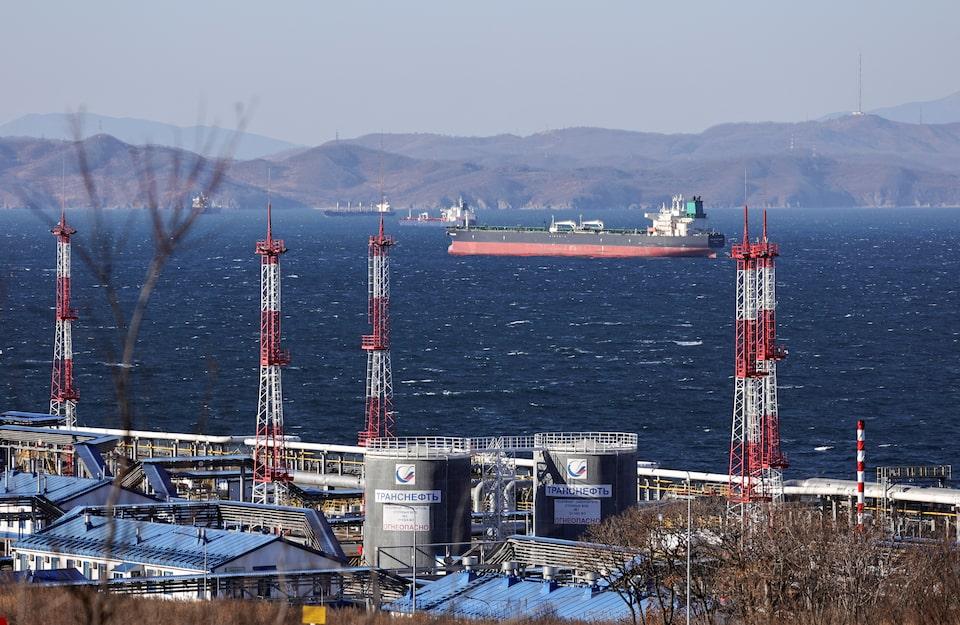
Russia's oil and gas revenues halved in January to $5.1 bln Drop driven by lower crude prices and a stronger rouble Russia ran a 2025 budget deficit of 2.6% of GDP MOSCOW, Feb 4 (Reuters) - Russian state oil and gas revenues halved in January compared to the same month of last year, hitting their lowest level since July 2020, according to finance ministry data. The decline was due to lower crude prices and a stronger rouble. Oil and gas revenues are crucial for Russia's state budget, which ran a deficit of 5.6 trillion roubles or 2.6% of gross domestic product in 2025. Sign up here. The January figure of 393.3 billion roubles ($5.10 billion) was down from 447.8 billion roubles in December. Oil and gas revenue is the leading source of cash for the Kremlin, making up nearly a quarter of federal budget proceeds that have been drained by heavy defence and security spending since Russia began its military campaign in Ukraine in February 2022. The budget is projected to collect 8.92 trillion roubles from oil and gas sales this year. Total budget revenues for 2026 are seen at 40.283 trillion roubles. Last year, Russia's federal budget revenues from oil and gas dropped 24% to 8.48 trillion roubles, the lowest level since 2020. ($1 = 77.1000 roubles) https://www.reuters.com/business/energy/russias-oil-gas-revenue-halved-january-yy-lowest-since-july-2020-2026-02-04/
2026-02-04 09:35
ZURICH, Feb 4 (Reuters) - UBS (UBSG.S) , opens new tab expects further outflows in its U.S. wealth management business in the first half of 2026 as advisers leaving the bank take clients with them, chief financial officer Todd Tuckner said on Wednesday. Tuckner told analysts on a call that UBS was not satisfied with the "net movement" of U.S. wealth advisors, and that a delay between their departure and the impact on assets under management meant UBS expected "further NNM (net new money) headwinds" in 2026. Sign up here. However, across the whole of 2026, the bank expects net new money to be positive, Tuckner added. https://www.reuters.com/business/finance/ubs-sees-more-outflows-us-wealth-unit-after-adviser-exits-cfo-says-2026-02-04/
2026-02-04 08:04
Foreigners dip their toes but remain wary of tepid earnings Lack of clear AI bets restrain Indian equities vs peers Traders expect pressure on frail rupee to ease after trade deal MUMBAI/SINGAPORE/LONDON, Feb 4 (Reuters) - The U.S.-India trade deal has blown away clouds over the unloved Indian rupee and is probably enough to pause relentless foreign selling in stocks, but investors say earnings growth must rebound and fundamentals improve for sustained buying. The long-awaited deal sparked a surge in the stock market and the rupee's best rally in seven years on Tuesday, as it signalled improving diplomatic and trade relations with the U.S. Sign up here. That, however, was just one of the factors hanging over the currency and stock markets which have underperformed regional and global peers by a wide margin since the beginning of last year and seen foreign allocations dwindle to a two-decade low. Although near record peaks, Indian equities are vulnerable to disruption from artificial intelligence and, without any companies in the sector, have been left behind in the rush to AI. Details of the trade deal also remain sparse, even if they do allow companies to at least start planning capital spending. "I'm not convinced tariffs have an immediate impact, but it certainly feeds into sentiment - that's probably the best way to think of it," said Michael Bourke, head of global emerging markets for equities at M&G Investments. "Just because tariffs have gone down, do you suddenly see earnings surge? (I'm) not yet convinced that's a line I would draw," he said. The deal is meaningful for markets, but primarily for sentiment and valuation rather than near-term earnings uplift, said Naomi Waistell, fund manager in the emerging equities team at Carmignac, which manages $48.5 billion in assets. "The deal does not resolve some of the recent issues surrounding Indian equities: still-elevated valuations ... relatively lower forward earnings growth versus EM peers and a lack of globally scalable AI-beneficiary businesses." Foreign investors have pulled roughly $23 billion out of Indian stocks since the start of 2025, although they poured in $580 million on Tuesday. Vikas Jain, head of India fixed income, currencies and commodities trading at Bank of America in Mumbai, said there should be some revival in the near-term for foreign investor flows. "The underweight investors will come to immediate neutral position. Going overweight will depend on growth revival and the kind of policies that are announced by the government." RUPEE RELIEF Analysts and traders say that the deal should also offer respite to India's battered currency. The rupee has been the worst performing Asian currency in the past 12 months, requiring the central bank to consistently come to its defence as it slid from near 88 per dollar when the tariffs were imposed to a record low of almost 92 in January. Heightened appetite among firms to hedge against the rupee weakness and the central bank's inclination to bolster FX reserves are among the factors traders say could stand in the way of an extended rally in the currency. "Tariffs on Indian goods had created a balance-of-payments risk for India, contributing to INR depreciation. The trade deal breaks this loop ... encouraging foreign investors to evaluate Indian equities more objectively," said California-based Peeyush Mittal, portfolio manager at Matthews Asia. India's benchmark index (.NSEI) , opens new tab has risen a respectable 10% in the past 12 months but pales in comparison to South Korea's (.KS11) , opens new tab Kospi's 118% surge and Taiwan stocks' (.TWII) , opens new tab 42% gain in the same period. The risks from lacking obvious AI winners was at play on Wednesday as well with Indian IT firms' stocks (.NIFTYIT) , opens new tab down over 6% after AI firm Anthropic launched workplace productivity tools, raising concerns of disruption across the sector. To be sure, some investors remain bullish on India and view it as a compelling trade. Sam Konrad, investment manager for Asian equities at Jupiter Asset Management, was slightly underweight India for most of 2025 but has been adding to his fund's holdings over the past few weeks. M&G's Bourke has also been a recent buyer of Indian financials, although remains underweight. Bigger allocations may take longer. Profit growth for Indian companies has remained in high single digits for six straight quarters, well below the 15%–25% growth recorded between 2020–21 and 2023–24. Goldman Sachs raised their earnings per share forecast for Indian stocks this year to 16% from 15%. They expect a 12% dollar return from Indian equities in the next 12 months versus 20% for Chinese equities. https://www.reuters.com/world/india/indias-markets-get-tariff-relief-not-buy-yet-2026-02-04/

2026-02-04 07:35
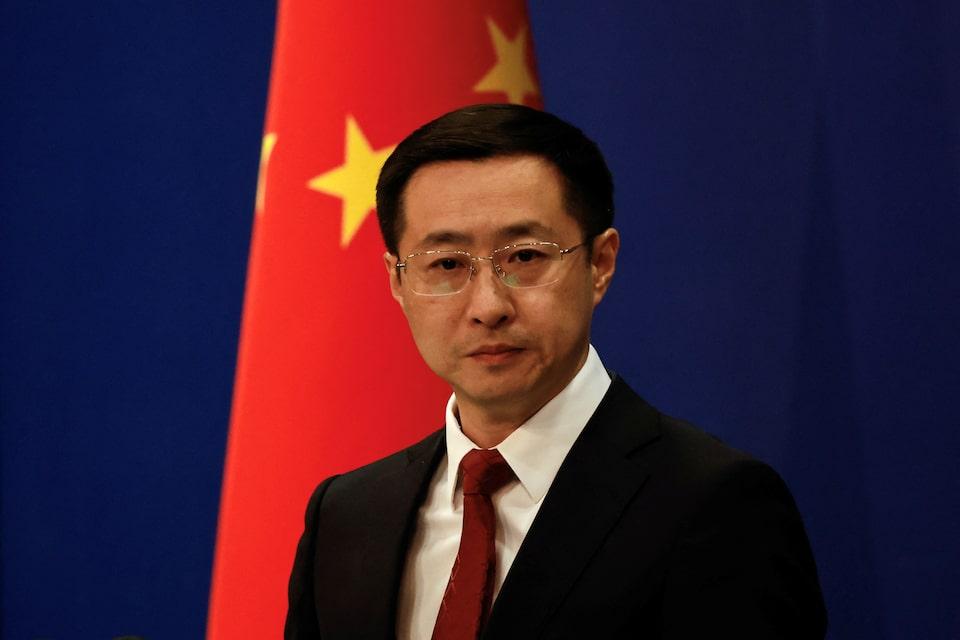
BEIJING, Feb 4 (Reuters) - China's foreign ministry on Wednesday called for communication to maintain the stability of global supply chains for critical minerals, responding to media reports that the European Union would pitch a partnership with the United States to curb their reliance on China. "All parties have a responsibility to play a constructive role" in safeguarding the stability and security of global supply and production chains, ministry spokesperson Lin Jian told a regular press conference. Sign up here. https://www.reuters.com/world/asia-pacific/china-urges-dialogue-safeguard-global-critical-minerals-supply-chains-2026-02-04/
2026-02-04 07:24
LONDON, Feb 4 (Reuters) - We all know people who seem to attract all the bad luck in life. Europe, facing both internal and external challenges, is starting to look like that unfortunate person. What the region needs now is clarity of purpose and a bold plan to achieve it. Some of the challenges Europe faces come from without, such as fraying Transatlantic ties with the U.S. and competitive pressures from China. Sign up here. Other difficulties stem from its own past policies and priorities – most notably over-regulation and an ill-conceived energy strategy – which are not in sync with the objective of maximising economic growth and overall prosperity. But either way, the economic impact is clear. Europe has fallen far behind the U.S. since the Global Financial Crisis. In 2010, the dollar per capita GDP of Europe and the U.S. were similar. Fast forward to today, and the U.S.’s per capita GDP is around 50% higher than that of Europe, and the gap is still widening. Europe’s "core" economic growth rate, which adjusts for exceptional short-term defence spending and unsustainable fiscal transfers to peripheral countries, is only 0.9%, by my estimate, compared with 2.5-3.0% for the U.S. Europe’s potential growth rate is low partly because its productivity growth rate is low. Between 2010 and 2019, labour productivity in Europe grew by only 0.7%. It then fell by 0.7% in 2023 and rose just 0.2% in 2024. This compares with a 2.0% long-run average in the U.S., and a shocking 4.5% average in the last two quarters. Low productivity growth ultimately reflects several issues, including the low cadence of innovations, burdensome regulations, large welfare programmes, and high public debt that crowds out private investment. In addition, Europe’s energy policy is inconsistent with economic prosperity. Energy prices in Europe are currently 54% higher than the average levels seen between 2016-2020 – roughly double the 26% increase in general inflation between that period and today. Part of the energy shock was due to Russia, but part was self-inflicted, such as Germany’s decision to phase out nuclear power. Evidently, there can be contradictions between doing good and doing well. True, Europe’s peripheral countries – including Greece, Ireland, Italy and Portugal – have seen above-trend growth since 2020, but much of that was due to unsustainable fiscal largesse from Brussels. Over the past five years, these countries have each received fiscal transfers and long-dated loans from the European Union representing 10-20% of GDP, including the 800-billion-euro Recovery and Resilience Facility (RRF). But the RRF will be exhausted in 2026. What’s next? FALLING BEHIND Europe – perhaps because of the historical scars from two world wars – has in recent decades pursued an ever-larger union of disparate nations rather than allowing the major powers in Europe to thrive unimpeded. In other words, to prevent any major European power from feeling sufficiently confident to wage war on its neighbours, the EU's emphasis has been on harmonisation and integration. The Nobel Peace Prize was awarded to the EU in 2012 at the height of the European Debt Crisis. The message was not lost on the world. But even if this strategy made sense decades ago, the world has changed. For starters, China’s bilateral trade surplus with Europe is becoming a problem, having almost doubled between 2019 and 2024 to $335 billion. That’s partly in response to U.S. tariffs and non-tariff measures. China’s bilateral trade surplus with America has receded by more than half, as a percentage of U.S. GDP, since 2018. What China could not directly export to the U.S. has been rerouted through third countries or pushed to other regions, including Europe. If 2025 trends continue, the bilateral trade imbalance between China and Europe could reach as much as $450 billion this year – a roughly 35% increase since 2024. Importantly, the problem is about more than U.S. tariffs. China has simply become too competitive. The government’s "Made in China 2025" plan – originally announced in 2015 – achieved most of the country’s ambitious goals for moving up the value chain in advanced manufacturing and other strategic sectors. Consequently, the range of products in which Europe maintains competitive quality or price advantages has narrowed significantly. In the 2000s, Italy – with its lower-value-added manufacturing compared with Germany – was crowded out by China. Now it is Germany’s turn. WHAT’S THE OBJECTIVE? To begin to address these issues, Europe must first clarify its primary objective. Is it a cleaner environment, greater income equality, or harmonising Europe so that the strong don’t become too strong? Or is it maximising Europe’s economic potential and prosperity so that it can remain competitive in the future, even at the expense of the environment and income equality? I suspect Europe’s current objective - whatever it may be - is outdated, reflecting neither the rise of U.S. President Donald Trump nor "Made in China 2025." While Europe has made some moves over the past year to reposition itself globally, such as the shift toward greater defence spending, the bloc is ultimately still hamstrung by the awkward nature of the union itself. Member states are not permitted to pursue their own strategies, while Brussels is constrained by the need for consensus among 27 disparate countries. Moving forward, Europe’s challenge is to avoid being a bystander. Even if it tries to defend the global order of the past, it will need a robust economy to pursue these goals. Defensive actions by Europe would only buy time and most likely won’t form an effective strategy capable of meeting tomorrow’s challenges. What Europe urgently needs is an economic and technological renaissance. (The views expressed here are those of Stephen Jen, the CEO and co-CIO of Eurizon SLJ asset management.) Enjoying this column? Check out Reuters Open Interest (ROI), , opens new tab your essential new source for global financial commentary. Follow ROI on LinkedIn, , opens new tab and X. , opens new tab And listen to the Morning Bid daily podcast on Apple , opens new tab, Spotify , opens new tab, or the Reuters app , opens new tab. Subscribe to hear Reuters journalists discuss the biggest news in markets and finance seven days a week. https://www.reuters.com/markets/europe/whats-point-europe-today-it-must-figure-it-out-fast-2026-02-04/