2025-10-29 13:54
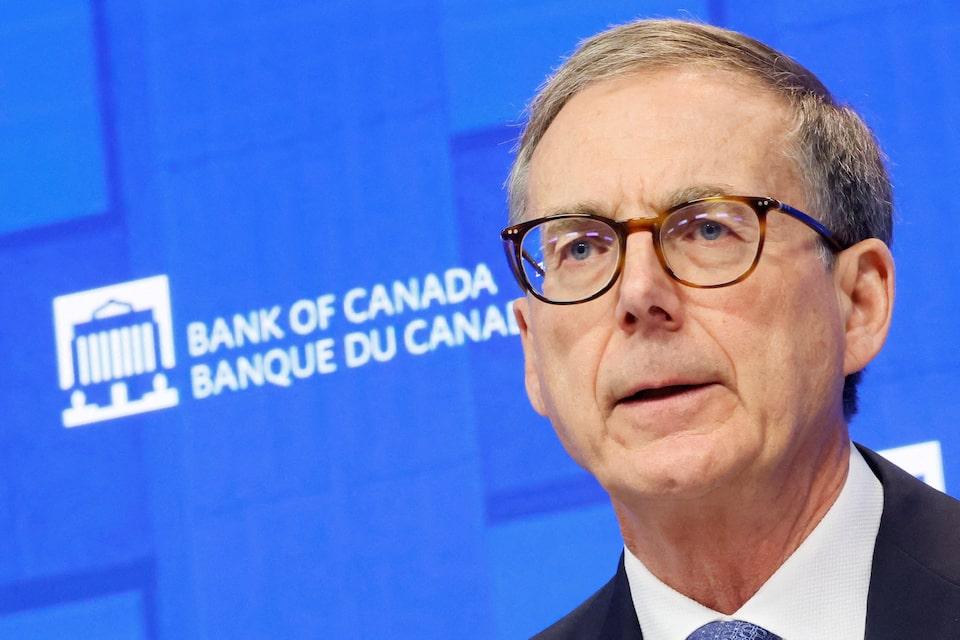
OTTAWA, Oct 29 (Reuters) - The Bank of Canada released the following statement by Governor Tiff Macklem on Wednesday: "Good morning. I'm pleased to be here with Senior Deputy Governor Carolyn Rogers to discuss today's monetary policy decision. Sign up here. "Today, the Bank lowered the policy interest rate a further 25 basis points, bringing it to 2¼%. This was our second straight cut, and reflects ongoing weakness in the economy and contained inflationary pressures. "Today we also published our outlook for the Canadian economy. "We have four main messages. "First, US tariffs and trade uncertainty have weakened the Canadian economy. We expect very modest growth through the rest of the year, with some pickup in 2026. "Second, while this weakness is restraining price increases, the trade conflict is also adding costs for many businesses, putting upward pressure on inflation. We expect these opposing forces to roughly offset, keeping inflation close to the 2% target. "Third, to support the economy through this period of adjustment, we have lowered our policy rate by 50 basis points over our last two meetings and by 100 basis points since the start of the year. "And finally, the weakness we're seeing in the Canadian economy is more than a cyclical downturn. It is also a structural transition. The US trade conflict has diminished Canada's economic prospects. The structural damage caused by tariffs is reducing our productive capacity and adding costs. This limits the ability of monetary policy to boost demand while maintaining low inflation. "For the first time since January and the start of the trade conflict, the Bank is publishing a baseline outlook for economic growth and inflation, rather than alternative scenarios. It has now been more than six months since we have been living with US tariffs. And while US trade policy remains unpredictable, its impacts are becoming clearer. "Let me expand on what we're seeing in the economy, and how that played into our deliberations. "While the global economy has been resilient to the rise in US tariffs and increased uncertainty, the impacts are becoming more evident. Trade relationships are being reconfigured and uncertainty is dampening investment in many countries. "In Canada, the impacts of US trade policy are already clearly apparent. GDP contracted 1.6% in the second quarter as tariffs and uncertainty reduced exports and business investment. US trade actions are having severe effects on targeted sectors including autos, steel, aluminum and lumber. Household spending was resilient in the second quarter, with strong consumer spending and a pickup in residential investment. "The labour market is soft. Employment gains in September followed two months of sizeable losses. Job losses have been concentrated in trade-sensitive sectors and hiring has been weak across the economy. The unemployment rate remained at 7.1% in September, and wage growth has slowed. "In the second half of this year, GDP growth is expected to resume, but remain weak, averaging about ¾%. It should then pick up on a quarterly basis in 2026 as exports and investment recover, and average about 1½% by 2027. This implies excess supply is only taken up gradually. "Even as growth recovers, the entire path for GDP is lower than it was before the shift in US trade policy. By the end of 2026, the level of GDP is about 1½% lower than forecast in January. About half of this downward revision reflects lost capacity as a result of the trade disruption. The other half is due to weaker demand. "CPI inflation was 2.4% in September, slightly higher than the Bank had anticipated. The Bank's preferred measures of core inflation have been sticky around 3% but upward momentum has dissipated. Looking at a broader range of indicators, underlying inflation looks to be around 2½%. The Bank expects inflationary pressures to ease in the months ahead and CPI inflation to remain near 2% over the projection horizon. "If the economy evolves roughly in line with the outlook in our MPR, Governing Council sees the current policy rate at about the right level to keep inflation close to 2% while helping the economy through this period of structural adjustment. We will be assessing incoming data carefully relative to the Bank’s outlook. "US trade policy remains unpredictable, as events over the weekend reminded us. There continues to be considerable uncertainty, both about US tariffs and their impacts. The range of possible outcomes is wider than usual — we need to be humble about our forecast. If the outlook changes, we are prepared to respond. "Canadian businesses and households are feeling the consequences of increased US protectionism. It is difficult, and ongoing uncertainty is compounding the difficulty. For many months, we have been stressing that monetary policy cannot undo the damage caused by tariffs. Increased trade friction with the United States means our economy will work less efficiently, with higher costs and less income. Monetary policy can help the economy adjust as long as inflation is well-controlled, but it cannot restore the economy to its pre-tariff path. "The Bank of Canada is focused on ensuring Canadians continue to have confidence in price stability through this period of global upheaval. "With that, the Senior Deputy Governor and I would be pleased to take your questions." ((Reuters Ottawa bureau, +1 647 480 7921; [email protected] , opens new tab)) Keywords: CANADA CENBANK/MACKLEM https://www.reuters.com/world/americas/full-text-bank-canada-head-says-rate-cut-aimed-helping-economy-2025-10-29/
2025-10-29 13:52
OTTAWA, Oct 29 (Reuters) - The Bank of Canada on Wednesday slashed its growth forecasts for both 2025 and 2026, citing the effect of U.S. trade policy, and predicted the economy would recover slightly in 2027. In its quarterly annual monetary policy report, the central bank said 2025 growth would be 1.2%, sharply down from the 1.8% predicted in January, the last time it released detailed economic forecasts. Sign up here. It said growth in 2026 would drop to 1.1%, down from the 1.8% forecast in January, before recovering to 1.6% in 2027. "Roughly half of the downward revision relative to the January report reflects the negative impact of tariffs and uncertainty on potential output," it said. "The remainder reflects weaker demand conditions, mainly caused by the negative effect of U.S. trade policies." Annual inflation in 2025 will average 2.0%, less than the 2.3% forecast in January, before edging up to 2.1% in 2026 and staying at that level in 2027. ((Reuters Ottawa bureau, +1 647 480 7921; [email protected] , opens new tab)) Keywords: CANADA CENBANK/FORECASTS https://www.reuters.com/world/americas/bank-canada-cuts-2025-2026-forecasts-cites-us-trade-policy-2025-10-29/
2025-10-29 13:16
Oct 29 (Reuters) - India's central bank on Wednesday proposed measures to make it easier and faster for people and businesses to receive money from abroad, aiming to cut delays between when a bank gets the payment and when it reaches the recipient's account. "One of the challenges with speed of cross-border payments is the delay between receipt of the payment at the beneficiary bank and credit to the beneficiary account," the Reserve Bank of India said. Sign up here. The RBI, in a draft circular published on its website, proposed that banks should ensure payments received during foreign exchange market hours are credited to customers' accounts on the same day, while those received after market hours should be credited the next business day. To further speed up the process, the regulator proposed that banks could introduce a "straight through" process with automated systems to credit payments directly to individual accounts after assessing the risks. It also encouraged banks to create digital platforms that allowed customers to upload required documents and track their foreign exchange transactions. The RBI has invited comments on its proposals from banks by November 19. https://www.reuters.com/sustainability/boards-policy-regulation/indias-central-bank-proposes-steps-speed-up-cross-border-payment-inflows-2025-10-29/

2025-10-29 12:55
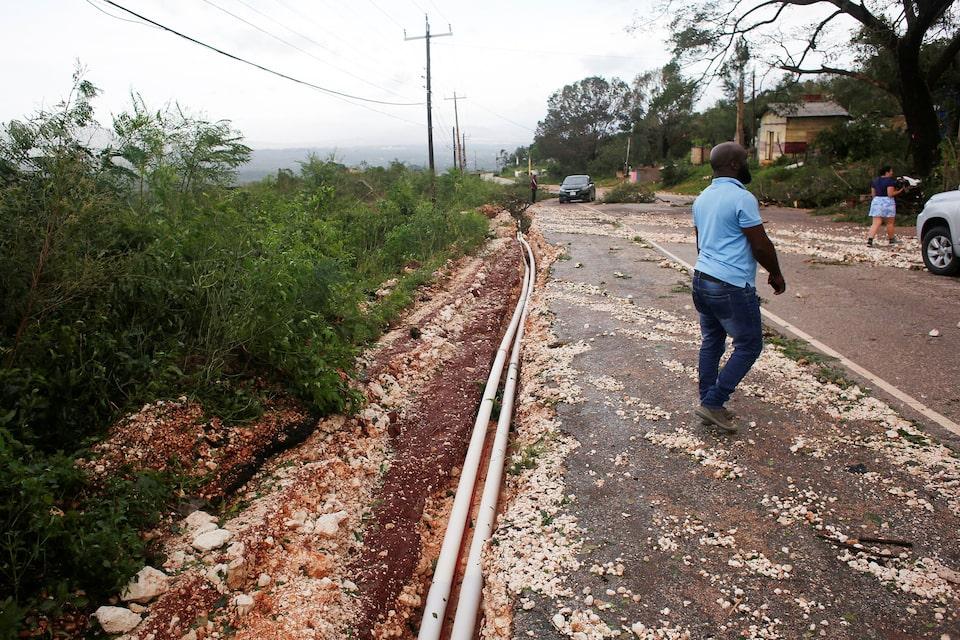
Melissa crossing Bahamas as Category 1 At least 25 people killed in Haiti, 4 in Jamaica Jamaica could take a decade to rebuild, forecaster says Cuba evacuates more than 700,000 Caribbean climate group calls for 'loss and damage' PORT-AU-PRINCE/KINGSTON/HAVANA, Oct 29 (Reuters) - Hurricane Melissa barreled through the northern Caribbean on Wednesday after thrashing Cuba's second-biggest city, isolating hundreds of rural communities, unleashing devastation in Jamaica and drenching Haiti, where at least 25 were killed. Melissa struck Jamaica on Tuesday as the strongest-ever hurricane to directly hit its shores, with sustained winds of 185 mph (298 kph), well above the minimum strength for a Category 5, the strongest classification for hurricanes. Sign up here. As of 8 p.m. (0000 GMT), Melissa was a Category 1 hurricane bringing wind, rain and storm surges as it moved north-east through the Bahamas archipelago, whose government earlier flew out nearly 1,500 people in what it called one of its largest evacuation operations. Residents in the Bahamas and nearby Turks and Caicos hunkered down, while some 895 miles (1,440 km) north-east Bermudans prepared for hurricane conditions forecast from Thursday. U.S. forecaster AccuWeather said Melissa was the Caribbean's third-most intense recorded hurricane, as well as its slowest-moving, which made it particularly destructive. The storm did not directly hit Haiti, the Caribbean's most populous nation, but lashed it with days of rain. Authorities reported at least 25 deaths, largely due to floods in Petit-Goave, a coastal town 64 km (40 miles) west of the capital where a river burst its banks. At least 10 children were killed and 12 people remain missing there, Haiti's disaster management agency said, adding that nationwide more than 1,000 homes have been flooded and nearly 12,000 people moved into emergency shelters. An extended gang conflict has impoverished Haiti and displaced over 1.3 million. People living in makeshift camps said the flooding made it impossible to sit or sleep, and that the government and aid groups were slow to bring supplies. Fortune Vital, a displaced man in Les Cayes, said he was separated from his family which already lacked sufficient food. "If the hurricane comes on top of all the problems we already have, we'll simply die," he said. 'LIKE MISSILES BLOWING THROUGH THE GLASS' In Jamaica, AccuWeather estimated Melissa could cost $22 billion in damages and economic loss and that rebuilding could take a decade or more. The capital Kingston was spared the worst damage and its main airport was set to reopen Thursday, but as of Wednesday morning authorities said about 77% of Jamaica was without electricity. Melissa made landfall in southwestern Jamaica on Tuesday, devastating areas already battered by last year's Hurricane Beryl. Local authorities said flood waters had washed up four bodies in the agricultural hub of St. Elizabeth. Prime Minister Andrew Holness visited Black River Hospital, the only public hospital in St. Elizabeth, where aerial footage showed the wrecks of buildings, roofs blown off, power cables knocked down and fields strewn with rubble. Workers there told the prime minister they spent the night fearing for their own families while working by flashlight to care for patients. "It was the most terrifying experience in all my life," a hospital worker said. "It is beyond imagining. At one point it was as if missiles were blowing through the glass." Jamaica's government gave an "all clear" to begin recovery efforts, but said it would keep emergency shelters open through the week as people kept coming in from devastated homes. Local government minister Desmond McKenzie said over 25,000 people had been admitted. "No one must be turned back from the shelters," he said. MASS EVACUATIONS IN CUBA Melissa was a still major Category 3 when it hit Cuba overnight with winds of 120 mph, landing in rural, mountainous Guama, some 25 miles (40 km) west of Santiago de Cuba, the island's second-most populous city. At least 241 communities remained isolated and without communications on Wednesday following the storm's passage across Santiago province, according to preliminary media reports, affecting as many as 140,000 residents. Across eastern Cuba, authorities evacuated around 735,000 people as the storm approached. No deaths were reported on Wednesday but President Miguel Diaz-Canel said the island had suffered extensive damage and warned of vigilance as rains continue to lash the region. "A major hurricane landfall in the dark is incredibly dangerous," AccuWeather lead hurricane expert Alex DaSilva said. "The storm lost wind intensity as it interacted with the mountains of southeast Cuba, but the forced upward motion of the air over the mountainous terrain is squeezing out tremendous amounts of rainfall." Cuban officials also warned of severe impact on crops ahead of the Northern Hemisphere's winter growing season. Cuba was already suffering from food, fuel, electricity and medicine shortages that have complicated life, prompting record-breaking emigration since 2021. On Wednesday, the U.N. General Assembly again voted overwhelmingly for the U.S. to end its Cold War-era economic embargo on the communist-run country. LOSS AND DAMAGE Scientists say hurricanes are intensifying faster with greater frequency as a result of warming ocean waters caused by greenhouse gas emissions. Many Caribbean leaders have called on wealthy, heavy-polluting nations to provide reparations in the form of aid or debt relief. The Caribbean Community Climate Change Centre, a branch of regional bloc CARICOM, issued a statement in solidarity of those affected by Hurricane Melissa and called for stronger efforts to curb climate change. It said Melissa's rapid intensification, fueled by record-breaking Caribbean sea temperatures, underscored need for the U.N.'s "loss and damage" fund to be scaled up. The fund was established in 2023 as a mechanism for developing nations to quickly and reliably access financing to recover from more frequent extreme weather events. However, donations from wealthy, polluting nations have fallen short of targets and the U.S. withdrew from its board in March. The devastation caused by Melissa drew an outpouring of support from across the world, with some countries pledging support in the form of cash, food aid and rescue teams. In Montego Bay, a popular Jamaican tourist destination, a resident told Reuters the water reached her waist and rescuers had to break into her home to save her and her child. "All the trees that my dad planted, all of them are gone," she said. https://www.reuters.com/sustainability/climate-energy/hurricane-melissa-hits-cuba-hours-after-devastating-jamaica-2025-10-29/
2025-10-29 12:42
RIYADH, Oct 29 (Reuters) - Russian President Vladimir Putin's special envoy Kirill Dmitriev told an investment conference in Saudi Arabia that the war in Ukraine will stop within one year from now. Dmitriev spoke after his meetings with officials from U.S. President Donald Trump's administration in the United States last weekend. His visit followed an announcement that a summit between Trump and Putin had been postponed. Sign up here. "We are sure that we are on the road to peace and as peacemakers we need to make it happen," Dmitriev, who is also the CEO of the Russian Direct Investment Fund, told the audience in Saudi capital Riyadh. Asked whether peace in Ukraine was possible within one year, Dmitriev said: "I believe so." While in the U.S. Dmitriev said that Russia and the U.S. were close to 'diplomatic solution' on war. Dmitriev touted cooperation between the United States, Saudi Arabia and Russia as the world's top holders of natural resources and said such cooperation will make the world more secure. "People are right now focused on the regional conflict that exists around Russia but we do not want it to escalate into a bigger conflict. And for that we have to do better than we have been doing, not worse," Dmitriev said. https://www.reuters.com/business/finance/putins-envoy-dmitriev-says-there-will-be-peace-ukraine-within-one-year-2025-10-29/

2025-10-29 12:35
Oct 29 - Home improvement firm Masco (MAS.N) , opens new tab slightly lowered its annual adjusted profit forecast and missed third-quarter estimates on Wednesday, as higher costs hurt margins in its plumbing business and demand for decorative products stayed weak. WHY IT'S IMPORTANT U.S. President Donald Trump's sweeping tariffs including 50% on copper pipes and wiring, 25% on kitchen cabinets and 10% on softwood lumber , opens new tab have posed significant challenges for home builders and home improvement firms that rely heavily on these commodities. Sign up here. Many homeowners, especially from lower-income households, are postponing big housing renovation projects, leading to softer demand for discretionary products. CONTEXT In July, Masco forecast an about $140 million hit from tariff-related costs in 2025, mostly affecting the second half of the year. To counter soaring commodity costs and mitigate tariff impacts, Masco has increased prices on commodities such as faucets and bath hardware as part of its cost-cutting strategy. The company has also been focused on reducing its China exposure by about 45% since 2018. Most of its international manufacturing facilities are in China and Europe. Its quarterly gross margin contracted 240 basis points to about 34.2%. MARKET REACTION Shares of the company were down about 7% in premarket trading. BY THE NUMBERS Masco now expects annual adjusted profit between $3.90 and $3.95 per share, compared with its previous forecast of $3.90 to $4.10 per share. The plumbing products segment, a major revenue contributor, posted adjusted operating margin of 16.4%, lower than 19.9% a year ago. Sales in Masco's decorative architectural products segment fell 12%, in local currency, for the quarter ended September 30, compared with a 3% decline a year ago. The company posted quarterly sales of $1.92 billion, compared with analysts' estimates of $1.94 billion, per data compiled by LSEG. Its adjusted profit of 97 cents per share missed estimates of $1.03 per share. https://www.reuters.com/business/masco-misses-quarterly-estimates-weak-plumbing-margins-decoratives-demand-2025-10-29/