2025-10-29 11:32
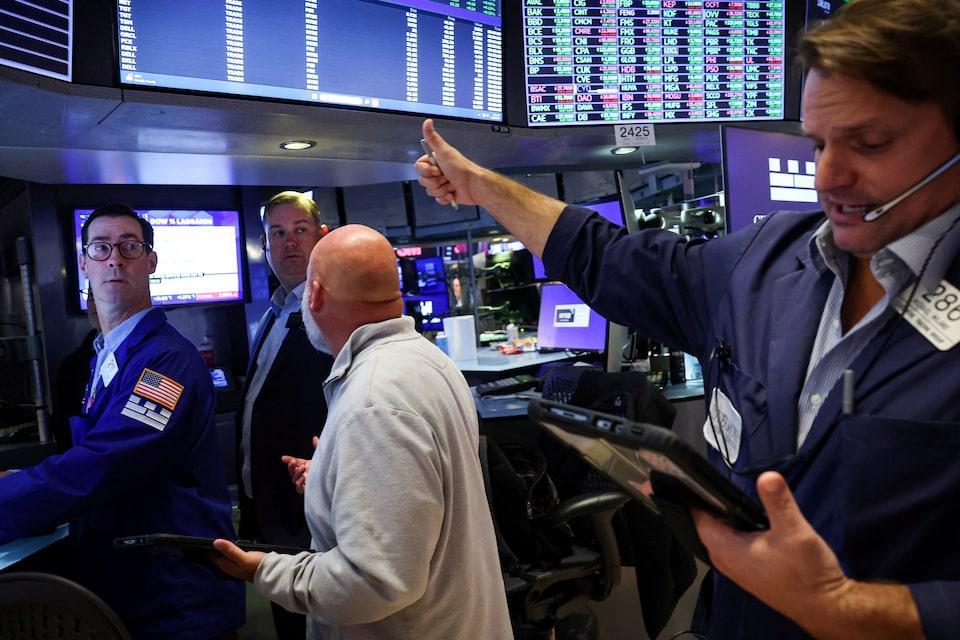
Oct 28 (Reuters) - What matters in U.S. and global markets today By Mike Dolan , opens new tab, Editor-At-Large, Finance and Markets Sign up here. Bulled up by another wave of AI deal-making and earnings excitement and with interest rates about to fall again, Wall Street now faces two days of critical monetary policy, earnings and global trade events that will test week's optimism. Despite months of fretting about possible bubbles in the AI gold rush, the world's most valuable stock, AI chip giant Nvidia, is poised to top $5 trillion in market value for the first time at the market open on Wednesday - just three months after it crossed the $4 trillion mark. Microsoft and Apple are now above or flirting with $4 trillion market caps too. The top four U.S. megacaps now have a market value in excess of the entire European STOXX 600 index, which is just under $14 trillion. Nvidia shares jumped 5% on Tuesday and another 2.8% in premarket trade today after CEO Jensen Huang announced $500 billion in AI chip orders and plans to build seven supercomputers for the U.S. government. And with optimism rising this week around some trade war detente at Thursday's crucial summit between President Donald Trump and China's President Xi Jinping in South Korea, Trump praised Nvidia's flagship Blackwell model as a "super-duper chip" and said he might speak to Xi about it following on-off curbs on tech exports this year. Meantime, Microsoft, Meta and Alphabet report earnings updates after Wednesday's market close and Apple and Amazon are out Thursday. Microsoft shares jumped 2% on Tuesday after it and OpenAI announced a restructuring that frees the ChatGPT maker to move away from nonprofit roots and go public - allowing it to finance CEO Sam Altman's ambitious plans to develop data centers and cutting-edge technology. With AI bullishness in overdrive, the potential downside of the technology was also in evidence this week - with sweeping job cuts announced by the likes of Amazon and UPS. With official economic data still absent due to the government shutdown, a preliminary estimate of an ADP National Employment Report showed the U.S. economy added an average of 14,250 jobs in the four weeks ending October 11. And it is softness in the labor market that's likely to keep the Federal Reserve cutting interest rates later on Wednesday, this time by another quarter point to below 4% for the first time in three years. Investors will also watch closely for an announcement on the end of its balance sheet rundown, so-called "quantitative tightening". Despite another heavy week of new debt sales, Treasury yields were subdued ahead of the decision - with the MOVE gauge of bond market volatility falling to its lowest in four years this week. The dollar was marginally firmer. And with AI driving the megacaps, Wall Street index futures were up again ahead of today's bell after hitting record closing highs on Tuesday. Elsewhere, the Bank of Canada is also expected to cut its interest rates today by a quarter point. Tomorrow's decisions from the European Central Bank and Bank of Japan are expected to leave policy unchanged there. In the thick of the European earnings season, Deutsche Bank rose 1% after its positive earnings - but UBS dropped 1% despite a forecast-beating 74% surge in net profit. In today's column, I discuss the latest collapse in U.S. Treasury bond volatility and how it flies in the face of crisis warnings throughout the year. Today's Market Minute Chart of the day Nvidia was set to make history on Wednesday by becoming the first company to notch $5 trillion market value, extending a powerful rally that has cemented its place at the center of the artificial intelligence boom. President Donald Trump said he will speak to Chinese President Xi Jinping about Nvidia's state-of-the-art Blackwell AI chip at their expected meeting on Thursday. Sales of the U.S. firm's high-end AI chips to China, which accounted for 13% of its revenue in the past financial year, have been a key sticking point in protracted trade talks between the world's two largest economies this year. Today's events to watch * U.S. Federal Reserve's Federal Open Market Committee policy decision (2:00 PM EDT), with press conference from Fed Chair Jerome Powell (2:30 PM EDT) * Bank of Canada interest rate decision (9:45 AM EDT) * U.S. corporate earnings: Microsoft, Meta, Alphabet, eBay, MGM, Boeing, Caterpillar, Equinix, Ventas, Verizon, Kraft Heinz, Everest, Starbucks, CVS, Centene, Align, GE Healthcare, Tyler, Fiserv, Masco, Cognizant, AvalonBay, ADP, Otis, Chipotle, DaVita, Garmin, Rollins, Dayforce, ServiceNow, NiSource, KLA, Smurfit Westrock, American Water Works, American Electric Power, Phillips 66, IDEX, Fortive, TE, Verisk, Generac, CH Robinson, Extra Space, Public Storage, Essex Property, Entergy, UDR * U.S. Treasury sells 2-year floating rate notes * U.S. President Donald Trump visits South Korea Want to receive the Morning Bid in your inbox every weekday morning? Sign up for the newsletter here. You can find ROI on the Reuters website , opens new tab, and you can follow us on LinkedIn , opens new tab and X. , opens new tab Opinions expressed are those of the author. They do not reflect the views of Reuters News, which, under the Trust Principles , opens new tab, is committed to integrity, independence, and freedom from bias. https://www.reuters.com/business/finance/global-markets-view-usa-2025-10-29/
2025-10-29 11:27
MOSCOW, Oct 29 (Reuters) - Newly imposed U.S. and EU sanctions targeting Russia and its oil giants Rosneft (ROSN.MM) , opens new tab and Lukoil (LKOH.MM) , opens new tab have yet to disrupt physical crude shipments from the country’s western ports, according to LSEG data and market sources. Despite weather-related constraints and sanction pressure, October exports from western ports of Primorsk, Ust-Luga and Novorossiisk are seen at about 2.33 million barrels per day (bpd), in line with Russia’s revised monthly programme, LSEG data shows and sources say. Sign up here. Russia's western oil exports are under pressure from new U.S. sanctions, sources say, as Urals oil loaded from the ports is purchased by India and Turkey which are expected to comply with the new restrictions imposed by the West. The U.S. set a November 21 deadline to wind down all dealings with Rosneft and Lukoil. Given the roughly four-week voyage from Baltic ports to Indian refineries, shipments loaded now may arrive to buyers after the cutoff date, raising logistical and financial risks. "Everything that is loaded in Primorsk now, will arrive in India after November 21," one of the sources said. He added that there may be issues with banks over payments for the barrels, noting that Russian oil sellers don't want to be paid in rupees. Indian refiners have yet to decide what to do about their Russian oil purchases. India’s Reliance Industries, a major Rosneft customer, said it is assessing the impact of the sanctions on its crude supply contracts. The sources expect Russian oil sales to be handed over to intermediaries and trading firms, which will increase costs for sellers but may shield buyers from sanctions-related risks. https://www.reuters.com/business/energy/russias-oil-exports-hold-steady-fresh-sanctions-yet-make-impact-2025-10-29/

2025-10-29 11:15
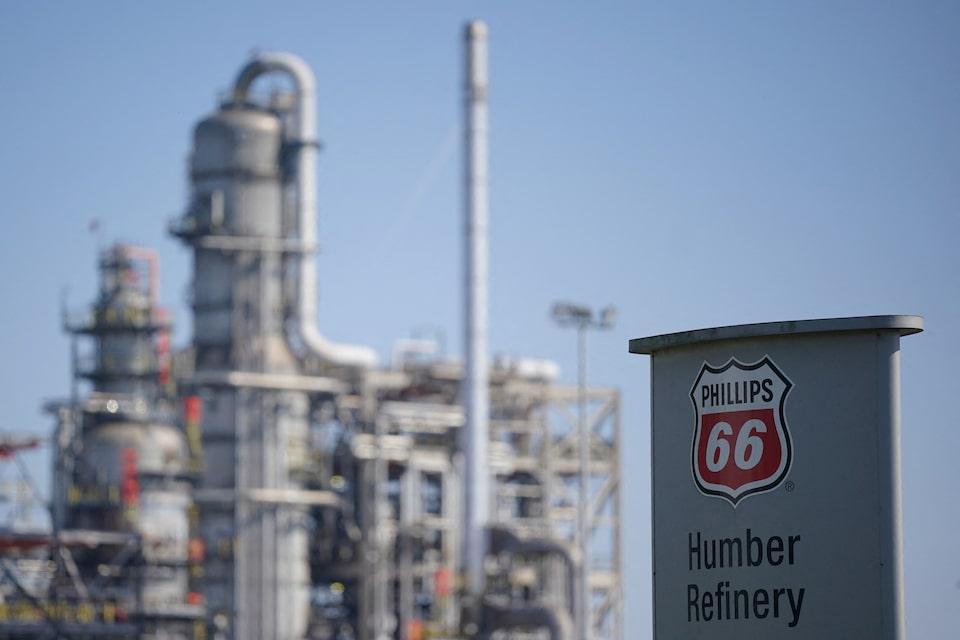
Oct 29 (Reuters) - Refiner Phillips 66 (PSX.N) , opens new tab beat Wall Street estimates for third-quarter profit on Wednesday, helped by stronger fuel margins and record volumes in its pipeline business. Shares of the company rose 1% in premarket trade. Sign up here. U.S. refining margins have rebounded from multi-year lows, recovering after last year's slump, when profits cooled from post-pandemic highs and supply shocks triggered by Russia's invasion of Ukraine in 2022 faded. Quarterly U.S. refinery margins on an average jumped about 25% from multi-year lows. The recovery has helped top refiners including Valero Energy (VLO.N) , opens new tab post stronger-than-expected quarterly results. Phillips 66's realized margin rose to $12.15 per barrel in the quarter, up about 46% from a year earlier, while the refining segment reported adjusted earnings of $430 million, compared with a loss of $67 million a year earlier. The refiner's midstream segment, which transports products such as gasoline, diesel and natural gas liquids through its pipelines, reported adjusted earnings of $697 million, up about 4% from a year earlier. The company said its refining segment's income was partially offset by higher environmental costs primarily associated with the planned idling of the Los Angeles Refinery. Phillips 66 said it has ceased processing crude oil at the Los Angeles Refinery on October 16, with remaining units expected to be idled by year end. The refiner's crude capacity utilization in the quarter was at 99%, compared with 94% from a year earlier, while turnaround expenses fell about 74% to $36 million. It reported an adjusted profit of $2.52 per share for the three months ended September 30, compared with analysts' average estimate of $2.17 per share, according to data compiled by LSEG. https://www.reuters.com/business/energy/phillips-66-beats-quarterly-profit-estimates-strong-refining-margins-2025-10-29/
2025-10-29 11:01
MUMBAI, Oct 29 (Reuters) - Silver premiums in India have fallen sharply as demand eased following the last two weeks' festive rush, prompting potential buyers to delay purchases, bullion dealers told Reuters. Earlier this month, premiums in the world's largest consumer of silver climbed as high as 10% over official domestic prices amid strong demand, forcing some physically-backed exchange-traded funds to temporarily suspend new subscriptions. Sign up here. "The rush to buy silver is over. Demand has slowed, and premiums have returned to normal levels," said Chirag Thakkar, chief executive of Amrapali Group Gujarat, a leading silver importer. BUYERS TURN WARY Silver premiums over official domestic prices have come down to 25 to 40 cents per ounce this week from more than $5 earlier this month, dealers said. Indians were celebrating the Dhanteras and Diwali festivals earlier this month, when buying gold and silver is considered auspicious and among the busiest bullion-buying days in the country. During the price rally, investors eagerly pursued silver, often paying higher premiums than usual, said a Mumbai-based bullion dealer with a private bank. "Now, sentiment has changed due to the recent price correction. Investors are waiting for prices to settle before making purchases," the dealer said. Domestic silver prices have corrected to 147,000 rupees ($1,672) a kg after hitting a record high of 170,415 rupees earlier this month. Silver prices have risen 68% so far this year. This price rally attracted a record inflow of 53.42 billion rupees into silver ETFs in September and more than doubled India's silver imports from August, reaching 1,012 metric tons. In the second week of October, ETFs struggled to procure silver in the local market due to shortages, but supplies are now sufficient, said a fund manager, who declined to be named. Flows into silver ETFs have also slowed over the past few days, he said. Earlier this month, rising Indian demand also pushed up silver lease rates, the cost of borrowing physical silver in London. ($1 = 87.8950 Indian rupees) https://www.reuters.com/world/india/indias-silver-demand-eases-premiums-fall-after-festive-surge-2025-10-29/

2025-10-29 10:57
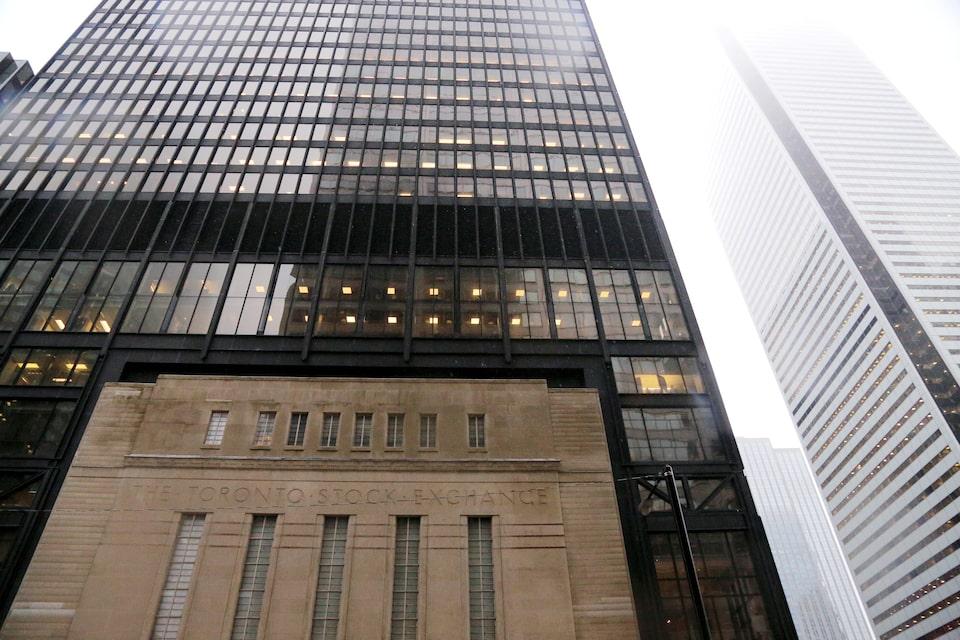
TORONTO, Oct 29 (Reuters) - Canada's main stock index fell on Wednesday as the Bank of Canada cut interest rates to support a faltering economy and investors worried that an upcoming federal budget could show hefty deficit spending. The S&P/TSX composite index (.GSPTSE) , opens new tab ended down 274.90 points, or 0.9%, at 30,144.78. Sign up here. The Bank of Canada signaled an end to its interest rate cutting cycle after lowering its benchmark rate to a three-year low of 2.25%, and cut its 2025 growth forecast to 1.2% from 1.8% in January. "The worrying thing is (interest rates) were cut because our economy is weakening as this trade dispute continues" with the United States, said Michael Sprung, president at Sprung Investment Management. "The other thing that is really on investors' minds in Canada is the budget next week, rumors have it that it could be an extremely high deficit again." Canada is due to present its federal budget on Tuesday. Economists forecast the government's fiscal deficit for the 2025-26 fiscal year will be between C$70 billion ($49.91 billion) and C$100 billion, a massive jump from the projected C$43 billion for the fiscal year that ended March 2025. The U.S. benchmark S&P 500 finished close to flat after the Federal Reserve cut interest rates but Fed Chair Jerome Powell said another rate cut in December is far from assured. Consumer staples (.GSPTTCS) , opens new tab posted the biggest decline among the 10 major sectors, falling 3.7%. Technology lost 1.7%, with shares of Constellation Software Inc (CSU.TO) , opens new tab down nearly 8%. Industrials (.GSPTTIN) , opens new tab declined 1.6% and heavily weighted financials (.SPTTFS) , opens new tab ended 1.3% lower. Energy was a bright spot (.SPTTEN) , opens new tab. It added 1% as the price of oil settled 0.55% higher at $60.48 a barrel. The materials group (.GSPTTMT) , opens new tab, which includes metal-mining shares, also notched gains, adding 0.3%, as copper prices rose. ($1 = 1.4024 Canadian dollars) https://www.reuters.com/business/tsx-futures-steady-boc-fed-rate-decisions-awaited-2025-10-29/
2025-10-29 10:54
MONROVIA, Oct 29 (Reuters) - Liberia has replaced its mining minister and top mining regulator, the office of President Joseph Boakai announced, as the West African nation and iron ore producer pursues talks with Washington on investments in its critical minerals sector. The new minister, R. Matenokay Tingban, served as deputy mining minister under former President Ellen Johnson Sirleaf. Sign up here. The decision to appoint him in place of the previous minister, Wilmot J.M. Paye, is part of moves to improve governance and efficiency, Boakai's office said in a statement on Monday, without elaborating. A second statement on Tuesday named a new head for the state mining regulator. The changes come as Liberia seeks to attract foreign investment into its mining industry, which recently identified deposits of lithium, cobalt, manganese and rare earths, minerals vital for electric vehicles and renewable energy technologies. U.S. Secretary of State Marco Rubio met Liberian Foreign Minister Sara Beysolow Nyanti in Washington on October 17 to discuss expanding U.S. participation in mining, the State Department said. Tingban will oversee a ministry central to Liberia's plans to boost investor confidence under Boakai's "ARREST Agenda", a five-year national development strategy. Boakai also appointed new deputies at the mines and education ministries. Some of the appointments require Senate confirmation. Iron ore remains Liberia's top mineral export, with ArcelorMittal (MT.LU) , opens new taboperating , opens new tab its largest mine and rail network, though gold has recently become a critical foreign exchange earner. Other players in the minerals sector include Ivanhoe (IVN.TO) , opens new tab, Bea Mountain (Avesoro), MNG Gold and Hummingbird Resources. https://www.reuters.com/sustainability/climate-energy/liberia-replaces-mines-minister-amid-talks-us-investments-2025-10-29/




