2025-10-29 00:59
Headline CPI rises 1.3% in Q3, largest in 2-1/2 years Core inflation beats at 1.0%, above RBA's forecasts Market pricing for Nov cut at just 8%, Dec less than 25% SYDNEY, Oct 29 (Reuters) - Australian consumer prices jumped by the most in 2-1/2 years in the September quarter as electricity and travel costs climbed, while a shockingly large increase in the core inflation reading seemed to rule out any imminent rate cuts. Investors gave up any remaining hopes for a rate cut from the Reserve Bank of Australia next week, which is now just 8% priced in, down from 40% before the data. The chance of a cut in December is now seen as less than 25%. Sign up here. Rates are seen bottoming at 3.35% by mid-2026 from the current 3.6%, implying just one last cut in the easing cycle. Economists at the Commonwealth Bank of Australia abandoned their call for one more rate cut in February after the hot inflation figures and now expect the cash rate to remain on hold for a prolonged period. "It would take a material upside move in the unemployment rate and more moderate inflation prints to bring the RBA back to the easing table," said Belinda Allen, head of Australian economics at CBA. "Instead, the RBA will now turn more hawkish and look to prevent a return to higher inflation." Data from the Australian Bureau of Statistics on Wednesday showed the consumer price index (CPI) rose 1.3% in the third quarter, topping forecasts of a 1.1% increase. The annual CPI inflation rate jumped to 3.2%, from 2.1%, above the top end of the RBA's 2% to 3% target band. Crucially, the key trimmed mean measure of core inflation accelerated by 1.0% in the quarter, well above forecasts of a 0.8% gain and unwelcome news for the RBA, which had looked for something nearer 0.6%. The annual pace rose to 3.0%, from 2.7%, the first increase since a peak of 6.8% in late 2022. The Australian dollar gained 0.2% to 66 cents after the data release, while three-year government bond futures fell 11 ticks to 96.43, the lowest in two weeks. Westpac too joined the other 'big four' banks on Wednesday in calling a rate hold in November after the inflation data. ELECTRICITY, HOLIDAY TRAVEL COSTS RISE Rate-cut hopes have faded since RBA Governor Michele Bullock said on Monday that even a 0.9% rise in the core measure would be a "material miss" to the central bank's forecasts, while labelling an unexpected surge in the jobless rate to 4.5% a statistical quirk. Adam Boyton, head of Australian economics at ANZ, said if the economy proves to be materially weaker than anticipated, the RBA does have the option to ease in December, but the hurdle for any easing this year is now very high. "We expect the more likely path for policy will be a final 25 bps easing in the first half of 2026, albeit now with the risk that our expectation of a final rate cut in February ends up occurring later or not at all." Details of the inflation report showed the largest price gains in the September quarter came in electricity, which jumped 9% as government energy subsidies ended, and local government charges paid by property owners, which surged 6.3%, the fastest pace since 2014. There was also upward pressure on services costs, with annual services inflation picking up to 3.5% in the quarter. Holiday travel and accommodation prices rose 2.5%, thanks to robust demand over school holidays. From next month, the bureau will publish complete monthly inflation data, versus partial data at present. But the RBA has said it will still focus on the quarterly reports as the seasonal adjustments in the new monthly reports will take some time catching up. https://www.reuters.com/world/asia-pacific/australia-core-inflation-jumps-q3-red-flag-rate-cut-2025-10-29/

2025-10-29 00:58
Japan must balance growth, inflationary concerns, Bessent says Remark adds to complications for monetary dove Takaichi BOJ meets for policy setting, markets see rates on hold TOKYO, Oct 29 (Reuters) - U.S. Treasury Secretary Scott Bessent urged Japan's government on Wednesday to give the central bank scope to raise interest rates, escalating his warning to Tokyo against keeping the yen too weak through prolonged low borrowing costs. The dollar fell 0.3% to 151.59 yen after the comments, which revived market expectations of a near-term interest rate hike by the Bank of Japan. Sign up here. "I am encouraged by her deep understanding of how Abenomics has moved from a purely reflationary policy to a program that must balance growth and inflationary concerns for the citizens of Japan," Bessent said in an X post about his meeting with Japanese Finance Minister Satsuki Katayama on Monday. "The government's willingness to allow the Bank of Japan policy space will be key to anchoring inflation expectations and avoiding excess exchange rate volatility," he added. The comments come ahead of the BOJ's two-day policy meeting ending on Thursday, when markets widely expect the central bank to hold off on raising interest rates. They also followed a statement by Bessent on Tuesday, which said he called for a "sound monetary policy" in Japan to anchor inflation expectations during his meeting with Katayama. "Bessent might have felt that without his pressure, the BOJ could keep delaying rate hikes," said Mari Iwashita, executive rates strategist at Nomura Securities. "But just raising rates once more won't move the yen much. I think Bessent is asking for clearer communication on how far the BOJ will eventually push up borrowing costs," she said. Bessent's comments add to complications for the administration of new Prime Minister Sanae Takaichi, who is known as an advocate of expansionary fiscal and monetary policy. Japan's top government spokesperson Minoru Kihara declined to comment on Bessent's X post. "Specific means of monetary policy falls under the jurisdiction of the BOJ," he told a news briefing on Wednesday. CONDITIONS ARE DIFFERENT NOW TO 'ABENOMICS' TIME Takaichi was close to former premier Shinzo Abe, who deployed his "Abenomics" fiscal and monetary stimulus policies 12 years ago to pull Japan out of deflation and combat a yen spike that had been hurting the export-reliant economy. Japan now faces different challenges. With inflation above its target, the BOJ exited remnants of Abenomics last year and raised rates twice through January. A weak yen has become a political headache by boosting import costs and inflation. "Bessent is correct in pointing out that Japan's economic and price conditions have changed dramatically from the time Abenomics was deployed," said Shotaro Mori, senior economist at SBI Shinsei Bank. "The BOJ understands that well, which means we should brace for the chance of a rate hike in December, or January next year." In overseeing Washington's trade and exchange-rate talks with Tokyo, Bessent has repeatedly signalled his preference for tighter Japanese monetary policy. Some analysts see Washington pursuing a weak-dollar policy that would boost U.S. exports, thereby applying pressure on Japan to allow the yen to appreciate against the dollar. https://www.reuters.com/world/asia-pacific/us-treasurys-bessent-urges-japan-government-allow-boj-policy-space-2025-10-29/
2025-10-29 00:47
SEOUL, Oct 29 (Reuters) - SK Hynix (000660.KS) , opens new tab on Wednesday said it expects the global memory chip market to experience a prolonged "super cycle", and that supply growth is likely to be limited just as demand for AI applications expands. Sign up here. https://www.reuters.com/world/china/sk-hynix-sees-memory-chip-super-cycle-be-prolonged-2025-10-29/

2025-10-29 00:18
LONDON, Oct 29 (Reuters) - Pay awards granted by British employers are likely to hold at their current 3% level over the next 12 months as caution dominates and the impact of high inflation fades, data firm Brightmine said on Wednesday. With the Bank of England watching for weaker inflation pressure before resuming its interest rate cuts, Brightmine said only 23% of employers it surveyed expected to raise pay awards, with 45% seeing no change and 32% predicting lower settlements. Sign up here. In 2023, pay awards were running at an average of 6% - double their current rate - after a spike in inflation to more than 11% in October 2022 following Russia's full-scale invasion of Ukraine. The expected award of 3% is below the most recent reading of headline inflation which stood at 3.8% in September. Affordability concerns and the impact of finance minister Rachel Reeves' decision to raise employers' social security contributions in her 2024 budget were capping pay awards, Brightmine said. "The next year will test organisations' ability to remain competitive while managing tight budgets," Sheila Attwood, Brightmine senior content manager, said, noting a growing focus on benefits, recognition and skills-based pay. Brightmine said pay awards held at 3% in the three months to the end of September, extending the pattern seen in 2025. Its forecasts for the next 12 months was based on research conducted in August and September, covering 213 organisations with a total of 600,000 employees. Official pay data has shown a slowing of overall earnings growth which BoE Governor Andrew Bailey has said backed his view that inflation pressures in the economy were easing. A survey published by the Confederation of British Industry on Wednesday showed firms expected activity to fall over the next three months, extending a run that began in late 2024, with uncertainty over Reeves' November 26 budget a cause for concern. https://www.reuters.com/business/world-at-work/wary-uk-employers-set-hold-pay-awards-3-brightmine-says-2025-10-29/
2025-10-28 23:54
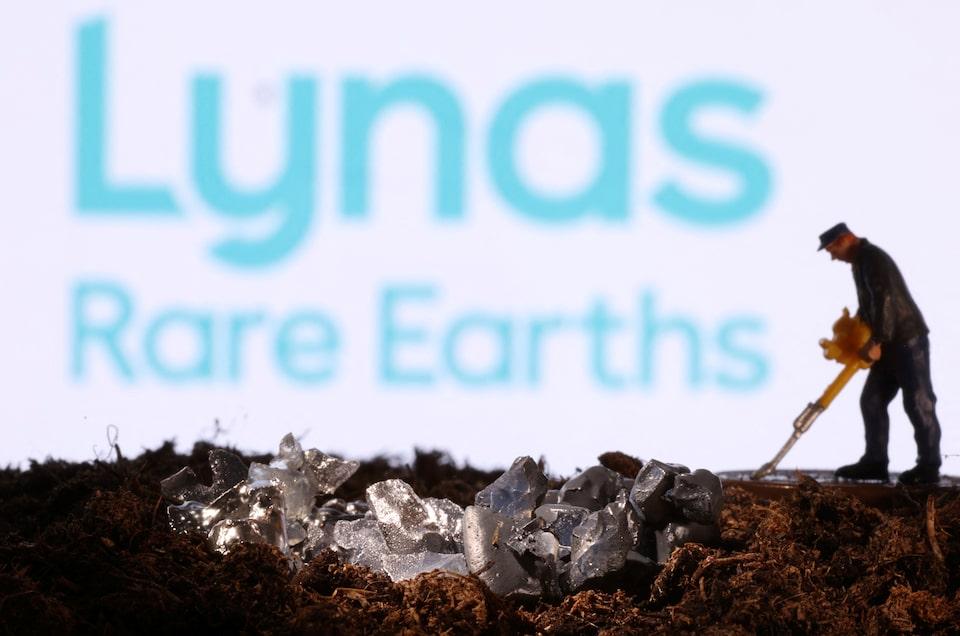
Facility to separate up to 5,000 tonnes per annum of heavy rare-earth feedstock Lynas in talks with partners for product offtake deals Shares down more than 1% Oct 29 (Reuters) - Australia's Lynas Rare Earths (LYC.AX) , opens new tab indicated rising demand for heavy rare earth oxides sourced outside China as it announced a new separation facility in Malaysia on Wednesday. Lynas, the world's largest rare-earth producer outside China, said the project would cost about A$180 million ($116.96 million) and will have the capacity to separate up to 5,000 tonnes per annum of heavy rare-earth feedstock. Sign up here. "Market demand for heavy rare earths is high and Lynas can be selective in where, and at what price, we sell heavy rare earth oxides," said CEO Amanda Lacaze. Feedstock will be supplied from Lynas' Mt Weld operations in Western Australia as well as other developing sources. The timeline for the project's construction is subject to regulatory approvals, the company said. Lynas said it is currently in discussions with various offtake partners to secure deals for the expanded range of products at fair prices. Shares of the company extended declines for the fourth consecutive session, slipping more than 1% to A$15.63 as of 2345 GMT after reports of a possible delay in Chinese rare earths curbs. ($1 = 1.5389 Australian dollars) https://www.reuters.com/world/asia-pacific/australias-lynas-plans-build-new-rare-earth-facility-malaysia-2025-10-28/
2025-10-28 23:07
Oct 28 (Reuters) - Walmart's Mexico and Central America unit (WALMEX.MX) , opens new tab reported on Tuesday a 9% drop in third-quarter net profit, mainly due to higher financial costs and a one-off accounting adjustment, despite growth in sales and operational efficiencies. Net profit for Mexico's largest retailer was 11.75 billion pesos ($641.41 million) in the three months through September, below the 13.7 billion-peso forecast of analysts polled by LSEG. Sign up here. Revenues for Walmex, as the company is known, rose 5% year-on-year to 241.52 billion pesos - slightly below analysts' estimate of 244.8 billion pesos. However, financial expenses rose by 65.7% compared to the same period in 2024, reaching 2.7 billion pesos, while a non-recurrent item impacted the consolidated net income margin. Walmex, which operates Walmart and Sam's Club stores as well as low-cost supermarket chain Bodega Aurrera, is one of Mexico's largest private employers. The quarterly results are Walmex's first under new Chief Executive Cristian Barrientos, who was named acting CEO on August 1 and confirmed as CEO and chair on October 7, replacing Ignacio Caride, who stepped down after fewer than two years in the role. In a presentation on Tuesday, Barrientos celebrated the company's "solid business fundamentals" while noting a volatile economic backdrop. "Given the ongoing uncertainty around tariffs, the coming USMCA (U.S.-Mexico-Canada trade agreement) renegotiation, and volatile consumption, we are encouraged by our team's ability to execute the priorities we have defined," Barrientos said, highlighting the company's "three non-negotiable pillars" of price leadership, product availability and the acceleration of e-commerce. The company reported a 3.9% rise in same-store sales in Mexico and 0.6% growth in Central America. It added 23 stores in Mexico and three in Central America. Looking ahead to the fourth quarter, CFO Paulo Garcia said Walmex was well positioned to navigate the economic environment and that the company is expecting performance in line with the two previous quarters, with "similar top-line growth levels and accelerated market share gains" as well as profit improvement. ($1 = 18.3147 Mexican pesos at end-September) https://www.reuters.com/business/retail-consumer/walmarts-mexico-unit-posts-9-drop-q3-profit-below-forecasts-2025-10-28/