2025-10-28 00:20
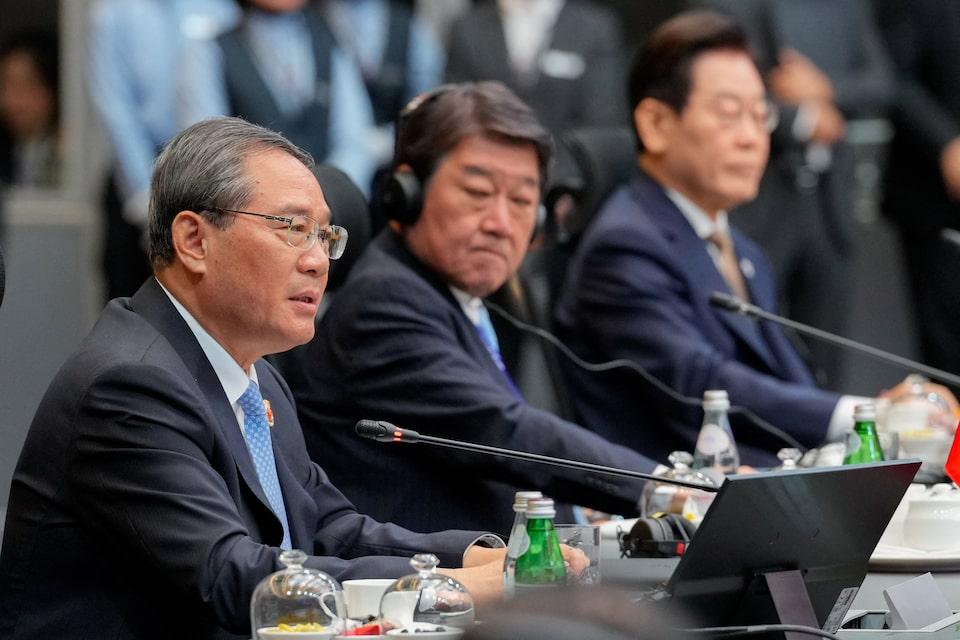
BEIJING, Oct 28 (Reuters) - China has called on its neighbours Japan, South Korea, and ASEAN countries to make greater efforts in science and technology, including carrying out joint scientific and technological research, according to the official Xinhua. Chinese Premier Li Qiang pointed to opportunities in artificial intelligence, robotics, and biomedicine, brought about by scientific and technological revolution and an industrial transformation. Sign up here. In remarks at a leaders' meeting with ASEAN, Japan, and South Korea in Malaysia and published by Xinhua late on Monday, Li said China is willing to continue to cooperating in the digital economy, electric vehicles and clean energy. "We must persist in properly resolving differences through dialogue and consultation, oppose external interference, and avoid artificially creating tension and conflict," he said in a speech at the meeting. https://www.reuters.com/sustainability/climate-energy/china-urges-joint-efforts-with-japan-south-korea-asean-science-tech-2025-10-28/
2025-10-28 00:07
LONDON, Oct 28 (Reuters) - British retailers cut their prices in October, led by the biggest drop for food in almost five years, industry figures showed, offering a bit of relief to households before Halloween as well as the Bank of England and the government. Overall shop prices fell by 0.3% from September, the first month-on-month drop since March, the British Retail Consortium said on Tuesday. Sign up here. A monthly 0.4% drop in food prices was the biggest such fall since December 2020, the BRC said. Compared with October last year, overall shop prices were 1.0% higher after a 1.4% rise in September, the first time that the annual pace of increases has slowed since June. Annual food price inflation was also cooler at 3.7% compared with October last year, down from 4.2% in September, although fresh food prices continued to accelerate. The BoE is watching food prices closely as it believes they have a big role in shaping public inflation expectations. Last week, official data showed Britain's headline inflation rate held at 3.8%, the highest since early 2024 but below forecasts of an increase to 4.0%. BRC Chief Executive Helen Dickinson highlighted fierce competition amongst retailers, widespread discounting and an easing of global sugar prices which helped to bring down prices of chocolate and confectionary ahead of Halloween. Some retailers started promotions for electrical goods and beauty products before the Black Friday sales that typically fall in November, Dickinson said. She called on finance minister Rachel Reeves not to increase the cost burden on the sector in her budget on November 26. "Adding further taxes on retail businesses would inevitably keep inflation higher for longer," Dickinson said. Reeves has said she will use her budget to bring down the cost of living. https://www.reuters.com/world/uk/uk-shop-prices-fall-first-time-since-march-retailers-say-2025-10-28/

2025-10-27 23:29
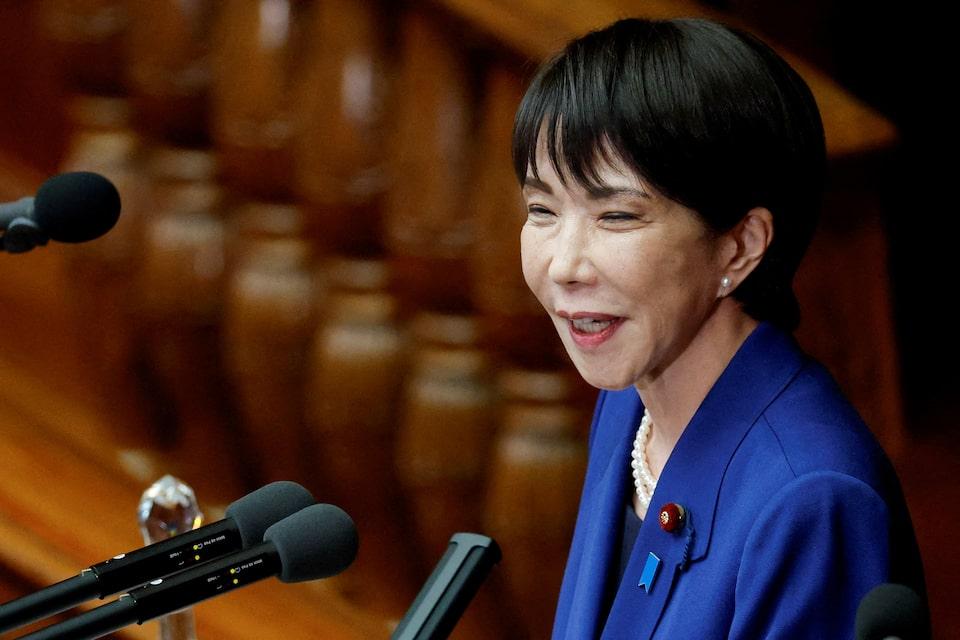
TOKYO, Oct 28 (Reuters) - Japanese Prime Minister Sanae Takaichi and U.S. President Donald Trump are in the final stages of preparing a joint document on securing rare earths and other critical minerals and strengthening supply chains, the Asahi Newspaper reported on Tuesday. The agreement, which the two leaders plan to sign during their meeting later on Tuesday, aims to address economic security concerns following China's move in October to tighten export controls on rare earths, which are crucial for a wide range of products from smartphones to fighter jets, the paper said citing Japanese government officials. Sign up here. In response to China's dominance in global production, the White House had initially planned to impose a 100% additional tariff on Chinese exports. But Washington and Beijing on Sunday reached a framework for a trade deal that could pause planned U.S. tariffs and Chinese export controls on critical minerals. Trump and Chinese President Xi Jinping are due to meet on Thursday on the sidelines of the Asia-Pacific Economic Cooperation summit in South Korea to sign off on the terms. https://www.reuters.com/world/china/takaichi-trump-sign-joint-document-securing-rare-earth-minerals-asahi-says-2025-10-27/
2025-10-27 23:17
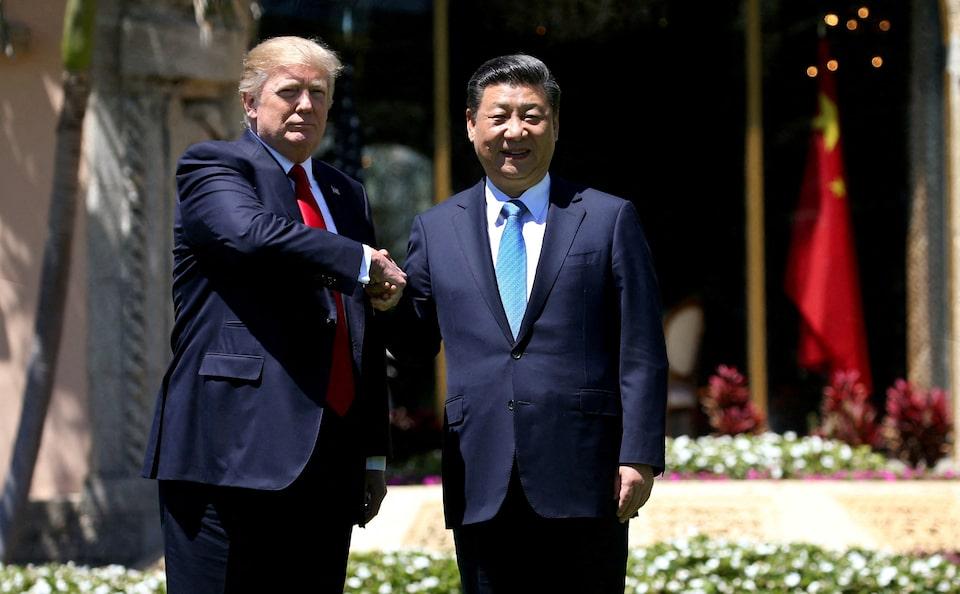
Stock markets buoyed again by US-China trade developments Investors say history repeats in Trump's threats and subsequent de-escalation Some investors expect meeting outcome will disappoint markets Lofty market valuations heighten downside risks NEW YORK/LONDON, Oct 28 (Reuters) - Investors are heading into this week's trade talks between the U.S. and Chinese leaders with a sense of deja vu, excited by the proclamations of a truce and apprehensive the real deal may offer far less to celebrate. Stock markets across the world jumped on Monday after U.S. officials said negotiators from both sides had hashed out a framework for agreements for lower U.S. tariffs on Chinese imports and Chinese concessions on rare earth export curbs. Sign up here. As expectations build for U.S. President Donald Trump to sign that deal with Chinese President Xi Jinping on Thursday and for some respite in the long mercurial relationship between the world's top two economies, the S&P 500 index (.SPX) , opens new tab rose 1% to hit a record high. Stock markets in South Korea (.KS11) , opens new tab, Taiwan (.TWII) , opens new tab and Japan (.N225) , opens new tab, too, notched new highs, while traditional havens such as gold fell in a sign investors were prepared to take more risky bets. It's a pattern markets have followed through Trump's first and now second presidencies, such as during the 2019 trade war with China and after his "Liberation Day" global tariff blitz this year, positioning for Trump to eventually back down after going on the offensive against trade partners. "We had this big headline, markets sold off, we had some wobbles on that, but now it seems that talks are constructive again and now that's being faded," Evelyne Gomez-Liechti, multi-asset strategist at Mizuho, said. "To be honest whenever we get all these headlines from Trump it also follows this TACO pattern. I feel like this was just the strategy again," she said. "TACO" - Trump Always Chickens Out - is a Wall Street acronym for the view that the president makes big threats but eventually backs down. In the past month, stocks fell after Trump threatened to impose additional 100% tariffs on imports from China as well as export controls on critical U.S.-made software, after Beijing tightened its rare earth restrictions. Repeating the TACO pattern, Chinese stocks (.CSI300) , opens new tab have been rising for more than a week in the run-up to the Xi-Trump talks. Even if the Trump-Xi meeting does not produce a definitive end to their trade war, investors are prepared to buy into any de-escalation in tensions. "There is not an insignificant number of discretionary fund managers who have been wary given enormous ructions we've been seeing to the global trade environment," said Ross Hutchison, head of euro zone market strategy at Zurich Insurance Group. "There genuinely is scope for those investors to buy into positive news flow here," he said. DOWNSIDE RISKS While trading the trade talks has become a familiar drill, investors have other reasons to be both bullish and cautious. "The risk of having a bad outcome in order to score political points is not that high because there's not that many political points to be scored on either side," said Thomas Christiansen, chief investment officer and head of emerging market debt at private bank Union Bancaire Privée, London. "Ultimately if you think of this as some sort of prisoner's dilemma, the right outcome is always going to be some level of agreement." Also, the Federal Reserve could be cutting rates this week again and even possibly easing liquidity, which could further stoke the market rally. However, with stocks at all-time highs and heavy concentration in AI-related stocks, disappointing earnings could offset any optimism from a U.S.-China trade deal or amplify a negative outcome from the Trump-Xi meeting. "It is not symmetrical. The market will react to the downside more than the upside," said Tracy Chen, Brandywine Global portfolio manager of global fixed income. The market is assuming that eventually there will be an average 15% reciprocal tariff between the U.S. and most of its trade partners, said Art Hogan, chief market strategist at B. Riley Wealth. "If something adversely affects that, one way or the other, I certainly think that there's more downside risk," he said. Investors have history as a guide to such letdowns too, the latest being after the May 2025 U.S. deal with China in Geneva. "U.S. and China have a history of negotiations breaking down even after a preliminary agreement," Thierry Wizman, Global FX & Rates Strategist at Macquarie, said in a note. "We expect the enthusiasm to fade," he said. https://www.reuters.com/world/china/trump-xi-trade-talks-near-investors-turn-history-guide-2025-10-27/
2025-10-27 23:06
SYDNEY, Oct 28 (Reuters) - Two workers were killed and another injured in an explosion at a recently reopened mine in Australia's New South Wales state early on Tuesday, an incident the state's premier called a "sobering reminder" of the industry's dangers. Emergency services were called to the remote mining town of Cobar, some 700 km (435 miles) northwest of Sydney, after being told people were critically injured in a workplace incident, police said. Sign up here. Australian media reported the incident occurred at the Endeavor silver, zinc and lead mine, owned by Polymetals Resources Ltd (POL.AX) , opens new tab. Polymetals did not immediately respond to a request for comment. The mine has operated since 1982 but was closed for maintenance in 2020. Polymetals bought the site in 2023 and restarted mining operations this year, according to the company's website. New South Wales Premier Chris Minns said that although mining safety has greatly improved, the deaths show that the sector must never stop being vigilant about worker safety. "This is a heartbreaking day for the Cobar community and will be felt across the entire mining industry," Minns said in a statement. https://www.reuters.com/world/asia-pacific/two-dead-explosion-underground-mine-australia-police-says-2025-10-27/

2025-10-27 23:05
OPEC+ meets on November 2 to discuss oil production targets Trump will likely repeat call on OPEC to increase output after hitting Russia with sanctions Russia likely to support stopping or reversing increases LONDON, Oct 28 (Reuters) - Saudi Arabia is caught between Donald Trump and a hard place, as the U.S. president’s latest oil sanctions on Russia force Riyadh to weigh competing geopolitical and economic priorities. Washington last week sanctioned Russia's top two oil companies Rosneft and Lukoil, which jointly produce around 5% of global oil supplies. The U.S. is seeking to squeeze the Kremlin’s revenue to pressure Moscow to return to the negotiating table to end the war in Ukraine. Sign up here. The move has sent oil prices up 5% since October 23 to around $66 a barrel on fears that the sanctions and potential retaliation could constrain global oil supplies. This creates a diplomatic conundrum for Saudi Arabia. The de facto leader of the Organization of the Petroleum Exporting Countries will need to balance its own strategic goals with its need to maintain the group’s alliance with Russia and other major producers, collectively known as OPEC+. OPPOSING INTERESTS OPEC+ members will meet on November 2 to decide on their output quota for December. Reuters reported on Monday that the group is leaning towards a small increase of 137,000 barrels per day, though only a handful of members, including Saudi Arabia, appear to have the capacity to increase production. OPEC+ has increased its target since April by more than 2.7 million bpd, arguing that resilient global economic activity has boosted demand for oil. The additions have nevertheless contributed to what looks like a severe excess supply of oil that the International Energy Agency expects to continue throughout this year and next. Saudi Arabia is likely facing pressure from Russia to stop or even reverse OPEC+ production increases, as adding more oil into the market would exacerbate the glut and further curtail revenue for Moscow, which relies on oil and gas for a quarter of its federal budget. However, Trump will almost certainly push for the opposite when he meets Saudi Crown Prince Mohammed bin Salman in the White House on November 18, as media reports suggest. Riyadh has been looking to strengthen its strategic ties with the United States, as was clear during Trump's visit to the kingdom in May. Indeed, Saudi Arabia’s decision to increase production this year may be, at least in part, driven by Trump's repeated calls for OPEC to increase oil output to lower energy prices. The U.S. oil sanctions on Russia therefore create a rather complex calculus for the Saudis. UNCLEAR IMPACT ON OIL SUPPLIES To make matters more challenging, it is unclear what the supply impact of U.S. sanctions on Rosneft and Lukoil will actually be. The two firms have accounted for more than half of Russia’s 9.2 million bpd produced so far this year and 47% of the country’s seaborne crude oil exports of 3.5 million bpd, according to analytics firm Kpler. Rosneft also exports nearly 900,000 bpd of crude to China via pipeline. While several major buyers in India and China, the two biggest importers of Russian oil, have suspended purchases since Trump’s announcement to avoid U.S. reprisals, this does not mean Russian production will actually decline in the near term. Rather, the most likely scenario is that Russian oil will initially accumulate on vessels at sea before being gradually absorbed by smaller Chinese refiners and other buyers willing to use so-called "shadow fleet" tankers to circumvent the sanctions. Still, Trump's move could potentially lead to the removal of at least 1.5 million bpd of oil from the sanctions-abiding oil market, according to Reuters calculations. Moreover, the fracturing of the global oil market will likely lead to higher logistics and transportation costs and increased inefficiencies, driving oil prices higher, even if global supplies will not be reduced on an absolute basis. In short, OPEC – and the Saudis – will need to factor these sanctions into their calculations even though they will likely struggle to forecast the precise impact on supply. MAJOR TEST FOR SAUDI ARABIA Saudi Arabia's leadership of the OPEC+ alliance that was formed in 2016 may well face its biggest test to date as it tries to navigate the fallout from the U.S. sanctions on Russia. The kingdom, the world's largest oil exporter, certainly has capacity to increase its output and help Trump keep a lid on crude prices. Riyadh has already shown this year that it is willing to take a temporary hit from lower oil prices to both increase its market share and, potentially, please the White House. Indeed, even after Trump’s sanctions announcement last week, Brent crude is still down 12% on the year. But opposing Russia also risks fracturing cohesion within an already shaky OPEC+ alliance, one that has been the bedrock of the Kingdom’s successful market management strategy over the past nine years. Therefore, even if OPEC’s next move is small, the implications for Saudi strategy could be massive. Want to receive my column in your inbox every Monday and Thursday, along with additional energy insights and links to trending stories? Sign up for my Power Up newsletter here. Enjoying this column? Check out Reuters Open Interest (ROI), , opens new tabyour essential new source for global financial commentary. ROI delivers thought-provoking, data-driven analysis. Markets are moving faster than ever. ROI , opens new tab can help you keep up. Follow ROI on LinkedIn , opens new tab and X. , opens new tab https://www.reuters.com/markets/commodities/saudi-opec-strategy-pulled-by-warring-us-russia-interests-2025-10-27/




