2026-02-04 04:34
BEIJING, Feb 4 (Reuters) - China's leading solar firm Jinko Solar (688223.SS) , opens new tab has been visited by a team sent by Tesla (TSLA.O) , opens new tab CEO Elon Musk, state-backed media outlet 21st Century Business Herald reported on Wednesday. The team also visited other major Chinese solar firms, the report said, citing Jinko staff. Sign up here. https://www.reuters.com/sustainability/climate-energy/chinese-solar-giant-jinko-visited-by-elon-musks-team-state-backed-media-reports-2026-02-04/

2026-02-04 04:33
Refinery planned as part of Nanshan aluminium smelter expansion Refinery scaled at 100,000 bpd to 'test waters', source says Refinery to produce petcoke, a feedstock for smelter, source says Nanshan plans $1.8 billion investment in phase-one, official says SINGAPORE/JAKARTA, Feb 4 (Reuters) - China's Shandong Nanshan Group plans to build an oil refinery on Indonesia's Bintan island, where the privately controlled firm operates a large alumina plant, according to three Chinese sources and an Indonesian official. Chinese firms have been looking to set up refineries in Southeast Asia, where fuel demand is growing steadily while China's domestic oil consumption peaks due to rapid electrification of the automotive fleet. Sign up here. Nanshan Group, an aluminium producer that also holds a stake in major Chinese refiner Yulong Petrochemical, plans to build a 100,000 barrels-per-day crude refinery in the Galang Batang special economic zone on Bintan, an island about one hour by ferry from Singapore known for its holiday resorts. Nanshan is "proceeding with refinery design" and in the process of formalising detailed investment plans including the configuration of the petrochemical part of the complex, a senior source with direct knowledge of the project told Reuters. The refinery would also produce petroleum coke, a heavy residue used as feedstock for the aluminium smelter Nanshan plans to build in an extension to its alumina facility in the same economic zone, the person added. SMALLER PLANT TO 'TEST THE WATERS' Several plans for new Indonesian refineries backed by Middle Eastern state firms including Saudi Aramco and Kuwait Petroleum have failed to materialise in recent years. Nanshan's plan for a relatively small refinery is to "test the waters" because of "uncertain market conditions and regulatory environment" in Indonesia, the person said, speaking on condition of anonymity as the plan is not yet public. Bambang Wijanarko, a senior official at Indonesia's National Council for Special Economic Zones, said Nanshan plans to spend up to 30 trillion rupiah ($1.79 billion) for the first-phase investment of a refinery and petrochemical plant, with a target to spend up to 150 trillion rupiah over five years. Nanshan is "still fulfilling the requirements" to obtain the necessary permits, Wijanarko told Reuters by text message, without elaborating. Neither the senior industry source nor Wijanarko gave a timeline for the start of construction. Nanshan, however, has begun hiring engineers and managers experienced in refinery construction and operation, according to two separate industry sources with knowledge of the matter. Shandong Nanshan Aluminium Co Ltd, the group's main aluminium unit, did not respond to requests for comment. NANSHAN ADDING ALUMINIUM SMELTER AT SITE Nanshan last month announced plans to "initiate preparation work" to build a 250,000-tpy aluminium smelting unit in Bintan, part of a planned expansion of its 4 million tons per year alumina facility that began operation in 2022. Chinese firms have three refinery assets in Southeast Asia: PetroChina's stake in Singapore Refining Co; Hengyi Petrochemical's Brunei plant, which announced plans last month to expand; and Shandong Hengyuan Petrochemical's facility in Malaysia's Port Dickson. More recent efforts by two Chinese chemical groups to build a refinery complex in Indonesia's North Kalimantan province have yielded little progress. https://www.reuters.com/business/energy/chinas-nanshan-group-plans-100000-bpd-refinery-indonesia-2026-02-04/

2026-02-04 03:30
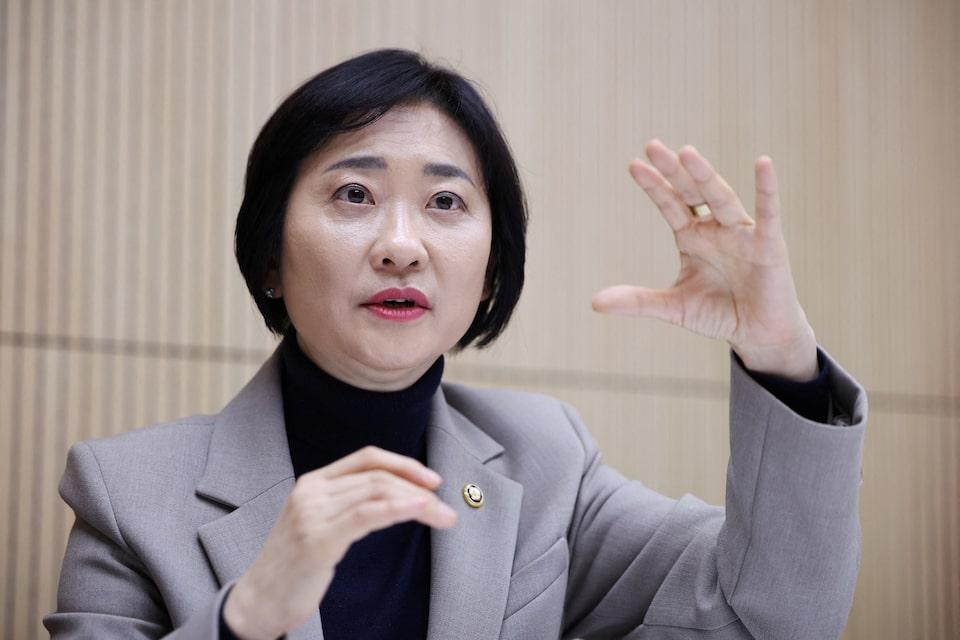
Vice minister says NPS can borrow against its assets for FX bonds Pension fund seeks to diversify financing amid FX volatility Consultative body with FX authorities to kick off February 5 SEOUL, Feb 4 (Reuters) - South Korea's vice welfare minister said she hopes the National Pension Service (NPS) will start issuing foreign-currency bonds by the end of the year, a move that will strengthen efforts to diversify financing amid rising exchange-rate volatility. "The sooner, the better. It would be ideal to do so by the end of this year, as long as revision of relevant laws takes place swiftly," First Vice Minister of Health and Welfare Seuran Lee told Reuters on Tuesday. Sign up here. Lee's remarks on the timeline are the first from a government official on the fund's unprecedented dollar-bond issuance plans. A frail won has been exerting pressure on the NPS, the world's third-largest pension fund, to better manage its foreign exchange portfolios to stabilise the currency market. A weak won has complicated Seoul's plans to invest $350 billion in U.S. industries under a trade deal with Washington, amid concerns that additional fund outflows could further weaken the won. Lee chairs the fund's operational advisory committee, a group that reviews any investment and management changes sought at the 1,437.9 trillion won ($992.24 billion) pension fund. The won cut early losses after Lee's comments to trade at 1,449.8 per dollar as of 0626 GMT, down 0.2%. The won had fallen as much as 0.5% earlier in the session. The won has dropped about 7% against the dollar since mid-2025, and the fund has been selling U.S. dollars in the foreign exchange forwards market to support the currency. MIRRORS CANADIAN FUND STRATEGY The NPS has been carrying out a feasibility study to start issuing foreign-currency bonds for the first time, while awaiting amendment of the Pension Act by the National Assembly. While details such as issuance size remained undecided, Lee said it "would make sense to put a ceiling for that, as a proportion of the fund's overseas investment size." That would mirror a strategy used by the Canada Pension Plan Investment Board. "Since it is selling bonds, yes it is leveraging but we can borrow against the fund's assets," Lee said, hinting that the NPS's dollar-denominated assets could be used as collateral. The issuance aligns with the pension fund's broader goal of adjusting its asset allocation. The welfare ministry last week lowered the year-end target for overseas stock exposure to 37.2% from 38.9%, while raising the target for domestic equities. The KOSPI (.KS11) , opens new tab rose 76% last year to post its biggest jump since 1999, outperforming global peers. "We cut the size of overseas investment for this year because of pressure on the foreign exchange market, but if we can issue foreign currency bonds, that issue will be resolved to some extent." "We're trying to find middle ground somewhere. It's kind of a balanced approach that isn't too burdensome for the financial markets but also protects our returns," Lee said. FX HEDGING IN FOCUS She highlighted the need for a review of the NPS's strategic currency hedging policies. "What we are currently doing in terms of currency hedging is responding flexibly to market conditions. None of this is a mechanical decision in nature." Such hedging involves selling dollar forward contracts to increase the supply of dollars and slow the won's fall. Key decisions affecting the fund's investment returns or leveraging must be approved by the National Pension Fund Management Committee, which is chaired by the welfare ministry. Lee said the welfare ministry, NPS, finance ministry and central bank will hold their first official meeting as part of a four-way consultative body on Thursday, to address financial market stability. ($1 = 1,449.1500 won) https://www.reuters.com/world/asia-pacific/south-korea-eyes-dollar-bond-issuance-pension-fund-this-year-2026-02-04/
2026-02-04 03:04
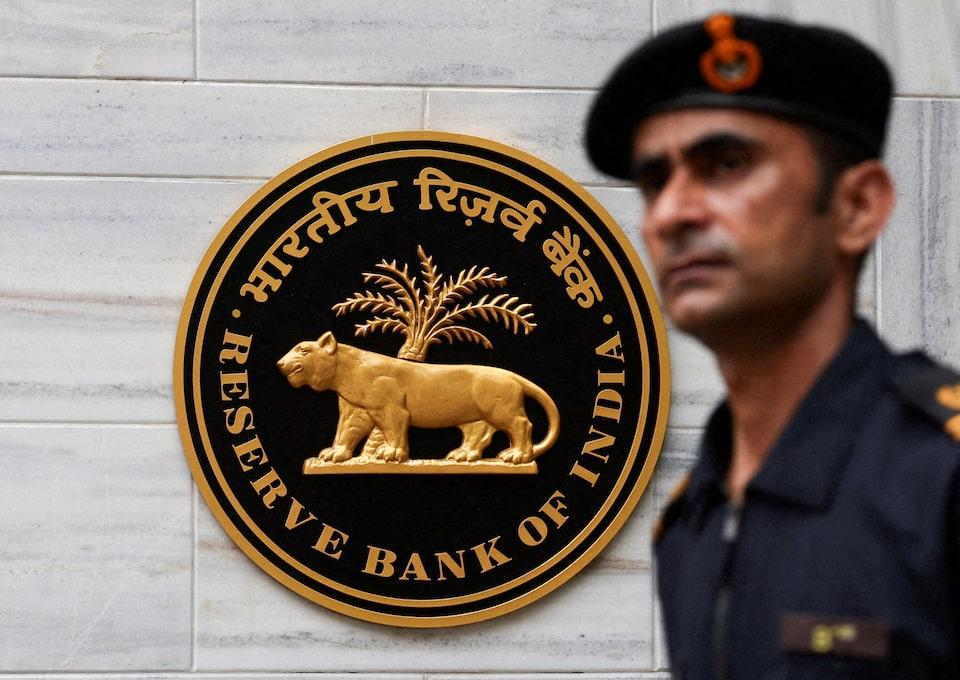
Majority of economists expect status quo on rates - poll U.S.-India trade deal seen reducing need for easing Focus on transmission of 2025's 125 bps in rate cuts MUMBAI, Feb 4 (Reuters) - India's central bank is expected to keep policy rates unchanged on Friday, while focusing on improving the pass-through of the previous year's rate cuts, with a U.S.–India trade deal alleviating the need for more immediate support to the economy. A large majority of economists polled by Reuters before the deal was announced on Monday - 59 of 70 - had expected a status quo in rates, but a minority had called for another cut as inflation remained low and U.S. tariffs threatened to disrupt India's strong run of economic growth. Sign up here. The Reserve Bank of India (RBI) has already cut rates by 125 basis points since last February, bringing the policy repo rate down to 5.25%. "The U.S.-India trade deal further bolsters the case for the RBI keeping rates unchanged this week," Dhiraj Nim, an economist at ANZ Bank, said. India's growth is running near its potential while inflation is expected to move back towards the central bank's target, underpinning the case for a policy pause, he said. India's GDP growth is expected to hit 7.4% in the current financial year and the government's economic adviser has forecast growth at 6.8-7.2% for next year. The Indian economy is in a "Goldilocks phase", Reserve Bank of India Governor Sanjay Malhotra said at the last policy meeting in December. It had forecast growth for the fiscal year ending March 31 at 7.3% and CPI inflation at 2%. IMPROVING TRANSMISSION OF RATE CUTS While the economy has been strong, the central bank has had to intervene across forex and bond markets amid large foreign outflows from the Indian equity markets up until the trade deal was announced. The RBI sold $30 billion from its foreign exchange reserves between September and November - according to the latest data available - in turn withdrawing rupee liquidity and adding to pain for the bond markets already under pressure from record government borrowings. The benchmark 10-year yield has barely fallen over the past year, despite the large rate cuts, keeping funding costs high and limiting the economic benefits of easier monetary policy for borrowers. The benchmark 10-year yield acts as a signal for pricing of borrowings for banks and corporates. "The challenge now is to ensure that transmission of previous rate cuts is not hampered, while the central bank remains on an extended pause," Kaushik Das, chief economist - India, Malaysia, and South Asia at Deutsche Bank, said in a note. Analysts expect the central bank to step up open market bond purchases by at least 1 trillion rupees ($10.92 billion) to support liquidity and reduce strains in the bond market. The urgency for RBI support for the bond market has increased following the higher-than-expected gross borrowing programme for the next fiscal year. "Higher market borrowing numbers mean concerns around bond supply will remain a challenge for policy transmission," economists at Nomura said in a note. https://www.reuters.com/business/india-central-bank-stand-pat-trade-deal-reduces-urgency-rate-cuts-2026-02-04/
2026-02-04 03:01
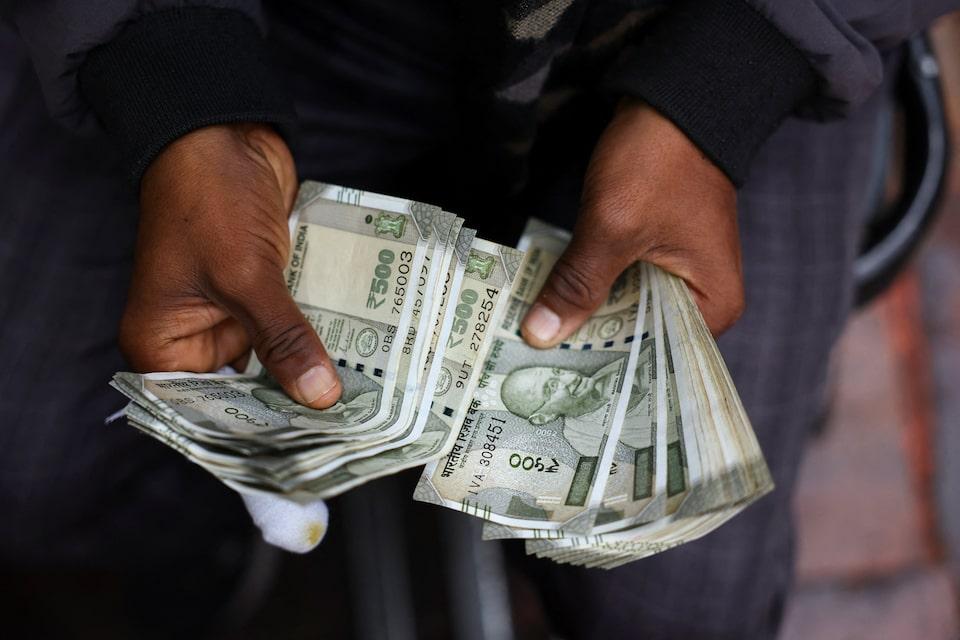
MUMBAI, Feb 4 (Reuters) - The Indian rupee slipped in early trading on Wednesday after a sharp rally in the previous session, as corporates stepped up hedging activity, while traders focused on the scale of demand for the RBI's FX swap slated for later in the day. The rupee was at 90.41 per dollar as of 09:50 a.m. IST, down 0.16% from its previous close. The currency had soared more than 1% on Tuesday after the U.S. and India announced a long-awaited trade deal. Sign up here. On the day, similar to the previous session, corporates stepped in to buy dollars. However, traders reckon that the positive sentiment post the trade deal and likely foreign portfolio inflows into local stocks should limit pressure on the currency. Meanwhile, the Reserve Bank of India will conduct a $10 billion 3-year dollar-rupee buy/sell swap auction on Wednesday, which is part of its measures to ensure adequate rupee liquidity in the banking system. "With the spot (USD/INR) lower, it may see keen participation. However, the RBI may not be too aggressive given that with the India-U.S. trade deal, it may get an opportunity to buy dollars on account of inflows," said Abhishek Goenka, chief executive at FX advisory firm IFA Global. The firm expects the rupee to hold an appreciation bias in the near-term. Meanwhile, stocks of Indian information technology (.NIFTYIT) , opens new tab firms dropped over 5% after U.S. artificial intelligence company Anthropic launched workplace productivity tools, intensifying worries of disruption in the sector. Broader equity benchmarks, as a result, were nearly flat on the day after rallying the most since May 2025 in the previous session. The dollar index was steady at 97.4 while Asian currencies were flat to modestly stronger. https://www.reuters.com/world/india/rupee-may-dip-after-us-india-deal-rally-large-corporates-seen-mopping-up-dollars-2026-02-04/
2026-02-04 02:28
Asia shares struggle on concerns over AI-led disruption in software Oil prices rise, geopolitics back on investors' minds Precious metals claw back losses Bitcoin sputters, holds near lowest in over a year SINGAPORE, Feb 4 (Reuters) - Asian stocks were on shaky ground on Wednesday, following steep losses in U.S. and European equities on fears that advancements in artificial intelligence could supplant traditional software. Oil prices climbed after the U.S. shot down an Iranian drone and armed boats approached a U.S.-flagged vessel in a key waterway, while precious metals found a firmer footing after a recent rout. Sign up here. A selloff among U.S. and European data analytics, professional services and software companies deepened after Anthropic's launch of plug-ins for its Claude Cowork agent on Friday sparked worries of an AI-fuelled disruption to those industries. While shares of some related companies slid in Asia, the overall selling pressure was less acute, given the region's historical dominance in hardware manufacturing. China's CSI Software Services Index (.CSI930601) , opens new tab fell 3%, while technology giants listed in Hong Kong (.HSTECH) , opens new tab lost 1.8%. In Japan, advertising giant Dentsu's stock price (4324.T) , opens new tab slumped more than 6%. Shares of Nomura Research Institute (4307.T) , opens new tab tumbled nearly 8%. The Nikkei (.N225) , opens new tab eased 0.8%, though MSCI's broadest index of Asia-Pacific shares outside Japan (.MIAPJ0000PUS) , opens new tab remained 0.1% stronger. Nasdaq futures slipped 0.12% after losing more than 1% in the cash session overnight, while S&P 500 futures were little changed. EUROSTOXX 50 futures dipped 0.1%. FTSE futures were up 0.08%. "The AI trade is splitting between relative winners and losers," said Ben Bennett, head of investment strategy for Asia at L&G Asset Management. "We saw that last week after Microsoft fell despite decent results on fears of disruption to its software business. And that software wobble has continued this week. So it's not simply that the tech sector is a universal winner - it's going to have some weak areas too." South Korea's technology-heavy KOSPI (.KS11) , opens new tab rose 1.4%, while stocks in Taiwan (.TWII) , opens new tab were up 0.2%. VOLATILE TIMES In the oil market, Brent crude futures rose 0.77% to $67.85 a barrel while U.S. crude advanced 0.97% to $63.82 per barrel as recent events stoked concerns that talks aimed at de-escalating U.S.-Iran tensions could be disrupted. The U.S. military said on Tuesday it shot down an Iranian drone that "aggressively" approached the Abraham Lincoln aircraft carrier in the Arabian Sea. A group of Iranian gunboats also approached a U.S.-flagged tanker in the Strait of Hormuz north of Oman, maritime sources and a security consultancy said. OPEC members Saudi Arabia, Iran, the United Arab Emirates, Kuwait and Iraq export most of their crude via the strait, mainly to Asia. Precious metals were meanwhile recovering from a rout. Spot gold reclaimed the $5,000 level and was up 2.8% at $5,076.29 an ounce, while silver rose more than 3% to $87.79 an ounce. The meltdown came after U.S. President Donald Trump announced Kevin Warsh as his pick to lead the Federal Reserve, while a margin hike by CME (CME.O) , opens new tab exacerbated the selling. Warsh is expected to shrink the Fed's balance sheet, which usually hurts non-yielding precious metals. "We expect elevated volatility to continue in the near term, but stabilization should return once the market finds its footing," said Joshua Chim, general manager of online broker FSMone. He added that retail investors on the platform had been "buying the dip via unit trusts or ETFs" following the "significant correction" in gold and silver prices. FED IMPLICATIONS Moves in currencies were more subdued on Wednesday, with the dollar halting a recent rally that came on the back of the Warsh announcement. The yen struggled and fell to the weaker side of 156 per dollar, ahead of a weekend lower house election in Japan that could see Prime Minister Sanae Takaichi winning a stronger mandate to pursue tax cuts and expanded stimulus. The euro last bought $1.1833 while sterling traded at $1.3715. In cryptocurrencies, bitcoin languished near its lowest level since November 2024 and was up just 0.15% at $76,277.95, having lost 2.9% on Tuesday. "The market structure has weakened strongly since October," said Manuel Villegas Franceschi from Julius Baer's next generation research team, adding that the "tipping point for the crypto drawdown" had been Warsh's nomination. Treasury yields were little changed, with the benchmark 10-year yield last at 4.2735%, while the two-year yield stood at 3.5737%. Longer-end yields have edged higher as investors mull a Fed under Warsh, whose preference for a smaller balance sheet could reduce the amount of bonds the bank owns. "I'm not thinking that necessarily, he's coming in and says 'for sure, we shrink the balance sheet'. I think he will make it data dependent, and say, dependent on developments," Deutsche Bank Private Bank's global chief investment officer Christian Nolting said at a media briefing. https://www.reuters.com/world/china/global-markets-global-markets-2026-02-04/