2025-10-24 11:43
MOSCOW, Oct 24 (Reuters) - Moscow, which for decades has run on caffeine, could be rediscovering its taste for tea as some shun coffee as a Western introduction and embrace the more traditional drink. Andrei Kolbasinov, founder of retro-chic teahouse chain Nitka, which means "thread" in Russian, says his business is all about trying to resurrect Russia's lost tea-drinking culture. Sign up here. "We are trying to revive modern Russian teahouses," he said. "Before the (1917) Revolution, there used to be a lot of them in Russia, especially in Moscow. Unfortunately, they all disappeared during Soviet times," Kolbasinov said. "Five years ago there were just coffee shops everywhere. We try to imagine how teahouses would look, had they continued existing," he said. His company runs three teahouses in Moscow and two more in other cities. While Russians are some of the biggest consumers of tea worldwide, they mostly do so at home, typically accompanying their brews with jam, lemon, and sweets. As in the rest of Europe, busy city dwellers are more likely to grab a coffee on the go than opt for a cup of tea. But with the country at loggerheads with the West over the conflict in Ukraine, even a simple tea shop reflects how the country has changed over the last three and a half years. Nitka customer Kirill, who did not give his last name, said: "Tea is ... well, it's more Russian I guess. It has this home warmth and cosiness." Kolbasinov said the rising popularity of his teahouses represented "a turn inward", as Russia rediscovers its own cultural traditions. Though a part of Nitka's tea is Russian grown, Western sanctions against Russia have complicated the country's tea imports, said Kolbasinov. For instance, some of Nitka's tea is sourced from Nepal, but sanctions have interfered with the complex supply chains that bind Russia to the landlocked South Asian country. Far more of the tea comes from Russia's neighbour and ally China, and from Georgia, where much of the Soviet Union's tea was grown before 1991. Neither country has imposed sanctions on Russia, and both have deepened economic ties with Moscow since 2022. https://www.reuters.com/world/some-russians-shun-coffee-western-favour-traditional-tea-2025-10-24/

2025-10-24 11:28
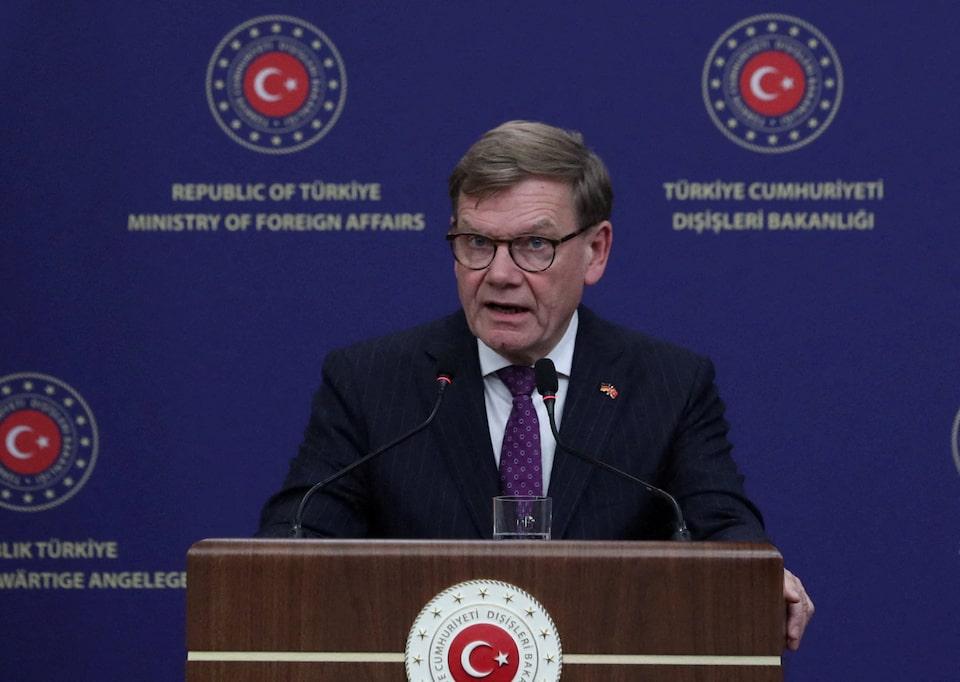
BERLIN, Oct 24 (Reuters) - A China trip by German Foreign Minister Johann Wadephul to China that was originally planned for Sunday will not take place, a spokesperson for his ministry said on Friday. "We are postponing the journey to a later time," the spokesperson told a regular news conference, adding that Germany was concerned about constraints placed on rare earth exports. Sign up here. It had also been impossible to arrange sufficient meetings for the trip, she added. She declined to say which country had cancelled the trip, adding that Germany regretted the development, including given China's importance in as a country, "which like no other has influence over Russia in its war against Ukraine". https://www.reuters.com/world/china/german-foreign-ministers-china-trip-cancelled-spokesperson-says-2025-10-24/
2025-10-24 11:07
Foreign buyers skip checks to ship parts before new rules hit China leads with 6 of top 10 global battery makers, led by CATL Delay may hit Reliance's battery and solar energy plans in India BEIJING/NEW DELHI, Oct 24 (Reuters) - Indian billionaire Mukesh Ambani's Reliance Industries (RELI.NS) , opens new tab is rushing to get its orders of battery components out of China ahead of new export curbs, two people briefed on the matter said, as concerns mount worldwide about how Beijing intends to enforce its widening export control regime. A team from Reliance has travelled to China to speed up the work, one of the sources said. Sign up here. Reliance and China's Ministry of Commerce did not respond to a request for comment. The people declined to be named due to the sensitivity of the situation. Chinese companies are world leaders in electric battery technology and to maintain that competitive edge Beijing introduced new rules this month requiring companies to seek permission before exporting battery supply chain equipment. The new curbs take effect on Nov. 8. At least a dozen other foreign customers of the Chinese battery sector are in a similar situation to Reliance, said the second source, who said some were foregoing quality assurance or other final stages of manufacturing to get goods shipped more quickly. "Who cares if it hasn't been painted yet or the screws haven't been checked," the second source said. "They are saying we'll do the testing once it lands, just get it out the door." CHINA HAS MAJOR ROLE IN BATTERY SUPPLY CHAIN Without the Chinese gear, Reliance cannot fulfill its plan to locally assemble or produce batteries to store energy from its mega solar power project being championed by the Indian government to cut dependence on fossil fuels, the person added. China's battery makers account for six out of the top ten players globally, according to consultancy SNE Research. The people did not say which Chinese companies supplied Reliance. CATL, China's largest battery maker, said in a statement to Reuters it was confident exports to its factories overseas would proceed smoothly under the new export regime. "The export of equipment and materials needed for our plants in Europe is progressing as planned," it said. China exported $48 billion worth of batteries in the first eight months of this year, up 26% compared to the same period last year, according to Chinese customs data. China's battery export action adds to concerns about the risk of being dependent on Beijing for key technologies that can become caught up in trade conflicts. China's export controls on rare earths have highlighted the risks of being dependent on one supplier. The curbs, introduced in April, led to shortages that threatened to cripple car production around the world. Chinese battery makers are reassuring foreign customers that nothing so drastic is likely to happen for batteries and export licences should be granted quickly and widely within a few months of the new regime starting, the second source said. But in the meantime foreign companies have to play a waiting game. "It is a very tense situation," said the first source. https://www.reuters.com/world/china/reliance-races-get-battery-gear-orders-out-china-ahead-export-curbs-sources-say-2025-10-24/

2025-10-24 11:00
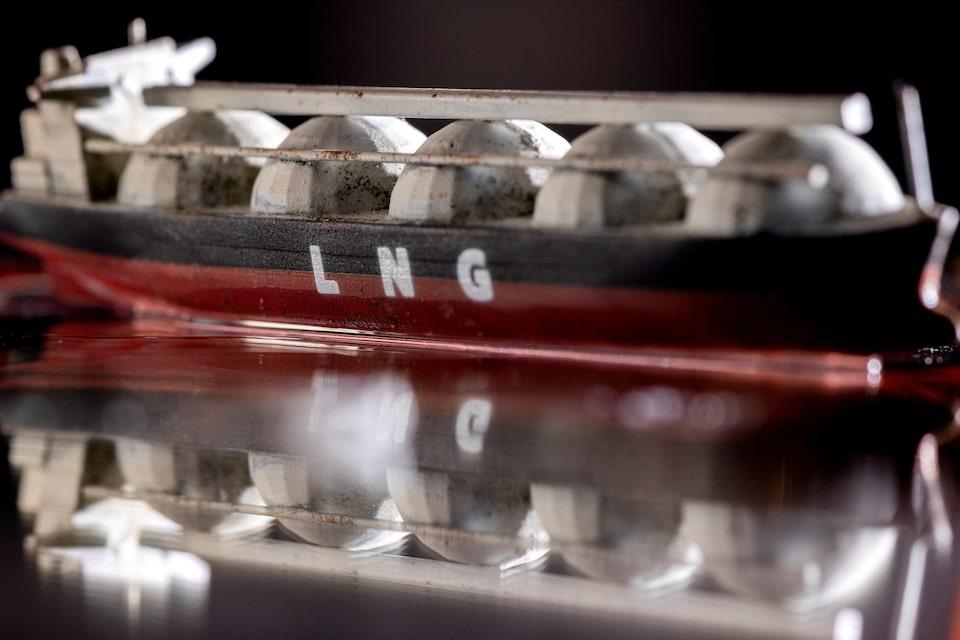
LITTLETON, Colorado, Oct 24 (Reuters) - It's not just the U.S., Qatar and Australia that are vying for a share of the lucrative LNG export market. Malaysia wants a cut too, and is retooling its own power generation system to do it. So far in 2025, Malaysia has lifted its imports of thermal coal to a record and boosted coal-fired electricity generation to all-time highs, data from Kpler and Ember shows. Sign up here. Malaysia's coal binge allows the country - the world's 11th largest natural gas producer - to free up gas supplies for export in the form of liquefied natural gas, and generate valuable trade revenues in the process. The coal-for-gas adjustment comes at a cost, as the country needs to import a majority of its coal supplies, and it has resulted in a surge in power sector emissions to the highest on record this year. But the coal use boom is justified by the fact that the country rakes in roughly twice as much income from LNG exports as it spends on coal imports. On economic grounds alone, Malaysia's LNG export drive looks set to persist, even though the additional LNG volumes the country is looking to sell may add to already oversupplied global markets in the years ahead. IMPORT BOOM Malaysia produces between 3 million and 4 million metric tons of thermal coal a year, according to the U.S. Energy Information Administration (EIA), but imports around 30 million to 35 million tons a year, Kpler data shows. Those coal imports - mainly from neighbour Indonesia - cost around $5 billion to $6 billion a year, according to customs data. The burning of that coal - which generates roughly half of Malaysia's electricity - yields around 72 million tons of carbon dioxide (CO2) emissions each year, according to Ember. Yet by steadily increasing coal's share of its electricity generation mix from under 10% at the start of this century, Malaysia has been able to sharply cut natural gas' share of electricity production. Natural gas generated around 80% of the country's electricity in the early 2000s, but only accounts for around 30% of Malaysia's electricity supplies so far in 2025, Ember data shows. FREEDOM (TO SELL) GAS Reduced use of gas for domestic power generation has allowed Malaysia to boost gas supplies for export, which the country recognized was a valuable revenue earner decades ago. Indeed, for a brief spell in the early 2000s, Malaysia was the world's largest exporter of LNG, and since then it has consistently ranked in the top five suppliers of the super-chilled fuel. Until about a decade ago, Malaysia's energy firms relied on domestic gas supplies as both the primary source of domestic electricity and one of the country's most lucrative export items. Since then, however, authorities have worked to slow the growth of domestic gas use for power generation so that more of it could be diverted to LNG export hubs and then onto high-paying end-use markets such as Japan and South Korea. A key driver of Malaysia's decision to conserve gas was the realization that its domestic gas reserves have peaked and are now in terminal decline. Malaysia's proven gas reserves were estimated at around 1.15 trillion cubic meters around 20 years ago, but were last estimated at 910 billion cubic meters, according to Energy Institute data. MONEY MATTERS To extract maximum value from those reserves, Malaysia's national oil and gas company Petronas remains committed to boosting LNG export volumes, and plans to bring on a third floating LNG export facility in 2027, per company filings. While the exact terms of its LNG export deals are not reported, industry estimates put the country's annual earnings from LNG exports at around $12 billion. As those export receipts are roughly twice what it costs the country to import the coal it needs, the economic case to continue exporting LNG over the long term seems solid. That said, Malaysia's enduring need for gas as a key part of its overall energy mix means it is also an occasional importer of LNG, when the price is right and its power needs dictate. Malaysia has also agreed to make purchases of U.S. LNG as part of trade talks aimed at avoiding U.S. tariffs on Malaysian goods exports. Overall, however, Malaysia looks set to remain a regular net exporter of LNG for the foreseeable future. And given its closer proximity to key Asian buyers compared to the U.S. and Australia, the country's planned growth in LNG export volumes may pose a fresh headache for rivals as they try to map out how to profitably boost sales in the years ahead. The opinions expressed here are those of the author, a columnist for Reuters. Enjoying this column? Check out Reuters Open Interest (ROI), your essential new source for global financial commentary. ROI delivers thought-provoking, data-driven analysis of everything from swap rates to soybeans. Markets are moving faster than ever. ROI can help you keep up. Follow ROI on LinkedIn , opens new tab and X , opens new tab. https://www.reuters.com/markets/commodities/malaysias-coal-binge-shows-what-nations-do-cash-lng-boom-2025-10-24/
2025-10-24 10:41
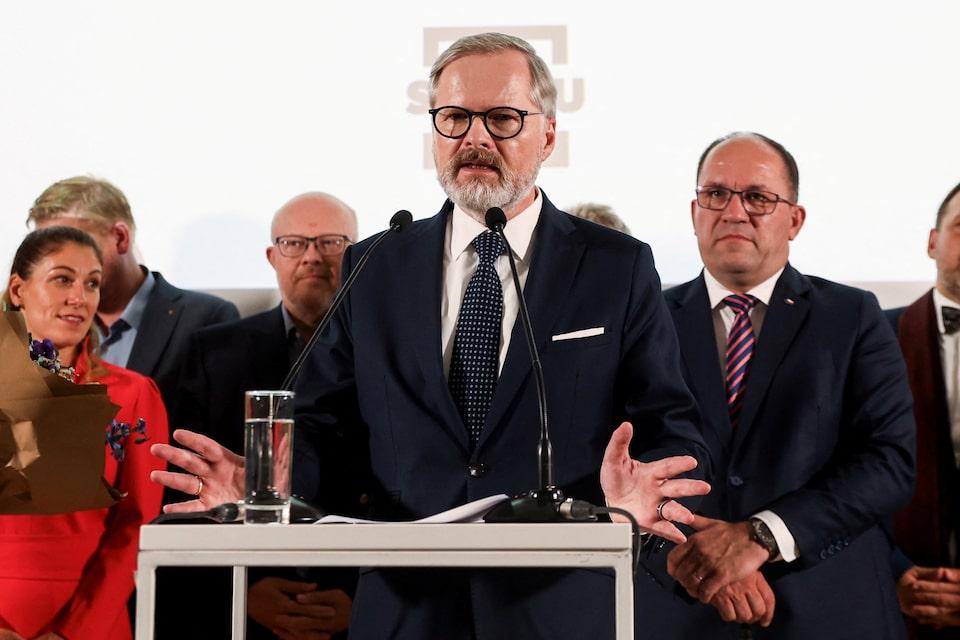
PRAGUE, Oct 24 (Reuters) - Czech populist party ANO, on track to form the next government after winning an election this month, said on Friday it could keep the outgoing cabinet's proposed 2026 deficit target in order to pass a budget before year-end. The outgoing centre-right government of Prime Minister Petr Fiala has brought public finances back within European Union rules. However, analysts expect fiscal loosening under ANO, which is led by billionaire former Prime Minister Andrej Babis. Sign up here. The outgoing government has submitted a central state budget draft with a deficit of 286 billion crowns ($13.74 billion), up from 241 billion seen in 2025. The next government could use that as a foundation to move the legislation ahead without delays, ANO official Alena Schillerova told reporters on Friday. The country would face a provisional budget limiting spending at the start of 2026 if lawmakers fail to approve a budget law by the end of December, which could hurt investments. FIGHT OVER BUDGET Fiala's budget bill fell through when parliament ended its term following an election on October 3 and 4, and ANO has pressed his government to re-submit the draft to avoid delays if the next administration has to start from scratch. Fiala has said he would consider this. Parliament would have to approve the re-submitted deficit target without changes to move the legislative process forward. ANO is in talks on forming a ruling coalition with the far-right SPD party and the right-wing Motorists that will have a majority in parliament. Babis is due to update the president on Monday on the talks. The new parliament first meets on November 3, and Babis's potential government is likely to be in place by December, perhaps sooner. CHANGES ONLY AFTER DEFICIT TARGET FIXED Schillerova said changes to the budget draft would be made in the bill's second reading, when money can be shifted among chapters, but overall revenue and spending figures cannot change. "We will definitely change (the current draft) in a second reading so that it is approved by the end of the year and we don't have to go into a provisional budget," she said. Approved budgets can still be amended later in the year. Fiala's government has cut the overall fiscal gap to around 2% of gross domestic product, below an EU ceiling of 3%. ANO campaigned on promises to cut taxes, lift wages and pensions, and spend on benefits such as mortgage subsidies. However, the Motorists back fiscal discipline and may temper some of ANO's spending aims. ($1=20.8210 Czech crowns) https://www.reuters.com/business/czech-2026-deficit-target-can-stay-unchanged-pass-budget-quickly-poll-winner-2025-10-24/
2025-10-24 10:33
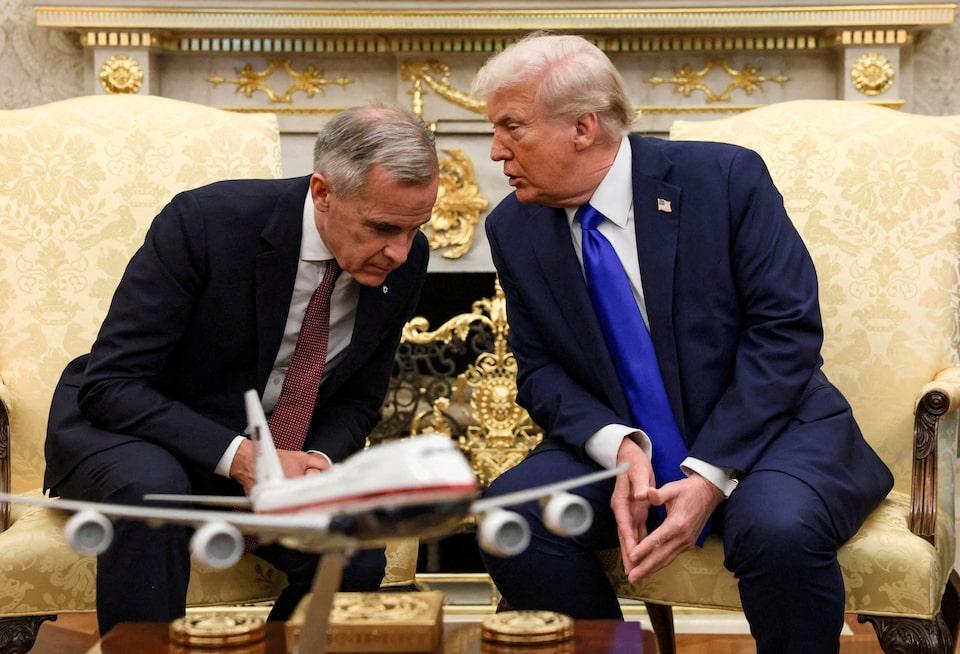
LONDON, Oct 24 (Reuters) - Everything Mike Dolan and the ROI team are excited to read, watch and listen to over the weekend. From the Editor Sign up here. Hello Morning Bid readers! Expectations of a thaw in U.S.-China relations gave Asian equities a boost on Friday, after the White House said on Thursday that President Donald Trump would meet with Chinese President Xi Jinping next week during the U.S. leader's Asia trip. Negotiations with another large U.S. trading partner, Canada, took a somewhat strange turn on Thursday, with Trump writing on Truth Social that trade talks between the North American nations were “TERMINATED,” because of what he deemed to be a “fraudulent” ad showing former President Ronald Reagan criticizing tariffs. In other trade news this week, the U.S. and Australia signed a deal on Monday that will see up to $8.5 billion invested in projects to develop and refine metals vital to industries including defence, advanced manufacturing and the energy transition. ROI Asia Commodities Columnist Clyde Russell argues that this deal is far from a game-changer, but it is a decent first step as the U.S. and its allies seek to reduce their reliance on China. On the domestic front, investors, starved of data during the government shutdown, will finally get some official economic information today: CPI inflation for September. The consensus expectation is that it will remain steady at 3.1% year-over-year. But, as ROI editor-at-large Mike Dolan writes, markets are likely to meet the announcement with a shrug, as almost no one seems to care about inflation anymore. What matters instead is the job market, or at least that’s the steer Federal Reserve Chair Jay Powell gave investors at the September FOMC meeting. ROI markets columnist Jamie McGeever argues that the drop in Treasury yields this month – the 10-Year yield fell below 4% earlier this week – shows that investors are hearing Powell loud and clear. Third quarter earnings season continued, with strong reports from Intel and many other firms, alongside disappointing results from Netflix and Tesla. Jamie McGeever suggests that maybe, just maybe, we could be seeing signs that the equity rally is about to broaden. Over in energy markets, geopolitics were once again center stage this week, as President Trump slapped sanctions on two Russian oil giants, Rosneft and Lukoil on Wednesday, in an effort to pressure Russian President Vladimir Putin to agree to a ceasefire deal in Ukraine. ROI Energy Columnist Ron Bousso argues that the effectiveness of these measures will hinge on Trump's willingness to enforce secondary sanctions and risk an energy price spike. The announcement sent Brent crude prices up over 5% on Thursday, but this jump may be short-lived, as the global oil market is widely believed to be oversupplied. Ron Bousso notes that any selloff should be limited, however, by the uncertainty surrounding OPEC+ production. Staying on fossil fuels, ROI Energy Transition Columnist Gavin Maguire pointed out that natural gas consumption by U.S. LNG firms looks set to overtake gas use by U.S. households for the first time in 2025, stoking tensions between the export-oriented LNG sector and domestic gas consumers. Over in metals, ROI Columnist Andy Home gives his key takeaways from the recent London Metal Exchange week. Spoiler alert, everyone loves Doctor Copper. And, finally, the most famous metal of all, gold, took a tumble on Tuesday, with prices dipping the most in five years. Of course, gold fell from a record-high above $4,300 and is still up more than 50% this year, so no one needs to pity the poor gold trader. As we head into the weekend, check out the ROI team’s recommendations for what you should read, listen to, and watch to stay informed and ready for the week ahead. This weekend, we're reading... CLYDE RUSSELL, ROI Asia Commodities and Energy Columnist: My suggestion this week is an OECD report on Australia's green iron potential. It outlines the scale of the opportunity but also the massive challenge in funding and coordinating such a massive shift for the world's biggest iron ore producer. , opens new tab MIKE DOLAN, ROI Financial Markets Editor-at-Large: This thought-provoking column by Jacob Funk Kirkegaard of the Peterson Institute considers whether a fiscal crisis in France, the EU's only nuclear power, might result in transferring France's nuclear deterrent costs to the EU level. , opens new tab RON BOUSSO, ROI Energy Columnist: This fascinating Reuters investigation shows that dark fleet tankers are no longer just for dodgy Iranian and Russian oil trading. The vessels are also being used by Mexican drug cartels in a flourishing market of illegal oil trading and tax evasion. ANDY HOME, ROI Metals Columnist: My most interesting read of the week is about the underground marathon that will take place in Boliden's Garpenberg zinc mine in Sweden. Participants will endure temperatures of up to 30°C as well as total silence and will be running in complete darkness with only their head torches for light. , opens new tab We're listening to... GAVIN MAGUIRE, ROI Global Energy Transition Columnist: This is a fascinating podcast about what’s possible with EV battery recycling. In short, the plan is "to turn a massive wave of incoming used batteries into a key resource for the grid." , opens new tab And we're watching... ANNA SZYMANSKI, ROI Editor-in-Charge: Yes, I did recommend the Reuters World News vodcast last week, but I'm doing it again just to make sure you don't miss the new video version of Reuters flagship podcast. , opens new tab Opinions expressed are those of the author. They do not reflect the views of Reuters News, which, under the Trust Principles , opens new tab, is committed to integrity, independence, and freedom from bias. Want to receive the Morning Bid in your inbox every weekday morning? Sign up for the newsletter here. You can find ROI on the Reuters website , opens new tab, and you can follow us on LinkedIn , opens new tab and X. , opens new tab https://www.reuters.com/business/finance/global-markets-view-usa-2025-10-24/