2026-02-11 22:14
First-half underlying earnings beat estimates Hikes FY26 Energy Markets underlying EBITDA outlook Shares jump as much as 8%, mark best day in three years Interim dividend of 30 Australian cents Feb 12 (Reuters) - Australia's Origin Energy (ORG.AX) , opens new tab raised its full-year earnings outlook for its energy retail division on Thursday, citing stronger electricity margins, which helped the power producer beat market expectations for first-half earnings. Shares of one of Australia's top power producers rose as much as 8.1% to A$11.970, posting their biggest intraday percentage gain in three years, while the broader benchmark ASX200 (.AXJO) , opens new tab was up marginally as of 2341 GMT. Sign up here. Origin forecast full-year operating earnings at its Energy Markets division between A$1.55 and A$1.75 billion, compared with its previous view of A$1.40 to A$1.70 billion. The midpoint of the new outlook is above the Visible Alpha consensus of A$1.62 billion. The division, which comprises Australia's largest energy retail business by customer accounts, reported operating earnings of A$860 million ($613 million) for the six months to December 31, up 17% from a year earlier. Energy Markets' earnings strengthened on higher electricity gross profit, robust growth in customer accounts and lower operational costs. The unit's gains helped Origin report first-half underlying profit of A$593 million, above the Visible Alpha estimate of A$577.9 million, but down from A$924 million reported a year earlier. It also declared an interim dividend of 30 Australian cents per share, unchanged from last year. "A solid HY26 result particularly in Energy Markets (EM)," UBS analysts wrote. "Stock to trade favourably on the upgrade in EM (outlook)." However, operating earnings at the Integrated Gas division, which includes Origin's stake in the Australia Pacific LNG (APLNG) project and LNG trading operations, fell over 31% to A$860 million on weaker realised prices and lower production. Origin also lifted the bottom end of its capital expenditure outlook to A$900 million, from A$800 million previously, keeping the upper limit at A$1.10 billion. That upbeat forecast reflects the extension of all four units of its coal-fired Eraring Power Station April 2029 to support energy supply in New South Wales state, following warnings of blackouts by the energy market regulator if the plant had retired as planned. ($1 = 1.4039 Australian dollars) https://www.reuters.com/business/energy/australias-origin-energy-tops-profit-estimates-strong-electricity-unit-2026-02-11/

2026-02-11 22:04
ORLANDO, Florida, Feb 11 (Reuters) - Wall Street wobbled and Treasury yields rose on Wednesday following the release of stronger-than-expected U.S. jobs data, while Japan's yen extended its strong post-election rally for a third day. In my column today, I look at U.S. workers' share of GDP, which has slumped to the lowest on record, and ask whether a productivity boom might reverse this multi-year trend. In theory, it could. In practice, it's highly unlikely. Sign up here. If you have more time to read, here are a few articles I recommend to help you make sense of what happened in markets today. Today's Key Market Moves Today's Talking Points * Maybe not so "clueless" after all? The delayed January U.S. jobs data on Wednesday showed that the economy created 130,000 new jobs last month, nearly twice the amount forecast, and the unemployment rate eased back to 4.3%. Earnings growth of 3.7% was stronger than expected too. Putting to one side the annual revisions and issues around shrinking labor supply, these headline numbers suggest the labor market is stabilizing and the Fed can afford to stay on pause for longer. Just as Chair Jerome Powell has indicated. Maybe he's not as "clueless" as President Donald Trump would have us believe? * It's reigning yen Japan's currency is on a tear, extending its post-election rally and clocking a third daily rise against the dollar of around 1%. It's on course for a weekly rise of 3%, which would be the yen's best week since November 2024. What's interesting about Wednesday's rise is it came while the dollar was rising more broadly. The yen's immediate test is 152/$ then 148/$, where it was just before Prime Minister Sanae Takaichi won the LDP leadership contest. Once it's back there, the political risk premium has essentially been taken out of its price. * AI - end of days or brave new world? The direction of travel isn't in doubt, but the speed and ultimate destination are. Assessing, quantifying and predicting artificial intelligence's transformative powers is dominating equity markets - we are in the relatively early stages of the AI revolution, so divergence, dispersion, and volatility reign. Among the findings in a Morgan Stanley report this week are: upward earnings revisions for AI Adopters have outpaced the AI-Disrupted by ~2x; AI-driven benefits over the next two years will be heavily skewed toward cost efficiency over revenue growth; AI adoption expected to benefit 49% of North America stocks covered, 37% in Asia, 43% in Europe. What could move markets tomorrow? Want to receive Trading Day in your inbox every weekday morning? Sign up for my newsletter here. Opinions expressed are those of the author. They do not reflect the views of Reuters News, which, under the Trust Principles , opens new tab, is committed to integrity, independence, and freedom from bias. https://www.reuters.com/world/asia-pacific/global-markets-trading-day-graphic-2026-02-11/
2026-02-11 22:03
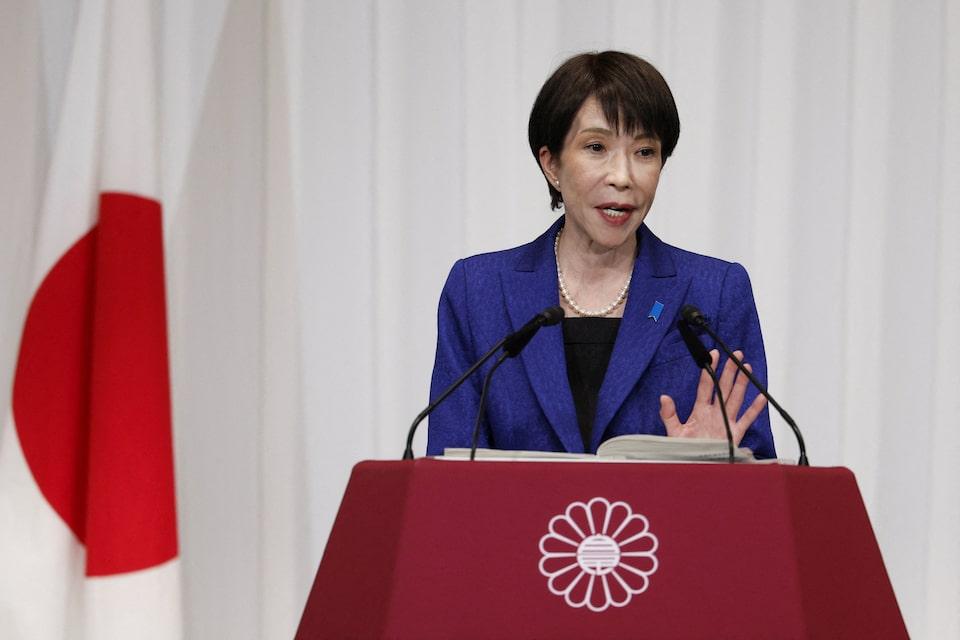
Takaichi vows to boost investment in 'proactive' fiscal policy Premier has chance to fill BOJ board openings with reflationists Weak-yen risk to keep PM from getting in the way of rate hikes Market betting on chance of another rate hike by April TOKYO, Feb 12 (Reuters) - Japanese Prime Minister Sanae Takaichi's landslide election win has given fresh impetus to her economic stimulus agenda but the risk of destabilising yen declines remains one firm check on her push for low interest rates. The emphatic victory last weekend has emboldened her mandate to boost investment and lower taxes to rev up the economy, all of which could heighten the hurdle for the Bank of Japan to further raise borrowing costs. Sign up here. The dovish premier may also seek to influence the BOJ's policy debate by filling bank board seats opening this year with like-minded reflationist candidates, some analysts say, in line with her past calls for the BOJ to keep rates low. Still, the risk that fresh yen selling could fire up imported inflation, reviving political headaches, is now one of the few barriers to her administration getting in the way of BOJ rate hikes, sources and analysts say. "A weak yen and subsequent inflationary risks would be potential triggers for a faster-than-expected rate hike," said former BOJ executive Akira Otani. He currently expects the BOJ to hike at its July meeting but also sees a good chance of earlier action in April or June. "If government executives don't give negative comments about rate hikes and instead say they are leaving monetary policy up to the BOJ, that could be a sign the government and BOJ have laid the groundwork for pushing up rates," said Otani, who is currently managing director at Goldman Sachs Japan. Takaichi is sensitive to how markets react to her decisions, particularly yen and bond yield moves, two sources said. Stubbornly high food prices, blamed in part on the weak yen, have hit households and the ruling Liberal Democratic Party's approval ratings, costing former premier Shigeru Ishiba his job. "What's most important for the BOJ is to avoid drawing political heat for causing unwelcome yen declines, which work to accelerate inflation," a third source said. "Yen moves will be key to how soon the BOJ pulls the trigger," the source said. The sources all spoke on condition of anonymity due to the sensitivity of the matter. YEN IS CRITICAL TO TIMING OF NEXT BOJ HIKE Under Japanese law, the BOJ nominally enjoys independence although that has not shielded it from past political pressure to expand monetary support for a moribund economy. The most extreme intervention came in 2013, when former Prime Minister Shinzo Abe hand-picked Haruhiko Kuroda to overhaul the BOJ's caution over ramping up stimulus. While the BOJ has left few clues on the next rate-hike timing, markets have priced in roughly an 80% chance of a hike by April. The BOJ holds its next meeting on March 18-19, around the time Takaichi is expected to visit the U.S. to meet President Donald Trump, who favours a weak dollar. It will review its growth and price forecasts at a subsequent meeting on April 27-28. "The BOJ probably wants to raise rates again around April, June or July," said Naomi Muguruma, chief bond strategist at Mitsubishi UFJ Morgan Stanley Securities. "The exact timing will depend on how the yen moves." TAKAICHI'S AVERSION TO MARKET SHOCKS Armed with a supermajority in the powerful lower house, Takaichi said on Monday she will focus on propping up growth by boosting investment through "proactive" fiscal policy. But she also said the administration must be mindful of market moves in guiding policy, highlighting its sensitivity to the risk of renewed yen falls that push up import costs. The BOJ, too, has signalled that yen moves would be key to its rate-hike timing. In January, the BOJ raised its price forecasts and said a weak yen could push up underlying inflation by prodding firms to pass on rising costs. At their January meeting, BOJ policymakers debated mounting price pressures from a weak yen with some warning of the risk of being "behind the curve" in dealing with too-high inflation, a summary of opinions showed. Sharp yen declines allowed the BOJ to hike rates to 0.75% in December with little pushback from the government. When Governor Kazuo Ueda pre-announced the move, the finance minister said she had no problem with his comments. To be sure, there is uncertainty on how much Takaichi is clinging to her initial enthusiasm for low interest rates, and to what extent she could meddle in monetary policy. The first test would come in her choice of nominees to fill two seats opening in the BOJ board this year. One succeeds Asahi Noguchi, whose term ends in March. Once known as a dove, he voted for the BOJ's past two rate hikes. Another joins when Junko Nakagawa sees her five-year term expire in June. A choice of doves could complicate the BOJ's efforts to lift still-low rates by shifting the balance in the nine-member board, which is divided between those who see conditions ripe for steady rate hikes, and others who want to tread cautiously. It would also send a message to markets that Takaichi may tap reflationist candidates to fill two more board seats opening in 2027, and then Ueda's post when his term ends in 2028. "If the yen stabilises, there are few reasons for the BOJ to rush," Muguruma said. "With the personnel appointments looming, the BOJ may not push too hard in getting a hike done early." https://www.reuters.com/world/asia-pacific/why-japans-emboldened-pm-wont-toy-with-risks-weak-yen-2026-02-11/
2026-02-11 21:54
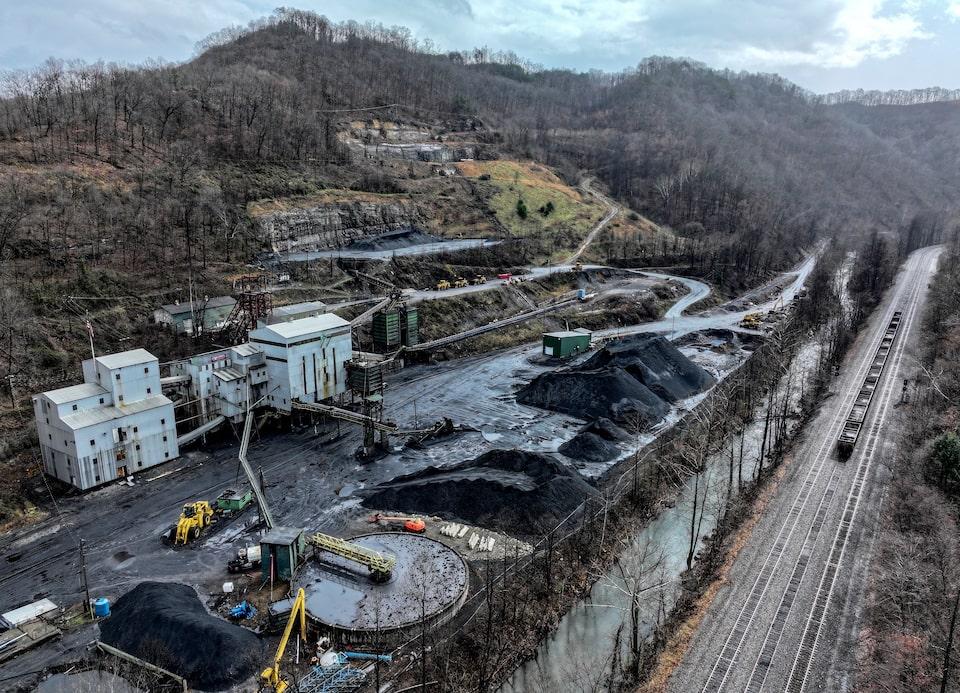
WASHINGTON, Feb 11 (Reuters) - President Donald Trump on Wednesday ordered the Defense Department to purchase electricity from coal-fired power plants in his latest effort to boost the coal sector. The move, which was announced at the White House as an executive order, calls for the Pentagon to form purchase agreements to buy electricity from coal-fired power plants for an unspecified amount. Sign up here. The president also announced that the Energy Department will provide six coal plants in Kentucky, North Carolina, Ohio, Virginia and West Virginia with $175 million for upgrades. Utilities had been phasing out coal-fired generators, which are major sources of carbon emissions tied to climate change. Trump, who has called climate change a hoax, has promised to fast-track energy infrastructure to meet rising electricity demand from artificial intelligence and data centers. Trump has declared an "energy emergency" to justify moves to keep open aging coal plants that have been set for closure and exempt aging coal plants from key air regulations. Trump has also removed tax incentives for wind and solar projects and his administration has slow-walked permits for renewable energy on federal land, as well as private and state lands. On Thursday, Trump is set to undo the legal underpinning of most major greenhouse gas regulations at the Environmental Protection Agency called the endangerment finding. The EPA administrator has said this will be the biggest deregulatory action in U.S. history. On Wednesday, Trump also announced that the Tennessee Valley Authority, the country's largest public utility, plans to delay the closure of two of its older coal-fired power plants in Tennessee. https://www.reuters.com/business/energy/trump-directs-energy-department-issue-funds-keep-coal-plants-online-2026-02-11/
2026-02-11 21:50
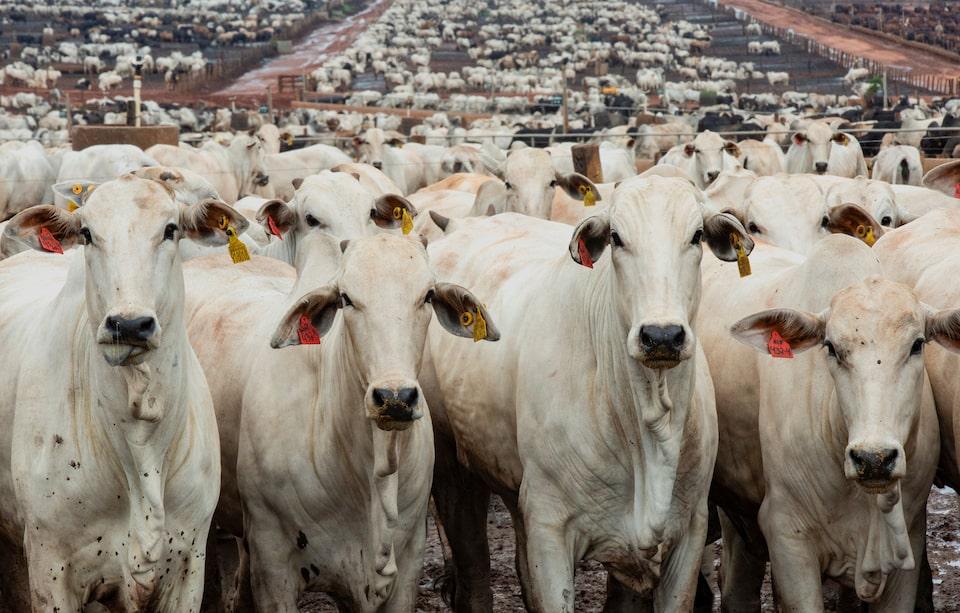
SAO PAULO, Feb 11 (Reuters) - The Brazilian government may assign individual export quotas for domestic beef companies selling products to China, Luis Rua, trade secretary at Brazil's ministry of agriculture, said in an interview on Wednesday. The measure is an attempt "to organize the industry" after the announcement of "safeguard measures" by China aimed at curbing imports and protecting its local industry, Rua said. Sign up here. "It's an ongoing discussion," the official said by telephone. "We're talking with the private sector to find alternatives to avoid an uncontrolled race," he said in relation to exporters potentially "rushing" to send beef to China, which could, for example, lower prices. The plan to assign individual company quotas may be discussed as early as Thursday at a meeting of Brazil's Foreign Trade Chamber (CAMEX), Rua said. China imposed an added 55% tariff on beef imports that exceed quota levels from key suppliers including Brazil, Australia and the U.S. The measure took effect on January 1 for three years, with the total quota set to increase annually. The total Chinese import quota for 2026 for countries covered under its new "safeguard measures" is 2.7 million metric tons, roughly in line with the record 2.87 million tons it imported overall in 2024. China is Brazil's main trade partner overall. Last year, Brazil exported 1.648 million metric tons of fresh beef to the Asian nation, an all-time record. As per Beijing's announcement, Brazil's import quota will be 1.106 million tons in 2026, 1.128 million tons in 2027 and 1.151 million tons in 2028. Rua said it remains unclear whether volumes in transit right before Beijing's announcement -- estimated by the industry at around 250,000 tons --, according to the official, would be factored in 2026's quota for Brazil. https://www.reuters.com/world/china/brazil-mulls-assigning-beef-export-quotas-exporters-dealing-with-china-official-2026-02-11/
2026-02-11 21:46
First-half profit beats estimates Shares rise to near four-year high Co trims production outlook for Brazil alumininium operations Feb 12 (Reuters) - Australia's South32 (S32.AX) , opens new tab reported higher first-half profit and beat analysts' estimates on Thursday, boosted by higher commodity prices, sending shares of the diversified miner to their highest point in nearly four years. Shares of the company rose as much as 5.4% to A$4.91, their highest level since June 9, 2022. Sign up here. Stock was also among the top movers in the benchmark index (.AXJO) , opens new tab, which was up 0.5%, as at 0019 GMT. Its underlying earnings attributable was $435 million for the half-year ended December 31, beating the Visible Alpha consensus estimate of $386.6 million and higher than the $375 million a year earlier. The miner, however, trimmed the production outlook for its Brazil aluminium segment to 135 kilo tons (kt) from 160kt in fiscal 2026 and to 140kt from 165kt in fiscal 2027. The revision in forecast comes as the smelter's operator is implementing measures to improve stability and continue the ramp-up of all three potlines at the operations, South32 added. South32, which was spun-off from BHP Group (BHP.AX) , opens new tab in 2015, declared an interim dividend of 3.9 cents per share, compared with 3.4 cents in the previous year. The first-half earnings were driven broadly by higher commodity prices, notably copper, silver and aluminium, lower controllable costs, and the restart of operations at its manganese division in Australia, the world's biggest producer of manganese said. That offset lower contributions from its Illawarra Metallurgical Coal and Cerro Matoso sites post divestment. The company also increased its capital management programme by $100 million to $2.6 billion, with $209 million remaining to be returned to shareholders by 26 February 2027. Its manganese division in Australia swung to a profit with underlying EBIT of $66 million, up from a loss of $34 million from a year earlier, as the segment achieved normalised production rates on the execution of its recovery plan following the impacts of Tropical Cyclone Megan. https://www.reuters.com/world/asia-pacific/australias-south32-posts-16-rise-first-half-profit-2026-02-11/