2026-02-03 19:16
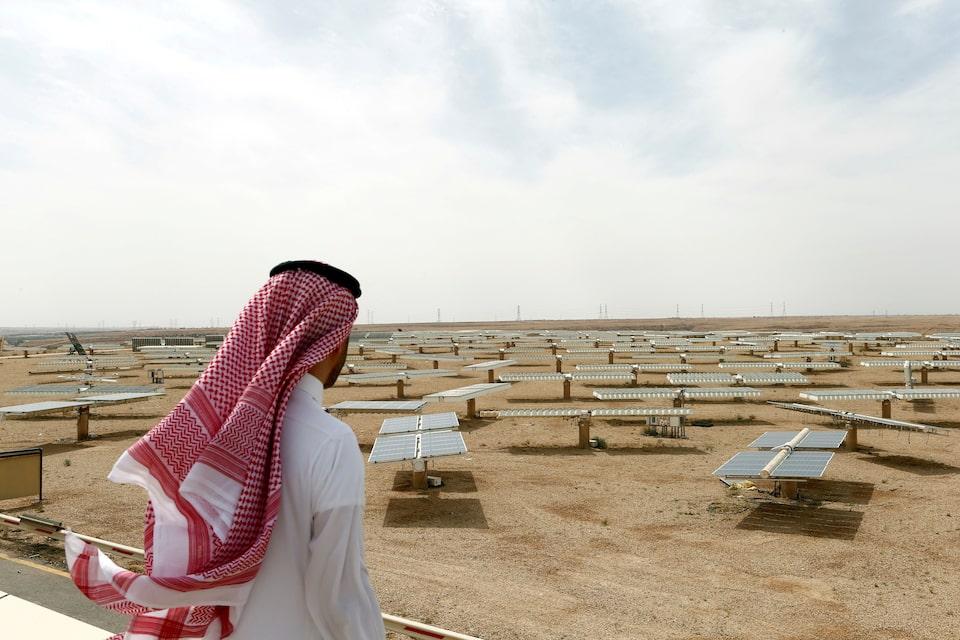
ANKARA, Feb 3 (Reuters) - Saudi Arabia will invest $2 billion to build two solar farms with total capacity of 2,000 MW in Turkey, the Turkish energy minister said on Tuesday. During Turkish President Tayyip Erdogan's visit to Riyadh, Turkey's Energy Minister Alparslan Bayraktar and his Saudi counterpart Prince Abdulaziz bin Salman signed an agreement on renewable energy power plant projects, Bayraktar said in a post on X. Sign up here. Under the agreement, Saudi companies will construct a solar power plant in the eastern province of Sivas and another in central province of Karaman with a total capacity of 2,000 MW in the first phase, Bayraktar said, adding that the total capacity of solar and wind power plants that the Saudi Arabian companies will construct will reach 5,000 MW. "We view these investments as one of the most important examples of direct foreign investment in our energy sector, and they will be financed entirely through external financing. Credit will also be provided by international financial institutions," Bayraktar said. The $2 billion solar power plants will meet the electricity needs of 2.1 million households in Turkey, Bayraktar also said. https://www.reuters.com/sustainability/boards-policy-regulation/saudi-arabia-build-2-billion-solar-farms-turkey-turkish-energy-minister-says-2026-02-03/
2026-02-03 18:57
Citadel head says US dollar lost some shine due to tariffs, political rhetoric Griffin calls for increased fiscal discipline, notes robust labor market Griffin praises Fed chair choice, criticizes Trump family's business dealings Griffin open to future political role but no immediate plans WEST PALM BEACH, Feb 3 (Reuters) - Billionaire investor Ken Griffin said on Tuesday that he believed the U.S. dollar had lost some of its luster with investors in the last 12 months. The greenback has faced recent wobbles, including slumping to a four-year low last week, as investors fretted about numerous factors including volatile fiscal policy and expectations for further Federal Reserve rate cuts. Sign up here. When asked about a challenge to the dollar's primacy at the WSJ Invest Live event in West Palm Beach, Florida, the founder of investment firm Citadel said while the United States continued to be "one of the great safe harbors in the world," and was asserting its geopolitical strength in many positive ways, the currency had been impacted. "Policies relating to tariffs, some of the rhetoric from the administration, have taken some of the shine off of the dollar," he said. In a wide-ranging interview, Griffin said there needed to be an increase in fiscal discipline, including the paying down of government borrowing that fueled pandemic-era spending. On the U.S. labor market, he noted that conditions were "reasonably robust" and that some of the hoarding of employees that took place in the wake of Covid-19 was starting to unwind. On whether advances in artificial intelligence were driving some of these job cuts though, Griffin argued that while the technology was getting some of the blame, businesses were yet to see the productivity gains from AI that would trigger layoffs. POLITICS AND POLITICAL MUSINGS Griffin applauded the naming of Kevin Warsh as the next chair of the Federal Reserve, as well as President Donald Trump's process for choosing who would run the U.S. central bank. "The choice by the president here is a powerful assertion that the Fed will maintain needed independence in policy decision-making," he said. The Citadel head was less complimentary though of some of the business dealings undertaken by the president and his family while Trump has been in office. "One of the things that you want to believe is that those who serve the public interest have the public interest at heart in everything they do," Griffin said, when asked about overseas investments into Trump crypto ventures. "And, I think, that this administration has definitely made missteps in choosing decisions or courses that have been very, very enriching to the families of those in the administration." He was also wary of the U.S. government playing a more active role in the economy, including buying stakes in companies when America has an "incredible venture capital community." He added that government involvement risked CEOs "having to, in some sense, suck up to one administration after another." Griffin added that while he was focused on Citadel, and that his position had given him an opportunity to provide input into policy decisions made by administrations of both parties, he could be open to running for political office. "I like to believe that, at a future point in my life, I will be involved in public service," he said. https://www.reuters.com/markets/wealth/billionaire-investor-griffin-says-us-dollar-has-lost-some-shine-2026-02-03/
2026-02-03 18:38
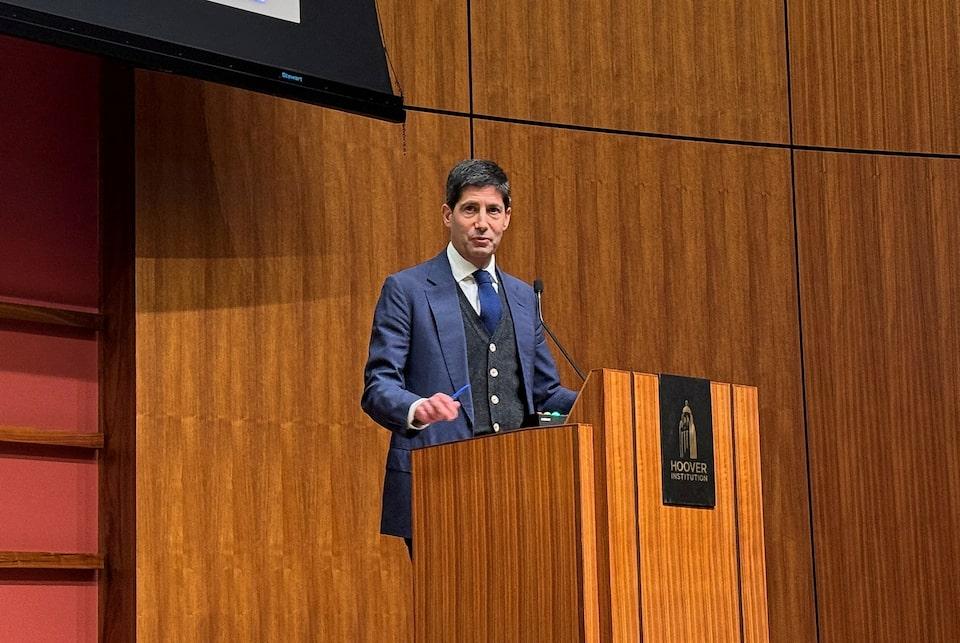
Markets expect steeper yield curves to be the norm in 2026 Tensions likely to revolve around Fed balance sheet, long-end rates Uncertainty about Warsh's views likely to raise rate volatility Incoming Fed chief expected to revert to hawkish instincts at some point NEW YORK, Feb 3 (Reuters) - Investors are ramping up bets on higher long‑dated Treasury yields and a steeper yield curve as incoming Federal Reserve Chair Kevin Warsh is expected to press for interest rate cuts while shrinking the U.S. central bank's balance sheet. Warsh's preference for a materially smaller Fed balance sheet, currently around $6.59 trillion, implies a withdrawal of meaningful government demand for Treasuries, a move which tightens financial conditions because the central bank is not providing liquidity to the market. Sign up here. Reduced Fed bond reinvestments and purchases expand the amount of Treasury supply in the market, which tends to lift long‑dated yields - steepening the curve. "The main outcome of shrinking the balance sheet would be to have a yield curve that is more normally positively sloped as it was historically before all the intervention following the financial crisis," said Eric Kuby, chief investment officer at North Star Investment Management Corp in Chicago. The yield curve - the gap between short‑ and long‑term rates and a key barometer of economic expectations - often steepens when investors grow more concerned about inflation and widening fiscal deficits. Higher long-term yields feed directly into borrowing costs across the economy: mortgages, corporate bonds, leveraged loans, and equity financing all become more expensive. At the same time, short-end yields are expected to remain subdued under Warsh, accentuating the steepness of the curve. Despite his reputation as a hawk when he was a Fed governor from 2006 to 2011, Warsh has recently leaned more dovish, aligning with President Donald Trump's expectations for near‑term rate cuts. The Treasury curve was already steepening - with rates on the long end at higher levels than those on the short end - even before Trump nominated Warsh to succeed Fed Chair Jerome Powell this spring. That steepening was driven by inflation anxiety and fears that higher fiscal deficits would lead to more debt issuance and a spike in yields. The Treasury 2/10-year yield curve flattened a bit on Tuesday. It hit 72.70 basis points (bps) a day earlier, its steepest level since April 9, a week after "Liberation Day" when Trump announced tariffs on products from U.S. trading partners around the world. Warsh, currently a visiting fellow at Stanford University's Hoover Institution, has said that productivity gains fueled by artificial intelligence in general have a disinflationary impact, allowing the Fed to ease monetary policy. U.S. rate futures show traders still expect roughly two quarter‑percentage-point rate cuts this year, with the first happening at the June 16-17 meeting, reflecting confidence a Warsh‑led Fed will focus on normalizing borrowing costs. Powell's term as Fed chief ends in mid-May, and Warsh must still be confirmed by the U.S. Senate. Analysts, however, highlight the tension between reducing the Fed's balance sheet and delivering the lower long‑term rates sought by the Trump administration. If the balance sheet contracts and long-term rates remain elevated, term premia - the added yield investors demand to take on duration risk - could remain sticky or rise further, possibly complicating efforts to ease financial conditions through traditional rate cuts. "It's a tough policy to administer. You have one policy that you're using in a dovish fashion like cutting rates, and then you have another policy that you're using that leads to higher rates, like shrinking the balance sheet," said Jim Barnes, director of fixed income at Bryn Mawr Trust in Berwyn, Pennsylvania. "They're going in opposite directions. You want to cut rates and shrink the balance sheet at the same time. But how do you put that into action? And that's where it becomes problematic." TECHNICAL ISSUES, RATES VOLATILITY Lou Crandall, chief economist at money market research firm Wrightson-ICAP in New York, said any plan to reduce the Fed's assets will involve a number of complex technical issues - especially with respect to bank liquidity regulations - and take time. Market players also anticipate higher interest rate volatility, with some viewing Warsh as a contentious Fed chief given his past criticism of the central bank, said Oscar Munoz, chief U.S. macro strategist at TD Securities in New York, adding that this situation could alienate some members of the central bank's policy-setting committee. "We also find the former governor harder to pin down given his notable 180-(degree) shift in policy priorities after espousing a very hawkish stance since being part of the Fed during the GFC (Global Financial Crisis)," Munoz added. Bond market participants, however, expect Warsh to revert to his hawkish instincts at some point, further driving interest rate volatility higher. Felix-Antoine Vezina-Poirier, associate strategist at BCA in Montreal, said while Warsh has pointed to AI-driven productivity gains as a reason "not to worry about future inflation," higher productivity implies a higher neutral fed funds rate. The MOVE index (.MOVE) , opens new tab, a measure of rate volatility, has been declining over the last few months and has yet to price in Warsh's upcoming stint as Fed chief. The index was last at 59.30, down from 84.32 in mid-November. "Only time will tell how Warsh works as chairman. He was an inflation hawk during his time on the Board of Governors," said Benjamin Connard, portfolio manager at Carnegie Investment Counsel in Stamford, Connecticut. "He's changed his tune recently, and a cynic may say only to secure the nomination. ... Rates are set by the majority, so Warsh alone cannot cut them. For a long-term investor, as long as there is continued confidence in the Fed as a whole, this nomination should not change your perspective." https://www.reuters.com/business/finance/investors-ramp-up-bets-steeper-yield-curve-under-warsh-led-fed-2026-02-03/
2026-02-03 18:16
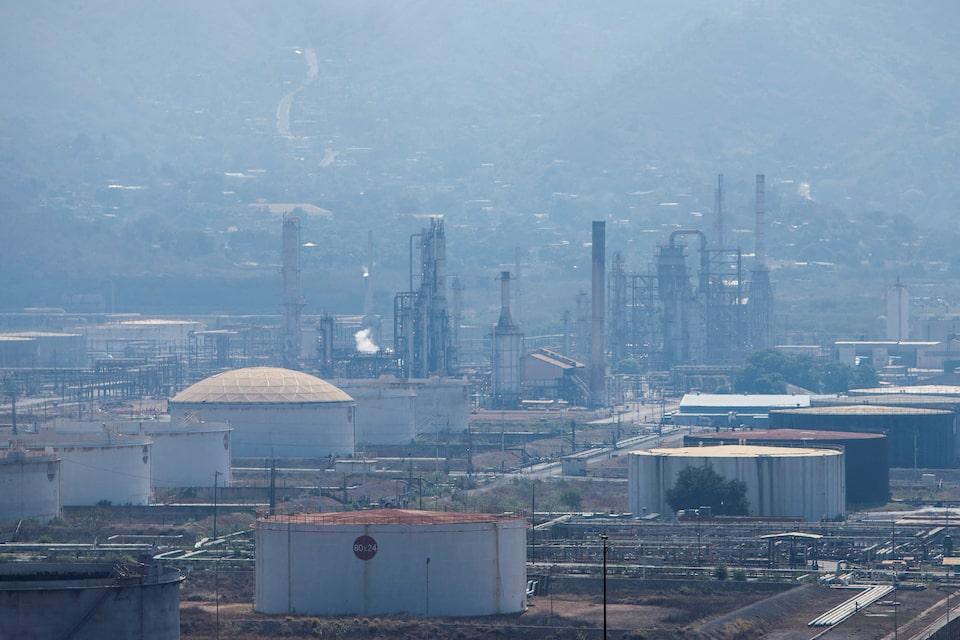
Could issue license as soon as this week, sources say Trump wants US firms to invest in Venezuelan production Oilfield services companies want licenses to use equipment WASHINGTON/HOUSTON, Feb 3 (Reuters) - The U.S. government is working to issue as early as this week a general license allowing companies to produce oil and gas in Venezuela, as Washington seeks to encourage expanded output in the OPEC nation since capturing its president, three sources close to the matter told Reuters. The move by the Treasury's Office of Foreign Assets Control would authorize companies to explore and pump for crude oil and natural gas, the sources said. OFAC already authorized U.S. companies to load, sell, transport, store and refine Venezuelan oil last month in a first general license. Sign up here. "The president's team is working around the clock to ensure oil companies are able to make investments in Venezuela's oil infrastructure. Stay tuned," said White House spokeswoman Taylor Rogers when asked about the plans for a license. President Donald Trump has said the U.S. intends to control Venezuela's oil sales and revenues indefinitely since U.S. forces seized Nicolas Maduro in a raid on Caracas on January 3. Trump said he wants U.S. oil firms to eventually invest $100 billion to restore Venezuela's energy industry to its historic output peaks and that the profits would be split between Venezuelans, the United States and companies. CHALLENGES TO INVESTMENT Venezuela's oil industry has been state-controlled for two decades, since the government expropriated assets of foreign companies including U.S. giants Exxon Mobil (XOM.N) , opens new tab and ConocoPhillips (COP.N) , opens new tab. Chevron Corp (CVX.N) , opens new tab is the only U.S. major that retained continuous operations in the country, as a partner of state energy company PDVSA. However, a sweeping reform approved in Venezuela last week is set to grant autonomy for foreign oil producers, while lowering taxes and encouraging fresh investment. While some companies have expressed significant interest in developing Venezuela's crude reserves, believed to be the largest in the world, top CEOs have warned they would need to see strong legal frameworks and a stable political environment before making decisions about any long-term projects. Venezuela's current oil output of less than 1 million barrels per day (bpd) is down sharply from a peak of about 3 million bpd after decades of oilfield neglect, mismanagement, underinvestment and sanctions. Oilfield service companies, meanwhile, have been clamoring for licenses to use key drilling equipment already in the country and to bring in rigs and specialized gear - moves that are seen as a crucial first step to revitalizing output. U.S. firms SLB (SLB.N) , opens new tab, Baker Hughes (BKR.O) , opens new tab and Weatherford have existing licenses that do not allow rig operation or expansion. Venezuela in December only had two active drilling rigs, according to Baker Hughes' report on international rig count. Most drilling equipment bought by PDVSA from countries including China in recent years is in need of major repairs, company sources have said. In the meantime, Washington and Caracas agreed last month to an initial deal to sell 50 million barrels of Venezuelan oil, with European trading houses Vitol and Trafigura marketing the supply. Venezuelan oil exports rose to some 800,000 bpd in January, from 498,000 bpd in December, shipping data showed. https://www.reuters.com/business/energy/us-soon-license-expanded-oil-production-venezuela-sources-say-2026-02-03/
2026-02-03 18:01
NEW YORK, Feb 3 (Reuters) - Marathon Petroleum (MPC.N) , opens new tab said it bought two cargoes of Venezuelan crude oil at the end of January and expects its refineries to process more heavy grades, company executive said during a post-earnings call on Tuesday. U.S. refiners are expected to benefit significantly from President Donald Trump's efforts to boost output in Venezuela and rebuild the country's dilapidated oil sector following the capture of President Nicolas Maduro this month. Sign up here. The company has the ability to quickly pivot to process Venezuelan crude at its refineries, including the facility at Garyville, said CEO Maryann Mannen. Other U.S. Gulf Coast refiners including Valero Energy (VLO.N) , opens new tab and Phillips 66 (PSX.N) , opens new tab have also purchased Venezuelan crude that are part of Washington's agreement with Caracas to export up to 50 million barrels. "Right now the signals are pointing towards a heavy, more sour slate, and so we're leaning into it significantly," chief commercial officer Rick Hessling said. https://www.reuters.com/business/energy/marathon-petroleum-buys-venezuelan-crude-us-refineries-2026-02-03/

2026-02-03 17:43
Rule of law not applied uniformly in US, fund's CEO says Knight Vinke wants UK utility SSE to scale up offshore wind Eric Knight says to meet with SSE executives in early 2026 LONDON, Feb 3 (Reuters) - Eric Knight said his hedge fund cannot invest in the United States under President Donald Trump because the risks have become too great, but profits can be made in Europe where rules and policies for green energy projects are more predictable. Monaco-based Knight Vinke Asset Management sold the last of its U.S. holdings in August, its CEO and founder Knight told Reuters in a recent interview. Sign up here. The fund, which Knight founded in 2003 and made its name in part by pushing Shell (SHEL.L) , opens new tab to unify into a single company in 2005, returned 17.9% in 2025, a letter to its investors which was seen by Reuters showed. After investing in everything from Big Oil to banks, Knight has focused on the energy sector in recent years, launching a dedicated energy transition fund last year. However, the risks of investing in alternative energy companies in the U.S. have become too high, he said. "It's become uninvestable because the rule of law is not applied uniformly," said Knight, "the headwinds are too strong." The Trump administration paused construction of five major offshore wind projects late last year, causing share prices to plummet, and last month Trump called wind farms 'losers'. Shares in Danish wind company Orsted (ORSTED.CO) , opens new tab plunged to a record low in August after the U.S. government halted work on its nearly-completed Revolution wind project off Rhode Island. Norwegian oil company Equinor (EQNR.OL) , opens new tab, meanwhile, took a near-$1 billion impairment on its green energy division after its Empire Wind 1 project was halted. Federal judges have since allowed work to continue on all five projects as they fight the administration in the courts. White House spokeswoman Taylor Rogers said the green energy industry received unfair, preferential treatment under former President Joe Biden. "President Trump has reversed course on Joe Biden's dangerous ideological crusade against oil and gas companies by unleashing American energy to lower costs for American families and businesses and to protect our national security," she said. PLANS TO SCALE UP SSE WIND CAPACITY Knight is focusing instead on Britain's SSE, which has a large power and transmission business as well as an offshore wind unit, predicting its valuation could double over the next five to ten years. Knight's fund, whose stake in SSE is currently under the 3% threshold requiring public disclosure, has amassed enough shares to press the company to expand its investments, backing a new 33 billion pound ($45.16 billion) capital expenditure plan, but calling for more to be spent on UK offshore wind. He said SSE should consolidate its Berwick Bank project off the coast of Scotland, one of the world's largest, with other local assets to create a larger, connected wind power project that can produce more energy at a lower cost. To do that, he said SSE should retain 100% of the project rather than selling off small stakes, as its management has previously done with other offshore wind assets. He also suggested selling assets that are about to lose guaranteed revenue streams as government-backed contracts or power purchase agreements near an end, including a portfolio of onshore wind assets. After writing to the board in February 2025 outlining the need for more ambition and greater focus, Knight said he planned to meet with SSE again in early 2026 after the conclusion of several internal SSE working groups. A spokesperson said SSE does not speculate on any individual shareholder views. Knight said his fund would also continue to lobby the British government, trade unions and other political parties on his vision to create much larger wind projects. They planned to convene a forum for stakeholders before Easter, he added. Knight, who bought into SSE several years ago, said the stock had done well, especially since his "observations" to the board last February and the resulting "transformational" plan to spend big on the grid network. Since February 2025, SSE's share price has risen more than 60% and the company is currently valued at around 28 billion pounds ($38.28 billion) but could rise significantly higher if the company backed his strategy, Knight said. "Within 5 to 10 years it could be worth 60 billion (pounds)," he said, which would bring it closer to BP (BP.L) , opens new tab, with a stock market value of just under 70 billion pounds. ($1 = 0.7307 pounds) https://www.reuters.com/sustainability/climate-energy/knight-vinke-founder-says-his-fund-cant-invest-uncertain-us-under-trump-2026-02-03/