2025-10-21 11:56
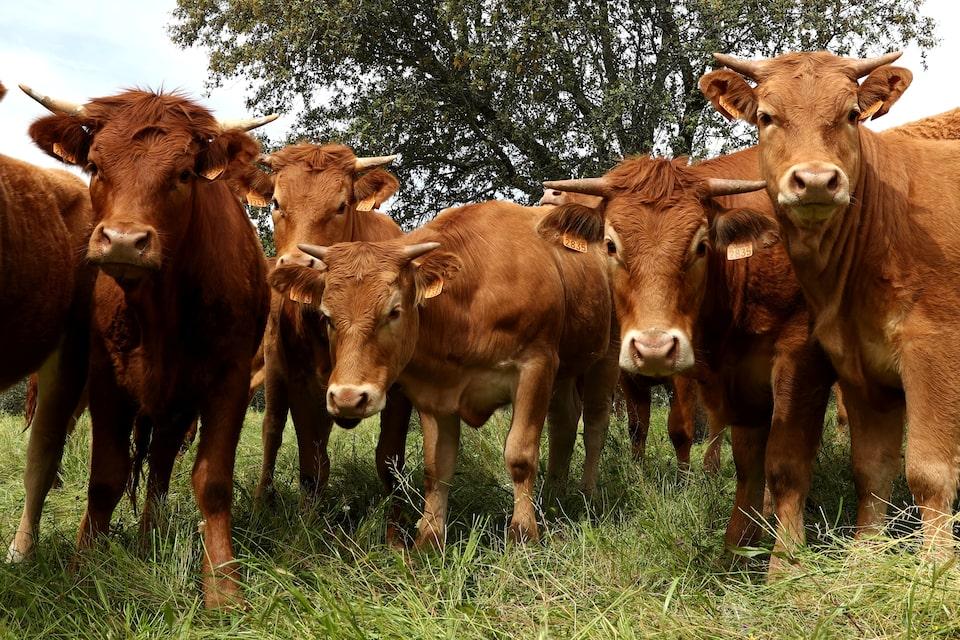
MADRID, Oct 21 (Reuters) - Spain has imposed a temporary ban on exports of live cattle following an outbreak of the highly-contagious lumpy skin disease, Agriculture Minister Luis Planas told reporters on Tuesday. Lumpy skin disease is a virus spread by insects that affects cattle and buffalo, causing blisters and reducing milk production. It does not pose a risk to humans but often leads to trade restrictions and severe economic losses. Sign up here. "We have temporarily suspended exports of live animals to prevent the spread of the disease; France has done the same," Planas said. France imposed a similar ban on cattle exports and events such as bullfighting on Friday. The Spanish outbreak was detected on a farm with 123 dairy heifers near Girona in the northeast, after three animals showed symptoms on October 1. https://www.reuters.com/business/healthcare-pharmaceuticals/spain-bans-live-cattle-exports-over-lumpy-skin-disease-outbreak-2025-10-21/
2025-10-21 11:52
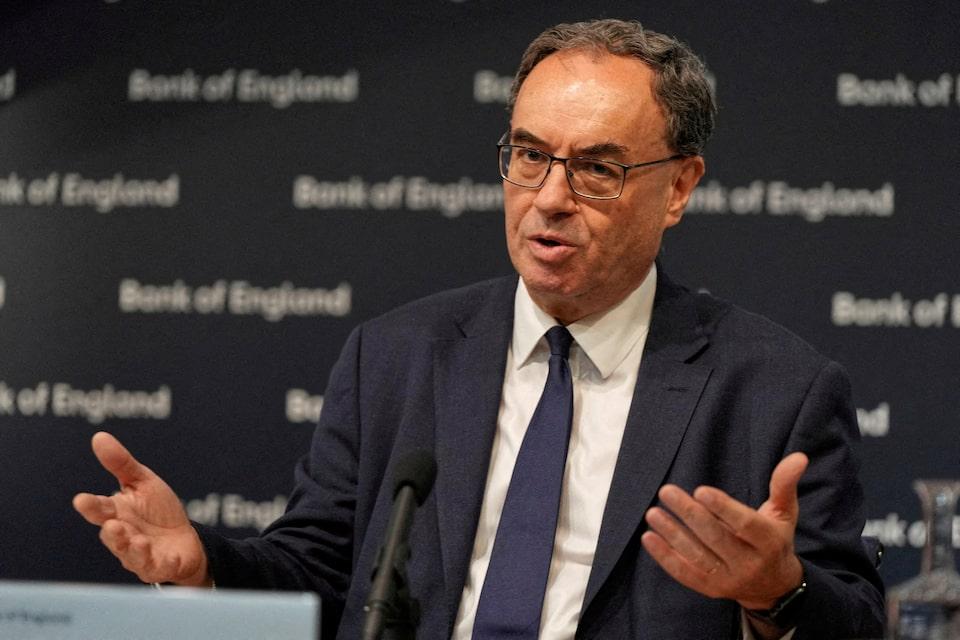
LONDON, Oct 21 (Reuters) - The recent collapses of U.S. car parts maker First Brands and auto dealership Tricolor may be a warning of much bigger financial problems to come and the Bank of England plans a more detailed probe, Governor Andrew Bailey said on Tuesday. Bailey told lawmakers that there were parallels with the early stages of the global financial crisis and that the central bank planned to run a "stress test" with the private equity and credit industry. Sign up here. "Are these cases idiosyncratic or are they what are called 'the canary in the coal mine'? In other words are they telling us something more fundamental...? I think that is still a very open question," Bailey told the House of Lords' Financial Services Regulation Committee. Bailey said the BoE planned to conduct a "system-wide exploratory scenario" with banks, insurers, private equity companies and other non-bank lenders. BoE Deputy Governor Sarah Breeden said the BoE expected to make a more detailed announcement before the end of the year and complete the exercise in nine to 12 months. "We can see the vulnerabilities here, the opacity, the leverage, the weak underwriting standards, the interconnections. We can see parallels with the global financial crisis. What we don't know is how macro-significant those issues are," she told the parliament committee. The exercise would be voluntary, as the central bank does not directly regulate many of the firms involved. Shares of some U.S. banks have fallen in recent weeks due to exposure to the bankruptcies of First Brands and Tricolor, which relied heavily on private finance. The House of Lords committee is looking at the growth since 2008 of so-called private markets - finance provided to large businesses outside of normal bank lending or issuing publicly traded shares or bonds. Bailey said he was concerned about potential conflicts of interest from private finance companies buying life insurers which then bought assets owned by the private finance companies. https://www.reuters.com/sustainability/boards-policy-regulation/bank-englands-bailey-says-first-brands-tricolor-collapses-may-be-warning-worse-2025-10-21/
2025-10-21 11:46
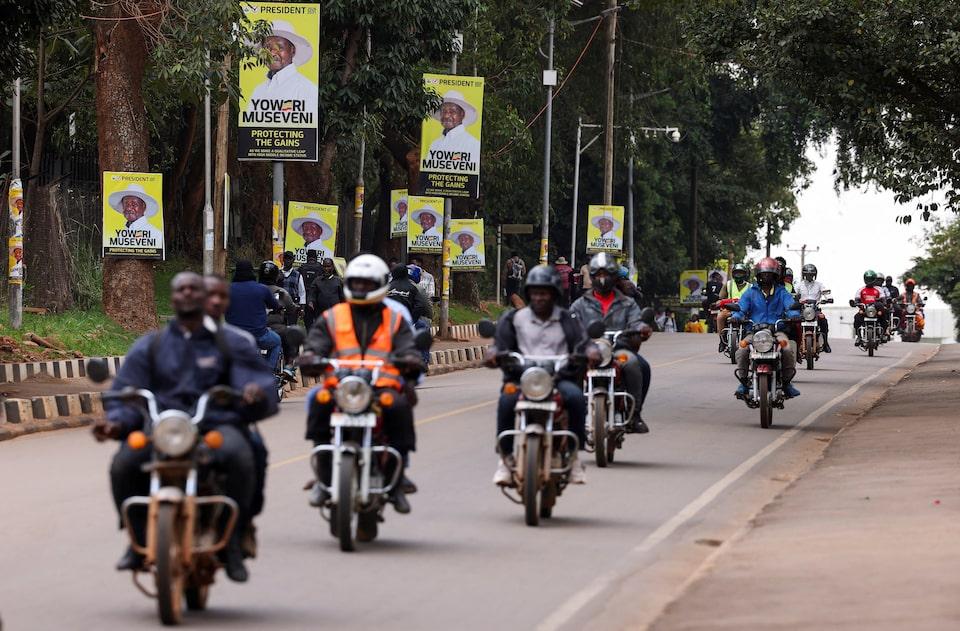
KAMPALA, Oct 21 (Reuters) - Uganda's electoral commission on Tuesday gave January 15 as the date for the country's general election, at which octogenarian President Yoweri Museveni will seek to extend his rule to nearly half a century. Now Africa's fourth longest-ruling leader, Museveni's government has changed the constitution twice to remove age and term limits, allowing him to remain in office since 1986. Sign up here. As in the 2021 election, Museveni's main rival is expected to be 43-year-old pop star-turned-politician Bobi Wine, who has parlayed his singing stardom to amass a large support base among young voters. Wine, whose real name is Robert Kyagulanyi, says Museveni won the last election through ballot-stuffing, intimidation of voters, bribery and other rigging tactics. Ruling party officials dismiss the accusation and say Museveni won through genuine support. Six other candidates representing smaller parties are contesting the upcoming presidential race, and voters will also elect members of parliament. A former rebel, Museveni has been credited with stabilising Uganda, promoting economic growth, and combating HIV/AIDS. But critics denounce his government's suppression of political opponents, human rights abuses and corruption scandals. Officials have denied allegations of rights abuses and say those detained are subject to due process. Museveni's government hopes the start of crude oil exports next year from fields operated by France's TotalEnergies (TTEF.PA) , opens new tab and China's CNOOC will help propel economic growth into double digits. Uganda is a significant geopolitical player in East Africa and has troops deployed in Somalia, South Sudan, the Democratic Republic of Congo and Equatorial Guinea as part of peacekeeping, anti-insurgency or military cooperation missions. https://www.reuters.com/world/africa/uganda-sets-general-election-january-15-2025-10-21/
2025-10-21 11:45
LONDON, Oct 21 (Reuters) - Sterling was little changed against the euro despite data on Tuesday showing Britain's borrowing in the first half of the financial year was the highest since the pandemic, as investors said a tough budget next month is already priced in. Against the euro, sterling was little changed at 86.80 pence. . It dipped 0.09% against a strengthening dollar to $1.3393, after briefly touching a six day low. Sign up here. Government borrowing in the first six months of the tax year totalled 99.8 billion pounds ($133.94 billion), up 13% from a year earlier and 7.2 billion pounds more than forecast by Britain's budget watchdog. In September alone, the government borrowed 20.2 billion pounds. It was lower than a median forecast of a 20.8 billion pound deficit in a Reuters poll of economists. The borrowing overshoot in the April to September period ran above official forecasts and keep up the pressure on finance minister Rachel Reeves as she prepares next month's key budget. "The UK government is in an unenviable position. And we know that, and investors know that. And we know that tax has to change and be moved up. That's been factored in," Guy Miller, chief market strategist, Zurich Insurance Group. "I wanted them to do this as quickly and as clinically as they could because it just removes that uncertainty. There's no reason to prolong it because the market's already pricing it," he said. Reeves has signalled that she will raise taxes and cut spending as she tries to stay on course to meet fiscal targets and avoid upsetting investors who have already pushed up British borrowing costs sharply. Reeves said last week she would like to have a bigger fiscal buffer to cope with volatile global markets, but creating one in her November 26 budget would involve tough trade-offs. Investors are also awaiting UK inflation data due on Wednesday. Economists polled by Reuters expect CPI inflation data for September to rise to 4% from 3.8% the previous month. https://www.reuters.com/world/uk/sterling-steadies-against-euro-after-uk-borrowing-overshoot-2025-10-21/

2025-10-21 11:43
NEW DELHI, Oct 21 (Reuters) - India's infrastructure output (ININFR=ECI) , opens new tab grew at its slowest pace in three months in September, weighed by a decline in coal, natural gas and refinery products. The index, which tracks activity across eight sectors and makes up 40% of the country's industrial production, grew at 3% year-on-year in September versus a revised 6.5% growth in August. The infrastructure output was 2.2% in June. Sign up here. KEY NUMBERS * Crude oil output fell 1.3% year-on-year in September against a revised increase of 2.4% in August. * Natural gas production declined 3.8% year-on-year in September as compared to a 2.2% fall in the previous month. * Cement output rose 5.3% year-on-year in September after a revised 5.4% increase in August. * Steel production rose 14.1% year-on-year in September after a revised increase of 13.6% in August. * Fertiliser production increased 1.6% year-on-year in September versus 4.6% rise in the previous month. * Coal production fell 1.2% year-on-year in September as compared to a growth of 11.4% in August. * Electricity generation increased 2.1% in September year-on-year versus a growth of 4.1% in August. * Refinery products output fell 3.7% in September year-on-year as compared to a growth of 3% in August. * Infrastructure output grew 2.9% year-on-year in April-September against a growth of a revised 4.3% a year ago. https://www.reuters.com/world/india/indias-september-infrastructure-output-grows-3-yy-2025-10-21/
2025-10-21 11:31
MILAN, Oct 21 (Reuters) - French utility EDF has picked Intesa Sanpaolo IMI (ISP.MI) , opens new tab and Lazard (LAZ.N) , opens new tab as financial advisers to study strategic options for its Italian subsidiary Edison (EDNn.MI) , opens new tab, two sources familiar with the matter told Reuters on Tuesday. Under the leadership of new CEO Bernard Fontana, state-owned EDF has started reviewing its assets as it seeks to raise money to meet government demands for investments in new nuclear reactors. Sign up here. EDF is considering an initial public offering or bringing on board a financial sponsor or selling a stake in Edison, sources have previously told Reuters, with one of the people saying EDF would keep a majority holding in the unit in any deal. Edison could be worth between 7 billion and 10 billion euros ($8 billion-$12 billion), sources have said. EDF, Lazard, Intesa and Edison declined to comment. Italian daily Il Sole 24 Ore reported on Tuesday that Intesa and Lazard were in pole position to become EDF's advisers. In September, Edison CEO Nicola Monti said the Italian group was ready to list on the Milan bourse should its parent company decide to press ahead with such a plan. Edison already has the corporate structure in place and procedures necessary for its stock to trade publicly. When it acquired full control of Edison and took it private in 2012, EDF kept Edison's savings shares listed in Milan. These are a special class of shares that offer a higher dividend than ordinary shares but do not give holders voting rights at shareholder meetings. Edison reported revenue of 15.4 billion euros and a core profit of 1.7 billion euros last year. ($1 = 0.8575 euros) https://www.reuters.com/business/energy/frances-edf-picks-advisers-study-options-italian-unit-edison-sources-say-2025-10-21/