2026-02-03 17:42
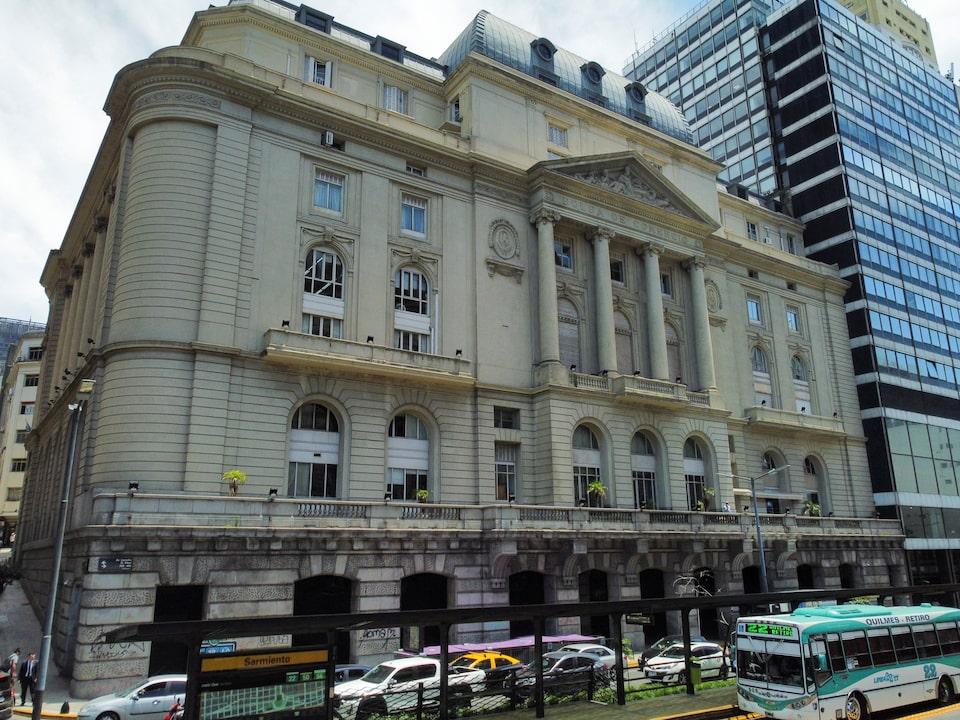
Resignation of INDEC head impacts local assets New inflation method delayed, causing market uncertainty BUENOS AIRES, Feb 3 (Reuters) - The resignation of the head of Argentina's statistics agency and the delayed start of a revised method for measuring inflation hit local assets on Tuesday. Marco Lavagna stepped down from the National Institute of Statistics and Censuses (INDEC) on Monday, saying it was "time to take on new projects and challenges." Sign up here. Economy Minister Luis Caputo told a local radio station on Monday that Lavagna resigned because he wanted to roll out a new formula to measure inflation immediately while the executive branch preferred to wait. Lavagna did not immediately respond to a request for comment. "With (President Javier Milei) we always had the vision that the change needed to be implemented once the process of disinflation had been totally established," Caputo said. Under Milei's government, sweeping austerity measures have reduced double-digit monthly inflation to under 3%. INDEC had announced in October that the updated method would be implemented in January. Caputo on Monday did not give a new date. He said the change would produce practically the same results, however, market sources told Reuters they expected it would show a substantially higher inflation rate. The current methodology dates back to 2004. Argentina's 'country risk' edged up to 496 basis points on Tuesday after last week touching its tightest since mid-2018. The local stock index benchmark (.MERV) was down for a fifth consecutive session after losing 2.9% on Monday due to profit-taking and the change at INDEC, traders said. International dollar bonds were mixed across the curve, with marginal price moves in both directions. Statistical data is a sensitive topic in Argentina because of the massive underreporting of inflation in the 2000s and 2010s, for which Argentina was censured by the International Monetary Fund. The IMF did not immediately respond to a request for comment on any implications of the delay on the current program between the Washington lender and Argentina. "It took a lot of effort to regain statistical credibility, and that's why the current situation is a terrible sign," economist Marcelo Rojas told Reuters. "Doubts are resurfacing that the government will interfere with statistical data again." The government has said it expects January's inflation could be around 2.5%, compared to 2.8% in December. It would be around 3.2% if the updated methodology was used for the consumer price index (CPI), according to market sources. https://www.reuters.com/world/americas/tension-over-inflationary-data-casts-shadow-over-argentine-financial-market-2026-02-03/
2026-02-03 17:21
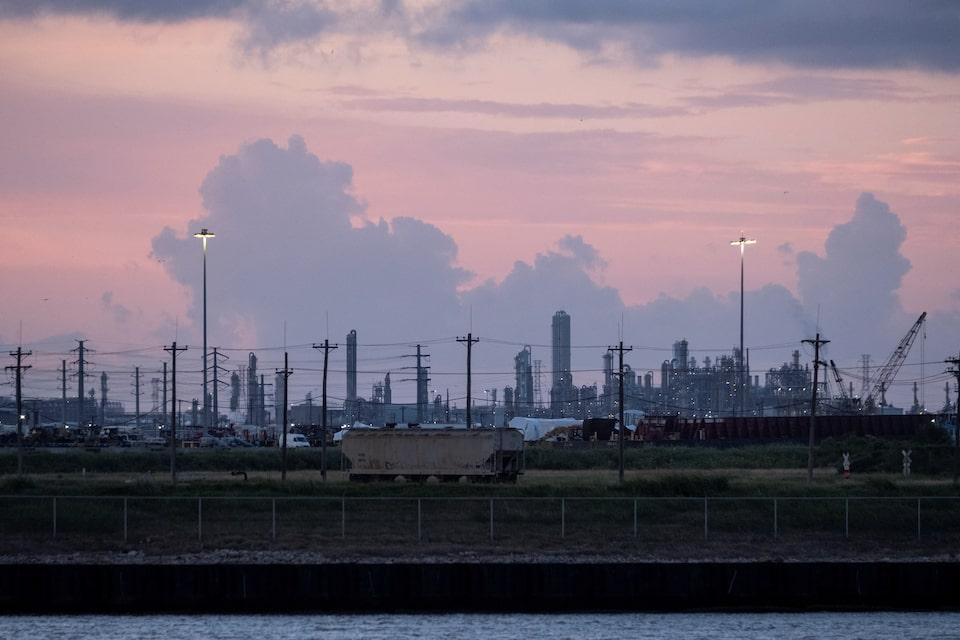
Venezuelan crude exports rose sharply in January Some US refiners say oil cargoes on offer are too expensive India may be possible buyer for excess crude HOUSTON/NEW YORK, Feb 3 (Reuters) - Oil refiners on the U.S. Gulf Coast are struggling to absorb a rapid surge in Venezuelan crude shipments since last month's flagship $2 billion supply deal between Caracas and Washington, pressuring prices and leaving some volumes unsold, according to traders and shipping data. The soft U.S. demand represents an early obstacle for President Donald Trump's hopes of sending the majority of the South American country's oil to the United States since U.S. forces captured Venezuela's President Nicolas Maduro last month in a raid in Caracas. Sign up here. Trading houses Vitol and Trafigura were granted U.S. licenses to market and sell millions of barrels of Venezuelan oil following the U.S. operation and a subsequent supply agreement with interim President Delcy Rodriguez. The trading houses, which joined energy major Chevron (CVX.N) , opens new tab in holding approval to export Venezuelan oil, struck several early deals to sell some cargoes to refiners in the U.S. and Europe. However, with Chevron also raising exports quickly, the trading companies are now finding it harder to secure enough buyers among Gulf Coast refiners, traders said. "We're all facing this issue where there's more to place and not enough takers," one of the traders said, citing reluctance from U.S. refiners to buy Venezuelan crude. Some refiners are complaining that prices, albeit declining, remain high compared to competing Canadian heavy grades. Venezuelan heavy oil cargoes for delivery at the Gulf Coast are being offered at about $9.50 per barrel below benchmark Brent , versus discounts of between $6 and $7.50 per barrel in mid-January. Meanwhile, Canadian WCS crude for delivery to the Gulf Coast was trading at a discount of about $10.25 a barrel under Brent futures, a trader said on Tuesday. Last month, total Venezuelan oil exports to the U.S. almost tripled to 284,000 barrels per day (bpd), according to data based on tanker movements. The U.S. was absorbing some 500,000 bpd of Venezuelan oil before Washington imposed sanctions on the country in 2019. But exports to the U.S. went to zero in mid-2025 after Trump revoked all licenses to trade and ship. Reaching the U.S. refiners' maximum capacity again will require time, one of the traders said, in part because some facilities would require adjustments to process heavier oil. Refiner Phillips 66 (PSX.N) , opens new tab can process around 250,000 bpd of Venezuelan crude, but prices must be competitive for Venezuelan grades to displace other sources of heavy oil, its chief executive Mark Lashier said at the Argus Americas Crude Summit in Houston on Tuesday. Chevron and Trafigura declined to comment. Venezuela's state oil firm PDVSA and Vitol did not reply to requests for comment. INCREASED COMPETITION Chevron, whose current Venezuela license authorizes it to export to the U.S. only, increased exports to 220,000 bpd in January from 99,000 bpd in December. Chevron CEO Mike Wirth told investors on Friday that the company's refining network can process up to 150,000 bpd of Venezuela's heavy grades, which implies it must store or market the remaining portion among other refiners. The firm, which is the only U.S. oil major operating in Venezuela, is producing some 250,000 bpd there. Wirth said the company sees potential for a 50% output increase over the next 18 to 24 months, provided the U.S. authorizes it to expand operations. Vessel monitoring data this week showed several Chevron-chartered tankers loaded with Venezuelan crude waiting for days to discharge at U.S. ports or slowing down navigation. A person familiar with Chevron's operations said the company had to negotiate new discharge dates with customers after a U.S. blockade on Venezuela caused shipping delays between December and January. But all cargoes had been sold before departure, the person added. Meanwhile, Vitol and Trafigura exported some 12 million barrels - equivalent to around 392,000 bpd - from Venezuelan ports in January, mostly to storage terminals in the Caribbean, the data showed. Much of it has not yet been sold, sources said. Total Venezuelan oil exports bounced to near 800,000 bpd last month, from 498,000 bpd in December. China was previously the top destination for Venezuelan oil, but none has been sent there since Maduro's capture in early January, according to the data. The U.S. said after seizing Maduro that it would control Venezuela's oil sales indefinitely. While China is allowed to purchase the oil, it must not be at "unfair, undercut" prices at which Caracas sold the crude previously, a U.S. official said last month. Beijing has rejected the U.S. takeover of Venezuela's oil exports. China's state-owned PetroChina, previously the largest receiver of Venezuelan crude, has told traders not to buy or trade Venezuelan oil while it assesses the situation, separate sources told Reuters last week. A potential relief valve for the Venezuelan oil could come from India. On Monday, Trump announced a trade deal with India that slashes U.S. tariffs on Indian goods in exchange for India lowering trade barriers, stopping its purchases of Russian oil and buying oil instead from the U.S. and potentially Venezuela. India's Reliance Industries (RELI.NS) , opens new tab last month said it was considering importing Venezuelan oil. https://www.reuters.com/business/energy/us-refiners-struggle-absorb-sudden-surge-venezuelan-oil-imports-2026-02-03/
2026-02-03 16:37
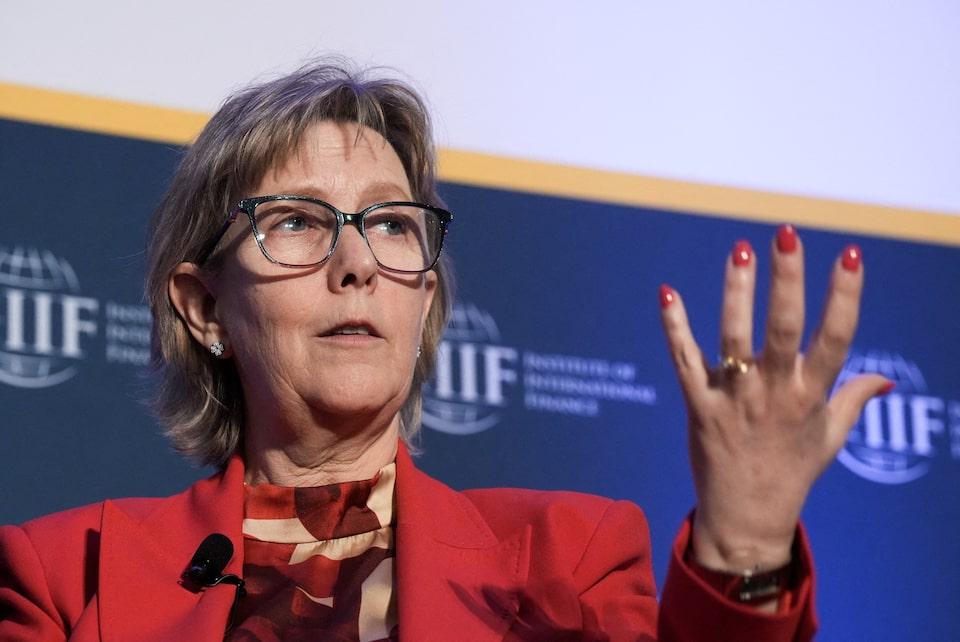
BRUSSELS, Feb 3 (Reuters) - Europe must keep control over key technologies that underpin the region's economies, the European Union's Financial Services Commissioner said on Tuesday, adding to growing calls for the bloc to be less reliant on U.S.-based technology giants. Europe is increasingly focused on "digital sovereignty" - the idea that reliance on companies from an increasingly isolationist United States is a threat to Europe's economy and security. Sign up here. "Europe must retain control over the key technologies that underpin and drive our economies," EU commissioner Maria Luís Albuquerque told a financial technology regulatory conference in Brussels. A senior official at the Netherlands' central bank also told the same event that Europe should be less reliant on technology firms based outside the region. European financial institutions were more vulnerable to potential cyberattacks due to their reliance on a small number of cloud computing providers, said Steven Maijoor, Chair of Supervision at De Nederlandsche Bank, although he added that some were broadening their supplier base. “It is undeniable that the faultlines on our European financial system have become far more prone to cracking in recent years," Maijoor added, citing cybersecurity risks and a souring of some "long-standing global relationships", without naming specific countries. The European Central Bank said in November that geopolitical tensions and technological disruptions were among the risks facing Europe's banking sector. EU regulators have designated 19 technology companies, including Amazon Web Services (AMZN.O) , opens new tab, Google Cloud (GOOGL.O) , opens new tab and Microsoft (MSFT.O) , opens new tab, as critical third-party computing providers for the bloc's finance industry. https://www.reuters.com/business/finance/europe-must-keep-control-key-technologies-says-eu-commissioner-2026-02-03/
2026-02-03 15:43
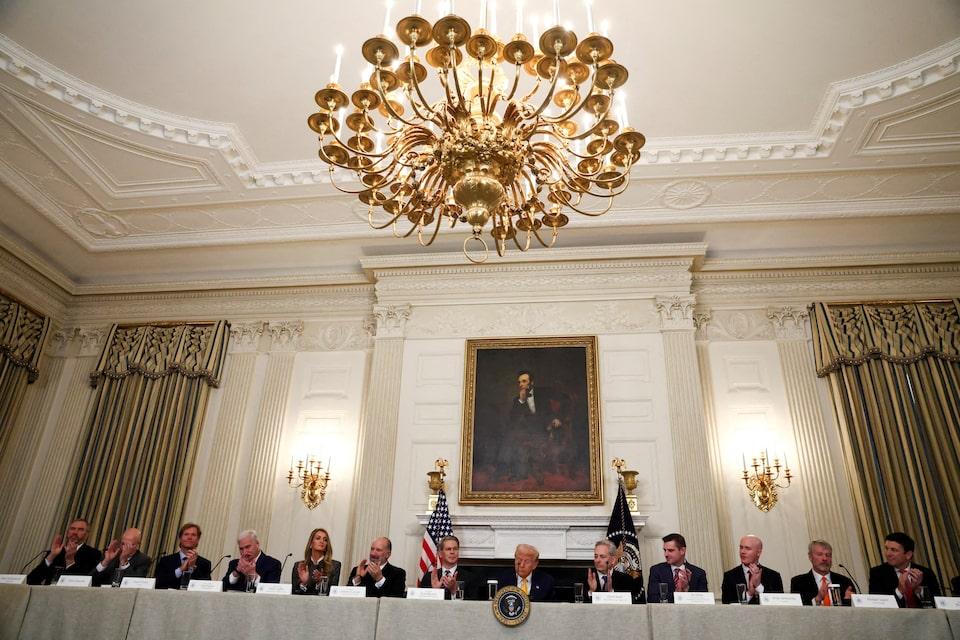
Meeting highlights divisions between banks and crypto firms Clash over stablecoin rewards stalls legislation Crypto firms argue rewards are key for customer recruitment Feb 3 (Reuters) - A White House meeting aimed at breaking a months‑long stalemate between major U.S. banks and cryptocurrency firms ended on Monday without any agreement, underscoring industry divisions that threaten progress on landmark digital‑asset legislation. The closed‑door session, convened by the White House’s crypto council, brought together representatives from the crypto and banking industries in an effort to reach an agreement on stalled crypto market structure legislation. Both sides emerged from the meeting describing it as constructive, but fundamental disagreements that upended the bill's progress remained unresolved. Sign up here. Representatives of the American Bankers Association, the Independent Community Bankers of America, the Blockchain Association and The Digital Chamber were among those in attendance. “The White House continues to engage in productive conversations to advance President Trump’s agenda of cementing American dominance in the cutting-edge technologies of the future," said White House spokesman Kush Desai in a statement. STABLECOIN INTEREST A STICKING POINT Crypto market structure legislation has been held up by a clash for months between the two industries over how the bill treats interest and other rewards paid on stablecoins. Banks have been pushing for language in the bill prohibiting the practice. Crypto companies say providing rewards such as interest is crucial for recruiting new customers and that barring them from doing so would be anti-competitive. Banks say the increased competition could result in insured lenders experiencing an exodus of deposits - the primary source of funding for most banks - potentially threatening financial stability. Monday's White House meeting was intended to forge a compromise after the Senate Banking Committee postponed a vote last month amid rising objections from both sectors and fears the bill did not have enough support to advance to the full Senate. While both sides in statements called the meeting constructive, it did not result in an agreement, according to one source who attended and declined to be identified discussing private policy discussions. The source anticipated there would be subsequent White House meetings to try and resolve the impasse. The Clarity Act aims to create federal rules for digital assets, the culmination of years of crypto industry lobbying. Crypto companies have long argued that existing rules are inadequate for digital assets, and that legislation is essential for companies to continue to operate with legal certainty in the U.S. The House of Representatives passed its version of the bill in July. https://www.reuters.com/legal/government/white-house-meeting-fails-resolve-us-crypto-legislation-stalemate-2026-02-03/
2026-02-03 14:59
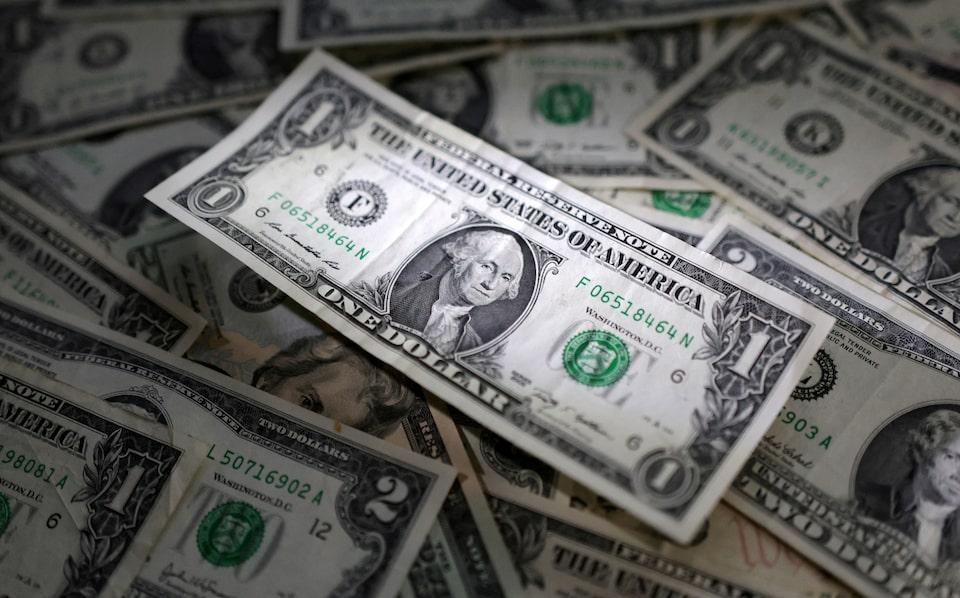
Dollar has a volatile start to 2026 Reserve currency detaching from economic trends, analysts say Disorderly dollar moves might spark capital flight, they say Hedging against currency volatility ripples into stocks, Treasuries LONDON, Feb 3 (Reuters) - The dollar, the world's No.1 reserve currency, is having a rocky ride as unpredictable White House policy moves and Federal Reserve independence concerns revive "Sell America" trades. While it is expected to weaken further, sudden rebounds in the greenback can catch traders out just as much as sudden sharp falls. Sign up here. Having fallen almost 2% in one week in January to four-year lows, an index measuring the dollar's value against other major currencies then bounced back , causing metals market mayhem. Here's a look at how dollar risks are rippling through world markets. 1/ METALS MELTDOWN The dollar's rebound in the last two trading sessions, following U.S. President Donald Trump's decision to nominate former Federal Reserve governor Kevin Warsh to replace outgoing Fed chief Jerome Powell has sparked a metals market meltdown. Gold, which had notched up its best month in more than half a century in January, slumped 5% on Monday after its biggest daily fall since the early 1980s in the prior session - though it regained some ground on Tuesday. Traders had crowded into a popular currency debasement trade that relied on metals prices rising as Fed independence kept the dollar on a steady weakening path. That concept then dropped out of metals markets "at lightning speed," days, Societe Generale said in a client note. Silver and copper also fell sharply from recent all-time peaks, while Brent crude oil is set for its worst week in almost two months after rallying 16% in January. 2/ WILDER CURRENCY SWINGS The almost $10 trillion-a-day global currency market has become more volatile. A gauge of the most actively traded currency pair -- the euro/dollar exchange rate -- that measures expected volatility in three months' time , hit its highest since July last week. According to Capital Economics, the dollar had become detached from traditional valuation metrics like the gap between U.S. and Japanese or European interest rates. Barclays has calculated a U.S. policy risk premium for the dollar, meaning it is influenced by White House rhetoric and has become partly detached from the economic and growth forecasts that investors usually track. That could make stocks and bonds priced in dollars harder for foreign investors to hold and value. "The main question is whether people lose confidence in the U.S. asset base," said Barclays global head of FX and EM macro strategy Themos Fiotakis. 3/ SELL AMERICA? Foreign investors own almost $70 trillion-worth of U.S. assets, more than doubling their holdings in the last decade as Wall Street stocks boomed. European money managers are assessing their exposures. A weaker dollar can boost U.S. stocks by increasing the local currency value of companies' overseas earnings and often raises prices of Treasuries. "But disorderly (dollar) decline could change this relationship," Bank of America analysts said in a note. A disorderly drop would be a 5% monthly loss, BofA said, which could generate a "drastic sell-off of long-dated Treasuries," and tighten U.S. financial conditions significantly. A wider debasement trade, with the dollar falling in tandem with domestic assets, was also a risk, BofA said. 4/ TAKE COVER NOW Janus Henderson multi-asset manager Oliver Blackbourn said that he was shifting his portfolios towards a neutral stance to back away from market risk and had cut his exposure to stocks and gold in the last two weeks. "If the dollar is more volatile on the back of various (policy) pronouncements then other assets are going to volatile on the back of that, so we'll just have to get more neutral in the short term." John Stopford, head managed income at Ninety One, said he had bought both put options that make money if Treasury yields rise and call options that pay out if they fall. This was "to cover the uncertainty over the likely direction of yields from here," he said. Hedge funds, meanwhile, are backing out of North American assets because of trade tensions and policy uncertainty. https://www.reuters.com/business/finance/how-dollar-disorder-could-be-wake-up-call-global-investors-2026-02-03/
2026-02-03 14:43
MEXICO CITY, Feb 3 (Reuters) - Mexico's government outlined a plan on Tuesday to spur 5.6 trillion pesos ($323 billion) in spending on infrastructure and other key areas in public-private partnerships through 2030, which officials said could boost growth above prior estimates as soon as this year. Finance Minister Edgar Amador said 722 billion pesos of the total could be allocated to projects this year, helping the economy expand between 2.5% and 3%. Sign up here. In its 2026 budget proposal presented in September, the finance ministry projected growth between 1.8% and 2.8% for the year. The new outlook is also above analyst projections. A Mexico central bank poll of private sector analysts on Tuesday forecast 1.3% growth this year and 1.8% in 2027. In 2025, according to preliminary data, growth was 0.7%. Amador added that the goal was to guarantee state ownership and oversight while bringing in private capital to reduce risk. President Claudia Sheinbaum, whose administration runs through 2030, said private partners would be selected through public bidding processes, and that the finance, economy and energy ministries would coordinate the projects. The government will take majority control of any joint ventures, which are intended to span projects in energy, trains, highways, ports, healthcare, water, education and airports. "This is good for the country because it will allow us to achieve greater development with equity, well-being, social justice and environmental protection," she said at her regular daily press conference. ($1 = 17.3157 Mexican pesos) https://www.reuters.com/world/americas/mexico-presents-323-billion-public-private-investment-plan-2026-02-03/