2025-10-21 05:52
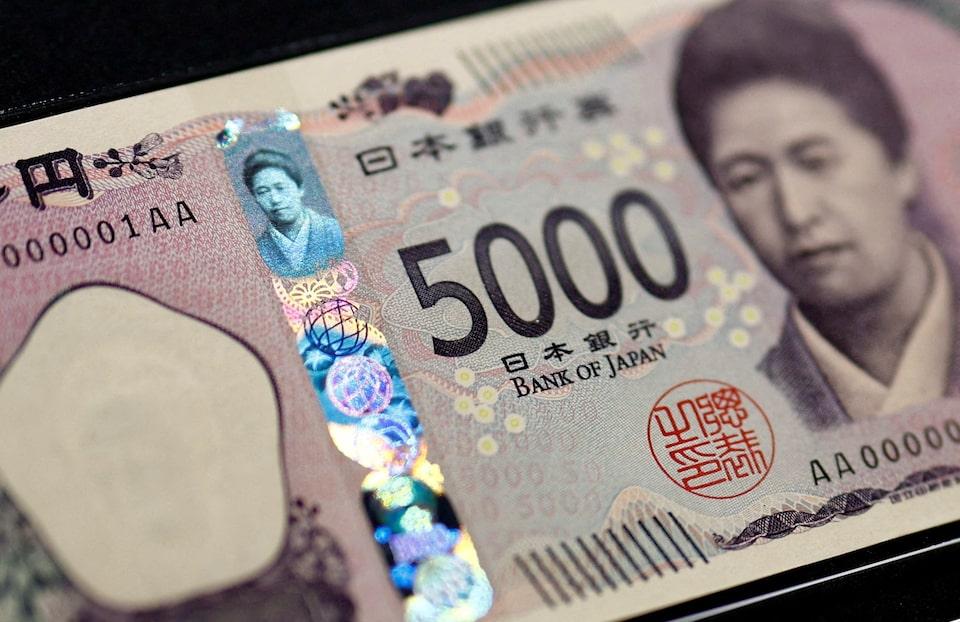
Yen down 0.76% Dollar index hits six-day high as Trump trade deal optimism boosts market mood ECB warns euro zone banks on potential US dollar funding pressures NEW YORK, Oct 21 (Reuters) - The yen eased to a one-week low on Tuesday after hardline conservative Sanae Takaichi was elected as Japan's prime minister, with traders betting her government could muddy the interest rate outlook and bring about a greater fiscal largesse. Takaichi, the first female PM and leader of Japan's ruling Liberal Democratic Party, won the lower house vote on Tuesday to choose the next prime minister. The move was widely expected by investors after she was backed by the right-wing opposition party Ishin. Sign up here. The Japanese currency was last down 0.76% at 151.895 per dollar , after earlier touching its lowest level against the dollar since October 14, in its biggest single-day fall in two weeks. The yen also struggled against the euro and sterling . Earlier on Tuesday, local media reported that Takaichi had finalized a plan to appoint Satsuki Katayama, a former regional revitalisation minister, as finance minister. During an interview with Reuters in March, Katayama signaled her preference for a stronger yen. Her appointment could give markets cause to rethink the idea of pushing the yen too low. "We continue to assume that inflation and the purchasing power of private households will remain important issues for the new government in order to improve public approval," said Volkmar Baur, FX & Commodity Analyst at Commerzbank. "Therefore, the new government is unlikely to support a depreciation of the Japanese yen," Baur added. Still, Takaichi's support for fiscal stimulus and looser monetary policy kept investors on edge and complicates the Bank of Japan's path for rate increases. "From a political perspective ... there may be considerations to delay monetary tightening until fiscal easing gains traction. The BOJ is thus caught between a rock and a hard place," HSBC chief Asia economist Fred Neumann said. DOLLAR FIRMS In the broader market, currencies were mostly rangebound despite an overall upbeat market mood after U.S. President Donald Trump said on Monday he expects to reach a trade deal with Chinese President Xi Jinping. White House economic adviser Kevin Hassett also said that the 20-day U.S. federal government shutdown was likely to end this week. Jitters over credit risks among U.S. banks also dissipated slightly. The dollar index, measuring the currency against six peers drew support from a weaker yen and rose to a six-day high. It was last up 0.312% to 98.921. European Central Bank's chief economist Philip Lane said on Tuesday that euro zone banks may come under pressure if U.S. dollar funding - the lifeblood of financial markets - were to dry up, amid concern over Trump's policies. Dollar funding fears have been at the back of central bankers' minds since Trump announced a wave of trade tariffs and began putting pressure on the Federal Reserve earlier this year. The euro fell 0.3% against a strengthening dollar to $1.161, little helped by easing political uncertainty in France. Sterling was down against the dollar despite data on Tuesday showing Britain's borrowing in the first half of the financial year was the highest since the pandemic, as investors said a tough budget next month is priced in. https://www.reuters.com/world/asia-pacific/yen-guard-ahead-parliament-vote-next-prime-minister-2025-10-21/
2025-10-21 05:46
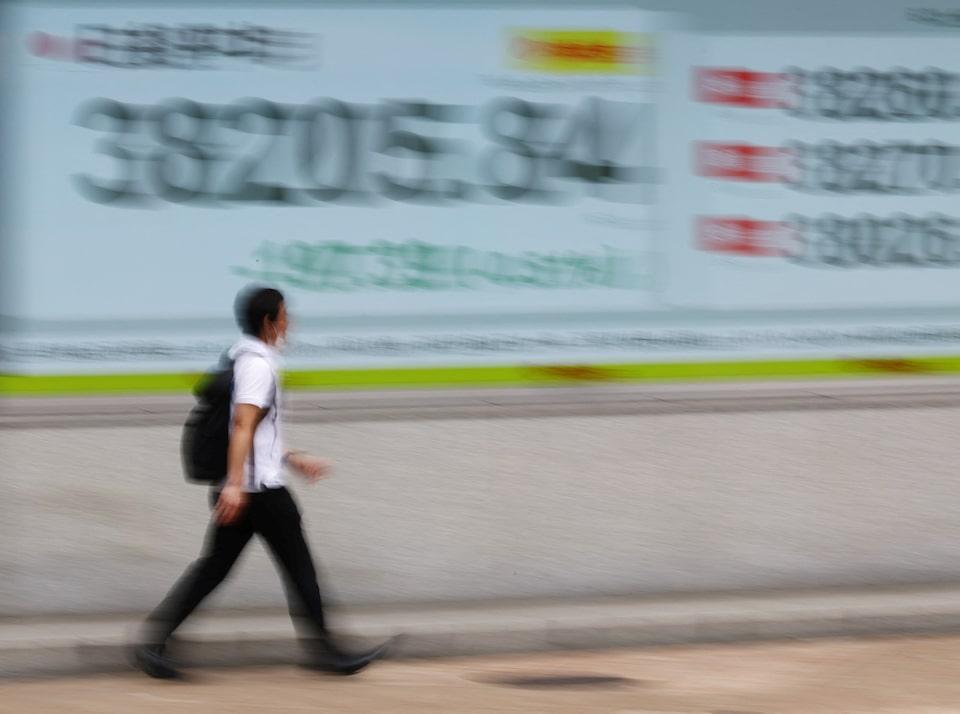
US stocks mixed and Dow up Gold down sharply as investors take profits Trump-Xi meeting next week NEW YORK, Oct 21 (Reuters) - Major stock indexes were mostly near flat on Tuesday, with upbeat results and forecasts from top U.S. companies providing some support, while gold prices dropped more than 5% as investors took profits after a recent rally. The yen fell to a one-week low after conservative Sanae Takaichi was elected as Japan's prime minister. Japan's Nikkei (.N225) , opens new tab share gauge closed at a record high on Tuesday. Sign up here. Spot gold fell 5.31% to $4,123.85 an ounce, and had its steepest daily percentage fall since August 2020. Prices scaled an all-time peak of $4,381.21 on Monday and have gained about 60% this year. U.S. President Donald Trump said he expected to reach a fair trade deal with Chinese President Xi Jinping when the two meet next week in South Korea, and played down the risks of a clash over the issue of Taiwan. The prospect of a resolution also helped bolster investor sentiment, along with a deal between Australia and the United States for the supply of rare earths minerals. In earnings, GM (GM.N) , opens new tab shares jumped after the company raised its full-year forecast, and Coca-Cola (KO.N) , opens new tab gained after the company posted results that beat analysts' estimates. But the S&P 500 technology sector (.SPLRCT) , opens new tab was down 0.2%, and Michael Green, chief strategist at Simplify Asset Management in Philadelphia, said the reaction to some earnings surprises was modest. "The earnings are better than expected as companies continue to gain slightly in terms of margins, which suggests that (companies) have to be passing through the tariffs or pushing the tariffs back onto the importers," Green said. The Dow Jones Industrial Average (.DJI) , opens new tab rose 218.16 points, or 0.47%, to 46,924.74, the S&P 500 (.SPX) , opens new tab rose 0.22 points, essentially flat, to 6,735.35 and the Nasdaq Composite (.IXIC) , opens new tab fell 36.88 points, or 0.16%, to 22,953.67. MSCI's gauge of stocks across the globe (.MIWD00000PUS) , opens new tab fell 0.84 points, or 0.08%, to 994.85. The pan-European STOXX 600 (.STOXX) , opens new tab index rose 0.21%. Against the Japanese yen , the dollar strengthened 0.81% to 151.96. Takaichi became Japan's first female prime minister and leader of its ruling Liberal Democratic Party on Tuesday. Traders bet that Takaichi's government could muddy the interest rate outlook and bring about greater fiscal spending. The dollar also rose against other currencies. The dollar index , which measures the greenback against a basket of currencies including the yen and the euro, was 0.35% higher at 98.95, with the euro down 0.33% at $1.1602. U.S. Treasury yields eased as investors looked ahead to the Federal Reserve's next moves. The Fed could deliver as many as three rate cuts in the next six months based on market-based expectations, while the European Central Bank, which meets next week, is not expected to deliver a rate cut any time soon. The yield on benchmark U.S. 10-year notes fell 2.9 basis points to 3.959%, from 3.988% late on Monday. Investor confidence was hit hard last week as a clutch of bad loans at U.S. regional banks ignited concern over credit risks that threatened to spill into the broader markets. The prolonged U.S. government shutdown also weighed on risk assets. Oil prices ended higher. Brent crude futures rose 31 cents, or 0.5%, to settle at $61.32 a barrel, while U.S. West Texas Intermediate crude futures for November delivery , which expired on Tuesday's settlement, closed up 30 cents, or 0.5%, at $57.82. https://www.reuters.com/world/china/global-markets-wrapup-1-2025-10-21/
2025-10-21 05:11
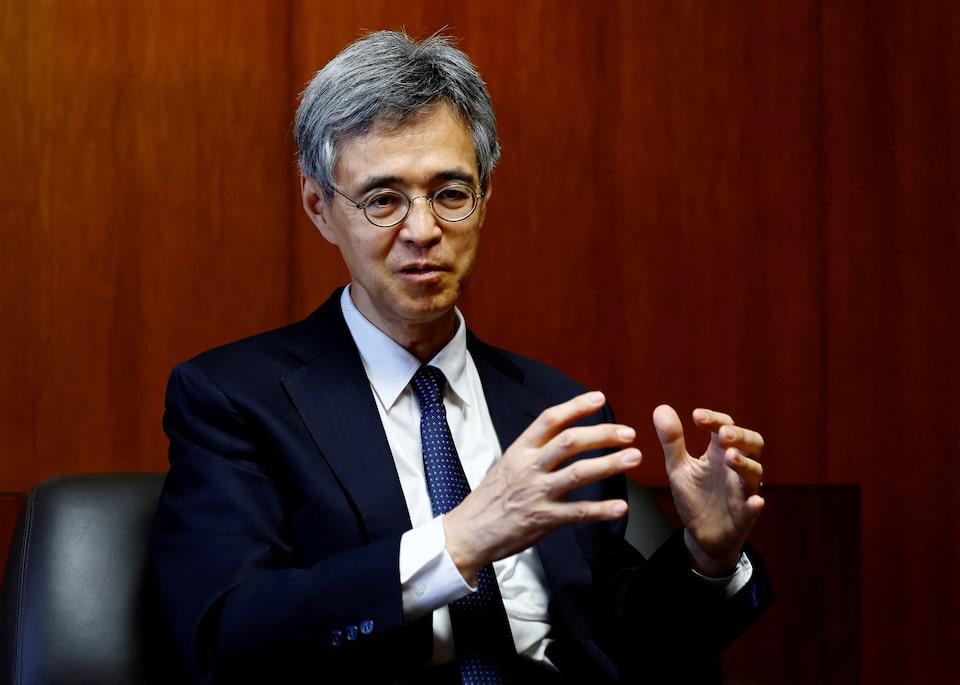
TOKYO, Oct 21 (Reuters) - Global regulators must adapt to new realities in the financial system, such as an increasing ratio of assets held by non-bank financial institutions and the emergence of stablecoins, Bank of Japan Deputy Governor Ryozo Himino said on Tuesday. The G20 major economies repeatedly affirmed their commitment to implement the Basel 3 regulations on the banking system, but the deadlines were extended time and again, Himino said. Sign up here. In the meantime, the global financial system has changed, with half of assets now held by non-bank financial institutions that fall outside the remit of Basel 3, he said. Stablecoins might emerge as a key player in the global payment system, partially replacing the role of bank deposits, said Himino, who was formerly Japan's top banking regulator. "Regulators are doing a lot in these spheres, but much more needs to be done," Himino said in a speech at the 2025 GZERO Summit Japan. "We need to continue to modernise international prudential standards to keep up with the new and emerging realities." U.S. banks, which have by far the strongest dollar deposit bases, have a significant competitive advantage in the international banking market and could take the lead in developing common standards to prevent market fragmentation, Himino said. Authorities must also persuade the public that implementing common financial regulatory standards would be in the best interest of their countries, he added. "Even in the past, there was no fixed formula that solved all problems. Today, there may be more need to tailor our approach to the demands of the task and the circumstances, and to be agile in seizing the opportunities that arise," he said. Basel 3 is a global regulatory framework developed by the Basel Committee on Banking Supervision in response to the global financial crisis in 2007 and 2008. Its primary goal is to strengthen regulation, supervision, and risk management within the banking sector. https://www.reuters.com/sustainability/boards-policy-regulation/bojs-himino-urges-regulators-adapt-new-financial-realities-2025-10-21/
2025-10-21 04:43
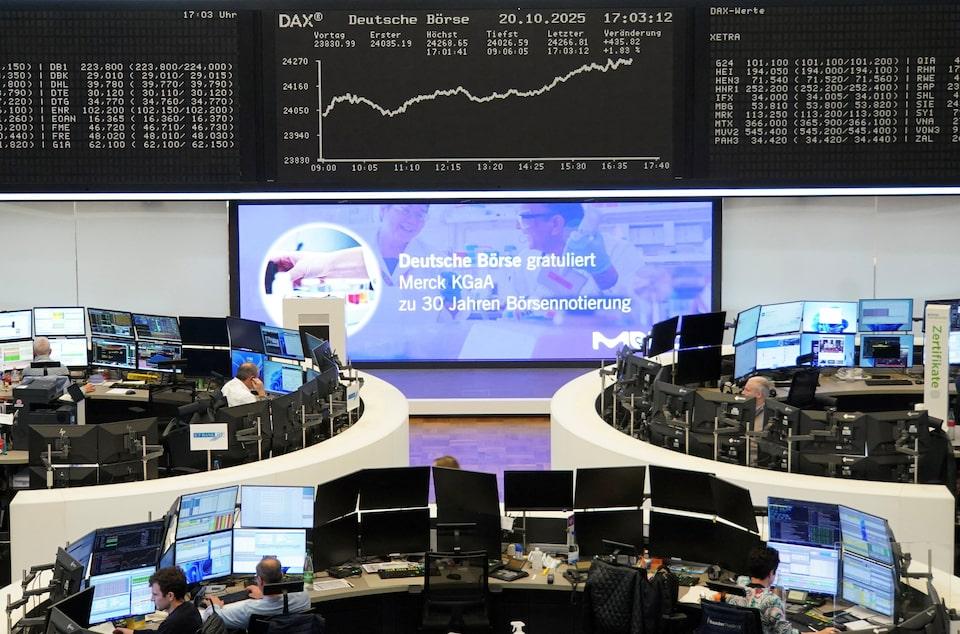
A look at the day ahead in European and global markets from Ankur Banerjee And just like that, worries about credit risks are in the rear view. Investors are feeling perky, betting that tensions between the U.S. and China will ease, the Fed will cut rates next week and the earnings season will be strong. Sign up here. That - let's call it optimism - has pushed stocks across Asia-Pacific (.MIAP00000PUS) , opens new tab to record peaks, with Japan's Nikkei just shy of a landmark 50,000 points. Tech-heavy Taiwan (.TWII) , opens new tab and South Korea stocks (.KS11) , opens new tab have also hit record highs after strong overnight gains from U.S. tech shares led by Apple (AAPL.O) , opens new tab. Hardline conservative Sanae Takaichi is set to be voted in as Japan's first female prime minister later on Tuesday and her appointment continues to push Japanese shares higher on hopes that her pro-stimulus plans will be good for equities. An acolyte of former Prime Minister Shinzo Abe, Takaichi is expected to appoint another Abe protege, Satsuki Katayama, to the post of finance chief, local media reported. That may be bad news for yen bears as Katayama has suggested the yen's real value is closer to 120-130 per dollar. The yen was last at 151.07. Over in Europe, the economic calendar is pretty bare and that could be a good thing for risk assets as they take cues from the prospect of the Federal Reserve lowering rates. Traders are ascribing a 98.3% chance of a 25 basis point cut next week. Meanwhile, investors are also taking comfort from the latest comments from U.S. President Donald Trump on China. Trump said he expects to reach a fair trade deal with Chinese President Xi Jinping as he gears up for a planned meeting with Xi on the sidelines of an economic conference in South Korea next week. Next week is shaping up to be news heavy with the spotlight on central bank meetings in the U.S. and Japan as well as the meeting between Trump and Xi. With earnings season in full stride, traders will not only keep an eye on big bellwethers but also parse through reports from regional banks after a turbulent last week where worries over rising credit risk hit sentiment. Some of the firms reported earnings on Monday with investors relatively comforted by the results. Key developments that could influence markets on Tuesday: Earnings: Unicredit, L'Oreal https://www.reuters.com/world/china/global-markets-view-europe-2025-10-21/
2025-10-21 00:57
Investors focus on expectations of oversupply US-China trade talks also in focus, Trump expects fair deal US crude stocks expected to have risen last week - poll NEW YORK, Oct 21 (Reuters) - Oil prices settled higher on Tuesday, bouncing off the previous session's five-month lows, as investors reassessed expectations of a looming glut and sought clarity on the trade dispute between the U.S. and China, the world's two biggest oil consumers. Brent crude futures rose 31 cents, or 0.5%, to settle at $61.32 a barrel, while U.S. West Texas Intermediate crude futures for November delivery , which expired on Tuesday's settlement, closed up 30 cents, or 0.5%, at $57.82. Sign up here. Both contracts had hit their lowest since early May on Monday, as record U.S. oil production and the decision by the Organization of the Petroleum Exporting Countries and allies to press ahead with planned supply hikes raised expectations of oversupply. However, relatively low U.S. crude and distillate fuel inventories were helping counter some of the pressure on oil benchmarks, Bjarne Schieldrop, chief commodities analyst at SEB, said. The U.S.-China trade dispute has also increased anticipation that a slowdown in global economic growth will curb demand for oil. Both sides have, however, made some efforts to downplay the disagreement. U.S. President Donald Trump, who is set to meet China's Xi Jinping in South Korea next week, said on Monday he expects to reach a fair trade deal with his counterpart. ANALYSTS DIVIDED ON FUTURE DIRECTION The structure of both WTI and Brent futures curves has started to shift to a contango, where prices for immediate supply are lower than for later delivery. That typically indicates that near-term supply is abundant and demand is declining. Market participants are debating how deep that contango is likely to be. The International Energy Agency earlier this month forecast that a surplus next year would lead to a strongly upward-sloped futures curve, called super contango. However, that has not emerged so far, UBS analyst Giovanni Staunovo said in a note. "While supply concerns have increased in recent weeks again, we believe the oil market is oversupplied but not in a glut," Staunovo noted. "We expect oil prices to stabilize around current levels," he said, adding that prices could come under pressure if trade tensions escalate. A preliminary Reuters poll released on Monday showed that U.S. crude oil stockpiles likely rose last week. "The reality of stock builds appears to be finally here and prices should head lower to put a deeper contango in the market," said Scott Shelton, energy specialist at TP ICAP Group. The U.S. is planning to buy 1 million barrels of crude oil for the Strategic Petroleum Reserve, Bloomberg reported on Tuesday. https://www.reuters.com/business/energy/oil-declines-oversupply-fears-2025-10-21/

2025-10-21 00:41
33 of 35 economists expect the BOK to hold rates at 2.50% BENGALURU, Oct 21 (Reuters) - South Korea's central bank will keep its key interest rate unchanged for a third consecutive meeting on Thursday, prioritising economic stability over a recovery in growth, according to a Reuters poll of economists who expect the next rate cut in November. The Bank of Korea (BOK) raised concerns at its previous meeting about risks to financial stability amid an overheated housing market and uncertainty over a trade deal with the United States, which is likely to be finalised at the end of this month, prompting the central bank to remain on hold for now. Sign up here. Nearly 95% of economists, 33 of 35, polled October 14-20 forecast the BOK would hold its base rate (KROCRT=ECI) , opens new tab at 2.50% on October 23. Two predicted a 25-basis-point cut to 2.25%. "It's unlikely for the BOK to move in October because the fundamentals, both economic and the housing market, haven't changed since August and more importantly the household debt issue Korea faces at the moment is not seen slowing down," Kelvin Lam, senior economist at Pantheon Macroeconomics, said. "The BOK will watch the housing market closely to make sure it is not going to be rising much further before it starts to cut rates again. I think one in November is a potential." After cumulative rate cuts of 100 bps over the past year, house prices have started to rebound, worsening affordability. The price-to-income ratio of an apartment in Seoul sits at 21.3, above 19.4 for London, heightening concerns in a country with one of the world's highest household debt-to-GDP ratios. With growth underperforming due to weak domestic demand and inflation around the BOK's 2% target, a strong majority of economists predict a 25-bps cut to 2.25% in November. The central bank is expected to tread cautiously to avoid further depreciation of the currency as Washington has agreed to reduce duties on imports of South Korean products to 15% in return for Seoul investing $350 billion in the U.S. But U.S. auto tariffs are still in place as the countries remain at odds over the details of the investments. "There is a lot of pushback and there are also people arguing it's better off paying the tariffs than to agree to the investment deal. At the end of the day it's about how the deal is going to be structured," Michelle Lam, economist at Societe Generale, said. "Going forward, I think the investment deal is definitely affecting the sentiment about the Korean won. So how that's going to be executed is still going to be quite important." The Korean won has lost around 2% since the deal was announced on July 30 and the BOK sold a net $800 million in currency market interventions in the second quarter to curb losses. Beyond this year, economists were split on the rate outlook. The median forecast showed another 25-bps cut to 2.00% in the second quarter of next year and then no change through 2026, a shift from a first-quarter cut expected in the August poll. The poll showed Korea's economy would expand 1.0% in 2025, slightly above the BOK's revised forecast of 0.9%, 1.8% in 2026 and 1.9% in 2027. Inflation was forecast to average 2.0% this year and ease slightly to 1.8% in 2026. (Other stories from the October Reuters global economic poll) https://www.reuters.com/world/asia-pacific/bank-korea-hold-rates-again-stability-takes-priority-cut-november-2025-10-21/