2025-10-20 22:44
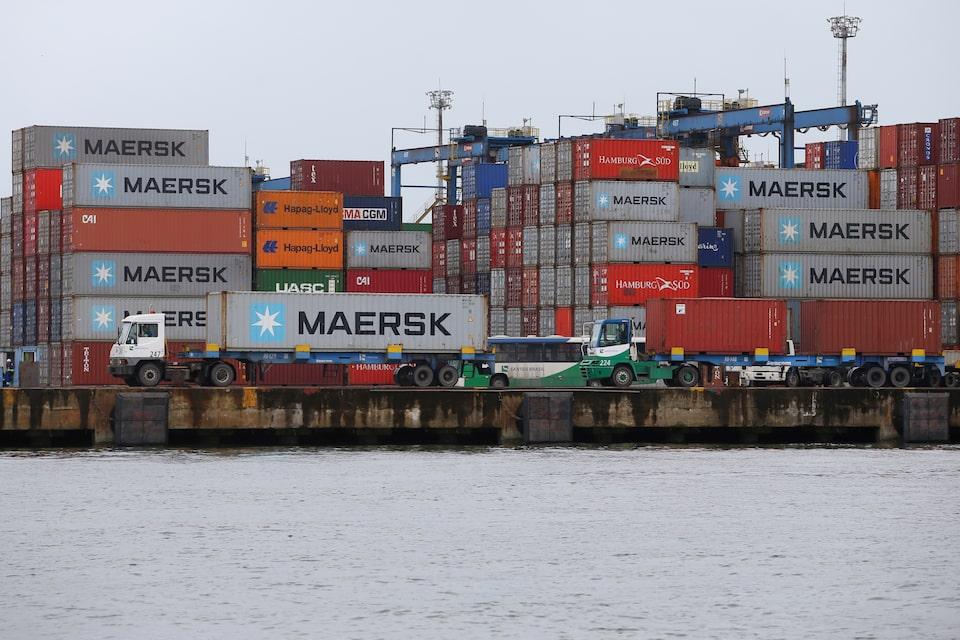
SAO PAULO, Oct 20 (Reuters) - Danish shipping company Maersk (MAERSKb.CO) , opens new tab is testing a blend of Brazilian ethanol with methanol and marine diesel - known as "bunker" - for its vessel engines as part of its efforts to further decarbonize operations, the company announced on Monday. WHY IT'S IMPORTANT The initiative could open a new market for Brazil's ethanol industry while helping to reduce the maritime shipping sector's carbon footprint, which currently accounts for about 3% of global greenhouse gas emissions. Sign up here. BY THE NUMBERS Maersk, which represents 15% of the global maritime shipping market, is testing a blend with 10% of ethanol. If the whole industry adopted the fuel mix, it could create demand for 50 billion liters of ethanol globally per year. Brazil's expected production this year is around 35 billion liters. KEY QUOTES "This is the first time ethanol is being burned in a two-stroke engine that's four stories tall - it's a completely different scale of research and level of concern," said Danilo Veras, VP of Regulatory Policies at Maersk Latam. CONTEXT Maersk, which aims to achieve net-zero emissions by 2040, chose the Brazilian ethanol for the test because it comes from existing sugarcane areas or, when corn-based, mostly from the same fields as soybeans, lowering potential impacts for deforestation, according to Veras. WHAT'S NEXT Maersk will complete ethanol blend tests in methanol-powered vessels by October 23, followed by bunker fuel testing. If successful, the company would begin negotiations with major Brazilian ethanol producers, including Raizen (RAIZ4.SA) , opens new tab, Copersucar, Inpasa, FS and Atvos. https://www.reuters.com/sustainability/climate-energy/maersk-tests-brazilian-ethanol-mix-make-cleaner-maritime-fuel-2025-10-20/
2025-10-20 22:39
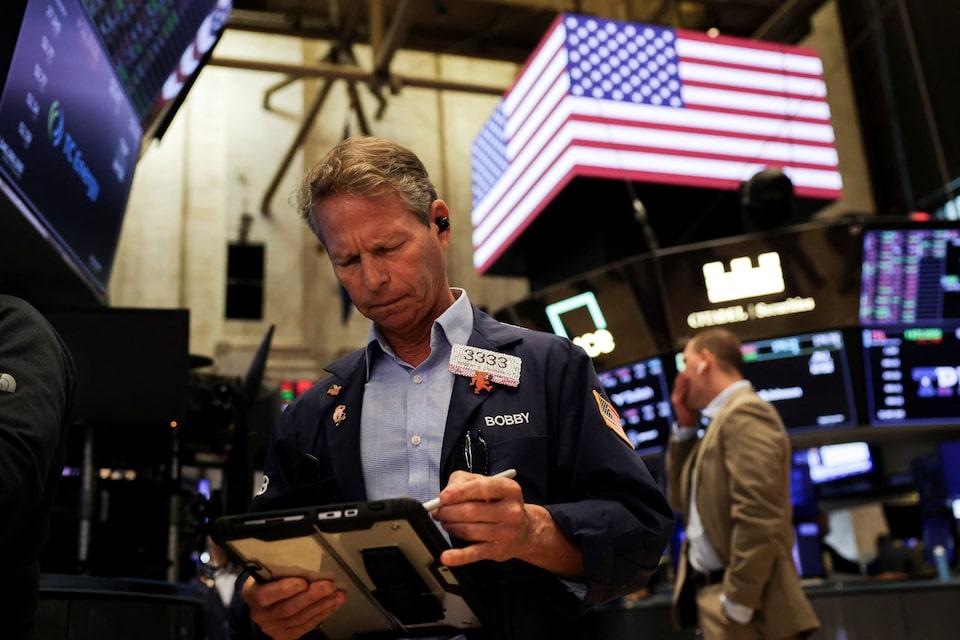
Indexes up: Dow 1.12%, S&P 500 1.07%, Nasdaq 1.37% Philadelphia Semiconductor Index hits all-time high Apple shares hit record high Boeing rises after FAA approves 737 MAX production raise NEW YORK, Oct 20 (Reuters) - U.S. stocks jumped on Monday with finance and technology shares providing much of the upside muscle, as upbeat quarterly earnings results revived risk appetite and investors grew less fearful about regional bank credit quality. A broad rally sent all three major U.S. stock indexes to a sharply higher close. The small cap Russell 2000 (.RUT) , opens new tab outperformed its larger counterparts, rising 2.0%. Sign up here. "It's a good, solid, across-the-board move, there's not a lot of negative in the market," said Paul Nolte, senior wealth advisor & market strategist at Murphy & Sylvest in Elmhurst, Illinois. "There’s some relief from the financials ... investors are looking at it as maybe a bit of an overreaction on the downside last week." "As far as the market’s concerned, everything is wonderful again." Apple stock (AAPL.O) , opens new tab touched a record high, while Meta (META.O) , opens new tab, Netflix (NFLX.O) , opens new tab and Alphabet (GOOGL.O) , opens new tab gained between 1.3% and 3.3%. The Philadelphia Semiconductor Index (.SOX) , opens new tab breached an all-time high, ending the session up 1.6%. Third quarter earnings season has shifted into high gear. Notable results this week include Tesla (TSLA.O) , opens new tab, Netflix (NFLX.O) , opens new tab, IBM (IBM.N) , opens new tab, Intel (INTC.O) , opens new tab, GM (GM.N) , opens new tab and Ford (F.N) , opens new tab, along with a spate of other high-profile industrial firms, including aerospace, transports and diversified manufacturers. Upcoming U.S. regional bank results are expected to provide a closer read of the sector on the heels of last week's selloff, which was driven by fears of systemic credit stress. Analysts currently expect third-quarter S&P 500 earnings growth, on aggregate, of 9.3% year-on-year, marking an improvement over their 8.8% growth estimate as of October 1. "A lot of the uncertainty that the businesses were concerned about -- tax legislation, the tariffs -- earlier this year has subsided for the time being, and that's allowed companies to focus on earnings and profitability," said Matthew Keator, managing partner in the Keator Group, a wealth management firm in Lenox, Massachusetts. Sentiment was given an extra boost by White House economic advisor Kevin Hassett, who said the federal government shutdown is likely to end this week. With the federal shutdown entering day 20, investors and policymakers have had to feel their way forward amid the resulting data blackout. But on Friday the Labor Department will make an exception by releasing its September consumer price index (CPI), which will provide the data dependent U.S. Federal Reserve with a glimpse at the state of inflation and perhaps an indication regarding the extent to which President Donald Trump's tariffs are affecting price growth. In the ongoing trade skirmish between Washington and Beijing, Trump suggested easing tariffs on China if Beijing resumes key agricultural purchases including soybeans. Trump blamed the latest showdown on China's rare earth export controls. The Dow Jones Industrial Average (.DJI) , opens new tab rose 515.97 points, or 1.12%, to 46,706.58, the S&P 500 (.SPX) , opens new tab gained 71.12 points, or 1.07%, to 6,735.13 and the Nasdaq Composite (.IXIC) , opens new tab gained 310.57 points, or 1.37%, to 22,990.54. Of the 11 major sectors in the S&P 500, communication services (.SPLRCL) , opens new tab enjoyed the largest percentage gain, while consumer staples (.SPLRCS) , opens new tab and utilities (.SPLRCU) , opens new tab inched lower. Among other stock moves, Boeing (BA.N) , opens new tab advanced 1.8% after the planemaker won approval from the U.S. Federal Aviation Administration to raise 737 MAX production to 42 planes per month. WeightWatchers (WW.O) , opens new tab surged 9.3% following the company's announcement that it would partner with Amazon for weight-loss drug delivery. Advancing issues outnumbered decliners by a 4.81-to-1 ratio on the NYSE. There were 345 new highs and 47 new lows on the NYSE. On the Nasdaq, 3,599 stocks rose and 1,078 fell as advancing issues outnumbered decliners by a 3.34-to-1 ratio. The S&P 500 posted 23 new 52-week highs and 4 new lows while the Nasdaq Composite recorded 77 new highs and 69 new lows. Volume on U.S. exchanges was 17.50 billion shares, compared with the 20.21 billion average for the full session over the last 20 trading days. https://www.reuters.com/business/wall-street-futures-gain-corporate-earnings-momentum-builds-2025-10-20/
2025-10-20 22:25
Oct 21 (Reuters) - Australia's South32 (S32.AX) , opens new tab on Tuesday logged a 135% jump in its first-quarter manganese output, supported by a recovery in its operations following the impacts of Tropical Cyclone Megan. The diversified miner said it had successfully executed the operational recovery plan at its Australia operations and ramped up export shipments after the tropical cyclone damaged infrastructure last year. Sign up here. The domestic manganese division produced 854,000 wet metric tons (wmt) during the first quarter, boosting the company's total quarterly production to 1.4 million wmt. South32's total production for the three months ended September 30 beat Visible Alpha's estimate of 1.23 million wmt and was significantly higher than the 597,000 wmt produced a year earlier. Its South Africa manganese operations produced 551,000 wmt in the first quarter, lower than the prior year's production. Meanwhile, the threat of closure of the Mozambique aluminium smelter continues to hang over the company, which said negotiations to secure affordable power have not progressed. https://www.reuters.com/business/energy/australias-south32-posts-135-jump-quarterly-manganese-output-2025-10-20/

2025-10-20 21:35
Oct 20 (Reuters) - The backers of a proposed 800-mile (1,287 km) gas pipeline in Alaska championed by U.S. President Donald Trump expect to complete a key engineering and cost study by the end of this year, Interior Secretary Doug Burgum said on Monday. The ambitious proposal to transport gas from Alaska's far north to the Gulf of Alaska has been talked about for decades but has received new impetus under Trump, who has sought to boost U.S. development of fossil fuels. Sign up here. The pipeline is a joint venture between U.S. energy developer Glenfarne and the state of Alaska's Alaska Gasline Development Corporation. Earlier this year Glenfarne said it expected to make a decision on the project in 2025 and had hired Australian engineering firm Worley (WOR.AX) , opens new tab to prepare a final engineering and cost estimate known as a Front-End Engineering and Design (FEED) study. "There's a lot of optimism about the Alaska LNG project, and the FEED study should be coming out in December of this year, and I think that we're going to see a lot of interest in that project," Burgum said during an appearance at an event hosted by the American Petroleum Institute trade group. Since returning to office, Trump has promised to push forward the mammoth project to move gas from Alaska's north to be chilled and shipped overseas as liquefied natural gas. Representatives for Glenfarne, AGDC and Worley were not immediately available for comment. https://www.reuters.com/business/energy/key-alaska-lng-pipeline-study-will-be-completed-this-year-us-interior-secretary-2025-10-20/

2025-10-20 21:25
US cattle farmers see beef imports as threat to livelihoods Economists doubt imports will lower US beef prices But imports may discourage US herd expansion, economists warn US cattle herd at lowest in nearly 75 years due to drought WASHINGTON/CHICAGO, Oct 20 (Reuters) - U.S. farmers on Monday criticized President Donald Trump's suggestion that the country may import more beef from Argentina, after they recently lost out to the South American nation on soybean sales to top buyer China. Trump said on Sunday that he was considering imports to reduce U.S. beef prices that have climbed to record highs. His administration earlier extended a $20 billion currency swap lifeline to Argentina, which the president considers an ally. Sign up here. Cattle producers saw the suggestion as a threat to their livelihoods and free markets, at a time when ranchers are profiting from sky-high livestock prices and strong consumer demand. "This plan only creates chaos at a critical time of the year for American cattle producers, while doing nothing to lower grocery store prices," said Colin Woodall, CEO of the National Cattlemen's Beef Association industry group. Last month, the Trump administration frustrated farmers by negotiating financial support for Argentina at a time when Argentina was selling soybeans to China, which has not bought any soy from the autumn U.S. harvest due to its trade conflict with Washington. "The last thing we need is to reward them by importing more of their beef," said Rob Larew, president of the National Farmers Union. Trump floated hiking beef imports aboard Air Force One on Sunday night. "If we buy some beef - I'm not talking about that much - from Argentina, it would help Argentina, which we consider a very good country, a very good ally," Trump said. A U.S. Department of Agriculture spokesperson said the agency is working to lower beef prices while supporting cattle ranchers with disaster aid and other efforts. "These actions coupled with President Trump's work to secure lasting markets for beef producers abroad send a strong message to American cattle producers - raise more beef and rebuild the herd," the spokesperson said. The White House did not respond to a request for more information. U.S. feeder cattle futures tumbled on Friday after Trump first said he was working on a deal to lower beef prices. They hit their lowest level in more than a week on Monday before ending nearly unchanged. In Montana, Jan McDonald, 78, said she plans to take calves to an auction for sale on Saturday and worried that Trump's suggestion could hurt prices. "I don't know where he's coming from," McDonald said. "It makes me very nervous about the future." ECONOMISTS SAY IMPORTS WON'T LOWER PRICES Economists said increased imports from Argentina, which last year represented about 2% of total U.S. beef imports, were unlikely to reduce U.S. beef prices. "The U.S. cannot buy enough beef from Argentina to materially move the needle in the market," Steiner Consulting Group said. Imports could also discourage U.S. producers from expanding their herds to boost domestic beef production, economists said. There is no quick fix to boost U.S. output as it takes about two years to produce full-grown cattle, said Derrell Peel, Oklahoma State University agricultural economist. "Flooding markets with foreign-grown beef could affect our nation's ability to be food independent in the long-term," American Farm Bureau Federation President Zippy Duvall said. U.S. cattle inventories in January dropped to the lowest level in nearly 75 years, after ranchers slashed their herds due to a years-long drought that burned up grazing lands and hiked feed costs. Supplies tightened more as the U.S. since May has mostly suspended imports of Mexican cattle amid concerns about the northward spread of New World screwworm, a flesh-eating pest that infests livestock. U.S. tariffs on goods from Brazil have also slowed imports of Brazilian beef. https://www.reuters.com/world/us/trump-plan-import-argentine-beef-angers-us-farmers-2025-10-20/

2025-10-20 21:07
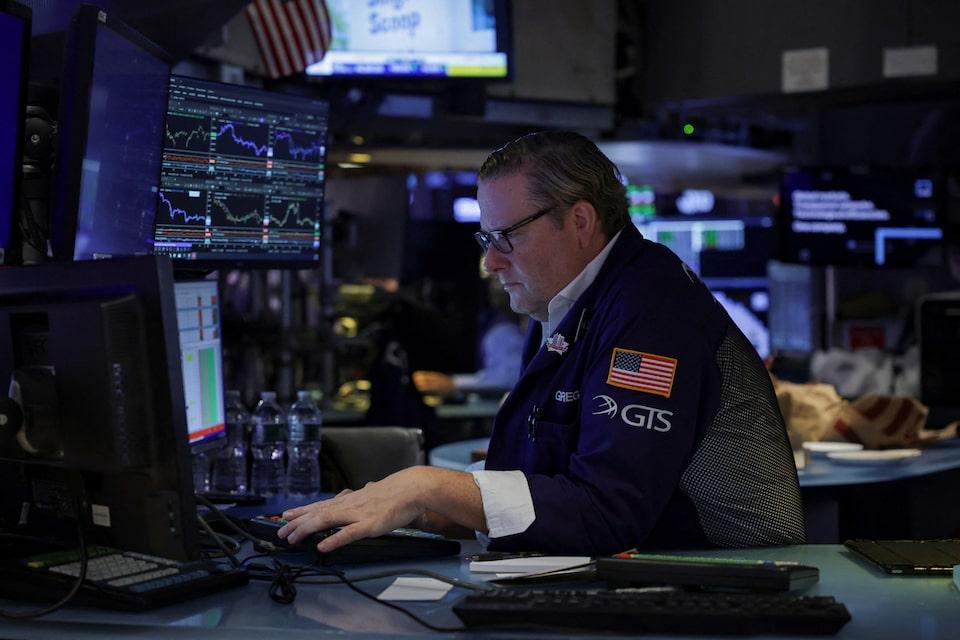
ORLANDO, Florida, Oct 20 (Reuters) - Wall Street and most global equity benchmarks rose sharply on Monday, as optimism around U.S. earnings and easing global trade tensions offset some of last week's worries over frothy asset prices, private credit markets and U.S. regional banks. More on that below. In my column today, I look at the so-called U.S. 'debasement trade'. While debt and deficit worries are real and justified, the bond and currency markets suggest they are overdone. Sign up here. If you have more time to read, here are a few articles I recommend to help you make sense of what happened in markets today. Today's Key Market Moves Today's Talking Points: * U.S. banking system liquidity Debate is intensifying around whether liquidity in the U.S. banking system is shrinking to the point that could soon pose funding, collateral and broader market risks. The Fed could soon end its QT program, bank reserves are below $3 trillion, balances at the Fed's overnight repo facility are almost zero, and usage of the Fed's Standing Repo Facility has ticked up. Some observers say alarm bells are ringing, and point to the recent wobbles in private credit and regional banks as evidence. Others are less worried, noting that while aggregate liquidity may be tightening, it is still plentiful and the Fed has several tools at its disposal should it need them. In short, there's no cause for concern. * Reading China's GDP tea leaves China's headline Q3 GDP figures showed stronger-than-expected quarterly growth of 1.1% and annual growth of 4.8%, which was slower than Q2 but in line with forecasts. On the face of it, China seems to be managing to shrug off the trade tension and tariff uncertainty. But under the surface, there is perhaps more cause for concern. House prices continue to fall, and more importantly, fixed asset investment fell for the first time ever, excluding the pandemic. An "alarming" development that points to downside risks for Q4 GDP, reckons Zhiwei Zhang at Pinpoint Asset Management. * The importance of rare earths Official Chinese data also showed that exports of rare earth magnets fell in September, reigniting fears that the world's top supplier could wield its dominance over a component that is critical for U.S. defense firms and makers of items from cars to smartphones. And increasingly central to U.S.-China trade relations. U.S. President Donald Trump said he expects to secure a "fair" trade deal with China and plans to meet President Xi Jinping in South Korea next week. Trump and Australian Prime Minister Anthony Albanese signed a rare earths deal on Monday, and Trump said he is working on deals with other countries. Debasing the 'debasement' trade The recent surge in gold, cryptocurrencies and stocks to record highs has sparked claims that the U.S. "debasement trade" is in full swing, but the bond and the foreign exchange markets tell a very different story. The upward swing in some "hard" assets this year is undeniable. The 50% spike in gold and even more eye-watering gains in other precious metals, such as silver and platinum suggest investors are getting anxious about something. Many have argued that this "something" is debasement - the fear that an oncoming inflationary storm could erode the dollar's purchasing power and the value of U.S. financial assets. The term "debasement trade" was coined earlier this year by analysts at JPMorgan, though they began flagging the idea last October, arguing that a Republican sweep of the White House and both houses of Congress would be bullish for gold and bitcoin due to expansionary fiscal policy. Fast forward to today, and debasement doomsayers are pointing to increased U.S. government borrowing and rising public debt projections as well as the resumption of Federal Reserve interest rate cuts at a time when inflation is about to enter its sixth consecutive year above the Fed's 2% target. But if we were primarily dealing with debasement fears, the dollar and U.S. bonds would be tumbling and Treasury yields would be spiking - and this isn't happening. WHAT DEBASEMENT? The numbers speak for themselves. The 10-year nominal Treasury yield last week broke below 4.00%, its lowest since April. In fact, Friday's 3.93% was the lowest in over a year if excluding April 4 and 7, the depths of post-"Liberation Day" tariff turmoil. The benchmark 10-year yield is down nearly 60 basis points this year. Even the 30-year yield, which is much more sensitive to the de-anchoring of long-term inflation expectations, has fallen around 20 basis points this year, hardly a sign investors are running for the hills. It's a similar story in "TIPS". The break-even inflation rate on 10-year TIPS, essentially an estimate of where bond investors see inflation a decade from now, last week fell to 2.275%, the lowest since June. More significantly, the 30-year TIPS break-even inflation rate fell to 2.21%, the lowest since May. True, the dollar had its worst start to a year on record in the first half of 2025, but it has been remarkably stable since April, with the dollar index ending last week almost exactly at its six-month average. Moreover, the dollar has significantly outperformed its G10 currency peers over the past month, as Rabobank's Jane Foley points out. "Debasement would imply a move away from the dollar and U.S. Treasuries into assets such as gold, and there is very little evidence to back up these flows," Foley says. To be sure, the dollar is being viewed more skeptically by investors than it was before U.S. President Donald Trump returned to the White House, likely because the world sees the United States as a less reliable economic partner. This is reflected in the fact that as much as 80% of portfolio inflows into the U.S. are now currency hedged, according to UniCredit estimates. All this suggests that investors still want to hitch their wagon to the U.S. economy and stock market, but not the dollar. DESPERATELY SEEKING CLARITY Fears of fiat currency debasement are nothing new, especially those involving the dollar. But they have gained traction since the huge monetary and fiscal responses to the 2007-2009 global financial crisis and the pandemic of 2020-2021. And Trump's unorthodox policy agenda has only added fuel to the fire. But given how markets are actually behaving, what we may truly be seeing is a mix of central bank diversification, private sector portfolio reallocations, or simply momentum-driven buying. Ultimately then, we may be reaching peak "debasement trade". Like other popular terms this year, such as the infamous "TACO" (Trump Always Chickens Out) trade – the "debasement trade" is essentially a simple narrative that can help investors make sense of an increasingly logic-defying world. Even though the $4 trillion global crypto market and $28 trillion gold market may be emitting dollar debasement warnings, the $28 trillion Treasury market and nearly $10 trillion-a-day currency market are not. If you want a simple answer to what's happening in today's financial world, keep looking. What could move markets tomorrow? Want to receive Trading Day in your inbox every weekday morning? Sign up for my newsletter here. Opinions expressed are those of the author. They do not reflect the views of Reuters News, which, under the Trust Principles , opens new tab, is committed to integrity, independence, and freedom from bias. https://www.reuters.com/world/asia-pacific/global-markets-trading-day-graphic-2025-10-20/