2026-02-03 13:46
New index expected to have over 20 countries Investors have been consulted over views Announcement expected by mid-year Frontier market debt has delivered strong returns over recent years LONDON, Feb 3 (Reuters) - JPMorgan is finalising plans for a new index to track frontier market local currency bonds, investors consulted on the details told Reuters, as the bank looks to satisfy a growing appetite for riskier and more diversified high-yield debt. The move, which comes 15 years after the Wall Street bank launched its hard-currency NEXGEM frontier index, coincides with the year-long slump in the dollar and some extraordinary recent rallies in markets like Argentina, Ecuador and Uganda. Sign up here. JPMorgan declined to comment on the plans. Six leading money managers who spoke to Reuters on condition of anonymity said the bank's engagements with them reached an advanced stage in the second half of last year. The proposed index includes 20 to 25 countries, with Egypt, Vietnam, Kenya, Morocco, Kazakhstan, Pakistan, Nigeria, Sri Lanka and Bangladesh having the largest "weightings", three of the managers said. BOND SIZES AND CAPS ON WEIGHTING According to one source, there would be a limit that means no country has a weighting of more than 8%. A second source said an earlier consultation document had a proposed 10% limit. It is also set to only include bonds of at least $250 million equivalent, although that has raised issues around Zambia, which many would like to see included but has traditionally only sold smaller individual bonds. "We expect they (JPMorgan) will give us a formal structure for the index around June with the opportunity to make some final comments," said one senior fund manager. "They are then likely to formally launch (the index) next year, we think." Another senior fund manager said the initial announcement might be as early as the end of March, which could also bring the formal launch date forward. TRILLION DOLLAR MARKET FTSE Russell has already had an equivalent index since 2021. JPMorgan's versions, however, are more prominent among emerging market money managers, who effectively use them to compile their funds and measure their performance. Analysis by Neuberger Berman estimates tradable local-currency debt has trebled over the last decade to around $1 trillion. It also calculates that over the last eight years, frontier market local FX debt had outperformed JPMorgan's mainstream emerging market local currency index by almost 2.5 percentage points, and also outstripped the EM dollar bond index. "We see that as a confirmation that frontier market growth and general economic performance has been systematically underpriced," Neuberger Berman's Rob Drijkoningen said. According to the World Bank, frontier economies are home to a fifth of the world's population but account for just 3.1% of global capital flows and less than 5% of global GDP. Their populations, however, are expected to increase by another 800 million over the next 25 years — more than the rest of the world combined - meaning they will play an increasingly important role in global economic growth. Analysts expect JPMorgan's new debt index to help expand local currency bond markets - something long-championed by the World Bank and IMF as a way to reduce the number of debt crises caused when currency crashes leave governments unable to pay hard-currency debt. ZAMBIA AND ELIGIBILITY REQUIREMENTS The rising interest in frontier market debt also comes as shaken confidence in once-safe debt in the developed world pushes capital flows to other parts of the globe. Three of the investors raised questions about Zambia, which until recently had only sold sub-$250 million local-currency bonds. It was not in some of JPMorgan's early outlines, the investors said, but the country has since issued at least one larger bond, raising hopes it will now make the cut. One eligibility requirement that mirrors JPMorgan's GBI-EM index of major emerging economies is that included bonds will have more than 2.5 years of remaining maturity - the time before full repayment is due. JPMorgan estimated in September the index will have approximately 400 basis points or more of "pick-up" in yield over the GBI-EM, with over 60% of the index constituents yielding more than 10%. A potential promotion of top-weighted countries like Egypt and Nigeria to the GBI-EM index in coming years is another issue that could alter the index's makeup, possibly putting off some investors. "It will be important to nail that down," one senior fund manager said. https://www.reuters.com/business/finance/jpmorgan-closing-new-frontier-market-local-currency-debt-index-sources-say-2026-02-03/
2026-02-03 13:03
Iran's crypto activity grows amid sanctions and currency devaluation U.S. Treasury examining whether crypto platforms facilitate sanctions evasion-TRM Labs Iranians moving crypto off local exchanges during instability-researchers PARIS/LONDON, Feb 3 (Reuters) - U.S. investigators are examining whether specific crypto platforms have facilitated sanctions evasion by Iranian officials, a blockchain researcher told Reuters, as cryptocurrency activity booms in the Islamic Republic. Iran's crypto transaction volumes hit an estimated $8-10 billion last year as both state-linked groups and retail investors have turned to digital currencies, according to estimates from TRM Labs and Chainalysis. Sign up here. The U.S. Treasury is now looking at whether crypto platforms have enabled state-linked players to evade sanctions when seeking to move money abroad, access hard currency or procure goods, said Ari Redbord, global head of policy at U.S.-based blockchain analysis company TRM Labs, who said he had direct knowledge of the Treasury's concerns. A Treasury spokesperson referred Reuters to a September statement , opens new tab announcing measures the department was taking against "shadow banking" networks supporting Iran, including those it said used crypto to skirt sanctions. Redbord did not identify any cryptocurrency platforms being probed or where they were based. TRM Labs estimates there was around $10 billion of crypto activity in Iran last year, against $11.4 billion in 2024. Chainalysis, another U.S.-based blockchain analysis company, said Iranian wallets received a record $7.8 billion in 2025, up from $7.4 billion in 2024 and $3.17 billion in 2023. Iran's mission at the United Nations did not respond to emailed requests for comment for this article. Cryptocurrencies remain a small part of the global financial system, but their use is expected to grow in emerging markets with weak currencies, the International Monetary Fund has said. Iran has been effectively severed from the dollar-based system and has seen a rapid devaluation of its rial currency. Oil revenues remain by far its largest source of foreign currency, hitting $53 billion in 2023, according to the latest estimates from the U.S. government's Energy Information Administration. "The harder one squeezes the Iranian economy, the more one better be ready to deal with the consequences, one of which is the expanding use of crypto," said Tom Keatinge, director of the Centre for Finance and Security at UK think-tank the Royal United Services Institute. Iran has also faced a series of crises over the past year, including the 12-day war with Israel as well as American strikes on its nuclear facilities. A recent wave of anti-government protests and the Tehran government's deadly crackdown have prompted threats of further military action from U.S. President Donald Trump as well as fresh scrutiny of Iranian finances. Washington imposed new sanctions on Iran last month, including on 18 people it accused of being part of shadow-banking networks of sanctioned Iranian financial institutions. IRAN'S REVOLUTIONARY GUARDS Crypto wallet addresses are pseudonymous - recorded on the blockchain as a string of letters and numbers - making it difficult to establish who is behind transactions or their locations. Researchers estimate crypto activity using data sources including web traffic and wallet addresses identified by countries including the U.S. and Israel as linked to sanctioned entities. Gaining a complete picture of Iran's crypto usage is near-impossible, the researchers said. Indeed, estimates of the split between state-linked and retail volumes vary significantly. Chainalysis estimates that 50% of Iran's volumes last year were linked to the Islamic Revolutionary Guard Corps (IRGC), a powerful political, military and economic force with close ties to Supreme Leader Ayatollah Ali Khamenei. By contrast, TRM Labs estimates that 95% of Iran-linked flows come from retail investors. Still, the company says it has identified more than 5,000 addresses it labels as IRGC-linked and estimates the Guards have moved $3 billion worth of crypto since 2023. British blockchain research company Elliptic said last month that the Central Bank of Iran, which like the IRGC is subject to international economic sanctions, had acquired at least $507 million worth of the stablecoin USDT in 2025, in what Elliptic called a "sophisticated strategy to bypass the global banking system." Iran's U.N. mission didn't respond to questions on the IRGC's or the central bank's alleged use of crypto. Reuters couldn't independently verify the findings of Elliptic and other blockchain researchers. Tether, which issues USDT, said it maintained a "zero-tolerance policy toward the criminal use of our tokens", and that it worked closely with law enforcement agencies to identify and freeze assets linked to illegal activity. Andrew Fierman, Chainalysis' head of national security intelligence, said that when a crypto wallet is publicly identified or sanctioned, owners can easily create new ones to use instead, complicating the task of U.S. authorities. RUSI's Keatinge said the scale of the challenge facing U.S. authorities was enormous. "It requires significant resources to do the kind of blockchain tracing and so on, to issue the sanctions," he added. "It's the ultimate high-speed whack-a-mole game." 15 MILLION CRYPTO USERS IN IRAN Ordinary Iranians, meanwhile, may be buying crypto because of the rapid rial devaluation, the researchers told Reuters. Crypto activity rose sharply during bouts of social and geopolitical instability last year including during the recent protests, until the government blocked the internet on January 8, the analysts added, citing activity on Iranian exchanges. Nobitex, the largest of Iran's crypto exchanges, told Reuters that about 15 million people in Iran had some exposure or used crypto assets, based on industry estimates. It said it had 11 million customers, with the majority of activity from retail and smaller investors. "For many users, crypto primarily functions as a store of value in response to the continued depreciation of the local currency," Nobitex said in an email. Iranians can move money off local exchanges to wallets and platforms located elsewhere, blockchain researchers and finance experts say. Singapore-based blockchain researchers Nansen said some Iranians had pulled funds from Nobitex in 2025, with balances of major cryptocurrencies having declined sharply from a mid-year peak. Nobitex was hit by an anti-Iranian hacking group in June last year. Nansen said it had identified hundreds of thousands of dollars worth of crypto which were transferred from Nobitex to international cryptocurrency exchanges. "These funds did not simply leave crypto. Instead, they increasingly moved to international exchanges," said analyst Nicolai Sondergaard. "Overall, the data suggests crypto in Iran acted as a slow, structural exit route throughout 2025." Nobitex said some customers may use crypto to transfer funds internationally, but it did not track the destination or purpose of such transactions. The exchange said it safeguards user assets by robust monitoring of activity, including checks to identify potentially suspicious transactions. It said it was understandable that some users may have had concerns regarding asset safety following the June hack. "In many cases, users transfer assets to self-custodied wallets (not other international exchanges) as a precautionary measure, allowing them time to assess the situation and determine whether to redeposit funds at a later time," Nobitex added. https://www.reuters.com/business/finance/irans-surging-crypto-activity-draws-us-scrutiny-2026-02-03/

2026-02-03 13:01
NEW YORK, Feb 3 (Reuters) - Federal Reserve Governor Stephen Miran continued to make the case for aggressive central bank interest rate cuts this year, in an interview on Fox Business Network on Tuesday. “I'm probably looking for a little bit more than a point of interest rate cuts over the course of the year,” Miran said. He described the current state of monetary policy as too tight for the economy and said that while inflation is above the 2% target, underlying price pressures are more benign. Sign up here. The solid underlying state of inflation coupled with strong growth powered by reduced regulatory burdens means the Fed can cut rates without spurring renewed price pressures, Miran said. Miran's term as a governor ended at the close of January but he remains in the position until a new policymaker is confirmed to hold his slot. Last Friday, President Donald Trump announced former central banker Kevin Warsh as his pick to lead the central bank. https://www.reuters.com/sustainability/boards-policy-regulation/feds-miran-tells-fox-business-he-still-wants-rate-cuts-this-year-2026-02-03/

2026-02-03 12:30
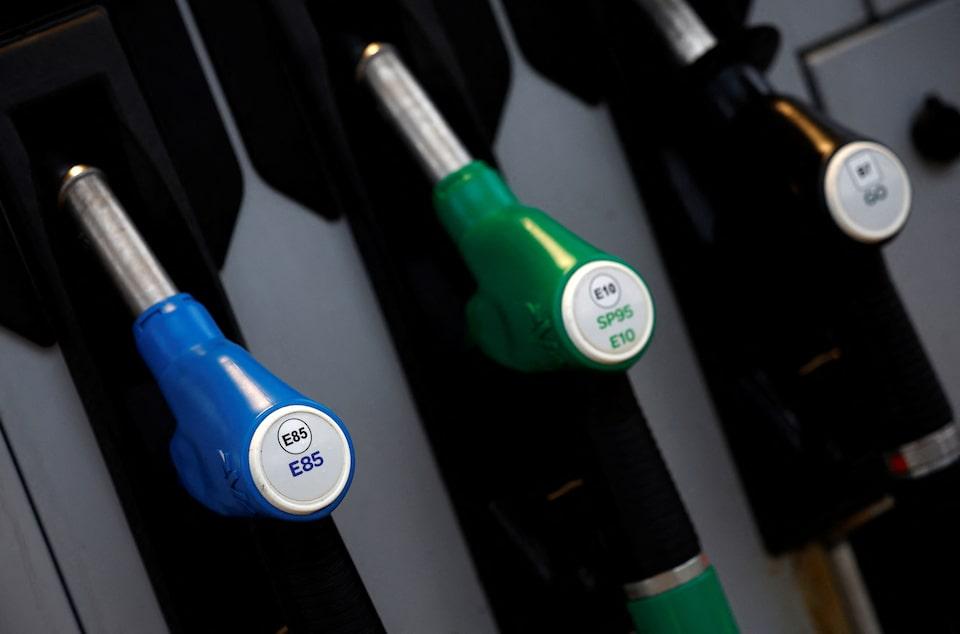
PARIS, Feb 3 (Reuters) - French consumption of ethanol in gasoline rose 15% to 19 million hectolitres in 2025 as gasoline car registrations climbed, and the trend is expected to continue, producers group Bioethanol France said on Tuesday. Of the global volume consumed in France last year, 60% was produced locally, made from sugar beet, wheat, maize and crop residues, the group said at a news conference. The remaining volume largely came from other parts of the European Union, they said. Sign up here. Ethanol consumption's rise was higher than the 5.6% increase in total gasoline consumption in France last year, as consumers turned to the cheaper crop-made fuel. France registered 1.63 million passenger cars in 2025, with gasoline and hybrids accounting for 74%, up from 41% in 2015, highlighting a major shift away from diesel, which fell to 6% from 58%, data from Bioethanol France showed. "When we look at the vehicle fleet, demand is set to continue," Bioethanol France Secretary General Sylvain Demoures told reporters. Consumption of the cheaper superethanol E85, which requires a flex-fuel car or a conversion kit, slightly dropped over the past two years to 8.6 million hectolitres in 2025 after continuous growth since its launch in 2006. "There was a jump in 2022 due to concerns caused by the surge in fuel prices," Demoures said. "In 2025, fuel was cheaper so the issue of cost savings was less easy to get across." The EU-Mercosur trade agreement, which includes a large import quota for ethanol to be phased in over five years after the deal is implemented, was a concern for French producers as a further rise in demand would be needed to absorb it. https://www.reuters.com/sustainability/climate-energy/french-ethanol-use-jumps-15-2025-driven-by-gasoline-demand-2026-02-03/
2026-02-03 12:26
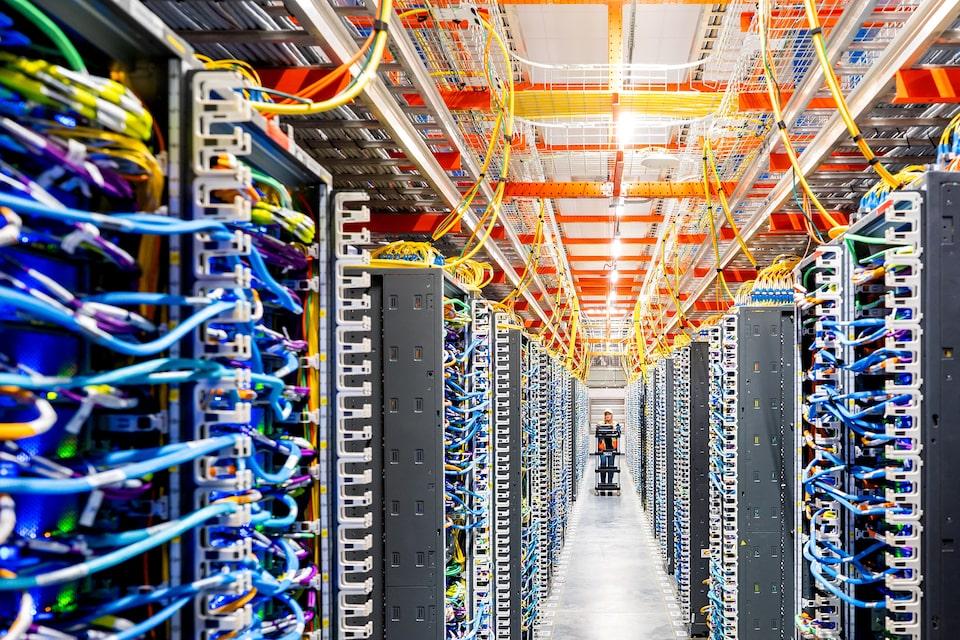
BRUSSELS, Feb 3 (Reuters) - Long delays to get power grid connections are challenging Amazon's (AMZN.O) , opens new tab plans to expand data centers in Europe, the company told Reuters, as industries ramp up pressure on policymakers to upgrade ageing energy grids. Energy-intensive industries have urged the European Union to invest more in grids, warning that a fast connection to stable, reliable power networks is a key criteria for investments in new industrial sites in Europe. Sign up here. Pamela MacDougall, Amazon Web Services' (AWS) head of energy markets and regulation in EMEA, said the timeline for getting a grid connection had become one of the biggest deciding factors in the company's data center investments. Connecting to the transmission network in Europe can take up to seven years - versus the roughly two years it can take to develop a data center, she said. In the United States, connection queues average one to three years, according to the International Energy Agency, although they can sometimes also stretch to seven years. "And we're finding more and more across Europe that certainty of the delivery date has continued to be delayed," she said in an interview. The European Commission proposed legal changes last year to cap deadlines for authorities to approve grid permits at a maximum of two years, and exempt grids projects from environmental assessments, to speed up the modernisation of Europe's power networks. EU countries and lawmakers are negotiating the proposals. NETWORK CONGESTION MacDougall said "in many countries" in Europe, Amazon had wanted to build infrastructure but missing grid connections or power network congestion had made the project unfeasible. "There's a misalignment. We want to expand and grow within two years," MacDougall said, adding that the delays were "challenging our growth aspirations". Italy and Spain are among the countries where grid connections are slowed down by a backlog of so-called "speculative" projects which applied for connections as a precaution but will likely not go ahead, electricity industry association Eurelectric has said. First-come, first-served rules mean other projects cannot overtake them in the queue. Another factor is long wait times for permits to upgrade European power grids. Slashing these deadlines are among the legal changes proposed by the European Commission. MacDougall is vice-chair of GIGA, an industry association launched last month to push policymakers to modernise Europe's power grids. Other members include energy-hungry tech companies Meta (META.O) , opens new tab and Google (GOOGL.O) , opens new tab, and electric vehicle charging infrastructure firm Fastned (FASTN.AS) , opens new tab. Amazon is building data centers across Europe as it expands its AWS - the world's largest cloud provider, which provides computing power, data storage and other digital services. The company does not disclose exactly how many data centers it has in Europe, but it has existing infrastructure in more than 20 European countries and is expanding investments in countries including France, Germany and Spain. https://www.reuters.com/sustainability/boards-policy-regulation/power-grid-delays-challenge-amazons-data-center-expansion-europe-2026-02-03/
2026-02-03 12:18
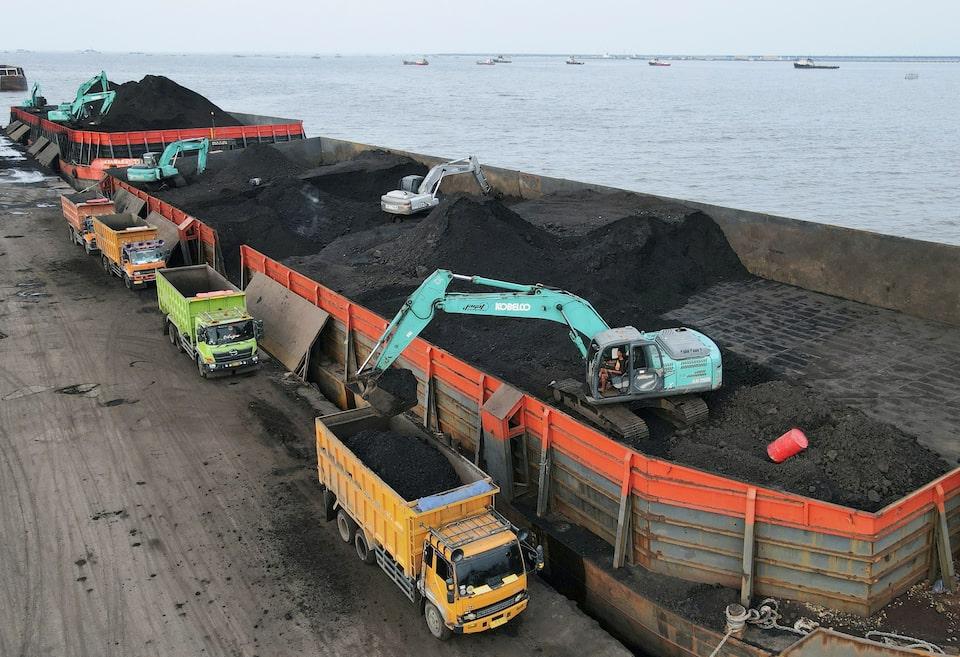
Long-term contracts honoured, buyers seek alternatives Proposed cuts slash output 24% to 600 million tons Lower-grade Indonesian coal prices may surge 40-70% - analyst Indonesia accounted for half of 2025 thermal coal exports NEW DELHI/SINGAPORE, Feb 3 (Reuters) - Indonesian miners have halted spot coal exports after the government proposed deep production cuts, leaving Asian buyers unable to secure supplies from the world's largest exporter, industry officials said on Tuesday. Indonesia last month issued output quotas to major miners that were 40% to 70% lower than 2025 levels as part of a plan to cut production by nearly one quarter and boost prices. The country's main industry body has opposed the move, warning it could trigger layoffs and mine closures. Sign up here. "Production is still ongoing but not at full capacity, and coal shipments will be limited until a final decision is made on the government quotas," H. Kristiono, deputy chairman of the Indonesian Coal Mining Association, told Reuters, adding that no spot cargoes were being offered. Long-term contracts are still being honoured, though some miners are considering cancellations on grounds of unforeseen circumstances, Kristiono said. The proposal marks Indonesia's latest policy-driven supply disruption, aimed at boosting government revenues amid softer demand from top buyers China and India. A brief export ban in 2022 sent prices sharply higher. Indonesia accounted for half of the 960 million metric tons of electricity-grade coal exported globally in 2025, according to Kpler data. It is now weighing a 24% production cut to about 600 million tons, even though exports alone exceeded 510 million tons last year. Traders expect the proposed curbs to push up prices and tighten supply. Indonesian spot coal cargoes were not being sold even at premiums of $1-$2 per ton over current prices, an Indian trader said at the Coaltrans India conference in New Delhi. Spot shipments are unlikely to resume this quarter unless Indonesia eases the output cuts, a Singapore-based trader said. Both traders declined to be named as they were not authorised to speak to the media. POLICY IMPACT Prices of lower-grade 4,200 kcal/kg Indonesian coal rose about 7% in January, according to India-based coal trader I-Energy Natural Resources, after reports of proposed production cuts in the month's first week. Lower-grade coal makes up most of Indonesia's exports, and its prices could rise 40% to 70% if output is reduced by 20%, while higher-grade coal could rise 10% to 20%, London-based DBX Commodities said. "The supply shock from Indonesia is driving other coal premiums up. Bids from Japan, China and Korea are going up as they are looking for stable supplies," a coal trader at a major Asian utility said. However, industry participants said buyers' preference for higher-grade coal from other suppliers, and continued weak demand from China and India, could limit any sharp rise. "A policy reversal under labour or fiscal pressure, sharper-than-expected slowdown in top buyer China and sustained low gas prices could mute a desired upside to coal prices," said DBX Commodities CEO Alexandre Claude. Vasudev Pamnani, director at I-Energy Natural Resources, said he expected short-term supply and price shocks for Indian buyers. "But if the cuts continue, India has the option to diversify and import from Russia, South Africa and Mozambique," he said. https://www.reuters.com/sustainability/indonesian-miners-halt-spot-coal-exports-over-proposal-cut-output-2026-02-03/