2025-10-17 07:02
LONDON, Oct 17 (Reuters) - The U.S. government shutdown extends into another week, earnings season is in full swing, U.S.-China trade tensions are high, and there's plenty of data to mull over. Japan's parliament, meanwhile, may vote on a new prime minister, and an election in Bolivia has ended almost 20 years of leftist rule. Sign up here. Here's all you need to know about the week ahead in world markets by Lewis Krauskopf in New York, Rocky Swift in Tokyo and Amanda Cooper, Naomi Rovnick and Marc Jones in London. 1/ US EARNINGS, INFLATION UPDATE ON WAY U.S. corporate earnings rev up, with Tesla (TSLA.O) , opens new tab and Netflix (NFLX.O) , opens new tab, while this week will end with a delayed U.S. inflation release. After major banks kicked off Q3 earnings, this week sees reports from an array of industries, including consumer companies Procter & Gamble (PG.N) , opens new tab and Coca-Cola (KO.N) , opens new tab, aerospace and defence giant RTX (RTX.N) , opens new tab and tech stalwart IBM (IBM.N) , opens new tab. Investors have also been confronting a government data blackout due to the federal shutdown that began on October 1. While key data including the monthly employment report have been delayed, the government plans to publish September CPI numbers on Friday, allowing the Social Security Administration to meet deadlines related to payment of benefits. The CPI release comes just ahead of the Federal Reserve's October 28-29 meeting, when the central bank is widely expected to cut rates by a quarter percentage point. 2/ BIG MOMENT FOR TAKAICHI Japanese markets await an expected parliamentary vote this week that may spur another leg up in a record stocks run. The blue-chip Nikkei hit all-time highs after Sanae Takaichi, a devotee of the "Abenomics" stimulus policies of the late Shinzo Abe, won a ruling Liberal Democratic Party election on October 4. After a rift with a long-time coalition party, Takaichi and the LDP last week sought a new partner in the right-leaning Japan Innovation Party, known as Ishin. On Monday, Ishin leader Hirofumi Yoshimura said the two sides would formalise a coalition deal, ahead of a vote in parliament on Tuesday to decide the next prime minister. Not surprisingly, the Nikkei is back at record highs. 3/ EARLY WARNING SIGNS It has been six months since U.S. President Donald Trump unveiled his "Liberation Day" tariffs. There are trade deals in place and investors and companies have some certainty. Or at least, they did until recently. Tensions have been flaring again between Washington and Beijing, prompting tit-for-tat fees on cargo ships and ports and a tightening on two-way supplies of key tech-sector materials and parts, though there has been some more conciliatory rhetoric in recent days. Europe hasn't yet seen evidence of the big spending that national governments, led by Germany, promised earlier this year. China, where growth is slowing too, holds a closed-door meeting of its leaders starting Monday. The upcoming surveys of business activity for Germany, France, the UK, the U.S. and the euro zone, among other regions, in October could start to reflect some of that renewed angst. 4/ STILL HIGH UK INFLATION? UK inflation data this week could be pivotal for Britain's gilt markets, sterling and finance minister Rachel Reeves' ability to limit unpopular tax hikes and spending cuts in her November 26 budget. With Britain's fiscal hole widening because of surging debt payments, Wednesday's September consumer prices report could fuel rate cut bets and offer Reeves some relief if the annualised print comes below the Bank of England's 4% forecast. But a higher-than-expected increase could keep the BoE cautious and Britain's finances looking precarious, in a threat to sterling's recent strong run against the dollar. Gilt markets are exhibiting optimism so far, with UK borrowing costs falling to over two-month lows as traders priced a 90% probability of a quarter-point rate cut by February. 5/ VOTING AND VULTURES Centrist Rodrigo Paz has won Bolivia's presidential runoff, defeating conservative rival Jorge "Tuto" Quiroga, as the country's worst economic crisis in a generation helped propel the end of nearly two decades of leftist rule. The debt market vultures will be watching closely. The economy is in deep disarray, with inflation running at nearly 25%, fuel shortages rife and the country's foreign exchange reserves now barely covering two months of basic imports. Paz has advocated a gradualist approach, fully aware of the country's long history of violent unrest at times of economic pain. His moderate platform — pledging to maintain social programmes while promoting private sector-led growth — appeared to resonate with left-leaning voters disillusioned by the ruling Socialists. https://www.reuters.com/business/take-five/global-markets-themes-takealook-2025-10-17/

2025-10-17 06:36
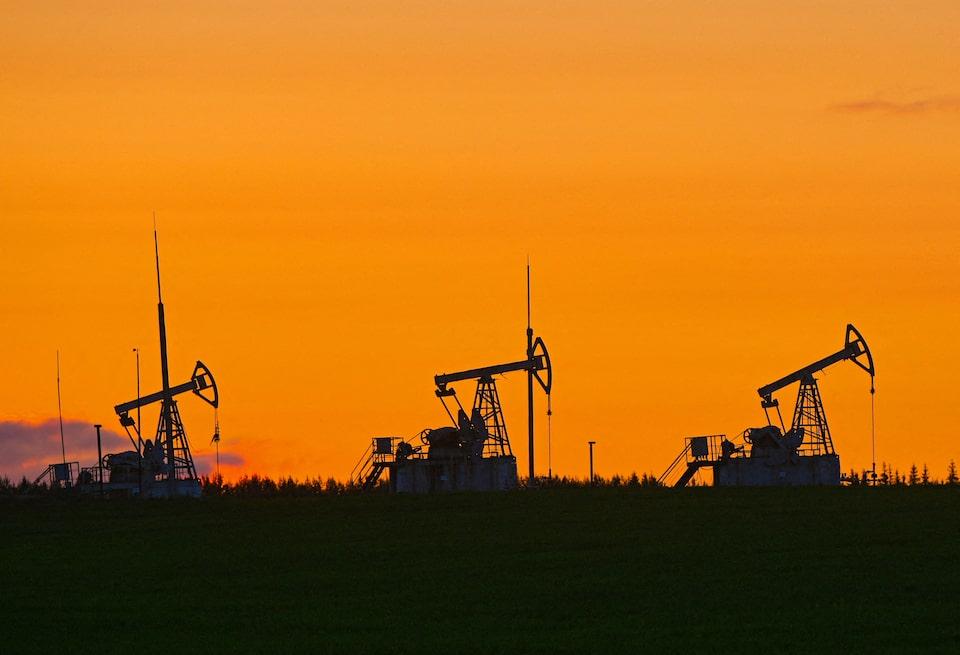
Russian oil a top irritant in US-India trade talks India has pledged to boost US energy purchases India could cut Russian oil imports from Dec-Jan, sources say India is biggest buyer of Russian seaborne oil US says Russia uses oil revenue to fund war in Ukraine WASHINGTON/NEW DELHI, Oct 17 (Reuters) - India has halved its purchases of Russian oil, a White House official said, but Indian sources said no immediate reduction had been seen, as President Donald Trump's administration presses New Delhi and other nations to buy less Russian crude. Russian oil is a main irritant for Trump in prolonged trade talks with India - half of his 50% tariffs on Indian goods are in retaliation for those purchases. His administration says Moscow is using petroleum revenue to fund its war in Ukraine. Sign up here. The White House official told Reuters on Thursday that talks with an Indian delegation in Washington this week have been productive and that Indian refiners were already cutting Russian oil imports by 50%. But Indian industry sources said on Friday that New Delhi had not informed refiners of any request to cut Russian imports. TRUMP SAYS MODI PLEDGED TO HALT RUSSIAN OIL PURCHASES Refiners have already placed orders for November loading, including some cargoes for December arrival, so any cut could be visible in December or January import numbers, said the sources, who asked not to be identified as they were not authorised to speak to the media. Indeed, India's imports of Russian oil are set to rise about 20% this month to 1.9 million barrels per day, according to estimates from commodities data firm Kpler, as Russia ramps up exports after Ukrainian drones hit its refineries. The Indian oil ministry and refiners that buy Russian oil did not immediately respond to Reuters requests for comment. Trump said Prime Minister Narendra Modi had assured him on Wednesday that India would stop buying Russian oil. India's foreign ministry did not respond to Trump's assertion except to say it was not aware of any telephone conversation between the two leaders that day. Still, India's oil minister on Thursday sought data on Russian oil imports from all the refiners, including their loadings and arrivals tied up for November and December. Oil prices fell on Friday, with Brent crude futures down 48 cents, or 0.79%, to $60.58 a barrel at 0720 GMT, amid uncertainty over global supply as Trump and Russian President Vladimir Putin prepared to discuss ending the war. US-INDIA TRADE TALKS HAVE FLOUNDERED India has become the biggest buyer of seaborne Russian oil sold at a discount after Western nations shunned purchases and imposed sanctions on Moscow for its 2022 invasion of its neighbour. New Delhi initially hoped to secure a quick trade deal with the U.S. due to Modi's warm relationship with Trump, but the talks have floundered and the president has slapped some of the highest levies in his global tariff regime on India's products. When Modi visited Trump in February, India pledged to more than double its annual U.S. energy purchases to $25 billion, with both nations targeting $500 billion in bilateral trade by 2030. U.S. negotiators have said curbing India's Russian crude purchases would be crucial to reducing its tariff rate and sealing a trade deal. Indian refiners are looking to buy at least 10% of their liquefied petroleum gas needs from the U.S. to help narrow India's bilateral trade surplus, sources told Reuters this week. Russia accounted for 36% of India's oil imports, some 1.75 million barrels per day, in the six months through September, trade data shows. Moscow said on Thursday it was confident its energy partnership with India would continue. Kremlin spokesman Dmitry Peskov said Russia could supply oil more cheaply to countries that Trump is trying to persuade to stop buying Russian oil. https://www.reuters.com/business/energy/india-already-cutting-russian-oil-imports-by-50-after-us-talks-white-house-2025-10-16/
2025-10-17 06:35
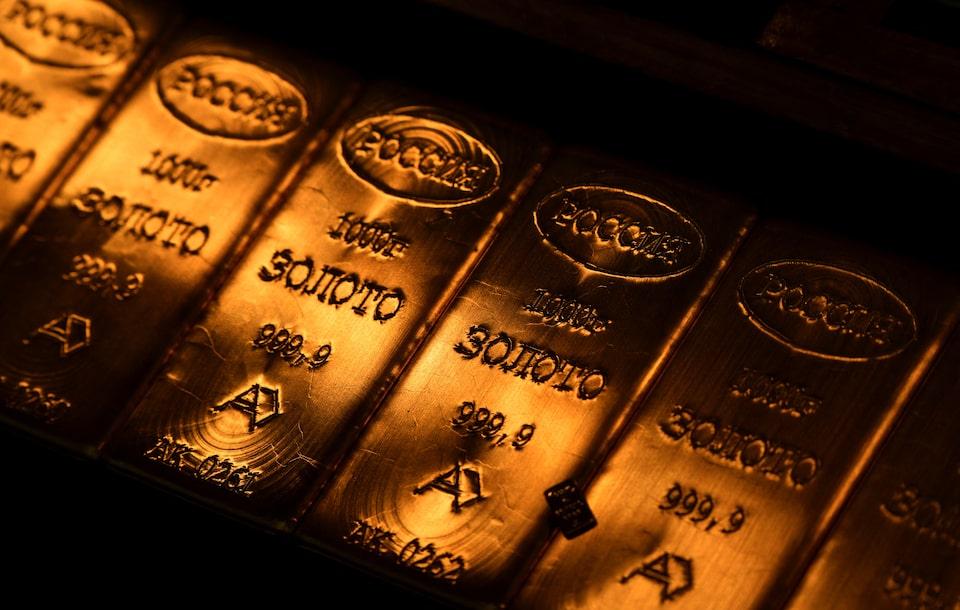
Trump says 100% tariffs on China not sustainable Gold is up about 7.2% so far this week Silver hits record high of $54.47/oz SPDR gold trust holdings hit highest level since July 2022 Oct 17 (Reuters) - Gold prices fell on Friday after notching a record high above the $4,300 an ounce level earlier in the session, after U.S. President Donald Trump said his proposed 100% tariff on goods from China would not be sustainable. Spot gold fell 0.4% to $4,309.63 per ounce, as of 1237 GMT, after scaling another record high of $4,378.69 earlier in the session. U.S. gold futures for December delivery was up 0.4% to $4,320.70. Sign up here. Gold has gained about 7.2% so far this week. Earlier in the session, gold had temporarily been on track for its biggest gain since September 2008 when the collapse of Lehman Brothers fuelled the global financial crisis. Wall Street futures trimmed losses on Friday after Trump confirmed that his meeting with Chinese President Xi Jinping was still on, easing investor concerns over worsening trade tensions between the two largest economies. "Equity indices have bounced off their lows on the back of a couple of bullish-looking comments from Donald Trump... we've seen gold prices come down a little bit on the back of those comments," said Fawad Razaqzada, market analyst at City Index and FOREX.com. Gold is traditionally considered a hedge during times of uncertainty and thrives in a lower interest rate environment. U.S. Federal Reserve Governor Christopher Waller voiced support for another rate cut. Investors expect a 25-basis-point reduction at the Fed's October 29-30 meeting and another reduction in December. Bullion has surged over 64% this year, driven by geopolitical tensions, rate cut bets, central bank buying, de-dollarisation and robust exchange-traded-fund inflows. "I believe resilient and huge ETF flows are pulling prices up," said Michael Haigh, global head of commodities research at Societe Generale. HSBC raised its 2025 average gold price forecast by $100 to $3,455 per ounce, and projected gold to reach $5,000 an ounce in 2026, supported by elevated risks. Spot silver fell 1.7% to $53.32 per ounce, after hitting a record high of $54.47, tracking the rally in gold and a short squeeze in the spot market. Platinum fell 3.9% to $1,646.50 and palladium lost 4.4% to $1,542.10. https://www.reuters.com/world/india/gold-rallies-beyond-4300oz-set-best-week-five-years-2025-10-17/
2025-10-17 06:35
Russia intensifies attacks on Ukrainian power sector Prolonged power cuts are becoming more common in many areas Nurseries in Chernihiv operate without heating Ukraine braces for tough winter as temperatures start to drop CHERNIHIV, Ukraine, Oct 17 (Reuters) - Ukrainian cook Natalia Meshok leaves home at 2 a.m. for the nursery where she works, using night-time hours when power supply is more or less stable to prepare food for dozens of children. Meshok, 59, lives and works in the northern city of Chernihiv, which has been hammered by repeated Russian drone and missile attacks on its power infrastructure in recent weeks, causing regular blackouts and disrupting daily life. Sign up here. "Completely empty and dark. It's a bit scary, but you realise you have to go because there are children here," she said, standing in a dark kitchen where pots of food rested on the stove ready to be served when the kindergarten opened. Chernihiv was one of the first cities to feel the brunt of intensifying Russian strikes on electricity and gas facilities across Ukraine, including in the capital Kyiv where hundreds of thousands of households lost power after an Oct. 10 attack. RUSSIA TAKES AIM AT POWER SECTOR, HEATING Officials say the frequency and accuracy of such attacks have increased during the last two months, leading some to predict a particularly hard 2025/26 winter as the war approaches its fourth anniversary. "We are preparing for various scenarios, including the worst-case ones," energy minister Svitlana Hrynchuk said just before the Oct. 10 attack. President Volodymyr Zelenskiy said Russia launched 3,100 drones and 92 missiles at Ukraine in just one week starting on Oct. 6. Russia denies targeting civilians, saying that its objective is to degrade Ukraine's military capabilities. Meshok was glad the electricity lasted longer than the usual couple of hours that night, meaning that she and her fellow cooks managed to prepare lunch for the children - aged from 2 years and up - as well as breakfast. "Do you know why children are in the nursery? Because their parents are working. No one has cancelled that. They need to go to work," said Yevheniia Savchenko, director of the nursery, a municipal facility. It had been raining in Chernihiv for almost a week when Reuters visited in early October, and the temperature in the nursery was 14 degrees Celsius (57 F). The basement, which doubles as an air raid shelter, was slightly warmer. Savchenko said she did not know when the heating would be turned on. In peacetime, Ukraine provided heating to state facilities in time for the so-called "heating season" that starts in mid-October when temperatures typically begin to drop. MANY CHILDREN KEPT AT HOME FOR WARMTH Frequent air raid sirens mean the children at Chernihiv's kindergarten No. 72 spend much of their days in the basement, playing, singing and eating. At one point the brightly lit space was plunged into darkness, prompting excited shouts from some of the toddlers, before a generator kicked in and the lights came back on to cheers. The generator can provide light, but not heating. Savchenko said only about 65 children were attending the kindergarten out of a total of 170 registered there. "As long as there is no lighting and no heat, they (some parents) try to keep the child at home, because there they can heat the room a little with gas," she said. HITS TO POWER GENERATION, ELECTRICITY TRANSMISSION, GAS Russia has been targeting Ukraine's energy system throughout the war, and this autumn it has hit both power generation and electricity transmission systems, as well as gas production facilities. Earlier this month, Russian forces struck Ukraine's main gas fields, and the energy minister, Hrynchuk, said "significant" damage could force Kyiv to increase its gas imports by a third. Ukraine, which says it does not attack civilian infrastructure, has in turn stepped up attacks on Russian oil refineries, causing a drop in oil processing and creating fuel shortages in many regions. During the heating season, Ukraine uses gas mainly for the centralised urban heating system that is left over from Soviet times, without which millions would be living in cold homes as temperatures outside frequently drop below freezing. If that system is unable to function fully, the electricity supply will not be able to compensate. Some politicians are urging city dwellers to find winter accommodation in villages where they can use direct natural gas supplies to households or wood for heating. There have been such warnings in previous years. But this year the energy minister announced for the first time since the war began in February 2022 that the government is prepared to restrict gas supplies to the population if needed, not just electricity. "They want to break us, but just as Ukraine is not broken, neither are Ukrainians," Meshok said of the Russians. "We will endure ... and we will prevail, without fail. Faith in the future is essential. Because if there is no faith in the future, then what is the point of our endeavours?" https://www.reuters.com/world/europe/russia-pounds-ukraines-power-supply-one-nursery-battles-provide-food-warmth-2025-10-17/

2025-10-17 06:33
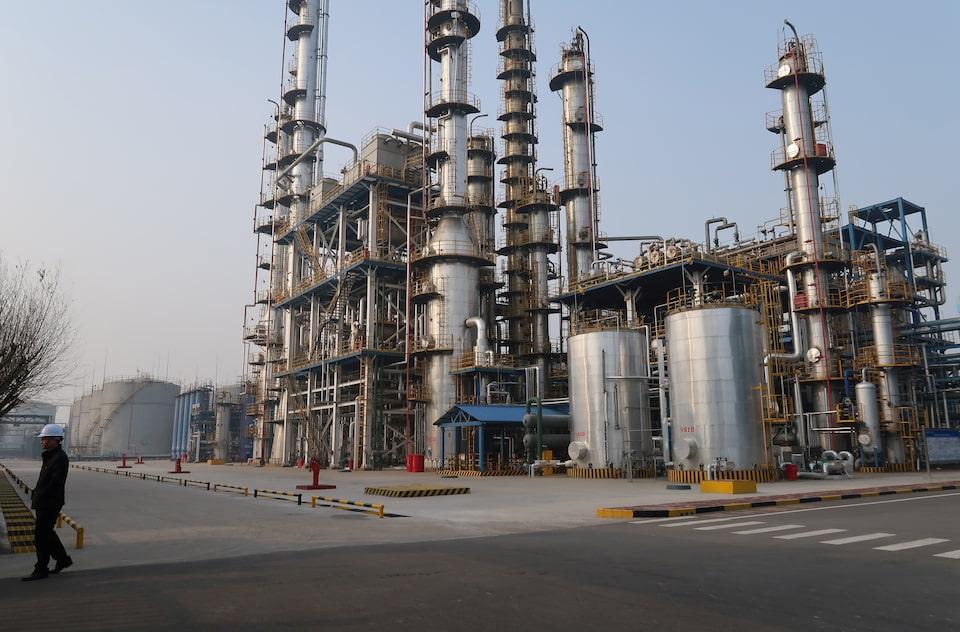
SINGAPORE, Oct 17 (Reuters) - China has approved another three biofuel refiners to export sustainable aviation fuel (SAF) by issuing them quotas, according to trade sources and a Chinese consultancy, a move that could see exports to Europe increase. While Europe, the world's second-largest aviation fuel market, has yet to set a mandate for the usage of greener fuel, Chinese biofuel firms are building more SAF plants and targeting the continent as a top export destination. Sign up here. China's Ministry of Commerce, which is responsible for quota issues, did not immediately respond to a Reuters request for comment. Shandong Haike Chemical, Shandong Sanju Bioenergy and Bain Capital-backed EcoCeres were awarded export quotas for a total of 788,000-828,000 metric tons a year, according to three industry and trade sources, and Chinese commodities consultancy JLC in a report. Shandong Sanju Bioenergy was allotted around 158,000 tons and Shandong Haike Chemical 370,000 tons, while EcoCeres received 260,000-300,000 tons of export permits, the sources and JLC said. This brings the total amount of SAF quotas issued so far in 2025 to around 1.2 million tons, including the first such permits alloted to Zhejiang Jiaao Enprotech. It is not compulsory for the new recipients to fully utilise the allotted permits by the end of 2025, according to the JLC report, but it is also unclear if the companies need to re-apply for quotas next year. Zhejiang Jiaao exported its first cargo in early May. https://www.reuters.com/sustainability/climate-energy/china-allows-more-biofuel-firms-export-green-aviation-fuel-sources-say-2025-10-17/
2025-10-17 06:18
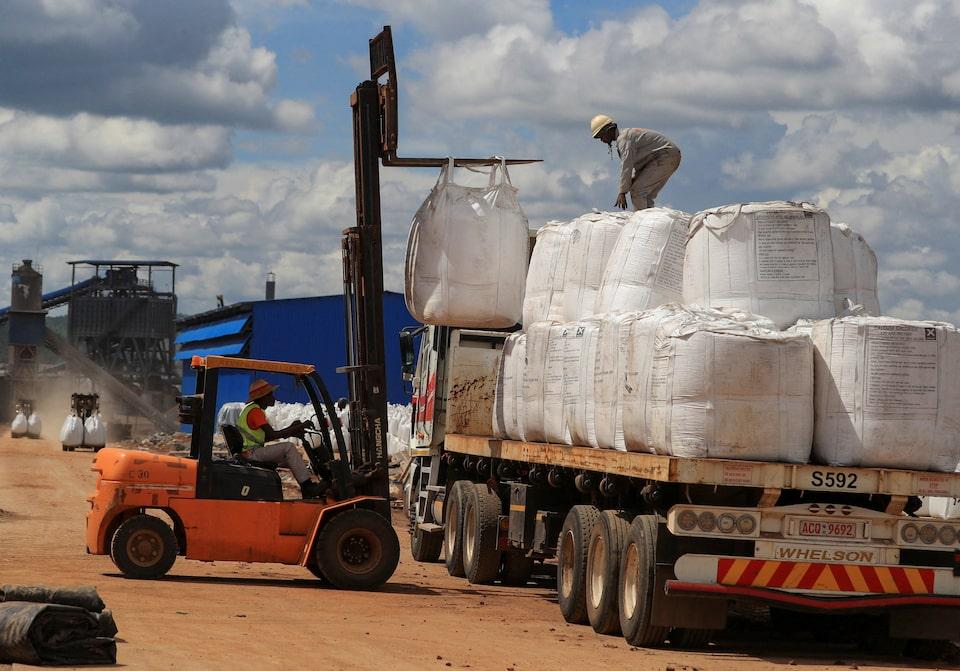
HARARE, Oct 17 (Reuters) - China's Zhejiang Huayou Cobalt (603799.SS) , opens new tab will start producing lithium sulphate during the first quarter of 2026 from its new $400 million plant in Zimbabwe, the company said on Thursday, as the African country pushes for more local processing. The newly completed plant at Huayou's wholly owned Prospect Lithium Zimbabwe's Arcadia mine has capacity to exceed 50,000 metric tons of lithium sulphate annually, an executive said during a tour of the operation. Sign up here. Lithium sulphate is an intermediate product which can be refined into a battery-grade material such as lithium hydroxide or lithium carbonate used in battery manufacturing. "We will start the first production from the beginning of next year," Prospect Lithium Zimbabwe general manager Henry Zhu told reporters. "The quantity of the lithium sulphate should be more than 60,000 metric tons, but it will depend on the configuration of the plant, because it is brand new," Zhu added. Zimbabwe, Africa's top lithium producer, has been nudging miners to process the mineral in the country in order to help lift its economy. Huayou, which acquired Arcadia lithium mine for $422 million in 2022, commissioned a $300 million lithium concentrator in 2023. The company and other Chinese metals firms Sinomine (002738.SZ) , opens new tab, Chengxin Lithium Group (002240.SZ) , opens new tab, Yahua Group (002497.SZ) , opens new tab, and Tsingshan Holding dominate Zimbabwe's lithium mining, producing concentrates and shipping them to their home country. Huayou exported 400,000 tons of lithium concentrate from Zimbabwe in 2024. The southern African country will ban the export of lithium concentrates from 2027 as it pushes for more local processing. Sinomine has also announced plans to build a $500 million lithium sulphate plant at its Bikita mine in Zimbabwe. https://www.reuters.com/world/africa/huayou-start-zimbabwe-lithium-sulphate-production-early-2026-2025-10-17/