2025-10-16 21:02
Ueda says no big gap between current, past views on global outlook Global growth resilient but tariff impact expected, Ueda says BOJ to keep raising rates if growth, prices move as projected Ueda drops few hints on whether BOJ could hike rates in October WASHINGTON, Oct 16 (Reuters) - Bank of Japan Governor Kazuo Ueda said on Thursday the central bank will scrutinise various data, including information he collects during his stay in Washington, in deciding whether to raise interest rates in October. He repeated his view that the central bank will hike rates if the likelihood of its growth and price forecasts materializing increases. Sign up here. Global and U.S. economies are showing resilience, though the impact of U.S. tariffs will likely emerge ahead, Ueda told a news conference after attending the G7 and G20 finance leaders' gatherings in Washington. "There's not much of a gap in how I see global and U.S. economies now and how I saw it back in Japan," he said. The International Monetary Fund edged up its 2025 global growth forecast on Tuesday as tariff shocks have proven more benign than expected, but warned that a renewed escalation in U.S.-China trade tensions could slow output significantly. In a speech earlier this month, Ueda said the global and U.S. economic outlook, as well as the fallout from U.S. tariffs on Japan's economy, will be key factors the BOJ will look at in deciding how soon to raise interest rates. "There's still some meetings left in Washington," said Ueda, who is scheduled to attend Friday's meeting of the IMF's steering committee. "I would like to keep gathering more information and scrutinise various data that comes out leading up to our October policy meeting," he said, when asked about the chance of a rate hike at the upcoming October 29-30 policy meeting. The BOJ ended a massive, decade-long stimulus programme last year and raised rates to 0.5% in January, on the view that Japan was on the cusp of durably hitting its inflation target. With inflation exceeding its 2% target for well over three years, the central bank has signaled its readiness to keep raising rates if the economy continues to improve. Highlighting the BOJ's growing attention to inflationary pressure, two of its nine board members proposed unsuccessfully to raise rates in September, which heightened market bets of a rate hike in October. But such expectations faded after the victory of Sanae Takaichi, an advocate of expansionary fiscal and monetary policy, in a ruling party leadership race that paved the way for her to become Japan's first female prime minister. Most analysts expect the BOJ to raise rates to 0.75% by January next year, though they are split on the exact timing. https://www.reuters.com/world/asia-pacific/bank-japan-chief-signals-need-more-data-deciding-october-move-2025-10-16/
2025-10-16 20:52
BOGOTA, Oct 16 (Reuters) - Colombia received a bid from a subsidiary of Denmark's Copenhagen Infrastructure Partners (CIP), to develop a project in the South American country's first offshore wind energy round, the head of its hydrocarbons agency said on Thursday. Orlando Velandia, who heads Colombia's National Hydrocarbons Agency (ANH), said CIP subsidiary CI GMF Cooperatief U.A. had submitted an offer. ANH not immediately provide details of the offer. Sign up here. "The participation of CIP, one of the world's leading investment funds in energy infrastructure and the green transition, represents an international vote of confidence," Velandia told a forum in Cartagena. The government aims to award contracts for at least 1 gigawatt of installed capacity in the bidding round. The country's Ministry of Mines and Energy in December gave preliminary approval to eight companies to participate. These also included Colombian companies Ecopetrol and Celsia as well as Belgium's Jan De Nul and DEME (DEME.BR) , opens new tab, Britain's Dyna Energy, Powerchina and China Three Gorges (600905.SS) , opens new tab. By February, participants had proposed 69 areas for potential project developments. Leftist President Gustavo Petro is looking to promote the development of renewable energies to wean the country off its dependence on polluting fossil fuels. https://www.reuters.com/sustainability/climate-energy/colombia-gets-offshore-wind-bid-denmarks-cip-2025-10-16/

2025-10-16 20:48
WASHINGTON, Oct 16 (Reuters) - U.S. Senate Democrats on Thursday blocked a bill that would have funded the Pentagon for a full year, thwarting an effort by Republicans to restart some federal funding as the government shutdown stretched into its 16th day. The tally was 50-44, falling short of the 60 needed to advance the measure in the 100-member Senate. The vote was largely along party lines, with President Donald Trump's fellow Republicans voting in favor and all but three Democrats objecting. Sign up here. Democrats who voted against advancing the legislation said they did not want to back spending on the military without providing funding for other programs, such as healthcare and housing, that are important to Americans. "It’s always been unacceptable to Democrats to do the defense bill without other bills that have so many things that are important to the American people in terms of healthcare, in terms of housing, in terms of safety," Senator Chuck Schumer of New York, the chamber's Democratic leader, told reporters before the vote. Republicans accused Democrats of playing politics by voting against the bill in order to keep their "leverage" in the debate over how to fund the government and end the shutdown that began on Oct. 1. "This is politics," Senate Majority Leader John Thune, of South Dakota, said, accusing Democrats of not being interested in supporting U.S. troops. Republicans control the House, Senate, and White House, but would need Democratic votes in the Senate to advance any bill to reopen the government because they control just 53 seats, not the 60 needed to advance most legislation. The $852 billion Defense Department appropriations bill was passed out of committee earlier this year with a strongly bipartisan 26-3 vote. Democrats say any funding package to reopen the government must also extend healthcare subsidies for about 24 million Americans that are due to expire at the end of the year. Trump signed an order on Wednesday directing Pentagon chief Pete Hegseth to ensure active-duty U.S. military personnel received pay this week despite the shutdown. https://www.reuters.com/world/us/military-spending-bill-blocked-us-senate-shutdown-grinds-2025-10-16/

2025-10-16 20:35
FERC grants similar extensions to other developers Plaquemines LNG aims for full service by mid-2027 Venture Global cites COVID challenges for extension request HOUSTON, Oct 16 (Reuters) - Federal regulators on Thursday approved a request from Venture Global (VG.N) , opens new tab for more time to keep its Plaquemines LNG plant in Louisiana in a commissioning stage before declaring the start of full commercial operations, a regulatory filing showed. Extending the commissioning phase allows Venture Global to sell the liquefied natural gas on the spot market at higher prices than under long-term contracts that apply during full operations. Sign up here. The Federal Energy Regulatory Commission said that while two of Venture Global's long-term customers for the facility - Chevron (CVX.N) , opens new tab and Orlen (PKN.WA) , opens new tab - asked to provide input, neither raised an objection to the extension request. An arbitration tribunal found last week that Venture Global breached an agreement with BP (BP.L) , opens new tab to declare timely commercial operations at its separate Calcasieu Pass plant in Louisiana. The LNG producer's shares have declined 36% over the past month amid the ruling and lower realized liquefaction fees in the second quarter. "As we stated previously, this in-service extension request is a standard procedural step," Venture Global said on Thursday, adding that it was unrelated to its planned timing for commercial deliveries. FERC has previously granted similar requests from other project developers. Venture Global asked FERC last month to give it until December 31, 2027 to keep the Plaquemines plant in a commissioning, citing issues including challenges that first originated during the COVID pandemic. The original deadline for putting the 27.2 million metric tons per annum export facility into full service was September 30, 2026. Plaquemines LNG has been planning to place all its Phase 1 facilities in service during the fourth quarter of 2026, and the remaining Phase 2 facilities in-service by mid-2027. Plaquemines is the second largest LNG facility in the U.S. and last month was responsible for nearly 16% of total exports of the superchilled gas from the country. Venture Global has typically used a strategy that involves building its plants quickly to sell commissioning cargoes at higher prices on the spot market for a time before formal commercial operations kick off with lower, longer-term pricing. https://www.reuters.com/business/energy/federal-regulators-approve-venture-global-commissioning-extension-plaquemines-2025-10-16/

2025-10-16 20:30
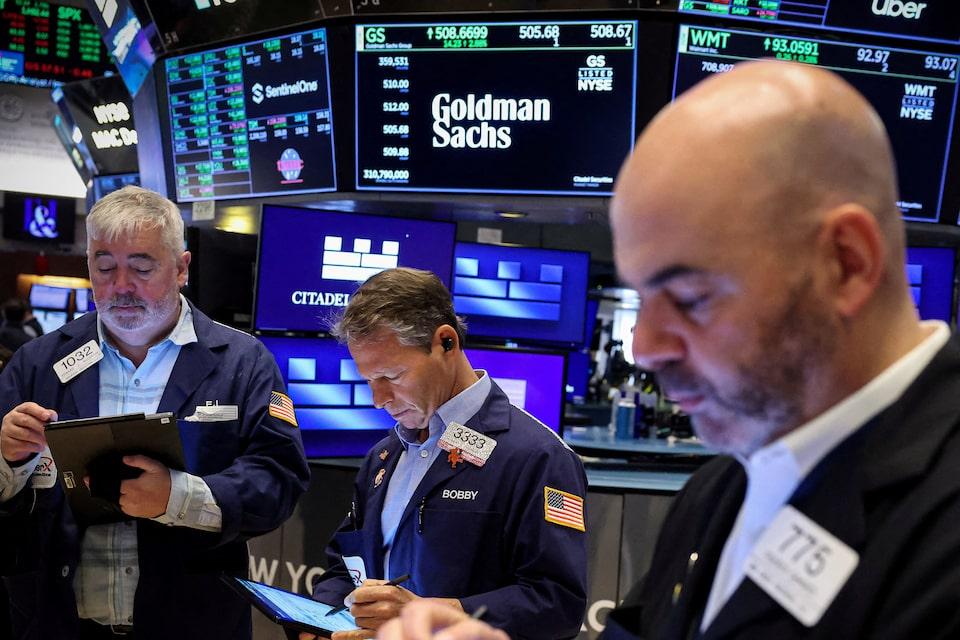
Salesforce rises after strong revenue forecast Weak Travelers results hit insurance stocks US-China trade tensions remain front and center S&P 500 -0.63%, Nasdaq -0.47%, Dow -0.65% Oct 16 (Reuters) - Wall Street closed lower on Thursday, with signs of weakness in regional banks spooking investors already on edge over U.S.-China trade tensions. Shares of Zions Bancorporation (ZION.O) , opens new tab tumbled 13% after the regional bank disclosed an unexpected loss on two loans in its California division, adding to growing investor unease about hidden credit stress as lenders navigate economic uncertainty with interest rates still relatively high. Sign up here. Western Alliance (WAL.N) , opens new tab slumped 10.8% after it said it initiated a fraud lawsuit against one of its borrowers. Jitters about commercial lending emerged following the September collapses of U.S. auto parts supplier First Brands and car dealership Tricolor. "I think that there's some level of minimal nervousness associated with the credit markets," said Ron Albahary, chief investment officer at LNW in Philadelphia. "If you've been doing this long enough, you don't ignore anything that might be a yellow flag in the credit markets." With the S&P 500 recently at record highs, investors were also watching for developments between Washington and Beijing after their trade war escalated last week. U.S. President Donald Trump has threatened 100% tariffs on China starting November 1, as well as other new trade measures against the world's second-largest economy following Chinese curbs on exports of rare earth minerals. "With the added uncertainty of U.S. and China trade and increased rhetoric and what that could mean for the economy and for the markets, I think that's adding to market instability," said Tom Hainlin, an investment strategist at U.S. Bank Wealth Management in Minneapolis. TSMC (2330.TW) , opens new tab, the world's largest manufacturer of advanced semiconductors, gave a bullish outlook for spending on artificial intelligence. Still, heavyweight AI-related stocks dipped, with Palantir (PLTR.O) , opens new tab and Meta Platforms (META.O) , opens new tab both off 0.8%, and Tesla (TSLA.O) , opens new tab losing 1.5% . Salesforce (CRM.N) , opens new tab jumped 4% after the business software seller forecast revenue of more than $60 billion for 2030, above Wall Street estimates. Optimism about AI and expectations of U.S. interest rate cuts have lifted Wall Street to record highs this year. The S&P 500 has gained 12% so far in 2025, and it is valued at an elevated 23 times expected earnings, a five-year high, according to LSEG. Robust earnings from major U.S. banks this week offered fresh signs of economic resilience at a time when official macroeconomic reports remain delayed due to an ongoing government shutdown. Analysts on average see S&P 500 aggregate earnings up 9.2% in the third quarter, versus expectations of an 8.8% increase two weeks ago, according to LSEG I/B/E/S. The S&P 500 insurance index (.SPXIN) , opens new tab dropped after industry bellwether Travelers Companies (TRV.N) , opens new tab posted quarterly revenue below estimates, with its stock falling nearly 3%. Insurer Marsh & McLennan (MMC.N) , opens new tab reported flat operating margins and slowing growth in its risk and insurance business, and its stock dropped 8.5%. The S&P 500 declined 0.63% to end the session at 6,629.07 points. The Nasdaq declined 0.47% to 22,562.54 points, while the Dow Jones Industrial Average declined 0.65% to 45,952.24 points. Ten of the 11 S&P 500 sector indexes declined, led lower by financials (.SPSY) , opens new tab, down 2.75%, followed by a 1.12% loss in energy (.SPNY) , opens new tab. Data showed the Philadelphia Fed Business Index for October declined 12.8 points, compared with a rise of 8.5 estimated by the economists polled by Reuters. Fed Governor Christopher Waller said he supported an additional interest rate cut in October due to mixed readings on the state of the job market. Hewlett Packard Enterprise (HPE.N) , opens new tab slumped 10% after the technology company forecast annual profit and revenue below Wall Street expectations. J.B. Hunt (JBHT.O) , opens new tab shares jumped 22% after the trucking firm reported third-quarter profits. Declining stocks outnumbered rising ones within the S&P 500 (.AD.SPX) , opens new tab by a 2.7-to-one ratio. The S&P 500 posted 29 new highs and 16 new lows; the Nasdaq recorded 113 new highs and 109 new lows. Volume on U.S. exchanges was relatively heavy, with 22.4 billion shares traded, compared to an average of 20.5 billion shares over the previous 20 sessions. https://www.reuters.com/business/wall-street-futures-gain-after-tsmcs-results-support-renewed-ai-optimism-2025-10-16/
2025-10-16 20:21
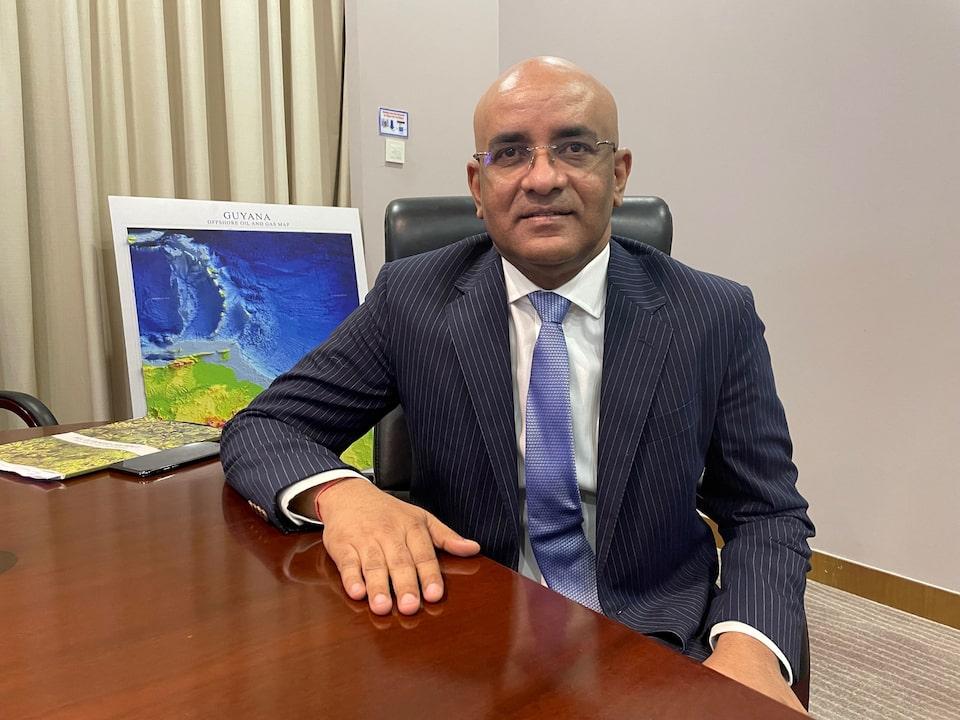
GEORGETOWN, Oct 16 (Reuters) - Guyana's Vice President said on Thursday the country will not take any possible gas development off the negotiation table, including Exxon Mobil's (XOM.N) , opens new tab future offshore projects. Exxon's eighth project, Longtail, is expected to be the first to develop non-associated gas in Guyana, and two more discoveries, Haimara and Pluma, could follow. An Exxon executive said this month that turning gas into liquefied natural gas (LNG) might not be a priority for the company in some projects. Sign up here. "(Gas) is a priority for us," Vice President Bharrat Jagdeo said during his weekly conference, adding that Guyana wants to monetize its gas reserves. A consortium led by Exxon, which controls all oil and gas output in the South American country, in February began applications to request government approval for Longtail, hoping to have the project authorized next year for a 2030 start-up. Longtail is expected to produce up to 1.5 billion cubic feet per day of natural gas and 290,000 barrels per day of condensate through a floating production facility that will have capacity to export, the group told the government this year. However, Exxon's gas strategy in Guyana, which could involve LNG, has not been fully designed yet. https://www.reuters.com/business/energy/guyana-not-taking-any-gas-development-off-table-vice-president-says-2025-10-16/