2025-10-14 21:45
Chevron pushes for input on Venture Global's LNG plant extension request Venture Global cites COVID-19 challenges for extension request Arbitration tribunal finds Venture Global breached agreement with BP HOUSTON, Oct 14 (Reuters) - Chevron (CVX.N) , opens new tab on Tuesday asked federal regulators to let it offer an opinion on Venture Global's (VG.N) , opens new tab recent request for more time to commission the Plaquemines LNG plant in Louisiana, at which the U.S. oil major has a long-term sales and purchase agreement that could be affected by any delay. The filing from Chevron came just days after an arbitration tribunal found that Venture Global breached an agreement with BP (BP.L) , opens new tab to declare timely commercial operations at its separate Calcasieu Pass plant, also in Louisiana. The LNG producer's shares plummeted 25% on Friday as investors worried about other ongoing arbitration liabilities. Sign up here. Last month, Venture Global asked the Federal Energy Regulatory Commission to give it until the end of 2027 to commission the Plaquemines plant, citing challenges stemming from the Covid-19 pandemic. The original deadline to put the 27.2 million metric tons per annum export facility into service was September 30, 2026. "Chevron has a substantial interest that may be directly affected by the outcome of this proceeding," it wrote in the filing. The company did not immediately respond to a request for further comment. Venture Global characterized the extension it is seeking as a standard procedural step that is routinely taken to align schedules with FERC in-service deadlines. “To be clear, this request to FERC for an extension of our in-service deadline at Plaquemines has no impact on our publicly announced expectations for the commercial operations date of Phase 1 and Phase 2 which remain the same, " Venture Global told Reuters on Tuesday. https://www.reuters.com/business/energy/chevron-pushes-say-venture-global-request-plaquemines-lng-startup-extension-2025-10-14/

2025-10-14 21:31
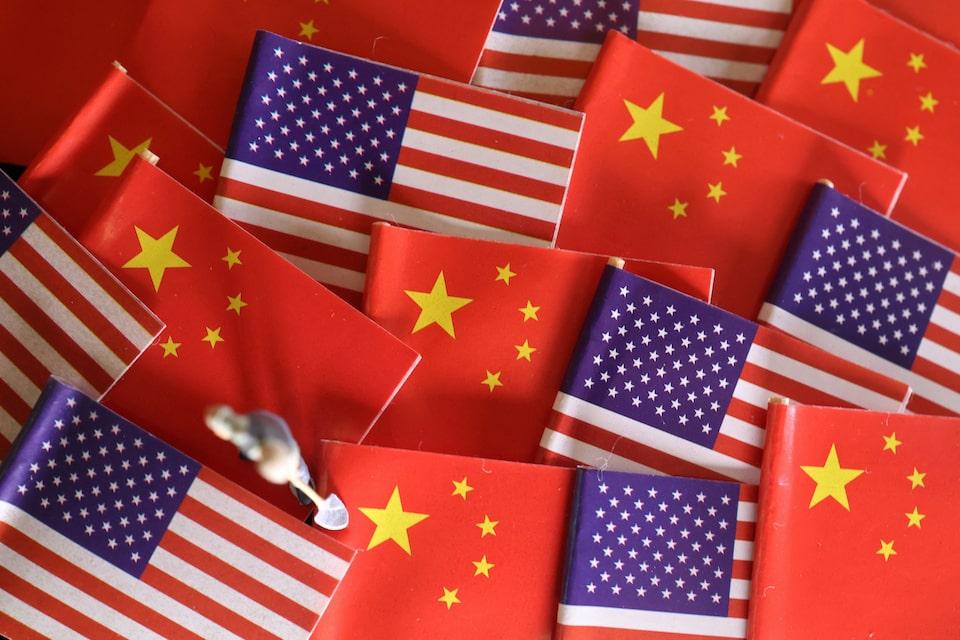
NEW YORK, Oct 14 (Reuters) - Bitcoin and ether tumbled on Tuesday as U.S.-China tension ramped up, wiping out a rally the day before that was fueled by President Donald Trump's conciliatory trade remarks. The U.S. and China on Tuesday began charging additional port fees on ocean shipping firms that move everything from holiday toys to crude oil, making the high seas a key front in the trade war between the world's two largest economies. Sign up here. In afternoon trading, bitcoin fell to as low as $110,023.78 and was last down 2.3% at $113,129. The world's largest cryptocurrency hit a record high above $126,000 on October 6. Ether, the second-biggest digital currency, slid to a trough of $3,900.80 and was last down 3.7% at $4,128.47. Last Friday, it dropped 12% from the day's high to a low of $3,436.29 . Altcoins, a term for all cryptocurrencies other than market-leader bitcoin, bore the brunt of the move, with many falling 80% on some exchanges, analysts said. Exchanges amplified Friday's selloff by automatically forcing some leveraged investors to close their positions after their collateral fell below certain thresholds, analysts said. "As long as China's relationship with the U.S. is shaky and stocks too concentrated in tech, crypto will be struggling as it tends to enjoy good times when other established assets are holding up well," said Juan Perez, director of trading at Monex USA in Washington. "But when the fundamentals are not great, crypto struggles to find a base for its value whether it's bitcoin or ether." Tuesday's price action came days after the crypto market experienced the largest liquidations in history, with more than $19 billion wiped out across leveraged positions late on Friday. The crash came after Trump said he would impose 100% tariffs on Chinese imports, in response to China announcing a major expansion of its rare earths export controls. https://www.reuters.com/world/china/bitcoin-ether-drop-us-china-tensions-flare-up-erasing-mondays-gains-2025-10-14/

2025-10-14 21:09
BRUSSELS, Oct 14 (Reuters) - Abu Dhabi state oil firm ADNOC is set to secure EU approval for its 14.7-billion-euro ($17 billion) bid for German chemicals company Covestro, with EU regulators likely to seek tweaks to remedies provided earlier this month, sources with direct knowledge of the matter said. The European Commission is examining the deal, ADNOC's biggest acquisition yet and one of the largest foreign takeovers of an EU company by a Gulf state, over concerns that ADNOC may be using state subsidies to acquire the chemicals company. Sign up here. The Commission declined to comment. Covestro shares gained 2.4% in late trade after the Reuters story was published, versus a slight dip in the STOXX Europe 600 chemicals index . The EU regulator sought feedback from rivals and third parties last week after ADNOC offered to change its articles of association to remove EU concerns about the unlimited state guarantee. It also pledged to retain Covestro's intellectual property in Europe. The Commission is expected to demand some minor changes to the remedies before clearing the deal, the sources said. Such demands are typical after feedback from third parties. ADNOC reiterated previous comments about offering a package of robust and proportionate remedies to the Commission and that it was confident this would lead to timely clearance of the deal. Separately, the Commission is expected to resume its investigation of the deal shortly after temporarily halting the process last month while waiting for ADNOC to provide requested information. ADNOC has since responded to all the requests for information, said another source. https://www.reuters.com/business/energy/adnoc-set-win-17-billion-covestro-deal-with-remedy-tweaks-sources-say-2025-10-14/

2025-10-14 21:07
NEW YORK, Oct 14 (Reuters) - Making sense of the forces driving global markets By Alden Bentley, Editor in Charge, Americas Finance and Markets Sign up here. Jamie McGeever is enjoying some well-deserved time off, but the Reuters markets team will still keep you up to date on what's happening in markets. U.S. central bank chief Jerome Powell steadied the market, which has been whipsawed in recent sessions by a flare-up in U.S.-China trade tensions. I'd love to hear from you, so please reach out to me with comments at [email protected] , opens new tab Today's Key Reads Fed's Powell says economy may be on firmer footing, but job market weak US, China roll out tit-for-tat port fees, threatening more turmoil at sea US banking giants buoyed by dealmaking, but warn of asset price bubbles Wall Street's fear gauge climbs as US-China trade fears rise Long Treasury yields to stay elevated as inflation, debt pressures blunt Fed easing: Reuters poll Today's Key Market Moves STOCKS: The S&P 500 (.SPX) , opens new tab and Dow (.DJI) , opens new tab shook off early losses, steadying on the back of comments by Federal Reserve Chair Jerome Powell and strong earnings from JPMorgan Chase (JPM.N) , opens new tab, Goldman Sachs (GS.N) , opens new tab, Citigroup (C.N) , opens new tab and Wells Fargo (WFC.N) , opens new tab. The S&P closed slightly lower, but the Dow (.DJI) , opens new tab held gains while the Nasdaq (.IXIC) , opens new tab remained on the ropes all day amid a pullback in tech shares. SHARES/SECTORS: Wells Fargo and Citi were up sharply while JPMorgan and Goldman shares were lower. Financials are the top-performing S&P 500 sector on the day, followed closely by Industrials, led by Caterpillar (CAT.N) , opens new tab after JPMorgan raised its price target. Market cap leader Nvidia (NVDA.O) , opens new tab was down sharply and Information Technology was the only losing sector. FX: The U.S. dollar eased. The safe-haven Swiss franc and Japanese yen gained following renewed signs of strain in U.S.-China trade relations, while the euro was supported after the French government proposed to suspend landmark pension reform. BONDS: U.S. Treasury yields declined as concerns about trade tensions between China and the U.S. dented risk appetite, while Powell's comments suggested the Fed remained on course to cut rates. COMMODITIES: Oil prices tumbled after the International Energy Agency warned of a huge supply glut in 2026. Gold prices set a new record high on rising expectations of a U.S. Federal Reserve rate cut this month and safe-haven demand on trade tensions between the world's two largest economies. CRYPTO: Bitcoin fell as low as $110,023.78 and was last down 1.9%. The world's largest cryptocurrency hit a record high above $126,000 on October 6. Today's Key Talking Points After major U.S. indexes fell again overnight, bulls recaptured control following comments by Federal Reserve Chair Jerome Powell that reassured investors that even without the latest government data, indications were the economy remained on a firm trajectory, while labor market conditions were not a deal breaker for further easing. He also reduced concerns about tight financial conditions by holding out the prospect of ending the Fed's balance sheet run-off. At the same time, solid results from some of the nation's largest banks set up earnings season on a positive note. The Cboe Volatility Index (.VIX) , opens new tab jumped to its highest in nearly five months before paring gains, reflecting the whipsaw stock market action since Friday on renewed concerns over a U.S.-China trade conflict. For the moment tariffs seem to have reclaimed top position as the market influence from Artificial Intelligence. AI excitement helped lift the S&P 500 to record highs last week and the benchmark is only about 1% away. Wall Street started the session on the back foot after Washington and Beijing moved to slap tit-for-tat additional port fees on ocean shipping firms. The previous two sessions saw a bungee-like drop and rebound after U.S. President Donald Trump threatened, then seemed to downplay, punishing China over rare earth export controls with 100% tariffs on Chinese goods. Graphics What could move markets tomorrow? * Bank of America, Morgan Stanley, United Airlines report earnings * Numerous Fed officials speak, including recent Trump appointment to the Board of Governors Stephen Miran participating at a CNBC forum in Washington DC Opinions expressed are those of the author. They do not reflect the views of Reuters News, which, under the Trust Principles, is committed to integrity, independence, and freedom from bias. Trading Day is also sent by email every weekday morning. Think your friend or colleague should know about us? Forward this newsletter to them. They can also sign up here. https://www.reuters.com/world/china/global-markets-trading-day-2025-10-14/

2025-10-14 20:28
Wells Fargo advances on Q3 profit beat Citigroup profit climbs on record revenue Industrial stocks lift Dow S&P 500 -0.16%, Nasdaq -0.76%, Dow +0.44% Oct 14 (Reuters) - Wall Street ended mixed on Tuesday as investors digested mostly positive quarterly results from big U.S. banks, comments from Federal Reserve Chair Jerome Powell and an ongoing U.S.-China trade war. The S&P 500 turned lower after U.S. President Donald Trump said Washington was considering t, including in relation to cooking oil. Sign up here. A slew of major lenders reported solid results on strong performance in the investment banking segment, helping the S&P 500 banking index (.SPXBK) , opens new tab rally. Wells Fargo (WFC.N) , opens new tab closed 7.15% higher, its biggest one-day percentage gain since November 2024, and Citigroup (C.N) , opens new tab jumped almost 4% after both lenders beat estimates for third-quarter profit. JPMorgan Chase (JPM.N) , opens new tab raised its full-year forecast for net interest income and Goldman Sachs (GS.N) , opens new tab beat Wall Street expectations for quarterly profit. However, shares of both banks dipped about 2%. BlackRock's (BLK.N) , opens new tab assets under management hit a record $13.46 trillion, lifting its shares over 3%. Adding to concerns about the China-U.S. trade war, the two countries began charging additional port fees on ocean shipping firms that move everything from holiday toys to crude oil. Global equities were shaken on Friday after Trump threatened 100% tariffs on Chinese goods after Beijing imposed controls on the export of rare earth minerals, although he softened his tone over the weekend. "The market is really struggling with where this shakes out," said Ross Mayfield, an investment strategist at Baird Private Wealth Management. "If the (Trump) administration feels like ramping up these tensions again, the market looks pretty expensive right now for that sort of fight, especially if 100% tariffs and other measures are back on the board." The U.S. labor market remained mired in its low-hiring, low-firing doldrums through September, though the economy overall "may be on a somewhat firmer trajectory than expected," Powell said in remarks prepared for delivery at a National Association for Business Economics conference. The S&P 500 declined 0.16% to end the session at 6,644.31 points. The Nasdaq declined 0.76% to 22,521.70 points, while the Dow Jones Industrial Average rose 0.44% to 46,270.46 points. Ten of the 11 S&P 500 sector indexes rose, led by consumer staples (.SPLRCS) , opens new tab, up 1.72%, followed by a 1.17% gain in industrials (.SPLRCI) , opens new tab. Volume on U.S. exchanges was 20.1 billion shares, compared with an average of 20.2 billion shares over the previous 20 sessions. Walmart (WMT.N) , opens new tab rose 5% after the retailer said it was partnering with OpenAI to enable customers and Sam's Club members to shop directly within ChatGPT. Gains in industrial stocks supported the Dow. Caterpillar (CAT.N) , opens new tab jumped 4.5% after JP Morgan raised its price target on the stock. The International Monetary Fund marginally Advancing issues outnumbered falling ones within the S&P 500 (.AD.SPX) , opens new tab by a 3.4-to-one ratio. The S&P 500 posted 23 new highs and 10 new lows; the Nasdaq recorded 123 new highs and 93 new lows. https://www.reuters.com/world/china/wall-street-futures-dip-us-china-tensions-weigh-2025-10-14/
2025-10-14 20:03
U.S. cooking oil imports from China dropped 65% this year Trump's comments have minimal impact, traders say China shifts soybean purchases to Brazil, Argentina WASHINGTON/BEIJING, Oct 15 (Reuters) - U.S. President Donald Trump said he was considering terminating some trade ties with China, singling out cooking oil, which traders and analysts said would have little impact as such shipments had already plummeted from China over the past year. "I believe that China purposefully not buying our Soybeans, and causing difficulty for our Soybean Farmers, is an Economically Hostile Act. We are considering terminating business with China having to do with Cooking Oil, and other elements of Trade, as retribution," Trump wrote on social media on Tuesday. Sign up here. "As an example, we can easily produce Cooking Oil ourselves, we don't need to purchase it from China." The U.S. was China's top market for used cooking oil (UCO), importing a record 1.27 million metric tons worth $1.1 billion in 2024. But after China cut tax rebates late last year and the U.S. imposed tariffs on Chinese goods this year, imports plunged 65% in January-August to 290,690 tons, or $286.7 million. As such, Trump's comments would have "minimal" impact on the commodity, two UCO traders in China said on condition of anonymity as they were not authorized to speak to media. "Domestic producers are now mainly taking orders for Europe and are no longer considering the U.S. market," said one of the traders. SHORT HISTORY AS EXPORT MARKET FOR CHINESE COOKING OIL The U.S. does not have a long history of being a top export market for Chinese used cooking oil, a product that can be converted into renewable diesel and which has helped the U.S. become one of China's top ten export destinations only as recently as 2022. By contrast, the Netherlands, Singapore, Spain and Malaysia have consistently processed hundreds of millions dollars' worth of Chinese UCO over the past decade, Chinese customs data shows. Year-to-date shipments to this year's top buyer Singapore are up 15% from last year at $537 million, while exports to the Netherlands - whose figures are distorted by the Rotterdam megaport - have jumped 131.5% over the same period. Chinese used cooking oil exports to the U.S. had surged in 2023, driven by federal and state incentives supporting biofuels and a rush to build new renewable diesel plants. TRUMP'S ANNOUNCEMENT 'NOT ESCALATORY,' ANALYSTS SAY Analysts said Trump's announcement was not escalatory following a week of fresh tariff threats and export controls. Used cooking oil trade is small compared with that of soybeans. Last year, China imported 22.13 million tons of U.S. soybeans worth $12 billion. But restricting UCO imports allows Trump to show the U.S. agriculture industry he is still being tough on China, some analysts said. "Used cooking oil is a niche trade, but it shows how the Trump Administration is standing up for American farmers, just as China shifts its agricultural purchases towards other suppliers," said senior analyst Chim Lee at the Economist Intelligence Unit. China is the world's largest buyer of soybeans. In recent months it has slashed purchases of U.S. soybeans in favor of Brazilian and Argentine produce. Trump has called the shift a negotiation tactic. He said this month he hoped to discuss soybeans with Chinese counterpart Xi Jinping while also saying the U.S. may halt a large share of imports from China. "So from 100% tariffs on all Chinese trade (in response to the rare earth/critical mineral export controls) to targeted sanctions on cooking oil?" Brad Setser, a former U.S. trade official now with the Council on Foreign Relations wrote on X. "Definitely not escalatory." https://www.reuters.com/world/us/trump-mulls-ending-some-trade-ties-with-china-including-relation-cooking-oil-2025-10-14/