2025-10-14 12:22
PARIS, Oct 14 (Reuters) - French luxury group LVMH (LVMH.PA) , opens new tab on Tuesday said it named Maria Grazia Chiuri, the former Dior women's designer, the new creative director of Italian fashion label Fendi with a first collection to be presented in February. Chiuri this May showed her last Dior runway show in Rome, her home town. Jonathan Anderson took over the creative leadership of the French house in June. Sign up here. Her move is the latest in a string of high-profile designer appointments, with new creative directors also appointed at brands including Gucci, Balenciaga and Chanel. The Italian, 61, will take over the charge from Silvia Venturini Fendi, a granddaughter of the house's founders. At Dior, Chiuri often added feminist messages to her fashion shows. https://www.reuters.com/business/retail-consumer/lvmh-names-maria-grazia-chiuri-chief-designer-fendi-2025-10-14/

2025-10-14 12:20
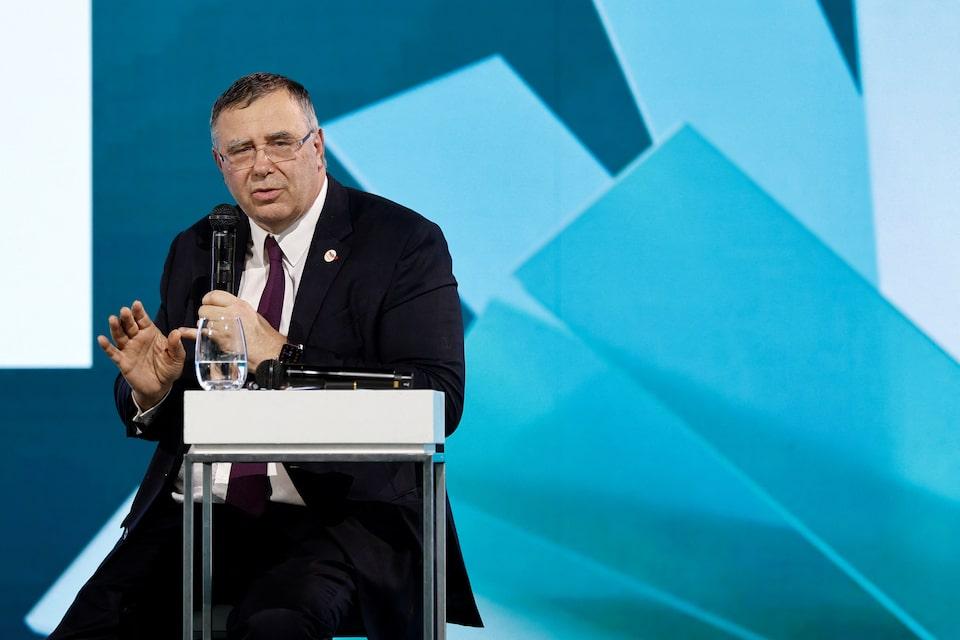
Tariffs raise costs for energy companies, CEOs say TotalEnergies, Baker Hughes cite financial impacts from US trade policies Exxon says it focuses on long-term fundamentals, not political cycles LONDON, Oct 14 (Reuters) - The executives of two oil companies warned this week that tariffs resulting from the U.S. administration's trade policies were driving up costs across the energy production chain and affecting investment decisions. TotalEnergies (TTEF.PA) , opens new tab CEO Patrick Pouyanne told the Energy Intelligence Forum in London on Tuesday that tariffs on steel were pushing up costs for liquefied natural gas (LNG) projects. Sign up here. In June, Trump an executive proclamation hiking tariffs on steel and aluminium imports to 50%. Lorenzo Simonelli, chief executive of energy services company Baker Hughes (BKR.O) , opens new tab, told the same conference on Monday that tariffs would add between $100 million and $200 million to the company's costs this year, though probably closer to the lower end of that range. “It is an incremental pressure point, but it’s something that we have to manage through,” he said. However, Darren Woods, chief executive of U.S. major ExxonMobil (XOM.N) , opens new tab downplayed the impact of policies pursued by any single administration, saying the group's long-term investments were not affected by one political cycle. Instead, he flagged Europe's environmental regulations as a factor driving away investment. "The challenge in Europe is that they try to micromanage and instruct the industry on how to achieve (decarbonisation)," Woods told the conference on Monday. "Frankly, they don't have the expertise." https://www.reuters.com/sustainability/sustainable-finance-reporting/oil-executives-flag-increased-costs-trumps-tariffs-2025-10-14/
2025-10-14 11:48
Oct 14 (Reuters) - Titan Mining (TI.TO) , opens new tab said on Tuesday it will begin production of graphite concentrate at its Empire State Mines in New York, days after China expanded export limits on rare earth minerals. The Canadian miner is targeting ramp-up to a 40,000-tonne-per-year commercial graphite facility, which the company said would be capable of supplying about half of current U.S. natural graphite demand. Sign up here. "China's decision to tighten graphite exports underscores the importance of having a secure domestic supply of natural graphite," said Titan CEO Rita Adiani. China already tightly controlled its exports of rare earths, but last week added five new elements, bringing the total that are subject to restrictions to 12. It also limited the export of dozens of pieces of equipment and material used to mine and refine rare earths, processes in which it is the world leader. In March, U.S. President Donald Trump invoked emergency powers to accelerate domestic production of critical minerals such as aluminum, cobalt, lithium, graphite, neodymium and dysprosium. Titan said the facility will produce natural flake graphite in micronized and high-purity forms sourced from the company's Kilbourne deposit. https://www.reuters.com/business/titan-mining-produce-graphite-concentrate-new-york-facility-2025-10-14/

2025-10-14 11:39
LONDON, Oct 14 (Reuters) - Commodity trader Radiant World has appointed Liam Brown and Louis McCauley as part of a hiring spree in Europe aimed at expanding its industrial and precious metals trading business after years of trading iron ore. Brown previously worked at Mercuria, Goldman Sachs and hedge fund Millenium and is trading industrial metals at Radiant, while McCauley was at Citi and Credit Agricole and is trading precious metals. Sign up here. Neither Brown nor McCauley responded to a request for comment. Radiant in response to a request for comment confirmed Brown and McCauley had recently joined the company and that both were based in London. It declined to say what they would be doing or where they had previously worked. Since Radiant hired former IXM co-head of metals trading, Adhitya Sethaputra, last June, the company has made seven hires in Europe, including one metals trader and one freight trader. Radiant also hired a metal trader in the U.S. and another in Singapore. Radiant declined to give detail, but said "the company has made several hires in Europe, Singapore and the United States". Sethaputra is based in Switzerland. Commodity trader IXM is owned by Chinese miner CMOC Group (603993.SS) , opens new tab. UK-based Radiant is one of the world’s largest physical traders of iron ore, according to market sources. Headquartered in the UK, Radiant is owned by Indian-born Pinkesh Nahar and has offices in Singapore, London, Geneva, Dubai, Shanghai and Stamford. (This story has been corrected to fix the name to Pinkesh Nahar in paragraph 9) https://www.reuters.com/world/china/radiant-world-expands-beyond-iron-ore-trading-into-metals-2025-10-14/

2025-10-14 11:33
FTSE 100 down 0.44%, FTSE 250 down 0.6% BP flags weaker oil trading while upstream output grows Homebuilders index climbs on government's planning reforms Bellway gains on higher FY results, launches share buyback Oct 14 (Reuters) - London stocks fell on Tuesday, led by declines in miners, as investors fretted over the economic fallout from mounting U.S.-China trade tensions. The blue-chip FTSE 100 (.FTSE) , opens new tab was down 0.44%, as of 1055 GMT, and domestically focused FTSE 250 (.FTMC) , opens new tab fell 0.6%. Sign up here. Both indexes rose on Monday after U.S. President Trump struck a more conciliatory tone, posting that "it will all be fine" and that the U.S. had no intention to "hurt" China. However, both countries on Tuesday began charging additional tit-for-tat port fees on ocean shipping firms that move everything from holiday toys to crude oil. Industrial metal miners (.FTNMX551020) , opens new tab shed 2.1%, tracking weaker copper prices. Anglo American (AAL.L) , opens new tab, Glencore (GLEN.L) , opens new tab and Rio Tinto (RIO.L) , opens new tab were among the biggest losers on the FTSE 100, falling between 1.8% and 3.2%. Energy heavyweight BP (BP.L) , opens new tab dropped nearly 2% after flagging weak oil trading performance. Aerospace & defence sub-index (.FTNMX502010) , opens new tab fell 1.9%, heading for the fourth consecutive session of losses. Data showed on Tuesday, growth in average British earnings slowed slightly in the three months to August, suggesting the Bank of England may be able to continue cutting interest rates, albeit very gradually. BoE officials held interest rates at 4% last month and continue to monitor inflationary pressures, including wage growth. Meanwhile, investors are fully pricing in the next rate cut only by April 2026, according to LSEG data. The British homebuilders index (.FTNMX402020) , opens new tab gained 1.8% after the government unveiled planning reforms aimed at speeding up housing construction. Bellway (BWY.L) , opens new tab rose 5.9% after it raised its dividend and announced a 150-million-pound ($199.20 million) share buyback after beating annual pretax profit expectations. Peers Persimmon (PSN.L) , opens new tab and Berkeley (BKGH.L) , opens new tab rose 2% and 1.9, respectively. EasyJet (EZJ.L) , opens new tab climbed 4.7% after media reports of the budget airliner's possible acquisition by global shipping company Mediterranean Shipping. Mitie (MTO.L) , opens new tab gained the most on the FTSE 250, up 8.6%, after the outsourcer resumed buy-back with share repurchase programme and hiking profit forecasts. https://www.reuters.com/world/uk/miners-drag-london-stocks-lower-us-china-trade-tensions-sap-sentiment-2025-10-14/
2025-10-14 11:05
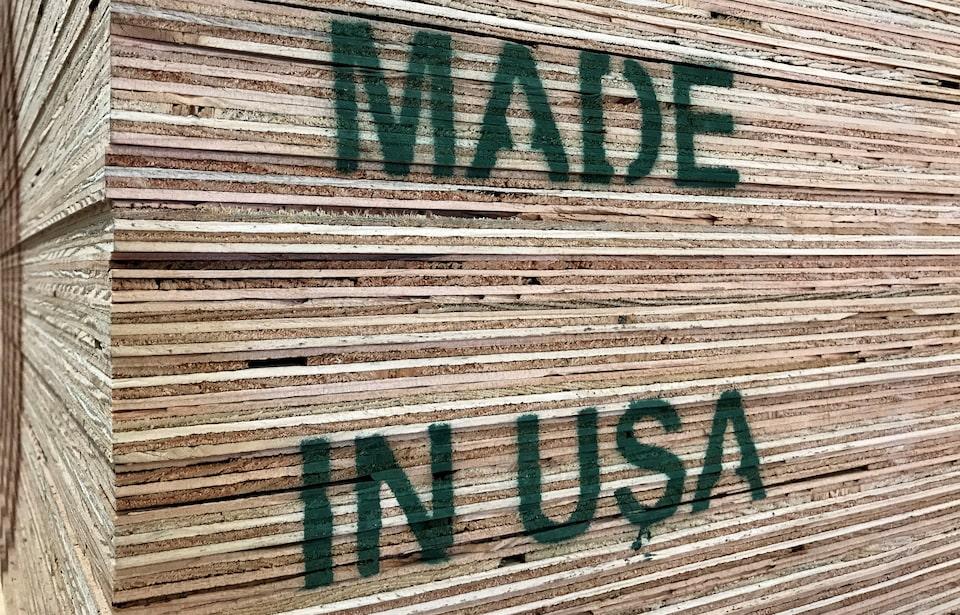
Oct 14 (Reuters) - Rayonier (RYN.N) , opens new tab and PotlatchDeltic (PCH.O) , opens new tab said on Tuesday they will merge in an all-stock deal valued at about $8.2 billion, including debt, to create one of North America's largest publicly traded timber and wood products companies. The merger comes as lumber markets remain volatile, whipsawed by shifting tariffs and a weak construction outlook. Sign up here. The combined company will own about 4.2 million acres of timberland across 11 U.S. states and operate seven wood manufacturing plants, providing it scale in a year when prices have swung sharply due to a cooling housing sector. President Donald Trump's new tariff on imported softwood lumber and production cuts at North American sawmills have lifted prices recently. The new company, which will be renamed after the merger completes, will operate seven wood products manufacturing facilities, including six lumber mills with total capacity of 1.2 billion board feet and one industrial plywood mill. Under the deal, PotlatchDeltic shareholders will receive 1.7339 common shares of Rayonier, representing an implied price of $44.11 per PotlatchDeltic share. This values PotlatchDeltic at $3.41 billion, according to Reuters calculation. Shares of Rayonier were down 1.2%, while those of PotlatchDeltic jumped 5% in pre-market trading. The per share value, also represents a premium of 8.25% to PotlatchDeltic's closing stock price on October 10, the last business day prior to execution of the deal, the companies said. Rayonier shareholders will own about 54% of the combined company and PotlatchDeltic holders the remaining 46%, upon closing of the deal expected in late first quarter or early second quarter of 2026. Rayonier Chief Executive Mark McHugh will lead the new company, while PotlatchDeltic CEO Eric Cremers will serve as executive chair for two years. The new firm's headquarters will be in Atlanta, with regional offices in Spokane, Washington, and Wildlight, Florida. https://www.reuters.com/legal/transactional/rayonier-potlatchdeltic-form-timber-products-giant-82-billion-merger-2025-10-14/