2025-10-14 05:43
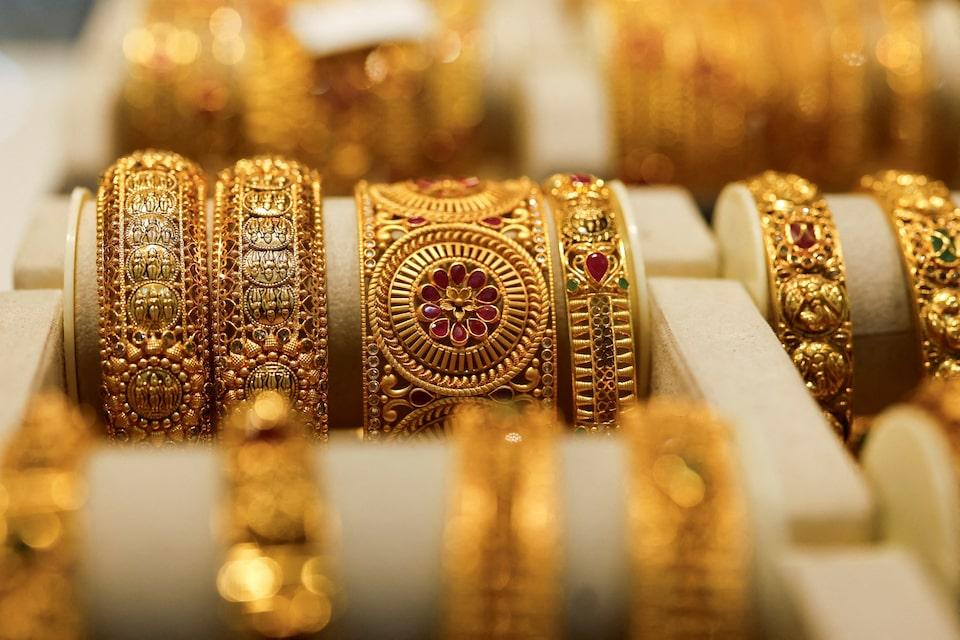
Gold hits record high of $4,179.48/oz Trump on track to meet Xi in South Korea, Bessent says Silver hits record high of $53.60/oz Oct 14 (Reuters) - Gold notched a fresh record high above the $4,100 level on Tuesday, lifted by expectations of a rate cut this month by the U.S. Federal Reserve and an investor flight to safety after a flare-up in trade tensions between Washington and Beijing. Spot gold rose 0.9% to $4,145.85 per ounce as of 1:50 p.m. ET (1750 GMT), after hitting a record high of $4,179.48 earlier in the session. Sign up here. U.S. gold futures for December delivery gained 0.7% to settle at $4,163.40. The metal has surged around 57% this year, breaking the $4,100 barrier for the first time on Monday. Its rally has been driven by multiple factors, including geopolitical uncertainties, expectations of U.S. interest rate cuts, strong central bank buying and robust ETF inflows. Analysts at Bank of America and Societe Generale now see gold reaching $5,000/oz in 2026. "The uptick in U.S.-China trade tensions, the ongoing government shutdown, and expectations of further Fed easing are all supporting gold," said Peter Grant, vice president and senior metals strategist at Zaner Metals. U.S. President Donald Trump's threats to impose 100% tariffs on Chinese goods, a rollout of tit-for-tat port fees by the two biggest economies and a broader macro trend of de-dollarization could push gold to $5,000/oz by mid-next year, Grant added. Trump is set to meet Chinese leader Xi Jinping in South Korea later this month, Treasury Secretary Scott Bessent said on Monday. Non-yielding gold tends to do well in low-interest-rate environments, and markets expect a 25-basis-point rate cut at the Fed meeting this month, followed by a similar reduction in December. "Based on the data that we do have, it is fair to say that the outlook for employment and inflation does not appear to have changed much since our September meeting four weeks ago," Fed Chair Jerome Powell said during his speech at the National Association for Business Economics annual meeting. Spot silver , buoyed by the same factors driving gold and tightness in the spot market, hit a record high of $53.60/oz before retreating 0.9% to $51.86. Platinum eased 0.3% to $1,640.76, and palladium rose 3.2% to $1,521.50. https://www.reuters.com/world/india/gold-hits-record-high-us-rate-cut-bets-silver-follows-suit-2025-10-14/
2025-10-14 05:41
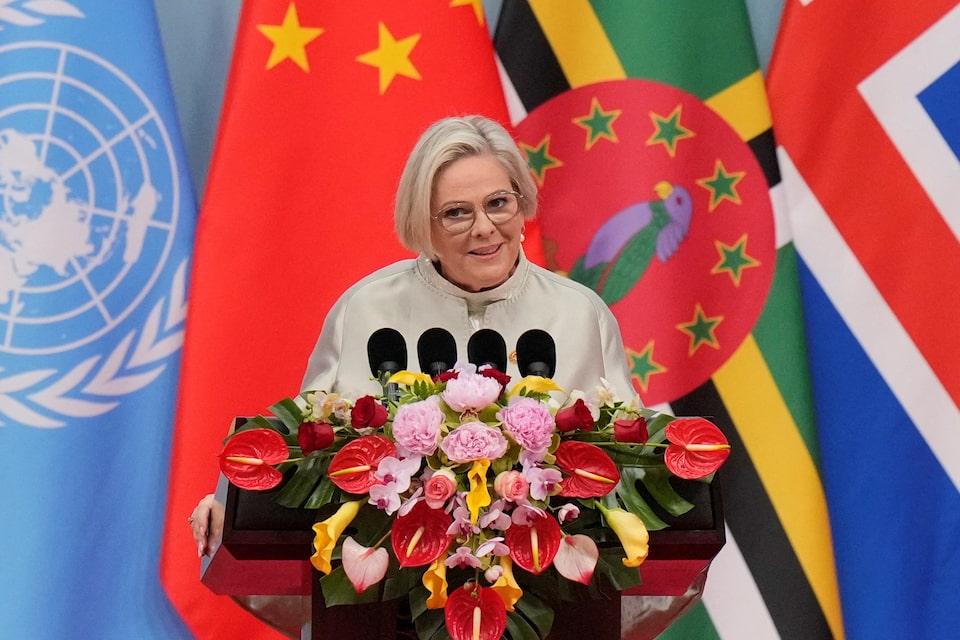
BEIJING, Oct 14 (Reuters) - China and Iceland will enhance intergovernmental and industry-level cooperation on geothermal and green energy, according to a joint statement released by Chinese state media on Tuesday. Both sides will work to reduce greenhouse gas emissions, promote energy transformation, and create green jobs and business opportunities, according to the statement issued by China's national broadcaster CCTV. Sign up here. The document was released following a meeting between Chinese President Xi Jinping and Iceland's President Halla Tomasdottir in Beijing. https://www.reuters.com/sustainability/climate-energy/china-iceland-boost-geothermal-green-energy-cooperation-joint-statement-says-2025-10-14/
2025-10-14 05:11
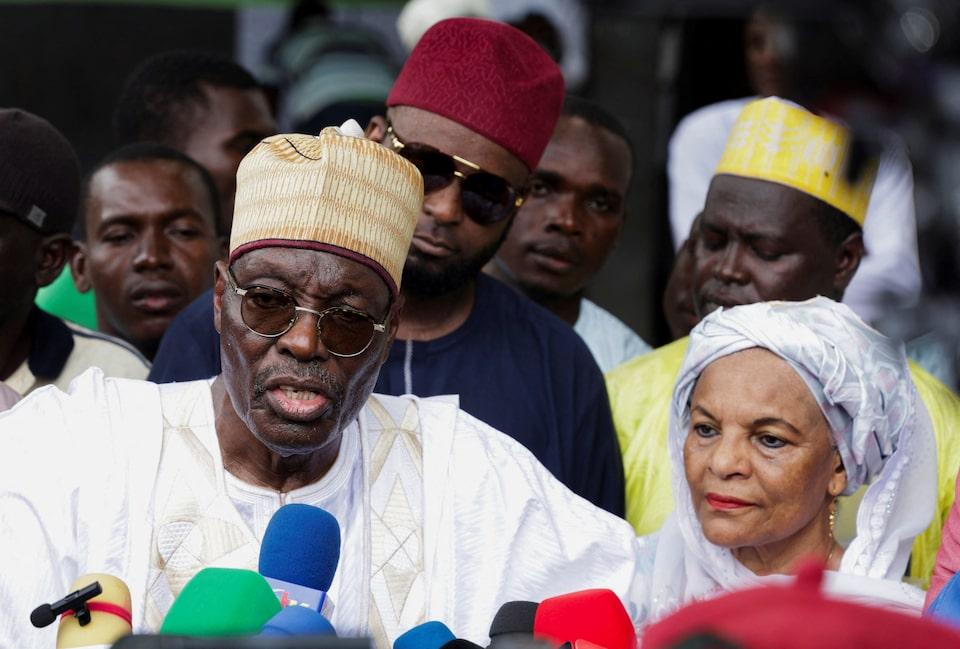
Biya, 92, seeks eighth term in office Tchiroma says 'our victory is clear' Official results expected by October 26 GAROUA, Oct 14 (Reuters) - Cameroon opposition candidate Issa Tchiroma declared victory late on Monday in the country's October 12 presidential election, urging President Paul Biya to accept defeat and "honour the truth of the ballot box". "Our victory is clear. It must be respected," Tchiroma said in a speech on his Facebook page from his hometown of Garoua in the north of the Central African state. "The people have chosen. And this choice must be respected." Sign up here. Tchiroma, 76, a former government spokesperson and employment minister, broke ranks with Biya earlier this year and mounted a campaign that drew large crowds and endorsements from a coalition of opposition parties and civic groups. Biya, 92, the world's oldest serving head of state, is seeking an eighth term after 43 years in power. Analysts had expected his control over state institutions and a fragmented opposition to give him an edge in the election, despite growing public discontent over economic stagnation and insecurity. Tchiroma praised voters for defying intimidation and staying at polling stations late into the night to protect their ballots. "I also thank candidates who have already sent me their congratulations and recognised the will of the people," Tchiroma said. "We have placed the regime before its responsibilities: either it shows greatness by accepting the truth of the ballot box, or it chooses to plunge the country into turmoil that will leave an indelible scar in the heart of our nation," he warned The government has not officially responded to Tchiroma's declaration. However, Minister of Territorial Administration Paul Atanga Nji warned over the weekend that any unilateral publication of results would be considered "high treason," adding that only the Constitutional Council has the authority to announce the winner. Cameroon's electoral law allows results to be published and posted at polling stations, but final tallies must be validated by the Constitutional Council, which has until October 26 to announce the outcome. Tchiroma said he would soon release a region-by-region breakdown of vote tallies compiled from publicly posted results. "This victory is not that of one man, nor of one party. It is the victory of a people," he said. He also called on the military, security forces and government administrators to remain loyal to the "republic, not the regime". Cameroon's single-round electoral system awards the presidency to the candidate with the most votes. More than 8 million people were registered to vote in the election. https://www.reuters.com/world/africa/cameroon-opposition-candidate-tchiroma-claims-victory-presidential-poll-urges-2025-10-14/
2025-10-14 05:10
MUMBAI, Oct 14 (Reuters) - The rupee was anchored near its record low for much of the session on Tuesday as risk appetite waned amid renewed U.S.-China trade tensions, though likely central bank intervention kept the local unit from dipping past its all-time low. The rupee closed at 88.7975 against the U.S. dollar, down 0.14% on day and within touching distance of its record low of 88.80. Sign up here. Traders cited persistent dollar sales by state-run banks, most likely on behalf of the Reserve Bank of India, mirroring intervention patterns seen in the last couple of weeks. A large private bank was also spotted offering dollars near the 88.80 mark, while bids were dominated by foreign banks, an FX trader at a Mumbai-based bank said. Asian currencies were mostly weaker as well, with the Korean won falling and Thai baht leading declines with a 0.6% and 0.9% fall, respectively. Global equities were in the red as well, with India's benchmark Nifty 50 (.NSEI) , opens new tab down 0.3% but faring better than the MSCI's gauge of Asian shares outside of Japan (.MIAPJ0000PUS) , opens new tab, which was down 1%. Safe-haven currencies, including the Japanese yen and Swiss-franc , nudged higher on Tuesday. Weak risk appetite globally added to the headwinds that the rupee is facing on account of steep U.S. tariffs, tighter immigration policies and a sharp rally in precious metals such as gold and silver. "We think India will eventually secure a lower tariff rate, which should benefit INR over three to six months but for now, the prevailing uncertainty may continue to dampen investor sentiment," analysts at ING said in a note. Their counterparts at HSBC also expect the rupee to recover once a breakthrough occurs in U.S.-India trade negotiations but limited visibility on that has prompted them to temper their year-end rupee forecast to 87.50, weaker than the 87 level pencilled in earlier. https://www.reuters.com/world/india/rupees-modest-recovery-us-trade-talks-contend-with-dollar-headwinds-2025-10-14/

2025-10-14 04:56
SoftBank gauging investor interest since mid-September, sources say Investors see 2 trillion yen as baseline valuation, sources say Investors' views vary on foreign expansion prospects, source says TOKYO/NEW YORK, Oct 14 (Reuters) - Investors expect the valuation of PayPay could exceed 3 trillion yen ($20 billion) as SoftBank (9984.T) , opens new tab prepares for an initial public offering of the Japanese payments app operator in the United States as early as December, according to two sources. SoftBank has been meeting with institutional investors since mid-September to discuss potential valuations in the IPO, the sources, who are familiar with the matter, said. Sign up here. Investors see 2 trillion yen as a baseline but expect the valuation could top 3 trillion yen, according to the sources. The potential valuation and the views of investors are being reported by Reuters for the first time. PayPay declined to comment. The sources declined to be named as the information is not public, and cautioned that deliberations are continuing and factors including valuation remain subject to market conditions. The deliberations come as the U.S. IPO market enjoyed its busiest quarter since the fourth quarter of 2021, with companies raising $24 billion through first-time share sales in the third quarter, according to Dealogic. The baseline valuation is based on expansion of PayPay's Japanese business but there is a range of views among investors about its prospects for growing its overseas footprint, which could support a higher valuation, one of the sources said. PayPay announced last month that users would be able to make payments abroad, beginning with South Korea, which is a popular foreign destination for Japanese travellers. "The key focus going forward will be to what extent overseas expansion can be realistically pictured as a growth story, given the lack of business foundations not only in the U.S. but also in Asia," said the source. PayPay has played a role in encouraging Japanese consumers to move away from a long-standing preference for cash by offering rebates on payments through its mobile app. It is the market leader in QR code payments and also offers services including banking and credit cards. Reuters reported in August SoftBank has selected investment banks for the potential IPO. Japan's cashless payments ratio exceeded 40% last year, compared to more than 80% in South Korea and China. The industry ministry aims to lift that further, as part of efforts to cut costs and address labour shortages. SoftBank's telecoms arm reported that operating profit at its financial segment, which includes PayPay, more than doubled to 18.1 billion yen in the April-June quarter. "Structural profit improvement is progressing, and future growth can be anticipated," said SBI Securities analyst Yukari Housui. PayPay is taking steps to bolster its cryptocurrency business. Last week PayPay said it has acquired a 40% stake in the Japanese business of Binance and plans to launch new crypto services. PayPay's ownership is split between a number of SoftBank entities: wireless carrier SoftBank Corp (9434.T) , opens new tab, the Vision Fund investment arm, and internet business LY Corp (4689.T) , opens new tab, which is a joint venture between SoftBank and Naver Corp (035420.KS) , opens new tab. Companies around the world are looking to list in the U.S. as they seek higher valuations. Around 20 Japanese companies have listed there in the last five years although in some cases they have underperformed and later delisted. Round One (4680.T) , opens new tab, an operator of amusement attractions, is considering overseas listings for two subsidiaries as it expands in the U.S. and looks to boost its brand recognition. ($1 = 153.0800 yen) https://www.reuters.com/business/finance/paypay-valuation-could-exceed-20-billion-planned-december-us-ipo-sources-say-2025-10-14/

2025-10-14 04:55
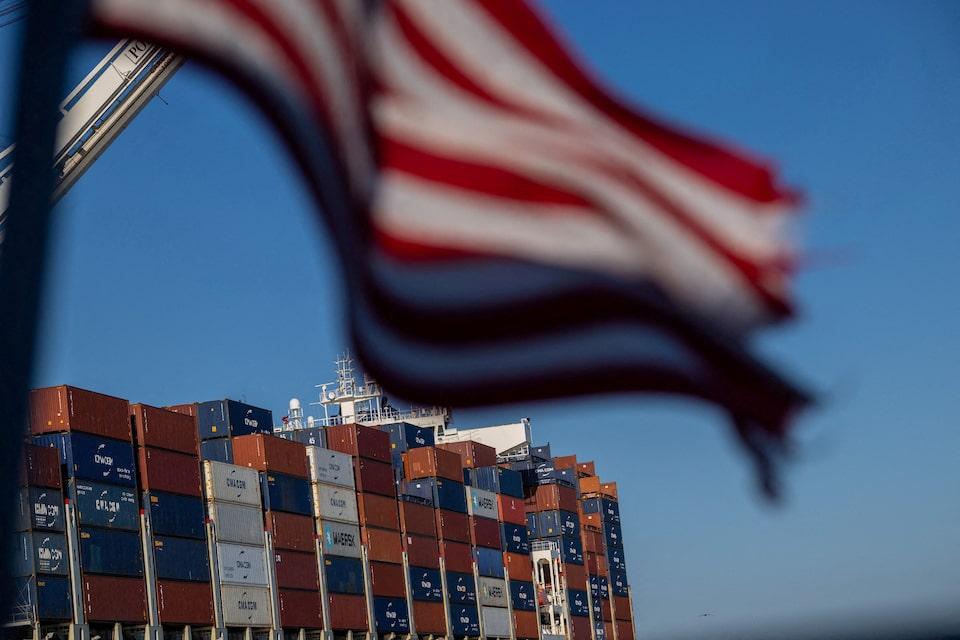
A look at the day ahead in European and global markets from Gregor Stuart Hunter: Container ports are the new economic battlegrounds. As negotiations between the U.S. and China intensify, the two nations will from today begin charging port fees on ocean shipping firms that move everything from toys to crude oil. Sign up here. S&P 500 futures erased earlier gains to fall as much as 0.4% after China's commerce ministry fired off another broadside, saying the U.S. cannot seek talks while also making threats. That came after President Donald Trump on Friday announced additional tariffs on Chinese goods from November 1. The trade worries snuffed out a rebound for stocks that began on Wall Street on Monday after U.S. Treasury Secretary Scott Bessent said Trump remains on track to meet Chinese leader Xi Jinping in South Korea in late October. A rally in Asia's tech sector briefly kept regional equities (.MIAPJ0000PUS) , opens new tab above water after OpenAI said it partnered with Broadcom (AVGO.O) , opens new tab to produce its first in-house artificial intelligence processors. That pushed Taiwan Semiconductor Manufacturing Company (2330.TW) , opens new tab shares to a record, while South Korea's Kospi (.KS11) , opens new tab gained 0.9% after Samsung Electronics (005930.KS) , opens new tab projected a 32% rise in third-quarter profit, beating estimates. China's No. 1 automaker BYD (002594.SZ) , opens new tab rose 1% after tipping Spain as its top candidate for a third car factory to serve the European market, sources told Reuters. The yen firmed a tad against the dollar after Japan's finance minister warned the country needs a new economic strategy that deals with inflation, rather than deflation, which was yesterday's villain. Gold gained 1.3% to $4,164.90 per ounce, showing little sign of pausing for breath as precious metals continue to set records. The same could not be said for digital gold, with bitcoin last down 1.8% at $113,719.84, while ether slipped 3% to $4,161.86. In early European trade, pan-region futures were last up 0.2%, German DAX futures rose 0.1% and FTSE futures were down 0.1%. Key developments that could influence markets on Tuesday: Economic data: Germany: CPI and HICP for September, ZEW Economic Sentiment and Current Conditions for October United Kingdom: Unemployment Claimant Count Change and HMRC Payrolls Change for September, ILO Unemployment Rate and Average Weekly Earnings for August Debt auctions Germany: 2-year government debt auction https://www.reuters.com/world/china/global-markets-view-europe-2025-10-14/