2025-10-14 03:45
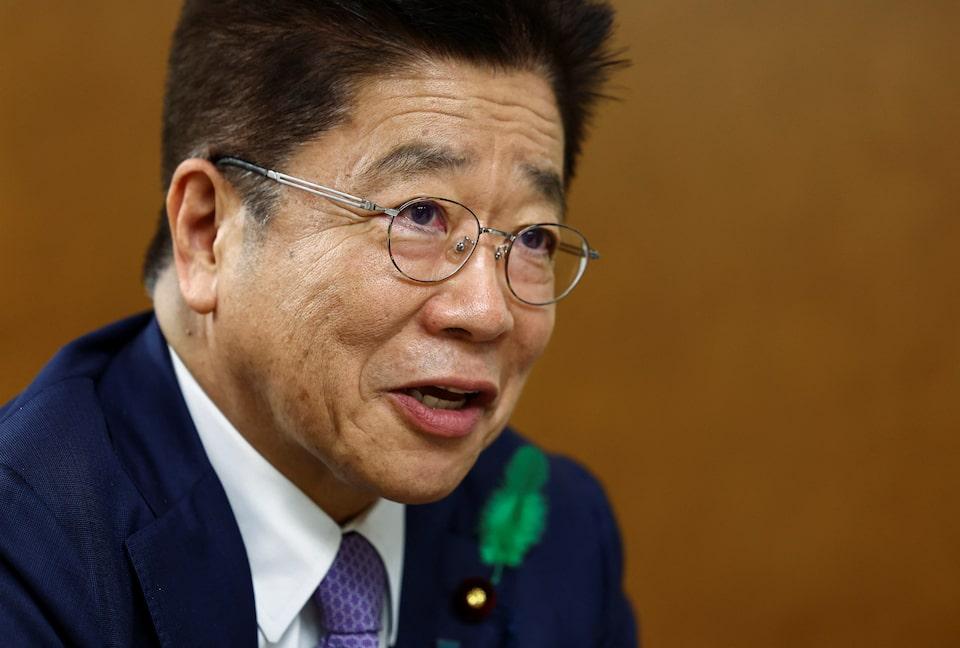
TOKYO, Oct 14 (Reuters) - Japan needs to come up with a new economic strategy that suits the current situation where inflation, instead of deflation, has become a concern unlike the times of "Abenomics" stimulus policies, Finance Minister Katsunobu Kato said on Tuesday. "It goes without saying that the situation has changed," Kato said at a regular press conference when asked about his views on the policies that former Prime Minister Shinzo Abe deployed in 2013. Sign up here. The moves were a mix of bold monetary easing, flexible fiscal policy and reform which helped the economy escape more than a decade of deflation but ran up the government's massive debt. "Inflation, rather than deflation, has become a challenge for us now. In light of this, I believe it is necessary to develop policies that are appropriate for the current circumstances," he said. Kato's comments come as the ruling Liberal Democratic Party's newly elected leader Sanae Takaichi, known for her staunch support of Abenomics, is widely expected to pursue reflationary policies. Takaichi's selection as the LDP's new leader last week dampened market expectations for a near-term interest rate hike, sending stocks higher and weakening the yen. Asked about the yen's weakness, Kato reiterated that the government will thoroughly monitor for excessive fluctuations and disorderly movements in the forex market. "We have been seeing rapid moves in the direction of a weaker yen since last week," Kato said. "It's important that exchange rates move in a stable manner, reflecting economic fundamentals," he added. https://www.reuters.com/world/asia-pacific/japan-finance-minister-calls-economic-strategies-that-fit-inflation-era-2025-10-14/
2025-10-14 00:59
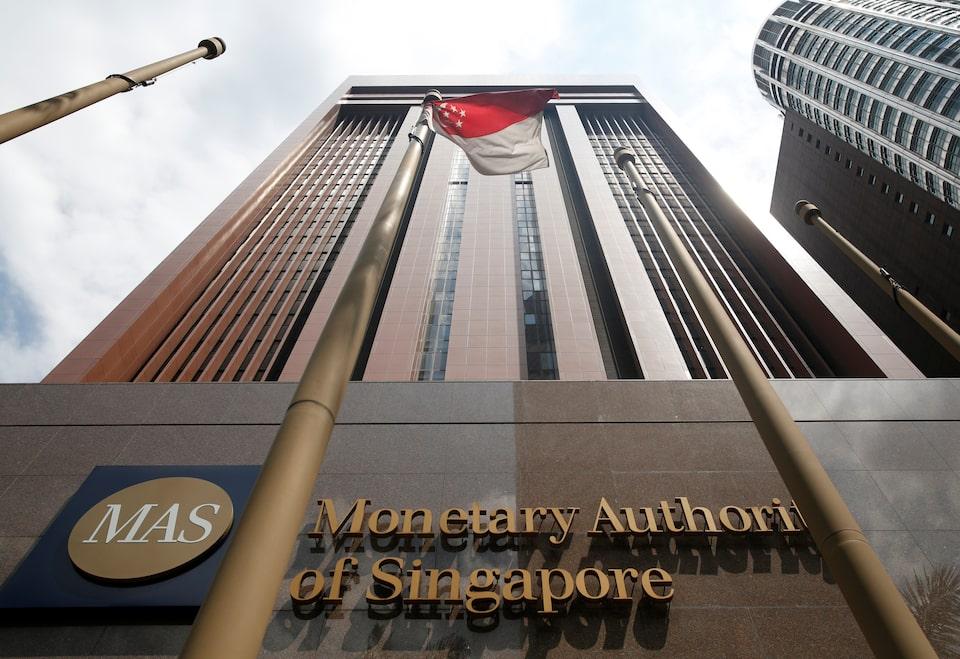
Singapore's growth stronger than expected: MAS Policy settings held as 10 of 14 analysts forecasted Q3 GDP 2.9% versus 1.9% in poll Economists predict GDP growth between 3% and 3.5% SINGAPORE, Oct 14 (Reuters) - Singapore's central bank kept its monetary policy settings unchanged on Tuesday, as expected, as growth in the city-state remained resilient despite challenges from U.S. tariffs. Ten of 14 analysts polled by Reuters ahead of the review expected the MAS to keep policy settings unchanged, while the other four expected an easing. Sign up here. The Monetary Authority of Singapore (MAS) said it will maintain the prevailing rate of appreciation of its exchange rate-based policy band. There would be no change to the width of the band or the level at which it is centred. "Singapore’s economic growth has turned out stronger than expected and the output gap will remain positive in 2025 and come in around 0% next year," the central bank said in a statement. OCBC economist Selena Ling said the headwinds from U.S. President Donald Trump's sweeping tariffs were not as bad as previously feared. "Tariff concerns, while lingering, have subsided slightly since April's 'liberation day'," Ling said. "Front loading has gone on longer, tariffs have come down from April levels, the U.S. economy has been a bit more resilient despite the slowdown." At its last review in July, the MAS held policy steady, after easing its reviews in April and January. The decision came as preliminary government data on Tuesday showed the economy doing better than expected, growing 2.9% in the third quarter from a year earlier and better than expectations of 1.9%. The MAS said the trade ministry would announce growth forecasts for 2025 and 2026 in November. OCBC's Ling expects the economy to post growth of 3% this year, "even if Q4 growth moderates to below 1% year-on-year". Maybank economist Chua Hak Bin was more optimistic, expecting GDP to come in closer to 3.5%, higher than his "already bullish GDP forecast of 3.2% for the year". Singapore's exports to the U.S. are subject to a 10% baseline tariff. That is lower than tariffs imposed on its Southeast Asian neighbours, but sectoral tariffs - such as a 100% tariff on branded drugs - are a concern. In August, the government upgraded its GDP growth forecast for 2025 to 1.5% to 2.5% from 0.0% to 2.0% after a better-than-expected first-half performance. Instead of using interest rates, Singapore manages monetary policy by letting the local dollar rise or fall against the currencies of its main trading partners within an undisclosed trading band, known as the Singapore dollar nominal effective exchange rate, or S$NEER. It adjusts policy via three levers: the slope, mid-point and width of the policy band. https://www.reuters.com/world/asia-pacific/singapore-central-bank-keeps-monetary-policy-unchanged-expected-2025-10-14/
2025-10-14 00:54
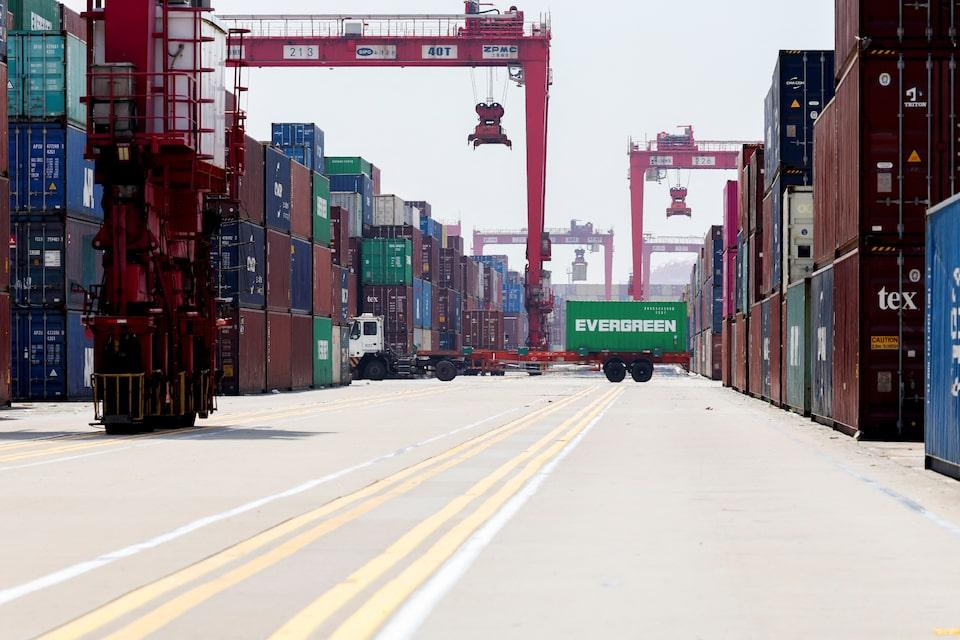
US, China begin collecting port fees on each other's vessels China says Chinese-built ships exempted from its levies China sanctions Korean shipbuilder for 'helping US'; launches probe US aims to loosen Chinese dominance in global maritime, bolster US shipbuilding BEIJING/LOS ANGELES, Oct 14 (Reuters) - The U.S. and China on Tuesday began charging additional port fees on ocean shipping firms that move everything from holiday toys to crude oil, making the high seas a key front in the trade war between the world's two largest economies. A return to an all-out trade war appeared imminent last week, after China announced a major expansion of its rare earths export controls and President Donald Trump threatened to raise tariffs on Chinese goods to triple digits. Sign up here. But after the weekend, both sides sought to reassure traders and investors, highlighting cooperation between their negotiating teams and the possibility they could find a way forward. China said it had started to collect the special charges on U.S.-owned, operated, built or flagged vessels but clarified that Chinese-built ships would be exempted from the levies. In details published by state broadcaster CCTV, China spelled out specific provisions on exemptions, which also include empty ships entering Chinese shipyards for repair. Similar to the U.S. plan, the new China-imposed fees would be collected at the first port of entry on a single voyage or for the first five voyages within a year. "This tit-for-tat symmetry locks both economies into a spiral of maritime taxation that risks distorting global freight flows," Athens-based Xclusiv Shipbrokers said in a research note. Early this year, the Trump administration announced plans to levy the fees on China-linked ships to loosen the country's grip on the global maritime industry and bolster U.S. shipbuilding. An investigation during the former Biden administration concluded that China uses unfair policies and practices to dominate the global maritime, logistics and shipbuilding sectors, clearing the way for those penalties. China hit back last week, saying it would impose its own port fees on U.S.-linked vessels from the same day the U.S. fees took effect. "We are in the hectic stage of the disruption where everyone is quietly trying to improvise workarounds, with varying degrees of success," said independent dry bulk shipping analyst Ed Finley-Richardson. He said he has heard reports of U.S. shipowners with non-Chinese vessels trying to sell their cargoes to other countries while en route so the vessels can divert. Reuters was not immediately able to confirm. Analysts expect China-owned container carrier COSCO (601919.SS) , opens new tab to be most affected by the U.S. fees, shouldering nearly half of that segment's expected $3.2 billion cost from those fees in 2026. Major container lines, including Maersk (MAERSKb.CO) , opens new tab, Hapag-Lloyd (HLAG.DE) , opens new tab and CMA CGM, slashed their exposure by switching China-linked ships out of their U.S. shipping lanes. Trade officials there reduced fees from initially proposed levels and exempted a broad swath of vessels after heavy pushback from the agriculture, energy and U.S. shipping industries. USTR did not immediately respond to a request for comment. China's commerce ministry on Tuesday said, "If the U.S. chooses confrontation, China will see it through to the end; if it chooses dialogue, China's door remains open." In a related move, Beijing also imposed sanctions on Tuesday against five U.S.-linked subsidiaries of South Korean shipbuilder Hanwha Ocean which it said had "assisted and supported" a U.S. probe into Chinese trade practices. Hanwha, one of the world's largest shipbuilders, owns Philly Shipyard in the U.S. and has won contracts to repair and overhaul U.S. Navy ships. Its entities also will build a U.S.-flagged LNG carrier. Hanwha said it is aware of the announcement and is closely monitoring the potential business impact, and that it will continue to provide services to its customers, "including through our investments in the U.S. maritime industry and via Hanwha Philly Shipyard." Hanwha Ocean's shares (042660.KS) , opens new tab sank nearly 6%. China also launched an investigation into how the U.S. probe affected its shipping and shipbuilding industries. SHIPPING LINES SCRAMBLE FOR WORKAROUNDS A Shanghai-based trade consultant said the new fees may not cause significant upheaval. "What are we going to do? Stop shipping? Trade is already pretty disrupted with the U.S., but companies are finding a way," said the consultant, who requested anonymity because he was not authorised to speak with the media. The U.S. announced last Friday a carve-out for long-term charterers of China-operated vessels carrying U.S. ethane and LPG, deferring the port fees for them through December 10. Meanwhile, ship-tracking company Vortexa identified 45 LPG-carrying VLGCs - 11% of the total fleet - that would be subject to China's port fee. Clarksons Research said in a report that China's new port fees could affect oil tankers accounting for 15% of global capacity. Jefferies analyst Omar Nokta estimated that 13% of crude tankers and 11% of container ships in the global fleet would be affected. TRADE WAR EXPANDS TO ENVIRONMENTAL POLICY In a reprisal against China curbing exports of critical minerals, Trump on Friday threatened to slap additional 100% tariffs on goods from China and put new export controls on "any and all critical software" by November 1. Administration officials hours later warned that countries voting in favor of a plan by the U.N. International Maritime Organization to reduce planet-warming greenhouse gas emissions from ocean shipping this week could face sanctions, port bans, or punitive vessel charges. China has publicly supported the IMO plan. "The weaponisation of both trade and environmental policy signals that shipping has moved from being a neutral conduit of global commerce to a direct instrument of statecraft," Xclusiv said. Shares in Shanghai-listed COSCO rose more than 2% in early trading on Tuesday. The company said its board had approved a plan to buy back up to 1.5 billion yuan ($210.3 million) worth of its shares within the next three months to maintain corporate value and safeguard shareholder interests. The shipping firm did not immediately respond to Reuters' queries about the port fees. ($1 = 7.1337 Chinese yuan) https://www.reuters.com/world/china/us-china-roll-out-tit-for-tat-port-fees-threatening-more-turmoil-sea-2025-10-14/
2025-10-14 00:04
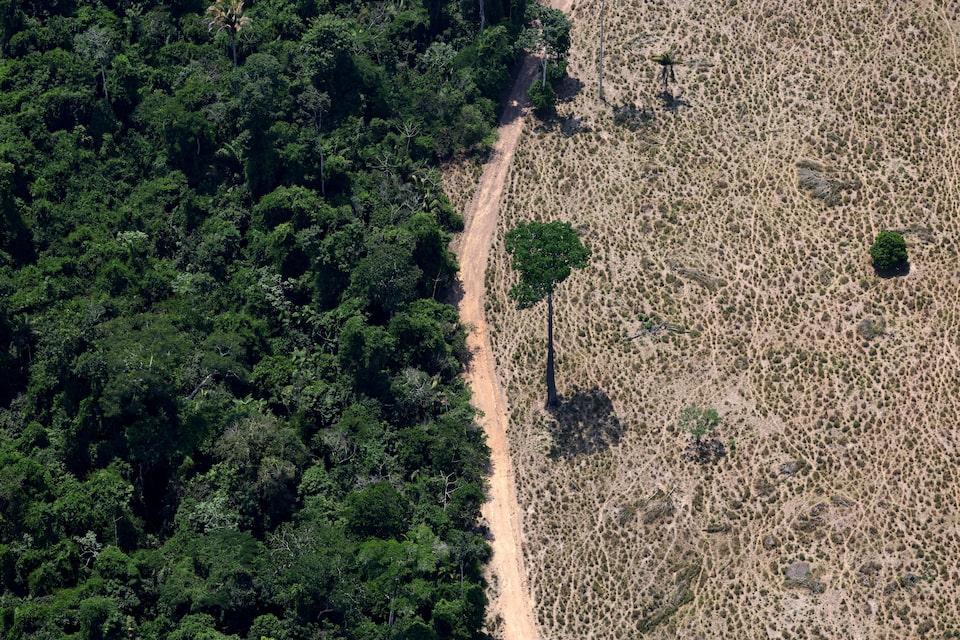
World lost 8.1 million hectares of forest in 2024, report says Fires, agriculture major drivers of deforestation, per Forest Declaration Assessment Brazil's TFFF fund aims to raise $125 billion for forest finance SANTIAGO, Oct 13 (Reuters) - The world is falling far behind a global goal to reverse deforestation by 2030, with losses being largely driven by agricultural expansion and forest fires, according to the 2025 Forest Declaration Assessment , opens new tab. The report said the world permanently lost 8.1 million hectares (20 million acres) of forest, an area about the size of England, in 2024 alone, putting the planet 63% behind the goal set by over 140 countries in the 2021 Glasgow Leaders' Declaration on Forests and Land Use , opens new tab. Sign up here. The Forest Declaration Assessment brings together research organizations, think tanks, non-governmental organizations and advocacy groups, and the report was coordinated by advisory company Climate Focus. Fires were the leading cause of forest loss, accounting for 6.73 million of those hectares around the world, with the Amazon rainforest hit particularly hard, releasing nearly 800 million metric tons of CO2 from fires in 2024. "Major fire years used to be outliers, but now they're the norm. And these fires are largely human-made," said Erin Matson, lead author of the Forest Declaration Assessment. "They're linked to land clearing, to climate change-induced drought, and to limited law enforcement." Earlier reports also found Amazon fires led to unprecedented forest loss, with Brazil leading tropical forest loss and Bolivia's forest loss surging by 200% in 2024. This year's global forest assessment also found that on average, 86% of annual global deforestation over the last decade was caused by permanent agriculture. It also listed gold and coal mining as growing sources of deforestation. "Demand for commodities like soy, beef, timber, coal, and metals keeps rising, but the tragedy is we don't actually need to destroy forests to meet that demand," Matson said, adding over $400 billion in agricultural subsidies are helping drive deforestation. "The incentives are completely backwards," she said, noting international public finance for forest protection and restoration averaged just $5.9 billion a year. The report estimates that $117 billion to $299 billion in financing is needed to reach the 2030 goals. With the COP30, the United Nations climate change conference, set to start in Brazil in November, Matson points to the country's proposed Tropical Forest Forever Facility, which aims to raise $125 billion in funding for long-term forest finance as a way to help stem forest loss. The fund, which would be financed by governments and private investors, could disperse $3.4 billion a year with 20% going to indigenous and local communities. "Looking toward COP30 in Belem, a successful launch of the Tropical Forest Forever Facility, TFFF, could start to channel long-term reliable finance to keeping forests standing," Matson said. "So looking at the global picture of deforestation, it is dark, but we may be in the darkness before the dawn." https://www.reuters.com/sustainability/climate-energy/world-falling-far-behind-deforestation-goals-with-farms-fires-driving-loss-2025-10-14/
2025-10-13 23:46
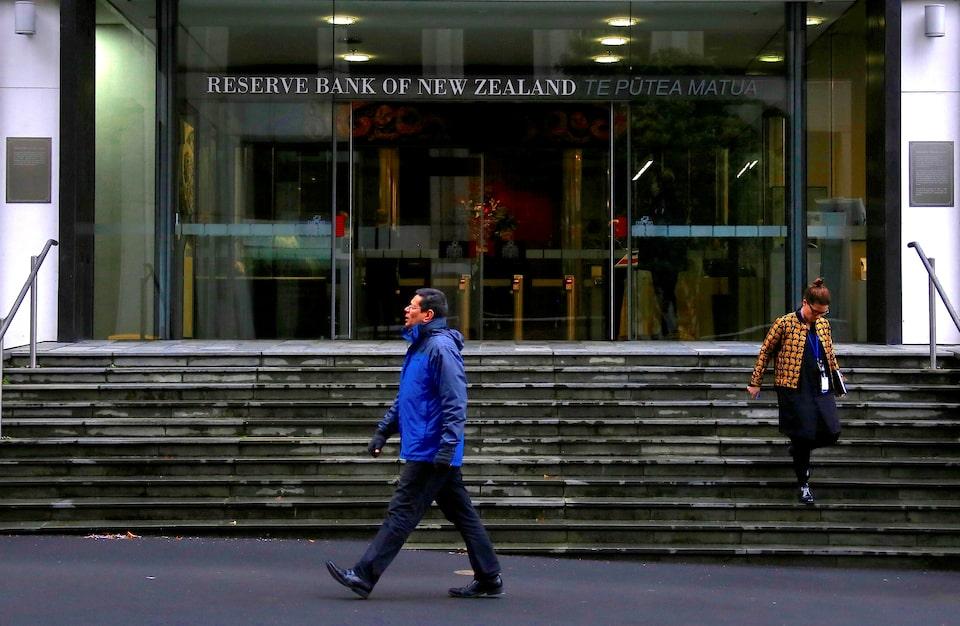
WELLINGTON, Oct 14 (Reuters) - New Zealand's central bank on Tuesday said it planned to ease mortgage loan-to-value ratio (LVR) restrictions from December 1 as house prices are now with sustainable estimates after a sustained fall. "Easier LVR settings will give banks more flexibility to lend, improving market efficiency and access to credit, particularly for first home buyers," the Reserve Bank of New Zealand Acting Assistant Governor Angus McGregor said in a statement. Sign up here. From December 1, 25% of the new loans banks issue to owner-occupiers can go to buyers with deposits of less than 20% of the property's value. Currently only 20% of loans can go to these buyers. McGregor said that it was appropriate time to review default settings as house prices are within the central bank's range of sustainable estimates, growth in mortgage lending remains moderate and the share of high risk lending is low. House prices are now roughly 16% below their peak in 2021 and data from the Real Estate Institute of New Zealand released earlier on Tuesday saw house prices in September down 1.5% on the same time a year ago. The central bank statement added that debt to income restrictions introduced last year were also helping to underpin borrower resilience and will help to contain the severity and consequences of any housing market corrections. These will remain in place. New Zealand Finance Minister Nicola Willis said relaxing the restrictions on the amount banks can lend will make it easier for people to buy their first home. https://www.reuters.com/world/asia-pacific/new-zealands-central-bank-ease-home-lending-rules-2025-10-13/
2025-10-13 23:28
SAO PAULO, Oct 13 (Reuters) - Brazilian airline Gol Linhas Aereas Inteligentes SA (GOLL54.SA) , opens new tab on Monday announced plans to go private as part of a corporate reorganization process. The company, which earlier this year emerged from U.S. bankruptcy proceedings, said in a regulatory filing that it intends to delist shares from the Brazilian stock exchange B3, a move still contingent on approvals, including from shareholders. Sign up here. As part of the restructuring, the company and Gol Investment Brasil SA will merge into another private company within the group, Gol Linhas Aereas, which does not intend to have listed shares. "The incorporation aims to reorganize the company's operations, seek synergies, and reduce its costs," said Gol, which made its initial public share offering (IPO) in Brazil in 2004. As part of a board-approved process, there will be a public tender offer for the current listed shares of Gol. However, the airline will reserve the right to cancel the offer if its total value reaches or exceeds 47.25 million reais ($8.64 million). Gol's financial reorganization during Chapter 11 significantly diluted the airline's free float, which is less than 1% for the non-common shares, minimizing the impact of its stock exchange exit. In 2024, Gol filed for Chapter 11 bankruptcy in the U.S. as the airline industry faced significant challenges, including debt, fewer passengers during the COVID-19 pandemic, and aircraft delivery delays. Gol's Brazilian rival Azul also filed for Chapter 11 in May this year. https://www.reuters.com/world/americas/brazils-gol-plans-restructuring-proposal-that-would-take-it-private-2025-10-13/