2026-02-03 06:34
KYIV, Feb 3 (Reuters) - Kyiv Mayor Vitali Klitschko said on Tuesday that 1,170 residential buildings in the capital were left without heating after an overnight Russian attack on Ukraine's energy infrastructure. Sign up here. https://www.reuters.com/business/aerospace-defense/kyiv-mayor-says-1170-residential-buildings-without-heating-after-russian-attack-2026-02-03/

2026-02-03 06:23
Takaichi's comments trigger yen selloff, raising concerns Officials rush to clarify Takaichi's stance on yen U.S.-Japan coordination helps stabilise yen amid volatility TOKYO, Feb 3 (Reuters) - Just as Japan was finally gaining ground in its long, hard fight to stop sharp currency falls, a fresh challenge has emerged from its own prime minister, whose off-the-cuff comments tell a different story about yen weakness. Prime Minister Sanae Takaichi, who heads to a snap election she is widely expected to win this Sunday, triggered a yen selloff earlier this week after a campaign speech in which she talked up the benefits of a weaker currency. Sign up here. While she later walked back those comments, monetary bureaucrats are privately worried mixed signals from the prime minister could undermine a push to shore up the battered currency, particularly through U.S. rate checks that signalled rare joint efforts with Washington. The weak yen has become a political sore point both at home and abroad, blamed domestically for soaring imported costs and more recently by the Trump administration for potentially destabilising U.S. markets. Takaichi's campaign comments this week quickly raised eyebrows among officials in her administration, according to people familiar with the matter, prompting behind-the-scenes efforts to prevent negative ramifications in financial markets. "Officials were scrambling to respond through Takaichi's X social media account to clarify her intentions over the weekend," one official at the prime minister's office said. In her X post on Sunday, Takaichi clarified that she did not have a preference for the yen's direction, noting that her earlier comments were intended solely to state that she would aim to build an economic structure that is resilient to exchange-rate fluctuation. SCRAMBLE TO KEEP THE CASE FOR A STRONG YEN After weeks of heavy downward pressure on the yen, signs of close coordination between Tokyo and Washington, including rare rate checks by the New York Federal Reserve, have helped steady the Japanese currency. Takaichi's initial remarks were at odds with Minister of Finance Satsuki Katayama, who has repeatedly threatened market interventions to support the yen and noted U.S. Treasury Secretary Scott Bessent shares concerns over excessive volatility in the yen. "It revealed a complete lack of a sense of crisis over the historically weak yen," Masafumi Yamamoto, chief currency strategist at Mizuho Securities, said. "Instead, it laid bare that Takaichi's long-held belief that yen depreciation is beneficial to the economy remains unchanged." After Takaichi's remarks, the yen has given up about half of its 7-yen gains driven by the spectre of joint U.S.-Japan interventions to support the yen. The government also made sure that Takaichi's clarification of her comments were passed on to U.S. authorities, another official said. So far, Washington has stayed quiet on Takaichi's remarks. "From Washington's perspective, the remarks were also likely unwelcome," said Tsuyoshi Ueno, a senior economist at the NLI Research Institute. U.S. officials have been wary that surging Japanese government bond yields, which have come alongside yen weakness, could reverberate through U.S. markets, pushing up Treasury yields and triggering selloffs in U.S. assets, Ueno said. According to several Japanese government sources, Bessent told Katayama at their bilateral meeting held on the sidelines of the World Economic Forum's annual gathering in Davos that Japan's rising debt yields had triggered a triple selloff in the United States and urged Japan to respond. Japan's bond rout, triggered by Takaichi's election pledge to temporarily waive the sales tax on food, coincided with market volatility stirred by U.S. President Donald Trump's threats to reignite a trade war with Europe over Greenland. When approached by Reuters for comment, a U.S. Treasury spokesperson said Treasury remains in continuous communication with economic counterparts across the globe, including Japan. The spokesperson also said during his discussions with many of these counterparts, Secretary Bessent has repeatedly emphasised that financial markets should reflect economic fundamentals and not unwarranted volatility. Katayama said in January she and Bessent shared concerns over what she called the yen's recent "one-sided depreciation". Tokyo's official stance on yen moves contrasts sharply with the new premier's own recent public musings. "I read the whole of Takaichi's campaign speech, but I honestly wonder whether it needed to be said in the first place," one government official said. "She rambled on, off the cuff without notes, but it's ultimately unclear what she was trying to say," he added. The government officials declined to comment as the matter is private. SHOOTING FROM THE HIP This is not the first time Takaichi has made off-hand remarks that have departed from lines carefully crafted by bureaucrats. Weeks after she took office in October, she commented in parliament about how Tokyo might react to a hypothetical Chinese attack on Taiwan, touching off the biggest dispute with Beijing in over a decade. But off-hand remarks are one of the reasons behind her popularity, appealing particularly to younger voters. Takaichi's Liberal Democratic Party is likely to score a landslide victory in next week's lower house election, a survey by the Asahi newspaper showed, heightening the chance the country will continue to pursue big spending and tax cuts. https://www.reuters.com/world/asia-pacific/japan-pms-idle-yen-comments-send-finance-bureaucrats-scrambling-2026-02-03/

2026-02-03 06:03
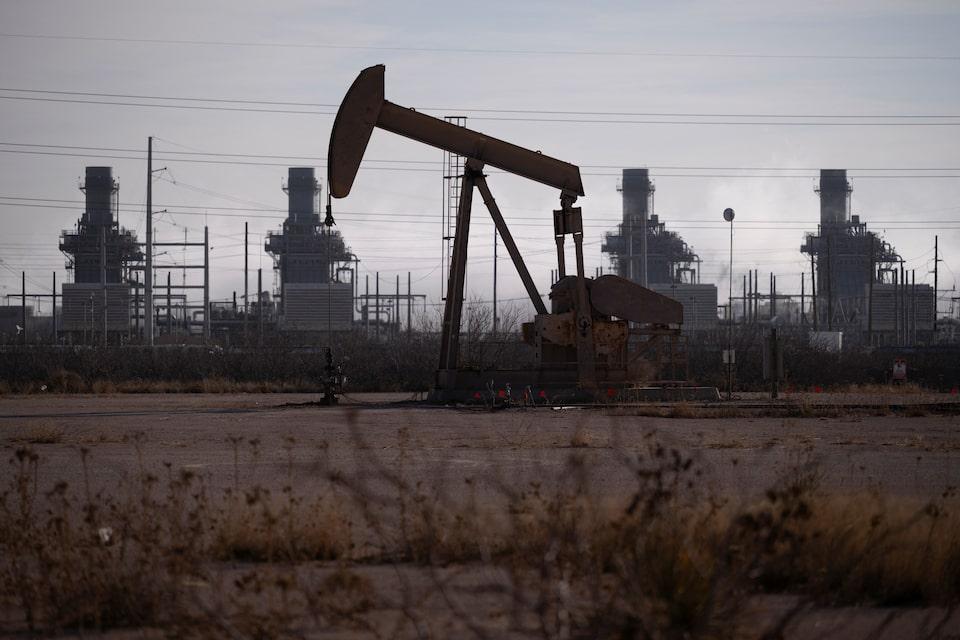
LITTLETON, Colorado, Feb 3 (Reuters) - A rush by U.S. utilities and tech giants to snap up as many gas turbines as possible to boost local power output is causing a global shortage of gas-power equipment and may spur other power systems to fast-track cleaner alternatives. The amount of U.S. gas-fired capacity that is under construction has more than doubled from a year ago, according to Global Energy Monitor (GEM) data, while the amount in pre-construction has jumped more than fivefold since early 2025. Sign up here. This U.S.-led surge in planned gas-fired power capacity has pushed delivery times for new gas turbines into the 2030s, and comes as the price of utility-scale solar farms backed by battery energy storage systems keeps falling to new lows. The combination of rising uncertainty in the gas power supply chain alongside the increased accessibility of clean power alternatives is driving firms in other countries to prioritise non-gas sources in their own expansion plans. RAPID GROWTH AT HOME The U.S. pipeline for new gas-powered generation capacity has surged over the past year or so, with total capacity under construction more than doubling since early 2025 to roughly 30 gigawatts (GW), according to GEM. The amount of U.S. gas capacity in pre-construction - where permits are being lined up and sites are being selected - has surged by 420% from early 2025 to just over 159 GW. The U.S. pre-construction capacity represents a third of the global gas capacity pipeline at that same development stage and means that the U.S. has a record share of the global gas power supply pipeline. Utilities have been the main contractors of the new planned capacity, although a number of so-called hyper-scalers including Meta (META.O) , opens new tab and Microsoft (MSFT.O) , opens new tab plan to power facilities directly from their own gas plants. Strong policy support for gas-fired power generation in Washington, alongside record-high domestic production of natural gas, has underpinned the appeal of gas-fired power in the U.S. in recent years. Pledges to cut restrictions on gas exploration on federal lands have also spurred expectations that U.S. gas supplies will continue growing and will remain the most abundant power source available to U.S. utilities and tech firms. COOLING DEMAND OVERSEAS While support for gas power reaches new highs in the U.S., there are signs that enthusiasm for the fuel is dimming elsewhere. On top of lengthening wait times for key equipment, the appeal of gas power has also been undermined by rising and volatile gas prices which scaled three-year highs in the U.S. last month and have nearly doubled in Europe so far this year. In addition, gas importing countries are wary of becoming reliant on supplies from potentially belligerent trading partners. Several European gas-consuming nations are still reeling from the fallout of Russia's invasion of Ukraine in 2022 and are reluctant to replace those lost supplies with imports of LNG from the U.S. while President Donald Trump wields tariffs and trade threats as instruments of coercion. Energy sovereignty is also a growing issue in Asia and Africa, where production of materials tied to the energy transition - including solar panels and battery systems - is creating local jobs and also helping to cut energy imports. MOVING TARGETS That said, 52% of the global gas pipeline in the pre-construction phase is based in Asia and Africa, with around 234 GW planned in Asia and a further 19.3 GW in Africa. China alone has around 61 GW of gas in the pre-construction phase on top of around 31 GW currently being built and so it is steadily increasing its overall gas-powered footprint. However, the wide time span covering the pre-construction projects means that those capacity levels are bound to change, especially in a dynamic power system like China's, where the generation mix is evolving at record speed. As the world's largest producer of renewable power and manufacturer of clean energy components, China's utilities and authorities are prioritising power gleaned from local sources over energy generated by imported fuels. At the same time, China is also by far the world's largest exporter of clean energy parts and systems, including solar panels and battery storage systems that are becoming increasingly popular among utilities in every region. Supporting those manufacturing and export-oriented sectors also remains a priority in Beijing and means that China's shipments of clean energy components will likely remain robust even as scarcity issues mount in the gas turbine space. For global power system managers weighing expansions in gas power or renewables, the prospect of abundant, affordable supplies of renewable equipment may outweigh the appeal of an uncertain timeline for gas power parts and high gas costs. That may set the stage for a divergence in global power system foundations, with the U.S. set to become ever gassier while other major markets opt for a cleaner makeup. The opinions expressed here are those of the author, a columnist for Reuters. Enjoying this column? Check out Reuters Open Interest (ROI), your essential new source for global financial commentary. Follow ROI on LinkedIn , opens new tab and X , opens new tab. And listen to the Morning Bid daily podcast on Apple , opens new tab, Spotify , opens new tab, or the Reuters app , opens new tab. Subscribe to hear Reuters journalists discuss the biggest news in markets and finance 7 days a week. https://www.reuters.com/markets/commodities/us-driven-gas-turbine-crunch-may-speed-global-clean-power-uptake-2026-02-03/
2026-02-03 05:33
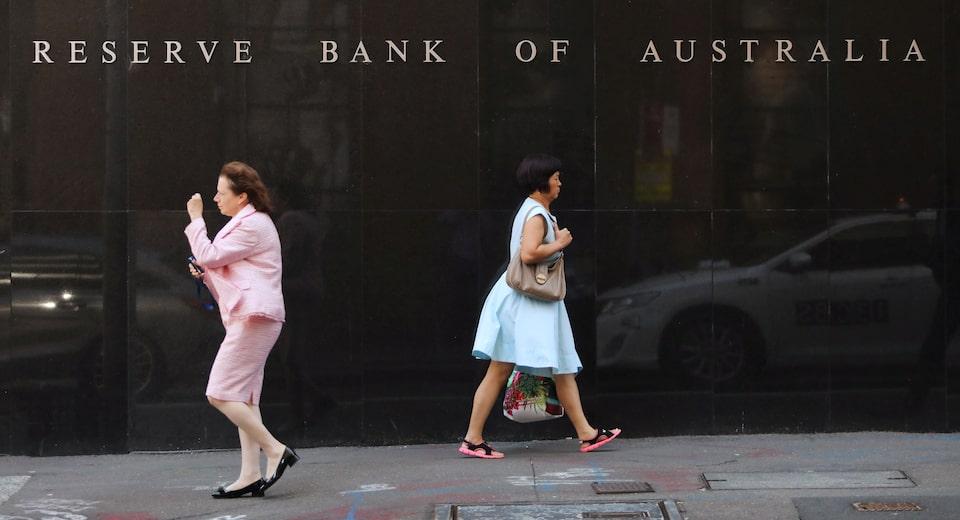
A look at the day ahead in European and global markets from Tom Westbrook Trade took a steadier tone in the Asia session on Tuesday, with metals prices stabilising and stocks generally recovering from a gold-and-silver-led wipeout on Monday. Sign up here. Rebounds in Tokyo (.N225) , opens new tab and Seoul (.KS11) , opens new tab were sharp and Indian shares cheered a deal U.S. President Donald Trump announced on Truth Social to lower tariffs on Indian goods in return for India quitting purchases of Russian oil. As with other bilateral deals, there were few solid details and none around the timing but it was enough to lift the rupee by more than 1%. Australia's currency traded more than 1% higher, too, after the central bank joined Japan as the only developed-world countries lifting interest rates. The 25-basis point hike was mostly expected by markets and comes with inflation running above target and the labour market tight. Investors have ramped up bets on a follow-up hike in May, which is priced at about 75%. Ahead, the ECB's lending survey can help investors gauge credit demand in Europe and earnings from Alphabet (GOOGL.O) , opens new tab and Amazon (AMZN.O) , opens new tab later in the week anchor the U.S. calendar. Elsewhere, market talk of a tax increase on gaming had Chinese internet stocks wobbly, while silver and gold were trying to find their footing. Mining shares were accordingly higher in Australia, with rare earth miners also helped by Trump announcing plans for a strategic stockpile of critical minerals, backed by $10 billion in seed funding from the U.S. Export-Import Bank. Elon Musk said on Monday that SpaceX has acquired his artificial-intelligence startup xAI in a record-setting deal that unifies Musk's AI and space ambitions. Key developments that could influence markets on Tuesday: - ECB bank lending survey - Fed Bowman speaks - U.S. earnings: PayPal (PYPL.O) , opens new tab, Pfizer , Marathon and, after market close, AMD (AMD.O) , opens new tab, Amcor and Mondelez (MDLZ.O) , opens new tab https://www.reuters.com/world/china/global-markets-view-europe-2026-02-03/
2026-02-03 04:46
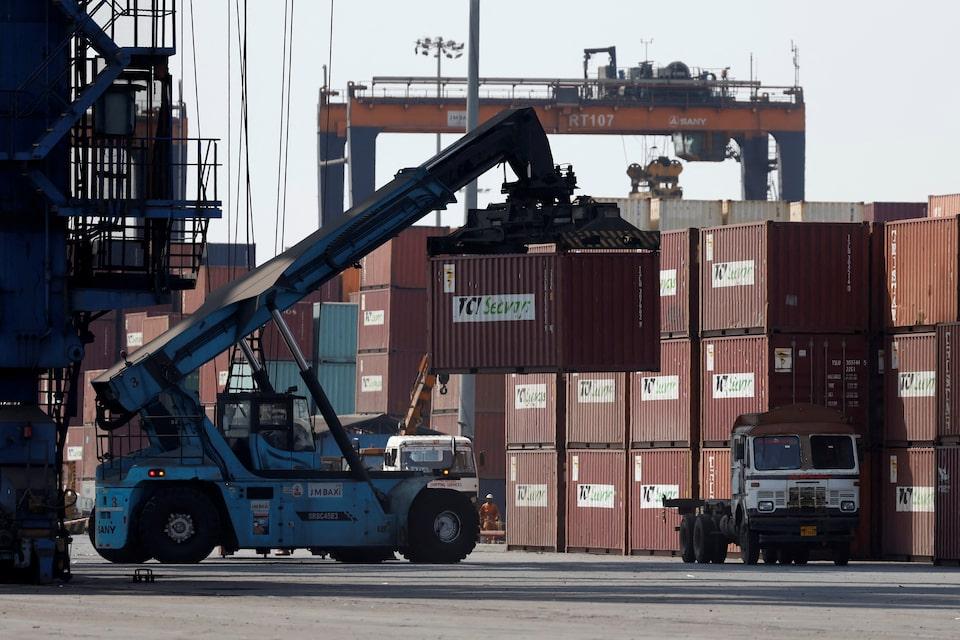
NEW DELHI, Feb 3 (Reuters) - India has agreed to buy petroleum, defence goods, and aircraft from the U.S., while partly opening up its highly-guarded agriculture sector under a trade deal, according to a government official, as the two sides reconcile after months of tensions. President Donald Trump announced a trade deal with India on Monday that slashes U.S. tariffs on Indian goods to 18% from 50% in exchange for India halting Russian oil purchases and lowering trade barriers. Sign up here. Trump said India agreed to buy more American goods with purchases rising to as much as $500 billion including energy, coal, technology, agricultural and other products. The Indian government official, who did not want to be named, said India has agreed to buy U.S. goods including telecom and pharmaceuticals and offered market access for some agricultural products, as part of New Delhi's commitments under the deal. India recently offered select market access for agricultural products to the European Union under a trade deal. The Asian nation has also lowered tariffs on imported cars to address Washington's immediate U.S. demands to conclude the first tranche of the deal, the official added. India's trade ministry did not immediately reply to an e-mail seeking comment. India's exports to the U.S. rose 15.88% year-on-year to $85.5 billion in January-November, while imports stood at $46.08 billion, Indian government data showed. "The commitment to buy U.S. products covers sectors like pharmaceuticals, telecom, defence, petroleum and aircraft. It will be done over the years," the official told Reuters. The official said a more comprehensive pact with the U.S. will be negotiated over coming months. DEAL LIFTS SENTIMENT The announcement of a trade deal between India and United States has reduced a great deal of global uncertainty, India's economic affairs secretary, Anuradha Thakur, said at an event in New Delhi on Tuesday. It also lifted investor sentiment. India's benchmark stock index, the Nifty 50 (.NSEI) , opens new tab, was up nearly 3% and the rupee climbed over 1% to 90.40 per dollar in early trading. The 18% tariff offered to India is lower than its Asian peers and comes right in time as exporters are still negotiating annual contracts with their U.S. customers, the official said. Among Asian nations, U.S. tariffs on goods from Indonesia stand at 19% while the rate for Vietnam and Bangladesh stands at 20%. "Lower tariffs will not only improve price competitiveness but also help Indian exporters integrate more deeply into U.S. supply chains,” said S.C. Ralhan, president of the Federation of Indian Export Organisations. Reduction in U.S. tariffs on most Indian goods will reinvigorate India's goods exports to the U.S., Moody's Ratings said in a statement on Tuesday. https://www.reuters.com/world/india/indias-commitment-buy-us-goods-under-deal-includes-petroleum-defence-aircraft-2026-02-03/
2026-02-03 04:19
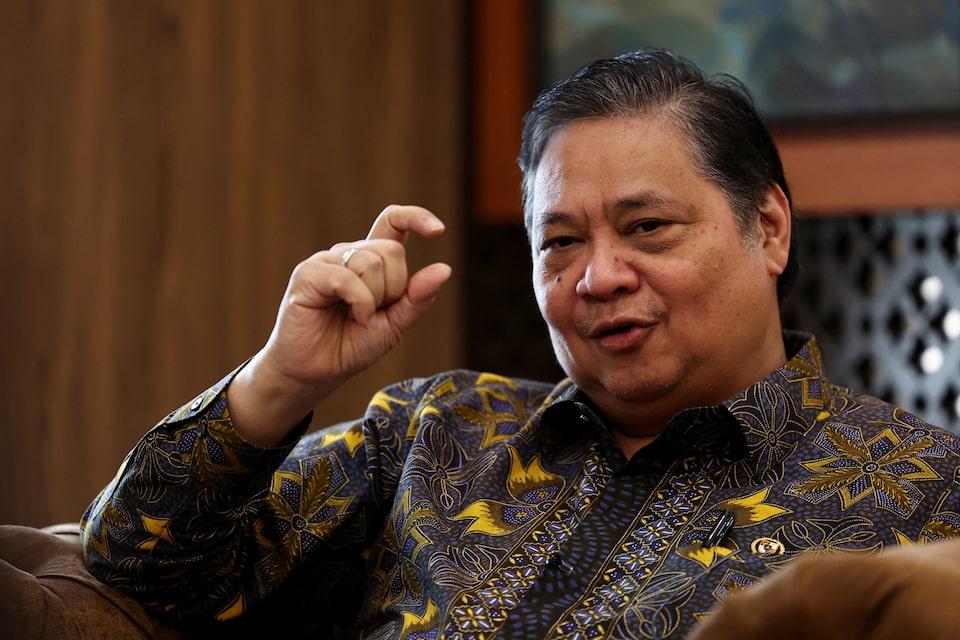
JAKARTA, Feb 3 (Reuters) - Indonesia plans to launch a 12 trillion rupiah ($715.78 million) social assistance programme to hand out rice and cooking oil to low-income families for two months, the country's chief economic minister said on Tuesday. Airlangga Hartarto did not give an exact timeframe for the programme but said it is aimed at boosting economic growth in the first quarter of 2026. Sign up here. The government will also allocate 200 billion rupiah for travel discounts during the Eid al-Fitr holiday, which will include air, train and sea transportation, Airlangga said. "Our target is to boost the economy because the first quarter is important," he told reporters. ($1 = 16,765 rupiah) https://www.reuters.com/world/asia-pacific/indonesia-launch-social-assistance-programme-worth-more-than-700-million-2026-02-03/