2026-02-11 21:31
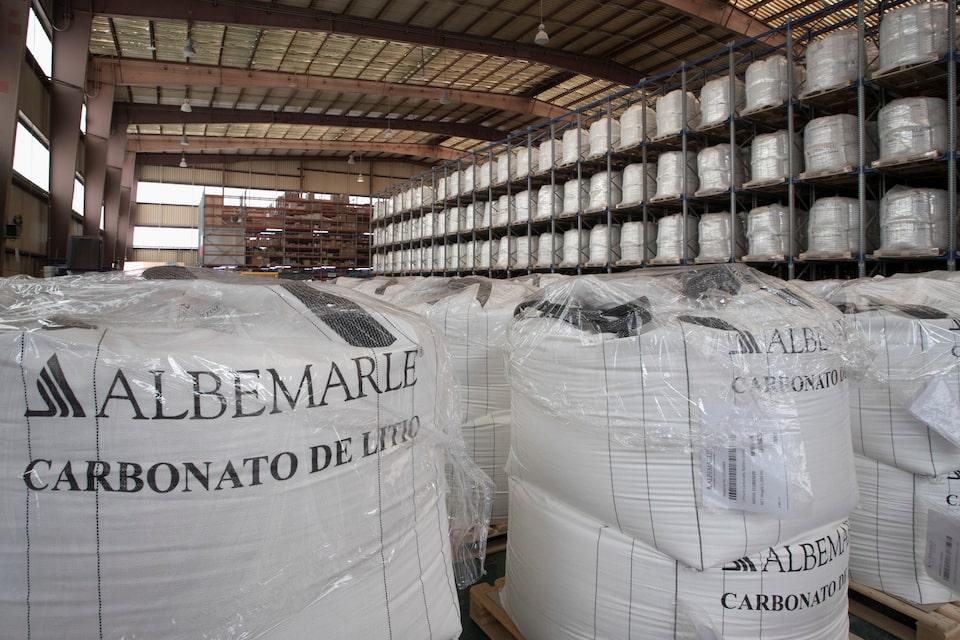
Feb 11 (Reuters) - Albemarle (ALB.N) , opens new tab, the world's largest producer of lithium, posted a larger-than-expected quarterly loss on Wednesday and said it would idle a major Australian processing plant as it continues to face weak prices for the battery metal. Shares of the Charlotte, North Carolina-based company fell 3.1% in after-hours trading. Sign up here. Lithium prices plunged more than 90% over the past two years due in part to oversupply from China, fueling layoffs, corporate buyouts and project delays at Albemarle and peers. While prices have climbed in recent months, they still remain far below all-time highs reached in 2023. Albemarle said it would idle the last active processing unit, or train, at its Kemerton processing plant in Western Australia after closing another train at the site last year. The company also canceled plans to add two new trains. "Unfortunately, recent lithium price improvements alone are not enough to offset the challenges facing Western hard-rock lithium conversion operations," CEO Kent Masters said in a statement. The Kemerton site processed spodumene, a type of hard rock containing lithium, from the Greenbushes mine, the world's largest lithium mine and one Albemarle co-owns with China's Tianqi Lithium (002466.SZ) , opens new tab. For the quarter ended December 31, Albemarle posted a net loss of $455.9 million, or $3.87 per share, compared to a net profit of $33.6 million, or 29 cents per share, in the year-ago quarter. Excluding one-time items, such as charges tied to the upcoming sale of its Ketjen refining catalyst business, Albemarle lost 53 cents per share. By that measure, analysts expected a loss of 41 cents per share, according to IBES data from LSEG. While prices remained weak, Albemarle reported a 23% jump in the sales of lithium products. The company has scheduled a Thursday morning conference call to discuss the quarterly results. https://www.reuters.com/business/albemarle-swings-quarterly-loss-charges-tied-ketjen-sale-2026-02-11/
2026-02-11 21:17
Feb 11 (Reuters) - Artificial intelligence company Anthropic on Wednesday announced initiatives to limit the impact of data centers on consumer energy prices amid increased investment in power-hungry infrastructure necessary for AI tech. Anthropic will cover all grid upgrade costs needed to connect its data centers by increasing its monthly electricity charges, thereby preventing them from being passed on to consumers, the company said. Sign up here. While Big Tech and political leaders across the U.S. are urging a rapid expansion of data-center capacity and new power production to keep the country competitive in AI, local communities are voicing concerns. Americans are worried about how these power-hungry facilities might impact their utility bills and the use of land, water and other natural resources in the region. Anthropic said it will bring new power generation and add grid capacity to meet its data centers' electricity needs, rather than buying credits or contracting for existing capacity. Where new power generation isn't online, the company will work with utilities and external experts to estimate and offset demand-driven price effects from its data centers, Anthropic added. These measures are similar to Microsoft's efforts introduced last month, when the cloud giant said it would pay utility rates high enough to cover its power costs and work with local utilities to expand supply when needed for its data centers. Anthropic said on Wednesday it is also investing in research catered to reducing its data centers' power usage as well as grid optimization tools. The company will also work with local leaders on measures such as supporting education programs and working with small businesses. https://www.reuters.com/technology/anthropic-shoulder-some-costs-data-center-expansions-threaten-raise-power-bills-2026-02-11/

2026-02-11 21:12
Q4 global same-store sales rise 5.7%, beating 3.7% estimate Revenue jumps 10% to $7.01 billion McDonald's value promotions attract budget-conscious US diners Feb 11 (Reuters) - McDonald's topped Wall Street estimates for fourth-quarter global comparable sales and profit on Wednesday, as meal deals and strong marketing promotions pulled in budget-strapped U.S. diners and demand held firm in Australia and Britain. Global same-store sales at the largest U.S. burger chain (MCD.N) , opens new tab rose 5.7% in the three months ended December 31, outpacing analysts' average estimate of a 3.7% increase, according to data compiled by LSEG. Sign up here. McDonald's has posted rising sales when many restaurant operators are struggling to retain traffic as consumers have tightened their belts. Cheaper options have fared better than the rest. Taco Bell same-store sales rose 7% in the latest quarter and KFC sales grew 3%, parent company Yum Brands (YUM.N) , opens new tab said last week. Meanwhile, sales at the higher-priced Chipotle Mexican Grill (CMG.N) , opens new tab declined 1.7%, the company reported earlier in February. McDonald's, which operated more than 43,400 restaurants worldwide at the end of 2024, earned $3.12 per share on an adjusted basis, topping expectations of $3.05. In October, McDonald's brought back its Monopoly tie-in after nearly a decade, followed by a slate of value offers in November including $5 breakfast and $8 meal options for lunch and dinner. In December, the company added a holiday-themed Grinch meal as a limited-time draw. "McDonald's value leadership is working," CEO Chris Kempczinski said in a statement on Wednesday. A faster rise in prices at restaurants compared to groceries in recent months, largely due to higher labor and utility costs, has also forced diners, particularly those in lower‑income households, to cut back on eating out, intensifying competition among fast-food chains. "MCD has to continue to grind away with marketing and value promotions that keep traffic positive and growing," said Jim Sanderson, analyst at Northcoast Research. Comparable sales in the U.S., McDonald's largest market, rose 6.8% in the October to December period, marking its third consecutive quarter of growth, compared with a 1.4% dip a year earlier, when an E. coli outbreak dented demand. Analysts were estimating a 4.9% rise. Sales in its business segment, where restaurants are operated by local partners, jumped 4.5%, led by Japan, while international market sales rose 5.2%, driven by demand in Britain, Germany and Australia. The company reported a 10% jump in revenue to $7.01 billion, while net income grew 7% to $2.16 billion. McDonald's expects to spend $3.7 billion to $3.9 billion on capital expenditures in 2026, mostly on new units, and plans to open about 2,600 restaurants globally, including roughly 750 in the U.S. and international-operated markets. It forecast operating margin to be in the mid-to-high 40% range for the year, compared to 46.1% in 2025. "Global cost inflation remains a headwind that will pressure margin expansion without consistent traffic growth that drives operating leverage across the P&L," Sanderson said. Shares of the company were down 1% in trading after the bell. BEVERAGE BET GROWS McDonald's is also pushing deeper into the fast-growing beverage segment, which executives have said are more profitable and can drive visits. Late last year, the burger chain tested a broader drink lineup at 500 restaurants in Wisconsin, Colorado and nearby markets, offering cold coffees, crafted sodas and energy-style drinks popular with younger consumers. Executives are expected to outline the results of the pilot on the earnings call later in the evening. Analysts at BTIG said an expected full national launch could provide a meaningful lift to same-store sales and traffic, giving McDonald's another lever to drive visits beyond its value promotions. https://www.reuters.com/business/retail-consumer/mcdonalds-beats-quarterly-global-sales-estimates-value-bets-pay-off-2026-02-11/
2026-02-11 18:58
Energy shortages not an excuse, minister says Gabon exported 9.4 million tons of manganese in 2024 New iron ore mines scheduled to start CAPE TOWN, Feb 11 (Reuters) - Gabon's mining minister said on Wednesday that energy shortages will not be accepted as justification for missing the country's 2029 ban on raw manganese exports, dismissing industry warnings that power constraints could delay refinery construction. The world's No.2 producer of manganese, used in steelmaking and increasingly in electric vehicle batteries, introduced the policy last year to diversify its economy after decades of raw‑ore exports, joining other African states seeking to capture more value from their mineral wealth. Sign up here. Power shortages are frequent in the Central African nation, hampering the expansion of energy-intensive industrialisation. Mining companies operating in the country, including France’s Eramet (ERMT.PA) , opens new tab, have expressed a willingness to cooperate with the government on the new refining rules but have noted that power limitations remain a challenge. Speaking on the sidelines of the Mining Indaba conference in Cape Town, Gabon Mining Minister Sosthene Nguema Nguema said alternative technologies had proven that power concerns should no longer be a barrier. "Energy is a false debate," Nguema said. "Some operators have already demonstrated processes that reduce energy use by 40 to 60%. So we do not expect energy to be a reason for anyone not to comply in 2029." DETAILED TIMELINE Gabon exported 9.4 million metric tons of manganese in 2024, down 5.3% the previous year, according to official data. The majority of it is exported in its raw state. Nguema said all manganese miners must submit detailed implementation timelines and show measurable progress toward compliance. "We are providing the administrative support companies need, but the responsibility to meet the deadline is theirs," Nguema said, reiterating that the 2029 timeline was non-negotiable. He added that the management crisis at Eramet, which controls Gabon's Comilog, operator of the world's largest manganese mine in Moanda, should not affect its compliance. "Eramet must comply like everyone else.” Eramet's February 1 decision to fire its CEO does not alter the group’s strategy and is unrelated to its activities in Gabon, Eramet said in an emailed statement, declining further comment. TWO IRON MINES Nguema said Gabon expects two new mines — Milingui and Baniaka iron ore mines — to come online this year, part of a push to expand the sector. He warned that companies that fail to begin construction or production will lose their licences. "Those who promise to open mines in 2026 and have not kept their word by 31 December will be told to leave the country," he said. https://www.reuters.com/business/energy/gabon-dismisses-energy-concerns-over-2029-manganese-refining-deadline-2026-02-11/

2026-02-11 18:52
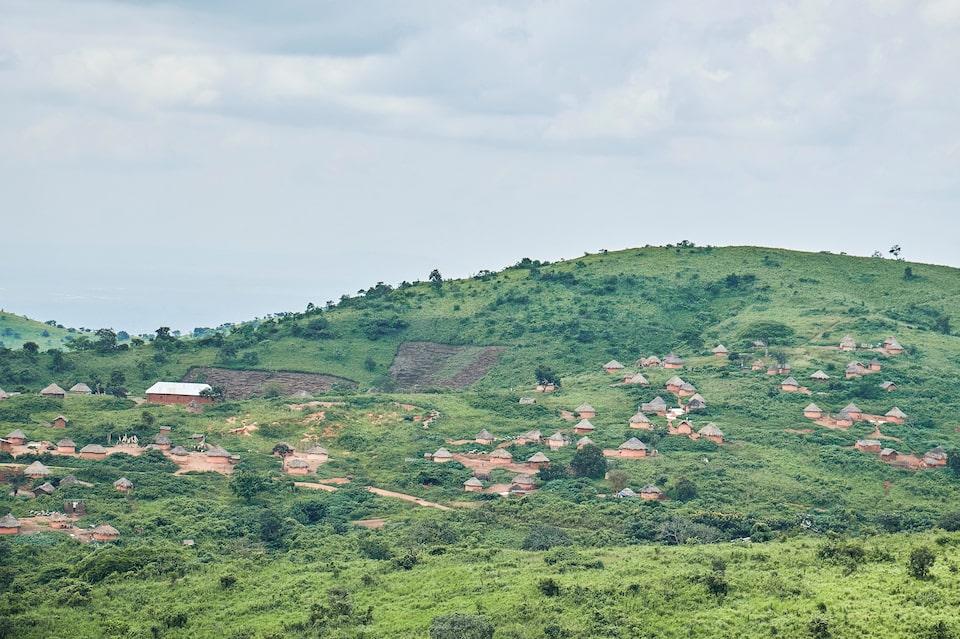
Democratic Republic of Congo readying first-ever international bond Country is banking on benefits of metals boom Minister says US government's DFC arm to provide $530 million loan for key railway project LONDON, Feb 11 (Reuters) - The Democratic Republic of Congo wants to make its international bond foray the first of many, its finance minister told Reuters, as the country rides the current metals market boom and improved ties with the United States. Mineral-rich Congo, which remains blighted by internal conflict with rebel forces, is the latest African country looking to capitalise on surging demand for smaller and riskier emerging economies' debt. Sign up here. "The priority for us is going into the international capital market, not just to raise funds, but to build a curve, for the private sector to raise also money and to come and invest in the country," Finance Minister Doudou Fwamba Likunde told Reuters in London where he was meeting investors. The exact timing of the debut international bond, expected to be $750 million in size, was still to be determined, Likunde said. It was flagged last month by the central bank governor for around April. "It's up to the condition of the market.... when the time is coming, we're going to be ready," Likunde said. FUNDS FOR ROAD AND HYDROPOWER PROJECTS Selling an international bond has been DRC officials' ambition for years but seemed elusive amid the country's brutal conflicts and concerns about human rights and corruption. Likunde said proceeds of the bond would be used to finance a number of large-scale projects, including modernising the international N'djili airport and roads in the capital Kinshasa, as well as hydropower plants and rural infrastructure. Market conditions that have left emerging market bond yield spreads - or risk premiums - at their lowest since the 2007-08 global financial crisis, have allowed governments to sell a record amount of debt year-to-date. DRC would be following the likes of Suriname, Laos and its neighbour, the Republic of Congo, who have all sold debt in recent months. S&P Global Ratings put DRC's credit rating of B- on a "positive outlook" earlier this year. However, analysts say Kinshasa may have to pay double-digit interest rates for the bond issuance. The country's external debt burden is one of the lowest in so-called frontier bond markets, at 18.5% of GDP with 95% of it borrowed on concessional terms. "We are going to keep communicating, telling our own story," Likunde said, adding he hoped to see more ratings upgrades. PUSH TO SECURE ACCESS TO CRITICAL MINERALS Likunde also provided an update on plans for the high-profile U.S.-backed Lobito Corridor railway which will connect the copper, cobalt and lithium belts of DRC, Angola and Zambia to the Atlantic coast. The corridor - which forms a key part of Washington's push to secure access to Africa's critical minerals and counter China's dominance - was discussed when DRC ministers travelled to the U.S. last week to a meeting alongside over 50 countries. "We've been working with DFC, they have released a commitment of $530 million of... a direct loan to a private company that is going to be in charge of operating this project," Likunde said, referring to the U.S. International Development Finance Corporation. Likunde said the company receiving the financing would be chosen through a tender process. https://www.reuters.com/sustainability/climate-energy/conflict-torn-congo-closes-debut-international-bond-2026-02-11/
2026-02-11 18:46
Feb 11 (Reuters) - SOLV Energy's (MWH.O) , opens new tab shares rose 20% in its New York debut on Wednesday, giving the solar and battery storage firm a valuation of $5.98 billion, underscoring a strong rebound in IPO activity in 2026. Shares opened at $30, above its initial public offering price of $25 at which it sold 20.5 million shares on Tuesday to raise $512.5 million. Sign up here. Strong equity markets, helped by the U.S. Federal Reserve’s rate cuts toward the end of 2025, have improved pricing conditions and encouraged more companies to pursue public listings. Also, a slowdown last year due to market volatility stemming from U.S. President Donald Trump’s shifting tariffs and a government shutdown created pent-up demand among issuers. Later this week, Wall Street firm Clear Street is set to go public, seeking a valuation of nearly $12 billion — the biggest this year. SOLV Energy provides construction, operation and maintenance services for large-scale solar and battery storage projects. It was founded in 2008. Originally a division of Swinerton Builders, the business was acquired in 2021 by private equity firm American Securities, along with SOLV, which was then a separate company. SOLV Energy had a total backlog of about $8 billion as of December 2025, driven primarily by engineering and construction contracts. "It gives us a lot of visibility into the next 24 to 36 months as we see this backlog continue to move through the business and it gives us a lot of certainty of how the business will perform moving forward," SOLV CEO George Hershman said in an interview with Reuters. Hershman said SOLV's intention was to delever the balance sheet, pay off a term loan and come out of the IPO debt-free. Jefferies and J.P. Morgan are the joint lead book-running managers for the offering. https://www.reuters.com/sustainability/climate-energy/solv-energy-fetches-6-billion-valuation-strong-nasdaq-debut-2026-02-11/