2026-02-03 04:03
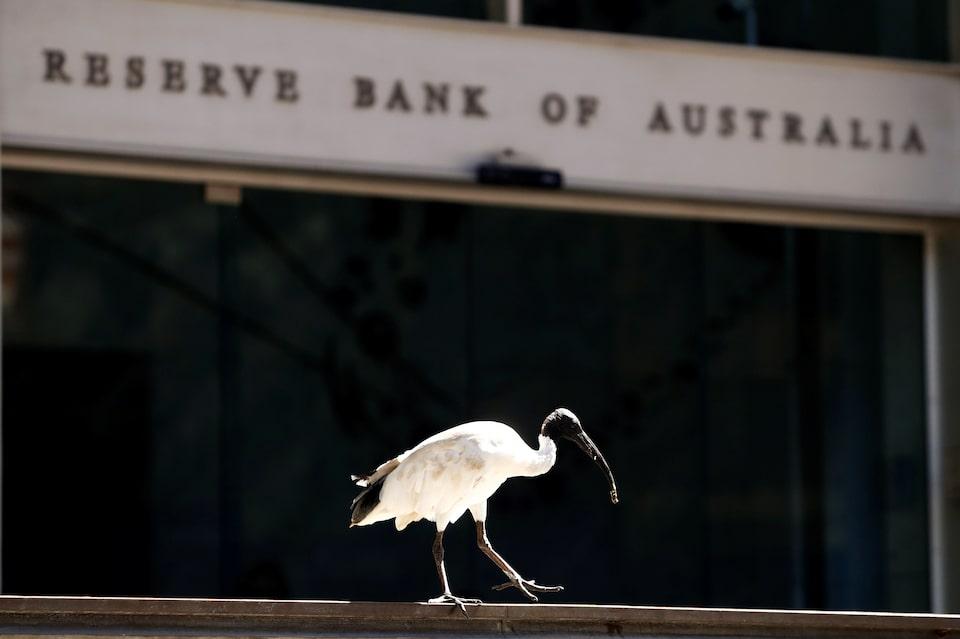
Rates raised by 25 bps, first hike in two years RBA warns that inflation likely to stay above target for some time Markets ramp up bets for follow-up hike in May Australian dollar rallies, bond yields jump SYDNEY, Feb 3 (Reuters) - Australia's central bank was forced to reverse course and raise interest rates on Tuesday as it struggles to bring inflation under control in a supply-constrained economy, leaving markets wagering further hikes would be needed this year. The Reserve Bank of Australia now joins the Bank of Japan as the only other developed-world central bank tightening policy at the moment. Markets are still priced for rate cuts in the U.S., UK and Canada, while the European Central Bank is widely expected to be on an extended pause. Sign up here. Wrapping up the February policy meeting, the RBA raised interest rates by 25 basis points to 3.85% in a unanimous decision, delivering the first hike in two years and coming just six months after its last cut in August. The central bank added it was uncertain whether financial conditions were restrictive. However, Governor Michele Bullock would not be drawn on the prospects of more rate rises even though the RBA's new economic forecasts were based on more policy tightening to bring inflation back to the target band of 2% to 3%. "I don't know if it's in a (tightening) cycle. Certainly it is an adjustment, and the board would be actively monitoring (data)," said Bullock at a post-decision briefing. "We are in a position where we think we might be around neutral in terms of financial conditions." Markets had wagered on a 78% probability of a hike on Tuesday given inflation surprised on the high side in the fourth quarter, while unemployment hit a seven-month low in December. "While part of the pick-up in inflation is assessed to reflect temporary factors, it is evident that private demand is growing more quickly than expected, capacity pressures are greater than previously assessed and labour market conditions are a little tight," the RBA's board said in its policy statement. "The board judged that inflation is likely to remain above target for some time and it was appropriate to increase the cash rate target." The Australian dollar extended earlier gains to be up 0.9% to $0.7002 while three-year government bond yields jumped 8 basis points to 4.3%. Investors ramped up bets for a follow-up hike in May, which is now priced around 75%. Markets expect an additional total tightening of 40 basis points this year. MORE HIKES COMING? The RBA did not raise interest rates as aggressively as its international peers when inflation was running hot due to its desire to preserve gains in the labour market. That approach may yet test policymakers. The central bank's three rate cuts last year saw inflation rear its head again, forcing it to pivot towards a hawkish stance late in 2025 and prompting market bets of an earlier-than-expected start to the tightening cycle. Consumer price growth has surprised on the upside for two straight quarters now, and is well above the RBA's target band of 2% to 3%. Underlying inflation, the central bank's preferred measure, ran at a quarterly pace of 0.9% in the fourth quarter, lifting the annual pace to the highest in over a year at 3.4%. The RBA now expects it to pick up to 3.7% by June before falling back to 2.6% by mid-2028, above the 2.5% midpoint of the target band. That was based on technical assumptions of over two rate rises this year before Tuesday's decision. Bullock said the board judged that timeframe was not an "acceptable" outcome. The recent flow of data has reinforced the case of a capacity-restrained economy, with a surprise fall in the unemployment rate to a seven-month low of 4.1% suggesting the labour market may have started to tighten again. Robust consumer spending, record-high housing prices and easy credit availability for households and businesses added to the case that financial conditions might not be restrictive at all. Sally Auld, chief economist at the National Australia Bank, suspected this was unlikely to be a “one-and-done” scenario for the RBA. "We continue to forecast a follow-up 25bp hike in May, although risks are biased to an earlier hike and the possibility of more than just a modest 50bp recalibration." https://www.reuters.com/sustainability/sustainable-finance-reporting/australias-central-bank-raises-rates-first-time-two-years-2026-02-03/
2026-02-03 03:56
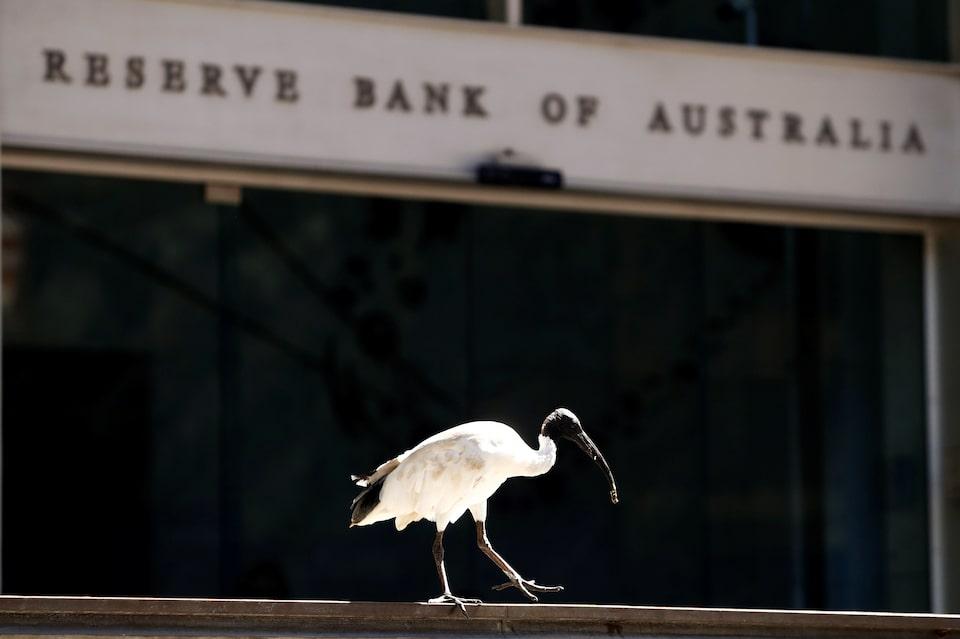
SYDNEY, Feb 3 (Reuters) - Australia's central bank on Tuesday raised its cash rate by 25 basis points to 3.85%, the first hike in two years, saying the economy was growing faster than expected and inflation was likely to remain above target for some time. Wrapping up a two-day policy meeting, the Reserve Bank of Australia said private demand had been stronger than expected and capacity pressures were greater than previously assessed, with the labour market still tight. Sign up here. Investors had been leaning toward a rate rise given inflation surprised on the high side in the fourth quarter, while consumer spending had picked up sharply and unemployment hit a seven-month low in December. https://www.reuters.com/world/asia-pacific/australias-central-bank-raises-cash-rate-25bps-385-2026-02-03/
2026-02-03 03:54
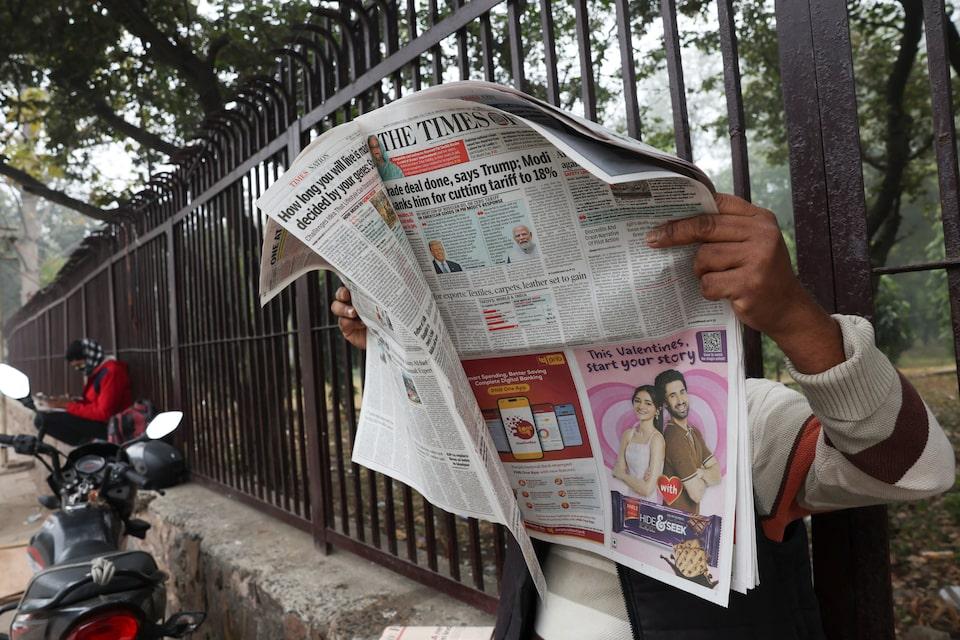
U.S. to slash tariffs on Indian exports to 18% from 50% Trade deal expected to lift sentiment on Indian markets Indian rupee up over 1%, stock benchmark rises 2.5% U.S. deal follows India-EU trade agreement last week MUMBAI, Feb 3 (Reuters) - India's financial markets rallied sharply on Tuesday after a trade deal that slashed U.S. tariffs on Indian goods to 18% from 50%, a development that investors said removed a key drag on the country's stocks, bonds and currency. India's benchmark stock index, the Nifty 50 (.NSEI) , opens new tab, rose 2.5% and the rupee climbed more than 1% to 90.2650 per dollar in early trading. The yield on the country's 10-year benchmark bond declined 5 bps to 6.72%. Sign up here. The Nifty posted its best one-day gain since May 2025, while the rupee logged its best rally in more than seven years. HALT TO RUSSIAN OIL PURCHASES U.S. President Donald Trump announced the deal on social media following a call with Indian Prime Minister Narendra Modi, noting that India had agreed to halt Russian oil purchases and lower trade barriers on U.S. exports. While Trump's announcement was scant on details, an Indian government official said India had agreed to buy petroleum, defence goods and aircraft from the U.S., while partly opening its guarded agricultural sector. Indian stock markets and the rupee have been battered since the tariffs were levied by Washington in late August, placing them among the worst-performing emerging market assets in 2025, with record foreign investor outflows. The trade breakthrough was expected to alleviate the persistent drag, with investors expecting a bounce-back in foreign sentiment and flows into Indian assets. "A successful bilateral trade agreement should help enhance investor confidence, boost foreign investment and capital expenditure plans while strengthening the Indian rupee," said Marcella Chow, global market strategist at J.P. Morgan Asset Management. The trade deal was also expected to lift a pall of geopolitical uncertainty which had accompanied the U.S.-India trade rift, keeping investors cautious on ploughing money into the country. "The key tail risk of geopolitical isolation about which investors were concerned has now been adequately addressed by back-to-back trade deals with the European Union and United States," economists at Citi said in a note. US BREAKTHROUGH FOLLOWS TRADE DEAL WITH EU The breakthrough with the U.S. comes less than a week after India signed a long-awaited trade deal with the European Union that was expected to eliminate or reduce tariffs on 96.6% of traded goods by value. Analysts at Jefferies expect Indian firms in the auto ancillary, solar manufacturing and chemicals sectors to be among the largest beneficiaries of the U.S.-India trade deal. "The reduction of the U.S. tariff rate on most Indian goods will reinvigorate India’s export growth to the U.S.," credit rating agency Moody's said in a note. India's exports to the U.S. rose 15.88% year-on-year to $85.5 billion in January-November, while imports stood at $46.08 billion, Indian government data shows. "Even though India has reduced its purchase of crude oil from Russia in recent months, it is unlikely to cease all purchases immediately which could be disruptive to India’s economic growth," the note added. Indian refiners will need a wind-down period to complete Russian oil deals before imports can be halted and they have so far not been ordered by the government to do so, two refining sources said on Tuesday. Shares of Reliance Industries (RELI.NS) , opens new tab, the oil-to-telecom conglomerate, were last up over 4%, leading the advance in stock benchmarks. https://www.reuters.com/world/india/indian-rupee-stocks-soar-after-trade-deal-with-us-2026-02-03/
2026-02-03 03:50
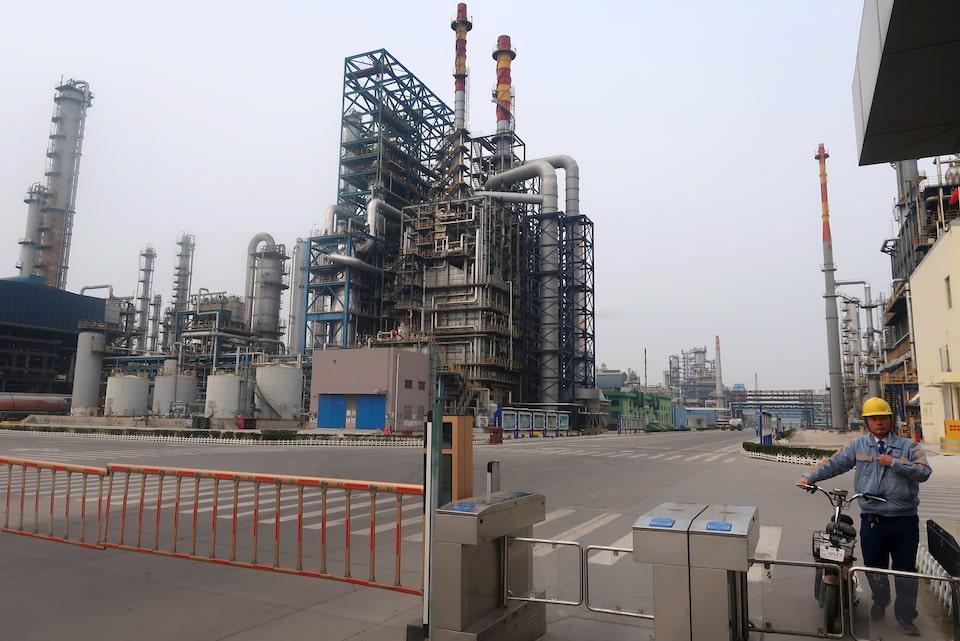
SINGAPORE/HOUSTON, Feb 3 (Reuters) - Chinese independent refiner Chambroad Petrochemical has bought one Canadian crude cargo for May delivery, four trade sources said on Tuesday, following a decline in Venezuelan crude supply into China. The refiner was one of the main buyers of Venezuelan oil, while it occasionally imported Canadian oil exported from the Trans Mountain pipeline for its bitumen production, according to trade sources. Sign up here. In its latest deal, Chambroad purchased Canadian Cold Lake crude exported from TMX at a discount close to $5 per barrel against the July ICE Brent contract for delivery to eastern Shandong province in May, two of the people said. Chambroad, which operates a 70,000-barrel-per-day refinery in Shandong and an 80,000-bpd refinery in the southern Hainan province, did not immediately respond to a request for comment. Venezuelan shipments to China have fallen sharply since mid-December, after U.S. President Donald Trump imposed a blockade on sanctioned ships, part of a campaign against President Nicolas Maduro that culminated in his capture by U.S. forces in early January. Independent refiners in Shandong are also buying discounted Iranian heavy crude to replace Venezuelan shipments, trade sources said on Monday. https://www.reuters.com/business/energy/chinas-chambroad-buys-canadian-crude-may-delivery-traders-say-2026-02-03/
2026-02-03 03:44
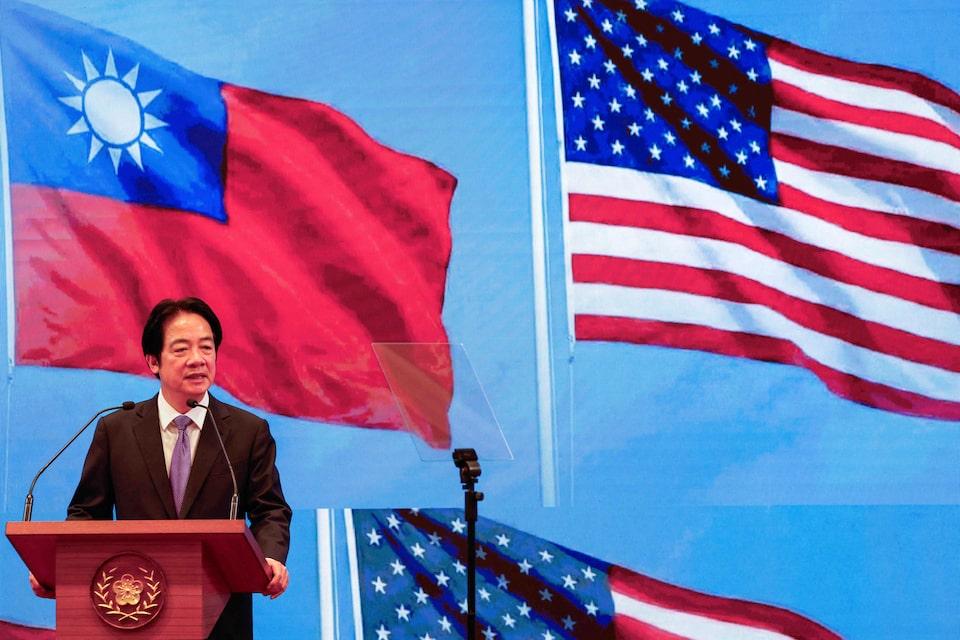
Taiwan, US held high-level economic talks last week Lai speaking as opposition delegation visits Beijing China claims Taiwan as its own territory over Taiwan's objection TAIPEI, Feb 3 (Reuters) - Taiwan must look to fellow democracies, not China, for trade and economic cooperation, President Lai Ching-te said on Tuesday, as his government mapped out how the island plans to work with the United States on areas like AI and critical minerals. Senior Taiwanese and U.S. officials last week discussed cooperation in artificial intelligence, tech and drones at a high-level forum launched during the first Trump administration, with the U.S. State Department praising Taipei as a "vital partner." Sign up here. The two sides signed statements on cooperation on economic security and on the Pax Silica Declaration - a U.S.-led initiative aimed at securing AI and semiconductor supply chains amid intense competition from Beijing, Washington's main strategic rival and which claims Taiwan as its own territory. Speaking at a news conference at the presidential office about the U.S.-Taiwan Economic Prosperity Partnership Dialogue, Lai lauded the outcome of those talks. "Taiwan is on the right economic path and is striding confidently onto the world stage. Taiwan has both the capability and the confidence to work with its democratic partners to lead the next generation of prosperity," he said. Lai was speaking as the deputy chairman of Taiwan's main opposition party the Kuomintang (KMT), Hsiao Hsu-tsen, was in Beijing for a think-tank exchange with China's Communist Party on ostensibly non-political issues like AI and tourism. Lai said Taiwan's opposition "had their own positions", and pointed to the differences of Taiwan's slower economic growth under the previous KMT government, which signed a landmark trade deal with China, or the much faster growth since the Democratic Progressive Party took office in 2016. "Do we want to continue collaborating with the U.S., Japan, Europe and other allied nations, or again lock ourselves into China?" he added. There was no immediate response from the KMT to Lai's remarks, but Hsiao told the opening of the forum in Beijing that "peaceful development" serves the interests of both sides, according to a read out of his remarks provided by the party. "We should cooperate across the Taiwan Strait to earn money from the world, rather than oppose each other across the strait and let foreign countries reap the benefits, exploiting Taiwan and hollowing it out," he said. China refuses to speak to Lai, calling him a "separatist". He says only Taiwan's people can decide their future. Speaking to reporters, Lai reiterated an offer to speak to Beijing, based on parity and equality. https://www.reuters.com/world/china/taiwan-must-look-democracies-not-china-trade-cooperation-president-says-2026-02-03/
2026-02-03 03:16
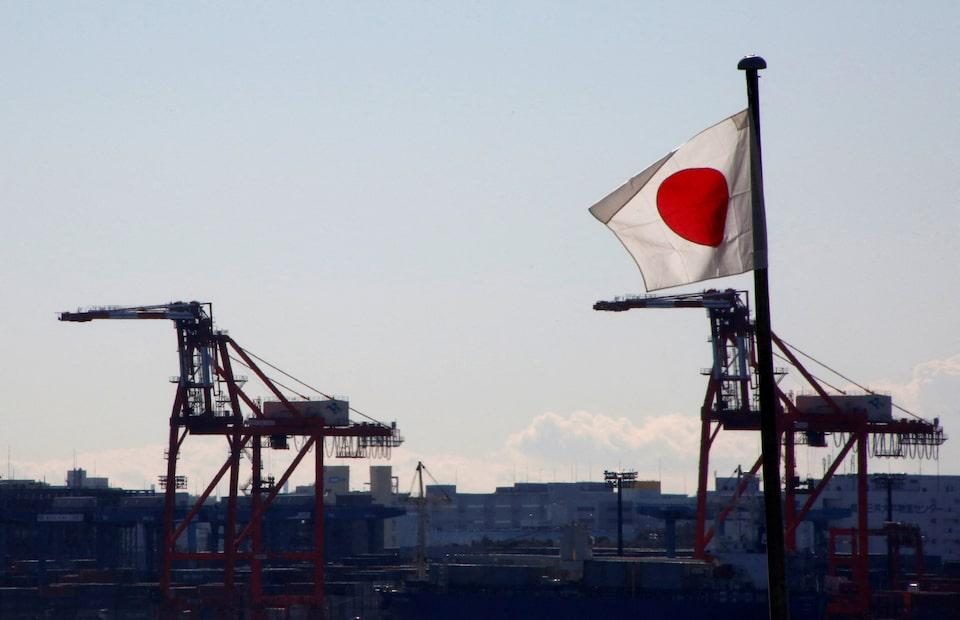
Exports rise for 13th straight year US remains Japan's largest food export market Shipments to China rebound from a slump in 2024 TOKYO, Feb 3 (Reuters) - Japan's exports of agricultural, forestry and fishery products rose 12.8% to an all-time high in 2025, lifted by stronger shipments to the United States despite new tariffs, and by a rebound in exports to China from the previous year's slump. Exports totalled 1.701 trillion yen ($10.9 billion) last year, up from 1.507 trillion yen in 2024, marking a 13th consecutive annual gain and a record high, the Ministry of Agriculture, Forestry and Fisheries (MAFF) said on Tuesday. Sign up here. "Rising global interest in Japanese cuisine, greater awareness of Japanese food among inbound tourists, and growing health consciousness are driving demand," said Kazuyoshi Nakasugi, deputy director of MAFF's export policy planning division, pointing to industry hearings. He said these factors pushed exports to many countries, including the U.S., Taiwan, and South Korea, to record levels. Shipments to the U.S. climbed 13.7% to 276.2 billion yen, making it Japan's largest export destination for the second straight year, on robust demand for green tea and beef despite tariffs introduced in April. Exports to China grew 7.0% to 179.9 billion yen, rebounding from a 29% slump in 2024, helped by higher shipments of ornamental koi, beer and logs. China suspended imports of all Japanese seafood after Tokyo Electric Power (9501.T) , opens new tab began releasing treated radioactive water from the Fukushima Daiichi nuclear power plant in August 2023, but eased the ban in mid-2025, though some restrictions remain. "Even after the easing, Japan's seafood exports to China have not recovered much," Nakasugi said. The government continues to promote diversification of export destinations for seafood by developing commercial channels elsewhere in Asia and in the U.S. By product, beef, rice, green tea and yellowtail posted record export values in 2025. Still, the total fell short of Japan's 2-trillion-yen food exports goal for 2025. "We aim to reach the 5 trillion yen target by 2030 by diversifying export destinations - expanding sales channels beyond Japanese-affiliated businesses to major local retailers and restaurants - while securing sufficient production of high‑demand foods such as matcha," Nakasugi said. ($1 = 155.5000 yen) https://www.reuters.com/sustainability/climate-energy/japans-food-exports-hit-record-2025-strong-us-demand-2026-02-03/