2025-10-10 20:37
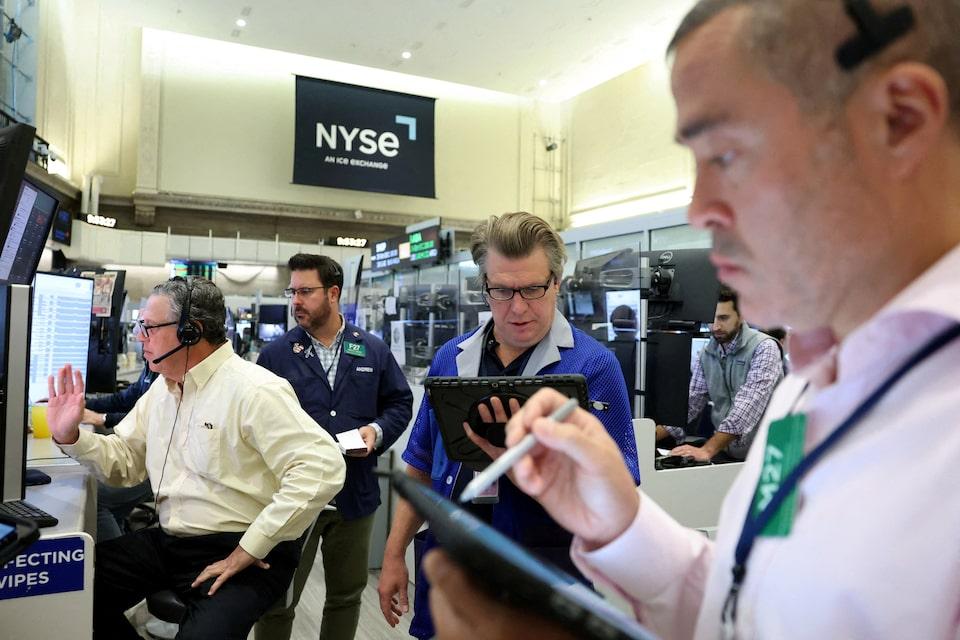
Stocks end week on dour note ahead of 3rd anniversary of bull market JPMorgan, Goldman among bank reports due in coming week S&P 500 earnings expected to rise nearly 9% in Q3 NEW YORK, Oct 10 (Reuters) - Investors will look to major banks' quarterly earnings reports in the coming week to help gauge the U.S. economy's health as the federal government shutdown has interrupted the flow of new data. Major U.S. equity indexes slumped on Friday, stalling the market's momentum, after comments from President Donald Trump ratcheted up trade tensions with China. Stocks ended the week on a dour note just before the benchmark S&P 500 (.SPX) , opens new tab is set to mark the third anniversary of the start of its current bull market run on Sunday. Sign up here. Markets had been overbought and due for some volatility, said Matthew Miskin, co-chief investment strategist at Manulife John Hancock Investments. "At the end of the day, it's going to come back to the economy," Miskin said. "It's going to come back to corporate profits, and earnings season is right around the corner." With the U.S. stock market's valuation around its highest level in five years and some concerns about over-inflated investor enthusiasm for technology and artificial intelligence, a strong third-quarter earnings season will be critical for equities to maintain their momentum. Despite Friday's sharp decline, the S&P 500 remains up over 11% year-to-date and within roughly 3% of its all-time high. "The market just keeps grinding higher," said Garrett Melson, portfolio strategist at Natixis Investment Managers Solutions. "The key underpinning of that is stronger earnings outlooks. ... When you look at the fundamentals, things continue to look good." The record-breaking run for U.S. stock indexes has been accompanied by recent strong gains for other assets, including gold, silver and bitcoin. Several high-profile officials have recently made cautious comments about markets, including Kristalina Georgieva, head of the International Monetary Fund, and JPMorgan CEO Jamie Dimon. JPMorgan (JPM.N) , opens new tab is among the major banks kicking off the earnings season when it reports on Tuesday, along with Goldman Sachs (GS.N) , opens new tab, Wells Fargo (WFC.N) , opens new tab and Citigroup (C.N) , opens new tab. Bank of America (BAC.N) , opens new tab and Morgan Stanley (MS.N) , opens new tab are due on Wednesday. Recent weak labor market data has raised concerns about growth and prompted the Federal Reserve to restart interest rate cuts. "Banks are a window into the U.S. economy," said Irene Tunkel, chief U.S. equity strategist at BCA Research. "If we see that consumers are still spending, if we see that demand for loans is improving, then I will start to think that perhaps we're not really edging towards contraction." Other companies due to report next week include healthcare company Johnson & Johnson (JNJ.N) , opens new tab and asset manager BlackRock (BLK.N) , opens new tab. S&P 500 companies overall are expected to have increased earnings by 8.8% in the third quarter from a year earlier, according to LSEG IBES. "A lot of the bullishness is built around the expected earnings growth," said Chuck Carlson, chief executive officer at Horizon Investment Services. "If we start to see cracks in that, that would not be good for the market in general." Attention also will be on Washington to see if Republican and Democratic lawmakers break an impasse and end a government shutdown that began on October 1. Markets have largely shrugged off the shutdown so far, but investors have warned that risks to the economy will increase the longer it goes on, while it is already hamstringing U.S. travel. Another issue for investors is the interrupted publication of key economic reports by government agencies. The monthly employment report, due on October 3, already has been delayed. Investors have been concerned that the shutdown also could affect next week's data, including releases related to inflation and retail sales. The monthly consumer price index report, which is closely watched for inflation trends, will be published on October 24, the U.S. Bureau of Labor Statistics said on Friday, after the CPI report was originally scheduled for this coming Wednesday. While the CPI report will allow the Social Security Administration to meet deadlines necessary for payment of benefits, the BLS said no other releases will be rescheduled or produced until regular government services resume. If the shutdown drags on through next week, there will be an impact on the October employment report when it is released, "which would make the numbers harder to interpret," Michael Pearce, deputy chief U.S. economist at Oxford Economics, said in a note on Friday. "With much of the regular economic data unavailable during the shutdown," Pearce wrote, "the data fog is thickening." https://www.reuters.com/legal/transactional/wall-st-week-ahead-investors-seek-economic-clues-bank-earnings-amid-data-fog-2025-10-10/
2025-10-10 20:34
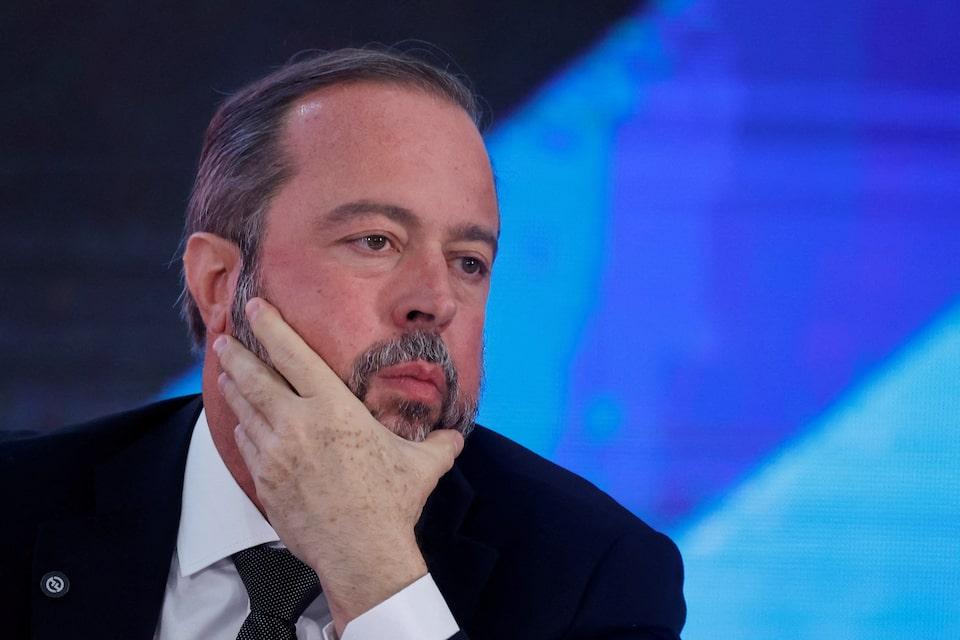
SAO PAULO, Oct 10 (Reuters) - Construction on a TikTok data center in Brazil will begin in six months, an official said on Friday, with the project expected to bring in some 50 billion reais ($9.11 billion) in investment. "Six months from now, we will begin construction to host TikTok's data center," Mines and Energy Minister Alexandre Silveira said in a statement. Sign up here. Plans for the project, which is expected to be based in the northeastern state of Ceara, were disclosed by Reuters in April, when three people familiar with the matter had said TikTok's Chinese parent company ByteDance was weighing the move. The facility has been planned for the Pecem port complex in Ceara, in a joint initiative between ByteDance and wind farm developer Casa dos Ventos, according to the sources. Silveira said Brazil has potential to attract data center investments given its renewable energy availability, also touting an executive order signed by President Luiz Inacio Lula da Silva last month aimed at luring such projects to the country through federal tax exemptions. In May, Casa dos Ventos announced it obtained two key approvals to move forward with a 300-megawatt data center project at the Pecem port complex. ($1 = 5.4910 reais) https://www.reuters.com/sustainability/climate-energy/brazil-begin-construction-tiktok-data-center-six-months-minister-says-2025-10-10/
2025-10-10 20:22
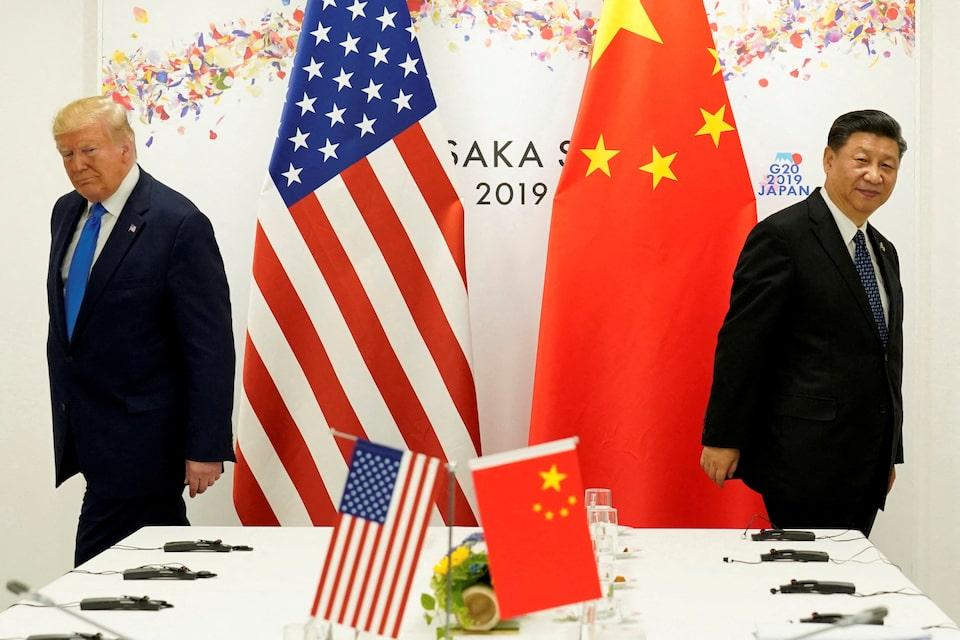
NEW YORK, Oct 10 (Reuters) - U.S. President Donald Trump on Friday said he was increasing tariffs on Chinese exports to the U.S. to 100% and imposing export controls on "any and all critical software" in a reprisal to recently announced export limits by China on rare earth minerals critical to tech and other manufacturing. Earlier, he said there was no reason to meet with President Xi JinPing in two weeks as planned, triggering a sell-off in the dollar, U.S. stocks, and a flight to safe-havens like Treasuries. Sign up here. China this week has tightened restrictions on exports of key rare earth materials and, separately, on Friday said it would impose extra port fees on U.S. ships from October 14. COMMENTS: BRIAN JACOBSEN, CHIEF ECONOMIST, ANNEX WEALTH MANAGEMENT, MENOMONEE FALLS, WISCONSIN: "Here we go again. Trade negotiation via social media can be very disruptive to markets, but a lot can change quickly. By setting a November 1st implementation date for tariffs, that leaves enough room to have people actually talk with each other about the issues instead of just lobbing press statements back and forth. Downside risks to growth and upside risks to inflation are now higher than they were just 12 hours ago, but those risks don’t have to become reality." CLAYTON TRIICK, HEAD OF PORTFOLIO MANAGEMENT FOR PUBLIC STRATEGIES AT ANGEL OAK CAPITAL, ATLANTA: "I think it's a little early on the bubble side. Volatility has been really low with the government shut down and no data, and I feel like vol should be higher. It needed a catalyst, and so this was the catalyst to repricing here." "You still have labor concerns, inflation concerns, and the idea that we've had no vol and just automatic buying of equities last week, I've actually thought when we get clarity of the government maybe reopening in the U.S. today, it may actually cause a sell-off because now you have data coming to the market and everyone waking up again. But we got it early. We got the Trump news on China. "So, I view that this vol needed to happen. I wouldn't say it's the start of the beginning of a much larger sell-off. Because I still feel that there's so much cash on the sidelines to buy the dip that I don't think it would sustain that much lower. But I wouldn't be surprised if equities traded in a sideways range for a while here. I don't see the market ripping higher right now." ANSHUL SHARMA, CHIEF INVESTMENT OFFICER, SAVVY WEALTH, NEW YORK: "Today’s sharp sell-off reflects renewed fears that the U.S. is escalating trade tensions with China, particularly the threat of a large hike in tariffs and the cancellation of the meeting with President Xi. These moves inject real risk into global supply chains, corporate margins, and investor sentiment." "We think this is less about valuations and more about sentiment. Fundamentally, corporate earnings and balance sheets remain healthy, but when policy uncertainty spikes, as it did with today’s tariff headlines, investors tend to de-risk quickly. In our view, this is a sentiment-driven pullback within an otherwise resilient market backdrop." "That said, if trade tensions persist and start to filter into earnings guidance or capital-spending plans, we think the market could see a more drawn-out adjustment. It’s unlikely to ‘pop’ a bubble overnight, but it may reset expectations and reintroduce volatility around policy risk. On the flip side, any sign of de-escalation or renewed dialogue could just as quickly revive risk appetite. "On balance, we think this episode serves as a reminder that policy shifts can still rattle markets, much like we saw in late March and early April, even when underlying fundamentals remain sound." MALCOLM POLLEY, DIRECTOR STRATEGIC MARKET ANALYSIS, STRATOS WEALTH MANAGEMENT, SEWICKLEY, PENNSYLVANIA: "I think it's weird that the market is still getting all bent out of shape over tariffs, when there is a lawsuit that the Supreme Court will hear next month about the constitutionality of all these. It would be beyond shocking to me if Trump wins. If that’s true, then all these tariff issues become moot, because Congress would have to approve them. So it’s surprising to me that this is the mountain that the market is choosing to die on. There have been a lot of murmurings about how expensive the markets have become, though, and there’s a feeling we should probably dial back risk as we probably were bound to have some kind of correction. Some of this is probably because it's Friday, and banks aren’t open on Monday. There are people that just don't want to own things that long because absolutely anything could happen over the weekend." JAMES ST. AUBIN, CHIEF INVESTMENT OFFICER, OCEAN PARK ASSET MANAGEMENT, SANTA MONICA, CALIFORNIA: "This is just an escalation of the trade war that has been somewhat subdued for the last several months. The market hasn't been putting a lot of worry into this trade war as things have settled down after Liberation Day. The main players here - China and the U.S. - were working it out if you will. But that seems to be in jeopardy in terms of where China and the U.S. may find reasons to re-engage and re-escalate this conflict. It certainly is concerning for markets that have been clearly pricing in very little risk and very little concern over whether it be the trade war or any other potential government shut down things like that for something to go wrong. Here, we have some potential for an escalation in a very important trade relationship and that rightfully creates a little fear in the market, which we haven't seen much of since Liberation Day.” JAMIE COX MANAGING PARTNER, HARRIS FINANCIAL GROUP, RICHMOND, VIRGINIA: "All the smart money is scooping up chip stocks on weakness today. Markets were rife for a little sell off, given such outsized gains since April, but, as with tariff month, it's yet another buying opportunity. The bull market is intact." TIM HOLLAND, CHIEF INVESTMENT OFFICER, ORION, OMAHA: "After months of more good news than bad and more certainty than uncertainty around trade – think the UK, EU and Japan deals and ongoing negotiations with China – today’s developments are a reminder that trade is not fully solved for, and macro and geo-political uncertainty persists. We are hopeful that US/China negotiations will continue and recent moves by both sides will prove to be more about tactics and positioning than not." "We don't think US stocks are in a bubble. That said, stocks have done quite well year to date and trade at elevated multiples. While we are not rooting for a meaningful pullback, any drop should put equities in a more constructive position from a valuation and a sentiment point of view. We would note that it seems to us the Administration has often gotten most aggressive on the trade front after the market has had a strong run, which it has had these past few months." MICHAEL ROSEN, CHIEF INVESTMENT OFFICER, ANGELES INVESTMENTS, SANTA MONICA, CALIFORNIA: "The threat of more tariffs is a reminder that market volatility will remain elevated while Trump is in the White House." "The actual tariff rate has been significantly below what was feared, and companies are adjusting to this new era in trade policy. We should expect to see markets back on track after this momentary bout of volatility." TOM BRUNI, HEAD OF MARKETS AND RETAIL INVESTOR INSIGHTS, STOCKTWITS, NEW YORK" "Trump's actions against China this morning were the excuse the market needed to begin correcting. Over the last week or so, we've seen momentum at the index level wane, with bitcoin, the S&P 500, and many leading stocks making marginally new all-time highs before falling back into their ranges. This, combined with the 'euphoric' feeling of almost any risk asset investors bought immediately going up, showed that sentiment was due for a reset; the market just needed a catalyst to begin that process." MATTHEW MISKIN, CO-CHIEF INVESTMENT STRATEGIST, MANULIFE JOHN HANCOCK INVESTMENTS, BOSTON: "The markets had become numb to geopolitical uncertainty and the trade war, but... it is still lingering out there as a risk." "The dollar is weaker, which does suggest there's not a flight to safety there." "The markets were overbought and really momentum heavy and they were due for some volatility. Is this a significant trigger? It may not be, just because we've already been going through this trade war for months now." "At the end of the day, it's going to come back to the economy. It's going to come back to corporate profits and earnings season is right around the corner.... It might be a healthy setback here after such a big run." "Earnings season actually is going to be in focus and we think that's going to be what the markets are going to be paying more attention to next week." "Valuations are stretched nearly across the board... The thing that has to come through is earnings. If earnings growth does not deliver, it is going to be very hard for this market to justify its current levels." GENE GOLDMAN, CHIEF INVESTMENT OFFICER AT CETERA INVESTMENT MANAGEMENT, EL SEGUNDO, CA: "The news is a surprise because just in two weeks President Trump was going to meet Xi to talk about trade and markets were very optimistic.” "The markets were fine this morning but with Trump saying that he's going to massively increase tariffs on China and that he's also not going to do the meeting in Korea that was supposed to take place with Xi in two weeks, this makes the markets jittery. It adds an additional risk." "With equities at high valuations this sell-off, is a sign of jitters. Everything is priced for perfection so the uncertainty increases market jitters. All of this adds uncertainty to economic growth. That's why we're seeing treasury yields fall. Oil is selling off too. Anything tied to the economy is weakening." JUAN PEREZ, DIRECTOR OF TRADING, MONEX USA, WASHINGTON: “It sends a message of negativity. What markets, for the most part, and investors need is a little bit clearer guidance, especially when trying to figure out if the Federal Reserve is going to deliver what they want, which is 50 basis points slashed off the interest rate for the remainder of the year.” “It brings, once again, to the table and to the spotlight that the United States is acting unilaterally to try to align trade and to try to get countries to align with trade. So ultimately, it does create a lot of negativity for the U.S. economy. It creates doubt about, where is this all going? What is the purpose? Is China really going to have to be very retaliatory moving forward in order to get the United States to negotiate better? So it creates a lot of doubt.” CHRIS SCICLUNA, HEAD OF RESEARCH, DAIWA CAPITAL MARKETS, LONDON: “It’s difficult to know how to respond to this (the Trump comments). The temptation, given what’s happened since the start of the year and the resilience of markets, is to fade these announcements and take this with a pinch of salt what he’s saying. We’ll have to see what the substance is.” STEVE SOSNICK, CHIEF MARKET ANALYST, INTERACTIVE BROKERS, CONNECTICUT: "The president's comments are not are obviously not helpful for the market. We finally got through the worst of the tariff concerns and now we find ourselves once again faced with another round of them and the tone of his comments was certainly quite aggressive - massive tariffs being threatened and no reason to talk to him (Xi). So this is definitely going in the wrong direction about U.S. China trade relations. It's definitely not a market friendly move and considering how quickly the market is selling off on this." ROBERT PAVLIK, SENIOR PORTFOLIO MANAGER, DAKOTA WEALTH, CONNECTICUT: "He's (Trump's) caught the market off guard again and thrown more question marks into a market that is being questioned about a very high degree of enthusiasm and being sort of scrutinized for having too much fluff built into it. Then Trump comes out with this surprise announcement, so you have a market that hit an air pocket and is selling off a little bit. When you reacted to it in the past, it's come back and burned you. Do you sell out of this market because of this? It's a giant question mark. It just creates more questions and volatility in the market." MIKE BROWN, SENIOR RESEARCH STRATEGIST, PEPPERSTONE, LONDON: "It’s a bolt from the blue from Trump and after the rare earth news earlier ... the timing is a big surprise. I would say as always with Trump and I think the market has learned this now, it’s difficult to determine what is the bluster and rhetoric and what he might follow through on. The key thing market participants will be focused on as we move into the weekend and next week, is: are we now looking at having to tear up the assumptions we did have that trade was a done deal and now look at a re-escalation of tensions between the two. If we are, and talks are in jeopardy, you are looking at a fairly chunky leg lower in risk in the days and weeks ahead." https://www.reuters.com/world/china/view-trump-threatens-massive-increase-china-tariffs-2025-10-10/
2025-10-10 20:08
September CPI report includes COLA for coming year Shutdown delays other economic data collection and processing Economists warn of volatility in October CPI due to missing data Fed expected to cut interest rates later this month WASHINGTON, Oct 10 (Reuters) - The U.S. Bureau of Labor Statistics said on Friday it would publish September's consumer inflation report on October 24 to assist the Social Security Administration with its annual cost-of-living adjustment for 2026 for millions of retirees and other benefits recipients. But the collection, processing and publishing of other official economic data remained suspended until the government resumed regular operations, the BLS said. The government shut down on October 1 after funding lapsed, delaying the release of September's closely watched employment report due last Friday. Sign up here. "This release allows the Social Security Administration to meet statutory deadlines necessary to ensure the accurate and timely payment of benefits," the BLS said in a statement. The Consumer Price Index report was originally scheduled for release on October 15. The Social Security Administration uses the CPI for Urban Wage Earners and Clerical Workers data from the third quarter of 2024 to the third quarter of 2025 to determine the annual cost-of-living adjustment for Social Security and Supplemental Security Income benefits for 2026. The programs benefit older Americans who have retired as well as the disabled and certain widows, widowers and children. The COLA announcement - a widely anticipated event each October among the households relying on those payments - is typically made shortly after the September's CPI report is released. In 2025, more than 72.5 million Social Security and SSI beneficiaries received a 2.5% COLA increase. The Senior Citizens League, one of the nation's biggest seniors groups, last month projected a 2.7% COLA raise in 2026, which would lift the average monthly benefit for retirees by $54 to $2,062 from $2,008. The rescheduled CPI report will be published just in time for the Federal Reserve's policy meeting on October 28-29. The U.S. central bank is expected to deliver another 25 basis points interest rate cut at that meeting. The Fed resumed easing policy last month, reducing its benchmark overnight interest rate by a quarter of a percentage point to the 4.00%-4.25% range, to aid the labor market. Investors will also welcome the reprieve from the official economic data blackout, but concerns are mounting over the quality of October's CPI report, with potential spillovers to November and December given the suspension of data collection. SHUTDOWN WILL IMPACT OCTOBER CPI DATA Consumer prices are collected throughout the month and the shutdown means a third of the October data is already missing. Though some prices are provided by third parties, economists warned missing information could inject volatility into the data. During the 2013 government shutdown, about 75% of the CPI data was collected that October. Economists expected something similar with this year's October report. "As prices rise on average, collecting prices only at the end of October may result in a higher average than if prices were collected throughout the whole month," said Veronica Clark, an economist at Citigroup. "This implies a larger change relative to average September prices. But it also means prices at the end of October would be more similar to average prices in November, implying a smaller change in November." The disruptions from the shutdown come as the BLS is already dealing with resource constraints because of budget and staffing cuts that have led to the suspension of data collection for portions of the CPI basket in some areas across the country. Economists also noted the BLS collects some prices every other month, which could distort the upcoming CPI reports. "However, assuming that November data are collected, the December price levels in the CPI would be no less accurate than they usually are," said Michael Gapen, chief U.S. economist at Morgan Stanley. "Still, it will be a long wait for clean CPI data. The December CPI will not be released until mid January." The CPI distortions would also impact the quality of the Personal Consumption Expenditures (PCE) Price Index, tracked by the Fed for its 2% target. Economists did not see the suspension of data collection hurting the employment report and said it could instead improve the quality of nonfarm payrolls estimates. The employment report has suffered from low response rates, which have partly contributed to large downward revisions to previously published payrolls numbers. "The payroll data reflect employment in the pay period that includes the 12th of the month, and so they might seem to be affected by the current shutdown, which is now approaching that time," said Gapen. "However, the establishments in the establishment survey will retain their information about who was employed over that period. The BLS may collect and tabulate it later, but the underlying employment information is unharmed." https://www.reuters.com/business/us-publish-september-cpi-report-this-month-despite-government-shutdown-2025-10-10/

2025-10-10 19:57
SANTIAGO, Oct 10 (Reuters) - Chile's mining regulator Sernageomin said on Friday it is investigating the death of a worker at BHP's Escondida, the world's largest copper mine. Two sources with knowledge of the matter said mining operations continued normally after the incident. Sign up here. BHP in a statement said a contractor had died on Thursday. An internal memo from Chilean construction company Workmate described the worker as a crane operator at Escondida. https://www.reuters.com/world/americas/chile-mine-regulator-probes-worker-death-bhps-escondida-2025-10-10/

2025-10-10 19:27
BUENOS AIRES, Oct 10 (Reuters) - OpenAI and Sur Energy have signed a letter of intent for a data center project in Argentina requiring an investment of up to $25 billion, the South American nation's government said on Friday. The project would involve a large-scale facility with a capacity of up to 500 megawatts to support advanced artificial intelligence computing, according to a government statement. Sign up here. Structured under Argentina's RIGI tax break scheme which went into effect last year, the project, if completed, would be "one of the largest technology and energy infrastructure initiatives," in the country's history, the statement said. OpenAI, which now has more than 800 million weekly ChatGPT users, became the world's most valuable startup, with a $500 billion valuation, after completing a secondary share sale last week. "We are proud to announce plans to launch Stargate Argentina, an exciting new infrastructure project in partnership with one of the country's leading energy companies, Sur Energy," OpenAI CEO Sam Altman said on social media. Altman added that it was the first Stargate project in Latin America, a region "full of talent, creativity and ambition." Earlier this week OpenAI had touted new partnerships at its developer conference, revealing a flurry of collaborations with companies including Spotify(SPOT.N) , opens new tab Zillow(ZG.O) , opens new tab and Mattel(MAT.O) , opens new tab while debuting a set of fresh tools to help developers build new applications. https://www.reuters.com/world/americas/openai-sur-energy-weigh-25-billion-argentina-data-center-project-2025-10-10/