2025-10-10 07:20
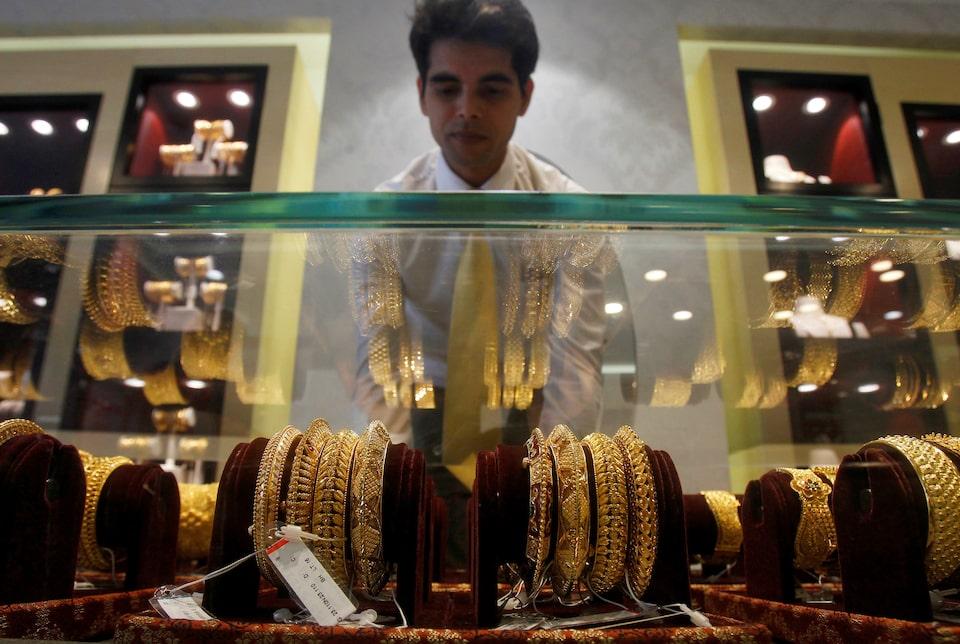
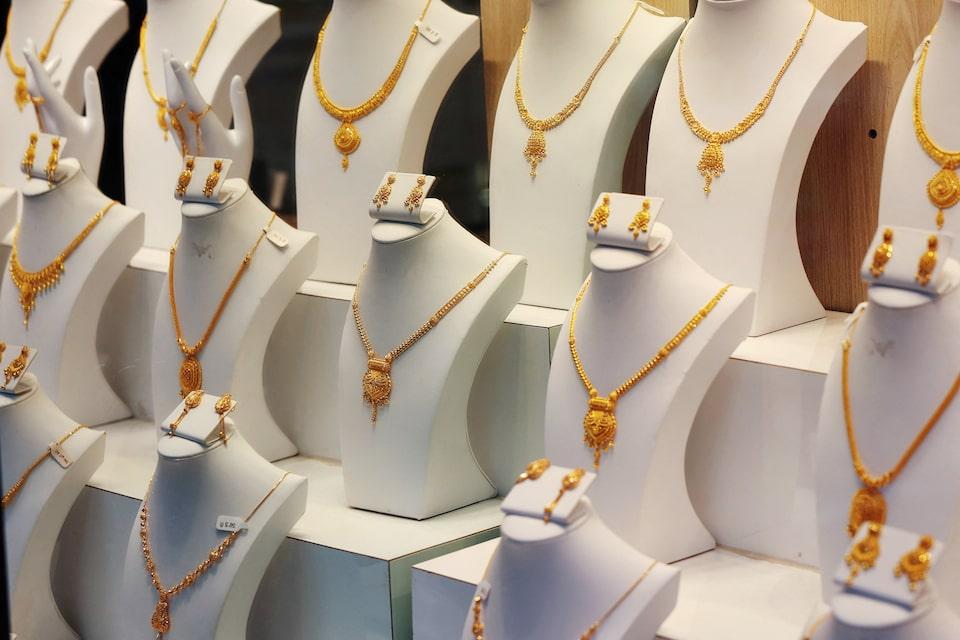
Spot gold breached $4,000 per ounce ceiling on Wednesday India dealers charge a premium of up to $15/oz this week Chinese markets open after October 1-8 Golden Week holiday Oct 10 (Reuters) - Physical gold demand in India held firm this week despite a record-breaking price rally, as jewellers and investors snapped up bullion ahead of key festivals later this month, while buying in China was subdued in post-holiday trade due to higher rates. In Hong Kong, residents rushed to sell everything from gold bars to rings to cash in on the record price rally. Sign up here. Spot gold prices rose above $4,000 per ounce for the first time on Wednesday, as broader geopolitical and economic uncertainty, and U.S. rate-cut expectations boosted bullion demand. Indians will celebrate Dhanteras and Diwali this month, festivals during which buying gold is considered auspicious and which are the busiest bullion-buying days in the country. Indian dealers were quoting a premium of up to $15 per ounce over official domestic prices, inclusive of 6% import and 3% sales levies, up from the last week's premium of $9. "Investment demand is really strong right now. Expecting prices to rise further, investors didn’t mind paying extra even over record high prices," said a Mumbai-based bullion dealer with a private bank. Domestic gold prices were trading around 121,000 rupees ($1,364.10) per 10 grams on Friday after hitting a record high of 123,677 rupees earlier in the week. Retail jewellery demand is still slow, but jewellers are hoping it picks up next week with Diwali around the corner, said a New Delhi-based dealer. Demand in top consumer China was lacklustre after a long holiday, with discounts of about $48-$60 an ounce being offered to lure buyers. "People are investing in gold bars and coins as safe havens but jewellery demand has been low. People are looking to buy, but they are waiting for prices to come down," said Peter Fung, head of dealing at Wing Fung Precious Metals. In Hong Kong, gold was sold anywhere between a discount of $0.5 to a premium of $1, while in Singapore , gold traded between a discount of $0.5 to a premium of $1.30. In Japan, bullion was sold at par to a premium of $1 per ounce over spot prices. ($1 = 88.7030 Indian rupees) https://www.reuters.com/world/china/asia-gold-festive-buying-props-up-demand-india-china-muted-post-holiday-trade-2025-10-10/
2025-10-10 07:13
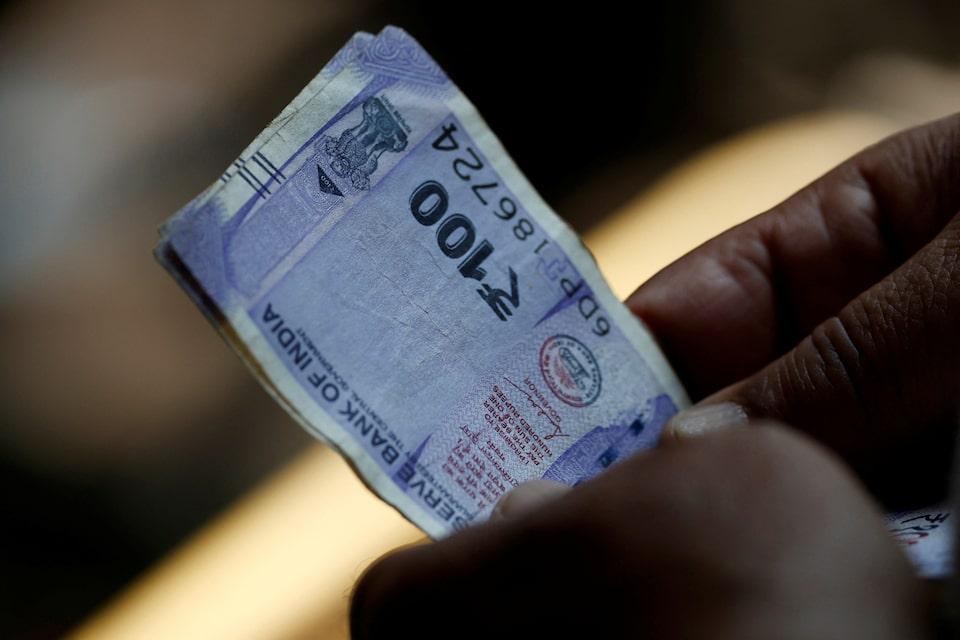
MUMBAI, Oct 10 (Reuters) - The Indian rupee's fall to an all-time low has split analysts on what comes next for the South Asian currency. While some predict further weakness looming, strained by sluggish trade and portfolio flows, others reckon that the worst may be over as valuations turn supportive. The diverging views underscore the cross-currents affecting the Indian economy, which is pressured by punitive trade tariffs imposed by the U.S. and a lull in foreign inflows, while the domestic economy remains resilient. Sign up here. Goldman Sachs, in a note released late last month, said that much of the external headwinds was likely already reflected in the exchange rate. The rupee now looks undervalued both against the dollar and on a trade-weighted basis, the note added. The bank likened the rupee's recent decline to being caught in a "torrential monsoon", weighed down by the combination of U.S. tariffs and higher visa costs for India's tech sector. This has reflected in its underperformance; the Indian rupee is the weakest among emerging Asia currencies so far this year. BofA Global Research concurred, saying the rupee's valuation has turned appealing after recent losses. The bank forecast the rupee recovering to 86 per U.S. dollar by the end of 2025. MORE WEAKNESS TO COME However, analysts did not rule out the possibility of the rupee dropping further towards 90 in the light of the uncertainty around U.S. tariffs. Every single day or week that passes without a breakthrough in U.S.–India trade talks adds pressure, said HSBC's head of Asia FX research Joey Chew, adding that the rupee could recover ground towards 87 if the U.S. reduces tariffs on Indian goods. The rupee has fallen 3.7% against the dollar this year and was quoted at 88.78 on Friday, just shy of the lifetime low of 88.80 touched last week. MUFG said it expects the currency to stay on the defensive, forecasting a decline toward 89.75 "over time". It warned that sustained tariffs could trim up to 1% from India's gross domestic product, potentially keeping capital inflows subdued. https://www.reuters.com/world/india/undervalued-or-still-vulnerable-indian-rupees-path-splits-analysts-2025-10-10/
2025-10-10 06:56
Gold hit a record high of $4,059.05 on Wednesday Silver hovers below record high of $51.22/oz hit on Thursday Platinum posts weekly loss, palladium sees weekly gain Oct 10 (Reuters) - Gold pared some gains on Friday after briefly rallying above the $4,000 an ounce milestone for a second time this week as U.S. President Donald Trump's warning of possible fresh tariffs on China accelerated a flight to safe-haven assets. Spot gold was up 0.4% at $3,989.49 per ounce as of 1:40 p.m. ET (1740 GMT). The metal logged a 2.7% gain this week. Sign up here. U.S. gold futures for December delivery settled 0.7% higher at $4,000.40. U.S. President Donald Trump said on Friday there is no reason to meet with China's President Xi Jinping in two weeks in South Korea as planned. The U.S. is calculating a massive increase in tariffs on Chinese imports, he said in a Truth Social post. Following the news, gold briefly topped the $4,000/oz milestone, climbing to a session high of $4,022.52. "Heating up the trade war again will tank the dollar and be good for safe-havens," said Tai Wong, an independent metals trader. The U.S. dollar (.DXY) , opens new tab fell 0.5%, making greenback-priced bullion cheaper for overseas buyers. Markets are also closely monitoring the risks related to the potential collapse of the French government and the ongoing government shutdown in the United States. Besides, investors are anticipating the U.S. Federal Reserve to cut interest rates by 25 basis points each in October and December. Non-yielding bullion, which hit a record high of $4,059.05 on Wednesday, is traditionally considered a hedge during times of broader uncertainty. Geopolitical risks, alongside strong central bank gold-buying, exchange-traded funds inflows, U.S. rate cut expectations and economic uncertainties stemming from tariffs, have all contributed to gold's rally. "On balance, there is a risk of a short-term pullback in prices given how quickly gold prices have risen in recent weeks. But over the next couple years, gold prices are likely to grind higher," Hamad Hussain, climate and commodities economist at Capital Economics, said. Silver is also benefiting from the same factors driving gold's rally, alongside concerns about supply deficit and rising demand for the metal. Silver rose 2.1% to $50.13 per ounce, a day after touching a record high of $51.22. It has gained more than 73% so far this year. Silver futures on Comex for December 2025 were trading at $47.32. "Silver's backwardation is a loud signal — physical demand is crushing paper supply... If backwardation holds and physical demand keeps rising, silver breaking and sustaining above $50 is very realistic," said Alex Ebkarian, COO at Allegiance Gold. Backwardation is when a commodity's spot price is higher than its futures price. Among other metals, platinum was down 1.4% at $1,596.55 and logged a weekly loss, while palladium eased 0.3% to $1,406.87, posting a more than 12.6% weekly rise. https://www.reuters.com/world/india/gold-heads-eighth-weekly-gain-strong-safe-haven-demand-2025-10-10/
2025-10-10 06:52
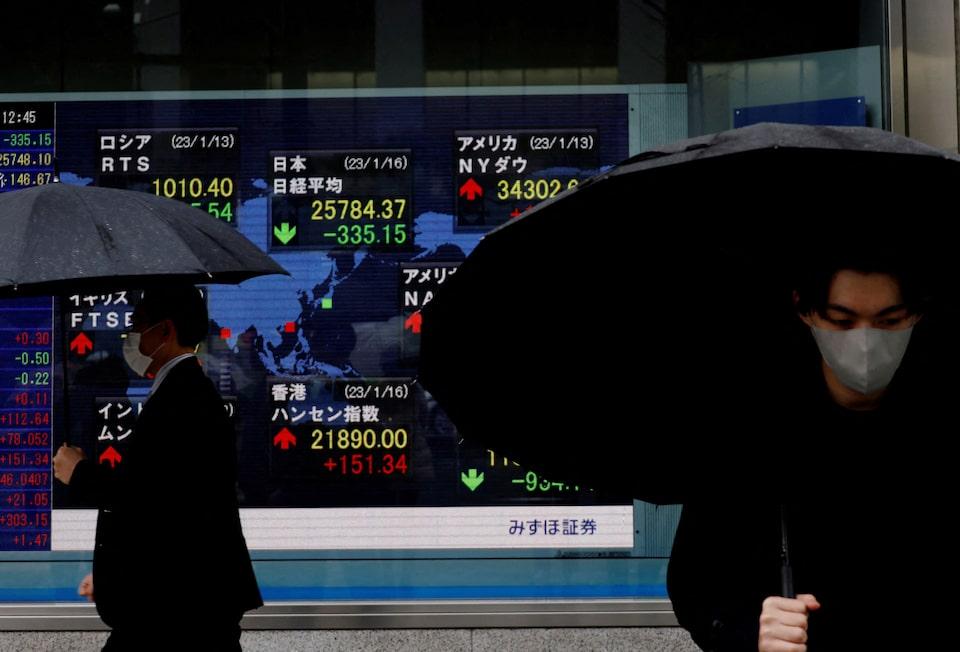
S&P 500, Nasdaq post biggest one-day pct drops since April Dollar falls after Trump comments on China Yen loses for the week after political changes in Japan NEW YORK, Oct 10 (Reuters) - Stocks fell sharply on Friday, with the S&P 500 and Nasdaq suffering their biggest one-day percentage declines since April 10, while Treasury yields dropped and the U.S. dollar weakened as comments by President Donald Trump reignited worries over a U.S.-China trade war. After markets closed on Friday, Trump said he was raising tariffs on Chinese exports to the U.S. to 100% and imposing export controls on "any and all critical software" in a reprisal against recently announced export limits by China on rare earth minerals critical to tech and other manufacturing. Sign up here. The announcement followed an earlier Trump social media post on Friday that signaled new levies against Chinese goods were in the offing, while threatening to cancel a meeting with President Xi Jinping. The news sent markets into turmoil, stirring concerns over how the trade war will affect the U.S. economy. Trump's April 2 "Liberation Day" tariff announcement set off some of the most severe market volatility in years. Technology-related shares led the day's tumble on Wall Street, with the S&P 500 technology index (.SPLRCT) , opens new tab falling 4% on the day and an index of semiconductors (.SOX) , opens new tab declining 6.3%. U.S.-listed shares of Chinese firms also dropped. E-commerce firm Alibaba Group Holding finished 8.4% lower and JD.com Inc declined 6.2%. Shares added to losses after the bell. Oil prices fell more than $2 a barrel as trade worries cast a shadow over the demand outlook, while spot gold rallied back above the $4,000 an ounce milestone. "He's caught the market off guard again and thrown more question marks into a market that is being questioned about a very high degree of enthusiasm and being sort of scrutinized for having too much fluff built into it," said Robert Pavlik, senior portfolio manager at Dakota Wealth in Fairfield, Connecticut. At the close, the Dow Jones Industrial Average (.DJI) , opens new tab was down 878.82 points, or 1.90%, at 45,479.60, the S&P 500 (.SPX) , opens new tab was down 182.60 points, or 2.71%, at 6,552.51 and the Nasdaq Composite (.IXIC) , opens new tab was down 820.20 points, or 3.56%, at 22,204.43. U.S. stock indexes had hit record highs earlier this week, lifted in part by expectations of further interest rate cuts from the Federal Reserve and optimism about artificial intelligence-related deals. The three major U.S. stock indexes posted losses for the week, with the S&P 500 registering its biggest weekly percentage decline since May. MSCI's gauge of stocks across the globe (.MIWD00000PUS) , opens new tab fell 20.96 points, or 2.11%, to 972.51. European shares (.STOXX) , opens new tab ended 1.25% lower, erasing weekly gains in a last-minute slide tied to the comments from Trump. U.S. Treasury yields fell to multi-week lows as investors moved to safe havens following Trump's early comments. Movement in U.S. sovereign debt yields had been in a holding pattern in recent days as a U.S. federal government shutdown, which began October 1, has halted the production of key economic indicators. In afternoon trading, the yield on the benchmark U.S. 10-year Treasury note fell to a more than one-month low and was last down 9.1 basis points (bps) at 4.057%. The U.S. dollar dropped after Trump's remarks, which lifted the euro and the yen against the greenback, while currencies linked to commodities and raw materials, including the Australian dollar, fell. The dollar index was last down 0.4% at 98.99. It is still set for a weekly gain of 1.66%, the largest since September 2024, after the Japanese yen and euro this week were hurt by fiscal concerns in their regions. The yen was last up 0.86% against the greenback at 151.73 per dollar on the day, while the euro was up 0.38% on the day at $1.1607. The Japanese currency has dropped on concerns that the Bank of Japan may not hike interest rates again this year after fiscal dove Sanae Takaichi's surprise victory to lead the ruling party. Japanese Finance Minister Katsunobu Kato said on Friday that the government was concerned about excessive volatility in the foreign exchange market. In France, President Emmanuel Macron late on Friday named Sebastien Lecornu as prime minister, reappointing him to a job he had quit earlier this week. Markets were rocked on Monday after Lecornu tendered his resignation. French blue chip stocks (.FCHI) , opens new tab dropped 2% this week. U.S. crude fell $2.61 to settle at $58.90 and Brent fell $2.49 to settle at $62.73. Spot gold rose 0.85% to $4,008.74 an ounce. https://www.reuters.com/world/china/global-markets-wrapup-1-2025-10-10/
2025-10-10 06:49
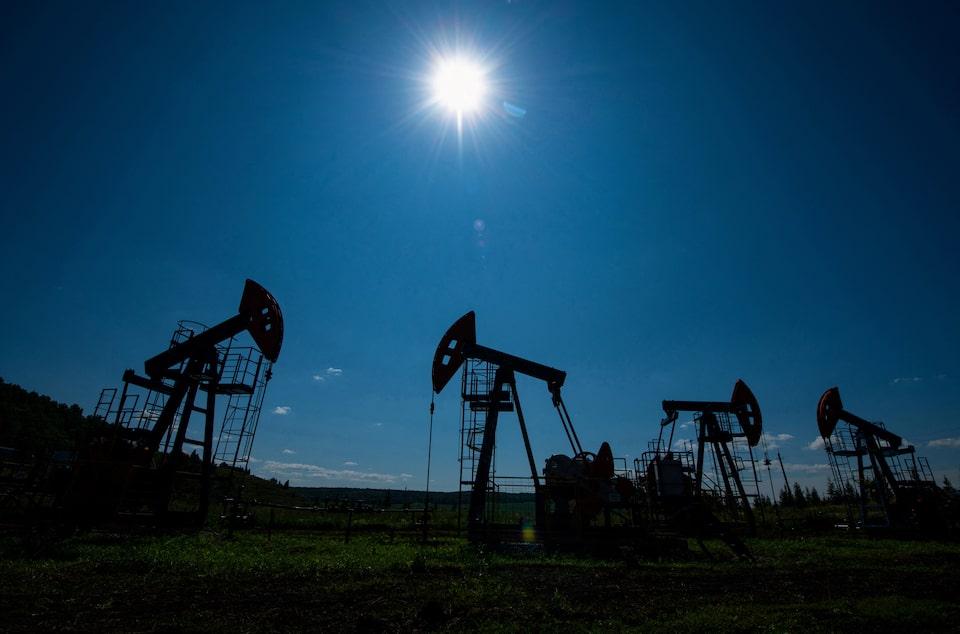
Brent and WTI crude prices fall to levels last seen in spring Gaza ceasefire shifts focus to potential oil surplus OPEC production increases, U.S. output seen leading glut HOUSTON, Oct 10 (Reuters) - (This Oct. 10 story has been corrected to say that Brent's settlement was at its lowest since May 7, not May 5, in paragraph 3) Brent and U.S. crude futures fell more than $2 a barrel, or more than 3%, on Friday as U.S. President Donald Trump's threat to impose increased tariffs on China cast a shadow over the demand outlook in a market seen as oversupplied. Sign up here. "The sell-off was driven by a shift to risk-off markets following Trump's post threatening tariffs on Chinese goods," said Giovanni Staunovo, an analyst with UBS. Brent crude futures settled at $62.73 a barrel, down $2.49, or 3.82%, the lowest since May 7. U.S. West Texas Intermediate crude finished at $58.90 a barrel down $2.61, or 4.24%, the lowest since early May. "Today is the culmination of a variety of factors of which Trump's threat of a massive increase in tariffs on China is just the latest," said Andrew Lipow, president of Lipow Oil Associates. Production increases from OPEC, additional output gains in North and South America, and the loss of geopolitical risk after the Gaza ceasefire agreement "are all factors that can be layered on top of Trump's announcement this morning of tariffs on China," Lipow said. Trump, who was due to meet Chinese President Xi Jinping in about three weeks in South Korea, complained on social media about what he characterized as China's plans to hold the global economy hostage, after China dramatically expanded its export controls on rare earth elements on Thursday. China dominates the market for such elements, which are essential to tech manufacturing. In addition to threatening to cancel the meeting with Xi, Trump said he may impose a massive increase in tariffs on Chinese goods. Israel and the Palestinian militant group Hamas signed a ceasefire agreement on Thursday in the first phase of Trump's to end the war in Gaza. Under the deal, which Israel's government ratified on Friday, fighting will cease, Israel will partially withdraw from Gaza, and Hamas will free all remaining hostages it captured in the attack that precipitated the war, in exchange for hundreds of prisoners held by Israel. Numerous vessels have been attacked by the Iran-aligned Houthis in Yemen since 2023, targeting ships they deem linked to Israel in what they described as solidarity with Palestinians over the war in Gaza. The Gaza ceasefire deal means the focus can move back to the impending oil surplus, as OPEC proceeds with the unwinding of production cuts, said Daniel Hynes, an analyst at ANZ. A smaller-than-expected November hike in output agreed by the Organization of the Petroleum Exporting Countries and allies (OPEC+) on Sunday eased some of those oversupply concerns. "Markets' expectations for a sharp ramp-up in crude supply have not manifested themselves in substantially lower prices," BMI analysts said in a note on Friday. Investors are also worried that a prolonged U.S. government shutdown could dampen the American economy and hurt oil demand in the world's largest crude consumer. https://www.reuters.com/business/energy/oil-little-changed-amid-fading-risk-premium-after-gaza-deal-2025-10-10/
2025-10-10 05:47
CANBERRA, Oct 10 (Reuters) - Australia's Queensland state government said on Friday it would run coal power plants at least into the 2040s, reversing a previous plan to pivot rapidly to renewables and in turn making national emissions reduction targets harder to achieve. The centre-right Liberal National Party won last year's election in Queensland, a huge chunk of land in Australia's northeast where more than 60% of electricity comes from coal-fired plants that are mostly owned by the state. Sign up here. "The former Labor government's ideological decision to close coal units by 2035, regardless of their condition, is officially abolished," said Queensland Treasurer and Energy Minister David Janetzki, laying out a five-year energy plan. "Queensland's coal-fired fleet is the youngest in the country and state-owned coal generators will continue to operate for as long as they are needed in the system and supported by the market," he said. The announcement highlights the divide between Australia's major political parties on climate policies. Labor, which holds power in the federal parliament and most states and territories, advocates the rapid development of renewable energy. The federal government committed last month , opens new tab to cutting national emissions by 62%-70% from 2005 levels by 2035. Queensland's previous Labor government said 80% of the state's power would be from renewables by then, and it would have "no regular reliance on coal". Many Liberal and National Party figures, however, oppose what they see as a too-rapid rollout of renewable energy that would blight the landscape and hobble the economy. Janetzki said sticking with coal generation in Queensland – a major coal producer - would save consumers money. His plan envisions running coal plants at least as long as they were designed to run, which in several cases is until around the 2040s. The plants' lifespans could also be extended where needed, according to the plan. The five-year roadmap also calls for construction of a new gas-fired plant in the state and commits A$1.6 billion ($1.1 billion) to maintain the state's coal, gas and hydroelectric plants, and A$400 million to drive private investment in renewables, gas and energy storage. "This is a sensible and pragmatic plan, built on economics and engineering, not ideology," Janetzki said. ($1 = 1.5232 Australian dollars) https://www.reuters.com/sustainability/boards-policy-regulation/australias-queensland-reverses-policy-pledges-keep-using-coal-power-2025-10-10/