2025-10-08 22:32
Oct 8 (Reuters) - French authorities on Wednesday denied an important maritime concession for the Aquind electricity interconnector project, effectively halting progress on the planned high-voltage link between France and the United Kingdom. While the project received environmental approval in July, the concession required a national-level recognition of public interest, which was not validated, the Seine-Maritime prefecture said in a statement on Wednesday. Sign up here. "We are surprised by this decision, given the growing need for interconnection identified at the European level, particularly between France and Great Britain, and the policies implemented in this respect," said Martin Dubourg, Aquind director for France. While presenting a risk for the project, the decision does not call into question its relevance or eventual completion, he added. With a capacity of 2 gigawatts, the interconnector is expected to transmit over 17 TWh of electricity annually between France and Great Britain, according to the project's website. https://www.reuters.com/business/energy/france-blocks-maritime-concession-france-uk-power-interconnector-project-2025-10-08/

2025-10-08 22:02
SINGAPORE, Oct 9 (Reuters) - Cryptocurrency exchange Gemini said on Thursday it has launched an Australian operation as the firm expands into the country, offering its digital currency exchange services to tap into growing demand. "We think that there's enough market opportunity for us to build a local platform," Saad Ahmed, head of APAC at Gemini, told Reuters on the sidelines of the TOKEN2049 crypto conference in Singapore last week. Sign up here. "We have some institutional customers from Australia, and I think that is another area where we've seen some growth. So having a team on the ground, building a business which is localised, which is optimised for Australian users... makes sense for us." The crypto adoption rate in the country rose to 31% as of early this year, up from 28% last year, according to the Australian Independent Reserve Cryptocurrency Index report released in February. New York City-based Gemini, led by the billionaire twins Tyler and Cameron Winklevoss, made its debut on the Nasdaq last month after raising $425 million in an initial public offering. The launch of Gemini's Australian operations, named Gemini Intergalactic Australia, will allow the company to offer crypto exchange services in the country after registration with the Australian Transaction Reports and Analysis Centre (AUSTRAC) as a digital currency provider, it said in a statement. Prior to the move, customers in Australia were able to use Gemini's platform but were serviced through the firm's global arm. https://www.reuters.com/sustainability/boards-policy-regulation/crypto-exchange-gemini-launches-australian-arm-2025-10-08/

2025-10-08 21:43
MUMBAI/LONDON, Oct 8 (Reuters) - A deputy of British finance minister Rachel Reeves has told other ministers that they will not be able to use an emergency reserve to fund pay rises in their departments, ahead of what is expected to be a tough budget in November. Chief Secretary to the Treasury James Murray said the government would not allow public spending to spiral out of control and would clamp down on access to the Treasury Reserve which stands at about 4 billion pounds ($5.37 billion). Sign up here. Ministers making a claim on the fund would have to show the Treasury how they have used up all savings options and departments would have to repay successful claims in the future. "This prudent but tough approach to public spending is what will help build a stable economy," Murray said in a letter to the rest of the cabinet which the finance ministry shared with reporters on Wednesday. Reeves is expected by economists to raise taxes and make spending cuts totalling 25 billion to 30 billion pounds in her budget on November 26 in order to stay on course to meet her targets for fixing the public finances. "Reserve access will only be granted on an exceptional basis, will not be granted for pay pressures and claims that are made will need to be repaid in future years," Murray said. Some government departments have agreed bigger pay rises for public sector workers than were budgeted for earlier this year, which may now have to be financed by job cuts or reduced provision of services to the public. ($1 = 0.7444 pounds) https://www.reuters.com/world/uk/uk-treasury-bars-ministers-using-emergency-reserve-fund-public-sector-pay-rises-2025-10-08/

2025-10-08 21:23
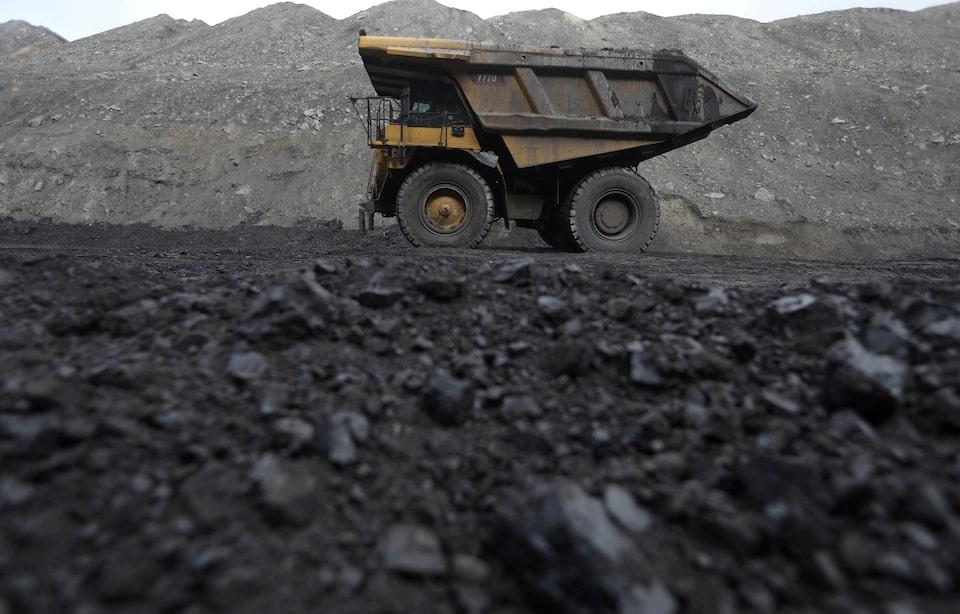
Oct 8 (Reuters) - The Trump administration has postponed a scheduled sale of coal leases on federal lands in Wyoming two days after a disappointing auction in Montana, an Interior Department spokesperson said on Wednesday. The Bureau of Land Management, a division of Interior that manages 245 million acres of federal lands, had been expected to keep processing permits and leases for oil, gas and coal operations during the government shutdown, according to contingency plans published last week. Sign up here. A sale of 3,508 acres of federal coal reserves in Wyoming's Campbell and Converse counties had been scheduled for Wednesday morning. The lease area contains 365 million tons of recoverable coal. Interior said it would post a new date for the sale but did not give a reason for the postponement. BLM held a lease sale for 1,262 acres in Big Horn County, Montana on Monday that attracted one bid from the Navajo Transitional Energy Company, which operates the nearby Spring Creek Mine. The bid of $186,000 for a lease with an estimated 167.5 million tons of recoverable coal equates to less than a penny per ton. The Interior Department blamed the administrations of former Presidents Joe Biden and Barack Obama, both Democrats, for the weak industry interest. "While we would have liked to see stronger participation, this sale reflects the lingering impact from Obama and Biden’s decades long war on coal which aggressively sought to end all domestic coal production and erode confidence in the U.S. coal industry," the Interior Department said in a statement. "Fortunately, President Trump and his Administration are rebuilding trust between industry and government as part of our broader effort to restore American Energy Dominance." Obama and Biden had toughened environmental regulations on coal to reduce pollution and climate impact, and encourage a transition to renewable energy sources. BLM has not yet accepted the NTEC bid because under the leasing process it first must determine whether it represents fair market value. NTEC had argued in sale documents that the fair market value of the coal should be close to the minimum bid of $100 per acre required by law. The company did not respond to requests for comment. President Donald Trump has vowed to revive coal leasing on federal lands so coal can fuel more of the nation's soaring electricity demand tied to artificial intelligence. https://www.reuters.com/business/energy/us-postpones-wyoming-coal-lease-sale-after-disappointing-montana-auction-2025-10-08/
2025-10-08 21:02
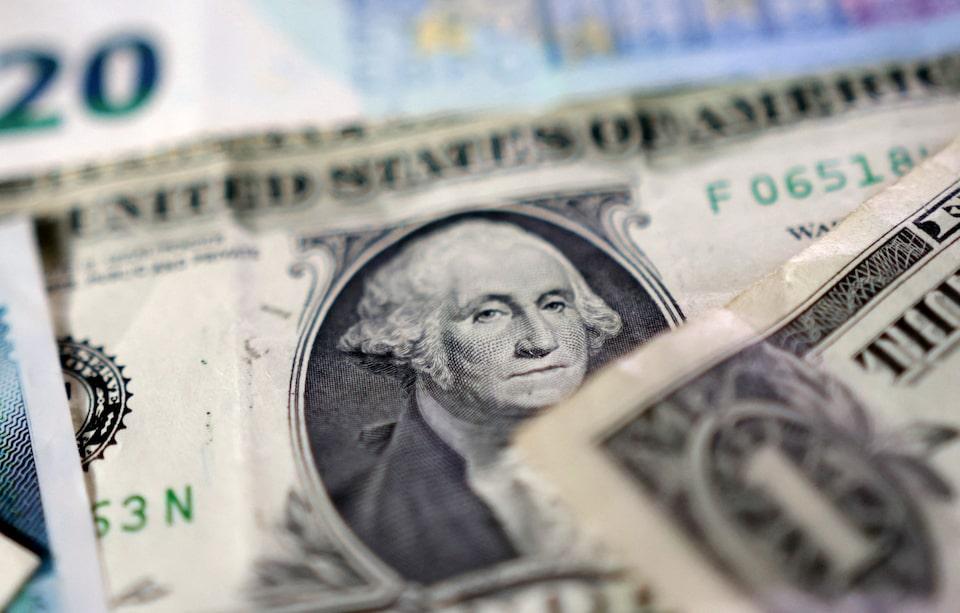
ORLANDO, Florida, Oct 8 (Reuters) - Well, that time out in the 'everything rally' didn't last long. Wall Street and precious metals hit new highs on Wednesday as investors shrugged off any potential reason to play safe, such as the U.S. government shutdown, and resumed buying. More on that below. In my column today I look at the amount of foreign-owned Treasuries held at the Fed, which has just fallen to a 13-year low, and what this might tell us about 'de-dollarization' and overseas demand for U.S. assets. Sign up here. If you have more time to read, here are a few articles I recommend to help you make sense of what happened in markets today. Today's Key Market Moves Today's Talking Points: * Let it loose! Policymakers around the world are engaging in a remarkable drive to juice growth, simultaneously revving up both their monetary and fiscal engines to full tilt. What makes it so extraordinary is the economic and financial backdrop it is being done against. A U.S. capex boom in AI is driving solid growth and earnings expectations, inflation in much of the developed world is above the 2% target, financial conditions are the loosest in years, public debt dynamics are deteriorating, and many markets - stocks, gold and crypto - are at record highs. It's safe to say, the easing push is not without risks. * Is Japan trailblazing again? Zooming in on that a bit more, and the focus settles on the easy policy king: Japan. From 'NIRP' and 'ZIRP' to yield curve control, from QE to record public debt, Japan in recent decades has single-mindedly pursued policies often considered unorthodox, unworkable or unrepeatable elsewhere. Yet where Japan has led, the developed world has usually followed, and the emergence of fiscal dove Sanae Takaichi as the country's next prime minister could be the latest example of this. "Japan is once again trailblazing the path for western markets," says SocGen's Albert Edwards. * Wait a minute Minutes of the U.S. Federal Reserve's last policy meeting released show that division among policymakers on the need for further interest rate cuts is perhaps deeper than first thought, or was previously indicated by Chair Jerome Powell. "Most participants" thought it appropriate to lower rates towards a more neutral level due to labor market risks, but at the same time "a majority of participants" emphasized the upside risks to inflation, which has been running above target for over four years. Maybe two more rate cuts this year aren't a slam dunk? Fed custody holdings ring 'de-dollarization' alarm The amount of U.S. Treasuries held at the New York Fed on behalf of global central banks has slumped to its lowest in over a decade, casting renewed doubt on foreign appetite for U.S. sovereign debt and other dollar-denominated assets. This may seem a little surprising. Recent data, including the Treasury International Capital and International Monetary Fund's 'Cofer' foreign exchange reserves reports, show overseas demand for Treasuries and dollar assets holding up pretty well. These two data sets are the gold standard measurements for U.S. capital flows and global FX reserves. But they are released with long lags - the last set of TIC data is for the month of July, and the latest Cofer numbers are for the second quarter. The New York Fed custody holdings figures aren't as comprehensive - central banks can hold their Treasury bonds elsewhere - but they are weekly, which in the world of cross-border, central bank capital flows is virtually 'real time'. And right now, these custody holdings are falling. Fast. The latest figures show that the value of U.S. Treasuries held at the New York Fed on behalf of foreign central banks is $2.78 trillion. That's the lowest since August 2012, and down $130 billion in just two months. Indeed, it's notable that peak holdings over the last year and a half, of $2.95 trillion, were in March-April this year, coinciding with peak market volatility around U.S. President Donald Trump's 'Liberation Day' tariff chaos. According to this temperature check, foreign central banks seem to have cooled on Treasuries since then. Fed custody holdings are only one measure of overseas demand for Treasuries. Could they be a precursor for upcoming TIC and Cofer reports? DISSECTING DOLLAR SHARE OF FX RESERVES The latest TIC data show that foreign central banks bought a net $17.1 billion of U.S. Treasuries in July. That brings net purchases in the first seven months of this year to $38 billion, according to JPMorgan analysts, some $4 billion more than the same period in 2024. Meanwhile, the latest Cofer figures show that, adjusting for the dollar's steep depreciation, central banks were actually net buyers of dollar reserves in the April-June period. Analysts at Deutsche Bank estimate central banks' purchases of dollar-denominated securities in the quarter - much of which will have been U.S. Treasury bills and notes - nudged $50 billion. These are modest sums when set against the $12 trillion global FX reserves universe and $29 trillion U.S. Treasuries market. But they still point to consistent demand for Treasuries from reserve managers, and pour cold water on the 'de-dollarization' narrative. That's the notion that the world, alarmed at many of U.S. President Donald Trump's policy agendas and America's deteriorating fiscal health, is reducing its exposure to dollar-denominated assets. The dollar has weakened significantly, but overseas demand for U.S. stocks and bonds remains solid, especially from private sector investors. "Latest data releases confirm there is no substantial evidence of an abrupt rotation away from U.S. Treasuries after Trump's April tariff announcements," JPMorgan analysts wrote on Friday. But as noted, the TIC and Cofer figures are dated. We are now in October, and the Fed's weekly custody holdings suggest there may have been a shift since the summer. Standard Bank's Steve Barrow says the decline in custody holdings raises a red flag because it has come at a time of notable dollar weakness. Rapid declines in custody holdings more often occur when the dollar surges because central banks are forced to sell some of their Treasuries to raise cash for FX intervention. "The fact that these custody holdings have fallen so fast might be a sign that central banks have become less enamoured of the Treasury market – and the dollar – in recent months," Barrow wrote on Monday. Weekly data can be volatile, and there are much more comprehensive assessments of central banks' appetite for U.S. Treasuries. But could Fed custody holdings be the canary in the 'de-dollarization' coal mine? What could move markets tomorrow? Want to receive Trading Day in your inbox every weekday morning? Sign up for my newsletter here. Opinions expressed are those of the author. They do not reflect the views of Reuters News, which, under the Trust Principles , opens new tab, is committed to integrity, independence, and freedom from bias. https://www.reuters.com/world/asia-pacific/global-markets-trading-day-graphic-2025-10-08/
2025-10-08 20:44
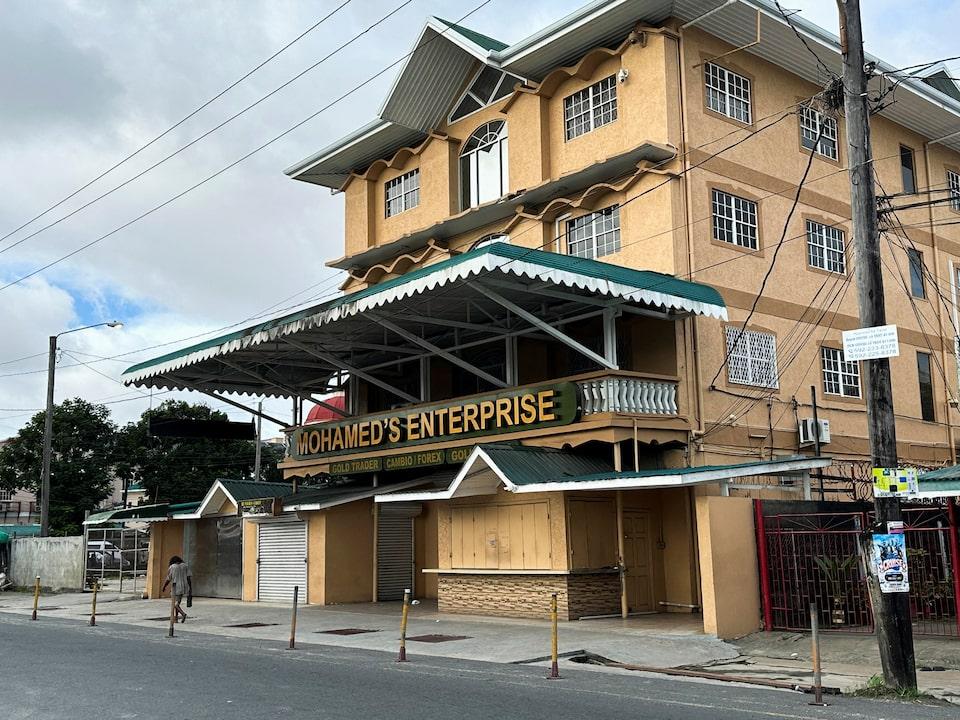
Extradition process established in cooperation framework between US, Guyana Azruddin and Nazar Mohamed were indicted in a US court of conspiracy to commit fraud, money laundering US Treasury imposed sanctions on the businessmen in 2024 Party calls leaders to decide if Mohamed can lead opposition GEORGETOWN, Oct 8 (Reuters) - Guyanese businessman and politician Azruddin Mohamed and his father Nazar Mohamed will be extradited to the United States to face fraud and corruption charges, once U.S. authorities formally make the request, Guyana's attorney general said. The businessmen, who own the gold-exporting firm Mohamed's Enterprise, were indicted in a Florida court last week on charges of conspiracy to commit fraud and money laundering to enrich themselves and defraud the government of Guyana. Sign up here. Azruddin Mohamed is positioned to be sworn in as Guyana's opposition leader by November, after his political party - We Invest in Nationhood (WIN), founded four months ago - won 16 parliamentary seats in Guyana's general election last month. "The next step is for the government of the United States of America to request the government of Guyana the extradition of the two persons," Attorney General Anil Nandlall said late on Tuesday in a show he regularly broadcasts on social media. "This process, which will be embarked upon, is a legal one and is contained in an extradition framework between the government of the U.S. and the government of Guyana," he added. Neither Azruddin nor Nazar Mohamed replied to a request for comment on the charges. If an extradition request is granted, the businessmen would have the right to challenge it in Guyanese courts, former speaker of Guyana's Parliament Ralph Ramkarran told Reuters. For Guyana and some of its neighbors, the court of last resort is the Caribbean Court of Justice. Azruddin Mohamed told local media this week he was assembling a legal team to challenge the U.S. charges and that Guyana's tax agency notified him and his father last week that they owe the government some $917 million in taxes and penalties. He also accused Guyana's ruling People's Progressive Party of persecuting him due to his foray into politics. "Fearing the momentum seen at the last election and the cry of the Guyanese people for change, they are doing everything possible to stop me," he said in a statement on Monday. Azruddin Mohamed is not expected to be legally barred from serving as opposition leader while facing the U.S. indictment, Ramkarran added. But one of Guyana's opposition parties called on Wednesday to reach a consensus on who should serve as their leader. GOLD EXPORTS ON THE RADAR The mining businessmen are accused of entering into agreements to sell and transport Guyanese gold to buyers in Miami and Dubai by fraudulently reusing Guyana customs declarations and seals, the court for the Southern District of Florida said on Thursday. They also are accused of paying bribes to Guyanese officials in one of a total of 11 charges. At least 10,000 kilograms of gold were exported through Miami since 2017 without payment of Guyanese taxes and royalties, causing a loss to the Guyanese authorities of some $50 million, prosecutors said in the indictment. The prosecutors are seeking to have the businessmen forfeit property, including a $5.3 million shipment of gold bars seized at a Miami airport last year. The U.S. Treasury imposed sanctions last year on the businessmen over fraud allegations. A company owned by the family was formerly part of a consortium building a $300 million oil logistics base in Guyana for Exxon Mobil (XOM.N) , opens new tab. https://www.reuters.com/world/guyanese-mining-businessmen-could-be-extradited-us-attorney-general-says-2025-10-08/