2025-10-08 20:37
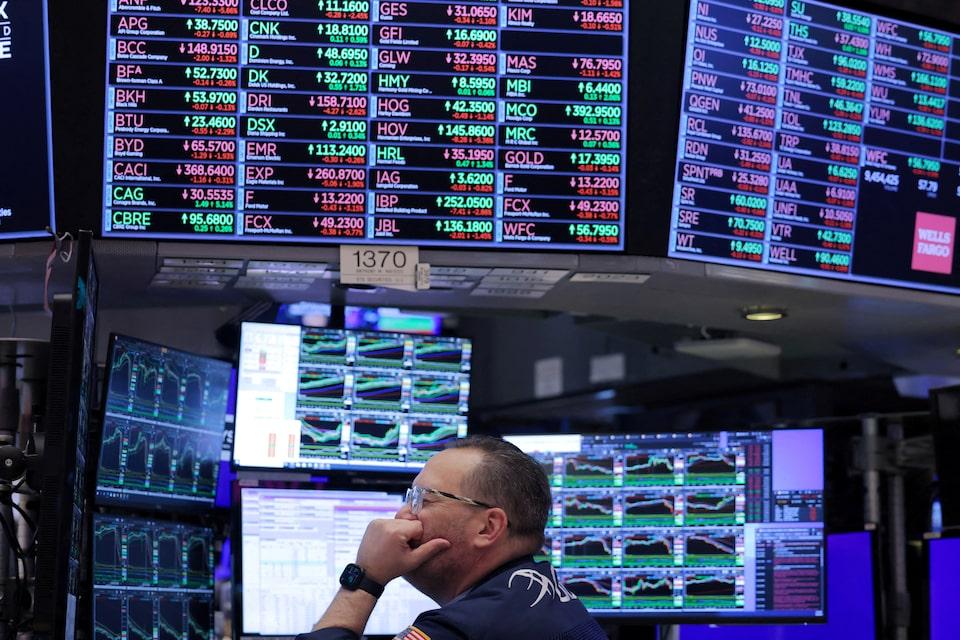
Dell climbs after multiple price target hikes US-listed shares of gold miners jump Joby Aviation descends on pricing stock offering Indexes: Dow flat, S&P 500 up 0.58%, Nasdaq 1.12% NEW YORK, Oct 8 (Reuters) - Technology shares boosted U.S. stocks to a higher close on Wednesday as investors, lacking economic data during the government shutdown, looked to minutes from the Federal Reserve's most recent policy meeting for clues to the outlook for interest rates. The tech-laden Nasdaq enjoyed the biggest percentage gain, boosted by the artificial intelligence-related megacaps that have led market gains so far this year. Sign up here. The S&P 500 and the Nasdaq notched all-time closing highs, while the Dow ended essentially flat. Chip stocks (.SOX) , opens new tab were clear outperformers, while energy (.SPNY) , opens new tab, consumer staples (.SPLRCS) , opens new tab and homebuilders (.SPCOMHOME) , opens new tab were the laggards, as a report from the Mortgage Bankers Association showed home loan demand dipped 4.7% last week despite easing interest rates. "The theme continues to be aggressive growth, with a constant supply of deal announcements, one after the other that are related to the AI space," said Bill Merz, head of Capital Market Research at U.S. Bank Wealth Management, Minneapolis. "Anything attached to AI is garnering a significant amount of attention." Amid continuing euphoria surrounding AI, mounting U.S. and geopolitical uncertainty has pushed gold prices above the $4,000-per-ounce threshold as investors flock to the safe-haven metal as a hedge against growing risks. "We’ve seen in the last few years that stocks and safe havens can work in conjunction with each other," Merz added. "A part of that comes from this dual reality that ... fundamentals, for now, are supporting higher than normal valuation, and simultaneously, deficit spending has to be financed by additional debt." The U.S. government shutdown entered its eighth day, and a congressional stalemate appeared to suggest market participants will lack official economic indicators for the immediate future, leaving markets with little to go on until third-quarter earnings season kicks off next week. In the absence of data, investors looked to third-quarter earnings season to get underway next week and the minutes from the September meeting of the Federal Open Markets Committee (FOMC) for clues as to the central bank's intentions regarding interest rate cuts. Those minutes showed a divided committee, with policymakers concerned about rising labor market risks but still wary of inflation. And while "most judged that it likely would be appropriate to ease policy further over the remainder of this year," the timing and pace of further moves remained an open question. "The topical discussion is about the extent of Fed cuts and how restrictive or not policy is," said Zachary Hill, head of portfolio management at Horizon Investments in Charlotte, North Carolina. "More broadly, the Fed is definitely not in a great position without public sector economic data as (the shutdown) continues to drag on, which really just makes policymakers' already challenging job even tougher." Financial markets are currently pricing in a fairly certain 92.5% likelihood that the Fed will lower the Fed funds target rate by 25 basis points at the conclusion of this month's policy meeting, which is set to occur on October 29. The Dow Jones Industrial Average (.DJI) , opens new tab fell 1.20 points, or 0.00%, to 46,601.78, the S&P 500 (.SPX) , opens new tab gained 39.13 points, or 0.58%, to 6,753.72 and the Nasdaq Composite (.IXIC) , opens new tab gained 255.02 points, or 1.12%, to 23,043.38. Among the 11 major sectors of the S&P 500, tech shares (.SPLRCT) , opens new tab led the gainers, while energy stocks (.SPNY) , opens new tab had the steepest percentage loss. Datadog (DDOG.O) , opens new tab rose 6.2% after Bernstein raised its price target on the cloud security firm, while Intercontinental Exchange ICE.N , opens new tab fell 2.2% after Barclays cut its price target on the stock. Fair Isaac Corp (FICO.N) , opens new tab fell 9.8% after credit bureau Equifax (EFX.N) , opens new tab said it plans to offer cheaper mortgage credit scores. Surging gold prices helped U.S.-listed shares of gold miners Newmont (NEM.N) , opens new tab and Gold Fields gain 1.7% and 3.7%, respectively. Dell (DELL.N) , opens new tab rose 9.1% after multiple brokerages raised their price targets for the stock. Freeport-McMoRan (FCX.N) , opens new tab advanced 5.3% in the wake of Citigroup's upgrade to "buy" from "neutral". Joby Aviation (JOBY.N) , opens new tab declined 8.1% after the electric air taxi maker on Tuesday priced a $514 million share sale at a 10.9% discount to its last closing price. AMD (AMD.O) , opens new tab jumped 11.4%, extending its gains for the third day. The chipmaker's shares have surged over 43% this week. Advancing issues outnumbered decliners by a 1.74-to-1 ratio on the NYSE. There were 469 new highs and 70 new lows on the NYSE. On the Nasdaq, 3,007 stocks rose and 1,659 fell as advancing issues outnumbered decliners by a 1.81-to-1 ratio. The S&P 500 posted 35 new 52-week highs and 6 new lows while the Nasdaq Composite recorded 129 new highs and 62 new lows. Volume on U.S. exchanges was 20.70 billion shares, compared with the 19.63 billion average for the full session over the last 20 trading days. https://www.reuters.com/business/wall-street-futures-tick-up-with-fed-commentary-minutes-focus-2025-10-08/
2025-10-08 20:35
Oct 8 (Reuters) - Silver prices shot to a record high on Wednesday, buoyed by gold's bull run and growing investor demand for hard assets amid persistent geopolitical and economic risks, as well as expectations of U.S. interest rate cuts. Spot silver hit an all-time high at $49.57 per ounce. Both a precious and industrial metal, silver has gained 70% so far this year, heading for its biggest annual growth since 2010. Sign up here. Gold, traditionally seen as a store of value during times of instability, surged past the $4,000 an ounce level for the first time on Wednesday, while copper briefly hit a 16-month peak. "There is also a case at present that many retail traders and others have been using silver as a safe-haven bet as well, which has increased demand and supported the rally in price," said Zain Vawda, analyst at MarketPulse by OANDA. "Given the structural supply deficit and strong industrial tailwinds, I think silver could reach $55/oz over the next six months or so." Providing another layer of support to silver is tight liquidity in the London spot market, a major hub for physical trade, after this year's massive outflows to the COMEX-owned warehouses in the U.S. . These deliveries to the U.S. stocks were at first due to worries that silver could potentially be hit by the U.S. April import tariffs, which the metal avoided. "This concern resulted in unusually wide differences between the London spot and New York-based CME futures prices, the exchange for physical or EFP market. The premium in New York made it profitable to shift gold and silver to New York," HSBC analyst James Steel said in a note. Silver's September inclusion on a draft list of U.S. critical minerals has caused another round of speculation over potential tariffs, prompting COMEX stocks to hit a record high last week. As of the end of September, there were 24,581 metric tons of silver, down 0.3% from August, valued at $36.5 billion in the London vaults, according to the LBMA. It currently takes 82 ounces of silver to buy an ounce of gold compared with 105 in April, as silver has been catching up with the gold price rally. "Silver underperformed gold mid-year as the gold-silver ratio went up to 100, exacerbated by trade concerns reflecting silver's role as an industrial metal," Matthew Piggott, director of gold and silver at Metals Focus said. "We see silver following gold and continuing to climb to breach the $60 level in 2026." While macroeconomic and financial factors are fuelling investment demand, the outlook for strong demand from technologies such as photovoltaics, electronics, and electric vehicles is adding support to prices. Similar to gold, silver has also seen a surge in inflows to physically-backed silver exchange-traded funds (ETFs) this year, and enjoyed strong industrial consumption due to higher China solar installations in January-May, Morgan Stanley said in a note. With room for silver ETF holdings to rise further, silver has an upside but it could start to lag versus gold as the solar demand growth is expected to slow down, it added. https://www.reuters.com/world/india/silver-soars-record-high-riding-golds-coattails-2025-10-08/

2025-10-08 20:32
FTSE 100 up 0.7%, FTSE 250 up 0.2% Lloyds Banking Group rises on lower motor finance scandal bill Gold miners jump after metal price hits record Unite Group plunges after softer Q3 rental growth Oct 8 (Reuters) - Britain's benchmark FTSE 100 closed at a record high on Wednesday, buoyed by gains in heavyweight financial stocks, while gold miners rallied as bullion prices surged to historic levels. The blue-chip FTSE 100 (.FTSE) , opens new tab gained 0.7% to 9,548.87, while the mid-cap FTSE 250 (.FTMC) , opens new tab closed up 0.2%. Sign up here. An index of bank stocks (.FTNMX301010) , opens new tab rose 1.9%. Lloyds Banking Group (LLOY.L) , opens new tab gained 3.7% after London's financial services regulator proposed a lower-than-feared redress package over motor finance mis-selling. The sentiment propped up other lenders, with Barclays (BARC.L) , opens new tab adding 1.1%. HSBC (HSBA.L) , opens new tab also rose 1.5% after Morgan Stanley raised its price target on the stock. Merchant bank Close Brothers (CBRO.L) , opens new tab surged 5.4%. Precious metal miners (.FTNMX551030) , opens new tab outperformed peers after gold prices soared past $4,000 per ounce for the first time. Endeavour Mining (EDV.L) , opens new tab and Fresnillo (FRES.L) , opens new tab rose 2.7% and 3%, respectively, placing the miners among the FTSE 100's top performers. Industrial metal miners (.FTNMX551020) , opens new tab added 1.7%, tracking gains in copper prices. Real estate stocks (.FTUB3510) , opens new tab, meanwhile, were the biggest drag among sectors falling 1.9%. Unite Group (UTG.L) , opens new tab dropped 10.8% to a more than five-year low, the biggest loser on the FTSE 250, after the student accommodation developer reported rental growth of 4% at the end of the third quarter, compared with a 8.2% growth a year ago. Investors also watched trade developments as Prime Minister Keir Starmer began a two-day visit to India and said he wanted the trade deal with India, inked in July, implemented as soon as "humanly possible". The FTSE 100 rallied to record highs last week, posting new peaks in four out of five sessions, helped by resurgent healthcare stocks, which had lagged in the first half of the year. On Wednesday, they (.FTNMX201030) , opens new tab gained 0.6%, while AstraZeneca (AZN.L) , opens new tab gave up its earlier gains to end the session nearly flat. Among other stocks, Vertu Motors (VTU.L) , opens new tab fell 2% after warning of an annual profit hit from a cyberattack at Jaguar Land Rover, whose dealerships the motor retailer operates. https://www.reuters.com/business/finance/londons-ftse-100-hits-fresh-high-banks-gain-gold-tops-4000-2025-10-08/

2025-10-08 20:29
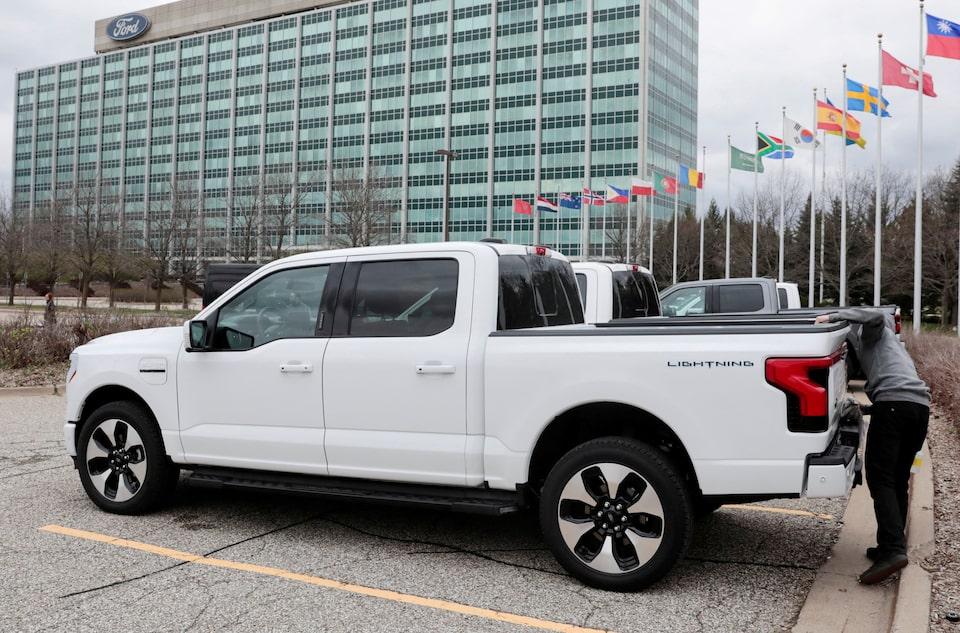
DETROIT, Oct 8 (Reuters) - Ford Motor (F.N) , opens new tab is pausing production next week at the Dearborn, Michigan, plant that makes its F-150 Lightning electric pickup, a change a union official at the plant says is related to a disastrous fire at a supplier's New York aluminum factory. The September 16 fire at a Novelis plant is expected to disrupt production of Ford's best-selling F-150 vehicles for months, and potentially sap $1 billion from its bottom line, according to an analyst estimate. Sign up here. A memo shared with workers at the plant, viewed by Reuters, said the Rouge Electric Vehicle Center (REVC) will be off next week. Nick Kottalis, the president and chairman of Dearborn Truck, as well as the REVC, confirmed the shutdown was related to the aluminum factory fire. Ford declined to provide specifics on any production adjustments. The automaker's stock fell about 6% on Tuesday on news of the fire. Ford shares closed 1.5% lower on Wednesday at $11.74. Ford began using a mainly aluminum body on its F-150 truck more than a decade ago in an effort to reduce the weight of the vehicle. It produces F-150 and Super Duty models at plants in Kentucky, Michigan, Missouri and Ohio. The automaker declined to say whether any production changes were planned at those locations. “Novelis is one of several aluminum suppliers to Ford. Since the fire nearly three weeks ago, Ford has been working closely with Novelis, and a full team is dedicated to addressing the situation and exploring all possible alternatives to minimize any potential disruptions," a Ford spokesperson said in a statement, in response to a question about the fire. EV sales have surged in recent weeks as buyers tried to grab a deal on models before the $7,500 federal tax credit expired on September 30. Ford sold a record 10,000 F-150 Lightning vehicles in the third quarter, with the company calling it the best-selling electric pickup in the U.S. Ford CEO Jim Farley recently said he expects EV sales to fall to about half their record levels of August and September in the absence of the credit. https://www.reuters.com/business/autos-transportation/ford-f-150-lightning-plant-hit-by-aluminum-fire-related-shutdown-union-official-2025-10-08/
2025-10-08 20:23
TSX ends up 0.5% at 30,501.99 Materials group adds 1.8% as gold surpasses $4,000 Technology sector gains 2.9% MEG Energy jumps 6.4% as Cenovus Energy raises bid TORONTO, Oct 8 (Reuters) - Canada's main stock index rose on Wednesday, led by gains for technology and metal mining shares, with the latter getting a boost from gold prices surpassing $4,000 an ounce. The S&P/TSX Composite Index (.GSPTSE) , opens new tab ended up 150.27 points, or 0.5%, at 30,501.99, moving closer to the record closing high it posted on Monday. Sign up here. "It seems to be that every day there's another news story that's good for gold," said Barry Schwartz, chief investment officer at Baskin Wealth Management. Gold surged past the $4,000 an ounce level for the first time as broader geopolitical and economic uncertainty as well as expectations of U.S. interest rate cuts sent investors flocking to the safe-haven asset. The materials group (.GSPTTMT) , opens new tab, which includes metal mining shares, was up 1.8%. "For the TSX, you may not have as much upside going forward but you might see a rotation in some of the names," Schwartz said, adding that the stocks of some good businesses have lagged the market's rally, including railroads, convenience store operator Alimentation Couche-Tard Inc (ATD.TO) , opens new tab and software company Constellation Software Inc (CSU.TO) , opens new tab. Shares of Constellation Software rose 0.8%, while e-commerce company Shopify Inc (SHOP.TO) , opens new tab added 3.3%. The technology sector (.SPTTTK) , opens new tab was up 2.9% along with gains for U.S. technology shares. Four of the TSX's 10 major sectors ended lower. Heavily weighted financials (.SPTTFS) , opens new tab were down 0.3% and energy (.SPTTEN) , opens new tab slipped 0.1% even as the price of oil settled 1.3% higher at $62.55 a barrel. Traders expected a lack of progress on a Ukraine peace deal to keep sanctions in place against Moscow. Cenovus Energy (CVE.TO) , opens new tab raised its bid for MEG Energy (MEG.TO) , opens new tab, intensifying a takeover battle for the Canadian oil producer with rival Strathcona Resources (SCR.TO) , opens new tab. MEG's shares rose 6.4%, while shares of Cenovus added 1.8% and Strathcona was up 2.4%. https://www.reuters.com/business/tsx-futures-edges-higher-commodities-strengthen-2025-10-08/
2025-10-08 20:08
PANAMA CITY, Oct 8 (Reuters) - The Panama Canal said revenues rose around 14.4% in its fiscal year 2025 to $5.7 billion, based on preliminary and unaudited figures, authorities said in a statement on Wednesday. The canal also reported that vessel transits increased 19.3% year-on-year to 13,404 during the 12-month period, which ended on September 30. Sign up here. Container and liquefied petroleum gas (LPG) segments drove revenue growth, while bulk carrier traffic continued to recover. Liquefied natural gas (LNG) volumes fell short of expectations due to global freight market conditions, the statement said. Authorities said the results leave the canal in a strong financial position ahead of planned investments starting in 2026 to expand capacity and maintain competitiveness. https://www.reuters.com/world/americas/panama-canal-posts-57-bln-fy2025-revenue-transits-jump-19-2025-10-08/