2025-10-08 20:02
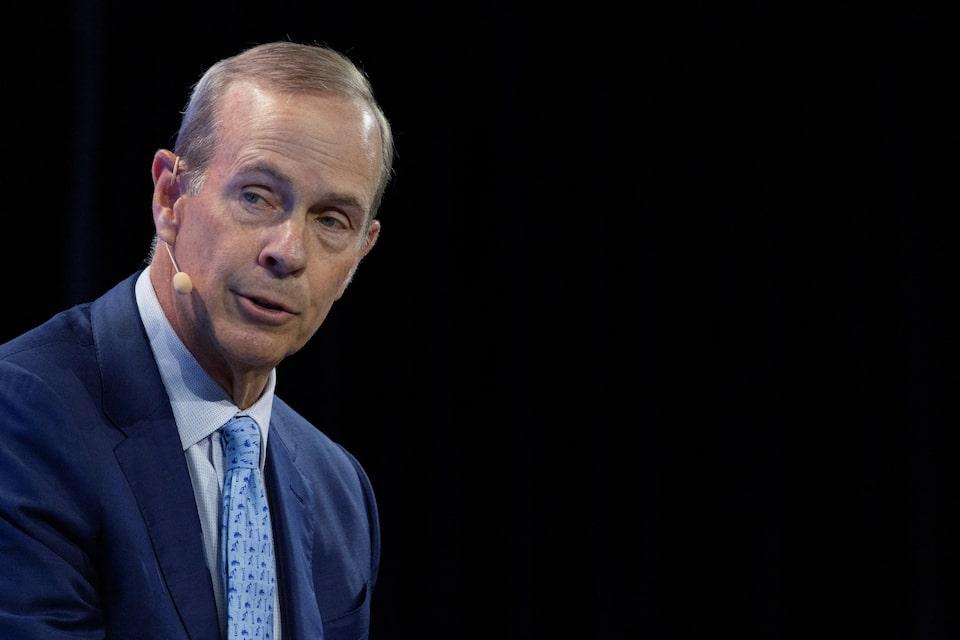
Chevron's Hess acquisition enhances growth prospects with Guyana oilfield stake Chevron to host investor day on Nov. 12 Chevron considers off-grid power solutions for data centers CEO stresses need for consistent safety practices after refinery fire HOUSTON, Oct 8 (Reuters) - Chevron (CVX.N) , opens new tab CEO Mike Wirth told employees on Wednesday that he believes the company will outperform publicly stated financial targets given to investors following the acquisition of smaller oil producer Hess. The No. 2 U.S. oil producer closed its $55 billion purchase of Hess in July after triumphing in a lengthy arbitration battle against larger rival Exxon Mobil (XOM.N) , opens new tab. Upon closing the deal, Chevron said it expected $1 billion in synergies and raised its free cash flow guidance for 2026 to $12.5 billion from $10 billion. Sign up here. "In our last number of acquisitions that we've done, once we've closed the deal, we actually find more value," Wirth said during an internal town hall meeting, audio of which was heard by Reuters. "I fully expect the (Hess) deal will meet and exceed what we've committed externally." Hess' crown jewel was its 30% stake in the prolific Stabroek Block in Guyana, an oilfield that Exxon operates and is estimated to hold at least 11 billion barrels of oil. Completing the acquisition gave Chevron a much-needed boost to its oil and gas reserves and future growth prospects. Chevron will host an investor day on November 12 to formally provide updated guidance to shareholders. PLANS TO POWER DATA CENTERS Wirth said the company was continuing to examine possible projects to power large data centers in the U.S. when asked by Chief Corporate Affairs Officer Laura Lane about conversations he held with Big Tech executives like OpenAI CEO Sam Altman and Meta (META.O) , opens new tab CEO Mark Zuckerberg. "They need a lot of power," he responded. "The scale of it is almost hard to describe." The boom in artificial intelligence has driven electricity demand to new heights, and Chevron is looking at projects that would not be connected to the existing power grid that Wirth said is fragile and unable to handle the required power loads. 'MORE CONSISTENT' FOCUS ON SAFETY NEEDED The meeting with employees took place days after a large fire broke out at Chevron's 285,000 barrel-per-day El Segundo refinery in southern California. There were no injuries in the fire. Internal data shows that staff are not consistent in completing safety checklists before beginning work, Wirth told employees, adding that fatalities this year have been mostly among the company's contractor workforce and that Chevron needed to ensure they were properly trained. "What we need is more consistent and disciplined execution of those processes," he said. Asked about the town hall, a Chevron spokesperson said “our talented workforce is an essential part of the ongoing success of our company, and we engage regularly to align on strategic priorities and our shared purpose to safely provide affordable, reliable, ever cleaner energy that enables human progress." https://www.reuters.com/business/energy/chevron-expects-hess-acquisition-outperform-targets-ceo-tells-employees-2025-10-08/
2025-10-08 19:53
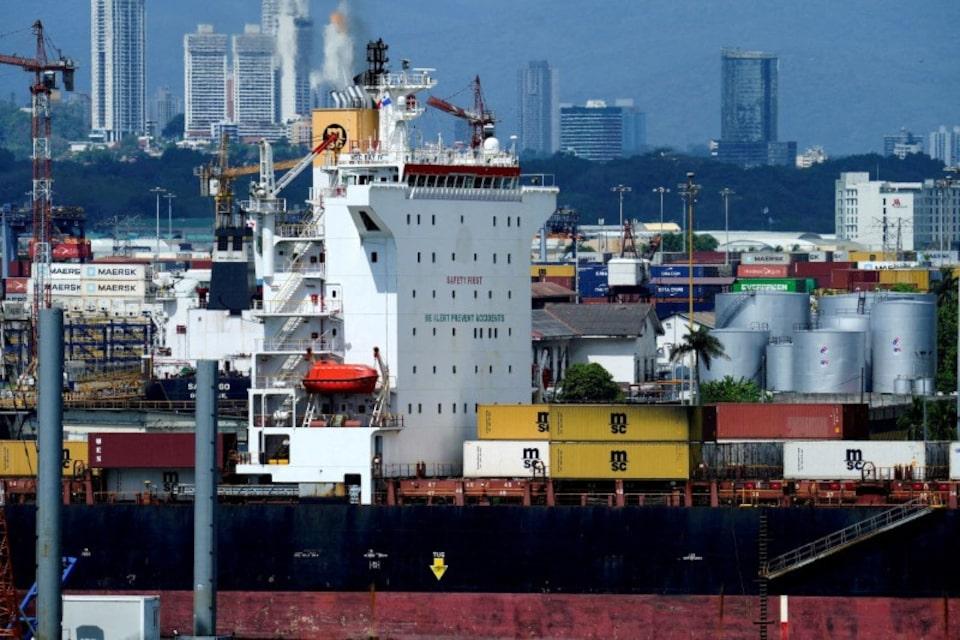
CIUDAD DE PANAMÁ, 8 oct (Reuters) - Los ingresos del Canal de Panamá subieron un 14% a unos 5,705 millones de dólares en el año fiscal 2025, al igual que los tránsitos de buques, que se incrementaron a 13,404, un aumento del 19.3% respecto al mismo período de 2024, según datos preliminares difundidos el miércoles. Sign up here. https://www.reuters.com/markets/commodities/canal-de-panam-incrementa-ingresos-y-trnsito-de-buques-en-ao-fiscal-2025-2025-10-08/
2025-10-08 18:21
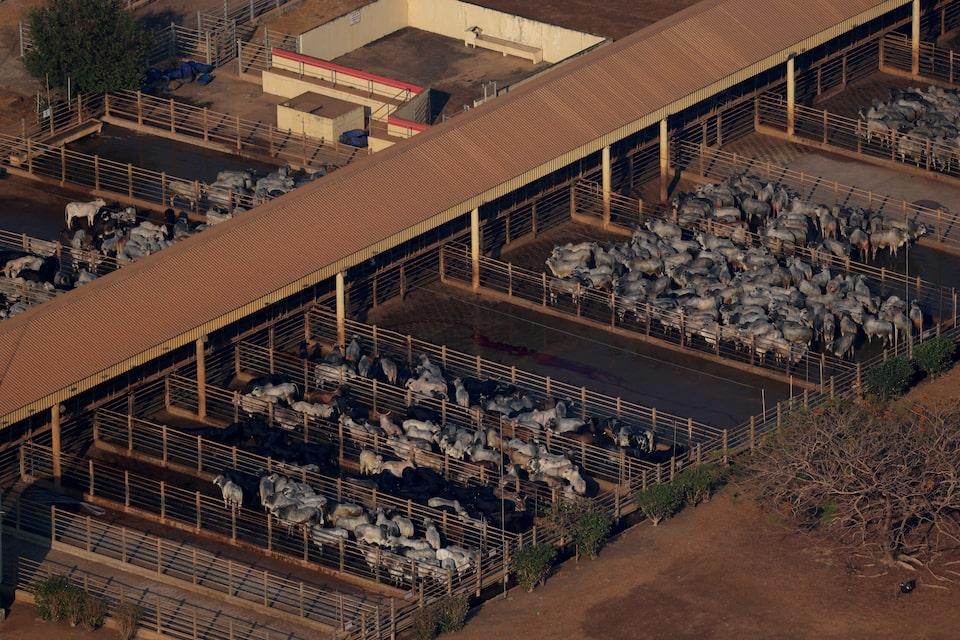
SAO PAULO, Oct 8 (Reuters) - Brazil's beef exports to China rose 38.3% in September from a year earlier, reaching 187,340 tonnes, industry group Abrafrigo said on Wednesday, helping push total monthly exports to a record high. China is the largest market for Brazilian beef, and has increased purchases as part of its broader strategy to avoid agricultural goods from the United States amid an ongoing trade dispute. Sign up here. Global demand for beef has helped Brazil offset the impact of U.S. tariffs on its exports, Abrafrigo said. In August, the U.S. imposed a 50% tariff on shipments of several Brazilian goods, including beef, which already had a 26.4% tax levy. Latin America's largest economy has been expanding exports to both new and traditional markets amid a global trade reshuffle triggered by U.S. tariffs, with similar trends also seen in soybean exports, which also reached record volumes. Total beef exports, including fresh and processed meat, edible offal, and tallow, generated $1.92 billion in revenue in September, with volumes reaching 373,867 tonnes, up 49% in value and 17% in volume year-on-year. "This strong performance came in the second month of additional tariffs imposed by the U.S. on Brazilian products, showing the sector's resilience and ability to seize new commercial opportunities," Abrafrigo said. Exports to the U.S., Brazil's second-largest beef market year-to-date, fell 41% in September to $102.9 million. The European Union became the second-largest destination last month, led by Italy, the Netherlands, and Spain. EU purchases totaled $131.7 million, up 106% from a year earlier. Abrafrigo said 130 countries increased purchases of Brazilian beef this year, while 48 reduced them. https://www.reuters.com/world/china/brazils-beef-exports-china-jump-38-september-amid-us-tariffs-2025-10-08/
2025-10-08 16:34
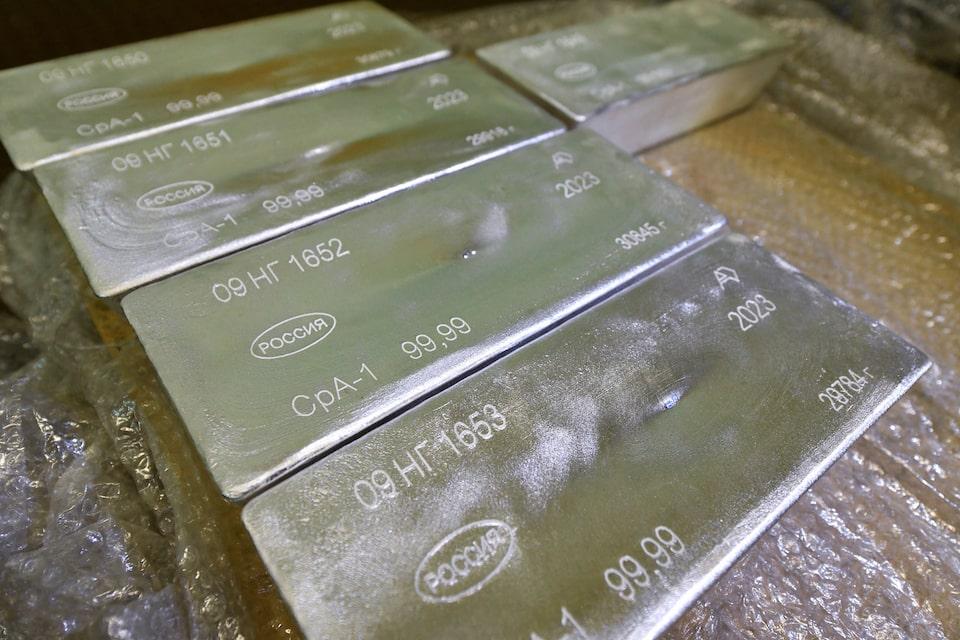
Oct 8 (Reuters) - Silver soared to a record high on Wednesday, riding the coattails of gold's unprecedented rally above the $4,000/oz level earlier in the session. Spot silver was up 3.5% at $49.54 per ounce by 1611 GMT. Sign up here. https://www.reuters.com/business/silver-rises-all-time-high-tracking-golds-record-breaking-rally-2025-10-08/
2025-10-08 16:03
NEW YORK, Oct 8 (Reuters) - Foreigners added just over $26 billion to their emerging markets debt and equity portfolios in September, the lowest since May, with the largest outflow from Chinese stocks since November, signaling investor apprehension toward EMs, according to a report from a banking trade group. The net $26.2 billion inflow for last month compares with a $47.1 billion net inflow in August and $63.5 billion in September 2024, according to data from the Institute of International Finance. Sign up here. The data showed a break away from China, as debt from EMs excluding China took in $35.1 billion, the most since February, while Chinese debt posted its first net monthly outflow since January. Chinese equities had their largest outflow since November. Investors have grown more selective amid tight valuations and China’s renewed weakness, the IIF said. It said sovereign issuance surged to $50 billion in September, led by Mexico, putting the year on track to surpass the 2020 issuance record. Yet most issuance comes from higher-grade issuers and the lower tiers struggle for market access. The U.S. Federal Reserve cut rates in mid-September for the first time this year, and Wall Street is split on whether it will cut again in both of its two remaining meetings this year, or only in one. Meanwhile, the tariffs and trade war, alongside the war in Ukraine and developments in Gaza, continue to weigh on sentiment. Bonds continue to attract cash on strong fundamentals and high real interest rates, but the boost from U.S. rate cuts is fading and investors are growing more cautious. There are renewed outflows in stocks, especially in China, and performance now varies more across regions: Latin America is holding up, while Asia and Eastern Europe are slowing. “With global macro conditions still fragile and geopolitical risks unresolved, EM portfolio flows are likely to remain positive, but increasingly concentrated and conditional,” Jonathan Fortun, a senior economist at the IIF, said in a statement. Regionally, emerging Asia took in almost $14 billion net last month and Latam followed with $8.2 billion. Africa and the Middle East funneled a net $2.6 billion and emerging Europe lagged with a $1.4 billion inflow. https://www.reuters.com/world/asia-pacific/emerging-market-portfolio-inflows-drop-26-billion-lowest-level-since-may-iif-2025-10-08/
2025-10-08 16:03
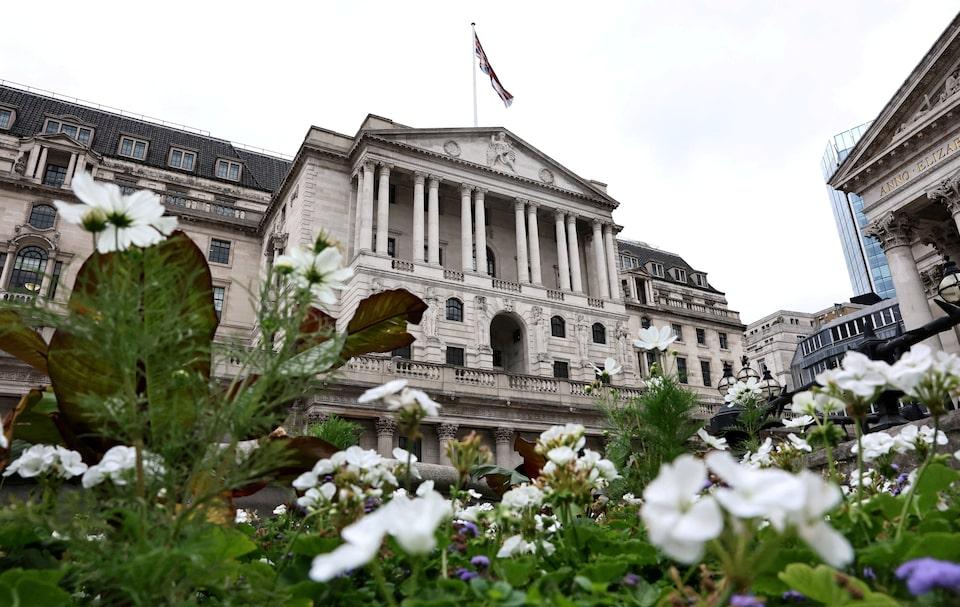
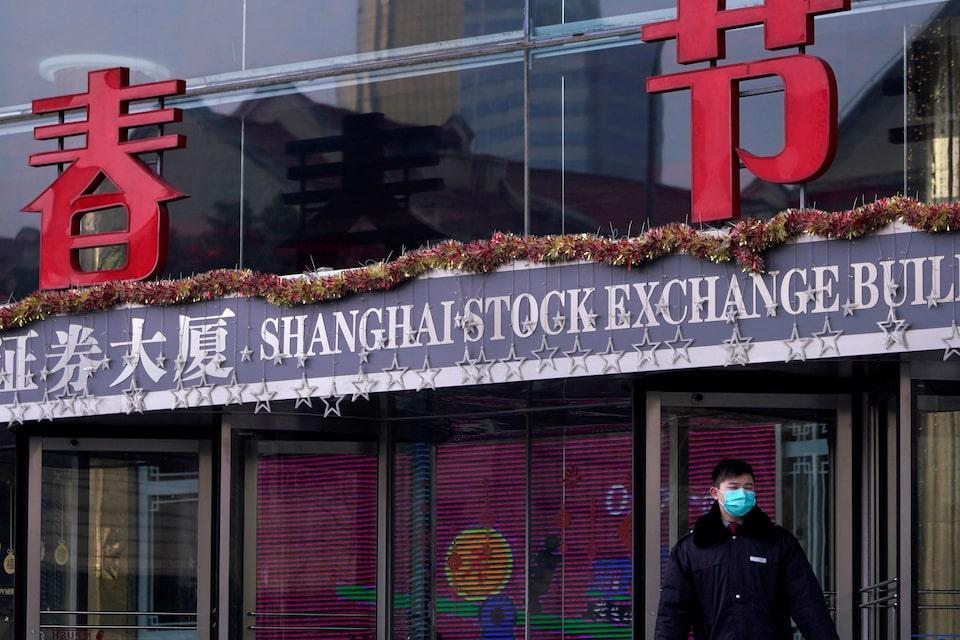
BoE says 'risk of a sharp market correction has increased' AI share price valuations echo those in dotcom boom, BoE says Loss of faith in Fed independence would hurt dollar, Treasuries Slide in US equities or bonds could push up UK borrowing costs Global fiscal worries weighing on UK bond prices LONDON, Oct 8 (Reuters) - Global financial markets could tumble if investors' mood sours on the prospects for artificial intelligence or the independence of the U.S. Federal Reserve, the Bank of England warned on Wednesday. The BoE said share price valuations on U.S. stock markets were similar to those seen near the peak of the dotcom bubble on some measures and noted that U.S. government bonds were vulnerable to any weakening in the Fed's credibility. Sign up here. "The risk of a sharp market correction has increased," the BoE's Financial Policy Committee said in a quarterly update, in its sharpest warning to date of the dangers of an AI-triggered market slump, adding that the risk of spillovers to Britain's financial system from such a shock was "material". The FPC is chaired by BoE Governor Andrew Bailey and focuses on financial stability risks. Bailey told Britain's parliament last month that he was "very concerned" about threats to Fed independence. LOSS OF FED INDEPENDENCE WOULD CAUSE GLOBAL SHOCK President Donald Trump has repeatedly urged the U.S. central bank to slash interest rates and has sought to fire one of its policymakers, Lisa Cook. "A sudden or significant change in perceptions of Federal Reserve credibility could result in a sharp repricing of U.S. dollar assets, including in U.S. sovereign debt markets, with the potential for increased volatility, risk premia and global spillovers," the BoE said. British government borrowing costs are closely correlated with U.S. Treasury yields, and a fall in U.S. bond prices would probably push up the cost of servicing new British public debt. Thirty-year gilt yields hit their highest since 1998 last month and yields for shorter maturities - where most British borrowing is concentrated - have risen too. The BoE said this increase reflected concerns about the difficulty of reining in high borrowing across advanced economies, amplified by political uncertainty in France and Japan. AI VALUATIONS ECHO PEAK OF DOTCOM BOOM On AI, the BoE said that 30% of the U.S. S&P 500's valuation (.SPX) , opens new tab was made up by the five largest companies, the greatest concentration in 50 years. Chipmaker Nvidia (NVDA.O) , opens new tab, Microsoft (MSFT.O) , opens new tab, Apple (AAPL.O) , opens new tab, Google-parent Alphabet , Amazon (AMZN.O) , opens new tab and Facebook-parent Meta (META.O) , opens new tab have all bet heavily on AI. Share valuations based on past earnings were the most stretched since the dotcom bubble 25 years ago, though looked less so based on investors' expectations for future profits. "This, when combined with increasing concentration within market indices, leaves markets particularly exposed should expectations around the impact of AI become less optimistic," the BoE said. Last month Meta boss Mark Zuckerberg said he would rather misspend a couple of hundred billion dollars than risk being late to the AI expansion. In August, almost half of fund managers polled by Bank of America judged that owning the seven largest U.S. tech stocks was the most crowded trade in the industry. Despite these concerns, the S&P 500 hit a record high on Tuesday, up 14% on the year to date. UK DOMESTIC RISKS LITTLE CHANGED The central bank saw little change in domestic financial stability risks, as households and businesses continued to cope with rising inflation - which it forecasts hit 4% in September - and with increased borrowing costs compared with past years. Risk managers surveyed by the BoE were more confident in the stability of the British financial system than six months ago, and viewed the main dangers as coming from cyberattacks and geopolitical factors. The BoE left unchanged its main tools for regulating banks. It kept the countercyclical capital buffer (CCyB) steady at 2% and after an annual review left the minimum leverage ratio at 3.25%. https://www.reuters.com/sustainability/boards-policy-regulation/markets-face-sharp-correction-if-mood-sours-ai-or-fed-freedom-bank-england-says-2025-10-08/