2026-02-02 20:07
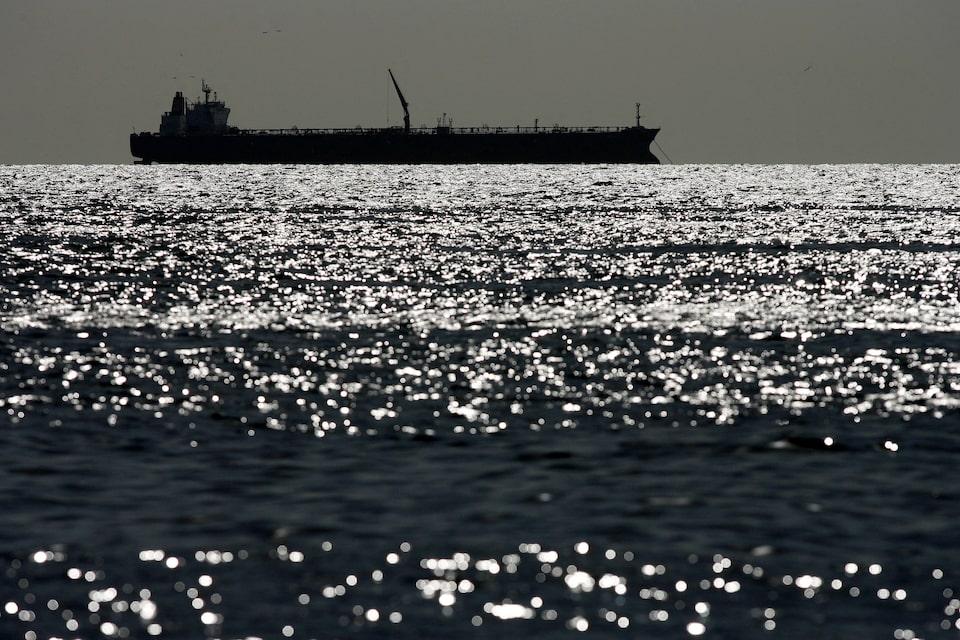
Hope that oil industry comeback could lift economy Skeptic says some are 'living an illusion' Reforms follow US capture of former president Feb 2 (Reuters) - Venezuelan state oil company PDVSA's workers and retirees are hoping oil-industry reform sparked by U.S. intervention last month will increase the purchasing power of their eroding wages and pension payments, but their confidence is measured. Some loyal PDVSA employees and retirees in and around the oil center of Maracaibo in Zulia state told Reuters they anticipate a turnaround would make their jobs, wages and pension payments more secure and valuable. Sign up here. “Those of us who are still here have stayed out of love for our work. We’ve waited many years to see our oil better paid,” said a manager with more than 20 years of experience at PDVSA, who asked not to be named. “Most people are willing to work, though there is still a lot of fear." But PDVSA retiree Jose Luis Galindo in nearby Ciudad Ojeda believes the economic boost will be modest. “People in general are living an illusion created by U.S. propaganda about the economic boom Venezuela will supposedly see," he said. The changes follow U.S. capture of President Nicolas Maduro last month and U.S. President Donald Trump's plan for Washington to direct the oil-exporting country from afar. He proposed a $100 billion energy reconstruction plan and has repeatedly said the overhaul will be positive for Venezuela and its people. The country has suffered a long economic decline and analysts estimate that inflation reached 400% last year. An energy-industry reform that passed last week is set to cut taxes, grant autonomy to private producers and allow the transfer of assets. Interim President Delcy Rodriguez, who has made oil sales deals with the U.S. since Maduro's ouster, supports the plan. The reform is aimed at raising oil and gas production and drawing foreign investment to Venezuela's industry, which has been state-controlled for two decades since the government expropriated assets of foreign companies including U.S. giants Exxon Mobil (XOM.N) , opens new tab and ConocoPhillips (COP.N) , opens new tab. Some workers and retirees hope new investment will increase both oil output and their pay, but the path ahead is far from secure. In Ciudad Ojeda, the landscape is dominated by housing complexes built in the 1960s and 1970s for oil workers. Not all residents are convinced Venezuela is heading toward an oil boom. Global oil firms are "not coming to rescue (PDVSA), they’re coming to invest to open up fields,” said Ender Perea, 71, who spent 38 years at the state oil company. https://www.reuters.com/business/energy/venezuelan-oil-region-industry-reform-sparks-both-hope-skepticism-2026-02-02/
2026-02-02 19:45
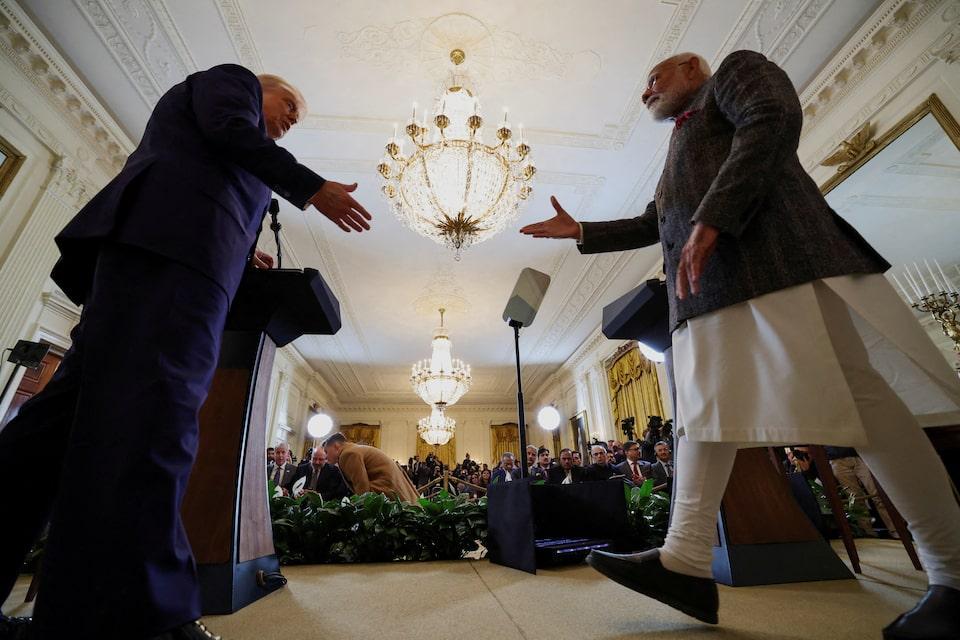
Feb 2 (Reuters) - U.S. President Donald Trump said on Monday he had agreed on a trade deal with India, and that New Delhi also agreed to stop buying Russian oil and buy more from the U.S. and potentially Venezuela. Below are some developments in U.S.-Indian trade relations over the past year. Sign up here. WHY DID INDIA–U.S. TIES DETERIORATE LAST YEAR? Between April and August of 2025, Trump surprised India by imposing a tariff of 25% initially on goods shipped to the United States. The U.S. followed up with another 25% tariff, citing India's purchase of Russian oil. The tariff moves pushed duties on most Indian goods shipped to the U.S. to 50% and drove relations between the two countries to a historic low. India called the actions by Trump unfair. BREAKDOWN IN TRADE DIPLOMACY By mid‑2025, prospects for a U.S.–India bilateral trade agreement deteriorated, with negotiations stalling amid heightened tensions. By then, Trump had closed larger deals with Japan and the EU, and offered better terms even to Indian archrival Pakistan. Trump's repeated remarks about mediating the India-Pakistan conflict further strained negotiations and contributed to Indian Prime Minister Narendra Modi delaying calls and meetings with Trump. Modi declined an invitation from Trump to visit Washington after the G7 meeting in Canada in June. Modi said in a speech that he would protect the interests of farmers, hinting that talks failed over disagreements in the politically sensitive agriculture sector. India pivoted to improving its relationship with China and struck a landmark trade deal with the European Union. WHAT IMPACT DID TRUMP’S TARIFFS HAVE ON INDIAN EXPORTS? Despite the tariffs, merchandise exports to the U.S., India's largest export market, have risen. In November, for instance, they rose 21% year-on-year, mostly thanks to increased electronics exports. Consumer goods like textiles, jewellery and auto parts were hit the hardest. IMPACT OF TARIFFS ON THE RUPEE AND MARKETS The Indian markets have been edgy since the worsening of India's relationship with the U.S. Indian equity markets and the Indian rupee were the poorest performers among emerging-market peers last year, on the back of record selling by foreign investors. The selling has continued into 2026. https://www.reuters.com/world/india/indias-bumpy-trade-relationship-with-us-over-last-year-2026-02-02/
2026-02-02 19:09
Feb 2 (Reuters) - Cboe Global Markets (CBOE.Z) , opens new tab is in the early stages of exploring a new regulated product that would use an options structure to offer all-or-none payouts, a source familiar with the matter told Reuters on Monday. The concept involves a binary-style payoff that would deliver a fixed return if a specified condition is met and nothing if it is not. Sign up here. The move would position the exchange to compete with fast-growing prediction market platforms, which have exploded in popularity since the last U.S. presidential election, by offering a regulated alternative that could appeal to retail traders. "This product would be particularly attractive for retail users due to its simplicity," said Nic Puckrin, analyst and co-founder of Coin Bureau. "Although retail participation in derivatives markets has grown substantially over the years, a binary, all-or-nothing options product would certainly appeal to less experienced investors." Prediction markets allow traders to wager on how real-world events will unfold, from sports results and entertainment releases to elections and economic data. Investors increasingly view prediction markets as a growth opportunity, prompting several firms to enter the space as it gains legitimacy and opens up new revenue streams and market insights. Cboe CEO Craig Donohue in October said the derivative exchange will concentrate on event and prediction, digital and crypto markets, adding that there is strong growth in these areas. Prediction market startups Kalshi and Polymarket have expanded rapidly. In December, derivatives exchange CME Group and sports betting firm FanDuel launched their prediction markets platform in five U.S. states. In 2008, the largest U.S. options market launched binary options on the Standard & Poor's 500 Index (.SPX) , opens new tab and the CBOE Volatility Index (.VIX) , opens new tab, showing that the exchange has long explored such contracts tied to market outcomes. The Wall Street Journal first reported on Monday that Cboe was in discussions to launch all-or-nothing options contracts. https://www.reuters.com/business/cboe-explores-options-product-with-all-or-none-payouts-source-says-2026-02-02/
2026-02-02 19:08
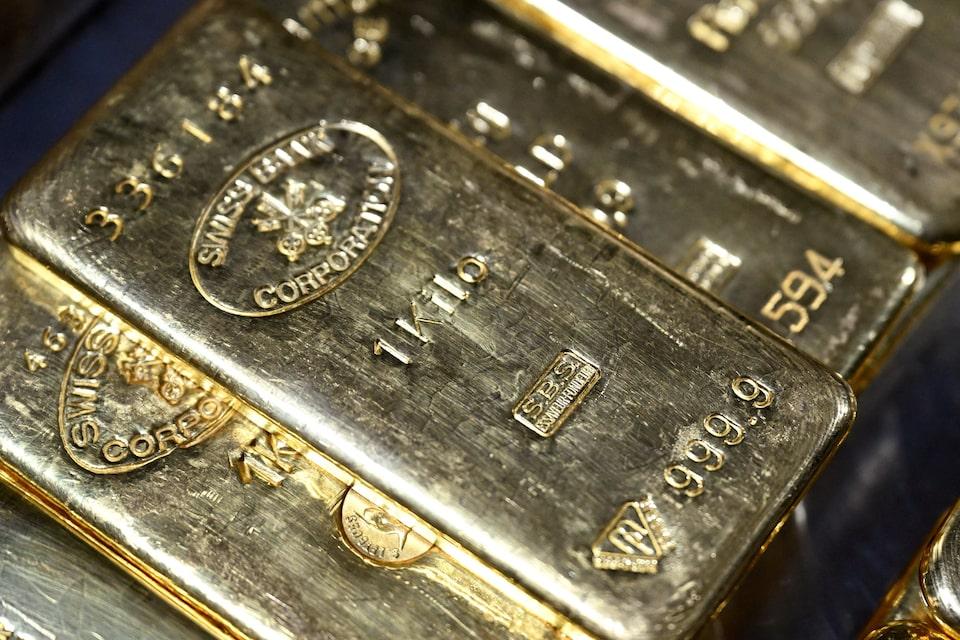
Volatility may persist, with mixed expectations for silver Federal Reserve rate cuts expected to support gold prices UBS and JP Morgan forecast gold prices above $6,200/oz this year Feb 2 (Reuters) - Despite a historic pullback in gold and silver prices, triggered by the sharpest two-session sell-off in decades, analysts see the metal's bull run continuing and expect it to notch fresh record highs later this year. Spot gold prices plunged nearly 10% on January 30, its steepest fall since 1983, breaking below the historic $5,000 per ounce milestone scaled just days previously and wiping out much of the gains for the year. Silver fell 27% in the same session, its biggest downfall on record. Sign up here. Gold fell more than 13% and silver nearly 34% over the last two trading sessions. But analysts largely expect this to be temporary. "Although the fall was large and fast, it should also be remembered that we are currently at the same levels we saw just three weeks ago," said Ross Norman, an independent analyst. "This is a significant correction but it does not, by any stretch of the imagination, signify the bull run has ended." AN OVEREXTENDED RALLY Gold’s retreat follows what analysts say was an overextended rally, taking the metal from a record peak of $5,594.82 to around $4,700 - nearly $900 lower. It was sparked by U.S. President Donald Trump's nomination of Kevin Warsh as the next Federal Reserve chair, followed by CME Group's decision to raise margin requirements on precious metals futures. The pullback could discourage speculative buying, analysts at WisdomTree noted, potentially creating space for long-term strategic buyers to re-allocate. Gold prices could see a period of consolidation before moving higher over the next few weeks and months, said Tai Wong, an independent metals trader. Markets also expect the Federal Reserve to trim interest rates two times this year, which will support non-yielding gold. "We look for gold to reach a new record high above $6,200/oz later this year," said UBS analyst Giovanni Staunovo. JP Morgan expects gold to reach $6,300/oz by year-end, the bank said on Monday, while Deutsche Bank reiterated its gold price forecast of $6,000 this year citing sustained investor demand. However, some analysts caution that volatility may persist in the near term, warning that the sell-off may not be over yet. "It is far too early to suggest gold has found a bottom yet," said Fawad Razaqzada, market analyst at City Index and FOREX.com. Expectations for silver remain mixed, reflecting its dual status as both a precious and industrial metal. https://www.reuters.com/world/india/golds-bull-run-seen-intact-despite-steep-pullback-2026-02-02/
2026-02-02 18:56
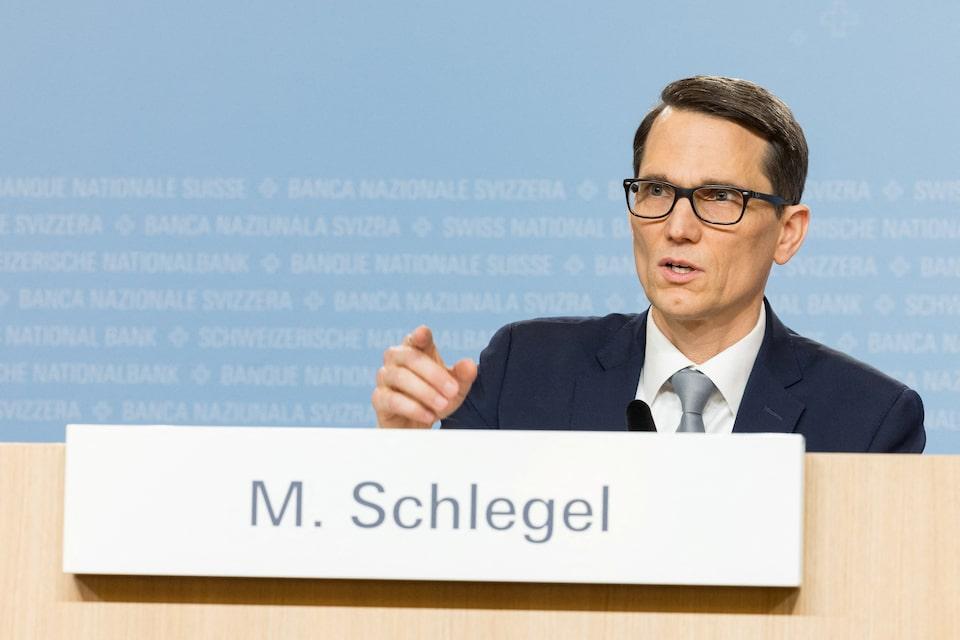
ZURICH, Feb 2 (Reuters) - A combination of low inflation in Switzerland and interest rates at 0% were uncomfortable for monetary policy, Swiss National Bank Chairman Martin Schlegel said on Monday, declining to say whether the situation made negative rates more likely. "As a central bank, my greatest concern is of course inflation and price stability, and we do everything we can to ensure that," Schlegel told broadcaster SRF. Sign up here. "At present with inflation at 0.1%, that's at the lower end of our definition of price stability - inflation of 0-2% - and with interest rates at 0%, that is not an easy situation for monetary policy," he added. He said the SNB had two policy tools - interest rates and currency market interventions - to steer inflation into the central bank's target range. "We have already said several times that we are prepared to go into negative territory," Schlegel said. "However, the hurdle is higher to lower interest rates into negative territory." The probability of reintroducing negative interest rates - unpopular with lenders and savers when last used from later 2014 to 2022 - "is difficult to say," he added. Instead the SNB would continue to monitor the situation, as well as the exchange rate of the Swiss franc, very closely, he said, and intervene on the forex markets if necessary. At present though, Schlegel said he expected Swiss inflation to rise in the coming months, adding monetary conditions in Switzerland were appropriate. Despite the recent decline in the U.S. dollar, there was also no alternative for central banks holding U.S. Treasuries as part of their foreign currency reserves, he told the Eco Talk programme broadcast later on Monday. Schlegel declined to comment on what other central banks and sovereign wealth funds were doing, but said currency reserves had to be liquid. "When you look at U.S. Treasuries, that is still the largest and most liquid market," Schlegel said. "There is no alternative." https://www.reuters.com/business/finance/swiss-national-bank-chairman-says-current-situation-not-easy-policy-2026-02-02/
2026-02-02 18:48
RABAT, Feb 2 (Reuters) - Morocco's energy ministry said on Monday it has paused a tender launched last month for a gas pipeline project, without giving details on the reasons for the suspension. The tender sought bids to build a pipeline linking a future gas terminal at the Nador West Med port on the Mediterranean to an existing pipeline that allows Morocco to import LNG through Spanish terminals and supply two power plants. Sign up here. It also covered a section that would connect the existing pipeline to industrial zones on the Atlantic in Mohammedia and Kenitra. "Due to new parameters and assumptions related to this project... the ministry of energy transition and sustainable development is postponing the receipt of applications and the opening of bids received as of today," the ministry said in a statement. Morocco is looking to expand its use of natural gas to diversify away from coal as it also accelerates its renewable energy plan, which aims for renewables to account for 52% of installed capacity by 2030, up from 45% now. The country's natural gas demand is expected to rise to 8 billion cubic metres in 2027 from around 1 bcm currently, according to ministry estimates. https://www.reuters.com/sustainability/climate-energy/moroccos-energy-ministry-puts-gas-pipeline-project-hold-2026-02-02/