2025-10-05 04:42
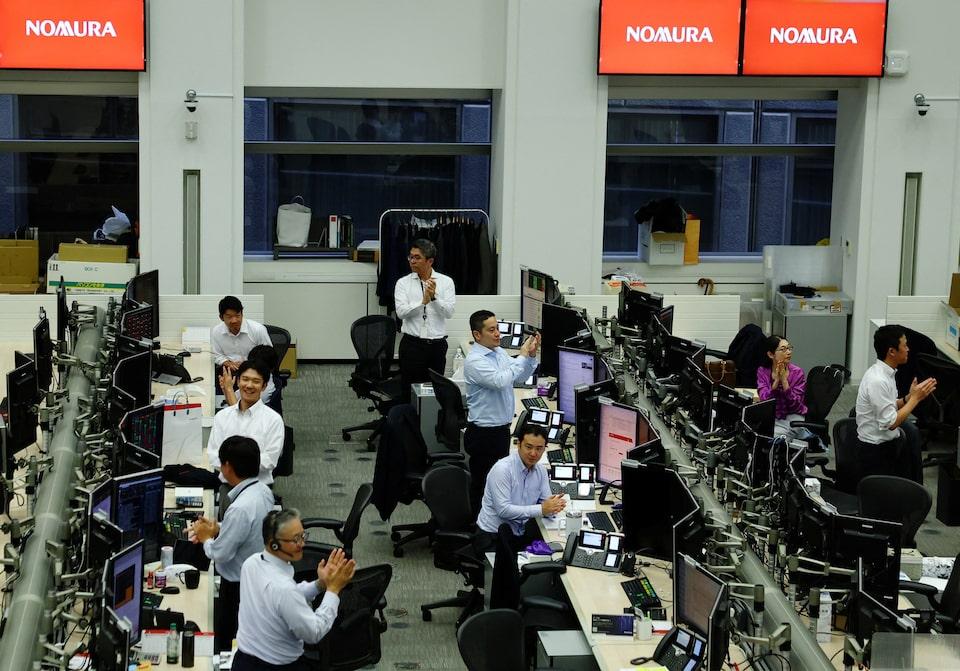
Takaichi win reduces chance of Oct BOJ rate hike, analysts say Takaichi government unlikely to squelch rate hikes altogether Japan needs demand-driven inflation, Takaichi says 'Abenomics' acolyte Takaichi more dovish than predecessors Delaying rate hike too long could unleash unwelcome yen fall TOKYO, Oct 5 (Reuters) - With Sanae Takaichi set to become Japan's prime minister, advancing expansionist economic policies, chances have risen that the central bank will avoid raising interest rates this month, though the pause may not last if it batters the yen. Takaichi, likely to become Japan's first female leader next week after winning the presidency of the ruling party on Saturday, stood out in the race as the only proponent of big spending and loose monetary policy. Sign up here. Parliament is expected to vote the conservative nationalist in as premier on October 15 since her Liberal Democratic Party is the largest in parliament, though this is not assured as the LDP's coalition lost its majorities in both houses under her predecessor, Shigeru Ishiba. NEW LEADER COMPLICATES BOJ RATE HIKES Upon winning the race, Takaichi made clear the government will take the lead in setting fiscal and monetary policy - and that her priority would be to reflate demand and the broader economy. Describing recent price rises as driven by higher raw-material costs, Takaichi warned it was premature to declare victory over deflation as companies start to feel the pain from President Donald Trump's U.S. tariffs. "What would be best would be to achieve demand-driven inflation, where wages would rise and drive up demand, which in turn causes moderate price rises that boost corporate profits," she told a press conference after her victory. Her ascension makes it more likely the Bank of Japan will refrain from raising rates on October 30, analysts say. "Takaichi is not seen as supportive of interest rate hikes, which could make it more difficult for the BOJ to proceed with tightening," said Kazutaka Maeda, an economist at Meiji Yasuda Research Institute. "While rate hikes may not be ruled out entirely, the central bank could adopt a more cautious and gradual approach," he said, adding the next increase may be delayed until early next year. Some analysts, however, doubt whether Takaichi will push back too hard against the BOJ's plan for slow, moderate tightening as inflation - rather than Japan's long-time curse of deflation - is now the bigger economic problem, costing Ishiba's LDP a huge election loss in July. The BOJ ended decades of massive stimulus last year, raising its policy rate to 0.5% in January on the view Japan was on the cusp of durably achieving its 2% inflation target. Before Takaichi's victory, markets were pricing in more than a 60% probability of a rate hike this month, with inflation above target for more than three years, a hawkish board split at the September policy meeting and calls for a near-term rate hike by a dovish policymaker. But Governor Kazuo Ueda kept markets guessing last week, warning of global uncertainties that could discourage firms from raising wages. "Ueda appeared to be in no rush hiking interest rates anyway. Takaichi's win will make it even more likely the BOJ will take a wait-and-see mode and hold off raising rates in October," said Mari Iwashita, executive rates strategist at Nomura Securities. At the same time, former central bank official Nobuyasu Atago said, "The BOJ faces a new challenge of creating a channel of trust and communication with Takaichi's administration, which might take some time." 'THINGS HAVE CHANGED' SINCE ABE Takaichi has been a vocal advocate of "Abenomics", a hefty mix of government spending and monetary stimulus deployed by her mentor, then-premier Shinzo Abe, to pull Japan out of deflation and ease the pain of a surging yen on the export-reliant economy. Although she has toned down comments such as calling last year's rate hike "stupid", Takaichi has retained ties with reflationist-minded lawmakers and economists who advise her on policy. Her stance contrasts with that of Ishiba and his predecessor Fumio Kishida, who nodded to the BOJ's efforts to roll back stimulus as accelerating food inflation - partly caused by higher import costs from a weak yen - hit households. With markets fully pricing in another rate increase by early next year, delaying a hike for too long could unleash sharp yen falls that would boost import prices, exacerbating inflation. Some investors expect Takaichi's win to push the dollar, now around 147 yen, above 150 yen - a level of yen weakness that drew verbal warnings from Japanese authorities in the past. "Given her reflationist streak, there's a chance Takaichi could meddle in monetary policy," said former BOJ board member Takahide Kiuchi, who expects no rate hike this month. "But I don't think her administration would force the BOJ to overhaul its rate-hike plans altogether, unless the U.S. economy weakens significantly." Diplomatic considerations could also affect Takaichi's stance on monetary policy, some analysts say. The Trump administration, which favours a weaker dollar to boost U.S. exports, has signalled displeasure over the yen's softness, with Treasury Secretary Scott Bessent saying in August the BOJ was "behind the curve" in tackling inflation. Trump is expected to visit Japan this month, with some media reporting he could arrive days before the BOJ's October 29-30 meeting. "In the past the yen was strong, so low interest rates were acceptable. Now that higher inflation is causing difficulties, it's probably harder for Takaichi to criticise monetary policy as much as before," said Tomohisa Ishikawa, chief economist at Japan Research Institute. "Things have changed from when Takaichi used to work together with Abe." https://www.reuters.com/world/asia-pacific/takaichi-win-japan-leader-may-delay-not-derail-boj-rate-hikes-2025-10-05/
2025-10-05 04:22
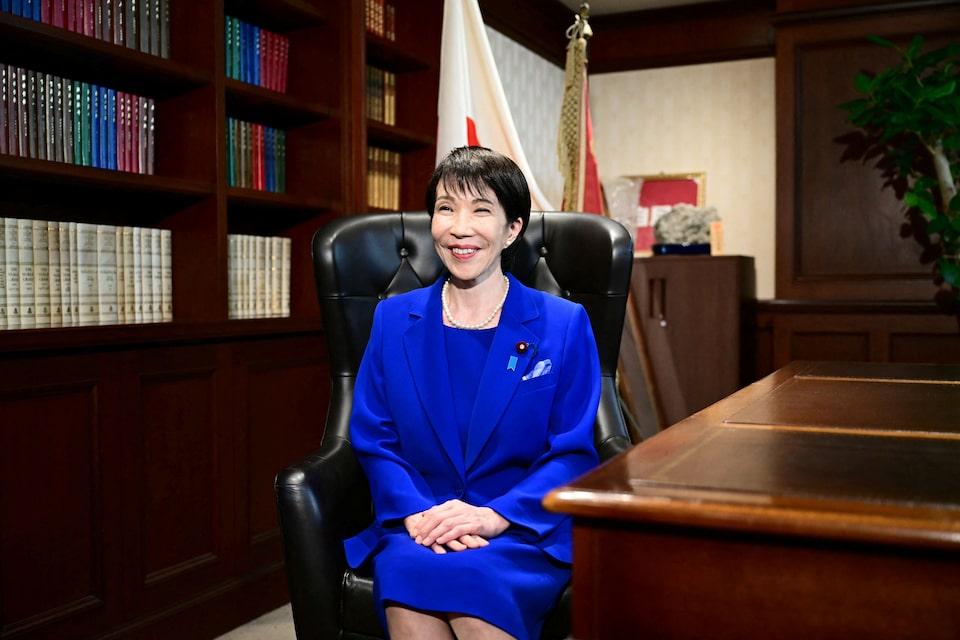
Oct 5 (Reuters) - Saudi Arabia's non-oil private sector expanded at its fastest pace in six months in September, driven by a surge in new orders and increased output, a survey showed on Sunday. The seasonally adjusted Riyad Bank Saudi Arabia Purchasing Managers' Index (PMI) climbed to 57.8 in September from 56.4 in August, indicating the strongest improvement in operating conditions since March. Sign up here. New orders saw a marked increase, with firms benefiting from strong market conditions, new customer acquisitions, and competitive pricing. This led to a rise in new work from international clients for the second consecutive month. Robust domestic and international demand helped the new order subindex jump to 63.3 in September from August's 60.1. Output growth experienced the quickest rate of increase since February. "Overall, September’s survey highlights a resilient private sector that is navigating cost pressures while benefiting from firm demand and steady hiring," said Naif Al-Ghaith, Riyad Bank's chief economist. Saudi Arabia's government is forecasting real GDP growth of 4.4% in 2025, with estimated non-oil sector growth of 5%, supported by increased domestic demand and improved rates of employment, according to a pre-budget statement. Employment growth remained strong in September, driven by higher demand and the need to manage workloads efficiently. Companies increased hiring steadily, although the related subindex saw a slight downward tick from the previous month. Input price inflation, driven by higher wages and supplier costs, edged down to a six-month low. Optimism for future activity improved, with firms confident about increased demand and upcoming large-scale infrastructure projects. https://www.reuters.com/world/middle-east/saudi-arabias-non-oil-private-sector-growth-strongest-six-months-pmi-shows-2025-10-05/

2025-10-04 19:23
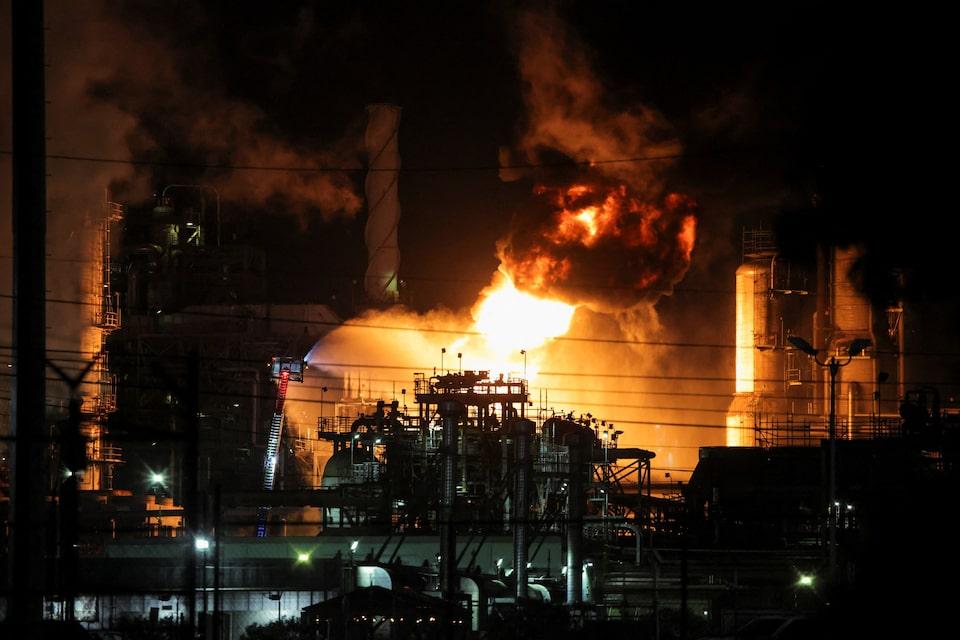
Oct 4 (Reuters) - Chevron (CVX.N) , opens new tab said on Saturday that it will be making operational adjustments to its 285,000 barrel-per-day El Segundo refinery to meet Southern California's fuel demands after a large fire erupted on Thursday night at the refinery. The El Segundo refinery is the second-largest in California and Chevron's second-biggest refinery in the United States. The facility supplies a fifth of all motor vehicle fuels and 40% of the jet fuel consumed in Southern California. Sign up here. An unplanned flare event occurred at the El Segundo refinery on Saturday following the extinguishing of the fire. "Future intermittent flaring is a possibility as these operational adjustments occur," a Chevron spokesperson said. https://www.reuters.com/business/energy/chevron-make-adjustments-los-angeles-refinery-following-large-fire-2025-10-04/
2025-10-04 17:11
QUITO, Oct 4 (Reuters) - Ecuador's government has revoked the environmental license granted to Canadian mining company DPM Metals (DPM.TO) , opens new tab for the development of Loma Larga, a gold project in an environmentally sensitive area, the government said on Saturday. The decision follows strong opposition from residents and local authorities in Azuay province, where Loma Larga is located, who argue that its development would affect the Quimsacocha water reserve, posing significant health risks to local communities. Sign up here. Ecuador's Environment and Energy Ministry said in a statement the decision resulted from technical reports submitted by authorities in Cuenca and Azuay that are responsible for the area's drinking water and irrigation systems. "The national government reaffirms its commitment to the rights of nature, the defense of water sources, and, under the precautionary principle, the protection of the health and well-being of the people of Cuenca and Azuay," it said. Cuenca Mayor Cristian Zamora, one of the leading voices opposing the mine, spoke at a public event thanking the authorities for listening and revoking the license for the project that he said would seriously threaten levels of water available for local residents. "It has been a decades-long struggle," he said. DPM, which acquired the project in 2021, did not immediately respond to a request for comment. The Loma Larga project was expected to receive investments of $419 million for an average annual production of about 200,000 ounces of gold during its first five years of operation, according to DPM. In August, the Ecuadorean government had already suspended activities related to the project until the company released an environmental management plan, despite having granted it a license a month earlier to begin construction. Despite having significant gold and copper deposits, Ecuador has halted mining projects due to recent legal rulings and local opposition. Currently, only two mining companies operate in the country. The Quimsacocha Reserve spans more than 3,200 hectares and encompasses the Andean "paramo" ecosystem, a type of highland moor. Its springs form one of the main water sources in the South American country. https://www.reuters.com/sustainability/climate-energy/ecuador-revokes-environmental-license-canadas-dpm-develop-gold-project-2025-10-04/

2025-10-04 12:54
SPD draft for new industrial policy in the steel sector Industry loss due to market distortion should be avoided SPD wants fewer steel imports, condition for steel scrap exports BERLIN, Oct 4 (Reuters) - Germany's Social Democrats, junior partners in Chancellor Friedrich Merz's coalition, will push for a more protectionist stance on Europe's steel industry, urging the EU to adopt a "buy European" strategy, a document seen by Reuters on Saturday showed. The SPD, headed by Finance Minister Lars Klingbeil, is due to adopt the proposals next week. They call for the European Commission to adopt a "robust trade protection" strategy to defend against subsidised foreign competitors. Sign up here. "At its core, what is needed is a tariff quota system that effectively limits excessive import volumes while keeping the market controlled and open," the SPD said. The proposals are likely to feed into a steel summit called by the conservative chancellor for this month for steel producers, German states and trade unions to thrash out proposals for supporting the industry. The extent to which the SPD's proposals will be adopted though remains unclear. Most German political parties have previously been against protectionism as the country has for the past two decades been one of the world's greatest beneficiaries of low trade barriers. However, German manufacturers and regulators are now increasingly worried about the distorting impact of competition from China and elsewhere and of U.S. tariffs. "We can't allow domestic value creation to depart just because the international rules are no longer working," the SPD said in the document. "This is not about protectionism, but about enforcing fair competition rules and European strategic interests," it said. The SPD also called for tighter controls on the import of Russian steel, including measures to prevent it entering the European market via Turkey. The SPD in particular has suffered electorally from de-industrialization in its formerly industrial heartlands, seeing the far-right eat into its vote share. https://www.reuters.com/world/china/german-coalition-partner-seeks-protections-european-steel-document-shows-2025-10-04/

2025-10-04 10:54
Japan yield curve expected to steepen on Takaichi victory Tokyo shares likely to rise, yen to fall Takaichi's mandate seen influencing BOJ's rate-hike policy TOKYO, Oct 4 (Reuters) - Japanese shares are expected to keep setting records even as the nation's currency and bonds sputter after fiscal dove Sanae Takaichi was elected on Saturday to lead the ruling party and likely become prime minister. Takaichi, 64, was considered to have the most expansionist fiscal and monetary agenda among five candidates in the Liberal Democratic Party race to replace hawkish Prime Minister Shigeru Ishiba. Sign up here. In the lead-up to the LDP race, a "Takaichi trade" emerged - long on stocks and bearish on Japanese government bonds, particularly longer maturities - positioning for a win by Takaichi, a devotee of the "Abenomics" stimulus policies of the late Shinzo Abe. 'POSITIVE SURPRISE' FOR SHARES, BONDS ON EDGE Japan's benchmark Nikkei (.N225) , opens new tab logged a record closing high of 45,769.50 on Friday, topping the record set the week before, as investors bet whoever succeeded Ishiba would be more dovish. Short positions on the gauge have been building up recently and may now be unwound, said Resona Holdings strategist Hiroki Takei. "This could be considered a positive surprise for stock prices," Takei said. "If short-covering is triggered, the rally could gain momentum, potentially pushing the index toward the 47,000 level." The Japanese government bond market has been on edge since late May due to waning demand among traditional buyers, decreased support from the central bank and concerns about swelling debt. The sector was dealt another blow in July, when Ishiba's coalition lost its majority in the upper house of parliament - having lost its lower house majority last year - as outsider parties campaigning on tax cuts and increased spending gained seats. The 30-year JGB yield surged to a record 3.285% on September 8, the first trading day after Ishiba announced he was stepping down. In recent weeks, the Nikkei's momentum slowed and longer-term JGBs rallied as markets gave the edge in the LDP race to farm minister Shinjiro Koizumi and Takaichi appeared to moderate her stance, leaving sales tax cuts out of her platform and staying mostly mum on the Bank of Japan. "She seemed to have toned down her rhetoric recently but ultimately the feeling is still that she will push for looser fiscal and monetary policy," said James Athey, a fixed income manager at British investment group Marlborough. "As such, there is likely to be a negative reaction in long-end JGBs and the yen." Japan's currency closed at 147.44 per dollar on Friday, staging a 1.4% gain on the week that was the sharpest since mid-May. After her LDP victory, Takaichi told a press conference the government and central bank must work closely to ensure Japan's economy achieves demand-driven inflation backed by rising wages and corporate profits. Prices for shorter-dated JGBs, those most sensitive to central bank rates, have been on a declining trend, pushing their yields higher as evidence mounted that Japan's economy was sound enough for the BOJ to resume tightening policy. BOJ Governor Kazuo Ueda has put the central bank on a long-term path to raise interest rates and shrink its balance sheet after more than a decade of massive stimulus that was a key part of former Prime Minister Abe's economic platform. Yields on two-, five-, and 10-year JGBs have all reached levels not seen since the financial crisis in 2008 on bets the BOJ could raise rates as early as this month's meeting. Takaichi's wide support among rank-and-file LDP members will lend her cabinet a strong mandate and a heavy hand in influencing monetary policy by the BOJ, said Tohru Sasaki, chief strategist at Fukuoka Financial Group and a former BOJ official. "Takaichi will make it difficult for the BOJ to raise rates, so yields will go lower," Sasaki said. "But at the same time, she's likely to expand spending, which is negative for bonds. A steepening of the yield curve is a possible reaction." https://www.reuters.com/world/asia-pacific/japans-nikkei-seen-hitting-new-highs-yen-bonds-sputter-takaichi-victory-2025-10-04/