2025-10-03 18:53
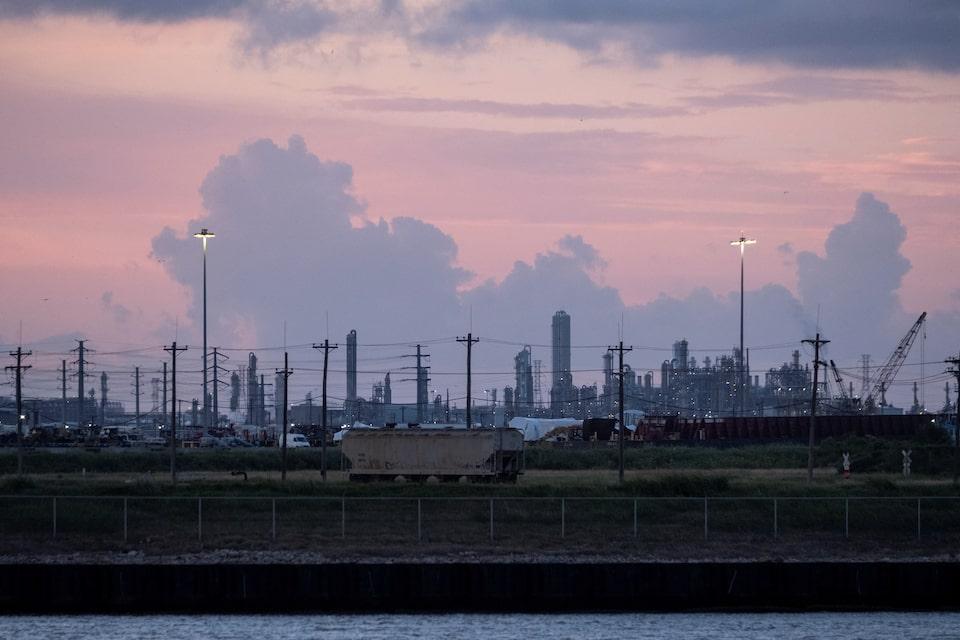
US crude exports hit 4.2 million bpd in September South Korea and India increase US crude purchases China to resume US crude imports as tensions ease HOUSTON, Sept 29 (Reuters) - Exports of U.S. crude oil climbed to the highest level in over a year and a half in September, ship tracking data showed, as U.S. refineries began seasonal maintenance and Asian demand increased. U.S. crude exports rose to an average of 4.2 million barrels per day in September, the highest since February 2024, according to data from ship tracking firm Kpler. Exports had eased in July to their lowest levels in nearly four years on low domestic supplies and as Asian and European buyers found cheaper alternatives. Sign up here. The spread between global benchmark Brent and U.S. West Texas Intermediate crude futures widened in August, when the bulk of the trades for September were executed, averaging minus $3.79, the widest in four months. A wider spread makes it more attractive to economically ship barrels across the Atlantic. Exports to South Korea climbed to 690,000 barrels per day in September, the highest on record. South Korea has agreed to purchase liquefied natural gas or other energy products from the U.S. to the value of $100 billion. FIRST US CRUDE EXPORT TO PAKISTAN September was also marked by the first export of U.S. crude to Pakistan after a landmark trade deal. The country ordered a second shipment that sailed in September after finding its debut purchase commercially viable. Overall, shipments to the country totaled 1.9 billion barrels, or 62,000 bpd. Indian refiners also bought more cargoes of U.S. crude oil, drawn by the competitive prices, and pressure from the U.S. that on Indian imports to 50%, citing New Delhi’s buying of Russian oil. Exports to Australia rose to around 79,000 bpd, their highest since March 2024, while those to Europe eased 11% to 1.7 million bpd in September from August. Shipments to China were set to resume in October after seven months of no shipments, with volumes expected to reach as much as 335,000 bpd, Kpler said, citing fixtures data. China, the world's biggest consumer of oil, had halted purchases after February in response to escalating trade tensions. Last month, U.S. President Donald Trump said China's President Xi Jinping agreed during a call to meet face to face in South Korea to discuss the trade conflict. "The renewed flows come amid signs of easing tensions between Washington and Beijing," Kpler said in a post on X. While trade deals could contribute to incremental shipments, higher shipping costs and relatively high prices for West Texas Intermediate crude threaten to shut the U.S.-Asia oil arbitrage for November. Domestic demand should also increase after the turnaround season over the coming weeks when refineries conduct maintenance on plants and equipment, reducing the availability of barrels for export, analysts with Energy Aspects said in a note. https://www.reuters.com/business/energy/us-crude-exports-rise-15-year-high-strong-asian-demand-us-refinery-maintenance-2025-10-03/
2025-10-03 18:48
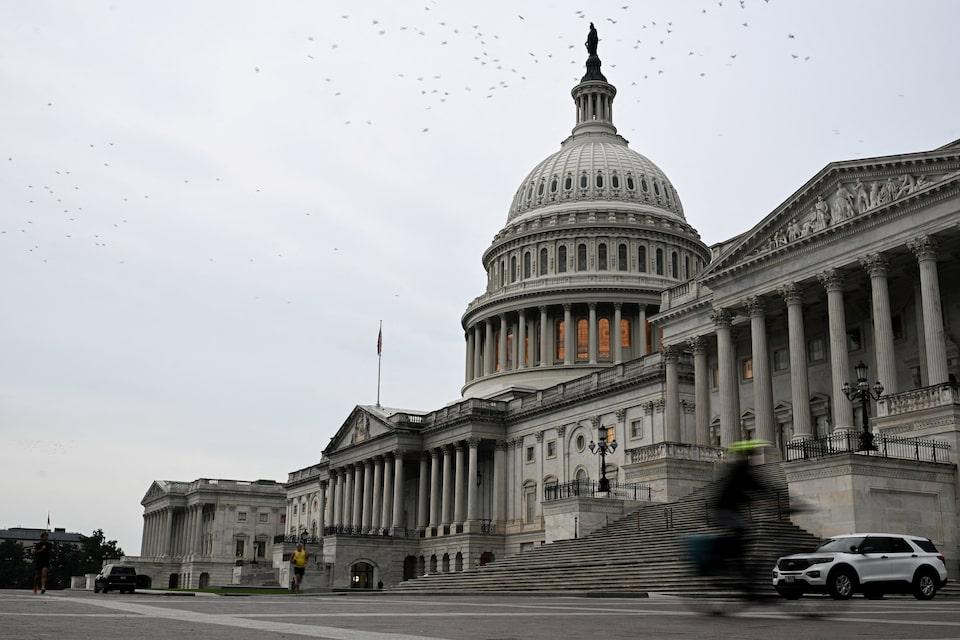
WASHINGTON, Oct 3 (Reuters) - A Democratic bill to fund the U.S. government and end a shutdown was falling short of the votes needed for passage in the Senate on Friday, as voting continued. Sign up here. https://www.reuters.com/world/us/democratic-bill-end-us-government-shutdown-falls-short-passage-senate-2025-10-03/
2025-10-03 18:48
Infrastructure mostly inherited from Noble Midstream buy Assets generate $200 mln of EBITDA Sale comes as Chevron aims to boost financial performance, prioritize cash NEW YORK, Oct 3 (Reuters) - Chevron (CVX.N) , opens new tab is selling a collection of pipeline assets in the Denver-Julesburg shale basin that are likely to fetch more than $2 billion, people familiar with the matter said. Investment bankers at Bank of America (BAC.N) , opens new tab have been working in recent weeks to solicit potential interest in the infrastructure, which was largely inherited from the oil major's acquisition of Noble Energy in 2020 and its subsequent full takeover of Noble's midstream business a year later, said the sources, who asked not to be named because the talks are private. Sign up here. Collectively, the assets generate around $200 million of earnings before interest, taxes, depreciation and amortization (EBITDA), some of the people added. Based on sales of similar assets, Chevron can expect to fetch upwards of $2 billion. A sale is not guaranteed, and Chevron could ultimately retain some or all of the assets, the people cautioned. Chevron did not respond to a comment request. Bank of America declined comment. Chevron is one of the largest producers of oil and gas in the Denver-Julesburg basin, which predominantly covers Colorado but also parts of Wyoming. While clinching its $55 billion acquisition of Hess in July after a long legal battle with Exxon Mobil (XOM.N) , opens new tab was a major victory, Chevron has been grappling with how to control costs, compete with rivals, and maintain financial performance, all against an uncertain oil price outlook. It is in the midst of shedding up to 20% of its global workforce. Chief Executive Mike Wirth told an August 1 analyst call it would challenge itself to divest assets that take money away from more profitable prospects. Deal activity in U.S. midstream has been robust, even as the Trump administration has moved to make building pipelines easier. While much has been driven by strategic players, reengaging in acquisitions after a period focused on debt reduction, private equity firms have also been keen buyers of assets. In recent weeks, MPLX (MPLX.N) , opens new tab agreed to buy privately-owned Northwind Midstream for $2.4 billion and sell assets in the Rockies for $1 billion. Plains All American (PAA.O) , opens new tab announced a $1.6 billion deal to buy a stake in the company which owns the EPIC Crude pipeline. https://www.reuters.com/business/energy/chevron-puts-2-billion-colorado-pipeline-assets-sale-sources-say-2025-10-03/

2025-10-03 16:15
A7A5 stablecoin linked by West to Russian sanctions evasion Its presence at TOKEN2049 conference highlights Western sanctions challenges Token's trading volumes soar, targeting Asian, African, Latin American markets SINGAPORE/PARIS, Oct 3 (Reuters) - The business behind a rouble-backed cryptocurrency targeted by U.S. sanctions was among the sponsors of a major crypto conference in Singapore this week, as demand soars for the token, used by Russians. The TOKEN2049 event is one of the biggest on the global crypto calendar, with more than 25,000 attendees, over 500 exhibitors, and industry elite among the speakers, including the eldest son of the U.S. president. Sign up here. The U.S. and Britain in August sanctioned several companies that they said were behind Kyrgyzstan-based A7A5, a stablecoin pegged to the rouble that was launched in January by a Russian defence lender and a payments firm. They described the token as part of a network for helping Russians evade Western sanctions. A7A5 had a booth at the TOKEN2049 conference and was listed as one of more than 20 "platinum sponsors" on the conference website. Some conference staff wore t-shirts with the A7A5 logo and its director for regulatory and overseas affairs, Oleg Ogienko, spoke on stage. References to A7A5 on TOKEN2049's website had been removed and Ogienko was no longer listed as a speaker by 1300 GMT on Thursday, after Reuters sent a request for comment. Hong Kong-registered TOKEN2049 did not reply to multiple requests for comment. Ogienko confirmed that the A7A5 operation on the ground in Singapore was part of the group targeted by sanctions. "We were sanctioned several times," he told Reuters on the event's sidelines on Thursday. He said A7A5 had nothing to do with money laundering and was compliant with regulations in Kyrgyzstan. "We just regularly applied for our participation, and the organisers confirmed the participation (at TOKEN2049)," he said. Trading volumes on A7A5 are soaring, and its presence in Singapore highlights the difficulty for Western countries that are trying to disrupt alleged use of crypto for sanctions evasion. Neither Singapore nor Hong Kong has announced sanctions on companies connected to A7A5. The U.S. does not have jurisdiction if there are no U.S. persons involved, three lawyers specialising in sanctions told Reuters. Sweeping Western sanctions since Russia's February 2022 full-scale invasion of Ukraine, particularly the exclusion of Russian banks from the SWIFT global financial messaging system, have hampered Moscow's trading options and left it seeking alternative routes for cross-border payments. Some $70.8 billion of A7A5 has been transferred since its launch in January, according to blockchain researchers Elliptic, up from $40 billion in July. The daily number of A7A5 transactions has doubled over the past month, Elliptic said. Reuters could not independently determine the source of funds in A7A5 or the reasons for the transfers. The Office of Foreign Assets Control, the U.S. Treasury agency which issued the sanctions, and Britain's finance ministry did not respond to requests for comment. Russia-based Ogienko said A7A5 was used for cross-border payments by Russian companies and trade partners. Its target markets are Asia, Africa and Latin America, he added. "There are many countries who trade with Russia, and some of them, many of them, use our stablecoin...and these are billions of dollars," he said. The Singapore gathering is one of the biggest in the crypto industry. Speakers included Donald Trump Jr; the chairman of U.S. brokerage Cantor Fitzgerald, Brandon Lutnick; and the heads of major crypto companies. Spokespeople for Trump Jr and Cantor did not respond to requests for comment. (This story has been refiled to say $70.8 billion of A7A5 has been 'transferred,' not 'traded,' in paragraph 14) https://www.reuters.com/sustainability/boards-policy-regulation/rouble-backed-token-targeted-by-sanctions-sponsors-top-crypto-conference-2025-10-03/

2025-10-03 15:28
DAKAR, Oct 3 - The International Monetary Fund is not planning to vote on Friday on a debt misreporting waiver that would let Senegal access fresh cash, despite the subject being discussed at a board meeting, two sources close to the matter told Reuters. The country has been expecting the waiver since May, but it has yet to complete certain criteria needed for a formal board vote, the sources said. Sign up here. The IMF froze Senegal's previous $1.8 billion lending programme after the country's then-newly elected leaders uncovered billions in unreported debt - a sum that has since ballooned to more than $11 billion. Senegal hopes for a waiver to allow the IMF to disburse new money under a new programme. Both sources said that discussions on a waiver were going well, and the waiver was likely to come this year. But a formal board meeting is needed to sign off on it and still has not been scheduled. An IMF spokesperson said Friday's meeting was "intended to update Executive Directors on Senegal’s situation and on the next steps of engagement, including the imminent launch of discussions on a new Fund-supported programme." "As part of the efforts to reinforce governance and transparency, the authorities have committed to certifying the final debt figures, investigating public-financial-management shortcomings, and tracing transactions related to the misreporting in coordination with the judiciary." A spokesperson for Senegal's finance ministry declined to comment. The IMF said on Thursday it would begin formal negotiations with Senegal over a new lending programme this month. But no further lending is possible until the misreporting case is resolved, and without a waiver, Senegal could be forced to repay money from the previous programme. The debt misreporting is one of the largest ever uncovered during an active IMF monitoring programme, and the Fund has a list of measures that Senegal must take before it brings the waiver to the board. Among them is agreeing the terms of a new technical assistance audit focused on public financial management, the sources said, though that audit itself does not need to be completed before the IMF grants the waiver. https://www.reuters.com/world/africa/senegals-imf-waiver-clear-more-cash-not-coming-friday-meeting-sources-2025-10-03/

2025-10-03 14:27
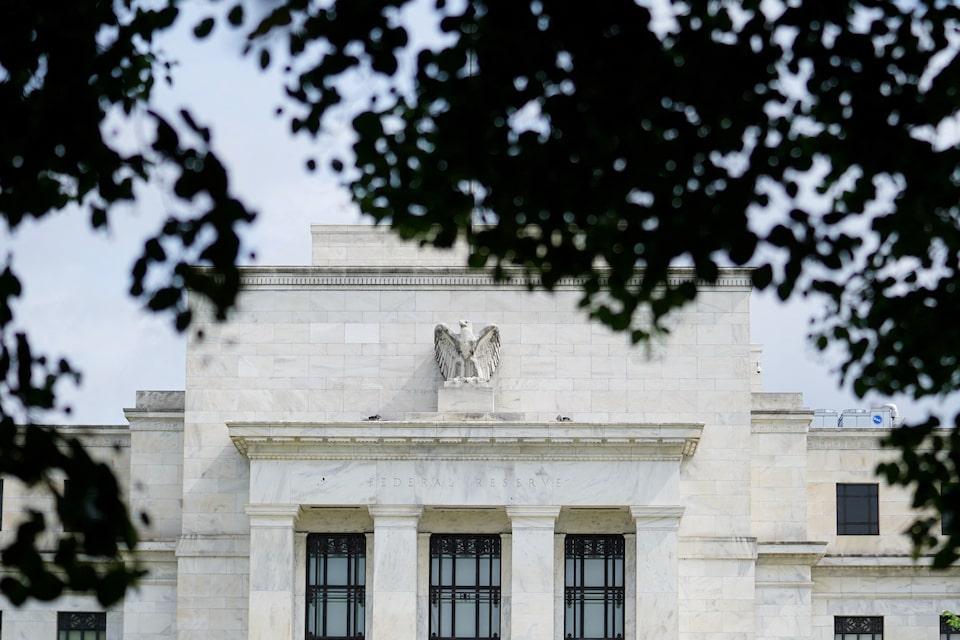
Oct 3 (Reuters) - Bank of America Global Research on Friday pulled forward its forecast for the next Federal Reserve interest rate cut to October from December, citing signs of a softening labor market. It remains the only major Wall Street brokerage forecasting just one more 25-basis-point rate cut from the Fed this year, while others such as Goldman Sachs and Morgan Stanley expect cuts at both of the Fed's upcoming meetings. Sign up here. BofA warned there is a risk the Fed could "over-ease." The U.S. government shutdown, which began on Wednesday, has disrupted the release of key economic data that the Fed relies on to evaluate whether conditions warrant a rate cut. The release of the closely watched monthly jobs report, originally scheduled for Friday, has been delayed due to the government shutdown, leaving investors to interpret alternative indicators that point to a cooling labor market and reinforce expectations of a rate cut. BofA says the soft trend in labor data is already strong enough to justify a rate cut, regardless of whether the NFP report is available or not before Fed's October meeting. Investors are pricing in a 98% probability of a 25-basis-point rate reduction in October and a 90% likelihood of another similar cut in December, according to CME Group's FedWatch tool. https://www.reuters.com/business/bofa-global-research-moves-fed-rate-cut-forecast-october-december-2025-10-03/