2025-10-03 11:51
COPENHAGEN, Oct 3 (Reuters) - Sweden is proposing legislation to increase security in the Baltic Sea by expanding its coast guard's ability to conduct maritime surveillance, the Nordic country's defence ministry said on Friday. The Baltic Sea region is on heightened alert following a string of undersea cable and gas pipeline outages in the years following Russia's 2022 invasion of Ukraine, as well as recent drone sightings and airspace violations. Sign up here. "We have not chosen our external situation, but we must deal with the reality we face," Sweden's Minister for Civil Defence Carl-Oskar Bohlin said in a statement. NATO, of which Sweden is a member, said on Saturday that it was upgrading its mission in the Baltic Sea with an air-defence frigate and other assets following drone incursions in Denmark. https://www.reuters.com/business/media-telecom/sweden-plans-boost-coast-guard-surveillance-baltic-sea-2025-10-03/

2025-10-03 11:50
Oct 3 (Reuters) - USA Rare Earth (USAR.O) , opens new tab shares jumped 10% in premarket trading on Friday, after a report that the mining company's CEO Barbara Humpton said it was in close discussions with the White House. Humpton was addressing a question about the company's potential interest in striking a deal with the Trump administration, in an interview with CNBC late on Thursday. Sign up here. USA Rare Earth did not immediately respond to a Reuters request for comment. U.S. President Donald Trump had invoked emergency powers in March to boost domestic production of critical minerals as part of a broad effort to offset China's near-total control of the sector. Earlier this week, the Trump administration took a 5% stake in Lithium Americas (LAC.TO) , opens new tab and a separate 5% stake in the company's Thacker Pass joint venture with General Motors (GM.N) , opens new tab, which is set to be the largest lithium source in the Western Hemisphere. MP Materials had also unveiled a multibillion-dollar deal with the U.S. government in July to boost output of rare earth magnets, with the defense department becoming its largest shareholder. Rare earths are a group of 17 metals used to make magnets that turn power into motion. China had halted exports in March as part of a trade spat with Trump, which showed some signs of easing in June even as broader tensions underscored the need for greater U.S. output. USA Rare Earth has been developing a mine in Sierra Blanca, Texas and a neo magnet manufacturing facility in Stillwater, Oklahoma, currently planned to go commercial in the first half of 2026. As of last close, its shares have gained 97.8% so far this year, giving the company a market capitalization of about $2.59 billion. https://www.reuters.com/business/energy/usa-rare-earth-shares-surge-after-report-miner-close-talks-with-white-house-2025-10-03/

2025-10-03 11:48
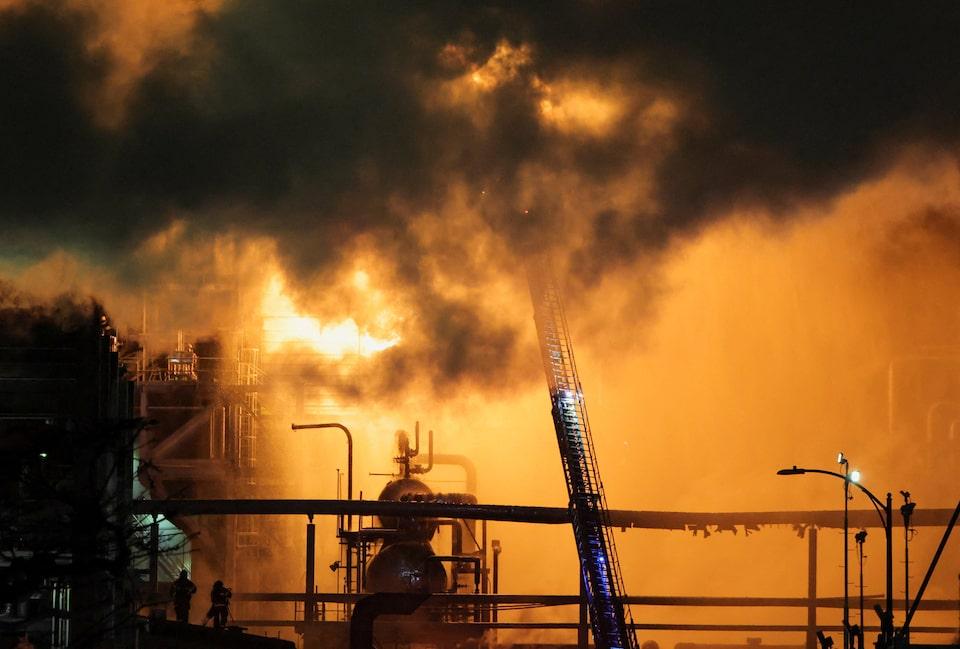
Oct 3 (Reuters) - A fire broke out in a jet fuel unit at Chevron's (CVX.N) , opens new tab 285,000 barrel-per-day El Segundo refinery near Los Angeles on Thursday, sending flames and smoke into the air. No injuries were reported and all workers at the refinery were accounted for, Chevron said in an email. Sign up here. The fire broke out in the refinery's Isomax 7 unit, which converts mid-distillate fuel oil into jet fuel, two sources said. Isomax 7 produces jet fuel along with the refinery’s two crude distillation units for Los Angeles International Airport (LAX). Chevron's second-biggest refinery in the United States, the El Segundo facility supplies a fifth of all motor vehicle fuels and 40% of the jet fuel consumed in southern California. In the U.S. so far in 2025, there have been several refinery fire incidents. Below are key details: https://www.reuters.com/business/energy/us-refinery-fire-incidents-so-far-2025-2025-10-03/
2025-10-03 11:29
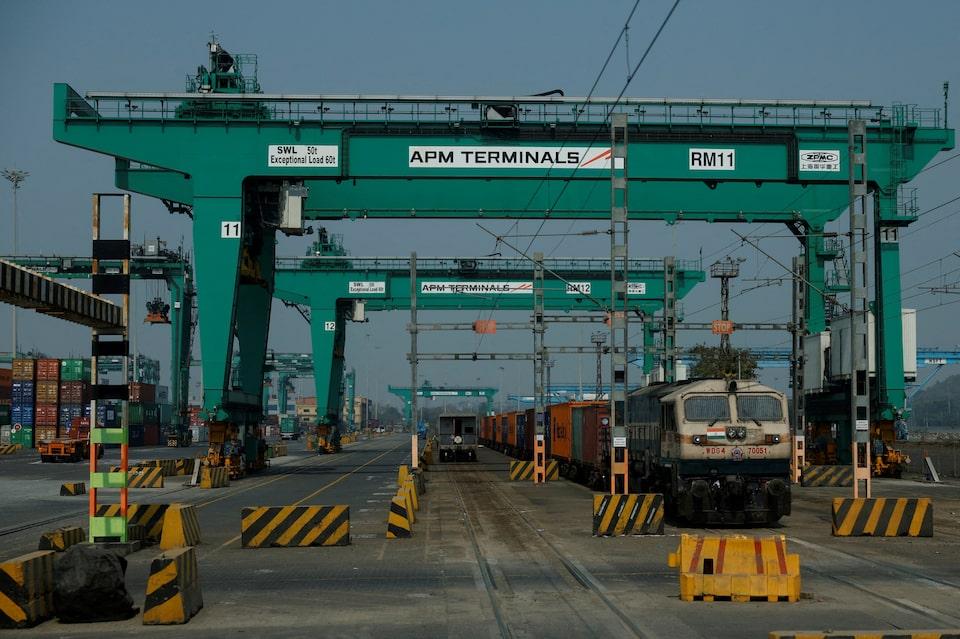
October 3 - U.S. President Donald Trump's tariff strategy has injected a bout of uncertainty into global financial markets, exacerbated by legal challenges to the levies and Trump's push for bilateral trade deals. Trump's order on "reciprocal" tariffs for exports from 69 trading partners listing higher import duty rates of 10% to 41% kicked in on August 7, raising the average U.S. import duty to its highest in a century. Sign up here. The latest round of levies includes a 100% tariff on branded or patented pharmaceutical imports and a 25% duty on heavy-duty trucks, as Trump intensifies efforts to reshape global trade. Here is a timeline for key upcoming events and dates that could have a bearing on U.S. tariff policy: October 1: The United States imposed a 100% tariff on imports of branded or patented pharmaceutical products , opens new tab, with some exception for companies building a manufacturing plant in the U.S. Trump also imposed 25% levies on heavy-duty trucks. October 14 Trump's 10% tariffs , opens new tab on imported timber and lumber and 25% duties on kitchen cabinets, bathroom vanities and upholstered furniture comes into effect. November 10: The U.S.-China tariff truce is extended through early November, providing a temporary reprieve during the seasonal surge in imports ahead of the year-end holiday season. January 1, 2026: Duties will rise further on January 1, 2026 to 30% for upholstered furniture and 50% for cabinets and vanities from countries without trade agreements. https://www.reuters.com/world/us/trumps-trade-war-tariff-deadlines-key-upcoming-events-2025-10-03/
2025-10-03 11:22
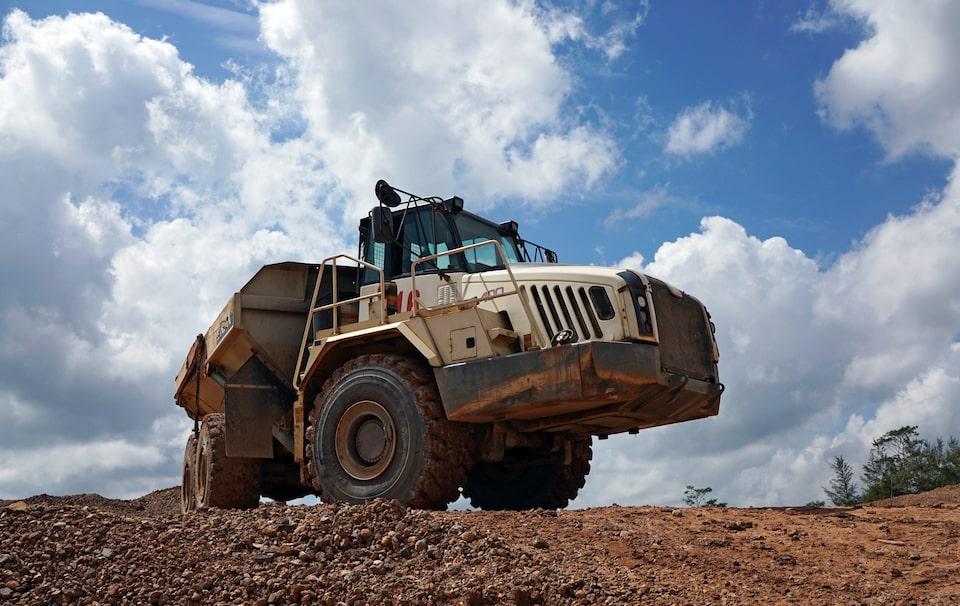
LONDON, Oct 3 (Reuters) - The tin market is once again bubbling on supply chain trouble, this time in Indonesia, where the government has launched a sweeping clamp-down on illegal mining. London Metal Exchange (LME) three-month tin has jumped to over $37,500 per metric ton, the highest level since April when the supply threat was to the Bisie mine in Democratic Republic of Congo. Sign up here. The latest price kicker was provided by Indonesian President Prabowo Subianto, who said , opens new tab the government aims to close 1,000 illegal mines in the tin-rich islands of Bangka and Belitung. How much tin such operations produce is impossible to know, and there may be an offset if their closure leads to higher production by the country's official sector. But it's another drop in tin's cauldron of supply challenges, which is why the price is once again on the boil. LONG CAMPAIGN The Indonesian authorities have been struggling to regain control of the country's tin production sector ever since it was de-regulated at the end of the last century. Much of the country's tin comes from artisanal and small-scale miners, which makes it difficult to tell who's operating under some form of official licence and who isn't. Boundaries have become blurred to such an extent that PT Timah (TINS.JK) , opens new tab, the country's top producer, has found itself in the dock for facilitating the black market trade. Some of the illegal "mines" are no more than basic rafts , opens new tab sent out at night to dredge for tin in waters licensed to PT Timah and other official sector operators. What's mined is then smuggled out of the country on small boats, such as the one seized , opens new tabthis week by the Malaysian Maritime Enforcement Agency transporting 530 gunny sacks of tin ore weighing 26.5 tons. This latest crack of the regulatory whip actually began at the start of last month and has already resulted in multiple closures, Prabowo said. SHADOW PRODUCTION How much tin comes from Indonesia's shadow sector? Since such material by definition eludes the country's customs service, it exists in a statistical black hole. Indonesia's official export figures capture flows of refined tin, which is the only form of the metal that is supposed to be shipped overseas. However, both Chinese and Malaysian customs departments are recording monthly imports of Indonesian "ores and concentrates". Chinese imports amounted to 1,192 tons in the first eight months of the year and Malaysia took in 642 tons in the first seven months, according to World Bureau of Metal Statistics data. This may be the tip of the iceberg. The chairman of the Indonesian Tin Exporters Association (ITEA) has told local media , opens new tab that up to 12,000 tons of tin are being illegally exported each year. Prabowo suggested that the shadow sector may represent around 80% of all production in the Bangka Belitung region. While estimates inevitably differ, there is a broad consensus that the problem has become much more acute over the last year. The illegal production boom has eaten into the official sector's capacity. PT Timah attributed a 32% year-on-year drop in ore production in the first half of 2025 to competition with the shadow sector. Indonesian exports of refined tin slumped to a multi-year low of 46,000 tons last year and the ITEA is expecting only a modest recovery to 53,000 tons this year. The ongoing closure of illegal operations should in theory help the official sector lift production in compensation, although by how much and over what period is highly uncertain. CAULDRON The tin price is in no mood to wait and find out, surging by 10% over the last week as time-spreads tighten. Just a couple of weeks ago the LME cash tin price was trading at a wide $167 discount to the three-month price. It has this week flipped to a $105 premium as shorts are forced to buy back their positions. The price reaction to the Indonesian news says much about the fragility of the tin supply chain, which is beholden to a small number of big producers. One of the world's largest tin mines is still missing in action. Man Maw in the semi-autonomous Wa State in Myanmar is supposed to be reopening after a two-year absence. However, the flow of tin raw materials over the border to China remains no more than a trickle, suggesting the mine is still far from its production rate before the authorities ordered it closed for a resource audit. The Bisie tin mine in the Congo is back up and running after being briefly suspended in March due to the advance of the M23 rebel group. However, the threat hasn't gone away. The United States is leading efforts to try and resolve the decades-old conflict in the eastern part of the Congo but no-one appears to have told the M23. One of its leaders, Kony Ng'ang'a, was in uncompromising mood in an interview last month , opens new tab with CNN. Tin traders already had enough supply flash-points to worry about. They now have another one. The opinions expressed here are those of the author, a columnist for Reuters. https://www.reuters.com/markets/commodities/tin-breaks-higher-indonesia-cracks-down-illegal-miners-2025-10-03/
2025-10-03 11:21
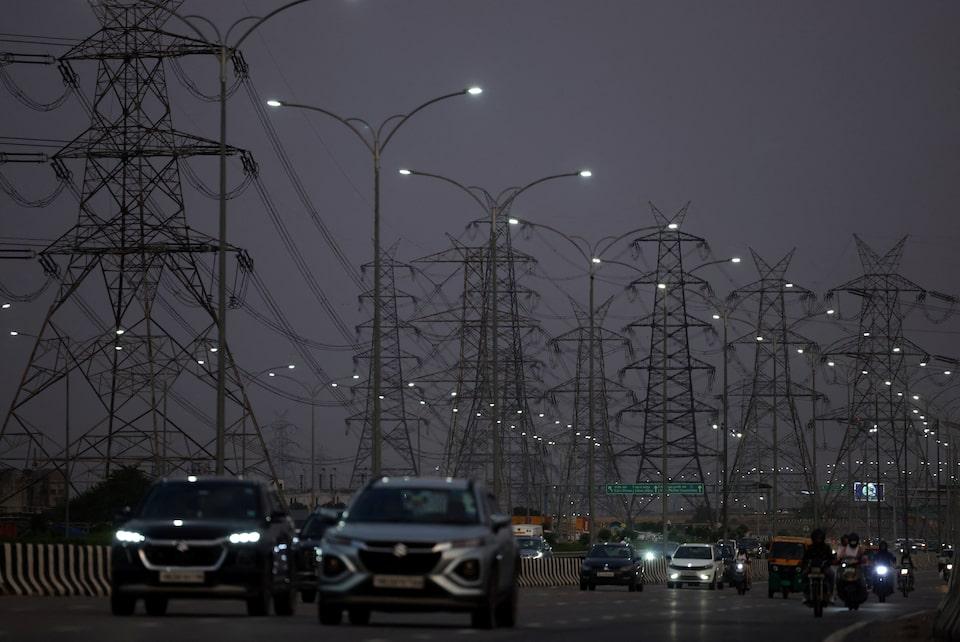
NEW DELHI, Oct 3 (Reuters) - India’s electricity generation slowed in September, reflecting a decline in industrial activity and prolonged monsoon conditions that reduced cooling demand. Power output rose 3.2% year-on-year but fell short of August’s 4% growth, marking the first monthly drop in three months, according to daily analysis of Grid India data. Sign up here. The moderation coincided with a slowdown in manufacturing expansion and continued rainfall, which curbed energy consumption. Industries account for nearly half of India’s domestic power use. Coal-fired generation, which typically contributes about three-quarters of India’s annual electricity output, declined in September compared to August. Production and supply by the country’s largest coal miner also fell, aligning with the dip in overall power output. Coal India’s (COAL.NS) , opens new tab production in September dropped by approximately 4%, while supply declined by 1.1%, company data showed. "Industrial demand and thermal power consumption remain subdued ... Coal power plant inventories have dipped slightly but remain adequate for near-term requirements,” said Vasudev Pamnani, director at I-Energy Natural Resources, a coal trading firm. Despite the slowdown in thermal generation, renewable energy and hydropower continued to expand. Solar and wind output increased, supported by strong capacity additions. India added a record 30 gigawatts of new solar and wind capacity in the first eight months of 2025 and aims to reach 500 GW of non-fossil fuel capacity by 2030. The sustained growth in renewable energy has helped reduce India’s reliance on coal for electricity generation this year. A 16% increase in generation from renewable sources such as solar and wind, along with a 7.4% annual rise in hydropower output, contributed to total electricity generation of 156.52 billion kilowatt hours in September, the data showed. https://www.reuters.com/sustainability/climate-energy/indias-power-output-growth-slows-september-industrial-momentum-eases-2025-10-03/