2025-10-02 01:04
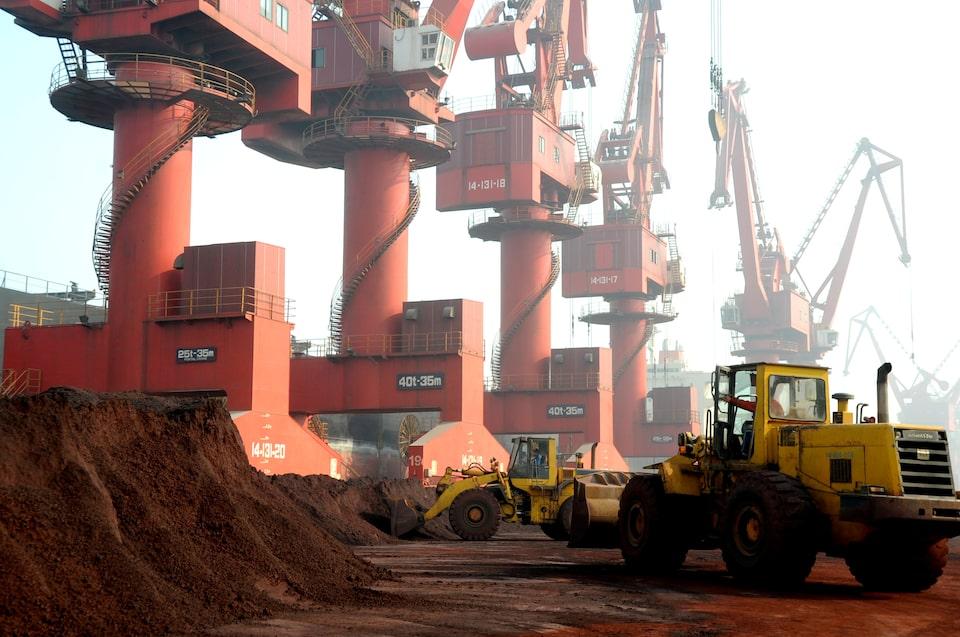
BUENOS AIRES, Oct 1 (Reuters) - Argentina's President Javier Milei said proposed U.S. financial support for Argentina could include purchases of the country's debt in the secondary market and a profit-sharing arrangement. In an interview with local radio station Mitre, Milei said negotiations with the U.S. government are still ongoing, and the proposed aid package could consist of three blocks. Sign up here. The U.S. is currently in negotiations for a $20 billion swap line with Argentina's central bank and stands ready to do what is needed to support the South American country, U.S. Treasury Secretary Scott Bessent said last week. https://www.reuters.com/world/americas/argentinas-milei-says-us-aid-talks-include-debt-purchases-profit-sharing-2025-10-02/
2025-10-02 00:54
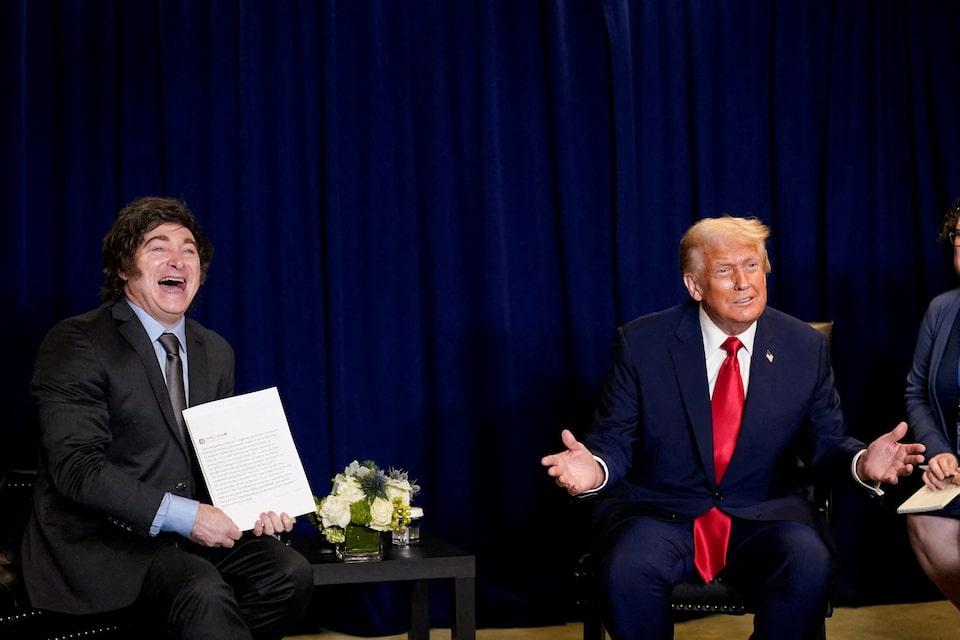
US seeks to reduce reliance on China for critical minerals Australia's mineral reserve may aid AUKUS pact negotiations Government backing boosts investor interest in mineral projects MELBOURNE, Oct 2 (Reuters) - The U.S. government has offered to buy equity in Australian critical minerals companies as part of a funding package to expand its supply and cut its reliance on China, executives recently returned from Washington said. The push is part of a plan to establish alternative mineral supply chains after China, the dominant producer of most critical minerals, responded to U.S. tariffs by restricting exports of rare earths and related permanent magnets, which impacted U.S. and European carmakers. Sign up here. Critical minerals include lithium, cobalt and rare earths, which are essential to technologies used in a variety of sectors, including clean energy, semiconductors and weapons. U.S. government officials were "saying to companies, you come to us with a proposal and we'll assess it and try and make it work through those various funding channels and programs that we have available to us," Andrew Worland, CEO of International Graphite (IG6.AX) , opens new tab, which is building a mine and processing plant in Western Australia, told Reuters. Worland was part of an Australian delegation of 15 critical minerals companies that visited Washington and New York last month to meet senior administration officials. The officials they met included former mining executive David Copley, who heads an office at the U.S. National Security Council focused on strengthening supply chains, and Joshua Kroon, a deputy assistant secretary for critical minerals and metals at the International Trade Administration, Worland said. Funding pathways could include traditional debt, debt and equity models, which would be debt financing with an "equity kicker," and also offtakes, where the U.S. could potentially prepay for supply to add to a defence stockpile, Worland said, adding the focus was on getting projects ready for 2027. The White House did not immediately respond to a request for comment on the discussions with the Australian companies. The U.S. government has already taken equity holdings in U.S.-listed critical minerals companies. On Tuesday, Reuters reported the U.S. Department of Energy will take a 5% stake in Lithium Americas (LAC.TO) , opens new tab and a separate 5% stake in the company's Thacker Pass lithium mine joint venture with General Motors (GM.N) , opens new tab. The U.S. government will acquire the stakes in Lithium Americas via no-cost warrants, the latest private sector investment by the Trump administration after recent purchases of parts of Intel (INTC.O) , opens new tab and MP Materials (MP.N) , opens new tab, to boost industries seen as vital to U.S. national security. Reuters also reported on Tuesday Australia is willing to sell shares in its new strategic reserve of critical minerals to allies including Britain to reduce their dependence on China. The reserve is expected to be a bargaining chip for Prime Minister Anthony Albanese when he meets President Trump in Washington on October 20. The Trump administration is reviewing the Australia, UK, U.S. (AUKUS) defence pact, which includes a multi-billion-dollar plan to provide Australia with nuclear-powered attack submarines to counter China in the Indo-Pacific. "The big takeaway message is the U.S. government is open for business and they will use whatever financial instruments are appropriate or suitable on a case-by-case basis," said CEO Andrew Tong of Cobalt Blue (COB.AX) , opens new tab , who was also part of the delegation. Cobalt Blue is seeking funding for its Australian cobalt mine and a cobalt refinery in Western Australia, which it is looking to integrate into the U.S. supply chain, he said. Financing has been difficult for critical minerals projects because their product markets are small and prices can be volatile, making valuations difficult and investments risky. But government backing, including the potential U.S. role, has derisked projects and ignited investor interest. https://www.reuters.com/business/energy/us-offers-buy-stakes-australian-critical-minerals-companies-2025-10-02/

2025-10-01 23:49
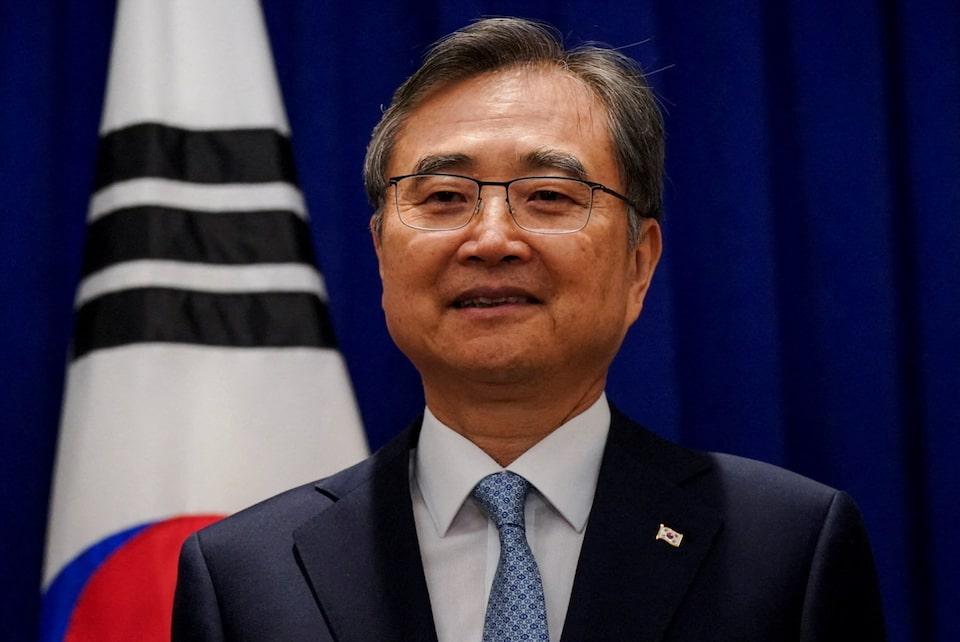
U.S. reviewing currency swap deal, key demand from South Korea Seoul aims to announce security deal before APEC summit Progress on South Korea's nuclear fuel processing rights SEOUL, Oct 2 (Reuters) - South Korea has delivered its proposals on a trade deal to the U.S., including its request for a currency swap line, and is waiting for a response, a presidential adviser said on Thursday, as he reaffirmed the government's will to finalise a deal this month. Washington had previously agreed to lower tariffs on imports from South Korea in return for a $350 billion investment package but follow-up negotiations to hammer out details, including the structure of the investment package, have stalled. Sign up here. "We have sent our stance to the U.S. and there has not been any response yet from Commerce Secretary Lutnick, our main counterpart," Presidential Policy Adviser Kim Yong-beom said at a meeting with foreign media. Kim said South Korea made a request for a bilateral currency swap programme in the proposal sent to the U.S., which Seoul wants in place to mitigate the foreign exchange impact of a $350 billion investment package, part of a preliminary deal reached in July. "We really want to do this but to do it, it needs to be operational," Kim said, adding that the deal needed to be logically acceptable to be approved by parliament. Kim also said an Asia-Pacific summit due to be held in Gyeongju in South Korea in late October would be an opportunity "we shouldn't miss". SECURITY PACT PROGRESS OUTPACES TRADE DEAL South Korea's foreign minister said in an interview with the Yonhap News Agency earlier in the day that Seoul was seeking to announce a security agreement with the U.S. before the summit, which South Korean officials expect U.S. President Donald Trump to attend. Foreign Minister Cho Hyun said in the interview that South Korea and the U.S. had reached a rough agreement on security in tandem with the ongoing tariff negotiations but Seoul may need more time to strike a trade deal than Japan did. Tokyo signed on to the details of its investment package with the U.S. last month. Cho also said the U.S. was reviewing a currency swap deal, which was a key demand from South Korea in tariff talks, but he signalled he was not optimistic. Meanwhile, Seoul and Washington have also been looking at a deal in security areas such as an increase in South Korean defence spending, which is part of the broader package aimed at pushing down U.S. tariffs. Trump has said South Korea should be paying for its own military protection and suggested it needed to pay more for the U.S. troop presence there. South Korean President Lee Jae Myung said on Wednesday the country would boost next year's defence budget by 8.2%, highlighting the importance of stronger self-defence. "In the security field, an agreement has already been reached in general, which allows us to increase our national defence capabilities in necessary areas," Cho told Yonhap. INDUSTRIAL NUCLEAR FUEL ACCESS UNDER REVIEW Working towards the security deal, top South Korean officials have said the two countries are making progress on giving more rights to South Korea on nuclear fuel processing for industrial purposes. That is currently not allowed under an existing agreement between the two countries. Cho said he did not rule out a possibility of Trump meeting with North Korean leader Kim Jong Un, as some "speculative" media reports suggested. The South Korean president suggested the U.S. president try to meet with Kim during his trip to South Korea. Last month, Kim said he was open to talks with the U.S. if Washington stopped insisting his country give up nuclear weapons, North Korean state media reported. https://www.reuters.com/world/asia-pacific/south-korea-foreign-minister-says-rough-agreement-security-reached-with-us-2025-10-01/
2025-10-01 23:45
Oct 2 (Reuters) - Critical Metals Corp (CRML.O) , opens new tab gained the right to increase its stake in the Tanbreez Rare Earths Project in southern Greenland to 92.5%, major shareholder European Lithium (EUR.AX) , opens new tab said on Thursday. Sign up here. https://www.reuters.com/business/energy/critical-metals-buy-most-greenland-rare-earth-mine-says-major-shareholder-2025-10-01/

2025-10-01 23:38
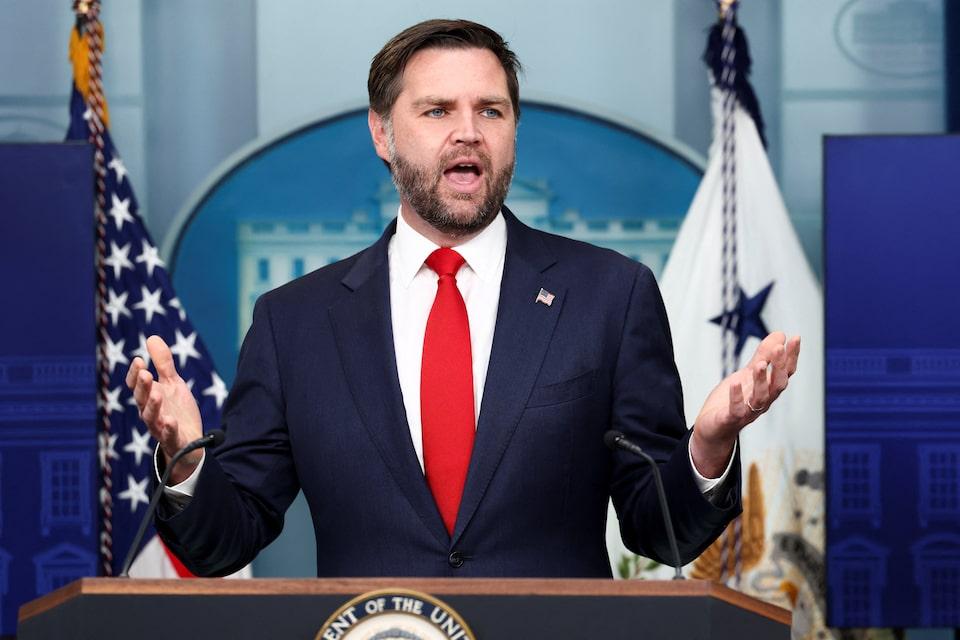
WASHINGTON, Oct 1 (Reuters) - U.S. Vice President JD Vance on Wednesday described AI-manipulated videos that President Donald Trump posted on social media of House Democratic Leader Hakeem Jeffries as a joke, dismissing complaints from Democrats that the videos were racist. Trump is butting heads with Democratic leaders over a government shutdown , opens new tab that is in its first day. Sign up here. On Monday, he posted a clip on his Truth Social account featuring Jeffries speaking outside the White House with a superimposed handlebar mustache and a sombrero, while Mariachi music plays in the background. Jeffries is Black, with his mother tracing her roots to Cape Verde. After Jeffries condemned the original post as "disgusting" in an MSNBC interview, Trump posted a video of Jeffries from that interview, with a mustache and sombrero again added. The White House replayed the clip on large screens in the press briefing room on Wednesday. "I think it's funny. The president's joking and we're having a good time," Vance said at a White House press conference, when asked by a reporter how the images squared with the White House's assertions that it is willing to negotiate with Democratic leaders in good faith. "You can negotiate in good faith while also poking a little bit of fun at some of the absurdities of the Democrats' positions, and even, you know, poking some fun at the absurdity of the Democrats themselves." Jeffries and other high-ranking Democrats have called the images racist and bigoted. Trump himself has at times employed xenophobic, racist or sexist comments throughout his political career. https://www.reuters.com/business/media-telecom/trumps-ai-videos-top-democrat-were-joke-not-racist-vance-says-2025-10-01/
2025-10-01 23:09
Malaysia's Khazanah to partner with Chinese firm, sources say China eyes Malaysian rare earths reserves, sources say Malaysia lacks technology to mine, process rare earths Australia's Lynas runs plant in Malaysian state of Pahang KUALA LUMPUR/BEIJING, Oct 2 (Reuters) - China and Malaysia are in early talks for a project to process rare earths, with sovereign wealth fund Khazanah Nasional likely to partner with a Chinese state-owned firm to build a refinery in the Southeast Asian nation, people familiar with the matter said. If the joint venture takes shape, it would represent a significant policy departure for China, the world's top supplier and refiner of rare earths, which has banned export of its processing technology to protect its dominance of the industry. Sign up here. Beijing is ready to swap its technology for access to Malaysia's untapped rare earths reserves, seeking to limit competition from Australian rival Lynas Rare Earths (LYC.AX) , opens new tab, which has a processing plant in the central state of Pahang, said two sources in Malaysia with knowledge of the talks. All four sources who spoke to Reuters for this report sought anonymity because the matter is a sensitive one. Khazanah Nasional and Malaysia's natural resources and trade ministries did not immediately respond to requests for comment on the talks. China’s State Council Information Office, which handles media queries on behalf of the government, did not immediately respond to a Reuters request for comment due to the National Day holiday. ROADBLOCKS AHEAD, SAY SOURCES A Malaysian source said the plan faced several roadblocks, however, such as China's concern whether Malaysia would be able to supply enough raw material for the plant. Two of the sources said Malaysia was also concerned by the potential environmental impact and regulatory hurdles, since mining activities typically require approvals and licensing from both state and federal government authorities. Malaysia has said it did not support rare earths mining in sensitive locations such as permanent forest reserves and water catchment areas. Global manufacturers are scrambling to secure alternative supplies of rare earths, after Beijing's export curbs this year led to output delays for major automakers and magnet producers. Malaysia has some 16.1 million metric tons of rare earth deposits, the government estimates, but lacks the technology to mine and process them. It has banned companies from exporting raw rare earths to prevent loss of resources. The only exception was granted in 2022 to a pilot mining project aimed at helping to set national operating and licensing guidelines for extraction of the rare earths. Australia's Lynas, the world's largest rare earths producer outside China, signed a deal in May with Malaysia's eastern state of Kelantan for a future supply of mixed rare earths carbonate, seen as an effort to develop the local industry. REFINERY TO HANDLE BOTH TYPES The proposed refinery is expected to process both light and heavy rare earths, two Malaysian sources said. These elements are critical to the manufacture of products from cars and mobile phones to military equipment. Heavy rare earth metals, used widely in the development of clean technology, are less common, however, and some elements face shortages amid high demand. In August, Johari Abdul Ghani, Malaysia's minister for natural resources said China was prepared to provide technical and technological assistance in processing rare earths. However, President Xi Jinping had asked to restrict cooperation efforts to state-linked companies so as to protect trade secrets, Johari said, adding that discussions were still preliminary and no deal had been reached. A successful deal would make Malaysia one of the few countries with both Chinese and non-Chinese rare earths processing technology, Johari added. https://www.reuters.com/world/china/china-malaysia-talks-rare-earths-refinery-project-sources-say-2025-10-01/