2025-10-01 22:56
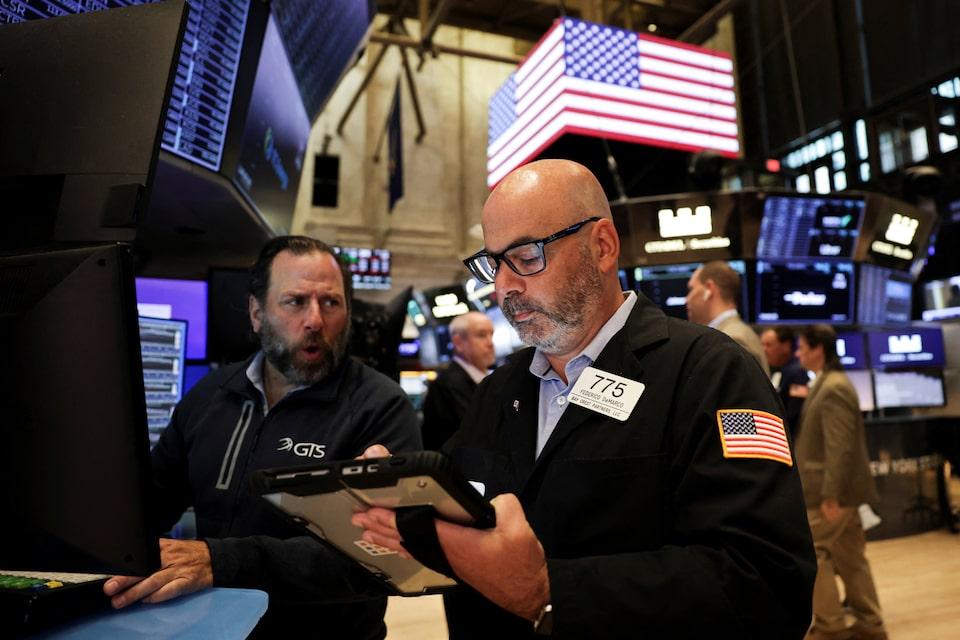
Indexes up: Dow 0.09%, S&P 500 0.34%, Nasdaq 0.42% Healthcare index extends rally after Tuesday's Pfizer/Trump deal AES rallies sharply to boost utilities sector September ADP jobs report softer than expected Oct 1 (Reuters) - Wall Street's main stock indexes closed higher on Wednesday, with the biggest boost from the healthcare sector, as investors looked past weaker-than-expected private payrolls data and uncertainty around the first day of the U.S. federal government shutdown. With the Labor Department's September jobs report expected to be postponed if the government has not reopened by Friday, investors were paying close attention to the ADP National Employment Report. Sign up here. ADP showed a decline in private payrolls of 32,000 and a downwardly revised 3,000 decline in August. These numbers were weaker than economist forecasts for growth of 50,000 in September and the prior report of a 54,000 advance in August. Elsewhere in economic data, the Institute for Supply Management showed U.S. manufacturing edged toward recovery in September. After opening lower, all three main U.S. indexes advanced. Among the S&P 500's 11 major industry sectors, the biggest gainer was S&P 500 healthcare (.SPXHC) , opens new tab, boosted by pharmaceutical companies. The healthcare rally started in earnest on Tuesday after Pfizer (PFE.N) , opens new tab and U.S. President Donald Trump said they had cut a deal. The drugmaker agreed to lower prescription drug prices in the Medicaid program - compared to its charges in other developed countries - in exchange for tariff relief. Trump said he expected more drug companies to follow suit. "Yesterday was the catalyst for healthcare," said Lara Castleton, U.S. head of portfolio construction and strategy at Janus Henderson Investors, adding that the sector was probably ripe for a rally after underperforming the rest of the market so far this year. "People have not necessarily been avoiding it, but they have not been as heavily allocated into healthcare as they have been in technology and all the AI hype," she said. The Dow Jones Industrial Average (.DJI) , opens new tab rose 43.21 points, or 0.09%, to 46,441.10, the S&P 500 (.SPX) , opens new tab gained 22.74 points, or 0.34%, to 6,711.20 and the Nasdaq Composite (.IXIC) , opens new tab gained 95.15 points, or 0.42%, to 22,755.16. The S&P 500 tech (.SPLRCT) , opens new tab sector provided the second biggest boost for the benchmark index, with Micron (MU.O) , opens new tab rallying 8.9% and the broader Philadelphia chip index (.SOX) , opens new tab adding 2%. The sector with the biggest percentage decline during the session was materials (.SPLRCM) , opens new tab, which ended the day down more than 1%. The healthcare sector's biggest gainers were Biogen (BIIB.O) , opens new tab , up 10.9% and Thermo Fisher (TMO.N) , opens new tab, up 9.4%. Castleton noted that equity investors appeared to be shrugging off uncertainties around the shutdown. Markets have historically been resilient during government closures. The S&P 500 rose during each of the last six shutdowns, according to a note from Deutsche Bank. During the last government closure between the end of 2018 and the beginning of 2019, indexes were able to advance. In individual stocks, a 16.8% rally in shares of AES (AES.N) , opens new tab made it the biggest gainer in the benchmark index and a strong boost for the S&P 500 utilities sector (.SPLRCU) , opens new tab. This was after the Financial Times reported that BlackRock-owned (BLK.N) , opens new tab Global Infrastructure Partners was nearing a $38-billion deal to acquire the utility group. While the materials sector was broadly weaker, Lithium Americas Corp (LAC.TO) , opens new tab U.S. shares rallied 23.3% and rival Albemarle (ALB.N) , opens new tab closed up 4.2%. The U.S. Department of Energy has taken a 5% stake in Lithium Americas and a separate 5% stake in the company's joint venture with General Motors Corteva (CTVA.N) , opens new tab said it would separate its seed and pesticide businesses into separate publicly traded companies, sending its shares down 9%. Advancing issues outnumbered decliners by a 1.92-to-1 ratio on the NYSE where there were 580 new highs and 99 new lows. On the Nasdaq, 2,707 stocks rose and 2,003 fell as advancing issues outnumbered decliners by a 1.35-to-1 ratio. The S&P 500 posted 37 new 52-week highs and 7 new lows while the Nasdaq Composite recorded 111 new highs and 68 new lows. Volume wise, on U.S. exchanges 19.79 billion shares changed hands compared with the 20-day moving average of 18.62 billion. https://www.reuters.com/business/wall-street-futures-slip-government-shutdown-complicates-fed-rate-path-2025-10-01/
2025-10-01 22:28
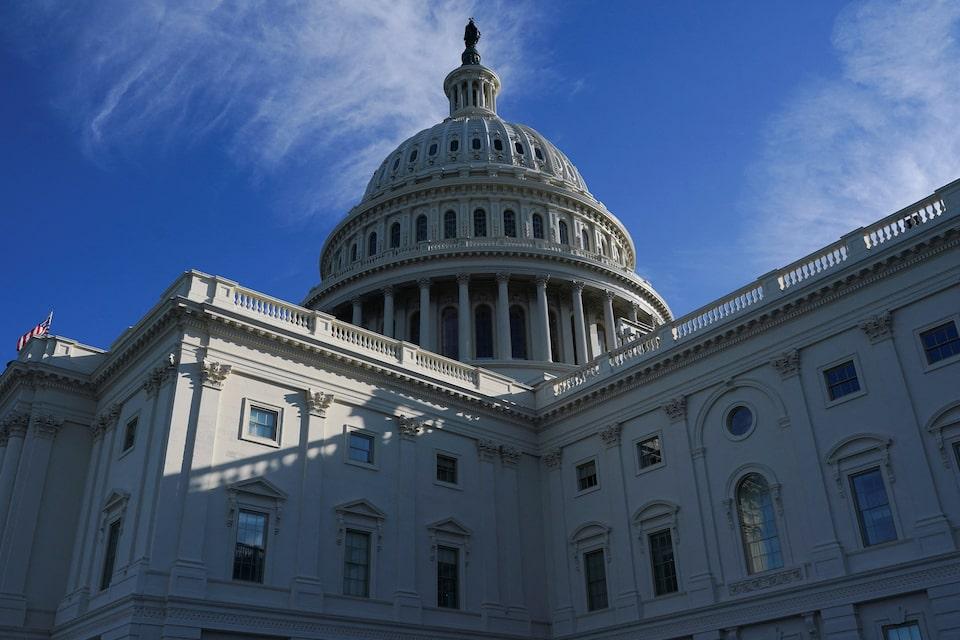
Oct 1 (Reuters) - Fitch said on Wednesday it does not expect the ongoing U.S. government shutdown to affect the country's sovereign ratings in the near term, adding that any impact on economic growth would depend on its scope and duration. The U.S. government shut down much of its operations earlier in the day as deep partisan divisions prevented Congress and the White House from reaching a funding deal, setting off what could be a long, grueling standoff that could lead to the loss of thousands of federal jobs. Sign up here. "Fitch will continue to assess developments around the U.S. regulatory environment, rule of law, and institutional checks and balances as part of its sovereign credit analysis," the ratings agency said. It expects the general government deficit to narrow to 6.8% of GDP in 2025 from 7.7% in 2024, partly due to a surge in tariff revenues, which it now sees reaching $300 billion. "Despite increased uncertainty around U.S. policy and the possible erosion of institutional checks and balances, we expect the U.S. dollar's predominant reserve currency status — a material sovereign rating strength — to continue for the foreseeable future," Fitch added. S&P Global Ratings said, separately, that government shutdowns generally have only a marginal effect on the broader economy, and it does not consider them credit events for the U.S. sovereign rating. But secondary effects can build up over time, it warned, as furloughed workers cut spending and delays in key economic data add uncertainty for the Federal Reserve. S&P Global estimated the shutdown could trim GDP growth by 0.1% to 0.2% for every week the government is closed. A government shutdown can have broad implications, disrupting federal services, slowing economic activity, and increasing uncertainty for markets and businesses. The longest U.S. government shutdown, lasting 35 days in 2018-2019 during President Donald Trump's first term, partly ended after flight delays triggered by air traffic controllers calling in sick. It remains unclear how long the current government shutdown will continue. The main U.S. stock indexes bounced back from early lows on Wednesday. "Government shutdowns are inconvenient and messy, but there is little evidence that they have a significant impact on the economy," said Scott Helfstein, head of investment strategy at Global X. "Typically, the lost economic activity, if meaningful in the first place, is recovered in the following quarter." https://www.reuters.com/sustainability/boards-policy-regulation/us-government-shutdown-unlikely-affect-sovereign-ratings-near-term-fitch-says-2025-10-01/
2025-10-01 22:22
Ukraine's Zelenskiy says more than 20 Russian drones deployed near Chornobyl Says Russia doing nothing to fix Zaporizhzhia plant power line Kremlin says doing what it can to restore Zaporizhzhia power Oct 1 (Reuters) - Ukrainian President Volodymyr Zelenskiy on Wednesday accused Russia of trying to create the risk of nuclear incidents, alleging Moscow had deliberately staged an attack that cut off power to the decommissioned Chornobyl nuclear power station. Zelenskiy also said Moscow was doing nothing to fix the cutoff of external power to the Russian-held Zaporizhzhia nuclear power plant, now in its eighth day, and was taking advantage of the "weak" position of the International Atomic Energy Agency (IAEA) and its Director General, Rafael Grossi. Sign up here. Ukraine's energy ministry said earlier that Russian attacks had cut power to the Chornobyl station, including a containment unit erected to minimise contamination from the world's biggest nuclear accident in 1986. Energy officials said strikes also cut off power to 307,000 customers in the nearby Chernihiv region. Zelenskiy said more than 20 Russian drones had been deployed in the attack on the town of Slavutych that cut power to the nearby Chornobyl plant for three hours. "The Russians could not have been unaware that a strike on facilities in Slavutych would have such consequences for Chornobyl," he wrote on the Telegram messaging app, adding that large quantities of spent fuel remained there. "And this was a deliberate attack in which they used more than 20 drones, according to preliminary assessments, Russian-Iranian Shaheds." The IAEA, the U.N.'s nuclear watchdog, issued a statement acknowledging that the plant had experienced "fluctuations" after losing its external power connection, but that alternative lines were used initially and power was later restored. Russia has not yet commented on the incident. Ukraine's energy ministry statement made no mention of any possible increased risk of radioactive release as a result of the power cutoff to the defunct Chornobyl plant due to the Russian attacks on Slavutych. "As a result of power surges, the new safe confinement facility, which isolates the destroyed fourth power unit of the Chornobyl station and prevents the release of radioactive materials into the environment, was left without power supply," the ministry said. After the Chornobyl station's fourth reactor exploded in April 1986 and spread radioactivity throughout Europe, Soviet engineers hurriedly erected a "sarcophagus" around the reactor. This was replaced by a new confinement structure in 2016, while the plant's other three reactors were gradually taken out of service. The plant was briefly occupied by Russian forces at the beginning of Moscow's 2022 invasion of Ukraine. And a Russian drone pierced the confinement structure's roof in February. FIXING THE EXTERNAL POWER LINE AT ZAPORIZHZHIA Zelenskiy also again blamed Russia's military for the cutoff of the external power line last week at the Zaporizhzhia plant in southeastern Ukraine. "And the Russians are doing absolutely nothing to fix the situation or allow Ukrainian specialists to restore the external power supply to the plant," he said. Russia, he said, was "deliberately creating the risk of radiation incidents, exploiting, unfortunately, the weak position of the IAEA and its Director General, Rafael Grossi, as well as the dispersion of world attention." Kremlin spokesman Dmitry Peskov told reporters that Russia was doing everything to ensure the Zaporizhzhia plant's safety. He said it had come under repeated fire from Ukrainian forces. Russia seized the plant in the early weeks of the war and each side regularly accuses the other of endangering nuclear safety. Zelenskiy on Tuesday had said that the situation at the Zaporizhzhia plant was "critical". Grossi, head of the IAEA, responded by saying there was no immediate danger from the power cutoff as emergency diesel generators were in operation. But he added that the external lines needed to be fixed. https://www.reuters.com/business/energy/russian-shelling-cuts-power-decommissioned-chernobyl-nuclear-power-plant-2025-10-01/

2025-10-01 21:51
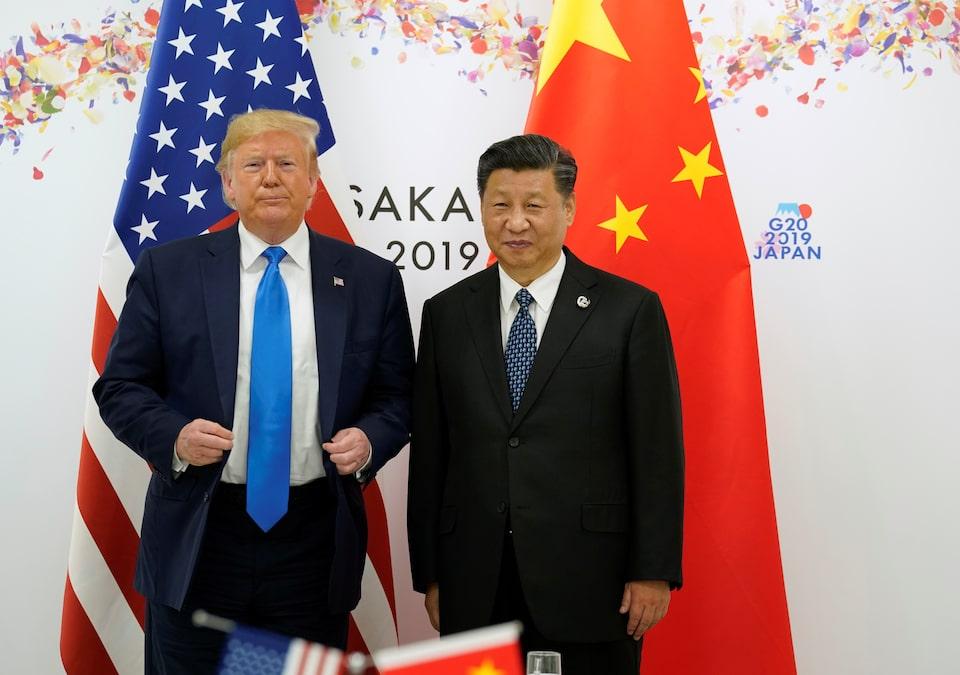
Trump says he will discuss soybeans in meeting with Xi Lack of Chinese buying hurts US soybean farmers China avoids US soy as part of negotiations, Trump says CHICAGO/WASHINGTON, Oct 1 (Reuters) - U.S. President Donald Trump said on Wednesday that soybeans would be a major topic of discussion when he meets with Chinese President Xi Jinping in four weeks. "The Soybean Farmers of our Country are being hurt because China is, for 'negotiating' reasons only, not buying," Trump wrote on Truth Social. Sign up here. Chinese importers have not yet bought soybeans from the autumn U.S. harvest during the trade war between Washington and Beijing, costing U.S. farmers billions of dollars in lost sales. Autumn is the prime marketing season for U.S. soybeans as farmers bring in fresh crops from their fields. However, China, the world's top soybean importer, has turned to South America for supplies instead, pressuring U.S. soybean prices. U.S. Senator John Hoeven of North Dakota, a Republican, said he did not think there was a specific timeline for China to resume purchases of U.S. soy following a briefing on Tuesday with U.S. Ambassador to China David Perdue. "He didn't indicate to me sales are imminent," Hoeven said in an interview. "The discussion was more, we need to keep the pressure on until we get sales and in the meantime be supportive of our farmers." In his post, Trump repeated a promise , opens new tab to use proceeds from tariff revenues to help farmers. Last month, Trump said he and Xi agreed during a call to meet face-to-face in South Korea to discuss a trade conflict that has kept the countries bitterly at odds. The two leaders are set to meet on the sidelines of the Asia-Pacific Economic Cooperation forum during the last week of October in Gyeongju, South Korea. Trump also said he would visit China early next year and that Xi would come to the U.S. at a later date. Efforts by the countries to lower trade tensions have led to expectations that China could direct more agriculture purchases to the U.S. as part of a deal with Trump. "Right now, they're buying from South America and using that to try to put pressure on us in these trade negotiations," Hoeven said. In 2020, during Trump's first term in office, he signed a trade deal with China that included promises to buy tens of billions of dollars in U.S. agricultural products while expanding U.S. access to Chinese agriculture markets. China never met its agreed purchase targets under the deal, and it has sought to diversify its food sources. "The essence of China-US economic and trade cooperation is mutual benefit and win-win," said Liu Pengyu, spokesperson for the Chinese embassy in Washington. "As a matter of principle, we hope the U.S. side will work with China to implement the important common understandings reached by our heads of state in their phone call." https://www.reuters.com/world/us/trump-xi-meet-four-weeks-us-president-says-2025-10-01/
2025-10-01 21:24
Oct 1 (Reuters) - The Bank of Canada expects to release baseline projections for the economy and inflation with its monetary policy report in October, its summary of deliberations released on Wednesday showed. The central bank had stopped giving definitive estimates for Canada's economy from the second quarter and instead opted to lay out a range of projections based on how U.S. tariffs impact the economy. Sign up here. Governor Tiff Macklem had based the decision to pause baseline estimates on extreme uncertainty over whether higher tariffs from U.S. President Donald Trump would increase inflation or slow economic growth. "Given the relative stability with respect to U.S. tariffs since the July Report, members expected they would be able to present a baseline projection for growth and inflation in the October Monetary Policy Report," the minutes of the meeting for the Sept. 17 rates decision showed. The BoC reduced its key policy rate to a three-year low of 2.5% last month, its first cut in six months, and said it would be ready to cut again if risks to the economy increased in coming months. Money markets are betting that the odds for another 25 basis point rate cut on Oct. 29 are just over 55%. The rate-setting committee acknowledged in their meeting that risks to inflation going up were subsiding. Most counter-tariffs on U.S. goods had been removed, the members believed, and they agreed that there was no longer a significant risk that the cost of tariffs would be passed on to Canadian consumers and create a knock-on effect to other prices. "Lower input costs from labor, shipping and materials would also likely mean lower inflationary pressures going forward," the minutes said. However, they agreed that the risks had not gone away. The Governing Council said that economic growth could slow further while the adjustment in business investment and jobs plays out. Members discussed how slower population growth and a softer labor market could dampen growth in household spending in the coming months. They also expected weak business investment to continue to weigh on economic growth in the second half of the year. But they agreed that consumption should continue to support growth going forward and that the economy was expected to grow roughly in line with the "current tariff scenario" outlined in the July monetary policy report. The impending renegotiation of the free-trade agreement between the U.S., Mexico and Canada was fueling some uncertainty, and this could impede recovery in business investment in the near term. (([email protected] , opens new tab)) Keywords: CANADA CENBANK/ https://www.reuters.com/world/americas/ahead-bank-canadas-sept-17-rate-decision-members-expected-they-could-present-2025-10-01/

2025-10-01 21:20
WASHINGTON, Oct 1 (Reuters) - The Group of Seven nations' finance ministers said on Wednesday they will take joint steps to increase pressure on Russia by targeting those who are continuing to increase their purchases of Russian oil and those that are facilitating circumvention. The G7 finance ministers also said they agreed on the importance of trade measures, including tariffs and import and export bans, in efforts to cut off Russian revenues due to Moscow's invasion of Ukraine. The joint statement followed a virtual meeting of the finance minister. Sign up here. WHY IT'S IMPORTANT Washington has called , opens new tab on its allies to impose tariffs on purchasers of Russian oil like India and China. While Trump has refrained from imposing additional tariffs on Chinese imports over China's purchases of Russian oil, his administration has targeted New Delhi with extra tariffs on imports from India. The G7 statement on Wednesday did not name India or China. KEY QUOTES "We will target those who are continuing to increase their purchase of Russian oil since the invasion of Ukraine and those that are facilitating circumvention," G7's statement said. "We will take concrete measures to significantly reduce, with the objective of phasing out, our remaining imports from Russia, including on hydrocarbon imports," it added. The G7 foreign ministers also said they were "giving serious consideration" to trade measures and other restrictions on countries helping finance Russia's war efforts. No country was identified in the statement. CONTEXT Russia's full-scale invasion of Ukraine began in February 2022. Moscow annexed Crimea in 2014. Russia has faced heavy sanctions from Western powers who have been considering ways to restrict financing for its war efforts. https://www.reuters.com/world/europe/g7-nations-say-they-will-target-those-continuing-increase-russian-oil-purchases-2025-10-01/