2025-10-01 17:43
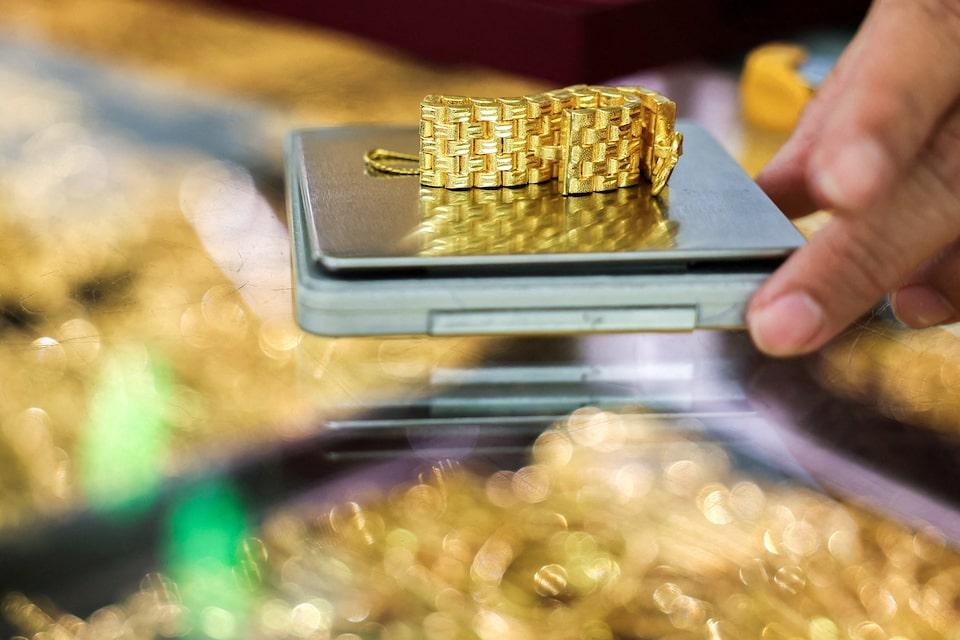
Oct 1(Reuters) - Gold scored another record high on Wednesday, taking this year's gains to 47% on mounting expectations for further cuts to U.S. interest rates, safe-haven demand and a weakening dollar. Silver has followed suit and is up 63% this year, hovering just shy of its record high. Sign up here. BULL RUN GATHERS PACE Spot gold hit a record $3,895.09 an ounce and was last trading at $3,864.16 at 1520 GMT. Bullion, which offers no yield but attracts investors in times of geopolitical and economic uncertainty, registered a robust 27% gain last year. "Investors are navigating everything from shifting Fed policy to global political developments, and gold is playing its traditional role as a store of value," said Joseph Cavatoni, senior market strategist at the World Gold Council (WGC) trade association. "What’s important now is that this safe-haven demand is layered on top of structural allocation trends — meaning gold isn’t just reacting to events, but also gaining traction as a core holding in portfolios." On the U.S. policy front, the Federal Reserve cut interest rates for the first time this year in September, with markets pricing in two more cuts in 2025. Conflict in the Middle East and the Russian war in Ukraine have stoked market jitters and economic uncertainty, as have fears over the U.S. Federal Reserve's independence under the influence of President Donald Trump. Gold's rally has also been underpinned by central bank buying, rising inflows into gold exchange-traded funds (ETFs), a weaker dollar and strong demand as a hedge against uncertainty. "As long as uncertainty levels are high, ETF flows (into gold) should continue ... I see gold prices passing through $4000/oz by the turn of the year," said Michael Haigh, global head of commodities research at Societe Generale. Global gold ETF demand has rebounded to 587.8 metric tons so far this year, recovering from a net outflow of 6.8 tonnes in 2024, the WGC says. SILVER FOLLOWS BULLISH TRACK Silver climbed to $47.83 an ounce for its highest since May 2011. Its record high is the $49.51 peak hit in April 2011. Silver's rally is supported by the same macroeconomic factors driving gold as well as by strong industrial demand, a tight spot market and speculative momentum. The gold-silver ratio stands around 82, its lowest since late October last year, signalling a relative strengthening of silver against gold. "Silver is a bit of a catch-up trade as it has been underperforming gold for several quarters prior to mid-2025," said Aakash Doshi, global head of gold strategy at State Street Investment Management. Silver supply growth has lagged demand growth for the past few years and recent CME premiums to London spot prices have encouraged deliveries into the COMEX system, he added. Industrial use accounts for nearly 60% of global demand , opens new tab for silver and the metal's inclusion on a draft list of U.S. critical minerals has sparked speculation over potential tariffs, drawing close attention from the market. CME silver stocks have jumped by more than 60% to 530.2 million ounces since the start of the year while the metal remains on track for a fifth straight annual supply deficit. https://www.reuters.com/world/india/gold-blazes-past-3800-record-run-silver-nears-fresh-peak-2025-10-01/
2025-10-01 17:33
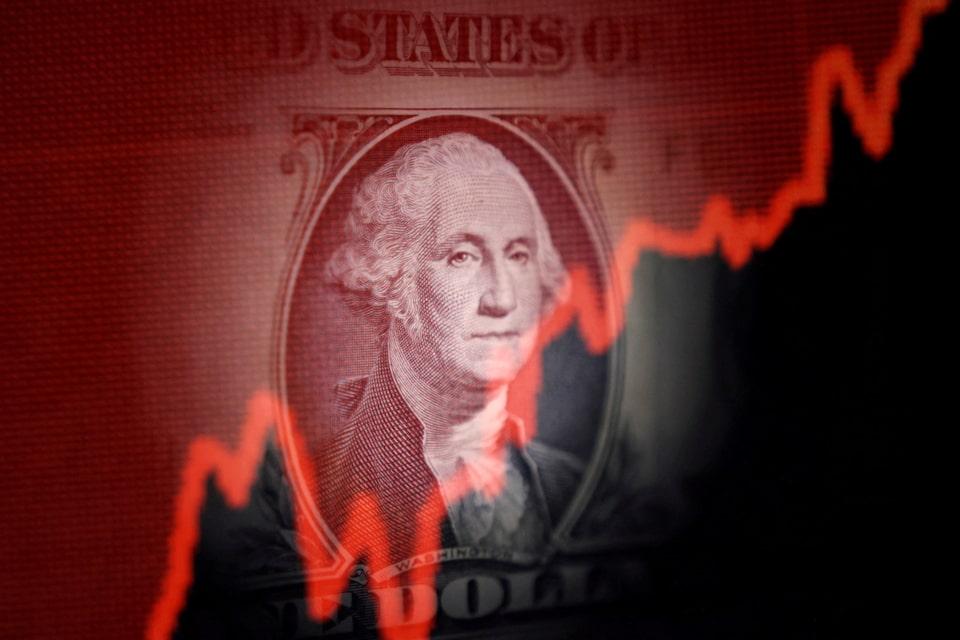
LONDON, Oct 1 (Reuters) - The U.S. dollar, long renowned for its strength, has been weakened by President Donald Trump’s stiff tariffs, his attacks on the Federal Reserve and his distancing from allies and global institutions. The dollar still makes up for the bulk of central bank foreign exchange reserves, according to latest IMF data. It's not expected to lose that position anytime soon given the United States' dominance in the global economy, trade and debt markets. Sign up here. Still, the dollar index, which measures the value of the greenback against a basket of major world currencies suffered its worst first half of the year since the early 1970s. And shifts in U.S. policy mean the dollar's standing is under scrutiny, with gold as well as the likes of the euro and Chinese yuan lining up to benefit from the dollar's woes. Our live dashboard continually tracks the dollar’s performance, taking stock of its current standing and charting where it may be headed next. https://www.reuters.com/world/africa/tracking-fate-king-dollar-2025-10-01/
2025-10-01 15:53
Running, training, basketball show growth in Q1 Q1 digital business revenues fall 12% Tariffs weigh on margins Oct 1 (Reuters) - Nike CEO Elliott Hill vowed to return the company to its sportswear roots when he took the helm last year in a much-touted change and his efforts are bearing fruit, but a sluggish recovery in China and uncertainty over tariffs remain a drag. The company, which reported a surprise rise in quarterly revenue and topped Street's low profit expectations, has aggressively cleared out aged inventory, as well as some lifestyle product lines, to focus on more innovative shoes focused on sports. Sign up here. "Nike is in the early innings of its turnaround and momentum is building," said Jefferies analyst Randal Konik in a note. The company said on Tuesday its order book for spring was up year-over-year, driven by its sports category as launches such as Vomero and Pegasus and P-6000 running bring back customers. Running, training, and basketball categories each reported double-digit growth in the quarter in North America, enabling a return to sales growth in the region after about a year. "We think retailers—like the combined Foot Locker and Dick's Sporting Goods—are reacting positively to Nike's new running shoe lineup," said Morningstar analyst David Swartz. Nike's (NKE.N) , opens new tab shares were up about 4.5% in early trading on Wednesday as investors welcomed a 2% reduction in inventory. "I am very pleased with inventory levels. Units are down more than dollars as inflation starts to come through. They have largely cleared through older franchises," said Mari Shor, senior equities analyst at Columbia Threadneedle. THE PRESSURE POINTS Progress will not be linear, Hill warned on a post-earnings call, with tariffs now expected to cost about $1.5 billion, versus the $1 billion Nike estimated previously, and weigh on margins already strained by heavy discounting to clear stock. China, which makes up about 15% of Nike's total revenue, remains a challenging market with intense competition from cheaper local brands such as Anta and Li-Ning adding to a weaker economic recovery and a struggling wholesale business. "We can invest to keep the marketplace clean and healthy, but it's an expensive operating model if sell-throughs don't improve to the levels that we need to see on a season-in, season-out basis," said Chief Financial Officer Matthew Friend on a post-earnings call. Customer engagement also remains weak in the company's digital business, with revenue falling 12% in the quarter. Hill said the global digital business was still working to find solid ground with the company paring back promotions on the channel. Nike's direct-to-consumer business is not expected to return to growth in fiscal 2026, executives said, as the unit recovers from steep discounts to clear out inventory of some of its classic labels such as Air Force One and Air Jordans. Tariffs and still-high inflation are also dampening consumer sentiment ahead of the all-important holiday shopping season. Meanwhile, Nike is gearing up for the key soccer World Cup in North America next year with intensive marketing efforts and product innovation. "I originally thought that Nike would be further along. I was looking at this fall as the real breakout point but it's clearly not going to happen until calendar '26," said Swartz. https://www.reuters.com/business/retail-consumer/nike-rebound-gains-momentum-china-tariffs-cast-cloud-2025-10-01/

2025-10-01 15:14
SAO PAULO, Oct 1 (Reuters) - Brazilian cryptocurrency firm OranjeBTC is scheduled to begin trading on the local stock exchange B3 next week as it tries to challenge the dominance of fintech Meliuz (CASH3.SA) , opens new tab, the first listed firm to have a bitcoin treasury strategy in the country. OranjeBTC's goal is to attract more local investors, thus expanding its treasury reserve, and teach stockholders about the bitcoin market using their own learning platform, founder and CEO Guilherme Gomes said. Sign up here. Certain types of investors who may be prohibited by regulation from buying bitcoins directly can invest in the asset through publicly traded companies, Gomes said. "Bitcoin will change financial systems as we know it, and will reshape markets," he said. "Our main focus is bitcoin at the highest level." Before arriving at the Sao Paulo stock exchange, OranjeBTC attracted the backing of some well-known international investors, including Mexican entrepreneur Ricardo Salinas, the owner of Banco Azteca, Gomes said. Other backers include Gemini (GEMI.O) , opens new tab co-founders Cameron and Tyler Winklevoss, crypto brokerage FalconX, and Adam Back, a leading name in bitcoin mining. OranjeBTC currently owns a treasury reserve of 3,650 bitcoins, Gomes said. At current prices, that would be valued at more than $420 million. Instead of a traditional IPO, the company will go public in a “reverse initial public offering” by listing shares through a recently acquired education-focused subsidiary, Intergraus, that already trades on B3, Gomes said. https://www.reuters.com/world/americas/billionaire-backed-bitcoin-firm-oranjebtc-begin-trading-brazilian-exchange-2025-10-01/

2025-10-01 14:32
BENGALURU, October 1 (Reuters) - The U.S. dollar, under pressure since the start of the year, may struggle to find its footing against most major currencies over the coming 12 months, according to a Reuters poll of FX strategists who said the already crowded short U.S. dollar trade will remain. Against the backdrop of rising U.S. fiscal deficit and worries that the Federal Reserve's independence was eroding, global investors have dumped the dollar for other major currencies and assets like gold which has surged more than 47% this year, setting record highs, on safe-haven demand. Sign up here. "The U.S. fiscal situation is this ongoing 800-pound gorilla of the markets, that special status means you can’t just go into other currencies - you go into gold," said John Hardy, head of FX strategy at Saxo Bank. "Gold is telling you what people think of fiscal pressure...people recognize nobody has a clean shirt. Everyone’s running on a dirty shirt." This has weakened the greenback by about 10% for the year, a trend expected to continue as the Fed is forecast to ease policy further to stave off weakness in the labour market. Meanwhile, the European Central Bank is likely done with cutting interest rates. U.S. non-farm payrolls increased only 22,000 in August. While a separate Reuters poll showed the world's largest economy probably created 50,000 jobs in September, the U.S. government shutdown which came into effect on Wednesday will delay the jobs report markets were eagerly waiting for. Still, the overall outlook for the dollar was to stay weak in the near term. "I'd probably stay out of the dollar unless I'm being tactical," said Dan Tobon, head of G10 FX strategy at Citi. A near 75% majority of analysts, 30 of 41, who answered a separate question in the Reuters September 26-October 1 poll expected the net short dollar position to increase or the current positioning to not change much by the end of October. Latest data from the Commodity Futures Trading Commission showed the short-dollar trade which began in April of this year was firmly in place. "The dollar can weaken further over the next six to 12 months as the Fed continues to cut rates while other major central banks like the ECB indicate they're close to or at the end of their rate cycle," said Lee Hardman, senior currency analyst at MUFG. "The dollar weakened a bit in response to the shutdown, but in terms of the big picture I don't think it changes a great deal. For now, I think the market's just got to assume its status quo and the Fed will remain on track to cut rates at the end of this month, even if they don't have data over the next week or two to analyze." On September 17 the Fed lowered its benchmark interest rate by 25 basis points to 4.00%-4.25% and indicated more cuts would follow at meetings in October and December. Interest rate futures are pricing in a 95% chance of a cut in October, per the CME FedWatch Tool. The poll of nearly 80 forex strategists showed the dollar weakening against all major currencies over the next three, six and 12 months. A more than 70% majority of analysts, 33 of 45, who answered an additional question said the U.S. dollar was more likely to end 2025 weaker than they expected rather than stronger. Twelve said stronger. The euro , which has gained more than 13% against the dollar for the year, was expected to strengthen 1.5%-3.0% to trade around $1.19, $1.20 and $1.21 in the next three, six and 12 months respectively. Among other major currencies, the Japanese yen was predicted to gain around 6% in a year to 139/dollar and the Aussie and the Kiwi dollars were expected to gain about 4.0%-6.0%. (Other stories from the October foreign exchange poll) https://www.reuters.com/business/dollar-faces-prolonged-weakness-amid-fed-rate-cuts-2025-10-01/
2025-10-01 13:17
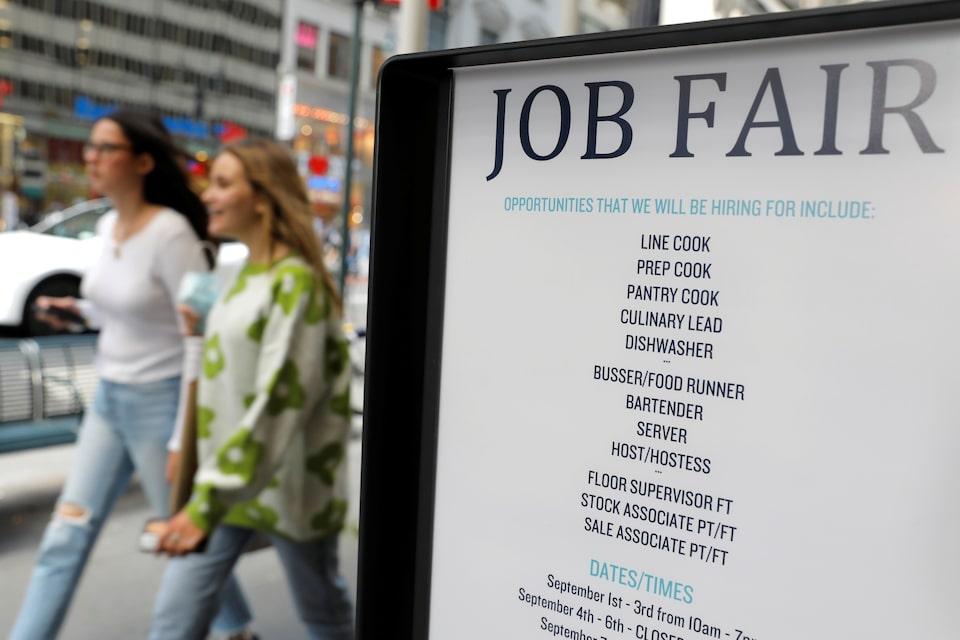
NEW YORK, Oct 1 (Reuters) - U.S. private payrolls unexpectedly fell in September, suggesting a weakening in labor market conditions. Private employment fell by 32,000 jobs last month after a downwardly revised 3,000 decrease in August, the ADP National Employment Report showed on Thursday. Economists polled by Reuters had forecast private employment increasing 50,000 following a previously reported 54,000 advance in August. Sign up here. In the absence of data from government agencies due to the current shutdown, investors may have to put a greater reliance on alternative data sources such as ADP. MARKET REACTION: STOCKS: S&P E-minis briefly extended declines and were last down 28.25 points, or 0.42%. BONDS: Treasury yields fell, with the yield on the benchmark U.S. 10-year note down 4.2 basis points to 4.108% and the two-year note yield off 5.9 basis points to 3.545%. FOREX: The dollar index weakened further and was last down 0.28% to 97.56. COMMENTS: OLIVER PURSCHE, SENIOR VICE PRESIDENT, ADVISOR, WEALTHSPIRE ADVISORS, WESTPORT, CONNECTICUT: ""With the ADP number, we continue to see signs of a weakening labor market. We continue to see signs of a consumer pulling back slightly. So, if you're an investor, you have to pay attention to that, knowing that it's not a trend until it is a trend - it's too early, but certainly there are red flags out there. If you dig into the data, it has still been mostly a lack of hiring by large companies who seem to be benefitting from AI-related productivity increases, whereas small- and mid-sized businesses are still hiring at a reasonably good pace." MATTHEW MISKIN, CO-CHIEF INVESTMENT STRATEGIST, MANULIFE JOHN HANCOCK INVESTMENTS, BOSTON: “This is another data point amid a laundry list of weak labor market data.” “However you want to look at it... it’s a weakening labor market and the Fed is likely to continue on their cutting path through year end in our view. Not having other data points does make this harder for the Fed.” PETER CARDILLO, CHIEF MARKET ECONOMIST, SPARTAN CAPITAL SECURITIES, NEW YORK: “This was a crucial report because the government is probably not going to be reporting this Friday. So, the markets are going to look at this very carefully. “So, the private sector lost 32,000 jobs last month. That's rather significant and this is a good indication that the labor market is continuing to weaken. And when we do get the first glimpse of the government report, we'll probably see a negative figure such as this, and that obviously confirms that the job market is weakening. “Ordinarily the market shrugs ADP numbers, but they have been pretty much consistent in showing trends. “I don't expect (the shutdown) to be long-lasting. But if the shutdown lasts a few weeks, let's say two or three weeks – which I don't think will happen - but if it should, that puts the Federal Reserve in a big bind. And if these numbers are accurate, the Fed is likely to become more aggressive. “But the market is likely to continue in a bullish trend in the fourth quarter and that's due to third quarter earnings that will be coming out in the next ten or twelve days. It’s probably going to be another positive session, another positive season. So I think the market will continue climbing on that.” WILL COMPERNOLLE, MACRO STRATEGIST, FHN FINANCIAL, CHICAGO: “They (ADP) revised their methodology sometime during the pandemic, and even before that I didn't find it was a very reliable predictor. But now, because the revisions to the BLS data have been quite significant, it could be that people are finding the ADP data to be just as good as the initial BLS prints.” “I think the BLS has a much bigger universe that they cover than ADP and so it's authoritative in that way. But also it's authoritative because it's what the Fed is going to consider the most reliable. And so, if there are conflicting signals between ADP and BLS, BLS takes the cake. Even though they know that it's susceptible to revisions, that's what they're going to work off of.” https://www.reuters.com/business/view-us-private-payrolls-fall-september-2025-10-01/