2025-10-01 05:58
African Growth and Opportunities Act expired on Tuesday Law lapsed despite support for renewal from lawmakers and White House Low-margin businesses like apparel to struggle to cope AGOA's benefits to exporters blunted by Trump tariffs NAIROBI/JOHANNESBURG, Oct 1 (Reuters) - The lapse of a flagship U.S. trade initiative with Africa that expired overnight is putting scores of businesses on the continent and hundreds of thousands of jobs at risk, raising fears that even a promised extension may come too late. There is bipartisan support in Washington for a renewal of the African Growth and Opportunity Act (AGOA), which waived U.S. duties on thousands of goods from sub-Saharan African countries for the past 25 years. Sign up here. But companies that invested in factories and farms to take advantage of duty-free access say even a temporary lapse will harm operations they built over many years, especially as they already face country-specific tariffs Trump imposed in August. Pankaj Bedi, chairman of Nairobi-based apparel company United Aryan, which supplies Target (TGT.N) , opens new tab and Walmart (WMT.N) , opens new tab, predicted some immediate layoffs as tariffs as high as a third of the value of textiles exports snap back into place. "Companies do not have the sustainability to take any kind of losses," Bedi told Reuters. He said some "responsible buyers" have agreed to absorb temporary losses in hopes that AGOA would be renewed retroactively but that if an extension is not agreed by November, "such support will no longer be possible". FEARS CHINA WILL 'TAKE OUR PLACE' In 2023, the last year for which data is available, Africa exported $9.7 billion in goods to the U.S. under the act. Hundreds of thousands of African jobs are estimated to depend on it. Some analyses question the initiative's effectiveness, noting beneficiary countries' share of U.S. imports has fallen since it was enacted in 2000, but it continues to enjoy political support. Republican and Democratic lawmakers describe it as a pillar of U.S. diplomatic relations and a counterweight to Africa's main trade partner, China, which announced in June it would remove all tariffs on 53 out of 54 African states. Adrian Smith, a Republican on the House Ways and Means Committee that oversees AGOA, told Reuters the law countered China's influence, and demonstrated "America's commitment to Africa's young, growing population". The U.S. Chamber of Commerce also told Congress in a letter last month that renewal would encourage businesses to diversify supply chains away from China. Democratic Senator Chris Coons, who co-sponsored a bipartisan bill in 2024 to extend it by 16 years, said: "If we fail to re-authorise AGOA, China will not hesitate to take our place." That bill, however, was overshadowed by other priorities in the final months of Joe Biden's Democratic administration, while the Trump administration has focused on leveraging tariffs in bilateral trade deals, raising doubts about the pact's future. Attaching a renewal proposal to other legislation would be the fastest way to secure an extension, but the Trump administration has opposed adding "extraneous" provisions to larger bills, according to two sources involved in the discussions. The administration, after a long silence on the matter, said this week it supported a one-year extension. Responding to Reuters' questions about AGOA, the White House said it backed a temporary extension, without elaborating. The Office of the U.S. Trade Representative did not respond to requests for comment. FOR SOME COUNTRIES, TRUMP TARIFFS NEGATE MUCH OF AGOA IMPACT The bilateral U.S. tariffs in place since August mean the impact of AGOA will vary highly from country to country. For example, South Africa, the continent's most advanced economy accounting for half of exports under AGOA, was hit with a 30% across-the-board tariff. That means that even with the pact's waivers, many goods - especially wine, citrus and cars - became too expensive to export to the U.S., rendering renewal a moot point. "These tariffs have pretty much changed the narrative completely," said Maryna Calow, Wines of South Africa spokesperson. She said the industry was now looking to increase sales to Canada to exploit a 25% retaliatory tariff the country has placed on the U.S., as well as to China and Japan. For automakers, export volumes to the United States have tumbled by 83% so far this year, National Association of Automobile Manufacturers of South Africa chief economist Paulina Mamogobo told Reuters. "Any benefits the industry previously derived from AGOA have essentially been nullified," she said. However, for countries such as Kenya, which has the minimum 10% tariff, or Madagascar and Mauritius, which have 15%, otherwise exportable goods become unprofitable without AGOA, jeopardising tens of thousands of jobs. In aggregate, AGOA is projected to have limited mitigating effect on Trump's tariffs, data from the U.N.-backed International Trade Centre shows. An ITC analysis shows that without AGOA bilateral tariffs will slash exports from the 32 AGOA-eligible countries to the U.S. by 8.7% by 2029, a figure which only decreases to 8% with the pact back in place. Moreover, experts say AGOA needs major reforms to live up to its promise. Some companies flag the requirement that eligible countries be re-certified each year as a source of uncertainty that deters long-term investments. "The question for me is not whether AGOA should be simply renewed," said Aude Darnal, a researcher on U.S. foreign policy. "It's ... what are the steps that are being taken to actually address the challenges?" https://www.reuters.com/sustainability/african-exports-face-immediate-damage-lapse-us-trade-initiative-2025-10-01/

2025-10-01 05:47
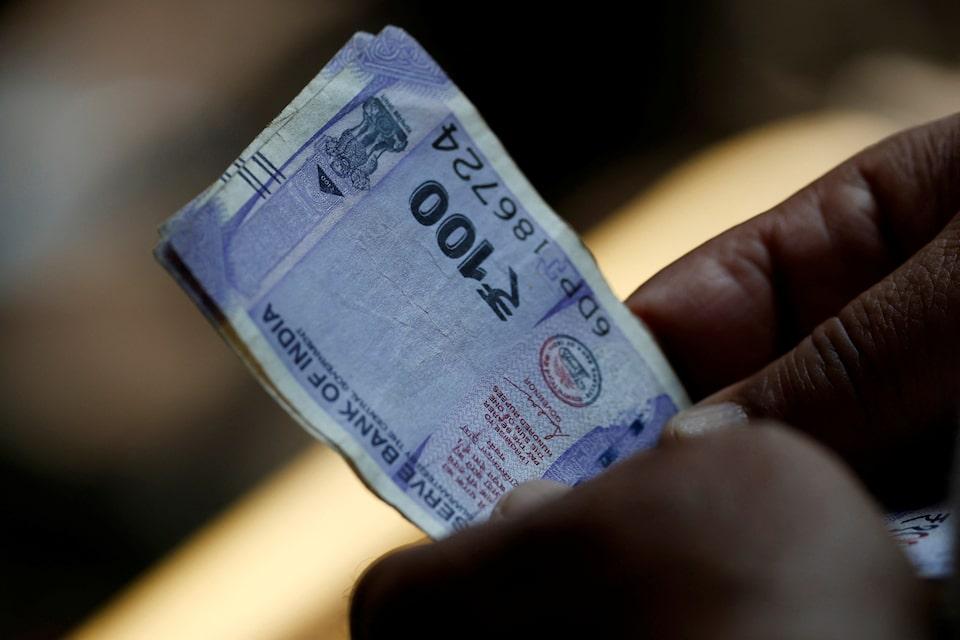
MUMBAI, Oct 1 (Reuters) - India's central bank on Wednesday proposed steps to boost the Indian rupee’s , global use, including allowing local banks to lend in rupees to businesses in neighboring countries and setting official reference exchange rates for major trading partner's currencies. Reserve Bank of India Governor Sanjay Malhotra announced the measures alongside the central bank's monetary policy decision on Wednesday wherein India's rate-setting panel decided to keep rates unchanged, along expected lines. Sign up here. "We have been making steady process in this regard," Malhotra said, referring to the rupee's internationalization, and said that under the proposed changes, authorized Indian banks will be permitted to make rupee-denominated loans to non-residents from Bhutan, Nepal and Sri Lanka, for cross-border trade transactions. Malhotra also said that transparent reference rates for currencies of India's major trading partners would be established, to facilitate rupee-based transactions. "The objective is to minimizes the use of crossing currencies to get rates. That'll help both our currency and the other currency," RBI Deputy Governor T Rabi Sankar said in a press-conference post the announcement of the central bank's policy decision. The Indonesian rupiah and the United Arab Emriates dirham are among the currencies the central bank is looking to establish reference rates for, Sankar said. "This is a case where the reference rate has to be shown first and the market has to pick up from there," he said. The RBI currently publishes reference rates for the U.S. dollar, euro, Japanese yen and sterling. The central bank also proposed to allow foreign entities to invest surplus rupee balances in their so-called vostro accounts into corporate bonds and commercial papers. The move would widen the permitted uses for funds kept in these accounts. Vostro accounts are typically held by a domestic bank on behalf of a foreign bank for trading partners to hold rupee-denominated balances from trade transactions. In August, the central bank had allowed foreign investors to invest their surplus vostro balances into central government securities. https://www.reuters.com/world/india/indias-central-bank-proposes-boost-international-usage-rupee-2025-10-01/
2025-10-01 05:46
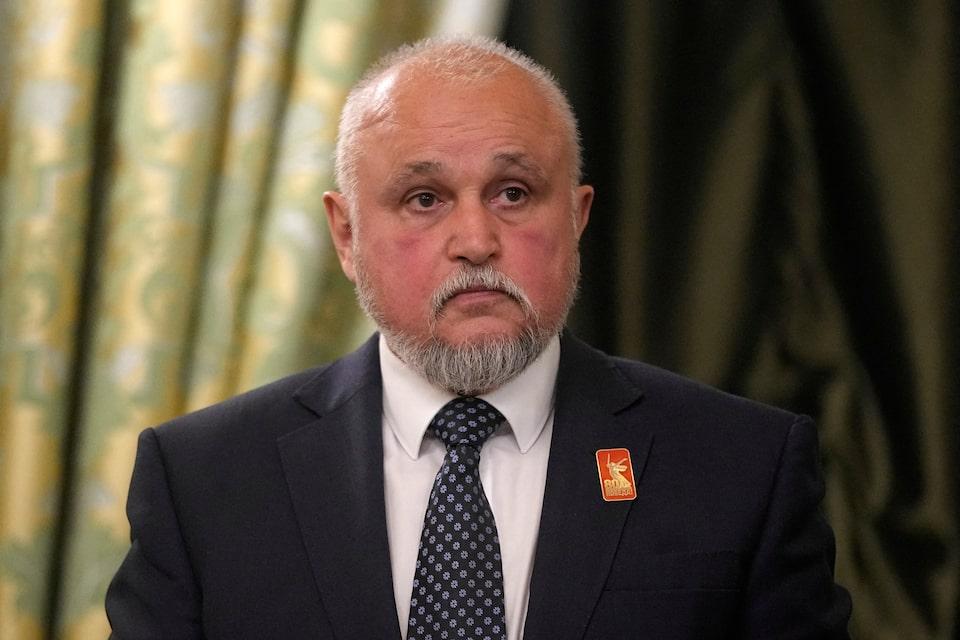
MOSCOW, Oct 1 (Reuters) - Russia plans to increase LNG exports to China from the Arctic LNG 2 and Sakhalin 2 projects, and "serious joint progress" is underway, Russian Energy Minister Sergei Tsivilev told the Expert magazine. Despite Western sanctions, Arctic LNG 2, which is 60% owned by Russia's Novatek (NVTK.MM) , opens new tab, has been sending out LNG since last year, with cargoes being delivered to two storage facilities in Russia and the Beihai LNG terminal. Sign up here. Russia "plans to increase supplies of not only pipeline gas but also liquefied natural gas (LNG) to China, particularly from the Arctic LNG 2 and Sakhalin 2 projects," Tsivilev was quoted as saying by Expert. "We are making significant joint progress here. Therefore, the prospects for energy cooperation between Russia, India, and China are very good." Asked about the pricing of gas through the proposed Power of Siberia 2 pipeline, Tsivilev said that was a question for Gazprom (GAZP.MM) , opens new tab and CNPC, though he added that a great deal of work had been done on settlements in national currencies. Tsivilev said that U.S. tariffs imposed on India in an attempt to force it to stop buying Russian oil had failed. He said that Russia was participating in the construction of India's largest nuclear power plant, Kudankulam. Russia, Tsivilev said, was planning the construction of what amounted to a new Russian domestic electrical power system. He said the aim was to commission 88 gigawatts of various generation capacity, including 35 gigawatts of thermal power, by 2042. On Russian oil production, he said that to achieve Russia's aim of raising oil production to 540 million tons per year by 2030, the country would need to develop "hard-to-recover" reserves. "Therefore, fine-tuning the tax regime is clearly necessary," he said, adding that the ministry was working to "incentivise the development of certain categories of reserves". https://www.reuters.com/business/energy/russia-increase-lng-exports-china-arctic-sakhalin-energy-minister-says-2025-10-01/
2025-10-01 05:00
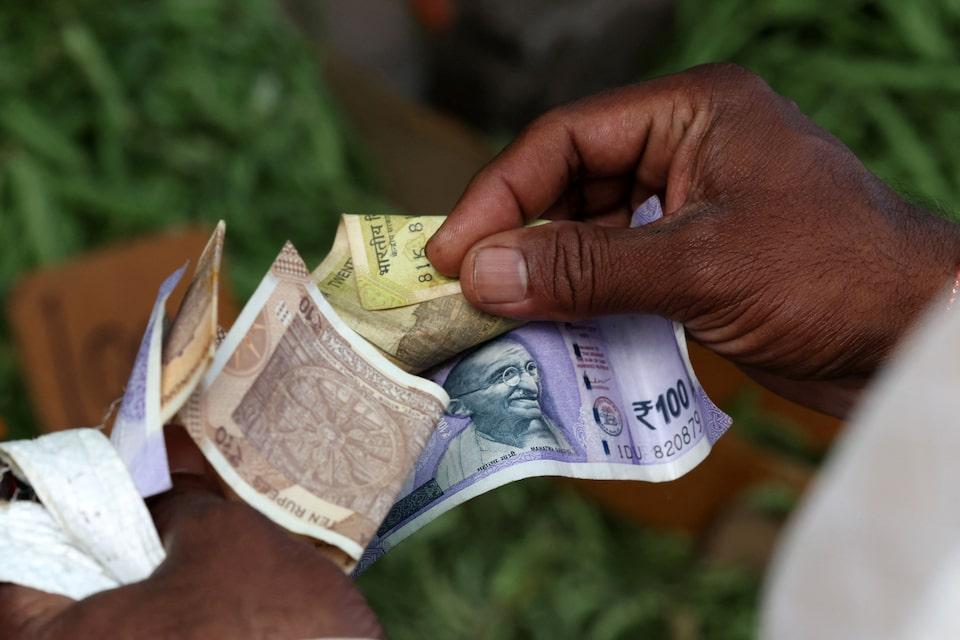
BENGALURU, Oct 1 (Reuters) - The Indian rupee will claw back some of its recent losses against the dollar on hopes the U.S. and India agree a trade deal, according to a Reuters poll of FX analysts who however said the currency could end the year weaker than they currently forecast. Most Asian currencies have gained in 2025 against a softer dollar except for the rupee , which has slid more than 3.5% as global investors pulled money from Indian markets. This is despite the economy registering robust 7.8% growth in the April-June quarter. Sign up here. Unsettled by Washington's punitive 50% tariffs on Indian goods, foreign investors have sold over $17 billion of Indian equities this year, sinking the rupee to record lows. However the Reserve Bank of India's regular interventions to smooth volatility have shielded the rupee from steeper losses. The partially convertible rupee was forecast to rise nearly 0.9% from current levels to 88.00 per dollar by end-December, and then be marginally stronger at 87.94 by end-March 2026 and trade around that level in a year, according to the median view of 38 FX analysts polled between September 26-30. "I'm still expecting some easing of the U.S.-India trade tensions, that could be a bit of a transient boost for the rupee...(but) a lot of the developments in the U.S. foreign and trade policy have meant the risks central to India are more pronounced," said Dhiraj Nim, FX strategist at ANZ Bank. "The fact domestically your growth cycle seems to be shifting in a lower gear...explains why equity flows remain weak and they could remain weak." Predictions of rupee appreciation have repeatedly backfired over the past decade with the rupee strengthening against the dollar only once in that period- in 2017. Twelve of 15 economists who responded to an extra question said the rupee is more likely to end the year weaker than their baseline forecasts, rather than stronger, highlighting risks to their outlook. "Every day if you have a flip-flop on trade policy...you don't know how the board is being laid every day. So that uncertainty is there, and your forecasts are bound to be wrong," said Aditya Vyas, chief economist at STCI Primary Dealer Limited, when asked why analysts are getting the rupee outlook wrong. Vyas predicts the rupee to hit 91.20 in a year. A separate Reuters poll conducted in September showed the Reserve Bank of India is likely to hold its key interest rate at 5.50% on October 1, though some economists said a cut to 5.25% cannot be ruled out. Analysts said if the RBI surprises markets with a rate cut, the rupee could come under further pressure. ( from the October foreign exchange poll) https://www.reuters.com/world/india/reuters-poll-indian-rupee-strengthen-to-8800-by-end-december-8794-end-march-2026-2025-10-01/
2025-10-01 04:32
A look at the day ahead in European and global markets from Stella Qiu And just like that the U.S. government has entered its 15th shutdown since 1981 and the second under President Donald Trump, who used the opportunity to threaten the dismissal of yet more federal workers. Sign up here. Tens of thousands have already been fired this year and over 150,000 workers are due to leave federal payrolls this week after taking a buyout, the biggest exodus in 80 years. If you're catching a U.S. flight soon, the FAA plans to furlough a quarter of its staff for the shutdown. Wednesday is also when Trump's new tariffs on big trucks, patented drugs and other items are due to take effect. Even when the government shuts down, the administration has said the tariff collections will continue. All of these are set to exacerbate concerns at the Federal Reserve about an already slowing labour market. Investors are betting that will overshadow the lack of economic data and convince the Fed to cut this month, with pricing at 96% up from 90% just a day ago. So far today, both S&P 500 futures and Nasdaq futures have fallen 0.5% - small moves given how much share markets have rallied this year. During the previous 21 shutdowns, the S&P has averaged 12 gains and 9 losses, with a median rise of 0.1%. All this uncertainty has been a useful excuse for gold bulls to push the theme of buying assets outside of government control, lifting the metal to another record of $3,875 an ounce. Silver and platinum are also on a tear. It's been a mixed session in Asia, with Chinese markets out for the week-long National Day holidays. Japan's Nikkei (.N225) , opens new tab dropped 1%, but Taiwan (.TWII) , opens new tab gained 1% and South Korea (.KS11) , opens new tab 0.8%. Still, judging by the muted moves in currencies and Treasuries, there appears to be little trepidation for investors apart from fretting over the data vacuum resulting from the government shutdown. No payrolls report to bet on! That puts the focus on the ADP National Employment Report later today. Forecasts are centred on a modest gain of 50,000 private-sector jobs as the labour market continues to cool. The JOLTS report on Tuesday highlighted the weakness was in hiring, with the jury out on whether that's due to AI, or tariffs or something more lasting. Before all that, there is euro zone inflation data for September which is likely to show inflation ticked up to 2.2% from 2% previously. Risks could be to the upside after German inflation came in higher than expected. A hot number would argue the European Central Bank is likely done easing this cycle and offer a reason to go long euros. Key developments that could influence markets on Wednesday: -- Euro zone HICP flash inflation readings for Sept -- ISM US Manufacturing survey -- ADP private payrolls https://www.reuters.com/world/china/global-markets-view-europe-2025-10-01/
2025-10-01 04:31
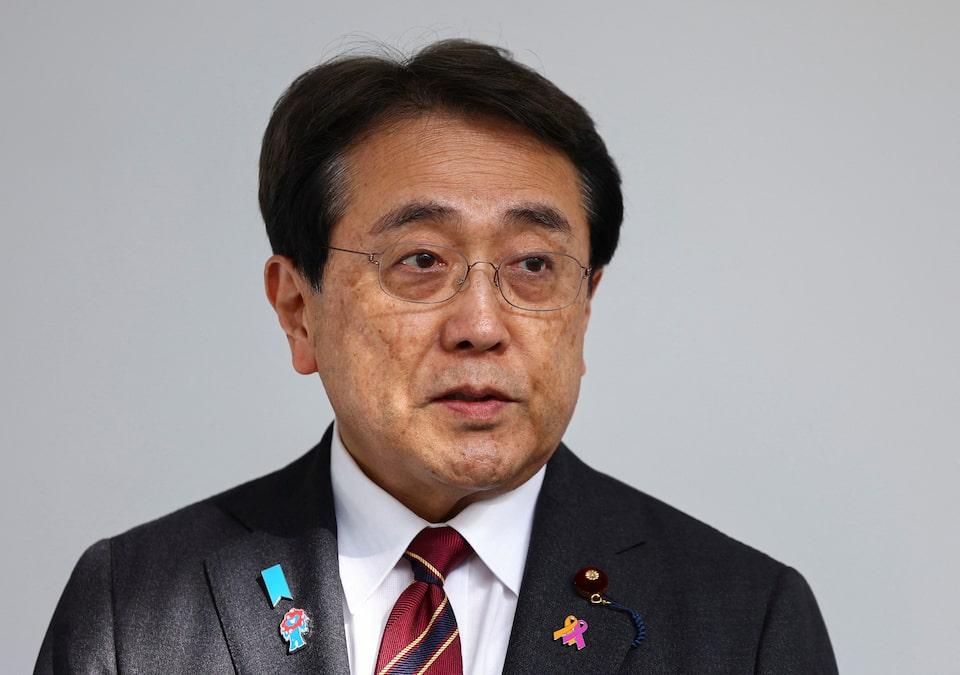
TOKYO, Oct 1 (Reuters) - Japan will run a $550 billion U.S.-bound investment package agreed in Tokyo's tariff deal with Washington without any impact on the foreign exchange market, its top trade negotiator Ryosei Akazawa said on Wednesday. "Based on our calculation, $550 billion is within the range where there will be no foreign exchange impact," Akazawa said, speaking to reporters at the Foreign Correspondents' Club of Japan. Sign up here. Japan and the United States signed a memorandum of understanding on the details of the package last month, which covers Japanese investments in sectors such as chips, metals, pharmaceuticals, energy and shipbuilding to be made by January 2029. Concerns over foreign exchange implications have become a major issue in South Korea's negotiations to formalise a U.S. tariff deal, which would reduce U.S. levies on Korean imports to 15% from 25% in return for South Korea's investment of $350 billion in the U.S. Akazawa said the government may use foreign exchange reserves for loans, for example by tapping a special account of the foreign exchange fund managed by the finance ministry. Japan's investment package would include equity, loans and loan guarantees from the state-owned agencies Japan Bank for International Cooperation (JBIC) and Nippon Export and Investment Insurance (NEXI). When asked about a comment he made in July that the equity component would account for just about 1-2% of the $550 billion, Akazawa clarified that the percentage was based on the past investment track records for JBIC and NEXI. He said it's up to Japan to decide the actual ratio when it starts investing. https://www.reuters.com/markets/us/japans-550-billion-us-investment-package-have-no-fx-impact-top-trade-negotiator-2025-10-01/