2025-10-01 04:28
Move reflects doubts about whether equities bull run will continue Nomura has appointed new head of US rates, co-head of FX and emerging markets business Expects advisory business to have a better second half TOKYO, Oct 1 (Reuters) - Japan's Nomura Holdings (8604.T) , opens new tab plans to beef up its interest rate and currency trading operations globally, believing increased market volatility will lift demand, a senior executive said. The push reflects growing doubts around the longevity of the current equities bull run. When markets become more volatile, interest rate and foreign exchange products typically perform better, as clients hedge risk and rebalance their positions, generating higher trading flows. Sign up here. "Global equity markets are at all-time highs. U.S. markets - and within U.S. markets, a narrow set of stocks - have dominated as drivers of value," Christopher Willcox, the head of the firm's wholesale division, told Reuters in an interview. "You would be wise to assume that can't go on forever and that at some point, there's an adjustment," he said. Nomura declined to provide details on how much hiring would take place or current staff numbers for those operations. NEW HIRES But he noted that the group appointed a new head of U.S. rates in August - Moritz Westhoff, formerly of Bank of America - and a new co-head of its FX and emerging markets business, David Leigh, who joined from Deutsche Bank last November. More personnel and capital will be directed to those teams, said Willcox, a former JP Morgan Asset Management CEO who joined Nomura in 2021 and became head of wholesale a year later. Nomura's interest rate and exchange rate operations form the bulk of its macro products business, which has made up around 30% of the wholesale division's revenue in recent years. In the past business year, the division's revenue topped 1 trillion yen ($6.8 billion). The push also reflects Nomura's efforts to build more diverse sources of income, given that its wholesale unit's performance has seen wild swings along with market conditions in the past. "We view the macro business as counter-cyclical. In the global financial crisis, it was everyone's rates business that made all the money at the time when their securitised products businesses were shut down," Willcox said. The securitisation of mortgage debt into financial instruments was among the core causes of the 2007-2009 global financial crisis. Willcox also said Nomura's advisory business is likely to perform better in the second half of the year compared to the first half, as the public listing market in the U.S. has picked up and there is pent-up M&A demand in Japan. Deals and capital raisings had been held back by uncertainty caused by U.S. President Donald Trump's sweeping tariffs, though this has eased somewhat with the signing of some trade agreements between the U.S. and other countries. The wholesale division does not have planned any major acquisitions along the lines of Nomura's $1.8 billion purchase of Macquarie's U.S. and European public asset management businesses. But it is looking to diversify its business lines in areas where Nomura has existing expertise to make money regardless of market ups and downs. Earlier in September, it launched a U.S. commercial real estate platform with a team hired from Barclays, which Willcox expects will contribute hundreds of millions of dollars to the top line over the next few years. "We're asking where logically we can extend pre-existing expertise into new zones," Willcox said. "And there's lots of them, it's not like we're running out of things to do." ($1 = 147.9700 yen) https://www.reuters.com/business/finance/nomura-boost-rates-fx-trading-units-sees-more-market-volatility-2025-10-01/
2025-10-01 04:13
MUMBAI, October 1 (Reuters) - The Indian rupee was flat on Wednesday with traders pointing out that a near-term floor for the currency appears to be forming near the 88.80 per U.S. dollar mark, a level marked by frequent interventions by the Reserve Bank of India. The RBI was likely active in early trading on the day as investors awaited the central bank's monetary policy decision due at 10:00 a.m. IST. Sign up here. A majority of economists polled by Reuters expect the central bank to keep rates unchanged but traders are split over whether the central bank would opt for a rate cut to support growth or choose to keep powder dry. The rupee was at 88.77 against the U.S. dollar as of 9:15 a.m. IST, little changed from its close at 88.7875 in the previous session. The currency had dipped to its all-time low of 88.80 on Tuesday but its intra-day decline was marginal with traders pointing to consistent dollar-sales from state-run banks. The rupee has been under pressure over the last month after steep U.S. tariffs on Indian exports went into effect while tightening of immigration policies sparked worries over a hit to trade, remittance and portfolio flows. Foreign investors net sold $2.7 billion of local stocks in September, extending their selling streak for a third straight month and putting 2025 on course for record foreign withdrawals, according to stock depository data. "With the dollar on the weaker side, even a small positive—such as relief on tariffs—could flip the mood and spark a sharper rupee appreciation," said Amit Pabari, managing director at FX adviosry firm CR Forex. India's benchmark equity indexes, the BSE Sensex (.BSESN) , opens new tab and Nifty 50 (.NSEI) , opens new tab were little changed on the day and the yield on the country's 10-year benchmark bond edged lower to 6.5664%. Elsewhere, the dollar index was flat at 97.82 while Asian currencies were flat to slightly lower. https://www.reuters.com/world/india/soft-line-sand-emerges-rupee-near-8880usd-rbi-interventions-2025-10-01/
2025-10-01 01:51
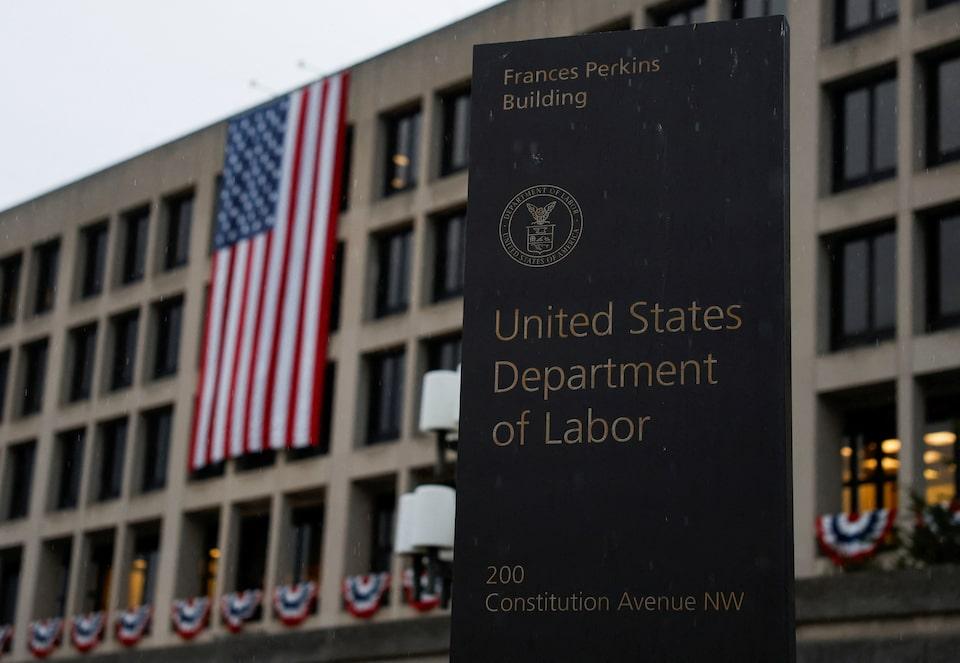
Antoni's nomination faced GOP concerns, no Senate hearing scheduled Antoni has been a critic of the BLS Trump fired McEntarfer, raising concerns about data reliability WASHINGTON, Sept 30 (Reuters) - The Trump administration has withdrawn its nomination of conservative economist E.J. Antoni as head of the Bureau of Labor Statistics, the White House said on Tuesday. President Donald Trump nominated Antoni last month to lead the bureau, which is part of the Department of Labor and produces statistics closely watched by the markets, after firing the agency's head, Erika McEntarfer, and accusing her without evidence of manipulating the bureau's figures. Sign up here. “Dr. EJ Antoni is a brilliant economist and an American patriot that will continue to do good work on behalf of our great country," a White House official said in a statement, promising the president will announce a new nominee "very soon." The Senate committee overseeing the Labor Department never scheduled a confirmation hearing, and on Tuesday, Republican Senator Lisa Murkowski of Alaska said she remained concerned about Antoni's nomination. A person familiar with the nomination said several other Republicans expressed similar hesitation. CNN first reported that the administration had pulled Antoni's nomination. Antoni currently serves as chief economist at the conservative think tank the Heritage Foundation and has been a critic of the BLS, whose monthly job market and inflation report is used by a global audience of economists, investors, business leaders, public policymakers and consumers. The U.S. lurched toward a government shutdown on Tuesday as a vote to extend funding past a midnight deadline failed in the U.S. Senate. A shutdown would delay the release of the September jobs numbers, which are due out on Friday. Antoni's nomination raised concerns among economists about the quality of BLS data. "The nominee will result in a surge in demand for private label data," Joe Brusuelas, chief economist at RSM US, said in August. Alex Jacquez, the head of policy and advocacy for Groundwork Collaborative, which describes itself as fighting "to change economic policy and narratives in order to build public power," said at the time that Antoni's selection was "a clear assault on independent analysis that will have far-reaching implications for the reliability of U.S. economic data." The BLS has come under scrutiny from Republicans after Trump took issue with its data. Senator Bill Cassidy, the Republican chairman of the committee that oversees the confirmation process, said in a statement that the "status quo" is not working with the jobs data. Trump added to growing concerns about the reliability of BLS and other federal government economic data when he fired McEntarfer on August 1. Her dismissal came hours after the agency reported much weaker-than-expected job growth for July and issued an historically large revision to its employment figures for May and June. https://www.reuters.com/world/us/white-house-withdraws-antonis-nomination-next-head-bureau-labor-statistics-cnn-2025-09-30/
2025-10-01 00:52
OPEC+ may raise output by up to 500,000 bpd in November -sources U.S. crude inventories rise by more than expected U.S. government shutdown and Asian factory data raise economic concerns NEW YORK, Oct 1 (Reuters) - Oil prices slid for a third day in a row to a 16-week low on Wednesday as a U.S. government shutdown fed worries about the global economy, while traders expected more oil supply to come on the market with a planned output boost by OPEC+ next month. Brent crude futures fell 68 cents, or 1.0%, to settle at $65.35 a barrel, while U.S. West Texas Intermediate (WTI) crude fell 59 cents, or 0.9%, to settle at $61.78. Sign up here. Those were the lowest closes for Brent since June 5 and for WTI since May 30. U.S. oil production growth will stall if prices stay near $60 per barrel, as fewer drilling sites are profitable at that level, the CEO of Diamondback EnergyFANG.O , opens new tab, one of the country's top oil producers, said on Wednesday. In other energy markets, U.S. gasoline futures closed at their lowest in almost a year. Traders expect OPEC+ to boost production in November by about the same as the 500,000 barrels per day hike in September, even as U.S. and Asian demand start to decline, Rystad analyst Janiv Shah said. OPEC+, the Organization of the Petroleum Exporting Countries (OPEC) and allied producers like Russia, could agree to raise oil production by up to 500,000 bpd in November, triple the increase made for October, as Saudi Arabia seeks to reclaim market share, three sources familiar with the talks said. However, OPEC wrote on X that media reports of plans to raise output by 500,000 bpd were misleading. An OPEC+ panel stressed the need for achieving full compliance with oil output agreements and extra output cuts that some members are required to make to compensate for earlier exceeding quotas at a meeting on Wednesday, OPEC said in a statement. Oil prices were also pressured by a bigger-than-expected increase in U.S. crude inventories last week. The U.S. Energy Information Administration (EIA) said energy firms added 1.8 million barrels of crude into inventories during the week ended September 26, exceeding the 1.0-million-barrel build analysts forecast in a Reuters poll. , On Tuesday, sources said the American Petroleum Institute trade group had reported a 3.7-million-barrel draw for the week. "Crude stocks rose following a drop in exports, which were not as hot and could signal some weak demand ... we already had a pretty big sell-off on the government shutdown and expectations that that could slow the economy and hurt demand," said Phil Flynn, a senior analyst at Price Futures Group. US GOVERNMENT SHUTDOWN The U.S. government shut down much of its operations on Wednesday as deep partisan divisions prevented Congress and the White House from reaching a funding deal. Government agencies have warned this would halt the release of the closely watched September employment report, among other things. The White House warned that worker layoffs are imminent as the first day of the government shutdown unfolded, even as Vice President JD Vance insisted no final decisions have been made. U.S. manufacturing activity edged up in September, though new orders and employment were subdued as factories grappled with the fallout from President Donald Trump's sweeping tariffs. In Asia, the world's biggest oil-consuming region, data on factory activity added to concerns about fuel demand, as manufacturing activity contracted across most major economies in September. Focus was also shifting to the supply and export disruption in Russia due to Ukrainian assaults, PVM Oil Associates' analyst Tamas Varga said. Russian Deputy Prime Minister Alexander Novak said the situation with the supply of fuel on the domestic market is under control on the whole, while some regions are experiencing shortages of the fuel. Urals crude differentials to dated Brent held steady on Wednesday, while oil loadings from Russia's three key western ports jumped by 25% in September from August, as refinery outages caused by Ukrainian drone attacks freed up more crude. In Venezuela, an OPEC member under U.S. sanctions, oil exports averaged 1.09 million bpd in September, the highest monthly level since February 2020, according to shipping data and documents from state-run energy company PDVSA. https://www.reuters.com/business/energy/oil-steadies-investors-weigh-opec-output-hike-against-us-crude-inventories-2025-10-01/
2025-10-01 00:39
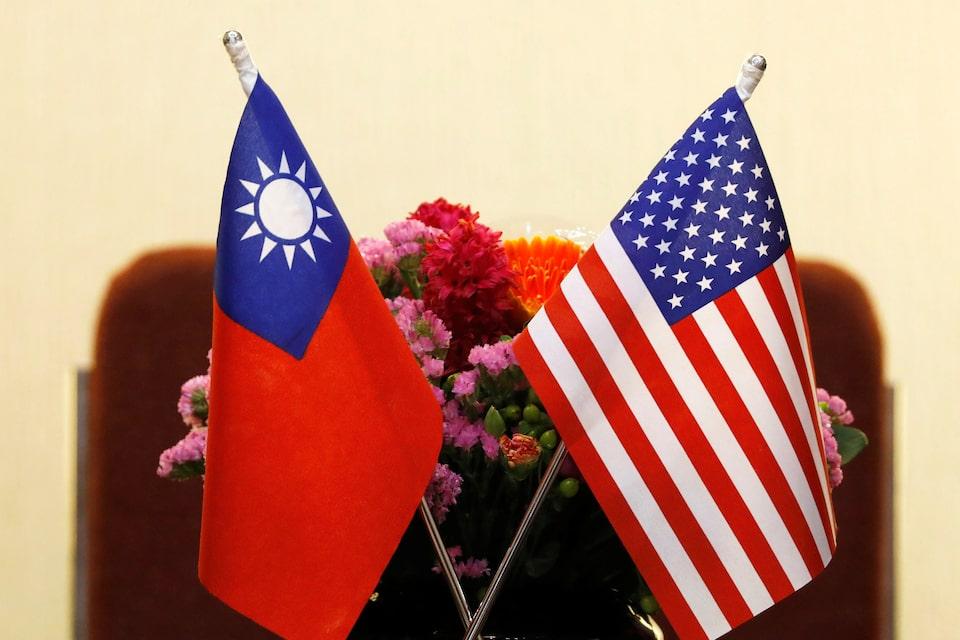
TAIPEI, Oct 1 (Reuters) - Taiwan will not agree to a deal with the United States for half of all semiconductor production to take place in the country, the island's top tariff negotiator said on Wednesday after returning home. U.S. Secretary of Commerce Howard Lutnick told U.S. television network NewsNation over the weekend that Washington's pitch to Taiwan would be a 50-50 split in making chips, the vast majority of which are now made on the island. Sign up here. Taiwan Vice Premier Cheng Li-chiun, who is leading the tariff talks with Washington, told reporters upon getting back to the island that she had not discussed the 50-50 idea suggested by the U.S. during the talks. "Our negotiating team has never made any commitment to a 50-50 split on chips. Rest assured, we did not discuss this issue during this round of talks, nor would we agree to such conditions," she said, according to Taiwan's official Central News Agency. Neither the U.S. Commerce Department nor the Office of the United States Trade Representative responded to requests for comment sent outside of U.S. business hours. Taiwan, home to the world's biggest contract chipmaker TSMC (2330.TW) , opens new tab, runs a large trade surplus with the United States. The island's exports to the United States are currently subject to a 20% tariff. TSMC, whose business is surging on strong demand for artificial intelligence applications, is investing $165 billion to build chip factories in the U.S. state of Arizona, though the bulk of its production will remain in Taiwan. The company declined to comment on proposals for a 50-50 chip production deal. Taiwan's government said last month that it hoped for a more favourable tariff rate from the United States after talks achieved "certain progress". Speaking in parliament in Taipei on Tuesday, Premier Cho Jung-tai said Cheng had had multiple talks with the United States on tariff issues. "The most critical substantive consultations are currently underway," he said. Cheng, speaking at the airport, said that "detailed" discussions had taken place which yielded "certain progress", the Central News Agency added. Separately, Taiwan's presidential office said late on Tuesday that President Lai Ching-te had met the visiting Luke J. Lindberg, Under Secretary for Trade and Foreign Agricultural Affairs at the U.S. Department of Agriculture. Lai said that a Taiwan agricultural delegation visiting the United States in September planned to buy $10 billion of U.S. agricultural goods over the coming four years, including soybeans, wheat, corn and beef. (This story has been corrected to rectify the television station name to NewsNation, in paragraph 2, in a previous version of this story) https://www.reuters.com/world/asia-pacific/taiwan-will-not-agree-50-50-chip-production-deal-with-us-negotiator-says-2025-10-01/
2025-10-01 00:32
US government funding expired at 0400 GMT on Wednesday Shutdown will delay key monthly jobs report Yen gets biggest boost US private sector jobs fall in September NEW YORK, Oct 1 (Reuters) - The U.S. dollar slid to two-week lows against the yen on Wednesday after data showed private-sector jobs in the world's largest economy contracted last month, boosting expectations the Federal Reserve will cut interest rates two more times this year. Against the euro and sterling, the dollar fell to one-week troughs in the wake of the jobs data. Sign up here. Data showed that U.S. private employment shrank by 32,000 jobs last month after a downwardly revised 3,000 decline in August, according to the ADP National Employment Report on Wednesday. Economists polled by Reuters had forecast private employment increasing 50,000 following a previously reported 54,000 advance in August. "The job situation seems to just be getting a little bit worse, data point after data point," said Erik Bregar, director, FX & precious metals risk management at Silver Gold Bull in Toronto. "The ever-weakening U.S. jobs market is the big story. And with the official data sources on hold because of the shutdown, some people might like it actually because those data sources haven't been very reliable lately." U.S. rate futures have priced nearly 50 basis points of cuts this year following the ADP data, from about 43 bps of easing on Tuesday, with market-implied odds of around 99% for an October rate move, according to LSEG data. The jobs data followed a mixed reading for the Bureau of Labor Statistics' Job Openings and Labor Turnover Survey, or JOLTS, on Tuesday. The report showed U.S. job openings increased marginally in August while hiring declined, consistent with a softening labor market. The ADP report, jointly developed with the Stanford Digital Economy Lab, gained more attention from investors seeking fresh clues on the labor market as the Labor Department's more comprehensive and closely followed employment report for September will not be published on Friday. The private sector jobs report came amid a U.S. government shutdown, which commenced hours after the Senate rejected a short-term spending measure that would have kept government operations afloat through November 21. Senate Republican Leader John Thune said the chamber would vote again on the House-passed measure on Wednesday. "We are concerned with the government shutdown, which also does not bode well for the buck," said Juan Perez, director of trading at Monex USA in Washington. "The dollar has few reasons to remain a beacon of strength and reliability when the American government is closed and there is evidence presented that Americans are struggling to find jobs." In afternoon trading, the dollar fell 0.6% against the yen to 147.07 yen, after earlier falling to its weakest since September 17. The greenback was flat against the Swiss franc at 0.7967 franc . The greenback also fell to a one-week low against the euro, which was last up 0.1% at $1.1738 . Sterling also rose to a one-week high versus the dollar, and was last up 0.3% at $1.3487 . The dollar index , which tracks the U.S. currency against six major peers, fell to a one-week trough, and was last down 0.2% at 97.68. The broader markets bore a few hallmarks of safe-haven buying, giving low-yielding currencies such as the Japanese yen a bid, while U.S. Treasuries and gold held firm. U.S. President Donald Trump warned congressional Democrats on Tuesday that letting the federal government shut down would allow his administration to take "irreversible" actions including closing programs important to them. The U.S. Labor and Commerce departments said their statistics agencies would halt data releases in the event of a partial shutdown. That includes Friday's scheduled nonfarm payrolls release, considered key in determining whether a Fed rate cut is likely at the end of this month. The length of any shutdown may be key for markets, as the Fed's next policy decision on October 29 remains weeks away. In contrast, traders are placing a roughly 40% chance that the Bank of Japan will raise interest rates this month. The central bank's quarterly "tankan" corporate sentiment survey on Wednesday showed confidence among big Japanese manufacturers improved for the second straight quarter and firms maintained their upbeat spending plans. BOJ officials have tilted more hawkish in recent days, including formerly dovish board member Asahi Noguchi, who said on Monday that the need for policy tightening was increasing more than ever. https://www.reuters.com/world/middle-east/dollar-defensive-us-government-shutdown-looms-2025-10-01/