
2024-05-08 10:01
A look at the day ahead in U.S. and global markets from Mike Dolan Wall Street looks to have brushed off the latest hawkish Federal Reserve noises and Disney's outsize swoon, with European bourses stalking new records as Sweden becomes the latest G10 central bank to cut interest rates and oil prices plunged. Stocks futures and Treasury yields held pretty steady overnight even after Minneapolis Fed chief and known hawk Neel Kashkari said all policy options were on the table in getting inflation back in the bottle. "If we need to hold rates where they are for an extended period of time to tap the brakes on the economy, or if we even needed to raise, we would do what we needed to do to get inflation back down," Kashkari said. Perhaps seen as a outlier and not even a voting member of the Fed's policymaking committee this year, markets appeared to bat the comments away. Helped by brisk demand for the hefty $58 billion sale of three-year notes on Tuesday and another sharp fall in crude oil prices, Treasury yields were relatively calm going into a $42 billion 10-year auction later on Wednesday. Crude oil prices fell to their lowest since March 11 as industry data showed a pile-up of U.S. inventories - a sign of weakening demand - and cautious supply expectations emerged ahead of an OPEC+ policy meeting next month. U.S. crude stocks rose by 509,000 barrels in the week ended May 3, sources said, citing American Petroleum Institute figures, and gasoline and distillate inventories also rose. Official U.S. government data is due later in the day. And European bourses looked set for record highs as Sweden cut interest rates on Wednesday and underlined the divergence between European central banks policymaking and the Fed's. Sweden's central bank cut its key interest rate to 3.75% from 4.00% as expected and said it was likely to cut the rate two more times in the second half of the year if the outlook for inflation still holds. After eight rate hikes in Sweden, inflation is now close to the Riksbank's 2% target after peaking at over 10%. The Riksbank is the second of the major G10 central banks to ease, with the Swiss National Bank jumping the gun in March. And crucially, the crown , weakened only marginally. With the European Central Bank now widely expected to cut rates next month, attention turns to Thursday's Bank of England meeting. Although no UK move is expected this week, there's considerable speculation the BoE may open the door for a rate cut in June too. Britain's benchmark FTSE 100 (.FTSE) New Tab, opens new tab hit a new record high on Tuesday, 10-year gilt yields fell to their lowest in almost four weeks and the pound slipped. The overall picture kept the dollar buoyed generally (.DXY) New Tab, opens new tab - especially against the ailing Japanese yen. Dollar/yen climbed back above 155 despite fresh warnings from Japanese authorities of repeat intervention to sells dollars. Asian stocks bucked the U.S. and European trend and wobbled across the board earlier, with Tokyo, Shanghai and Hong Kong all ending in the red. Back on Wall Street, Tuesday's gains and steady overnight futures survived another retreat in Tesla and Walt Disney's (DIS.N) New Tab, opens new tab 10% slump. Disney fell as a surprise profit in its streaming entertainment division was eclipsed by a drop in its traditional TV business and weaker box office. Shares in electric-pickup maker Rivian (RIVN.O) New Tab, opens new tab fell about 5% in out-of-hours trade overnight as it stuck to a 2024 production forecast well below Wall Street targets and reported a wider-than-expected first-quarter loss as it ended a weeks-long manufacturing halt. Key diary items that may provide direction to U.S. markets later on Wednesday: * Federal Reserve Vice Chair Philip Jefferson, Fed Board Governor Lisa Cook and Boston Fed President Susan Collins speak * US corporate earnings: Uber, News Corp, Airbnb, Emerson Electric, Corpay, Celanese, Atmos Energy, NiSource, STERIS, Broadridge Financial Solutions * Chinese President Xi Jinping in Serbia and Hungary as part of week-long visit to Europe * US Treasury auctions $42 billion of 10-year notes Sign up here. https://www.reuters.com/markets/us/global-markets-view-usa-graphics-2024-05-08/
2024-05-08 08:23
KUALA LUMPUR, May 8 (Reuters) - Malaysia plans to introduce "orangutan diplomacy" in its relations with major palm oil-importing countries, offering the animals as trading gifts in an effort to allay concerns about the environmental effects of growing the commodity. However the plan, likened to China's "panda diplomacy" by the commodities minister, has prompted concerns among wildlife advocacy groups which called on the government to consider alternative measures to protect the orangutan's habitat and improve the sustainable production of palm oil, which is used in everything from lipstick to pizza. The proposal comes after the European Union last year approved an import ban on commodities linked to deforestation, which could hurt palm oil. Malaysia, the world's second-largest producer of palm oil, has described the law as discriminatory. Plantations and Commodities Minister Johari Abdul Ghani said Malaysia would offer gifts of orangutans to trading partners, particularly major importers such as the EU, India and China, as part of a diplomatic strategy. "This will prove to the global community that Malaysia is committed to biodiversity conservation," Johari said on social media platform X late on Tuesday. "Malaysia cannot take a defensive approach to the issue of palm oil. Instead we need to show the countries of the world that Malaysia is a sustainable oil palm producer and is committed to protecting forests and environmental sustainability." No further details of the plan were immediately available. The orangutan, whose name means "man of the forest" in Malay, is critically endangered, with a population of less than 105,000 on the island of Borneo, conservation group WWF says. WWF Malaysia said palm oil estates should set aside wildlife corridors that are safe for orangutans, and it called on the government to outlaw the further conversion of forests into plantations. It also raised concerns over how the orangutan plan could affect efforts to increase existing ape populations. "WWF supports in-situ conservation of wildlife, and would urge that trading partners are brought to Malaysia to support this initiative, as opposed to sending orangutans out of the country," it said in a statement to Reuters. Advocacy group Justice for Wildlife Malaysia said the government should consider alternative diplomatic measures, citing the need for more research on the plan's potential impact and feasibility against other conservation efforts. Sign up here. https://www.reuters.com/world/asia-pacific/malaysia-eyes-orangutan-diplomacy-with-nations-that-import-palm-oil-2024-05-08/

2024-05-08 07:49
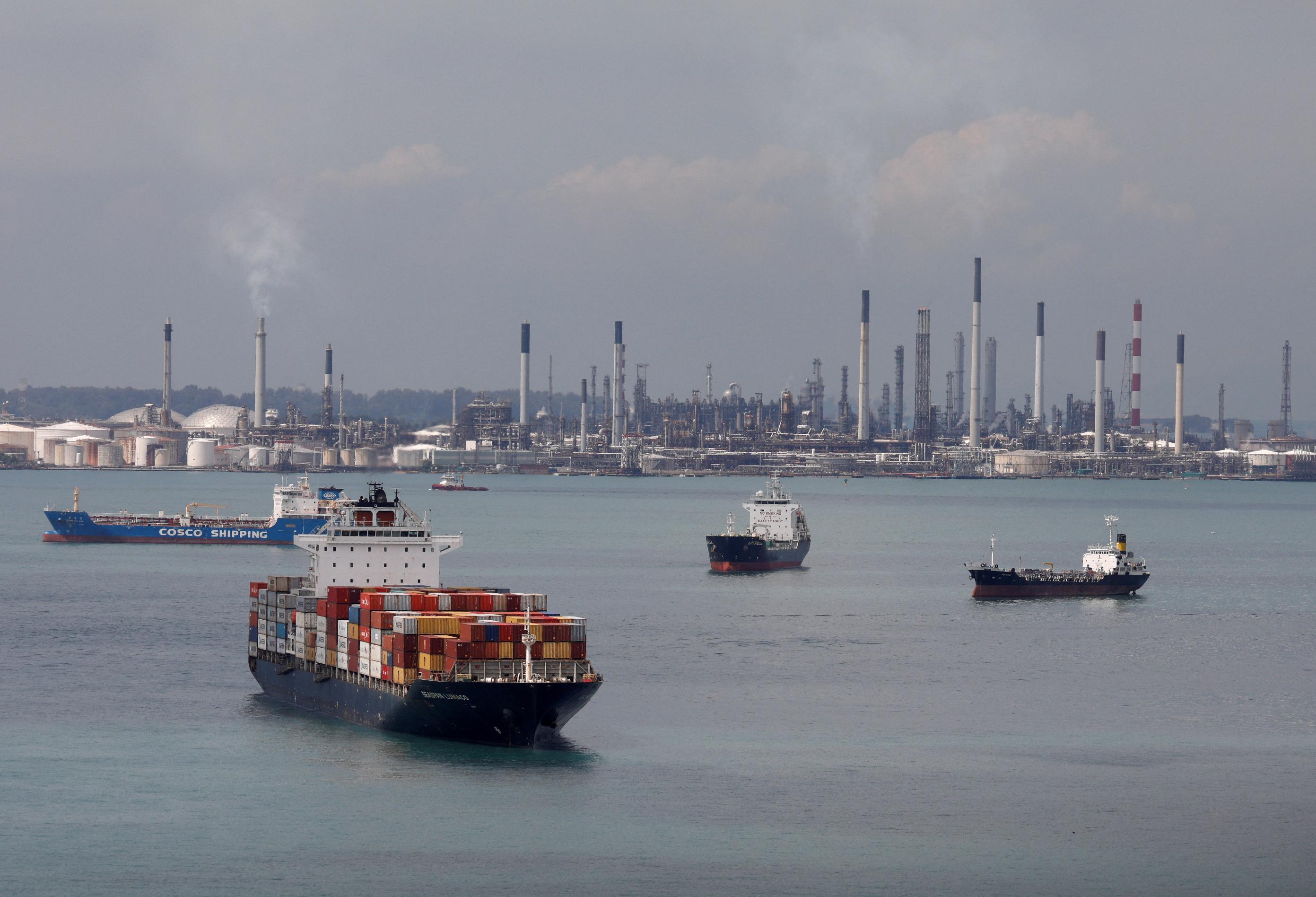
CAGP, majority owned by Chandra Asri, to buy the assets Transaction expected to be completed by end-2024 Buyers get foothold in Asia's main oil hub but refinery is old SINGAPORE, May 8 (Reuters) - Shell (SHEL.L) New Tab, opens new tab said on Wednesday it has agreed to sell its refinery and petrochemical assets in Singapore, Asia's main oil hub, to a joint venture between Indonesian chemicals firm Chandra Asri and Swiss miner and commodities trader Glencore. Reuters reported last August that Shell had hired Goldman Sachs to explore a potential sale of its refining and petrochemical plants in Singapore as part of a broader strategic review globally to become a lower-carbon operator. The sale is part of Shell CEO Wael Sawan's plan to reduce the company's carbon footprint and focus its operations on the most profitable businesses. The transaction will transfer all of Shell’s interest in Shell Energy and Chemicals Park Singapore to the joint venture company CAPGC, Shell said in a statement. The companies did not provide a value for the deal. Subject to regulatory approval, the transaction is expected to complete by the end of 2024, Shell added. The buyers of Shell's assets on Bukom and Jurong islands would gain a foothold in one of the world's top oil refining and trading centres but would also face competition from newer refineries in China and elsewhere - the Bukom facility opened in 1961 - as well as a Singapore carbon tax set to rise sharply in 2024. CAPGC is majority-owned and operated by Chandra Asri Group and minority-owned by Glencore through their respective subsidiary companies, the Indonesian company said in a statement. Shell's assets include a refinery capable of processing 237,000 barrels per day (bpd) of oil and a 1-million-metric-ton-per-year (tpy) ethylene plant located on Bukom island, just south of Singapore, as well as a plant that produces mono-ethylene glycol on Jurong island in the Southeast Asian city-state's west. CAGP and Vitol had been the final bidders for the assets after shortlisted Chinese firms including state-run China National Offshore Oil Corp (CNOOC) dropped out. Acquiring Shell's plants in Singapore would provide Chandra Asri with naphtha feedstock for its cracker and allow the company to integrate its petrochemical production with refining which could improve its efficiency and reduce costs. "Chandra Asri has been a leading player in the olefins and downstream space in Indonesia for decades, and has been looking to expand its current portfolio within and outside Indonesia for many years ... this foothold in the petrochemical hub of Southeast Asia will give it leverage in increasing its ASEAN footprint and lift itself to be a truly regional player," said Wood Mackenzie's global head of polyesters, Salmon Lee. Chandra Asri operates Indonesia's sole naphtha cracker, which can produce 900,000 tons of ethylene and 490,000 tons of propylene annually, basic raw materials that are further processed at the complex into other petrochemicals. For Glencore, Shell's assets would give the global trader a physical foothold for its trading in Asia. Glencore's only refining asset is a 100,000 bpd facility in Cape Town that is South Africa's third-largest refinery. It also owns a lubricants plant in Durban. A partnership with Glencore also means Chandra Asri can harness the trading giant's strengths in not only the trading sphere but also on the logistical front, Woodmac's Lee added. Shares of Chandra Asri Pacific (TPIA.JK) New Tab, opens new tab rose as much as 1.9%, outperforming the benchmark Indonesia index's (.JKSE) New Tab, opens new tab 0.5% drop on Wednesday afternoon. Its shares have climbed 49% so far this year, giving it a market value of some $42 billion, LSEG data showed. Shell's shares in London rose 0.1% and have climbed nearly 13% so far this year. Last week the company smashed forecasts with a $7.7 billion first-quarter profit, buoyed by cost cutting and its strategic shift. Sign up here. https://www.reuters.com/markets/deals/shell-sell-singapore-refinery-petrochemical-assets-chandra-asri-glencore-2024-05-08/
2024-05-08 07:41
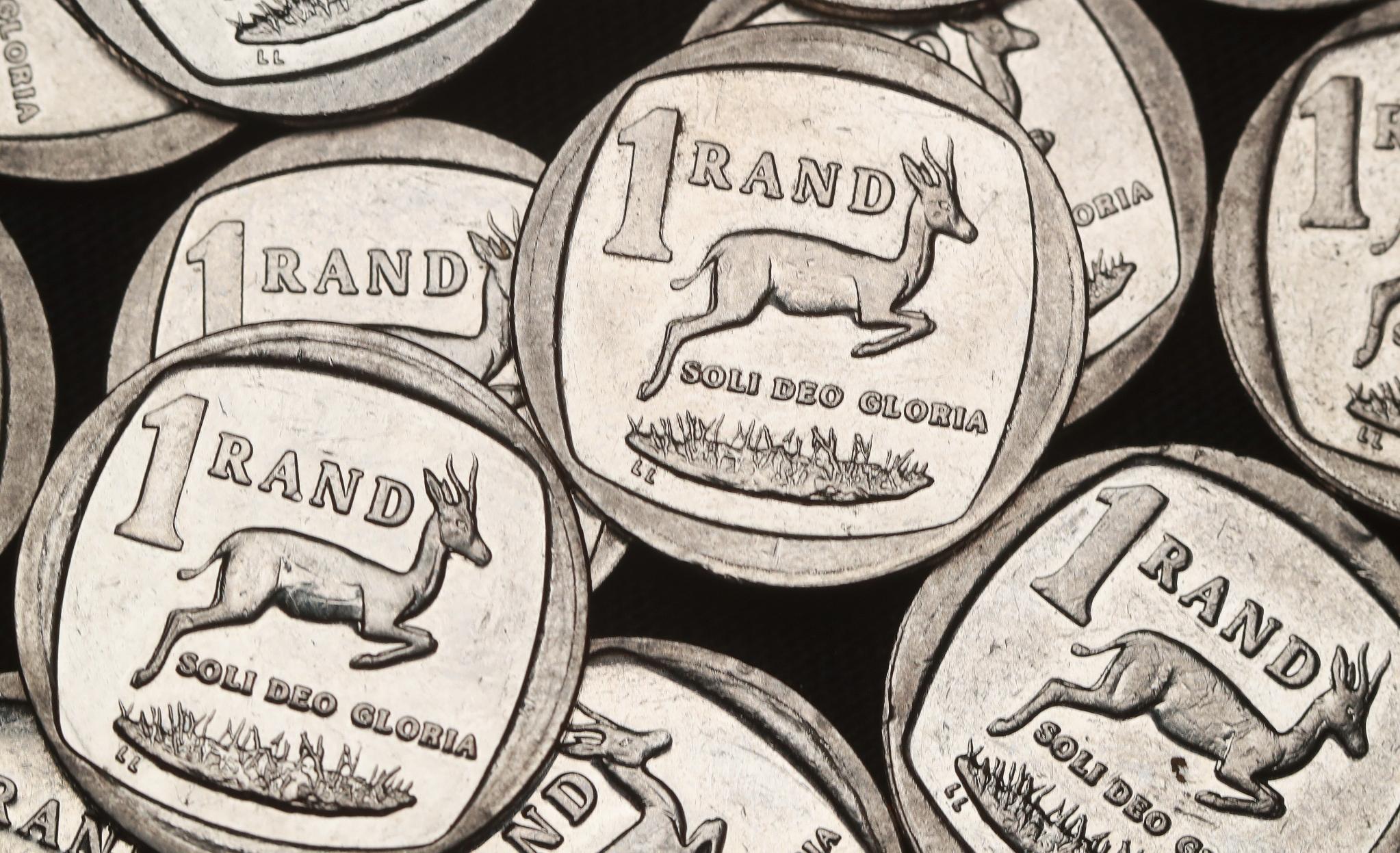
JOHANNESBURG, May 8 (Reuters) - South Africa's rand weakened against the dollar early on Wednesday, pulled down by souring risk sentiment. At 0726 GMT, the rand traded at 18.58 per dollar , 0.38% softer than its previous close. The dollar index was last trading up 0.14% against a basket of currencies. "Risk sentiment has fallen a touch as geopolitical tensions in the Middle East are on the rise again," said Andre Cilliers, currency strategist at TreasuryONE. Israeli forces on Tuesday seized the main border crossing between Gaza and Egypt in Rafah, the southern Gaza city where more than one million displaced Palestinians have sought shelter during Israel's seven-month-old offensive. Like most emerging market currencies, the rand is risk-sensitive and takes cues from global drivers such as the direction of dollar in addition to local economic data points. Central bank data earlier showed South Africa's net foreign reserves rose to $57.851 billion at the end of April, from $57.513 billion in March. On the stock market, the Top-40 (.JTOPI) New Tab, opens new tab and the broader all-share (.JALSH) New Tab, opens new tab indices were both around 0.3% weaker in early trade. South Africa's benchmark 2030 government bond was marginally weaker, with the yield up 1 basis point to 10.485%. Sign up here. https://www.reuters.com/markets/currencies/south-african-rand-slips-risk-sentiment-sours-2024-05-08/
2024-05-08 07:22
Airstrikes cause blackouts in string of Ukrainian regions Officials tell residents to economise electricity use Imports won't make up shortages, grid operator head says Three civilians wounded in overnight aerial attacks Russia says strikes were retaliation for Kyiv's attacks KYIV, May 8 (Reuters) - Russian missiles and drones struck nearly a dozen Ukrainian energy infrastructure facilities on Wednesday, causing serious damage at three Soviet-era thermal power plants and blackouts in multiple regions, officials said. Ukraine's air force said it shot down 39 of 55 missiles and 20 of 21 attack drones used for the attack, which piles more pressure on the energy system more than two years after Russia launched its full-scale invasion. "Another massive attack on our energy industry!" Energy Minister German Galushchenko wrote on the Telegram app. Two people were injured in the Kyiv region and one was hurt in the Kirovohrad region, Interior Minister Ihor Klymenko said. Galushchenko said power generation and transmission facilities in the Poltava, Kirovohrad, Zaporizhzhia, Lviv, Ivano-Frankivsk and Vinnytsia regions were targeted. Some 350 rescuers raced to minimise the damage to energy facilities, 30 homes, public transport vehicles, cars, and a fire station, the interior ministry said. National power grid operator Ukrenergo said it was forced to introduce electricity cuts in nine regions for consumers and that it would expand them nationwide for businesses during peak evening hours until 11 p.m. (2000 GMT). Ukrenergo CEO Volodymyr Kudrytskyi, interviewed by the Ukrainska Pravda media outlet, said electricity imports would not make up for power shortages. He said hydropower stations had also been hit, clarifying an earlier company statement omitting hydro stations from the list of affected facilities. Power cuts for industrial users, he said, were "almost guaranteed" but interruptions for domestic users would depend on how well they reduced consumption. "Many important power stations were damaged," he said, citing three stations operated by DTEK, Ukraine's biggest private company, as well as two hydropower stations. "The damage is on quite a large scale. There is a significant loss of generating power, so significant that even imports of power from Europe will not cover the shortage that has been created in the energy system." Russia's defence ministry said it struck Ukraine's military-industrial complex and energy facilities in retaliation for Kyiv's strikes on Russian energy facilities. "As a result of the strike, Ukraine's capabilities for the output of military products, as well as the transfer of Western weapons and military equipment to the line of contact, have been significantly reduced," the ministry said. WORLD WAR TWO ANNIVERSARY President Volodymyr Zelenskiy noted the attacks were launched on the day Ukraine marks the end of World War Two. "This is how the Kremlin marks the end of World War Two in Europe, with a massive strike, attempting to disrupt the lives of our people with its Nazism," he said in his nightly video address. In an earlier online address, Zelenskiy singled out what he said was the West's limited progress in curbing Russian energy revenue and some countries that attended President Vladimir Putin's inauguration for a fifth term in the Kremlin on Tuesday. Fighting Nazism back then, he said, was "when humanity unites, opposes Hitler, instead of buying his oil and coming to his inauguration". Ukraine has stepped up drone attacks on Russian refineries this year despite apparent objections by the United States, trying to find a pressure point against the Kremlin whose forces are slowly advancing in the eastern Donbas region. Ukrainian strikes on Russian refineries may have disrupted more than 15% of Russian oil refining capacity, a NATO military alliance official has said. After pounding the energy system in the first winter of the war, Russia renewed its assault on the grid in March as Ukraine was running low on stocks of Western air defence missiles. Prime Minister Denys Shmyhal estimated that more than 800 heating facilities had been damaged and up to 8 GW of power generation lost so far, adding the government needed $1 billion to fund repair work. DTEK vowed to keep working to restore power at its facilities, and its CEO, Maxim Timchenko, called on Ukraine's allies to provide more air defence systems. Officials did not name the facilities hit on Wednesday, part of a policy of wartime secrecy that Kyiv says is needed to prevent Russia using the information for further strikes. But Lviv governor Maksym Kozytskyi said Russia attacked a natural gas storage facility in his region in the west of the country, Radio Free Europe/Radio Liberty reported. In central Poltava region, energy infrastructure was hit by a drone, Poltava Regional Governor Filip Pronin said. The governors of Vinnytsia and Zaporizhzhia said critical civilian infrastructure facilities were damaged. Sign up here. https://www.reuters.com/world/europe/russia-targets-energy-facilities-air-attack-ukraine-officials-say-2024-05-08/

2024-05-08 06:53
May 8 (Reuters) - Europe's largest copper producer Aurubis AG (NAFG.DE) New Tab, opens new tab reported first-half core profit above expectations on Wednesday, helped by lower electricity and gas prices. Aurubis' first-half core profit, also known as operating earnings before taxes, rose 2% to 243 million euros ($260.96 million) from the same time last year, beating the consensus estimate of 233 million euros expected in a company poll. Group revenue for the first half of the year fell 6% to 8.25 billion euros, roughly in line with expectations of 8.27 billion euros. Second-quarter core profit, at 132 million euros, increased 16% from the year-ago period, while revenue fell 7% to 4.35 billion euros. Revenue was down mostly on lower copper prices and a drop in copper shape sales such as bars and sheets, Aurubis said, with demand from the construction sector particularly muted. Lower sulfuric acid sales, which it sells to industry, and lower refining charges for the processing of recycling materials also crimped revenue, the company said. But the firm's first half result was boosted by "considerably higher" treatment and refining charges (TC/RCs) stemming from higher copper concentrate throughput at its sites, Aurubis added. Miners pay TC/RCs to smelters to process copper concentrate into refined metal, offsetting the cost of the ore. Aurubis reiterated its guidance for the year even as it said an increase in global smelting capacity and limited growth in concentrate supply from the mining industry would likely hold down TC/RCs for the year. It said long-term contracts meant it had "limited" exposure to developments in the spot market. The company's shares had closed almost 11% lower last Friday after analysts at UBS warned that low TC/RCs would hit its earnings. ($1 = 0.9312 euros) Sign up here. https://www.reuters.com/markets/commodities/lower-energy-prices-help-copper-producer-aurubis-first-half-profit-2024-05-08/


