2024-05-08 05:07
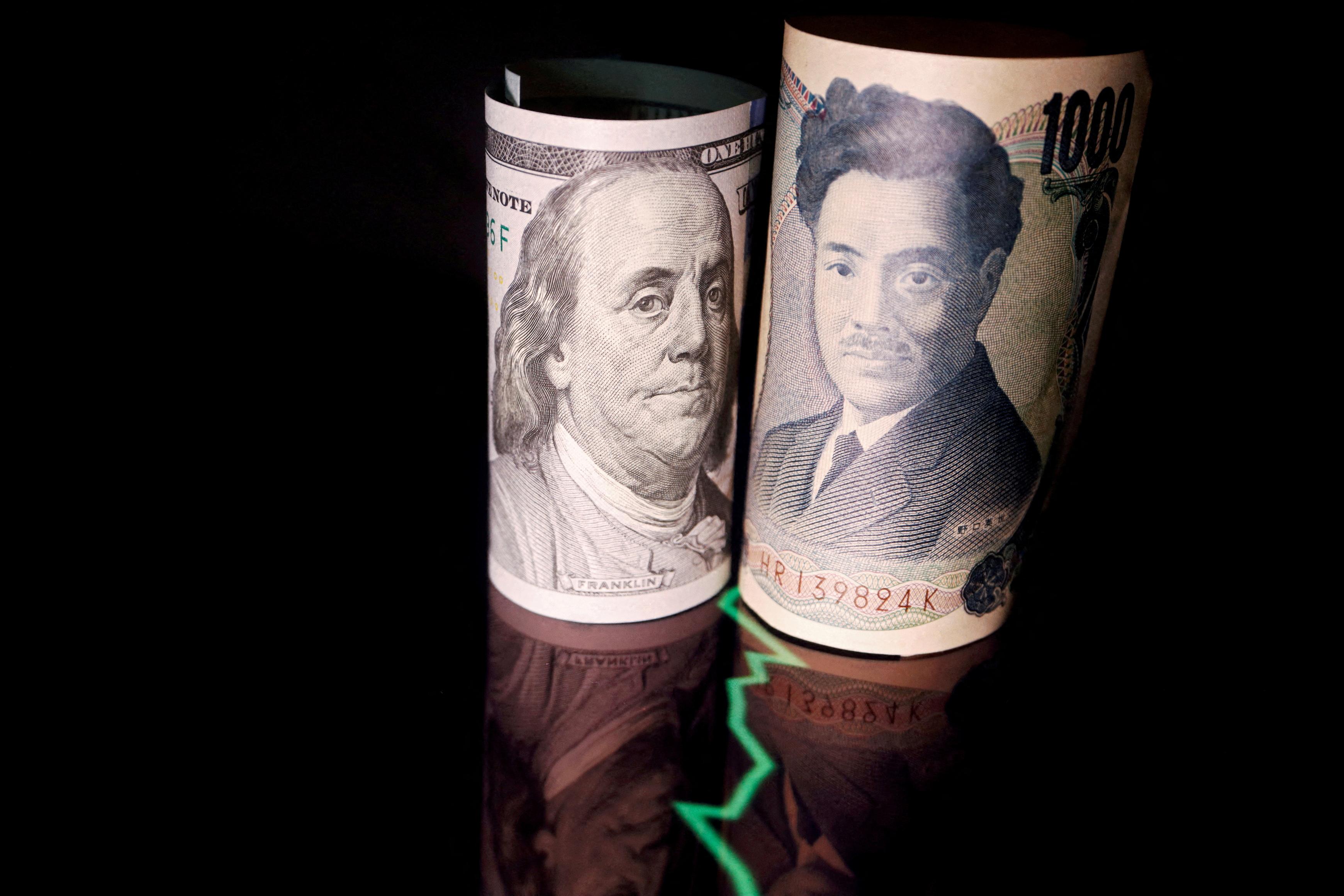
NEW YORK/LONDON, May 8 (Reuters) - The dollar gained on Wednesday as investors bet on the U.S. economy outperforming peers and was higher for the third day against the Japanese yen, keeping investors wary of the risk of intervention from Tokyo. In Europe, the Swedish crown came under pressure after the central bank cut interest rates and said it expected two more cuts this year, while the pound was stuck in negative territory ahead of a Bank of England meeting on Thursday. The move in Sweden was a reminder that dollar is likely to remain strong as long as other central banks cut rates before the U.S. Federal Reserve. The yen remained front of mind for currency traders as Japanese officials issued a stronger warning over the impact of the weak currency on the economy. "Carry trades are still attractive and the market is still more inclined to buy the dip in dollar/yen," said Vassili Serebriakov, an FX strategist at UBS in New York. "I don’t think the market is ignoring the risk of intervention, but ... unless there’s a significant change in the U.S. economic outlook we don’t think there will be a significant change in the setup for the FX markets either," Serebriakov added. Analysts have said any intervention from Tokyo would only offer temporary respite for the yen, given the wide gap between interest rates in the U.S. and Japan. Traders believe Japanese authorities spent some $60 billion last week on propping up the yen after it hit its weakest in 34-years against the dollar around 160 yen. The dollar was last up 0.59% against the yen at 155.6 , up from last week's low of 151.86. FED ABOVE ALL Investors are focused on the pace and timing of Fed rate cuts. The latest data showing weaker-than-expected U.S. jobs creation, together with an easing bias from the U.S. central bank, have cemented expectations that rates will likely be lower by year-end. The dollar was last up 0.11% at 105.54 against a basket of currencies , above last week's one-month low. The euro dipped 0.08% to $1.0745. Sterling weakened 0.1% to $1.2492. In the meantime, central banks in Europe have already started cutting interest rates. The Swiss National Bank cut in March ahead of Wednesday's move by Sweden's Riksbank. The European Central Bank has signalled its intention to cut in June, assuming the data points in the right direction, and the BoE is gradually smoothing the way to its first cut. "What we're looking at is a raft of European central banks going over the next few months, whether or not it's June, or August. We've got a near 50% chance of the Fed cutting in September, but I think that's probably the one that could get pushed out," XTB research director Kathleen Brooks said. "For now, and particularly today, the focus is on Europe cutting first and we're seeing that upward pressure on the dollar," she said. While traders are pricing in an expected Fed rate cut in September, that move will also depend on whether inflation continues to ease back closer to the U.S. central bank’s 2% target. “Its going to be hard to go more dovish from here in terms of Fed expectations I think in the near term and that’s why that bias to buy the dollar is still going to be in place,” said UBS’ Serebriakov. Boston Fed President Susan Collins said on Monday that the current setting of monetary policy would slow the economy in the way she believed would be necessary to get inflation back to the target. In cryptocurrencies, bitcoin fell 0.77% to $62,480, set for a fourth daily loss, its longest stretch of daily declines so far this year. Sign up here. https://www.reuters.com/markets/currencies/dollar-regains-momentum-yen-struggles-2024-05-08/
2024-05-08 04:31
A look at the day ahead in European and global markets from Kevin Buckland The Federal Reserve and the enigmatic path of U.S. interest rates continue to dominate the market's attention. And with no top tier economic data for a week - when CPI drops - the opinions of policymakers take added importance. Investors have no shortage of Fedspeak to look forward to on Wednesday, with Vice Chair Philip Jefferson, Governor Lisa Cook and Boston Fed President Susan Collins taking the podium at various events. Fed Chair Jay Powell suggested last week that the bias is still towards easing, and further tightening is not a topic of discussion as of now. But whether stubborn inflation and a robust economy will allow a rate cut this year has come into doubt, with Minneapolis Fed boss Neel Kashkari signalling as much on Tuesday. The lack of conviction among investors is clear in the differing directions for the dollar and Treasury yields this week, with the former pushing higher while long-term rates retreat. It's a very different story in Sweden: The Riksbank is widely expected to embark on its rate-cutting cycle today, after signalling at its last meeting an intention to ease either this month or next. Inflation is close to target, the economy has slowed sharply, and a weak currency has become a headache, leading analysts to pencil in a full percentage point of reductions to put the key rate at 3% by year-end. The Bank of England announces policy on Thursday, and while no change is predicted this week, dovish bets have risen recently. Traders now price two quarter-point cuts this year, with odds for whether the first comes in June or August a coin toss. Wednesday's data calendar is light in Europe, consisting mainly of some German factory numbers. The corporate calendar is heavy by comparison though, featuring earnings from such names as AB Inbev, BMW and Continental. Key developments that could influence markets on Wednesday: - Riksbank policy decision - Germany industrial production, industrial output; Italy retail sales (all March) - Corporate earnings including AB Inbev, BMW and Continental Sign up here. https://www.reuters.com/markets/europe/global-markets-view-europe-2024-05-08/

2024-05-08 02:58
MUMBAI, May 8 (Reuters) - The Indian rupee is expected to open little changed and hold a narrow range on Wednesday amid dollar strength and a central bank that is likely to intervene. Non-deliverable forwards indicate the rupee will open barely changed from its close of 83.5075 in the previous session. The rupee spend a large part of Tuesday's session near 83.50 on likely dollar selling by the Reserve Bank of India. "Today should be very similar to yesterday, with the action centred around 83.50," an FX trader at a bank said. "All through yesterday, it did seem a hand was on offer at 83.50, which based on how it has been, must be the RBI." The dollar index inched up to 105.54 amid renewed weakness on the Japanese yen, which percolated down to other Asian currencies. The offshore Chinese yuan weakened to 7.2294 and other Asian currencies dipped between 0.2% and 0.5%. The dollar index sell-off has stalled after finding support at the 105 level, MUFG said in a note. The yen dropped to 155.20 to the dollar, well off its peak of 151.86 from last week, on the back of possible intervention from Japanese authorities. The U.S.-Japan interest rate differential has been a major factor in the yen's decline. And indications are that U.S. interest rates are unlikely to come down in a hurry, which would mean that the yen and other Asian currencies will not see much relief. Futures are pricing in less than two U.S. interest rate cuts this year, which is quite a way from the six to seven that were discounted at the beginning of the year. Several Fed speakers are lined up to talk in the coming days, which will give investors insights on the rate path. KEY INDICATORS: ** One-month non-deliverable rupee forward at 83.58; onshore one-month forward premium at 8.25 paisa ** Dollar index up at 105.55 ** Brent crude futures down 0.4% at $82.8 per barrel ** Ten-year U.S. note yield at 4.47% ** As per NSDL data, foreign investors sold a net $137.9 mln worth of Indian shares on May. 6 ** NSDL data shows foreign investors bought a net $43.6 mln worth of Indian bonds on May. 6 Sign up here. https://www.reuters.com/markets/currencies/rupee-cling-8350usd-amid-resurgent-dollar-central-bank-support-2024-05-08/
2024-05-08 00:56
US crude stocks fall 1.4 mln bbls as refining rises -EIA US dollar edges higher as investors mull timing of rate cuts Geopolitical risks for oil prices dissipating, analysts say NEW YORK, May 8 (Reuters) - Oil prices edged higher on Wednesday after data showed U.S. crude stockpiles fell last week as refiners slowly ramped up output ahead of the summer driving season, while a stronger dollar capped gains. Brent crude oil futures settled 42 cents, or 0.5%, higher at $83.58 a barrel. U.S. West Texas Intermediate crude futures rose 61 cents, or 0.8%, to $78.99 a barrel. U.S. crude inventories fell by 1.4 million barrels to 459.5 million barrels last week, government data showed, compared with a 1.1 million-barrel draw that analysts forecast and industry data that showed a 509,000-barrel increase. [EIA/S] "Stronger refining activity and exports have encouraged a minor draw to crude inventories, helping unwind some of last week's large build," said Matt Smith, lead oil analyst at Kpler. Refinery utilization rates rose by 1 percentage point to 88.5% of total capacity, but was still lower than rates of 91% a year ago ahead of the Memorial Day weekend at the end of May that kicks off the peak season for gasoline demand. "Gasoline demand is still below 9 million barrels (per day) ahead of the start of the summer driving season. That is a pretty grim situation here," said Bob Yawger, director of energy at Mizuho. A strengthening dollar , which gained as investors bet on the U.S. economy outperforming peers, weighed on crude oil prices. A stronger greenback dampens oil demand by making the dollar-denominated commodity more expensive for investors holding other currencies. Hopes of a ceasefire in Gaza have put some downward pressure on oil prices in recent trading sessions, with some analysts saying the risk premium on oil had declined in tandem. "Taking away the current geopolitical trigger leaves the market staring into a world of sticky inflation in the U.S. that is countered by interest rates that not only keep the U.S. dollar elevated but make any sort of commodity trading more expensive," PVM Oil analyst John Evans said. The U.S. believes negotiations on a Gaza ceasefire should be able to close the gaps between Israel and Hamas. U.S. Central Intelligence Agency Director William Burns traveled to Israel on Wednesday and met with Israeli Prime Minister Benjamin Netanyahu, an Israel official said. Sign up here. https://www.reuters.com/markets/commodities/oil-prices-edge-lower-rising-us-stockpiles-2024-05-08/

2024-05-08 00:52
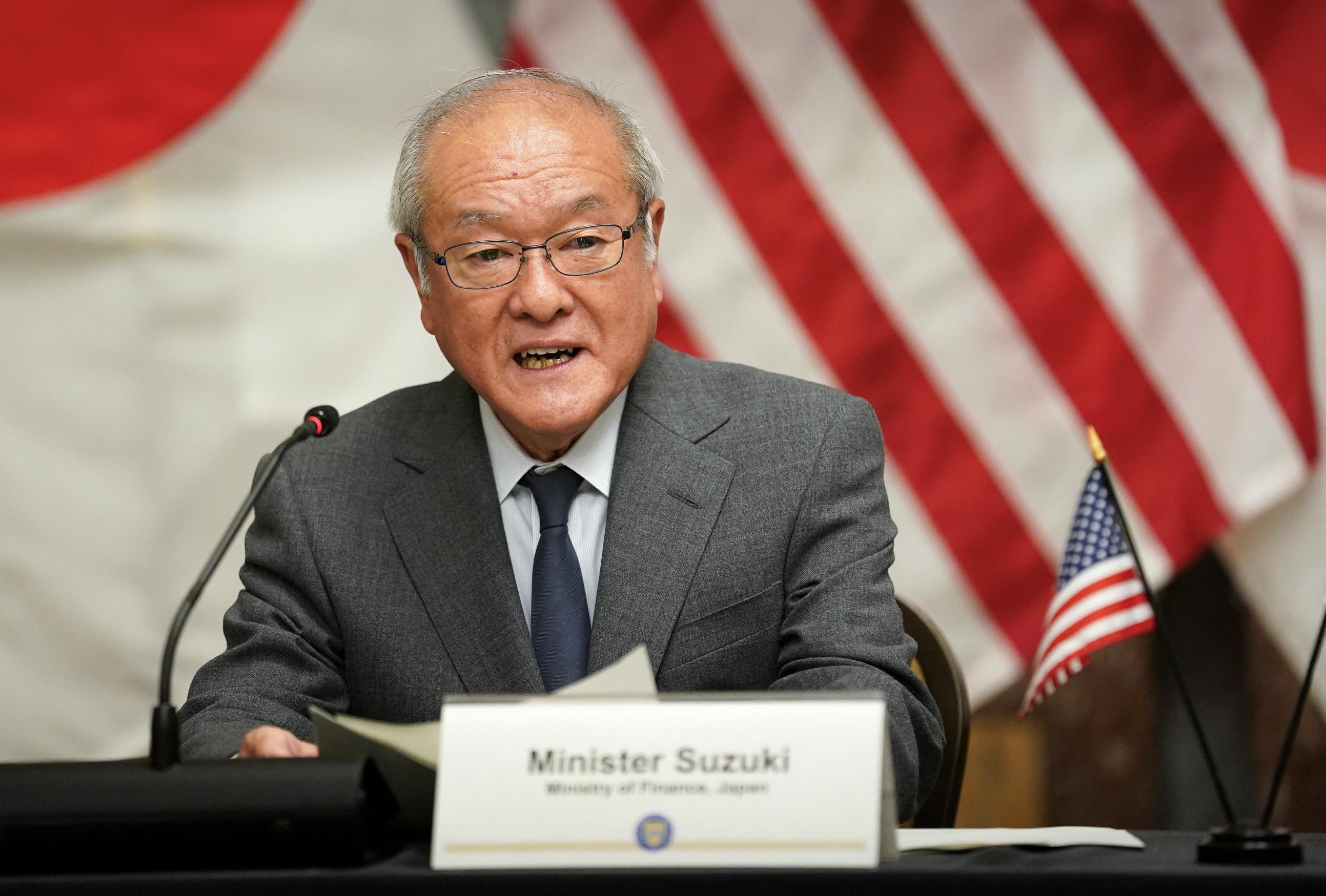
BOJ Ueda says FX impact on inflation may have become bigger Ueda says yen moves may have big impact on prices, prompt action Finance minister voices concern on negative impact of weak yen Suzuki says ready to act against excessive yen volatility TOKYO, May 8 (Reuters) - The Bank of Japan may take monetary policy action if yen falls affect prices significantly, governor Kazuo Ueda said on Wednesday, offering the strongest hint to date the currency's relentless declines could trigger another interest rate hike. Ueda also said the BOJ could raise interest rates sooner than expected if inflation overshoots its forecasts, or risks to the price outlook increases. Finance Minister Shunichi Suzuki voiced "strong concern" on Wednesday over the negative impact of a weak yen, such as boosting import costs, and repeated Tokyo's readiness to intervene in the market to prop up the sagging currency. The remarks, which followed a meeting between Ueda and Prime Minister Fumio Kishida on Tuesday, underscore the resolve of the government and central bank to cooperate in keeping damaging yen falls in check. "We need to be mindful of the risk that the impact of currency volatility on inflation is becoming bigger than in the past," as firms are already becoming more keen to raise prices and wages, Ueda told parliament on Wednesday. "Exchange-rate moves could have a big impact on the economy and prices, so there's a chance we may need to respond with monetary policy," he said. The remarks compared with those Ueda made after the BOJ's policy meeting on April 26, when he said the yen's recent falls did not have an immediate impact on trend inflation. Ueda's post-meeting comments have been cited by some traders as having accelerated the yen's declines by heightening market expectations the BOJ will hold off on raising interest rates from current levels around zero for some time. After the yen hit a 34-year low of 160.245 per dollar on April 29, Japanese authorities are suspected to have spent more than 9 trillion yen ($58.4 billion) intervening in the market last week to prop up the currency. The dollar stood at 155.40 yen on Wednesday, creeping up from a roughly one-month high of 151.86 on May 3. ON TRACK FOR RATE HIKES Speaking at a seminar later on Wednesday, Ueda said "sharp, one-sided" yen falls were undesirable as they hurt the economy. He also said trend inflation was moving "firmly" towards the BOJ's 2% target as a virtuous wage-inflation cycle becomes more solid, highlighting the central bank's conviction that conditions for additional rate hikes were falling into place. The BOJ will "adjust the degree of monetary accommodation" - code for rate hikes, according to BOJ watchers - if trend inflation accelerates toward its 2% target as it projects, Ueda said, signaling the chance of raising rates in the near-term and in several stages in coming years. "If inflation overshoots our forecasts or if upside risks become high, it will be appropriate for us to adjust interest rates earlier," he said. "On the other hand, if inflation undershoots or downside risks heighten, we must maintain current accommodative financial conditions for a longer period." The BOJ ended negative interest rates and other remnants of its radical stimulus in March. Many market players expect the BOJ to raise rates from current levels around zero sometime later this year. On the BOJ's bond buying, Ueda said the central bank will maintain the size of purchases for the time being to scrutinise how markets absorb its March policy shift. All the same, he said it was appropriate to reduce the size of bond purchases in the future. Sign up here. https://www.reuters.com/markets/currencies/japan-ready-respond-excessive-fx-volatility-says-finance-minister-2024-05-08/
2024-05-08 00:51
TOKYO, May 8 (Reuters) - Bank of Japan Governor Kazuo Ueda said on Wednesday the central bank may take monetary policy action if yen moves have a big impact on inflation, escalating his warning against the economic fallout from the currency's recent sharp declines. A weak yen affects the economy in various ways including by pushing up import costs, and affecting demand for goods and services, Ueda said. While the BOJ won't seek to directly control yen moves with monetary policy, it will scrutinise the potentially huge impact they could have on the economy and prices, Ueda said. "Companies' wage- and price-setting behaviour is becoming somewhat more active. As such, we need to be mindful of the risk that the impact of currency volatility on inflation is becoming bigger than in the past," Ueda said. "Exchange-rate moves could have a big impact on the economy and prices, so there's a chance we may need to respond with monetary policy," Ueda told parliament. The remarks compared with those Ueda made after the BOJ's policy meeting last month, when he said the yen's recent falls did not have an immediate impact on trend inflation. Ueda's post-meeting comments have been cited by some traders as having accelerated the yen's declines by heightening market expectations the BOJ will hold off on raising interest rates from current levels around zero for some time. Sign up here. https://www.reuters.com/markets/asia/boj-will-scrutinise-yen-impact-inflation-guiding-policy-says-governor-ueda-2024-05-08/