
2024-05-07 07:29
First-quarter underlying profit $2.7 bln vs forecast $2.87 bln Hit by lower prices, refinery outage and lower fuel margins Targets at least $2 bln in cash cost savings by end of 2026 Shares down 0.2% LONDON, May 7 (Reuters) - BP's (BP.L) New Tab, opens new tab first-quarter earnings plunged by 40% to $2.7 billion, missing forecasts after lower energy prices and a U.S. refinery outage offset increased oil and gas production. The London-based company held its dividend at 7.27 cents per share and maintained the rate of its share buyback programme at $1.75 billion over the next three months, similar to the previous quarter. Profit fell 5% short of analyst forecasts, denting efforts by CEO Murray Auchincloss to steady the company after a bruising period that followed the abrupt resignation of predecessor Bernard Looney in September. Auchincloss, who was head of finances under Looney, has vowed to simplify BP's operations and cut costs in the face of investor doubts over plans to reduce the company's focus on oil and gas and expand a low-carbon business. BP on Tuesday introduced a target to deliver cash cost savings of at least $2 billion by the end of 2026 relative to 2023. Shares in the company were down 1.9% at 1450 GMT, compared with a 0.5% drop for the European energy index (.SXEP) New Tab, opens new tab. First-quarter underlying replacement cost profit, the company's definition of net income, missed the $2.87 billion consensus forecast from analysts polled by the company and was well short of a $3 billion profit in the previous quarter and $5 billion a year earlier. BP beat earnings forecasts in the previous quarter but had missed them in the previous two. The results reflected lower energy prices and the impact of the outage at its Whiting refinery in Indiana, which was partially offset by a strong oil trading result, higher refining margins and oil and gas output. Oil and gas production was up 2.1% from a year earlier at 2.38 million barrels of oil equivalent per day on the back of field start-ups in Azerbaijan and the United States. "We're seeing good operational momentum," Auchincloss told Reuters. BP's cashflow was down 34% at $5 billion after restocking of diesel and gasoline stocks ahead of summer, Auchincloss said. The company's debt rose to $53 billion while its debt-to-market capitalisation ratio rose to 22% from 19.7% in the previous quarter. The earnings miss was a result of higher tax rate and interest expenses versus expectations, said HSBC analyst Kim Fustier. The miss "is not what BP bulls may have been hoping for, especially after Shell's impressive 20% beat last Thursday" on the back of strong trading and refining, Fustier said. Rival Exxon Mobil (XOM.N) New Tab, opens new tab also missed earnings forecasts, while Chevron (CVX.N) New Tab, opens new tab and TotalEnergies (TTEF.PA) New Tab, opens new tab both met expectations. All three reported sharp drops in profit due to a lower natural gas prices. Saudi Arabia's state-owned oil giant Aramco (2222.SE) New Tab, opens new tab on Tuesday reported first-quarter net profit of $27.3 billion, down 14% from a year earlier. Sign up here. https://www.reuters.com/business/energy/bp-reports-q1-profits-27-billion-missing-forecasts-2024-05-07/
2024-05-07 07:18
RBA leaves benchmark rate at 12-yr high of 4.35% RBA reiterates it won't rule anything in or out on policy SYDNEY, May 7 (Reuters) - Australia's central bank chief said on Tuesday interest rates were at the right level after holding steady for a sixth month, but cautioned that inflation risks were on the upside in a sign policy was unlikely to be eased anytime soon. Wrapping up its two-day May policy meeting, the Reserve Bank of Australia (RBA) kept rates at a 12-year high of 4.35%. However, it stopped short of reinstating a tightening bias that some economists had tipped after first quarter inflation and the labour market failed to cool as much as expected. In unusually forthcoming remarks, RBA Governor Michele Bullock said she hoped the economy would not have to "stomach" higher interest rates, but the board was prepared to act if service sector inflation stayed stubbornly high. The dovish comments jarred financial markets, which had been wagering on a real chance of another hike in rates following a disappointingly high inflation reading in the first quarter. The Australian dollar fell 0.5% to $0.6587, while three-year bond futures rallied 8 ticks to 96.06. Markets slashed bets of another hike this year to imply a probability of just 13% for September, compared to 43% early in the day. Bullock said the board did discuss raising interest rates at the meeting, but judged that monetary policy was already restrictive enough to bring inflation back to the bank's target band of 2-3% by late 2025. "Right now we believe that rates are at the right level to achieve this, but there are risks and at this stage, the board is not ruling anything in or out," she said. The board also appeared to have looked past hawkish forecasts from the bank's economists that showed inflation is expected to pick up to 3.8% and stay there until the end of the year, from 3.6% in the first quarter, even assuming no rate cuts until mid 2025. Inflation slowed less than expected in the first quarter, underlining a home grown inflation challenge, while recent labour market data confirmed only a gradual loosening, with the jobless rate at 3.8% in March. "The combination of the less hawkish than expected language in the post‑meeting statement and the larger than expected upward revisions to the RBA's inflation forecasts over the next few quarters implies the hurdle to another hike could be higher than markets have been expecting," said Adam Boyton, head of Australian economics at ANZ. "We continue to favour November for the start of the easing cycle, although the risks remain skewed toward that being delayed into 2025 and being shallower than we are forecasting." Globally, other central banks are also struggling in their last mile attempts to get inflation back to target, complicating the outlook for eventual rate cuts. The Federal Reserve is now expected to cut less than twice in 2024, a change from about six reductions priced in at the beginning of the year. The Australian government delivers its annual budget statement next week and is under intense pressure to curb spending in the fight against inflation. Sign up here. https://www.reuters.com/markets/rates-bonds/australias-central-bank-holds-interest-rates-vigilant-inflation-risks-2024-05-07/
2024-05-07 07:03
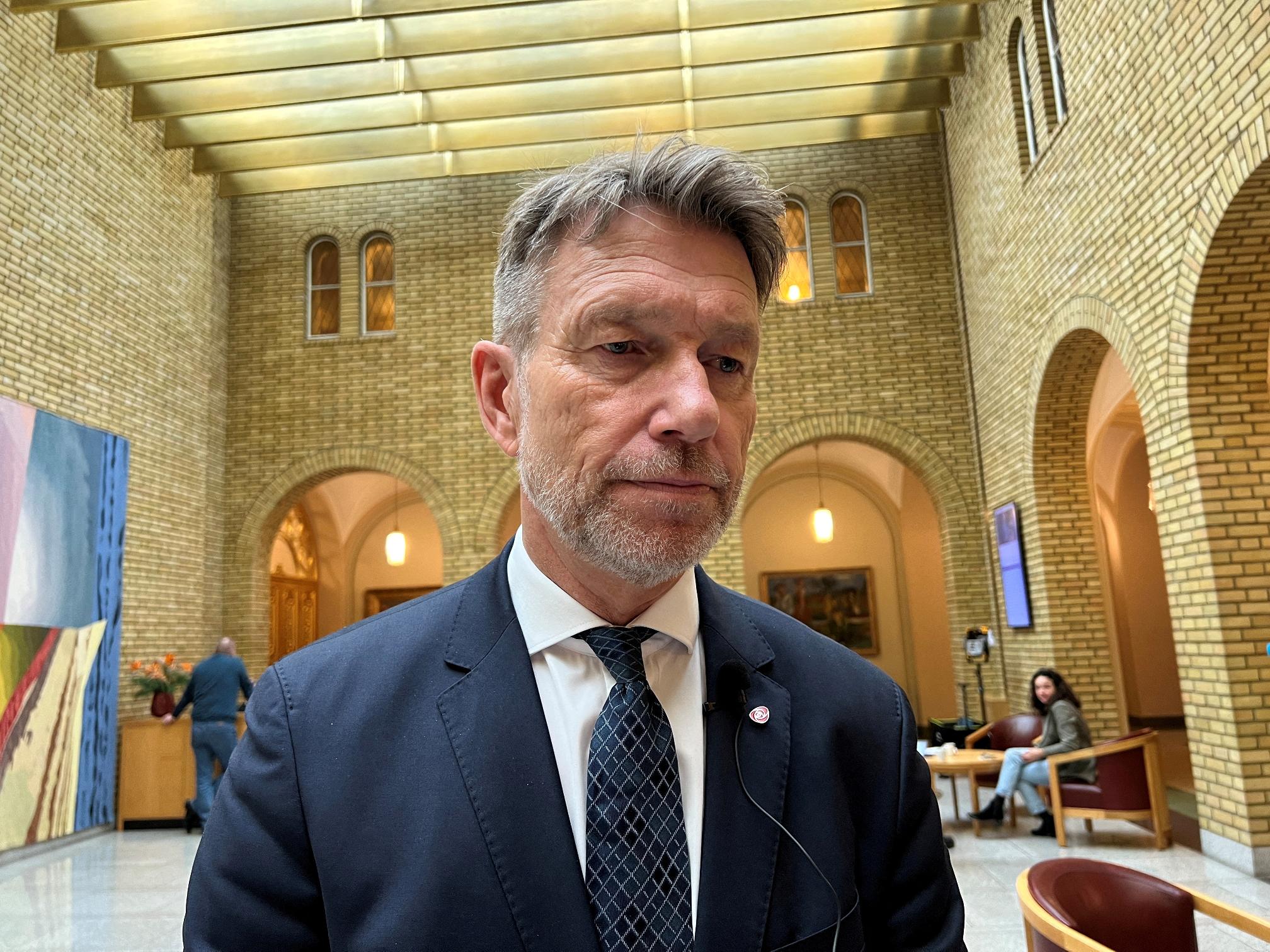
OSLO, May 7 (Reuters) - Norway and Moldova on Tuesday signed a memorandum of understanding to tighten cooperation in the energy sector aimed at securing supply in the eastern European country that is trying to end its long-standing reliance on Russia. The agreement aims to "promote and enhance cooperation in the field of energy; including but not limited to, energy transition and energy security, as well as to encourage new investments in the energy sector". Signed in Oslo by Norway's energy minister Terje Aasland and his Moldovan counterpart Victor Parlicov during a two-day state visit by Moldova's President Maia Sandu, it covers cooperation on a government, research and private sector level. A former Soviet republic and one of Europe's poorest nations, Moldova is seen as particularly vulnerable to the consequences of Russia's war in neighbouring Ukraine. NATO-member Norway, which shares a border with Russia in the Arctic, has become Europe's top gas supplier after a sharp reduction in Russian flows. It also provides financial support to Moldova through its multi-billion-dollar Ukraine aid programme, the latter including 400 million crowns ($36.87 million) for the purchase of gas in 2023. In the past, Moldova relied almost exclusively on Russian gas under a deal with state-controlled Gazprom (GAZP.MM) New Tab, opens new tab but stepped up diversification efforts in the wake of the Ukraine war. The country does not currently buy gas from Russia but its breakaway Transdniestria region relies on its supplies. While Tuesday's agreement mentions security of gas supplies as one area of interest, the key focus is on renewable energy, electrification as well as cybersecurity. Moldova has already increased the share of renewable energy sources in its electricity consumption to 10.5% in 2023 from 3.6% in 2021, driven by wind and solar power generation, according to official data. ($1 = 10.8488 Norwegian crowns) Sign up here. https://www.reuters.com/business/energy/vulnerable-moldova-tightens-energy-cooperation-with-norway-2024-05-07/
2024-05-07 06:55
LITTLETON, Colorado, May 7 (Reuters) - After a rough couple of years, exchange-traded funds (ETFs) tied to clean energy generation and distribution are starting to outperform investor vehicles centred on oil and gas exploration and production. Since the start of 2022, most major ETFs tied to renewable energy generation have lost between 20% and 70% of their value as rising interest rates, supply chain disruptions and a slowdown in clean energy installations cut consumer demand and hit the earnings and stock prices of clean energy companies. Over the same period, cuts to crude oil output by major producer groups have helped lift earnings for oil and gas producers, which in turn boosted the returns of ETFs tied to that space by more than 50%. However, over the past month an array of ETFs dedicated to key aspects of the energy transition - from renewable energy generation to smart grid management and uranium extraction - have all posted positive returns just as a major ETF tied to oil and gas output lost roughly 5%. Several factors could derail this relative recovery in clean energy momentum, including a worsening in Middle East conflict and higher-for-longer interest rates in the United States. But if a peace deal is reached between Israel and Palestinian militant group Hamas in Gaza and interest rates trend lower in key consumer markets, further pressure on oil and gas prices could materialize just as the affordability of renewable generation equipment improves. That in turn could potentially accelerate the recent divergence in ETF returns and support clean energy investing trends while undermining the appeal of fossil fuels. ETF PERFORMANCE HISTORY Over the past five years or so, investment vehicles tied to clean energy have endured a roller coaster ride. Appetite for exposure to renewables soared from early 2020 through to the start of 2021 as several major economies adopted supportive policies designed to accelerate the energy transition away from fossil fuels and stimulate the development of industries and expertise in the clean energy arena. The iShares Global Clean Energy ETF (ICLN.O) New Tab, opens new tab characterized the broad flow of investor interest in clean power during that period, with prices rising by around 180% from January 2020 to January 2021. Over that same period, investor interest in traditional energy developers dwindled amid a broad push-back against fossil fuels, exacerbated by the global downturn in fuel use during COVID-19 lockdowns. The S&P oil & gas exploration and production ETF (XOP.P) New Tab, opens new tab, one of the largest ETFs tracking fossil fuel output, slumped by over 60% through the opening four months of 2020, and finished out the year still nursing more than 40% losses despite recovering mobility and business activity in several economies. COVID CRUNCH Following the upsurge in enthusiasm for clean energy in 2020, project developers during 2021 and 2022 experienced acute difficulties in securing sufficient quantities of related equipment - from solar panels and power inverters to racking systems and turbine blades - as supply chains remained impaired by COVID-19 movement restrictions in China and elsewhere. These restrictions led to major project delays and component cost rises just as widespread interest rate increases curbed consumer purchasing and borrowing power, and resulted in a slowdown in renewable infrastructure build-out across several regions. Russia's invasion of Ukraine in early 2022 then caused disruption to natural gas and oil flows, which helped lift the prices of those commodities and boosted earnings for several key fossil fuel producers. TREND REVERSAL The combination of cost climbs for renewable energy projects and higher fossil fuel prices resulted in a downturn in investor interest in renewable energy ETFs and a steady increase in the returns posted by fossil fuel ETFs since 2022. Investment vehicles tied to uranium extraction snapped the downtrend in clean power investing since the second half of 2023, as growing policy support for nuclear generation sparked investor positioning in case of a shortage of nuclear fuels. ETFs tied to electric grid upgrades and smart power management systems also made gains in 2023, as awareness about the challenges of incorporating renewable energy into existing grid systems sparked major utility-scale investments. So far in 2024, the URA uranium ETF is up by around 14% while the returns posted by the S&P oil & gas exploration and production ETF and the Nasdaq Clean Edge Smart Grid (GRID.O) New Tab, opens new tab are around 12%. Other major clean energy ETFs, including the iShares Clean Energy ETF (ICLN.O) New Tab, opens new tab, so far remain in the red on a year-to-date basis. But if the momentum seen over the past month is sustained, all major clean power ETFs, including the First Trust Global Wind Energy ETF , may soon register positive returns for the year so far, which will serve to boost sentiment across the clean energy space. And if that sentiment is further boosted by supportive macro-level changes regarding geopolitical tensions and interest rate regimes, additional investor momentum into the broader clean energy ETF space can be expected. Sign up here. https://www.reuters.com/business/energy/clean-energy-etfs-start-outperform-key-oil-gas-etf-maguire-2024-05-07/

2024-05-07 06:51
SINGAPORE, May 7 (Reuters) - The United States sees Iran's capacity to move its oil as reliant on service providers based in Malaysia, with oil being transferred near Singapore and throughout the region, the U.S. Treasury Department's top sanctions official said on Tuesday. Brian Nelson, Treasury's undersecretary for terrorism and financial intelligence, was speaking during a four-day visit to Singapore and Malaysia, which the department said aimed to advance its work in countering financing and revenue generation by Iran and its proxies. The trip comes as Treasury increases its focus on financing for militant groups routed through Southeast Asia, including through fundraising efforts and illicit sales of Iranian oil. Nelson told reporters the United States was trying to prevent Malaysia from becoming a jurisdiction where the Palestinian militant group Hamas could both fundraise and then move money. He said the United States saw Iranian oil being transferred near Singapore and throughout the region. Last December, Treasury imposed sanctions on four Malaysia-based companies it accused of being fronts supporting Iran's production of drones. Nelson also said sanctions and export controls against Russia were seeing progress, saying the Russian oil price cap was reducing Moscow's capacity to profit from oil sales while preserving the stability of global energy markets. Singapore is a major shipping hub. Insurance and other maritime service providers operating in Singapore have warned of evasion of the price cap on Russian oil, complaining that it is difficult to confirm that paperwork promising oil is bought at or below the $60 cap is accurate. Sign up here. https://www.reuters.com/business/energy/irans-capacity-move-oil-reliant-malaysian-providers-us-official-says-2024-05-07/
2024-05-07 06:43
Canal to cost $1.7 billion and set to be completed by 2028 Cambodia deputy PM dismisses environment risks, security issues Critics say could hit rice output in Vietnam's Mekong Delta China to get multi-decade concession for Funan Techo canal PHNOM PENH/HANOI, May 7 (Reuters) - Cambodia plans to cut shipping through Vietnamese ports by 70% as a result of a $1.7 billion China-funded upgrade of a canal connecting the Mekong River basin to the Cambodian coast, the country's deputy prime minister told Reuters. Sun Chanthol downplayed environmental concerns about the Funan Techo canal slated to break ground later this year, and dismissed speculation that it could be used to allow upriver access for Chinese warships as "baseless". The project, to be completed by 2028, has the potential to reignite tensions between Cambodia and Vietnam, which are close partners but have often clashed. Conservationists and Vietnamese authorities have voiced alarm at potential damage to the already fragile Mekong Delta, a massive rice-producing region supporting millions of people downstream in Vietnam. However, while Sun Chanthol said the canal would be used also for land irrigation and fishing, he said the water that would be diverted would be "a drop in the bucket". He said the canal's shorter route to the sea for barges and ships from and to Phnom Penh carrying textile and raw material would reduce greenhouse gas emissions. Cambodia had notified the Mekong River Commission (MRC), an intergovernmental organisation for the joint management of the basin, but would not consult other countries in the region about the project, he said. If requested, Cambodia would provide additional information with the MRC, but had no legal obligation to do so, he said. The MRC told Reuters that Cambodia had not shared the canal's feasibility study despite multiple requests and two formal letters sent in August and October. A spokeswoman for Vietnam's foreign affairs ministry said in a statement that she hoped Cambodia would share information and coordinate with Hanoi to assess the impact of the project. RISKS FOR RICE OUTPUT? Currently, about 33% of cargo to and from Cambodia use Vietnamese ports for their global trade by sending them through the Mekong River, Sun Chanthol said, noting that with the expanded canal the goal is to reduce that to 10% - which would represent a 70% drop on current shipping volumes. However, the limited capacity of the canal "brings its economic viability into question," said Ted Osius, former U.S. ambassador to Vietnam and currently head of the US-ASEAN Business Council, an influential advocacy group. The upgraded 180 km (11 miles) canal would be 100 metres (328 feet) wide with a depth up to 5.4 metres (18 feet), allowing barges and ships with a 3,000 deadweight tonnage to use it, Sun Chanthol said. "This project has a minimal impact on the environment," he also said, noting it would discharge up to 5 cubic metres (m3) of water per second, versus Mekong's 8,000 m3 per second. "The canal is the size of a straw," he stressed. Concerns remain, however, especially in Vietnam. "This project can lead to the displacement of established populations, loss of agricultural lands and reduction of wetlands," said Nguyen Hung, a specialist in supply chains at RMIT University Vietnam, echoing concerns raised by Vietnam National Mekong Committee. Brian Eyler, programme director on sustainability at U.S.-based think tank Stimson Center, said the canal would "reduce water available for industrial scale rice production in Vietnam". Eyler said the project requires consultation with other partners under Mekong River Commission rules because the Bassac river, from which water will be diverted, is a branch of the Mekong and not a tributary. But for Sun Chanthol the project concerns only tributaries of the Mekong, including the Bassac, and therefore does not require consultation with partners. The canal "will benefit the 1.6 million Cambodians living along the canal" thanks to better irrigation for farming, Sun Chanthol said, adding that impact on the Mekong basin's water resources would be monitored. CHINA China Road and Bridge Corporation, a major Chinese state-owned construction company, will develop the canal and fully cover its costs under an agreement with the government of Cambodia, Sun Chanthol said, noting the company in exchange will obtain a multi-decade concession. "Is it 30 years, is it 40 years, is it 50 years, that will be discussed during our negotiation," he said. CRBC did not respond to a request for comment. Sun Chanthol said speculation that the canal could be used by China for military purposes was "absolutely untrue". "Our constitution does not permit any foreign military in the country," he said. A Vietnam-based Western diplomat also dismissed as "somewhat exaggerated" warnings from Vietnamese academics about security risks for Vietnam, because of the limited depth of the canal and the size of the locks. Sign up here. https://www.reuters.com/world/asia-pacific/cambodia-says-it-will-cut-shipping-through-vietnam-by-70-with-new-china-funded-2024-05-07/


