2024-05-07 04:47
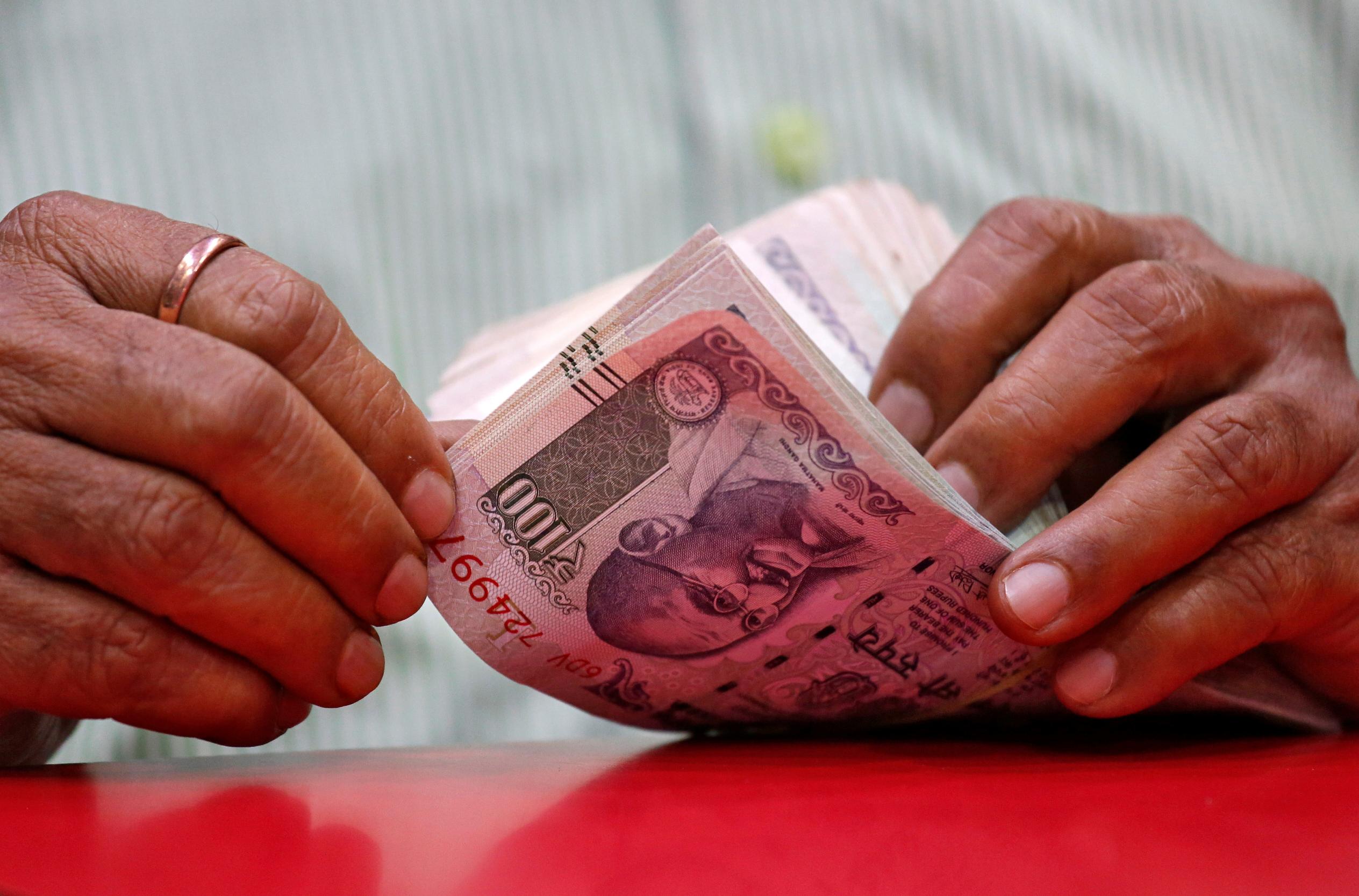
MUMBAI, May 7 (Reuters) - The Indian rupee was little changed on Tuesday as traders remained shy of pushing the local currency to weaker levels on expectations that the Reserve Bank of India (RBI) would intervene to prevent a sharp fall. The rupee was at 83.4750 against the U.S. dollar as of 10:10 a.m. IST, barely changed from its close at 83.4875 in the previous session. Most Asian currencies slipped, with the Indonesian rupiah down nearly 0.2% and leading losses. The dollar index was up slightly at 105.2 while the 10-year US Treasury yield was steady near 4.50%. "The rupee is likely to stay in a small range with the RBI standing in between (the rupee and its) depreciation beyond 83.50," Anil Bhansali, head of treasury at Finrex Treasury Advisors said. Persistent dollar demand from local oil companies and likely dollar outflows have maintained pressure on the rupee over the last few trading sessions, traders said. "There is limited appetite to go long (on USD/INR) at these levels since it's almost certain that the RBI will step in," a foreign exchange trader at a state-run bank said. Traders expect the central bank to intervene to prevent the rupee from falling towards its record low of 83.5750 hit on April 19. With the calendar relatively light on US data releases this week, the focus will be on remarks from US Federal Reserve officials for cues on when the U.S. central bank is likely to begin easing policy rates. In recent remarks, Fed officials have emphasised that they will be data-dependent and that the current level of policy rates should cool inflation to the central bank's 2% target. Investors are currently pricing in nearly two rate cuts over 2024, up from the one rate cut expected before data on Friday showed that job growth had slowed more than expected in April. Sign up here. https://www.reuters.com/world/india/rupee-flat-traders-remain-wary-cenbank-intervention-weaker-levels-2024-05-07/
2024-05-07 04:37
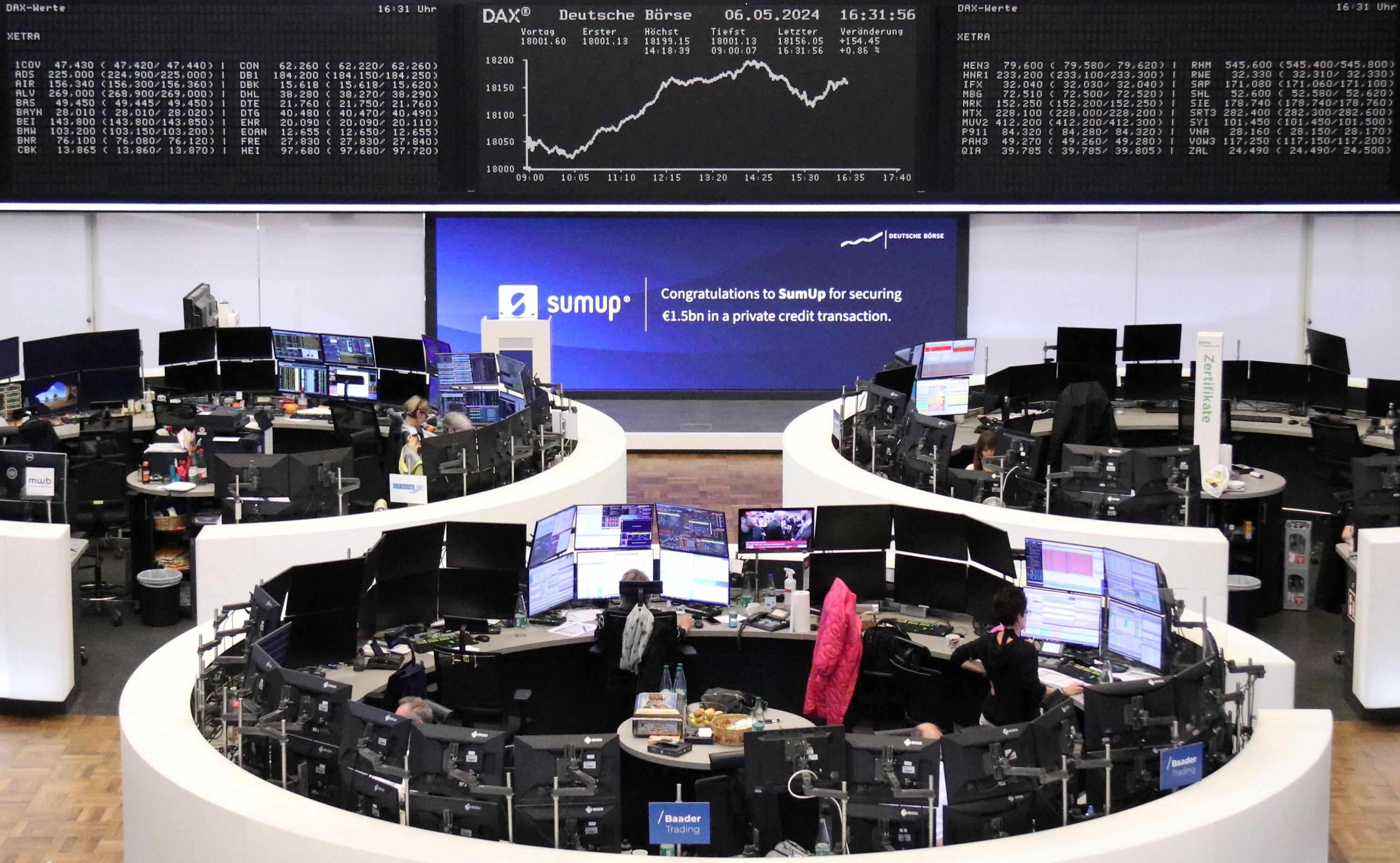
A look at the day ahead in European and global markets from Tom Westbrook Gilts and London stocks were poised to catch up with global gains, following Monday's market holiday. Fed Chair Jerome Powell downplaying the risk of rate hikes and weaker-than-expected U.S. labour data has renewed confidence in rate cuts. FTSE futures suggest the cash index (.FTSE) New Tab, opens new tab is heading higher into record territory at the open, following gains in Asia and on Wall Street. German factory orders are the highlight of the economic calendar, along with European retail sales numbers. UBS reports earnings. In currencies, there is talk that speculators who have been heavily long dollars are paring back and maybe even preparing for the dollar's much-anticipated fall alongside U.S. rates. However in price terms, the greenback has so far turned only to meandering rather than outright dropping. Indeed, it continued to rise for a second straight session on the yen, even as the spectre of official intervention hangs over the currency. Australia's central bank left interest rates on hold, as expected, though it said the inflation rate remains high and is falling slower than expected. Large flows from mainland China into Hong Kong's equity market have put downward pressure on the yuan . While the Hang Seng (.HSI) New Tab, opens new tab was set to snap a 10-day winning streak on Tuesday with a modest drop, it is nearly 15% above last month's lows. The MSCI Asia ex-Japan index (.MIAPJ0000PUS) New Tab, opens new tab hit a 15-month high. Commodities may pose another challenge to the comfort on the interest rate path. Oil has steadied while a ceasefire deal proves elusive in the Middle East. Chicago corn climbed for a fifth session in a row, touching its highest for the year so far and wheat touched a nine-month high as adverse weather roils the outlook. Late frosts have hit Russia on the cusp of harvest season. Wet weather in the U.S. corn belt has planting behind schedule. Brazil is flooded and in Argentina leafhoppers are spreading a harmful bacteria that stunts growth and loosens corn kernels. Key developments that could influence markets on Tuesday: Economics: Eurozone retail sales, German factory orders Earnings: UBS, Disney Sign up here. https://www.reuters.com/markets/europe/global-markets-view-europe-2024-05-07/
2024-05-07 04:16
FX diplomat signals readiness to intervene if excessive moves BOJ governor met PM Kishida, yen was among topics discussed BOJ's Ueda says will scrutinise yen impact on economy, prices Yen's decline complicates BOJ's rate hike path TOKYO, May 7 (Reuters) - Japan may have to take action against any disorderly, speculative-driven foreign exchange moves, the government's top currency diplomat Masato Kanda said on Tuesday, reinforcing Tokyo's readiness to intervene again to support a fragile yen. In a sign of authorities' alarm over recent yen falls, Bank of Japan Governor Kazuo Ueda said currency moves were among topics he discussed in a meeting with Prime Minister Fumio Kishida on Tuesday. Kanda, Japan's vice minister of finance for international affairs who also oversees the country's currency policy, said the government did not need to intervene if exchange rates move steadily reflecting fundamentals. "However, when there are excessive fluctuations or disorderly movements due to speculation, the market is not functioning and the government may have to take appropriate action. We will continue to take the same firm approach as we have in the past," said Kanda. Ueda also said the central bank will guide monetary policy with a close eye on how the yen's falls could affect inflation, suggesting the currency's moves could affect the pace and timing of future interest rate hikes. "I mentioned that in general, currency moves could have a potentially major impact on the economy and prices, and that the BOJ will therefore scrutinise the yen's recent falls in guiding policy," Ueda told reporters after meeting premier Kishida. While a boon for Japanese exporters, the weak yen has become a source of headaches for policymakers as it increases import costs, adds to inflationary pressures and squeezes households. Tokyo is suspected to have intervened on at least two separate days last week to support the yen after it tumbled to lows last seen more than three decades ago. BOJ data suggested authorities spent more than 9 trillion yen ($58.4 billion) in defence of the currency, helping lift the yen from a 34-year low of 160.245 per dollar to a roughly one-month high of 151.86 over the span of a week. Tokyo is estimated to have spent around $60 billion during its last forays in the market to prop up the yen in September and October 2022. The yen , which is down nearly 9% on the dollar this year, was last trading around 154.50. YIELD PRESSURE Japanese businesses have traditionally favoured a weak yen given the country's heavy reliance on exports. But they are now questioning whether the weak yen has become too much of a good thing. "No matter what, the yen weaker than the 150 level (against the U.S. dollar) is too much," the chairman of the powerful Keidanren business lobby, Masakazu Tokura, told a regular press conference on Tuesday. If authorities had conducted intervention, the timing was "very good," he added. The yen's relentless decline is putting the BOJ in a tight spot. The currency has been under pressure despite the BOJ's landmark decision to ditch negative interest rates in March as U.S. rates have climbed and Japan's have stayed near zero. That dynamic has driven cash out of yen into higher-yielding assets, with the pressure intensifying in recent months as expectations for Federal Reserve rate cuts receded. Ueda last month dropped hints the BOJ could raise rates in several stages in years ahead, with a hike possible in autumn. But the hawkish signals have been drowned out by markets focused on cues to sell the yen. Hiking rates too hastily could also hurt Japan's fragile economic recovery, a risk the governor had stressed even as the BOJ phased out its massive monetary support. Many analysts expect the BOJ to raise interest rates from current levels around zero some time this year, though they are divided on how quickly borrowing costs could rise thereafter. ($1 = 154.1800 yen) Sign up here. https://www.reuters.com/markets/currencies/japan-warns-action-over-rapid-currency-moves-2024-05-07/
2024-05-07 03:11
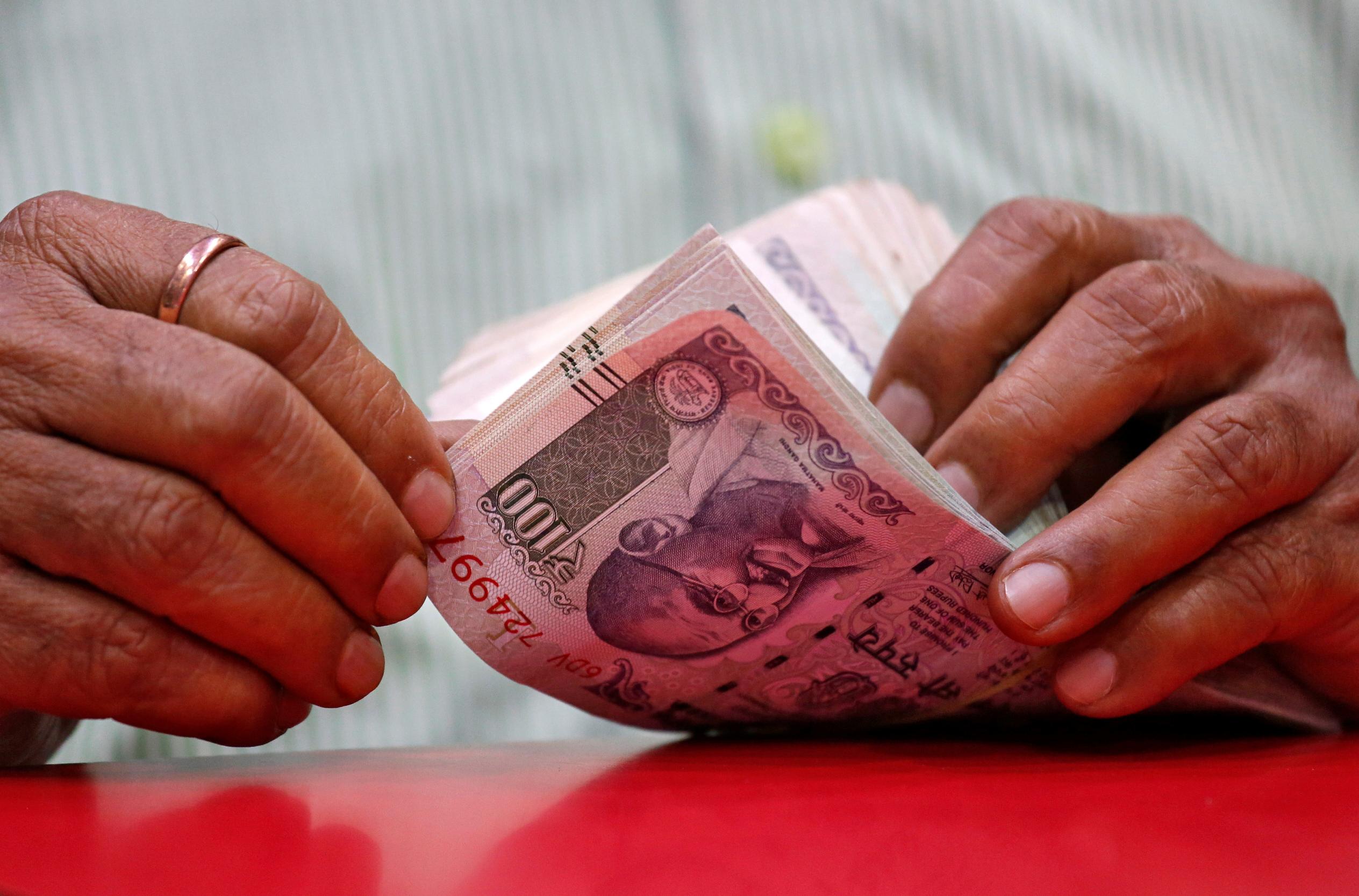
MUMBAI, May 7 (Reuters) - The Indian rupee is tipped to open little changed on Tuesday on persistent dollar demand and bets that the central bank will not allow the currency to slip to an all-time low. Non-deliverable forwards indicate the rupee will open nearly unchanged from 83.4875 in the previous session. Traders have cited dollar demand from oil companies and related to the daily corporate outflows as reasons for the rupee being under constant pressure on Monday. "It's very noticeable from the price action the (dollar) demand and a lack of selling interest. Only real demand will be there at the current level, knowing that the RBI (Reserve Bank of India) will probably want to hold 83.50-83.55," an FX trader at a bank said. The rupee has been in a range of roughly 83.35-83.50 over the last few sessions. Asian peers were mostly rangebound with no U.S. data releases. U.S. yields were quiet, with the 10-year hanging near 4.50% and the dollar index at 105.20. The focus this week is on a host of Federal Reserve speakers before the U.S. consumer inflation data due next Wednesday. Investors are having to contend with uncertainty on the Fed interest rate outlook. On the one hand, the last three inflation readings have been higher. On the other, the recent first-tier U.S. data has been softer than expected - payrolls rose less than expected and manufacturing and services activity contracted last month, according to surveys. Amid all this, ING Bank said it is sticking to its call of a Fed rate cut in September. "To deliver it, we think we need at least three 0.2% or below month-on-month core inflation prints and the unemployment rate getting above 4% with a little bit more evidence of softening consumer spending growth," ING said in a note. KEY INDICATORS: ** One-month non-deliverable rupee forward at 83.55; onshore one-month forward premium at 8.25 paisa ** Dollar index at 105.17 ** Brent crude futures up 0.2% at $83.5 per barrel ** Ten-year U.S. note yield at 4.49 ** As per NSDL data, foreign investors sold a net $256.4 million worth of Indian shares on May. 3 ** NSDL data shows foreign investors bought a net $98.3 million worth of Indian bonds on May. 3 Sign up here. https://www.reuters.com/world/india/rupee-expected-draw-support-8350-8355usd-central-bank-2024-05-07/
2024-05-07 00:54
API data shows increase in US crude, fuel stockpiles EIA raises forecast for 2024 world oil output, lowers demand Israeli forces take control of vital Rafah crossing US crude and product inventories expected to have fallen NEW YORK, May 7 (Reuters) - Oil prices closed slightly lower on Tuesday on signs of easing supply concerns, while market participants shifted their focus to U.S. stockpiles data due later today and Wednesday. Brent crude futures settled 17 cents lower at $83.16 a barrel, and U.S. West Texas Intermediate crude futures closed 10 cents lower at $78.38. Prices fell further in thin post-settlement trading after market sources said that data from the American Petroleum Institute showed a jump in U.S. crude and fuel stocks last week. Rising inventories, typically a sign of weak demand, have defied analysts' expectations in recent weeks. Analysts polled by Reuters forecast a decrease in U.S. oil and fuel stockpiles, and official data from the U.S. Energy Information Administration (EIA) is due at 10:30 a.m. ET (1430 GMT) on Wednesday. Brent crude futures traded at $82.98 a barrel by 4:48 p.m. ET, 35 cents lower than Monday's closing price, and WTI futures were down 23 cents to $78.26 a barrel. U.S. gasoline futures and ultra-low sulfur diesel futures also fell in extended trading. "If EIA shows less barrels are going into the refineries, then that is a problem for crude oil here," Mizuho analyst Robert Yawger said. "Heading into peak summer driving season we should be drawing, not building," he added. Current global inventory data shows crude oil and petroleum supplies are running 1.1 million barrel per day above forecasts in developed economies, according to an analysis by energy brokerage StoneX. "Global inventories remain in a building phase and has accelerated recently," StoneX analyst Alex Hodes wrote to clients on Tuesday. The EIA on Tuesday raised its forecasts for this year's world oil and liquid fuels output and lowered its demand expectations, pointing to a well-supplied market as opposed to prior forecasts that showed under-supply. The premium of the first-month Brent contract to the six-month contract slipped to $2.90 a barrel on Tuesday, the lowest since mid-February, another sign of market participants betting on easing supply tightness. Last week, Brent and WTI had their steepest weekly losses in three months as weak U.S. jobs data fueled hopes for interest rate cuts. Oil prices found some support in Tuesday's session from a U.S. government solicitation to buy more than 3 million barrels of oil for the Strategic Petroleum Reserve (SPR). Oil traders largely looked past escalating tensions in the Middle East, where the Israeli military seized control of the Rafah border crossing between the Gaza Strip and Egypt and its tanks pushed into the southern Gazan town of Rafah, as mediators struggled to secure a ceasefire agreement. "Instead, their focus appears directed towards the uncertainties surrounding global economic growth prospects and the anticipated impact of sluggish growth on oil demand," said Ricardo Evangelista, senior analyst at financial brokerage ActivTrades. Sign up here. https://www.reuters.com/business/energy/oil-edges-up-after-israel-strikes-gaza-while-truce-talks-continue-2024-05-07/

2024-05-07 00:07
All 30 economists expect BNM to hold rates at 3.00% on May 9 Decision due at 0700 GMT on Thursday, May 9 BENGALURU, May 7 (Reuters) - Bank Negara Malaysia (BNM) will leave its key interest rate at 3.00% and keep it unchanged at least until 2026, despite a weakening currency and a steady inflation outlook, a Reuters poll of economists found. Malaysia's consumer price index (CPI) rose 1.8% from a year earlier in March, matching the pace in the previous month, but was below BNM's estimate of 2.0%-3.5% for the year, in part because BNM increased rates by a cumulative 125 basis points between May 2022 and May 2023. Despite the central bank raising rates to pre-pandemic levels, the Malaysian Ringgit is down over 3% against the dollar for the year, as financial markets expect the U.S. Federal Reserve to deliver its first rate cut in September. With the Fed expected to keep rates higher for longer, BNM is also likely to follow suit. All 30 economists in the April 30 - May 6 Reuters poll predicted Malaysia's central bank would leave its overnight policy rate (OPR) (MYINTR=ECI) New Tab, opens new tab at 3.00% on May 9. "BNM is likely to assess its policy stance as remaining supportive of the economy... The Malaysian ringgit's volatility will continue to garner BNM's attention during its May decision," wrote Han Teng Chua, an economist at DBS Bank. "There is also limited room for easier BNM monetary policy, given Malaysia's negative interest rate differentials with the U.S. and a still-firm U.S. dollar due to the uncertainty regarding the timing and extent of potential interest rate cuts over the coming months." Malaysia's GDP was expected to grow 4.3% this year and 4.6% in 2025 and inflation was forecast to average 2.6% this year and 2.5% next, a separate Reuters poll showed. While BNM is not forecast to hike again, economists do not expect the central bank to cut soon. Among economists who had a long-term view, 23 of 25 expected no change before end-2024. "Looking at the current situation in Malaysia where it's one of the countries not facing an inflation problem, it sets a good scene for BNM to start easing policy. The main reason we think that's not going to happen is because of its concern surrounding the currency," said Sheana Yue, an economist at Oxford Economics. "This year, domestic demand has been weak and everything is being driven by what's happening in the currency. We think next year pressure on the currency will ease more but domestic activity will be stronger. Hence, BNM might keep rates on hold next year even if the Fed cuts rates to prevent the economy from overheating." Sign up here. https://www.reuters.com/markets/asia/malaysia-cbank-keep-rates-unchanged-least-until-2026-2024-05-07/