2024-05-06 23:13
May 6 (Reuters) - The United States and its allies must encourage mining projects in countries where Western corporations are reticent to do business to guarantee a reliable and sustainable global supply of the critical minerals needed to combat climate change, a senior White House official said on Monday. In a stark warning, White House senior adviser for energy and investment, Amos Hochstein, said mineral resources in nations like the Democratic Republic of Congo and Zambia were essential to meeting enormous global demand for clean energy components and power infrastructure to support the growth of artificial intelligence. They also offered an alternative to the world's current dependence on China. "We can all live in the capitals and cities around the world and say 'I don't want to do business there.' But what you are really saying is we're not going to have an energy transition," Hochstein said on a panel at the Milken Institute Global Conference in Los Angeles. "Because the energy transition is not going to happen if it can only be produced where I live, under my standards." President Joe Biden's landmark climate change law, the Inflation Reduction Act, created big subsidies for producers of minerals like lithium and copper that are needed in equipment like batteries and solar panels. The same is now needed for projects in countries that possess large amounts of those resources but may have poor labor and environmental standards and less stable political systems, Hochstein said. "If you want to invest in, whether it's Chile, Peru, Ecuador, Mexico, Congo, Zambia, DRC, etc, Angola - these are different profile countries that have different kinds of risks associated with them. And Western finance has basically said we will not be able to absorb this risk," Hochstein said. The United States and Group of Seven (G7) nations as well as Australia, South Korea and Saudi Arabia must collaborate to unlock capital that would back up companies that currently are unwilling to take on projects in countries they deem risky to their reputations or assets, Hochstein said. The capital could flow through U.S. agencies like the U.S. International Development Finance Corporation, Export-Import Bank of the United States and global institutions like the World Bank and International Monetary Fund. Those collaborations must offer countries incentives to improve their communities and quality of life, Hochstein said. "The government has a real role here of incentivizing private capital by taking more risk in this initial work, in a responsible manner, but more risk to allow the private sector to come in, augment it and allow the investment so that we have a diversified, sustainable and equitable energy transition," Hochstein said. Sign up here. https://www.reuters.com/sustainability/us-must-support-critical-mineral-projects-risky-nations-white-house-adviser-says-2024-05-06/

2024-05-06 22:19
Indexes extend gains from end of last week Paramount Global up as bidders await word from special committee Tyson Foods shares sink on worries over consumer demand Spirit Airlines hits record closing low on weak revenue outlook Indexes up: Dow 0.46%, S&P 1.03%, Nasdaq 1.19% May 6 (Reuters) - U.S. stock indexes closed higher on Monday, their third straight session of advances, as investors continued to gain hope that there was a greater chance of the Federal Reserve cutting interest rates this year. Expectations for rate cuts by the U.S. central bank have been tempered as the year has progressed, as inflation has proven stickier, and some investors had begun to worry they might not materialize at all, sending markets lower in April. However, data on Friday showed U.S. job growth slowed more than expected in April, taking pressure off the U.S. central bank to keep rates higher for longer. Coupled with earnings season in corporate America surprising to the upside, this has given investors renewed positive moment in recent sessions. After the Fed last week signaled it was leaning towards eventual reductions in borrowing costs, but wanted to gain "greater confidence" that inflation will continue to fall before cutting rates, policymakers reiterated that message on Monday. Richmond Fed President Thomas Barkin said the current interest rate level should cool the economy enough to return inflation to the central bank's 2% target, with the strength of the job market giving officials time to wait. Barkin, a voter this year on interest rate policy, added that inflation "data whiplash" supported the Fed's deliberative policy towards interest rates. Meanwhile, Federal Reserve Bank of New York President John Williams said while rate cuts would happen, monetary policy was currently in a very good place. "The primary thing that the market is trying to reason its way through is inflation and the Federal Reserve," said Jason Pride, chief of investment strategy & research at Glenmede. "A lot of the market's movements have been a reflection of the market really trying to figure out and fine tune the different perspectives on inflation and rates." Traders are currently pricing in rate cuts worth 46 basis points from the Fed by the end of 2024, with the first cut expected in September or November, according to LSEG's rate probability app. The Dow Jones Industrial Average (.DJI) New Tab, opens new tab rose 176.59 points, or 0.46%, to 38,852.27, the S&P 500 (.SPX) New Tab, opens new tab gained 52.95 points, or 1.03%, to 5,180.74 and the Nasdaq Composite (.IXIC) New Tab, opens new tab gained 192.92 points, or 1.19%, to 16,349.25. The majority of S&P 500 sectors ended in positive territory. The energy index (.SPNY) New Tab, opens new tab was among the leading gainers, rising in part due to U.S. natural gas futures hitting their highest level in 14 weeks. Chipmakers broadly gained on Monday, including Arm Holdings , which rose 5.2% ahead of earnings later this week. Micron Technology (MU.O) New Tab, opens new tab increased 4.7% after a report said Baird upgraded the stock, and Advanced Micro Devices (AMD.O) New Tab, opens new tab and Super Micro Computer (SMCI.O) New Tab, opens new tab gained 3.4% and 6.1%, respectively - recovering ground lost after disappointing earnings from the pair last week. Paramount Global (PARA.O) New Tab, opens new tab advanced 3.1% after the media company ended its exclusive negotiations with Skydance Media without a deal, allowing the special committee to entertain other offers from rival bidders. Tyson Foods (TSN.N) New Tab, opens new tab fell 5.7% after the meatpacker surpassed Wall Street expectations for second-quarter profit but warned that consumers were under pressure from persistent inflation. Meanwhile, Spirit Airlines (SAVE.N) New Tab, opens new tab slumped 9.7%, to a record closing low, after reporting a weak revenue outlook for the second quarter. The S&P 500 posted 29 new 52-week highs and 2 new lows while the Nasdaq recorded 150 new highs and 54 new lows. Sign up here. https://www.reuters.com/markets/us/futures-edge-higher-rate-cut-bets-2024-05-06/
2024-05-06 21:56
May 6 (Reuters) - The U.S. Centers for Disease Control and Prevention (CDC) said on Monday it had met with state health officials and asked them to facilitate distribution of protective gear for farm workers to avoid infection against H5N1 bird flu. The CDC said it asked state health departments to work with their agriculture department counterparts and partners in communities to prioritize the distribution of personal protective equipment from their stockpile to workers on farms where dairy herds have been known to be infected with bird flu. Principal Deputy Director Nirav Shah said while the risk to the U.S. public remains low, states should act to protect people with work exposures including people on dairy farms, poultry farms and in slaughterhouses. The CDC urged farmers, workers and emergency responders last week to wear appropriate protective gear when in direct or close physical contact with sick birds, livestock, feces, raw milk or contaminated surfaces. An analysis of the outbreak released on Thursday by the U.S. Department of Agriculture suggests the virus has been circulating in the country's dairy cows for about four months before being reported on March 25. Preliminary tests of milk, baby formula and other dairy products suggests they are safe to consume, according to the U.S. Food and Drug Administration. Sign up here. https://www.reuters.com/world/us/us-cdc-asks-states-make-worker-protective-gear-available-combat-bird-flu-2024-05-06/

2024-05-06 21:55
May 6 (Reuters) - Canada's Woodland Cree First Nation has rejected oil and gas producer Obsidian Energy's (OBE.TO) New Tab, opens new tab proposal to expand drilling operations on its traditional territory, the Indigenous community said in a statement on Monday. WHY IT'S IMPORTANT The formal notice that Woodland Cree's chief and council have rejected Obsidian's drilling plans mark a further breakdown in relations, after the First Nation initially raised concerns about the company's activities on their territory in northern Alberta in February. The community urged Obsidian to address their concerns about a series of earthquakes in their territory in late 2022 and early 2023, that regulators said Obsidian were responsible for. CONTEXT Calgary-based Obsidian produces around 6,500 barrels of oil equivalent per day (boepd), or 20% of its total production, from assets in the Peace River region, some of which are within Woodland Cree territory. MARKET REACTION Obsidian shares were last down 0.4% at C$10.90 on the Toronto Stock Exchange. Analysts at brokerage Stifel said that while the rejection would not have a meaningful impact on Obsidian's short-term outlook, because the company already had well licenses in hand, it was not ideal for longer-term plans in the region. THE REACTION Obsidian did not immediately respond to a request for comment. Sign up here. https://www.reuters.com/business/energy/canadian-first-nation-rejects-obsidian-energy-drilling-expansion-plans-2024-05-06/

2024-05-06 21:53
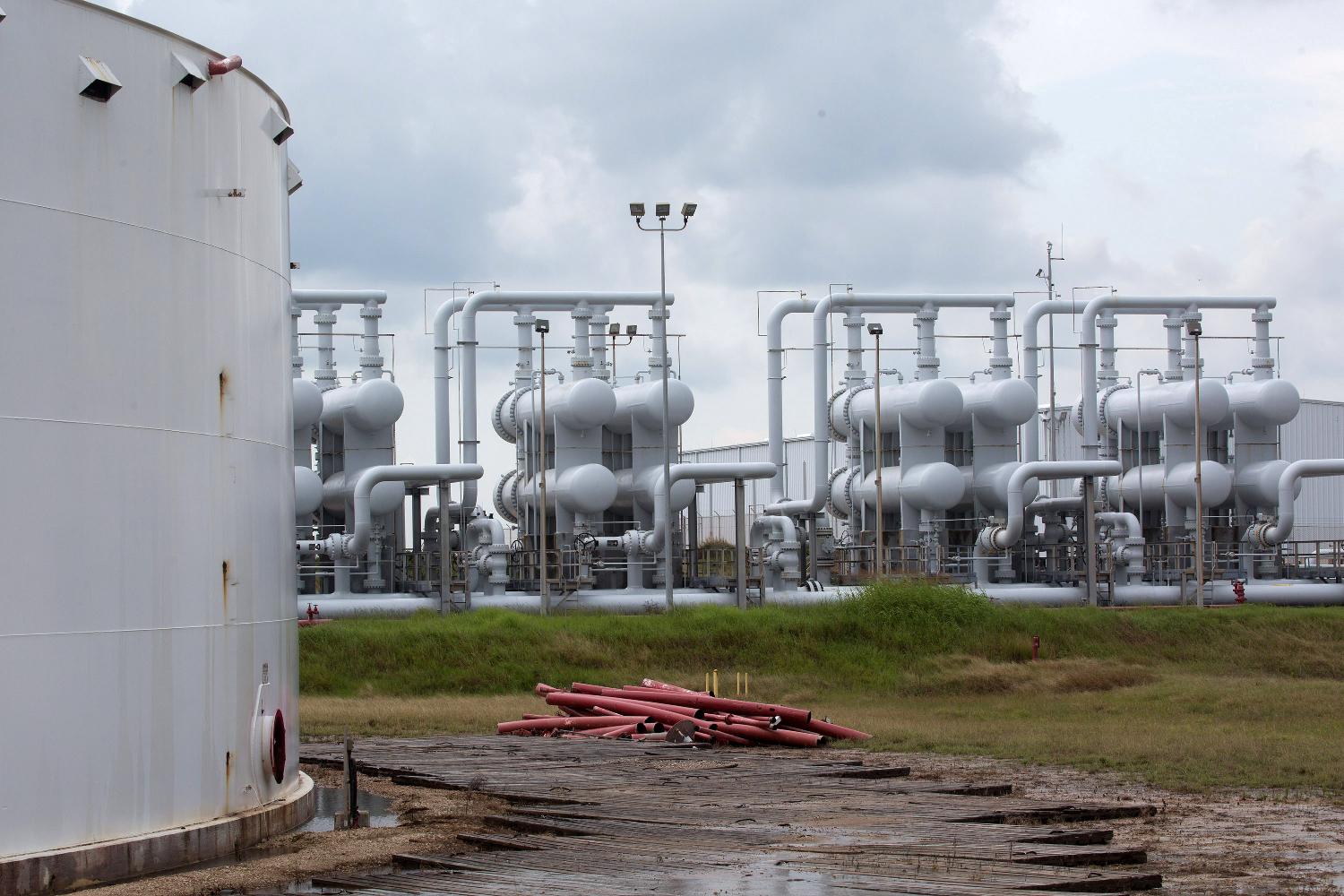
LOS ANGELES, May 6 (Reuters) - The U.S. has sufficient supply of oil in the Strategic Petroleum Reserve to address any supply concerns and is monitoring markets on how to use it, Amos Hochstein, President Joe Biden's energy adviser, said on Monday. The SPR is still near 40-year lows after Biden directed the largest ever sale of 180 million barrels from the reserve after Russia's 2022 invasion of Ukraine. The Biden administration recently stopped buying back oil for the reserve as crude has been trading above the $79 per barrel price it wants to pay to purchase oil. "We have been replenishing into the SPR for the last several months. I think we have sufficient supply in the SPR to address any kind of concern in the economy if we need it," Hochstein said on the sidelines of the Milken Institute Global Conference. "For now I think we'll continue to monitor markets and if we need to use the SPR the president has shown a willingness to use it to support the U.S. economy." Last month the Energy Department said it canceled the purchase of about 3 million barrels of crude for the SPR due to rising oil prices. The SPR currently has about 367 million barrels. The most oil it ever held was nearly 727 million barrels in 2009. Sign up here. https://www.reuters.com/markets/commodities/us-has-sufficient-oil-supply-reserve-address-any-supply-concerns-biden-adviser-2024-05-06/
2024-05-06 21:49
May 7 (Reuters) - A look at the day ahead in Asian markets. Asian markets are rising on the back of a subdued dollar, lower U.S. bond yields and looser financial conditions that the more benign outlook for U.S. interest rates lately has delivered, and Tuesday looks like being another positive day for risk assets. Buying momentum should be strong after another day of solid gains on Wall Street, and the bullishness across local markets is palpable - China opened strongly after last week's holiday, volatility in Japan's currency markets has subsided, and Hong Kong stocks are on their best run in six years. The Hang Seng has now been up 10 days on the trot, gaining a remarkable 15% in the process. It is probably due for a down day but who knows - maybe it has enough juice to test the record 14 consecutive days in the green from January 2018. Inflation data from the Philippines and Taiwan, Japanese service sector PMI, and the latest international foreign exchange reserve holdings from several countries, including China, are all highlights on Tuesday's calendar. The main event, though, is the Reserve Bank of Australia's policy decision. Or, more accurately, the guidance offered by Governor Michele Bullock in her press conference after the bank keeps its cash rate on hold again at 4.35%. That's the expectation of all but one of the 37 economists surveyed in a Reuters poll - the other predicted a quarter point rate cut hopes gradually fade. At the RBA's last meeting in mid-March, policymakers watered down their tightening bias, although Bullock declined to say whether policy has shifted to neutral, saying risks were "finely balanced", and pushed back immediate rate cuts. Since then, U.S. rate cut expectations have receded further, the Australian dollar has recovered some ground, and domestic inflation has not cooled as much as analysts or policymakers had hoped. The consensus view from economists is still for the cash rate to be cut by a quarter point in September, but money markets are leaning the other way and are currently attaching a 50-50 chance of a quarter point hike in September. Elsewhere, official figures are expected to show a pick up in consumer price inflation in the Philippines with the annual rate rising to 4.1% in April from 3.7% in March - not the direction of travel the central bank wants to see. Price pressures in Taiwan, however, are more closely influenced by dynamics in China, where deflation has been more of a threat to the economy recently than hot inflation. China releases its latest official FX reserves figures, which will be closely watched for signs Beijing may be offloading some of its U.S. Treasuries to support the yuan. Total reserves are seen dipping to $3.225 trillion in April from $3.246 trillion in March. Here are key developments that could provide more direction to markets on Tuesday: - Australia central bank policy decision - Japan services PMI (April) - Philippines inflation (April) Sign up here. https://www.reuters.com/markets/asia/global-markets-view-asia-graphic-pix-2024-05-06/