2024-05-02 04:03
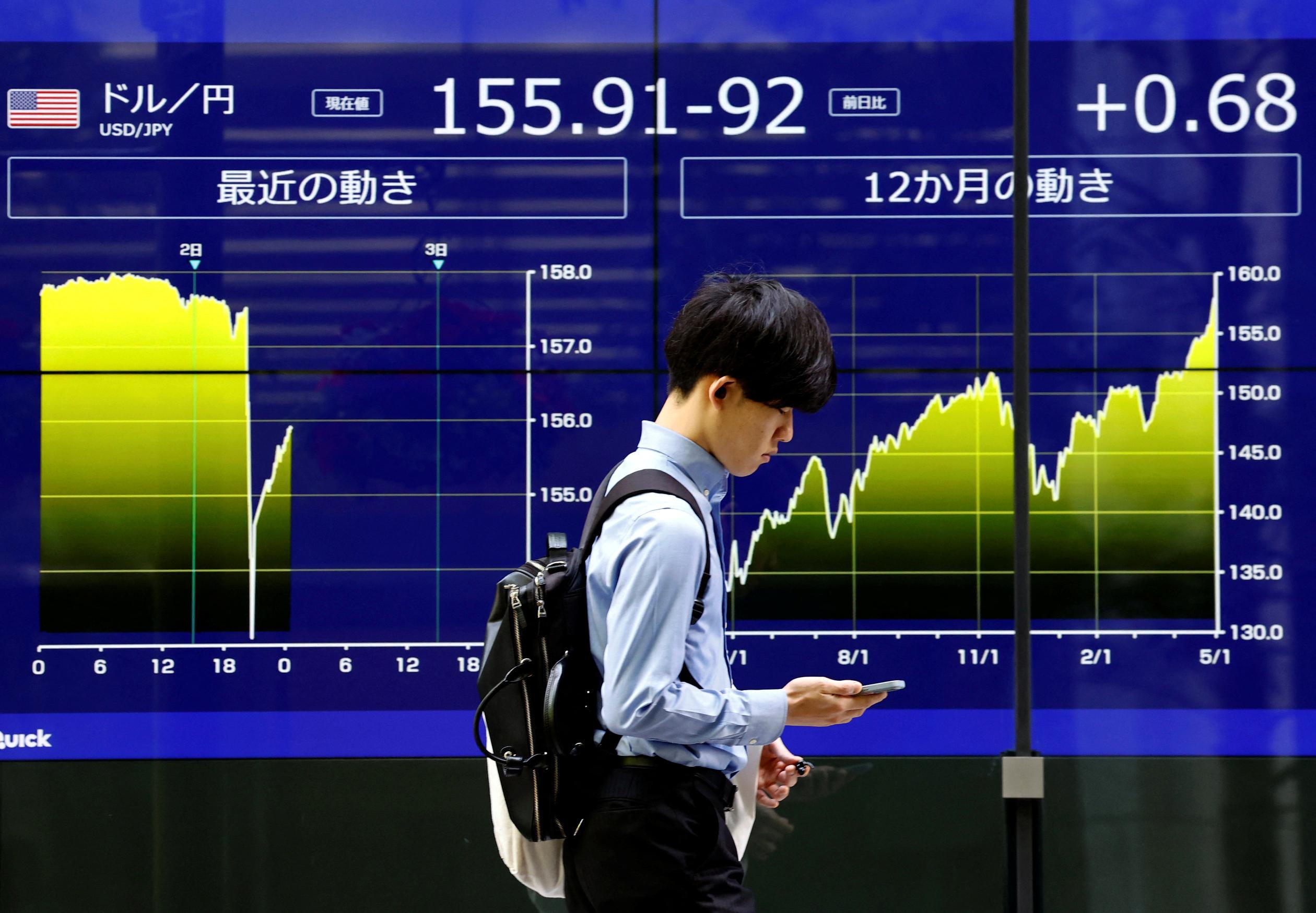
TOKYO, May 2 (Reuters) - Japanese authorities likely intervened in the currency market to signal they see 160 yen to the dollar as their line in the sand, Columbia University academic and former finance ministry executive Takatoshi Ito told Reuters on Thursday. "Intervention is effective if conducted in a timely manner," said Ito, who is an associate of former Bank of Japan Governor Haruhiko Kuroda and retains close contact with current Japanese policymakers. "By hammering speculative moves with intervention, the authorities are trying to generate market expectations that 160 could be the dollar/yen's ceiling," he said. Japanese authorities are suspected of having stepped into the foreign exchange market at least twice this week to prevent sharp and economically debilitating declines in the yen. Ito said the central bank may raise interest rates twice to 0.5% by the end of this year if yen weakness persisted and boosted inflation significantly. "When the yen's decline is proceeding gradually reflecting interest-rate differentials, it's hard to change the trend with currency intervention," Ito said. "If the yen's weakness continues and has a pass-through on inflation, two rate hikes by end-year could become an option for the BOJ," he said. "There's a chance the BOJ could raise rates again this autumn at the earliest," he added. Ito said he "wouldn't be surprised if the BOJ's policy rate heads toward 2% in the medium term", provided the central bank's 2% inflation target is achieved and the economy remains solid. He also pointed out that a weak yen by itself was unlikely to derail the Japanese economy if it stayed at around current levels, as it benefits export-oriented companies. Concerns about the negative impact on consumption could be addressed with consumption-boosting policy measures, he said. Ito served as deputy vice minister for international affairs at Japan's finance ministry from 1999 to 2001. He also served as a private-sector member of the government's top economic council for two years until 2008. ($1 = 156.0200 yen) Sign up here. https://www.reuters.com/markets/currencies/japans-fx-intervention-signals-160-yen-line-sand-says-ex-official-2024-05-02/
2024-05-02 00:48
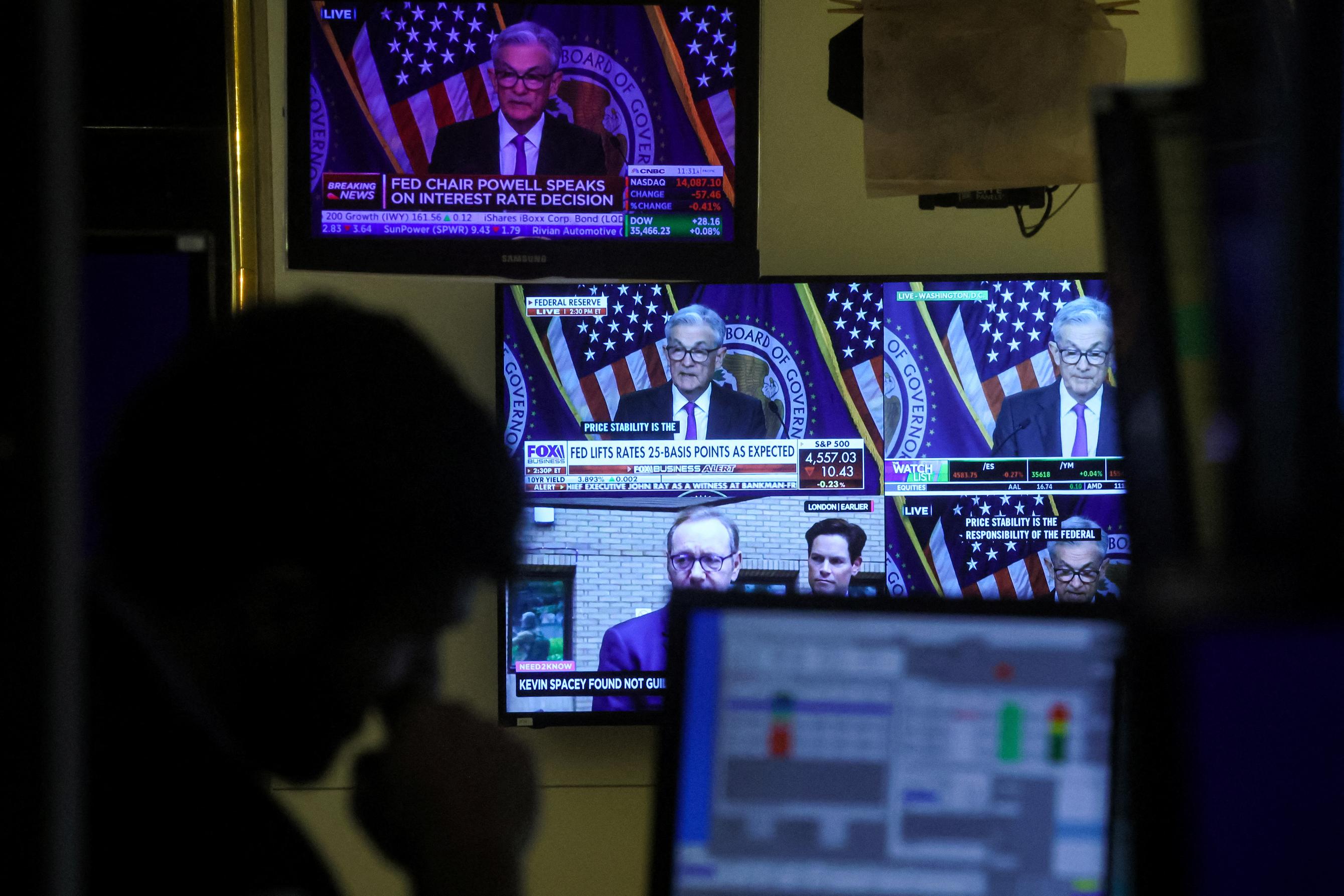
Fed leaves policy rate unchanged as expected Fed Chair Powell: further inflation progress not assured Job openings hit three-year low Indexes: Dow up 0.23%, S&P off 0.34%, Nasdaq down 0.33% NEW YORK, May 1 (Reuters) - U.S. stocks closed mixed on Wednesday after the Federal Reserve left its key interest rate unchanged, as expected, and indicated that while its next move will likely be a rate cut, continued progress on inflation is not assured. The S&P 500 and the Nasdaq ended lower while the Dow Jones Industrial Average notched a modest gain. The Federal Open Markets Committee concluded its two-day monetary policy meeting with a unanimous decision to let the Fed funds target rate stand at 5.25%-5.50%. The accompanying statement left the timing of any rate cut in doubt, and Fed officials underscored their concern that the first months of 2024 have done little to build the confidence they seek in falling inflation. At the subsequent press conference, Fed Chair Jerome Powell suggested that while the central bank remains focused on bringing inflation back to its 2% target, he noted progress toward that goal and dismissed the notion of an imminent rate hike. "Powell didn't rock the boat very much," said Ryan Detrick, chief market strategist at Carson Group in Omaha. "He acknowledged that inflation is still a problem but remained optimistic that it will improve over the coming quarters." "What sparked today's rally was when he said the next move will not be a hike," Detrick added. "He pushed back against that, hard. ... That allowed the bulls to take charge." Powell said the labor market was normalizing, citing data released on Wednesday showing job openings dropping to a three-year low. First-quarter reporting season has breezed passed the halfway point, with 310 of the companies in the S&P 500 index having reported. Of those, 77% posted consensus-beating earnings, according to LSEG. Analysts now expect aggregate first-quarter S&P 500 earnings growth of 6.6% year-on-year, a significant improvement over the 5.1% estimate as of April 1, LSEG data showed. Among individual companies, Advanced Micro Devices (AMD.O) New Tab, opens new tab shed 9.0% after its disappointing artificial intelligence chip sales forecast, while Super Micro Computer (SMCI.O) New Tab, opens new tab slid 14.0% following the company's quarterly revenue miss. The weak results pulled the Philadelphia Semiconductor Index (.SOX) New Tab, opens new tab 3.5% lower. Amazon.com (AMZN.O) New Tab, opens new tab rose 2.2% on better-than-expected quarterly results as interest in AI helped drive cloud-computing growth. Johnson & Johnson (JNJ.N) New Tab, opens new tab advanced 4.6% after it said it will proceed with a proposed $6.48 billion lawsuit settlement over allegations that its baby powder and other talc products cause ovarian cancer. Starbucks (SBUX.O) New Tab, opens new tab tumbled 15.9% after the coffee chain cut its sales forecast as it posted the first drop in same-store sales in nearly three years. CVS Health (CVS.N) New Tab, opens new tab plunged 16.8% after the healthcare company's earnings fell short of consensus and it slashed its annual profit forecast. The Dow Jones Industrial Average (.DJI) New Tab, opens new tab rose 87.37 points, or 0.23%, to 37,903.29, the S&P 500 (.SPX) New Tab, opens new tab lost 17.3 points, or 0.34%, to 5,018.39 and the Nasdaq Composite (.IXIC) New Tab, opens new tab dropped 52.34 points, or 0.33%, to 15,605.48. Of the 11 major sectors in the S&P 500, energy shares (.SPNY) New Tab, opens new tab recorded the largest percentage loss, while utilities (.SPLRCU) New Tab, opens new tab led the gainers. Advancing issues outnumbered decliners on the NYSE by a 1.38-to-1 ratio; on Nasdaq, a 1.50-to-1 ratio favored advancers. The S&P 500 posted 12 new 52-week highs and 10 new lows; the Nasdaq Composite recorded 55 new highs and 105 new lows. Volume on U.S. exchanges was 12.26 billion shares, compared with the 11.08 billion average for the full session over the last 20 trading days. Sign up here. https://www.reuters.com/markets/us/futures-fall-chip-stocks-drag-fed-rate-decision-awaited-2024-05-01/
2024-05-02 00:46
LAUNCESTON, Australia, May 2 (Reuters) - Asia's imports of crude oil slipped slightly in April from March, as increased arrivals in China failed to offset lower purchases elsewhere in the world's top-importing region. April imports were 26.89 million barrels per day (bpd), down from 27.33 million bpd in march and roughly in line with February's 26.68 million bpd, according to data compiled by LSEG Oil Research. For the first four months of the year Asia's crude imports were about 27.03 million bpd, only 300,000 bpd higher than for the same period in 2023, the LSEG data showed. This means that crude oil arrivals in Asia are growing at a pace that is so far well short of the forecast by groups such as the Organization of the Petroleum Exporting Countries (OPEC). OPEC's April oil market outlook forecast that global oil demand will rise by 2.25 million bpd in 2024 from the previous year, with 1.24 million bpd of that coming from non-OECD countries in Asia. China, the world's largest crude importer, is expected by OPEC to see demand increase by 680,000 bpd in 2024. However, using official customs data for the first quarter and LSEG's estimate for April imports, China's crude arrivals for the January-April period were about 27.03 million bpd, which is 290,000 bpd higher than the customs data for the same period last year. It should be noted that there is a difference between crude oil imports and demand growth, as the total demand figure can be met from more than just imports such as domestic production and changes in inventories. Nonetheless, the slower pace of imports in China and the rest of Asia suggest that demand growth is so far nowhere near as strong as the OPEC forecast indicates. It should also be noted that OPEC, and other analysts, expect demand growth to accelerate over the northern summer months and extend into the second half of 2024, largely on the view that China's economy is recovering growth momentum and the rest of the world is emerging from its inflation-linked slowdown. The International Energy Agency (IEA) has a more modest target for global oil demand growth, with its April report estimating 1.2 million bpd for 2024. The IEA's forecast for China's oil demand growth is 500,000 bpd for 2024, meaning it is also significantly above the current growth rate in China's imports. PRICE IMPACT The question then becomes are China's crude imports likely to increase in coming months, and the answer likely depends on movements in crude prices as much as it may on China's improving economy. China's recent pattern of crude imports has been that they increase when oil prices soften and ease back when they increase, allowing for a lag of around two months to account for when cargoes are arranged and physically delivered. This means that much of the oil that was offloaded in the first four months of the year was bought when crude prices were still soft. Global benchmark Brent futures hit a six-month low of $72.29 on Dec. 13, and then recovered to trade in a range around $80 for much of the first quarter. Rising geopolitical tensions and extended output cuts by the OPEC+ group, which includes OPEC and allies such as Russia, led Brent higher from mid-March onwards, with the contract peaking at $92.18 on April 12. This means the impact of the price spike from mid-March onwards has yet to show up in China's import figures, and it will likely only be a factor from May onwards. What happens to China's imports in May, June and July will go some way towards answering the question as to whether China's economic recovery is strong enough to ameliorate the impact of higher oil prices. The opinions expressed here are those of the author, a columnist for Reuters. Sign up here. https://www.reuters.com/markets/commodities/asias-crude-oil-imports-slip-april-trail-opec-forecasts-russell-2024-05-02/

2024-05-02 00:29
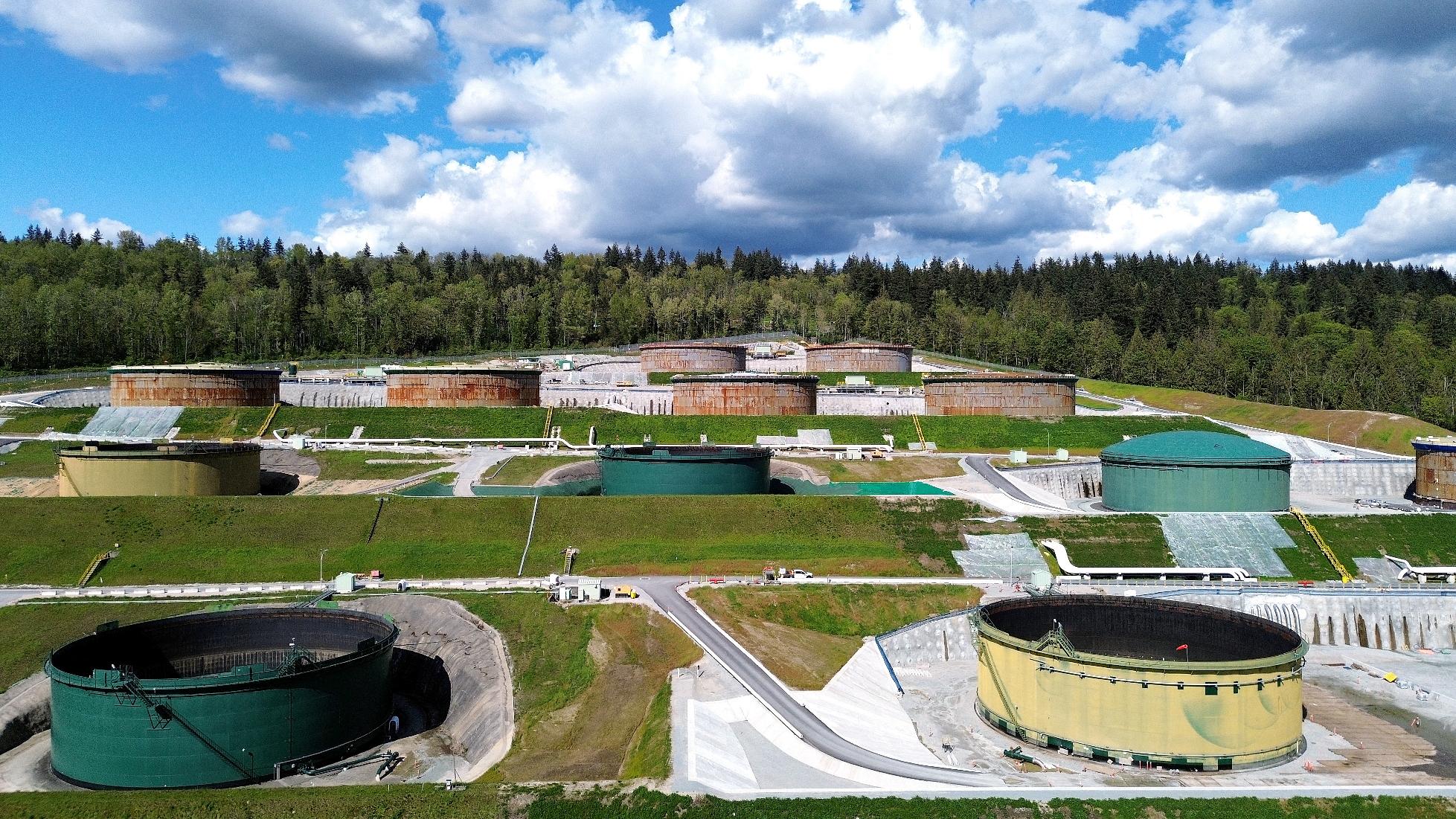
May 1 (Reuters) - After 12 years and C$34 billion ($25 billion), Canada's Trans Mountain pipeline expansion project (TMX) began commercial operations on Wednesday, a major milestone expected to transform access to global markets for the country's producers. Pipeline constraints have forced Canadian oil producers to sell oil at a discount for many years, but TMX will nearly triple the flow of crude from landlocked Alberta to Canada's Pacific coast to 890,000 barrels per day (bpd). For Canada, the world's fourth-biggest oil producer, the additional pipeline capacity is set to boost crude prices, lift national gross domestic product and expand access to Asian oil markets. Both TMX and the existing pipeline are now able to transport crude oil and the company has the ability to load cargoes from all three berths, Trans Mountain said in a press release, adding that 70% of the expanded pipeline is full by volume. "Everyone has been waiting for this for literally years," said Rory Johnston, founder of the Commodity Context newsletter. "It's a fantastic thing for Canada and the Alberta oil patch." The expanded pipeline was first proposed by Kinder Morgan (KMI.N) New Tab, opens new tab in 2012. The Canadian government bought it in 2018 to ensure the project got built despite opposition, but construction has been marred by regulatory delays and costs soaring to more than four times the project's original budget. "It is increasingly difficult to build pipelines in this country and it wouldn't surprise me if this was the last pipeline," Jon McKenzie, CEO of oil producer and TMX shipper Cenovus Energy (CVE.TO) New Tab, opens new tab, said on an earnings call. The Canada Energy Regulator (CER) granted the final permits for the expansion project on Tuesday, clearing the way for the pipeline to start operating. Trans Mountain Corp said May 1 marks the commercial commencement date for the project, and tankers will be able to load at Westridge Marine Terminal in the Port of Vancouver by mid-May. EXPORT OPTIONS TMX will substantially boost Canada's oil export capacity and could help shrink the discount on benchmark Canadian heavy crude, currently around $13.50 a barrel below U.S. crude, to less than $10 a barrel, analysts at RBC Capital Markets said in a note to clients. Asian buyers are already showing interest. Reliance Industries (RELI.NS) New Tab, opens new tab bought 2 million barrels of Canadian crude from Shell for July delivery, marking the Indian refiner's first oil purchase from TMX, Reuters reported. For Ottawa, the project's completion comes as a relief. Prime Minister Justin Trudeau's Liberal government was slammed by environmental campaigners for buying the pipeline in the first place, and has drawn sharp criticism during construction for spiralling costs. Green groups worry about the pipeline's potential to leak in pristine areas and its expansion of carbon-intensive oil sands crude. Climate activists warn increasing oil and gas production risks hamstringing Canada's efforts to cut carbon emissions. "Trudeau made the decision to purchase this gift for the fossil fuel industry, but it’s these communities and ecosystems that will pay the price when the Trans Mountain pipeline inevitably spills," said Peter McCartney, climate campaigner at the Wilderness Committee environmental group. The federal government wants to sell at least part of Trans Mountain to Indigenous groups, but is expected to have to take a major haircut on its investment. "The Trans Mountain Expansion Project will ensure Canada receives fair market value for our resources while maintaining the highest environmental standards," said Katherine Cuplinskas, press secretary to Deputy Prime Minister Chrystia Freeland. "The federal government will launch a divestment process in due course." Canadian oil production is forecast to hit a record high of around 5.3 million bpd this year, according to TD Securities, as producers ramp up output in anticipation of TMX's new capacity. Two traders in Calgary said oil inventories in Alberta are brimming at record levels of 42 million barrels, but expected to draw down reasonably quickly once the expanded pipeline starts flowing. "The completion of TMX is monumental for Alberta, since this will significantly increase our province's output," Alberta premier Danielle Smith said in a statement on Tuesday. Conservative premier Smith is a frequent critic of Trudeau's Liberals but thanked the federal government for seeing the project through, and said stronger Canadian crude prices would result in many millions of dollars extra in government revenues. "This is a game changer for Alberta," she said. ($1 = 1.3778 Canadian dollars) Sign up here. https://www.reuters.com/business/energy/canadas-long-delayed-trans-mountain-oil-pipeline-set-start-operations-2024-05-01/
2024-05-02 00:23
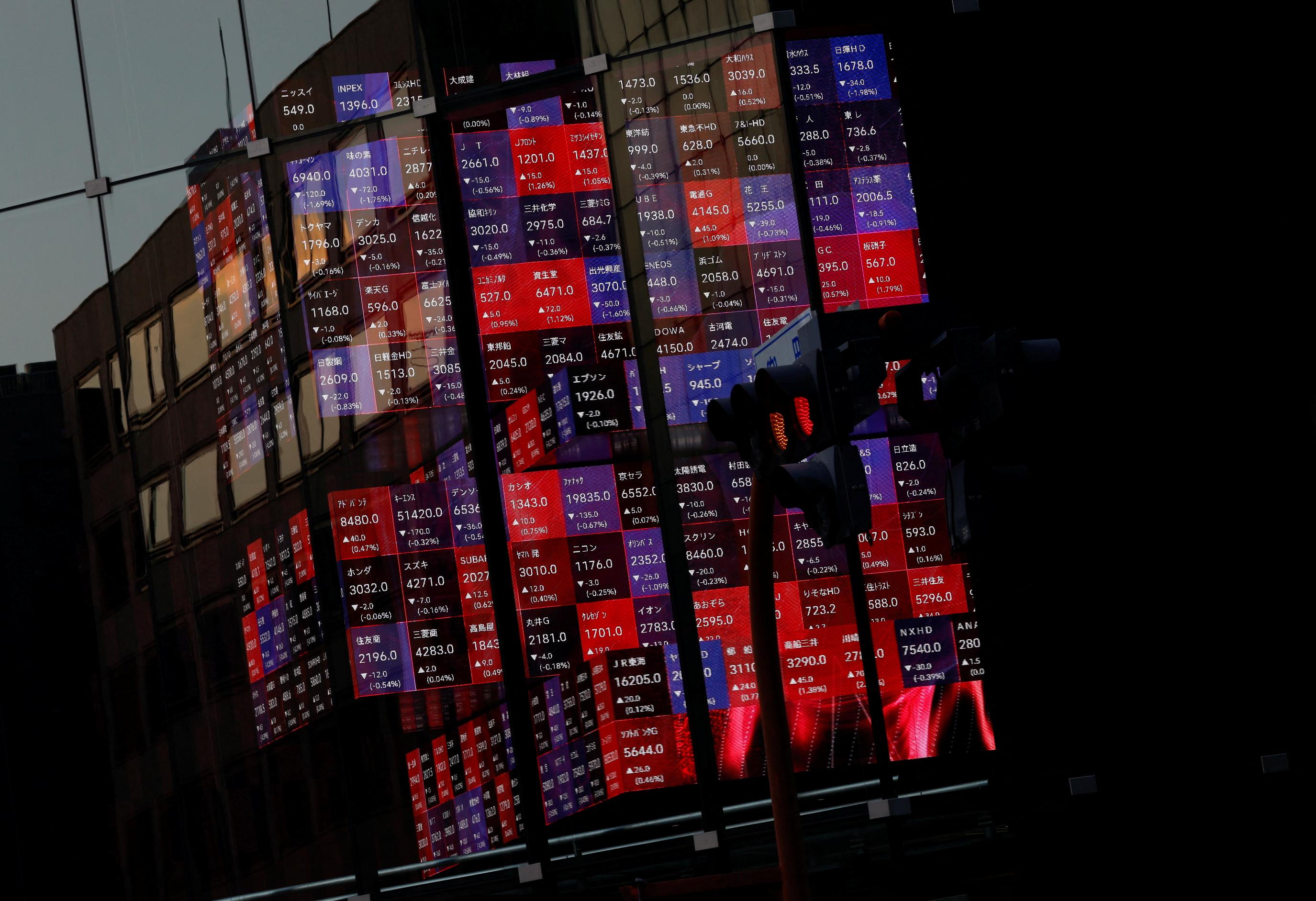
World stocks rise after Fed, data Dollar weaker vs yen but off lows NEW YORK, May 2 (Reuters) - A gauge of global stocks climbed on Thursday after the Federal Reserve indicated it was leaning toward a dovish stance, while the dollar retreated against the yen after another suspected round of intervention by the Bank of Japan. On Wall Street, U.S. stocks closed with solid gains, after Fed Chair Jerome Powell said that while recent inflation readings mean it will likely take longer than expected for central bank officials to become comfortable that inflation will resume its decline, interest rate increases also remained unlikely. Markets have consistently scaled back the timing and amount of rate cuts this year from the Fed as inflation has proved to be sticky and the labor market remains on solid footing. After expecting the first cut to come by March at the start of the year, markets now see a better than 60% chance the Fed will cut by at least 25 basis points in September, according to CME's FedWatch Tool New Tab, opens new tab. The U.S. central bank also said it would slow the speed of its balance sheet drawdown starting on June 1 to ensure this process does not create undue stress in financial markets. U.S. economic data also showed the labor market remains tight, ahead of key government payrolls data due on Friday, while other data indicated worker productivity was subdued in the first quarter. "He is not intending to put a hike back on the table and the market has already kind of absorbed the idea that it's going to be higher for longer, the key is how much higher for longer and that's tomorrow's report," said Rob Haworth, senior investment strategist at U.S. Bank Wealth Management in Seattle. "Jobless claims at 208,000 today help affirm that, but the labor market report tomorrow will be the big one and affirm the Fed's view of how strong is strong." Tech shares (.SPLRCT) New Tab, opens new tab and consumer discretionary (.SPLRCD) New Tab, opens new tab led sector gains, closing up roughly 1.6%, as Qualcomm (QCOM.O) New Tab, opens new tab surged about 10% following its quarterly results while Amazon (AMZN.O) New Tab, opens new tab advanced 3.2%. After the close, Apple reported a smaller than expected decline in quarterly revenue, and Chief Executive Tim Cook told Reuters the company expects a return to sales growth in the current quarter. Of the 373 companies in the S&P 500 that reported earnings through Thursday morning, 77.2% have topped analyst expectations, according to LSEG data, above the 67% beat rate since 1994 but slightly below the 79% over the past four quarters. The Dow Jones Industrial Average (.DJI) New Tab, opens new tab rose 322.37 points, or 0.85%, to 38,225.66; the S&P 500 (.SPX) New Tab, opens new tab gained 45.81 points, or 0.91%, to 5,064.20; and the Nasdaq Composite (.IXIC) New Tab, opens new tab gained 235.48 points, or 1.51%, to 15,840.96. MSCI's gauge of stocks across the globe (.MIWD00000PUS) New Tab, opens new tab rose 7.17 points, or 0.95%, to 761.44, on pace for its biggest daily percentage gain since April 23, while Europe's broad FTSEurofirst 300 index (.FTEU3) New Tab, opens new tab closed down 4.50 points, or 0.23%. Shares in Europe ended slightly lower after touching a one-week low earlier in the session, as investors returned from a midweek holiday and digested the Fed's announcement and a host of earnings reports. The Japanese yen also remained in focus, as another round of intervention in the currency was suspected shortly after Powell had finished speaking, the second such event this week. Against the Japanese yen , the dollar weakened 0.78% to 153.26. after falling as low as 153.07 on the session. The dollar index , which measures the greenback against a basket of six major currencies, fell 0.35% to 105.34, with the euro up 0.15% at $1.0725. Sterling strengthened 0.06% to $1.2534. U.S. Treasury yields were choppy in the wake of the Fed and economic data, as the yield on benchmark U.S. 10-year notes fell 0.8 basis point to 4.583%, from 4.591% late on Wednesday. The 2-year note yield, which typically moves in step with interest rate expectations, fell 5.2 basis points to 4.8872%, from 4.939%. Oil prices were little changed after a slump to a seven-week low, losing some ground after the U.S. labor market data. U.S. crude settled down 0.06% at $78.95 a barrel and Brent settled at $83.67 per barrel, up 0.28% on the day. Sign up here. https://www.reuters.com/markets/global-markets-wrapup-1pix-2024-05-02/
2024-05-01 23:33
NEW YORK, May 1 (Reuters) - The looming U.S. presidential election will not influence the Federal Reserve's interest rate decisions, Fed Chair Jerome Powell said on Wednesday, adding that policymakers were "at peace" with keeping political considerations out of their decision-making process. Powell, speaking in a news conference after the end of the U.S. central bank's latest policy meeting, said Fed policy decisions will be guided by "what we think the right thing for the economy is," repeating a long-held stance of ignoring politics in the central bank's economic analysis. "If you go down the road, where do you stop? And so we're not on that road," Powell said. "We're on the road where we're serving all the American people, and making our decisions based on the data and how those data affect the outlook and the balance of risks. The issue of the Fed's independence jumped back into the spotlight last week when the Wall Street Journal reported that allies of former President Donald Trump are drafting proposals that would attempt to erode the central bank's independence and give Trump more influence over the Fed if he wins the Nov. 5 election. Trump, who nominated Powell to be Fed chief in late 2017, unleashed withering verbal attacks on the Fed for raising rates in 2018, calling its policymakers "boneheads" and "loco" and threatening to fire or demote Powell on multiple occasions. But the controversy was not mentioned in the Fed's 2018 meeting transcripts, which were released earlier this year. Powell said that Fed meeting transcripts also show no evidence that officials have allowed the pending election to affect their policy choices. When it comes to the election, "we're at peace over it, we know that we'll do what we think is the right thing, when we think it's the right thing" Powell told reporters. U.S. Treasury Secretary Janet Yellen, who preceded Powell as Fed chief, also put in a plug for the central bank's independence on Wednesday, releasing excerpts of a speech she will deliver on Friday in the battleground state of Arizona in which she warns that the erosion of democratic institutions would hurt U.S. economic growth and prosperity. "As Chair of the Federal Reserve, I insisted on the Fed’s independence and transparency because I believe it matters for financial stability and economic growth," Yellen will say, according to the excerpts. "Recent research has been consistent with my belief: It has shown that greater central bank independence is associated with greater price stability, which contributes significantly to long-term growth." Sign up here. https://www.reuters.com/markets/us/feds-powell-says-looming-election-wont-sway-rate-decisions-2024-05-01/