2024-05-01 10:59
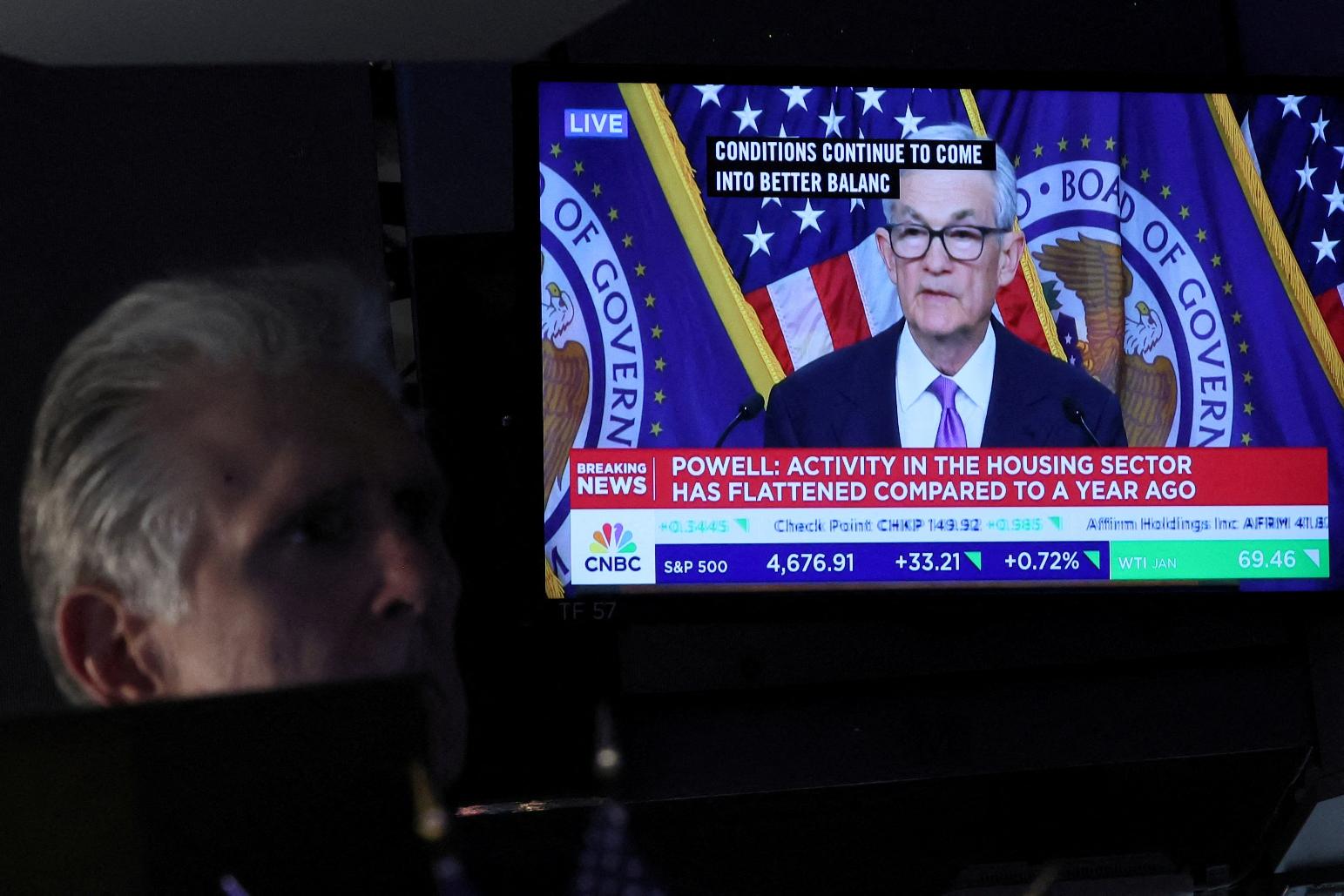
NEW YORK, April 30 (Reuters) - Bond investors are selectively adding longer-dated maturities to their portfolios on bets the Federal Reserve will delay cutting interest rates and reduce them at a slower pace than in previous easing cycles, starting with a decision to stand pat on rates at this week's policy meeting. Some portfolio managers taking this view are particularly focusing on intermediate Treasury maturities, such as five-year notes for juicier returns. Longer-duration Treasuries tend to outperform shorter-dated ones in a rate-cutting cycle as U.S. yields fall. With U.S. inflation stubbornly persistent and the labor market still robust, the Fed is widely expected to hold interest rates steady in the 5.25%-5.50% range at the end of its two-day meeting on Wednesday. Fed Chair Jerome Powell is likely to sound cautiously hawkish on the economic outlook, reinforcing expectations that the first rate cut will be delayed to either September or December. For 2024, U.S. rate futures traders are pricing just one 25 basis point rate cut, more likely in December . "We have been in the shallow easing cycle camp for some time. There are structural factors in the economy that's going to keep inflation above the 2% target more often," said Matt Eagan, portfolio manager and co-head of the Full Discretion Team, at Loomis, Sayles & Company in Boston. He said investors need to be compensated for inflation seen averaging between 2%-2.5% and an inflation-adjusted rate that is roughly 2% on the long end. Marcelo Carvalho, global head of economics at BNP Paribas in London said inflation globally has become more ingrained due to higher public sector investment spending. "Inflation we think probably settles down on average at higher levels in the coming years than before...where we got used to long periods of low inflation and low rates," Carvalho said. GO FOR THE BELLY The best way to play this scenario is to focus on buying the "belly" of the curve, such as five-year notes, which could provide the best bang for your buck, Loomis Sayles' Eagan said. This bet is predicated on the fact that with inflation staying above 2%, the Fed's neutral rate, a level at which policy rates are considered not too easy or too tight, will also be higher. The Fed's neutral rate is currently at 2.6%. But bond investors such as Loomis Sayles have penciled in a neutral rate of anywhere between 3.5% to 4% which means the Fed won't be cutting as much. With a higher neutral rate, there's a floor under Treasury yields, analysts say, particularly for 10-year notes, which are typically bought by investors when the Fed starts cutting rates. With the 10-year yield's fair value seen at 4.5%, and currently trading at 4.66%, market participants said there's not much scope for the 10-year yield to fall and therefore returns could be limited. "Once the Fed starts to cut rates, all that rate decline is going to happen on the front end of the curve and the long-end will have much less scope to come down," Eagan said. In previous U.S. rate-cutting cycles in which the economy saw structurally declining growth and inflation, the policy rate would often fall by several percentage points, analysts said. Once the Fed began to ease, it tended to slash rates aggressively, and investors bought longer-dated Treasuries - the 10s and 30s - to take advantage of the more attractive returns as their yields sank. Clayton Triick, head of portfolio management, Public Strategies, at Angel Oak Capital Advisors in Atlanta, said going back down to a 1.5% to 2.5% fed funds rate would not be reasonable anymore, citing the undeniable backdrop of higher inflation. He sees a neutral rate of between 3.5% and 4.5%. In such an environment, he said there is value in owning, not the long, long end like the 10s and 30s, but fixed-income assets with two- to five-year maturities, echoing Loomis Sayles' strategy. "It's very difficult for us to really predict where the long end will go especially given the path of fiscal policy in the United States," said Triick. "We do not see big changes happening on the fiscal front and so that could mean higher risk premiums, higher term premiums in the yield curve." Sign up here. https://www.reuters.com/markets/us/bracing-shallow-fed-easing-bond-investors-take-middle-curve-road-2024-04-30/
2024-05-01 10:50
NEW DELHI, May 1 (Reuters) - Eastern India experienced its hottest April on record as a heatwave scorched parts of the country amid a general election, killing at least nine people, and the weather office on Wednesday forecast above normal temperatures for May too. Searing heat has been cited by political analysts as one of the reasons for low voter turnout in the seven-phase parliamentary election that began on April 19, with results due on June 4. Heatwave conditions are, however, forecast to abate gradually in the coming days. The mean temperature in eastern India was 28.12 Celsius (82.61 Fahrenheit) in April, the warmest since records began in 1901, with experts blaming a combination of factors. "In an El Nino year, you get more heating," said Mrutyunjay Mohapatra, chief of the India Meteorological Department, referring to a climate pattern that typically leads to hot and dry weather in Asia and heavier rains in parts of the Americas. He said fewer thunderstorms and an anti-cyclonic circulation near India's southeastern coast were causing heatwaves. "Wind blows from land towards the sea during an anti-cyclone ..., so land becomes warmer and temperature rises." In April, the eastern Indian state of West Bengal recorded the most number of heatwave days for the month in the last 15 years, followed by the neighbouring coastal state of Odisha where heat conditions were the worst in nine years. Authorities have also declared a rare heatwave in the southwestern coastal state of Kerala, where at least two deaths have been recorded due to soaring temperatures. Central and northwestern India, which includes major wheat producing states that typically witness heatwaves this time of the year, have been largely spared due to intermittent thundershowers last month, Mohapatra said. The weather office said rainfall in May is likely to be normal and that it expects more showers during the second half of the monsoon season in August and September as compared to June and July due to the La Nina climate pattern, which typically brings higher rainfall to India. Monsoon is the lifeblood of India's economy, delivering 70% of the rain needed to water crops and recharge reservoirs, and the met department has predicted that India will receive above normal monsoon rainfall in 2024. Sign up here. https://www.reuters.com/world/india/india-likely-see-above-normal-maximum-temperatures-may-weather-office-says-2024-05-01/

2024-05-01 10:35
TOKYO, May 1 (Reuters) - Japan's Mitsui (8031.T) New Tab, opens new tab expects net profit to fall 15.4% to 900 billion yen ($5.7 billion) for the fiscal year ending in March 2025, hit by weaker performance of its energy business, the trading house said on Wednesday. The company plans to buy back up to 40 million of its shares worth up to 200 billion yen by Sept. 20 to boost shareholders' returns. It posted a drop of 6% in net profit for the year ended in March to 1.1 trillion yen, on lower prices of metallurgical coal, crude oil and gas but outperformed an LSEG poll of analysts that forecast net profit of 973 billion yen. According to the company's three-year business plan announced in May 2023, net profit is expected at 920 billion yen in the fiscal year ending in March 2026. "Smaller one-off gains is the main reason for the profit decline for the current year," Mitsui CEO Kenichi Hori told a press conference. Under the three-year plan, Mitsui is set to spend 1.8 trillion yen in growth segments, including 600 billion in energy transition such as natural gas, next-generation fuels and decarbonisation. "We want to have a geographically-diversified LNG (liquefied natural gas) portfolio and complete promising LNG projects one by one so that our Japanese customers can diversify their procurement," Hori said. Hori did not elaborate on the company's future plan for the Arctic LNG 2 project in Russia in which Mitsui owns a stake, but said the trading house would respond carefully while consulting with the Japanese government and other relevant parties. Mitsui also said it has sold its stake in Indonesia's PT Paiton Energy, which operates coal power plants, to a unit of Thai energy firm Ratch group PCL (RATCH.BK) New Tab, opens new tab and a unit of unlisted PT Medco Daya Abadi Lestari, and will book a profit of 44 billion yen in the April-June quarter. After the sale, the net capacity of Mitsui's power generation assets will be 9.6 gigawatts, of which coal-fired power generation will account for 8%, down from 16% as of March 2024. ($1=157.8600 yen) Sign up here. https://www.reuters.com/business/japans-mitsui-sees-net-profit-falling-15-weaker-energy-business-2024-05-01/

2024-05-01 10:27
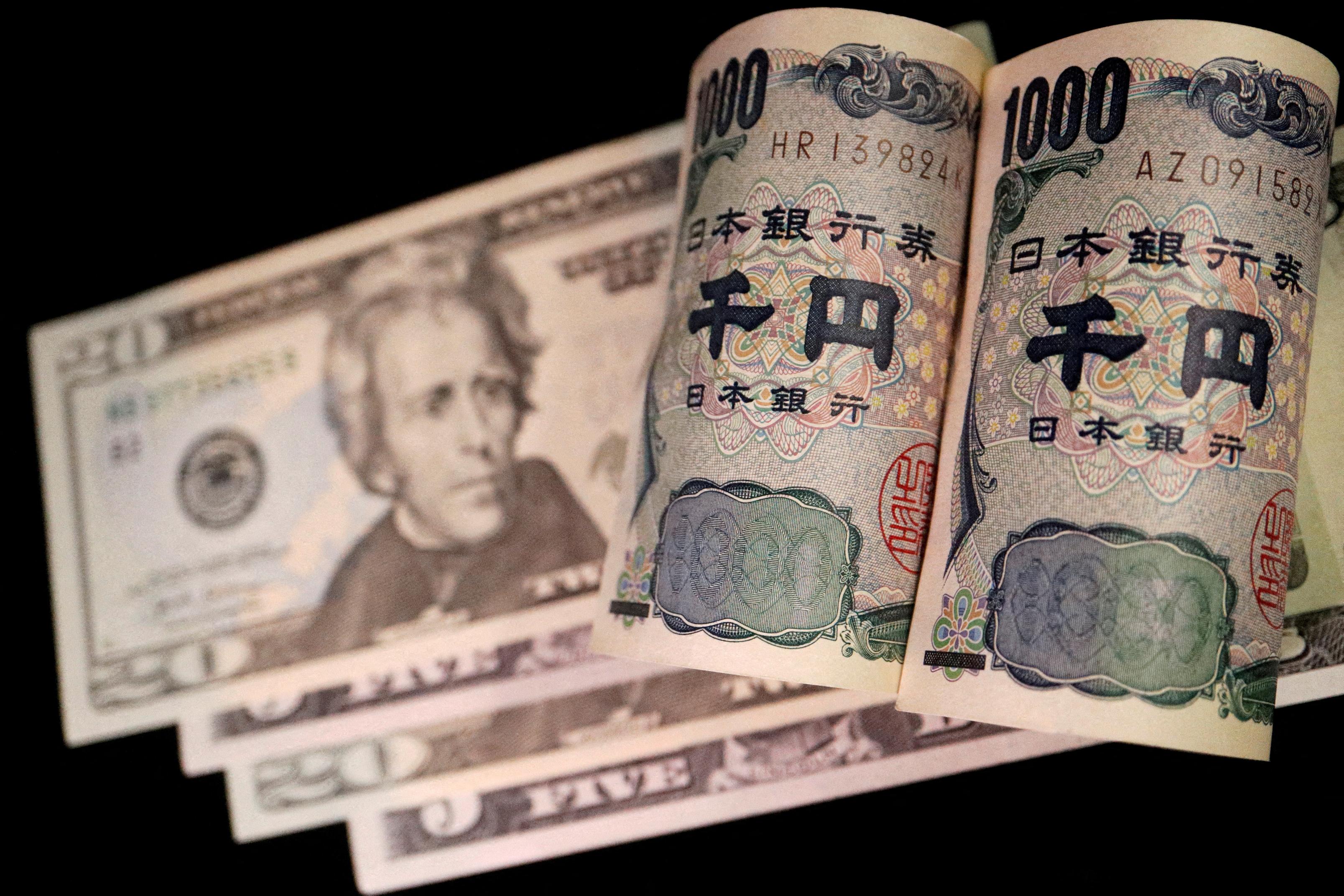
TOKYO, May 1 (Reuters) - Corporate Japan is starting to wonder if the weak yen has become too much of a good thing. The currency fell to a 34-year low on Monday and has lost about a quarter of its value against the surging U.S. dollar in a little more than two years. Typically, a weak yen is seen as a boon for Japan Inc, as it makes cars and other goods cheaper overseas and lifts profits when earnings from abroad are brought home. But it has also pushed up costs of raw materials, food and fuel, battering sectors from farmers who import fertilisers to small manufacturers which rely on parts from China. The biggest squeeze has been for households, which for years have seen little wage growth. Their plight -- and that of Japan's legions of struggling small businesses -- may say more about the state of the country's still-limping economy than the windfall for exporters such as Toyota Motor (7203.T) New Tab, opens new tab or the stock market's climb to a record high. Smaller firms employ seven out of 10 workers in Japan, and have less ability to pass on rising costs by raising their selling prices in a competitive market. "The yen is a little too weak," the chairman of the powerful Keidanren business lobby, Masakazu Tokura, told a regular press conference last week, days before Monday's sell-off briefly pushed the currency past 160 to the dollar. Current currency levels beyond 150 to the dollar did not represent the "true strength of Japan's economy" he said. Japanese authorities likely intervened in the market to put a floor under the yen on Monday, traders said, a supposition borne out by Bank of Japan data a day later, but it is expected to remain weak as long as the U.S. Federal Reserve keeps interest rates high. The yen was around 157.91 to the dollar on Wednesday. A more "comfortable" level would be 125 to the dollar, Koji Shibata, the head of ANA Holdings (9202.T) New Tab, opens new tab, which runs Japan's top airline, recently told reporters. While airlines enjoy a surge of inbound tourists drawn by the weak yen, more Japanese now baulk at going abroad. "The currency is handicap for those who want to travel overseas. The higher costs abroad are a big turn-off," Shibata said. Rival Japan Airlines (9201.T) New Tab, opens new tab may need to raise prices, mainly on international routes, if surcharges and currency hedging aren't enough to offset escalating fuel costs that stem from a weaker yen, President Mitsuko Tottori recently told a media roundtable. An exchange rate of around 130 to the dollar would be better for the airline, she said. 'NO MERIT' If seen as a proxy for the strength of the broader economy, then the yen presents a worrying view, a point that's repeatedly made by Tadashi Yanai, Japan's richest man and the founder of Fast Retailing (9983.T) New Tab, opens new tab, the parent company of the Uniqlo clothing chain. Yanai has said the weak yen has "no merit" for a country that imports raw materials from all over the world, and processes and adds value to them before selling. He has stuck to that stance even as the currency has boosted Uniqlo's overseas earnings. The retailer has a substantial overseas business, with China its biggest foreign market. Excessive weakening in the yen could have an impact on the Japanese economy, Tokyo Gas (9531.T) New Tab, opens new tab Chief Financial Officer Taku Minami told a press conference last week. That in turn could have an effect on the utility's business, he said. Managers also say that regardless of the boost to profits, the currency's volatility makes it more difficult to plans for the future. "Depreciation does provide some benefit for us to be candid, but longer term it does increase the instability in our supply chain, in the business environment itself," Eric Johnson, the chief executive of chip materials maker JSR told a press conference on Tuesday. "As most business leaders, I think what's most important is we look for stability and predictability." CONSERVATIVE FORECASTS Japanese automakers have long been known for sticking to conservative currency forecasts. "Given the unpredictability of forex rates, there is a natural tendency to want to avoid being overly bullish in forecasts, and be embarrassed later," said Christopher Richter, senior Japan autos analyst at brokerage CLSA. "If you go back historically, this is almost always the way." Toyota had estimated a rate of 143 yen to the dollar in the financial year just ended. It is due to release full-year earnings next week. Since a 1-yen change against the dollar means a difference of 50 billion yen ($317 million) in profit for Toyota, taking a conservative view is more prudent, said Koji Endo, head of equity research at SBI Securities, adding that most automakers have set their forecasts at around 140-145 yen to the dollar. For years Japanese manufacturers have been building up overseas operations, which has helped offset some of the yen's impact. The weak yen is unlikely to dissuade automakers from investing more in overseas markets, Endo said. "It is not the currency rate, but changes in another country's regulations, or political situation, that may cause a change" in investment, he said. "The exchange rate has little to do with it." ($1 = 157.9300 yen) Sign up here. https://www.reuters.com/markets/currencies/japan-inc-weak-yen-may-be-too-much-good-thing-2024-05-01/
2024-05-01 10:18
May 1 (Reuters) - Industrial materials maker DuPont de Nemours (DD.N) New Tab, opens new tab beat Wall Street estimates for first-quarter profit and raised its full-year forecasts on Wednesday, as it benefited from higher sales in its electronics and semiconductors segment. Chemicals companies had resorted to cost cuts and destocking last year due to low demand in key markets. But the overall manufacturing output is now improving. The United States reported an increase in output in February and March, while China and South Korea also saw some recovery even as factory activity in many Asian economies weakened in March. "Channel inventory destocking within our industrial-based businesses has bottomed and assumed recovery timing is on track with our previous expectations," DuPont chief executive officer Ed Breen said. DuPont raised its adjusted earnings per share between $3.45 and $3.75 from $3.25 to $3.65 it had previously forecast. It also estimates sales to rise to $12.10 billion to $12.40 billion from its prior target of $11.90 billion to $12.30 billion. "Year over year sales and earnings growth assumed in the second half of 2024 is expected to be driven by further electronics market recovery and a return to volume growth in its water and protections unit," said Lori Koch, chief financial officer of DuPont. The company's electronics and industrial unit, the biggest segment in terms of revenue, saw a 5% rise in net sales to $1.37 billion, Analysts had expected $1.32 billion, according to LSEG data. The company's adjusted profit was 79 cents per share, above analysts' average estimate of 65 cents. DuPont expects second-quarter sales of $3.03 billion and adjusted profit of 84 cents. Analysts were expecting earnings of 78 cents for the period, with sales to be in line. Sign up here. https://www.reuters.com/business/dupont-beats-profit-estimates-raises-full-year-forecasts-2024-05-01/
2024-05-01 10:05
A look at the day ahead in U.S. and global markets from Mike Dolan May Day for Wall Street comes with the daunting prospect that the multiple interest rate cuts once expected from the Federal Reserve this year might now just be just one - if any. Facing another $1.1 trillion in new Treasury debt sales over the coming two quarters, Tuesday's jarring news that U.S. employment cost growth accelerated during the first three months of the year was the latest blow to bond markets already struggling with a hawkish Fed. With Wednesday's Fed decision unlikely to offer much encouragement on rates, futures markets have reduced 2024 easing expectations to just 27 basis points (bps). A quarter-point cut is now not fully priced until the Dec. 18 central bank meeting - well after November's election. Two-year Treasury yields topped 5% again on Tuesday to hit their highest for the year - barely 32 bps below the current Fed policy rate - and 10-year yields crept back above 4.7%. And exchange-traded funds capturing longer-term Treasury bonds (TLT.O) New Tab, opens new tab are clocking losses of more than 10% for the first four months of the year. With Japan's ailing yen still on the back foot despite Monday's official intervention to support it and Switzerland's sliding franc leading the way in Europe, the dollar index (.DXY) New Tab, opens new tab is stalking six-month highs. Bitcoin plummeted to its lowest in more than two months. Navigating this week's torrent of corporate earnings reports alongside the rates markets rumble, Wall St stocks (.SPX) New Tab, opens new tab recorded their worst day since January, with both the S&P500 and Nasdaq (.IXIC) New Tab, opens new tab clocking monthly losses of more than 4%. And stock futures remain in the red first thing - with even megacap Amazon's (AMZN.O) New Tab, opens new tab earnings beat after the bell on Tuesday doing little to lift the broader mood even as its shares rose in out-of-hours trading. And adding to the gloom was an miss from one of the past year's artificial intelligence darlings, Super Micro Computers (SMCI.O) New Tab, opens new tab, sending its stock down 14% after the bell. AMD's (AMD.O) New Tab, opens new tab AI chip sales forecast also underwhelmed and its shares fell 7% too. All too negative? Some suggest month-end trading on Tuesday and market holidays across much of Asia and continental Europe on Wednesday may have exaggerated the moves. But it's hard to escape the discomfort in the bond market. Possible straws in the wind for inflation-anxious Treasuries include a retreat in U.S. crude oil prices to their lowest in more than a month amid Gaza ceasefire hopes and Tuesday's weakening U.S. consumer confidence readings for April. FOCUS ON POWELL What's more, the employment cost hit for the first quarter may yet be trumped by this week's series of April labor market updates - starting with ADP's private sector payrolls update later today and culminating in the full national employment report on Friday. March job openings data are also due on Wednesday. And while the Fed is unlikely to sound dovish on the policy rate outlook at Chair Jerome Powell's press conference later in the day, there's considerable focus on Fed discussions about slowing the rundown of Treasuries from its balance sheet. On top of that, the Treasury itself also publishes details of its quarterly refunding process with indications on auction sizes and maturity buckets. Another heavy earnings diary for stocks is perhaps overshadowed by the Fed meeting and bond market angst and Apple is due to report on Thursday. With many major markets closed on Wednesday, the macro markets focus overseas remains on the still-fragile yen and continues to probe 158 per dollar - some 1.5% weaker than it was early last Friday despite Monday's intervention bout at 160. Japan's ruling Liberal Democratic Party is examining the possibility of introducing measures to provide tax breaks for companies converting foreign profits into the yen, two senior party officials told Reuters. The tax holiday may be deployed as a policy tool to stem the yen's sharp declines, incentivising firms to return overseas profits to Japan. Key diary items that may provide direction to U.S. markets later on Wednesday: * Federal Reserve delivers latest policy decision, statement and press conference * US April ADP private sector payrolls, March JOLTS job openings data, ISM's April US manufacturing survey, S&P Global's final April manufacturing survey, US March construction spending * US corporate earnings: Pfizer, Kraft Heinz, MetLife, eBay, Qualcomm, Mastercard, Automatic Data Processing, Marriott, Dupont De Nemours, Global Payments, CVS, Marathon Oil, Mosaic, Eversource, Yum! Brands, ETSY, Estee Lauder, Albemarle, PPL, Paycom Software, Devon Energy, Generac, Aflac, Cognizant Technology, Ventas, Allstate, MGM Resorts etc * US Treasury details quarterly refunding schedules and auction sizes * Bank of Canada Governor Tiff Macklem testifies to Senate committee Sign up here. https://www.reuters.com/markets/us/global-markets-view-usa-pix-2024-05-01/