
2024-04-30 12:20
LONDON, April 30 (Reuters) - A group of Western insurers has said a Russian oil price cap has become unenforceable and only pushed more ships into joining a shadow fleet, delivering one of the harshest rebukes to the measure that had been meant to cut revenue to the Kremlin. The G7 group of industrialised nations approved a price cap for Russian oil after Washington lobbied to curb the Kremlin's revenue amid the war in Ukraine while keeping Russian oil flowing to avoid a an energy price spike. The cap allows Western shippers and insurers to participate in Russian oil trading as long as oil is sold below $60 per barrel. The International Group of P&I Clubs said in a statement the price cap has had little success since being introduced two years ago as Russia has switched to its own fleet as well as ships outside Western oversight. The statement was submitted as written evidence to a UK parliamentary hearing on Tuesday. The group says it comprises 12 marine third-party liability insurers covering 87% of the world's ocean-going tonnage. "The oil price cap appears increasingly unenforceable as more ships and associated services move into this parallel trade. We estimate around 800 tankers have already left the International Group Clubs as a direct result of the introduction of the oil price cap," the statement said. U.S. and European Union officials consider the price cap to have succeeded in cutting revenue to Russia while keeping oil flowing and avoiding a price shock. Enforcement of the price cap by the U.S. Treasury has reduced the number of ships that are willing to carry Russian crude, complicating Russian efforts to sell it and get profits. However, Tom Keatinge, director of the Royal United Services Institute's Centre for Finance and Security, told the hearing: "Within the reach of the UK and the G7 there are insurers who are providing insurance that is in breach of the oil price cap". "These are names that should be being added to the sanctions list and should be drawn to the attention of the international community that dealing with that particular insurance company is going to get you into hot water," he added, without naming any firms. https://committees.parliament.uk/writtenevidence/129266/pdf/ New Tab, opens new tab Sign up here. https://www.reuters.com/business/energy/western-insurers-say-russian-oil-price-cap-doesnt-work-2024-04-30/
2024-04-30 12:14
Rate announcement due on May 3 All analysts surveyed predict unchanged rate of 4.50% OSLO, April 30 (Reuters) - Norway's central bank will keep its key policy interest rate unchanged this week, according to all 30 economists in a Reuters poll, but it remains on track to cut the cost of borrowing later in the year. Norges Bank said in March it planned to cut rates this year from a 16-year high of 4.50%, with the reduction in borrowing costs most likely to begin in September. The Norwegian currency has since depreciated to trade at a weaker level than expected by the central bank, which could stoke inflation and affect the timing of rate policy changes. On an import-weighted index basis (.NOI44) New Tab, opens new tab, the crown (NOK) on Tuesday traded at its weakest level since mid-December, some 3% below Norges Bank's full-year projection. Norway's core inflation rate stood at 4.5% year-on-year in March, a 20-month low, down from a record 7.0% last June but still exceeding the central bank's goal of 2.0%. "Since the March meeting a weak NOK, higher rates abroad, and slightly higher domestic capacity utilisation more than offset the lower inflation figures," DNB Markets said in a note to clients. "We expect Norges Bank to reiterate the guidance from March but possible downplay the guiding for a September cut," it added. The ECB and the U.S. Federal Reserve are both expected to cut rates in coming months. A majority of economists in the April 25-30 Reuters poll predicted there would be one rate cut in the July to September quarter of 2024 and another in the final three months, each of 25 basis points, to end the year at 4.00%. The poll showed a median prediction for 2025 of three cuts, bringing the policy rate down to 3.25%. The end-2025 forecasts varied from a low of 3.00% to a high of 4.00%. Sign up here. https://www.reuters.com/markets/europe/norway-rates-seen-hold-this-week-autumn-cut-beckons-2024-04-30/
2024-04-30 12:12
Auto group to launch first hybrid cars in India as early as 2026 Shifts strategy amid slowing EV demand Hyundai, Kia to compete in hybrid segment in India - analyst SEOUL/NEW DELHI, April 30 (Reuters) - Hyundai Motor Group plans to launch its first hybrid cars in India as early as 2026, three sources said, as the South Korean auto group shifts strategy to look beyond electric vehicles and boosts its presence in a key market. The group, housing Hyundai Motor (005380.KS) New Tab, opens new tab and Kia Corp (000270.KS) New Tab, opens new tab, is evaluating a hybrid sport-utility vehicle of size similar to its top-selling, mid-sized Creta SUV in India, said two of the sources, who have direct knowledge of the plans. Both Hyundai, which is India's second-largest carmaker, and Kia are targeting the launch of hybrid SUVs in 2026 or 2027, the two sources said, adding that their EV plans for India were also on track. In a statement on Tuesday, Hyundai Motor Group told Reuters it was "committed to a future of electrified mobility and will optimize product strategies for each market". The pivot to hybrids - which use a gasoline powertrain and electric motor - comes as Hyundai sees a surge in sales of the technology in India, prompting it to shift away from an initial strategy that focused only on battery-driven electric vehicles. Hyundai and Kia, which now sell only gasoline and diesel cars and imported EVs such as the IONIQ 5 and EV6, respectively, are working to launch their first India-made EVs in the world's third-largest car market in 2025. "As local brands do not currently offer competitive hybrid cars in the country, Hyundai and Kia, who have experience of building hybrids, could command that market share in India," said analyst Shin Yoon-chul at Kiwoom Securities. At the moment, that segment of the market is dominated by Japanese rivals like Toyota, he added. Building EVs in India would have obvious long-run strategic value for Hyundai and Kia but the underdeveloped EV manufacturing and charging infrastructure remain a challenge, said one of the sources. Until EV sales pick up pace, Hyundai "wants to get dibs on India's hybrid market", the person said. That is why Hyundai has adopted hybrids as an interim strategy for India because it already has the technology globally, said a second source. "It has now begun work on tailoring that technology for cars in India to make it mainstream," the source said. GROWING POPULARITY The popularity of hybrids, which are cheaper than EVs and offer fuel savings over gasoline models without the headache of charging, has grown in India since Toyota Motor (7203.T) New Tab, opens new tab launched its first mass-market hybrid SUV in 2022. Hybrid models, dominated by Toyota, accounted for about 2% of India's total car sales of 4.1 million in 2023. The share of EVs was just above 2%, even though the first affordable model was launched by domestic company Tata Motors (TAMO.NS) New Tab, opens new tab in 2020. The surge in hybrid car sales comes despite a high domestic goods and services tax of 43% on such models versus 5% for EVs, because of their environmental benefits. While Toyota has been lobbying the government to cut the 43% tax, car makers like Tata and even Hyundai opposed such changes as recently as this year, saying they would hurt investments. Hyundai's hybrids will allow it to better compete with rival and market leader Maruti Suzuki (MRTI.NS) New Tab, opens new tab which sells such models in partnership with Toyota and plans more affordable launches with technology from parent Suzuki Motor (7269.T) New Tab, opens new tab. India is Hyundai's third biggest revenue generator after the United States and South Korea. It is doubling down on the South Asian nation, where it plans a $3-billion IPO, after cutting back output in China following years of losses there, and having sold its two Russian plants. Last week, Hyundai Motor said on an earnings call that it planned to add equipment to build hybrid vehicles at its EV plant in Georgia, United States, to better meet growing hybrid vehicle demand. Sign up here. https://www.reuters.com/business/autos-transportation/hyundai-motor-group-plans-hybrid-car-launch-india-strategy-shift-sources-say-2024-04-30/
2024-04-30 12:10
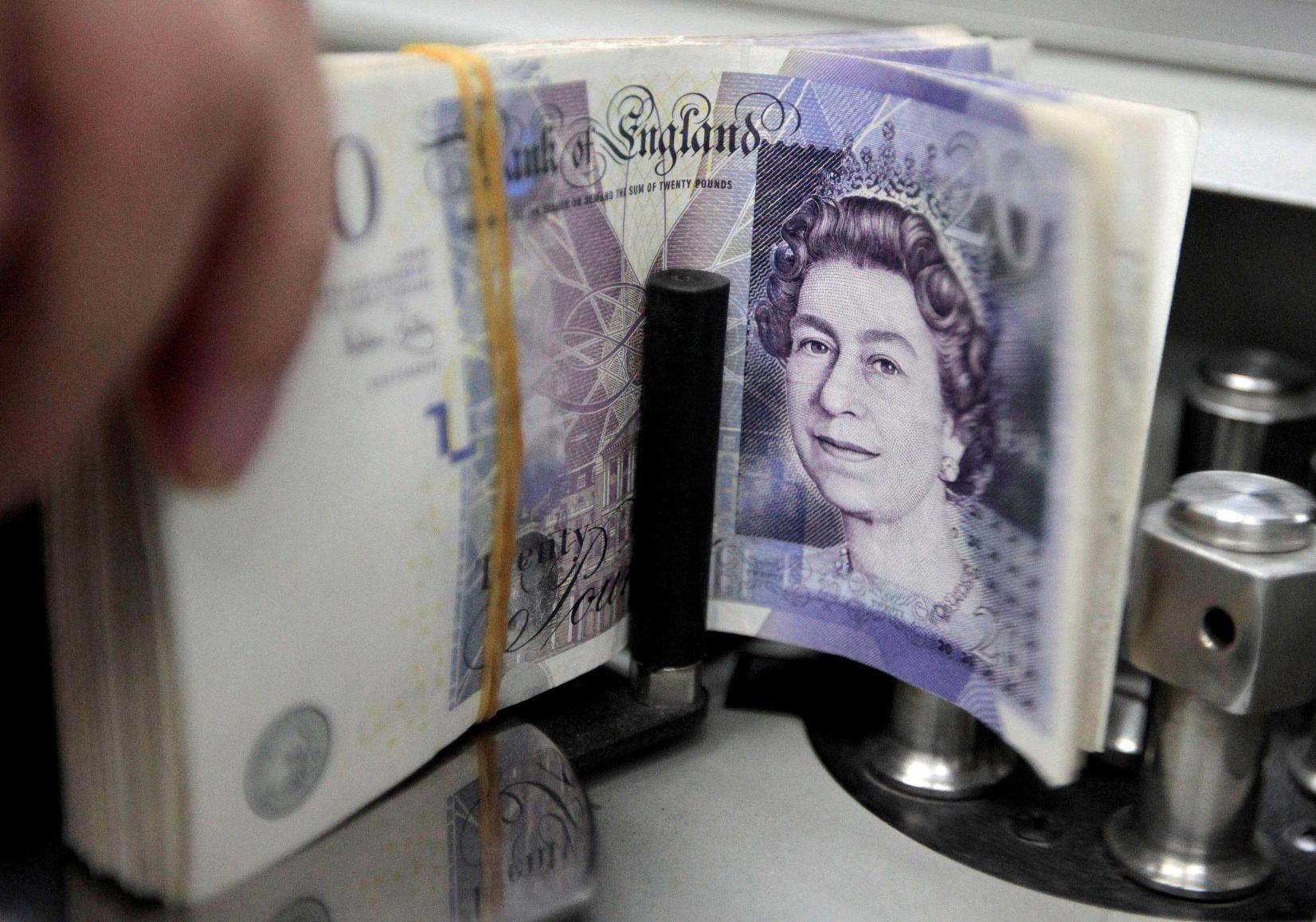
April 30 (Reuters) - Sterling was on track to break a five-day rising streak against the euro, with investors reckoning that the Bank of England would be more hawkish than the European Central Bank in its monetary policy path. It dropped slightly versus the greenback, which was mixed ahead of the Fed's meeting. Analysts said the recent moves in rate forwards confirmed the prospect of a first BoE rate cut in August while signalling markets remained sceptical about additional monetary easing. Markets priced in an 80% chance of a first move by the BoE in August while discounting around 40 bps by year-end , implying a 60% chance of a second cut in 2024. Meanwhile, the ECB is seen starting in June and ending the year with almost three rate cuts. The pound dropped 0.15% at 85.46 pence per euro. The single currency hit its strongest since early January at 86.06 after dovish comments from BoE Governor Andrew Bailey. Bailey said in mid-April British inflation looked on track for a drop towards the 2% target. In the following days, BoE policymaker Megan Greene and Chief Economist Huw Pill sounded way more hawkish, arguing that inflation data was too high for the BoE to consider cutting rates. "The 85-86 range has dominated for a long time and acts as a sort of magnet for the euro sterling cross," said Jane Foley, head of forex strategy at Rabobank, commenting on today's rise of the single currency. The pound dropped 0.15% to $1.2542 . Markets look at the general elections later this year and the risks of less fiscal discipline, but they forecast a limited impact on financial markets. "I think politicians have learned that markets will show zero-tolerance for anything but a prudent fiscal policy," Rabobank's Foley argued. British Prime Minister Rishi Sunak's Conservative Party is set for a defeat, according to a projection published early this month, which showed the Labour Party winning over 400 seats. Sign up here. https://www.reuters.com/markets/currencies/sterling-set-break-five-day-rising-streak-versus-euro-2024-04-30/
2024-04-30 12:00
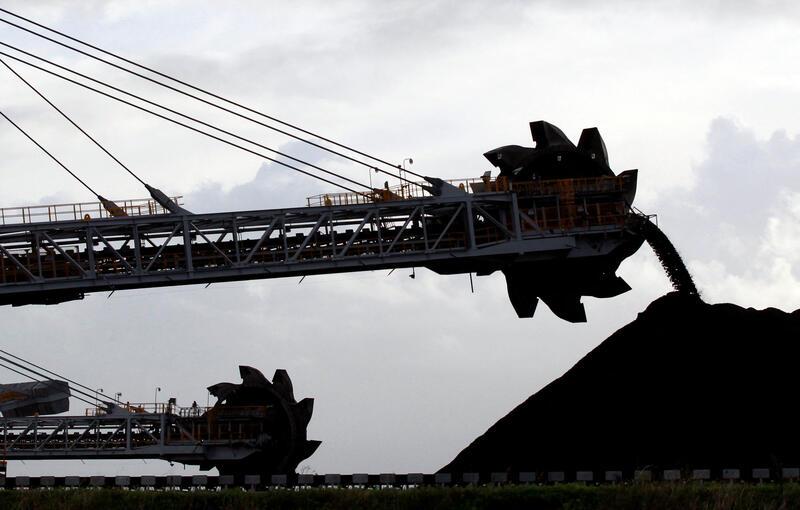
LAUNCESTON, Australia, April 30 (Reuters) - Australia shipped more coal to China than Japan in April, the first time this has happened in any month in more than four years, underscoring shifting market dynamics and an improved political relationship with Beijing. Australia's exports of all grades of coal to China were 6.87 million metric tons in April, up from 6.83 million in March and the highest since November, according to data compiled by commodity analysts Kpler. Shipments of coal to Japan from Australia were 6.10 million tons in April, down from 7.93 million in March and the lowest since the 5.97 million recorded in April 2017. Australia's coal exports to China have been recovering since February last year when the world's biggest buyer of the polluting fuel ended an informal ban on imports. Australia is the world's biggest shipper of metallurgical coal used to make steel, and the second-biggest exporter of thermal coal, used mainly to generate electricity. The curb on imports was put in place in mid-2020 amid tensions between Beijing and Canberra over the latter's call for an international investigation into the origins of the COVID-19 pandemic, which started in the Chinese city of Wuhan. The ban was never official, unlike some of China's other actions against Australia, such as punitive tariffs on barley, wine and lobsters, but it still resulted in shipments effectively dropping to zero. The election of the centre-left Labor Party in May 2022, which ended nine years of rule by the right-wing Liberal-National coalition, led to improving relations between China and Australia. It's worth noting that Australia's top exports to China, namely iron ore and liquefied natural gas, were unaffected by the tensions. It could also be argued the ban on coal was a failure from a Chinese perspective, as it led to higher prices for all grades of thermal coal in Asia, while Australia was able to find other buyers, mainly India, for its exports. A further point is that while Australia's exports to China have been averaging above 6 million tons a month for the past year, they are still below the levels that prevailed prior to the unofficial ban in 2020. In 2019, Australia's exports to China averaged 7.84 million tons a month, and in 2018 it was 7.37 million, according to Kpler data. Exports to China hit a record high of 12.03 million tons in June 2020, just before the ban was imposed. While Australia's exports to China have recovered somewhat, the trend for shipments to Japan show a gentle decline due to nuclear reactor restarts and lower LNG prices after the spike caused by Russia's invasion of Ukraine ended. For the first four months of the year, Australia's exports of all grades of coal to Japan have averaged 8.07 million tons, down from an average of 8.79 million in 2023, and 10.54 million in 2022. INDIA DROPS It's also the case that as exports to China have resumed, shipments to India have declined. Australia sent 2.63 million tons of all grades of coal to India in April, down from 3.49 million in March and the lowest since May 2020. The bulk of Australia's exports to India are metallurgical coal, which accounted for 1.52 million tons in April, or about 58% of the total. Australian thermal coal struggles to be competitive in India as it has to compete against grades from Indonesia, the world's biggest exporter of this type of coal, as well as from South Africa and more recently Russia, which has been selling fuel at discounted levels after Western countries imposed sanctions in the wake of Moscow's invasion of Ukraine. While Australia's exports to India and Japan have eased, the country's overall shipments have been largely stable, with increases to China and other Asian countries such as Vietnam offsetting any losses. Australia's total coal exports were 28.22 million tons in April, down from 29.58 million in March, but slightly higher than the 28.08 million from April last year. The opinions expressed here are those of the author, a columnist for Reuters. Sign up here. https://www.reuters.com/markets/commodities/china-overtakes-japan-april-australias-top-coal-market-russell-2024-04-30/
2024-04-30 11:57
May 1 (Reuters) - U.S. equity markets closed sharply lower on Tuesday, joining their global counterparts in the monthly loss column as investors await crucial economic data and the Federal Reserve convenes for its two-day policy meeting. Gold sank, the dollar rebounded and benchmark U.S. Treasury yields ticked higher after the U.S. Labor Department reported hotter-than-expected first-quarter employment cost growth, which is unlikely to alter the Fed's restrictive stance. "The sell-off was triggered by the higher-than-expected employment cost index," said Jay Hatfield, portfolio manager at InfraCap in New York. "And investors are positioning ahead of what is likely to be a hawkish press conference following the Fed meeting." All three major U.S. indexes recorded their first monthly percentage losses since October. "We have reached new highs in the S&P this year, but there comes a time when a market needs to digest those gains," said Sam Stovall, chief investment strategist of CFRA Research in New York. "The old 'sell in May' adage might have come true a month early." The Federal Reserve Open Market Committee gathers on Tuesday for its monetary policy meeting, which is expected to culminate on Wednesday with a decision to leave the Fed funds target rate in the 5.25% to 5.50% range. The accompanying statement, as well as Fed Chair Jerome Powell's subsequent press conference, will be parsed for clues regarding the central bank's expected path forward with respect to interest rate cuts. "We know the Fed is going to be hawkish, and there's going to be questions about rate increases," Hatfield added. "That will be the money answer, depending how much he pushes back on that." First-quarter earnings season has passed its halfway point, with a host of high-profile results on tap this week, among them Amazon.com New Tab, opens new tab and Apple Inc. Analysts now see aggregate S&P 500 first-quarter earnings growth of 6.0% year-on-year, up from the 5.1% estimate as of April 1, LSEG data showed. The Dow Jones Industrial Average fell 570.17 points, or 1.49%, to 37,815.92. The S&P 500 lost 80.49 points, or 1.57%, at 5,035.68 and the Nasdaq Composite dropped 325.26 points, or 2.04%, to 15,657.82. European stocks ended lower as a raft of bleak earnings dampened investor sentiment due to upbeat economic data and the increased likelihood that the European Central Bank could cut interest rates in June. The pan-European STOXX 600 index lost 0.68% and MSCI's gauge of stocks across the globe shed 1.23%. Emerging market stocks lost 0.61%. MSCI's broadest index of Asia-Pacific shares outside Japan closed 0.41% lower, while Japan's Nikkei rose 1.24%. The dollar, boosted by economic data, regained some strength against a basket of world currencies and the yen weakened against the greenback, paring gains in the aftermath of suspected currency intervention on the part of Japanese authorities on Monday. The dollar index rose 0.62%, with the euro down 0.43% to $1.0673. The Japanese yen weakened 0.89% versus the greenback at 157.75 per dollar, while sterling was last trading at $1.2497, down 0.51% on the day. U.S. Treasury yields rose after the hotter-than-expected employment costs report as investors awaited the Fed decision. Benchmark 10-year notes fell 19/32 in price to yield 4.6902%, from 4.612% late on Monday. The 30-year bond fell 28/32 in price to yield 4.7945%, from 4.737% late on Monday. Crude prices dropped on easing geopolitical tensions as Israel-Hamas peace talks moved forward and U.S. data showed healthy crude output and exports. U.S. crude dropped 0.85% to settle at $81.93 per barrel, while Brent settled at $87.86 per barrel, down 0.61% on the day. Gold prices tumbled to a one-week low ahead of the Fed meeting, but remained on course for their third consecutive monthly gain. Spot gold dropped 1.8% to $2,292.60 an ounce. Sign up here. https://www.reuters.com/markets/global-markets-wrapup-1-2024-04-30/


